
Female Sexual Functioning during Postpartum Period: A Single- Center Survey on Polish Women
Introduction: Numerous physical, psychological and sociocultural factors affect both the sexual function and the quality of woman’s life during postpartum period. Therefore, the aim of this study was to evaluate female sexual functioning during the first year after childbirth. Patients and Methods: We conducted a prospective survey study on women in postpartum period using an anonymous questionnaire including 73 inquiries concerning intimate relationship and sexual functioning during the first year after childbirth. The following statistical test were used: chi-square test of independence, Spearman's rank correlation coefficient, Wilcoxon and U Mann-Whitneya tests. The significance level of p = 0.05 was assumed. Results: The study included 150 women, majority of them (60%) were at the age between 31-40 years old and were married (87%). During the postpartum period, most women had a low need for intercourse (65%), which was lower than before pregnancy (in 72% of participants) and statistically significant (p < 0.001). In 68% of cases, a decreased satisfaction with sex was declared during the first year after the childbirth, which was statistically significant (p < 0.001). In the first year after giving birth, 74% of respondents decreased the average number of intercourses, and this difference was statistically significant (p < 0.001). Also, after giving birth, the number of women who did not experience genital disorders decreased (75%). The most common time to return to intercourse after childbirth was 6-12 weeks (67%), and it was either a joint decision (46%), or a male partner choice (44%) in majority of cases. Conclusion: Postpartum period has significant negative impact on woman’s sexuality. After the childbirth most women declare less need for sexual intercourses, decreased number of intercourses with less satisfaction.
Introduction
Pregnancy, delivery, postpartum and breast-feeding periods affect physiological and mental functions that may have a negative impact on woman’s sexuality [1]. After childbirth interest in sexual activity decreases, which may be caused by vaginal injuries, urinary incontinence, as well as psycho-emotional concerns such as changes in woman’s body, tiredness due to the constant child care and altered relationship between the partners [2]. Sexuality is a complex issue influenced by both organic processes including the nervous, vascular and endocrine system and individual aspects such as family, societal and religious beliefs, aging, health condition and personal experience [3]. Sexual functioning of women in the early period of motherhood is poorly understood due to the insufficient research in this area. The data published so far confirms the fact that women during the postpartum period need sexual contact, but their frequency and character depend on the course of labor, procedures performed during childbirth, its complications, breastfeeding and the relationship with the partner during this period [4]. Moreover, a number of studies, including systematic reviews, have revealed the high prevalence of sexual dysfunctions, such as dyspareunia, incontinence, lack of desire, and change in sensations of pleasures following childbirth, as well as the need for effective interventions and counseling strategies to cope with them [5, 6, 7]. Additionally, data shows that postpartum depression affects as many as one in five women and can have a profound impact on sexual desire and the perception of sexual pleasure [8]. Therefore the aim of this study was to evaluate female sexual functions during the first year after childbirth.
Patients and Methods
An anonymous self-prepared survey containing 73 inquiries concerning intimate relationship before and during pregnancy was performed on women in postpartum period who were under the care of a private gynecological clinic in Podlasie (East Poland). Participation in the survey was voluntary. The first part of the questionnaire included general and demographic information: respondent’s age, area of residence, education, economic status, type and state of relationship. The second part was related to sexual life before and after pregnancy: frequency of sexual intercourses, their quality, satisfaction, sexual dysfunctions, as well as self- perception of one’s attractiveness, appearance or partner’s perception. The third part contained information about the impact of delivery (mode of delivery, partner’s participation, medication), breastfeeding, and newborn child (health, way of feeding, room sharing) on intimate relationship between partners and their sexual life. The last part concerned general attitude toward sexuality and sexual counseling provided by the gynecologist.
Statistics
The significance of the relationship between nominal variables was checked using the chi-square test of independence. Correlations between two quantitative or ordinal variables were checked using Spearman’s rank correlation coefficient. The difference in the assessment of sexuality before pregnancy and sexuality during postpartum period was checked using the Wilcoxon test. The difference in scores measured on an ordinal scale between the two groups was checked using the Mann-Whitney U test. In statistical analyses, the significance level of p = 0.05 was assumed. The analyzes were performed using the SPSS program.
Results
General Information
The study included 150 women. Majority of them were between 31 and 40 years old (60%) and between 25 and 30 years old (33%) and lived in provincial cities (53%) or in the countryside (23%). Most often, respondents had higher education - bachelor’s degree (15%) or master’s degree (63%). Respondents most often assessed their economic status as good (60%), less often as very good (19%), and as satisfactory (19%) (Table 1).
| Count | % | ||
|---|---|---|---|
| Age | 18-24 years | 6 | 4,0% |
| 25-30 years | 50 | 33,3% | |
| 31-40 years | 90 | 60,0% | |
| 41-50 years | 4 | 2,7% | |
| Education | Primary education | 1 | 0,7% |
| Vocational education | 16 | 10,7% | |
| Secondary education | 15 | 10,0% | |
| Higher education, first degree | 23 | 15,3% | |
| Higher education, second degree | 94 | 62,7% | |
| Higher education, third degree | 1 | 0,7% | |
| Place of residence | Village | 35 | 23,3% |
| Commune city | 20 | 13,3% | |
| Poviat city | 15 | 10,0% | |
| Provincial city | 80 | 53,3% | |
| Economic status | Low | 2 | 1,3% |
| Satisfactory | 29 | 19,3% | |
| Good | 90 | 60,0% | |
| Very good | 28 | 18,7% | |
| No response | 1 | 0,7% |
Table 1: Basic sociodemographic information about the surveyed women.
Most of the surveyed women were married (87%), and their relationship most often lasted from 5 to 10 years (39%) or over 10 years (30%).
Sexual Functioning during the First Year after Childbirth
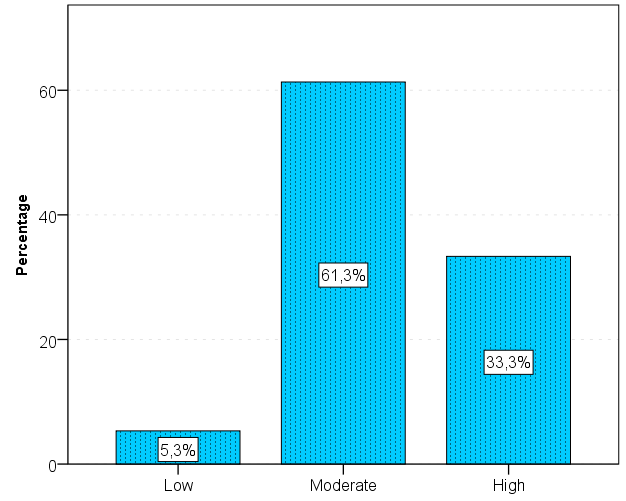
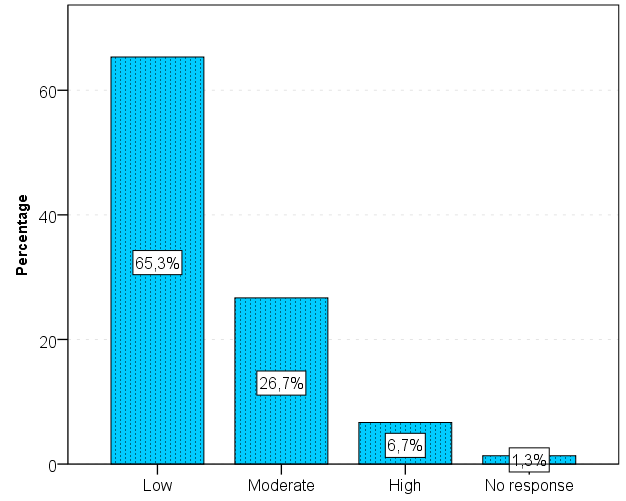
Before getting pregnant, most women had a moderate need for sex and intercourse (61%), nearly 33% of them had a high need and 5% had a low need (Figure 1). During the postpartum period, most women had a low need for intercourse (65%), 27% had a moderate need for sex, and 7% had a high need for sex (Figure 2). Analysis using the Wilcoxon test showed that the differences in the need for sex before and during the postpartum period were statistically significant (p < 0.001) (Table 2).
| Lower | Higher | The same | Z | p | |
|---|---|---|---|---|---|
| Desire for Sex/Intimacy during Postpartum Period | 107 | 5 | 36 | -9,07 | <0,001 |
| 72,3% | 3,4% | 24,3% |
Table 2: Wilcoxon test results. Changes in the need for sex during the postpartum period.
The respondents had to rate their satisfaction with sex using a 5-point scale, where a score of 1 meant great dissatisfaction and a score of 5 meant great satisfaction. The mean satisfaction with pre-pregnancy sex was 4.2, with a standard deviation of 0.84. The median distribution was 4.0. The rating most often given by respondents was 5. The average satisfaction with sex during the postpartum period was 3.0, with a standard deviation of 1.26. The median distribution was 3.0. The rating most often given by respondents is 3. In 68% of women during the postpartum a decrease in their satisfaction with sex was observed,and 25% of women reported no changes in this matter. Analysis using the Wilcoxon test showed that the differences in the assessment of satisfaction with sex before pregnancy and during the postpartum period were statistically significant (p < 0.001) (Table 3).
| Lower | Higher | The same | Z | p | |
|---|---|---|---|---|---|
| Satisfaction with sex during postpartum | 97 | 10 | 36 | -8,33 | <0,001 |
| 67,8% | 7,0% | 25,2% |
Table 3: Wilcoxon test results. Change in satisfaction with sex during the postpartum period.
In the first year after giving birth, 74% of respondents decreased the average number of intercourses, 2% increased them, and 24% had no changes in this matter. Analysis using the Wilcoxon test showed that the differences in the number of intercourses before and during pregnancy were statistically significant (p < 0.001). Also, during postpartum period, the average duration of intercourse, including foreplay, decreased in 47% of the surveyed women, increased in 5%, and more than half of the respondents did not notice any changes in this matter (49%). Analysis using the Wilcoxon test showed that the differences in the duration of intercourse before and during pregnancy were statistically significant (p < 0.001).
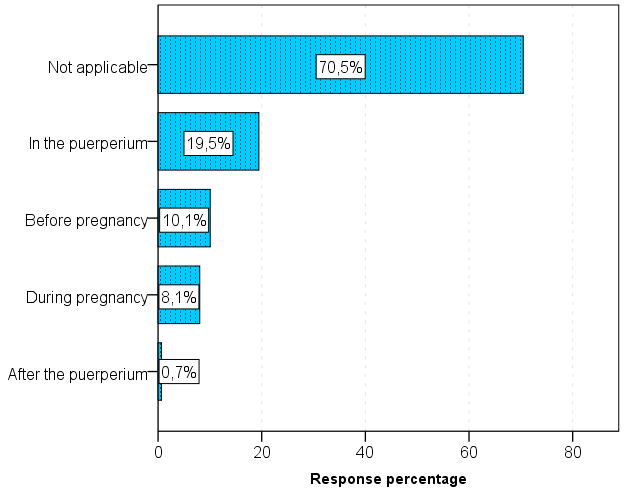
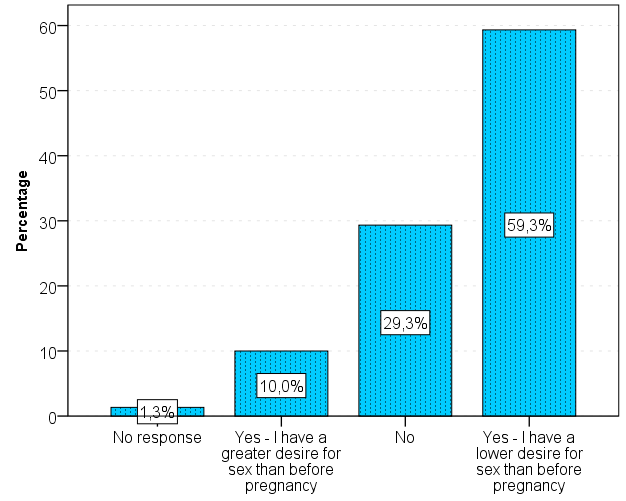
In the first year after giving birth, most women had less desire for sex than before pregnancy (59%), 29% of women felt no need for sex, and 10% had more desire for sex than before pregnancy (Figure 2). About 29% of surveyed women suffer or have suffered from mood disorders. Most often, respondents suffered from mood disorders during the postpartum period (20%), less often before pregnancy (10%), during pregnancy (8%) or after the postpartum period (1%) (Figure 3).
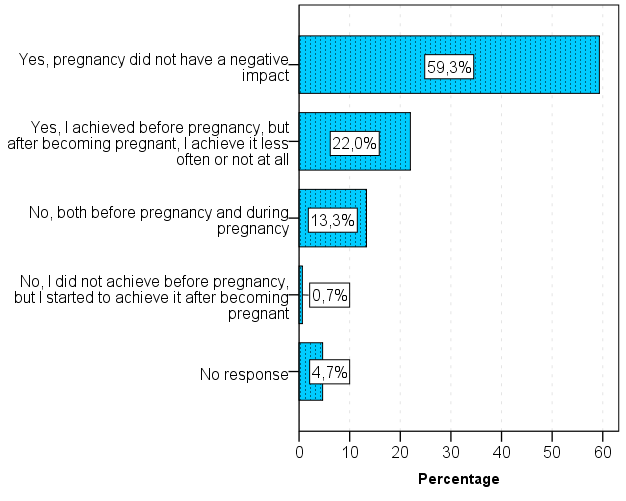
Nearly 59% of women felt orgasm, and childbirth did not negatively affect it (59%), 22% felt orgasm before pregnancy, but after becoming pregnant they experience it less often or not at all, 13% of women did not have orgasm both before and after pregnancy (13%), while 1% of women did not achieve orgasm before pregnancy, but began to achieve it after conception (Figure 4).
During pregnancy, 86% of women did not experience such disorders, 9% had decreased libido, 5% had lubrication disorders, and 1% had dyspareunia (Figure 5).
After giving birth, the number of women who did not experience genital disorders decreased (75%), 17% had decreased libido, 10% had lubrication disorders, and 2% had dyspareunia. Statistical analysis showed a statistically significant relationship between age and the need for sex (p = 0.044) and the number of intercourses (p = 0.001) in the postpartum period. The correlations were negative, which meant that younger respondents felt the need for sex more often and had more intercourse (p = 0.001). There was no relationship between age and satisfaction with sex (p = 0.123), duration of intercourse (p = 0.123), frequency of masturbation (p = 0.305) in the postpartum period. Correlation analysis did not show any relationship between the length of the relationship and the need for sex (p = 0.480), satisfaction with sex (p = 0.525), number of intercourses (p = 0.889), and duration of intercourse (p = 0.087).frequency of masturbation (p = 0.417) in the postpartum period.
General Information on the Delivery and Postpartum Period
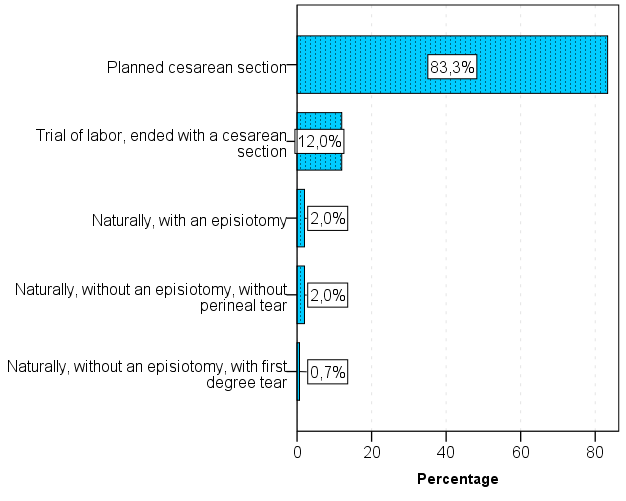
For nearly 53% of the surveyed women, it was their first childbirth and over 77% of respondents were planning their current pregnancy. Over 29% of surveyed women experienced miscarriages or any other complications related to pregnancy in the past. In most cases, it was a natural pregnancy (94%), and 6% of respondents had an in vitro pregnancy (6%). In most cases, delivery was by planned cesarean section (83%), 12% had an attempt at vaginal and vaginal delivery, but the delivery ended in a cesarean section (Figure 6).
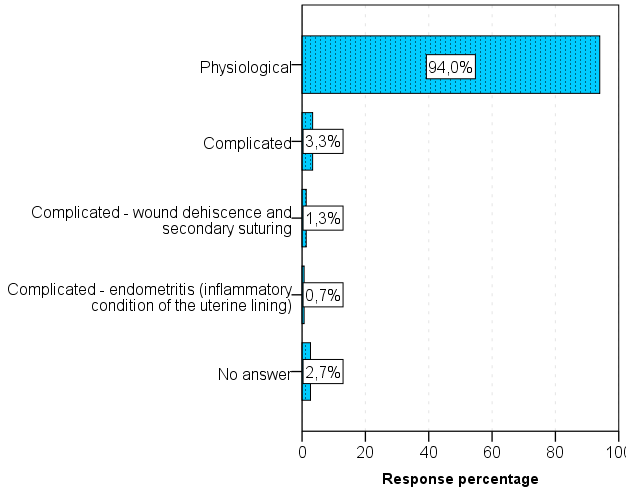
Women giving birth vaginally most often did not undergo any medical treatment (13%), 5% received oxytocin and 1% had epidural anesthesia. Before giving birth, 41% of respondents attended antenatal classes. The topic of sexuality during pregnancy and the postpartum period was discussed during antenatal classes by only 10% of the surveyed women. Nearly 11% of women claimed that their husband or partner participated in the birth, and 17% of them declared that this situation had no impact on their sexual life, 2% believed that it had a negative impact, and 3% that it had a positive one. In the context of the negative impact on sexual life, 2% of respondents would not decide to have a family birth again. Before pregnancy, 10% of respondents were treated for infertility. The mean duration of treatment was 3.5 years, with a standard deviation of 1.77 years. Over 5% of respondents believed that infertility treatment had a negative impact on sexual life, 3% that it had no impact, and 1% that it had a positive impact. In most cases, the postpartum period was physiological (94%), in 3% it was complicated, in 1% it was complicated with wound dehiscence and secondary stitches, in 1% - complicated, with inflammation of the mucous membrane of the endometrial cavity (Figure 7).
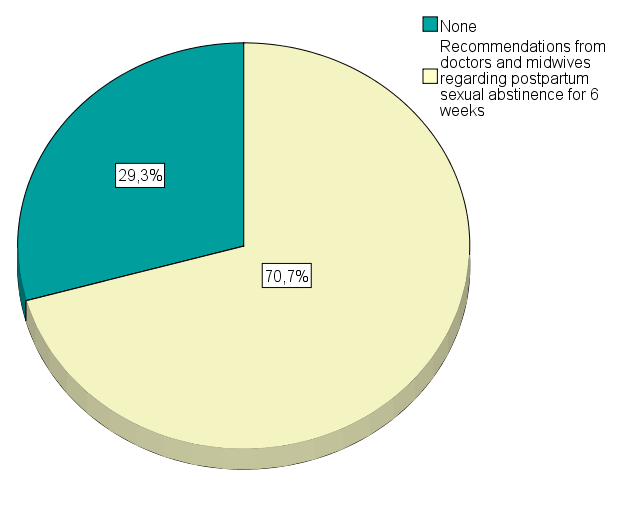
Most women received recommendations from physicians and midwives regarding postpartum sexual abstinence for 6 weeks (71%), and 29% of respondents did not receive any instructions (Figure 8).
Nearly 7% of surveyed women had postpartum complications. Half of the surveyed women (50%) were breastfeeding. 82% of women surveyed declared that their child sleeps with the respondent and her partner/husband in the bedroom. Most often, the time to return to sexual intercourse after childbirth was 6-12 weeks (67%).
The respondents most often decided to resume sexual intercourse together (46%) or their partner (44%), less often it was the respondent’s decision (8%). Majority of respondents did not postpone the decision to return to sexual activity (48%). The main reasons for postponing this decision were lack of willingness to have intercourse due to fatigue (43%) and fear of feeling pain during intercourse (35%). Less frequently, the reason was lack of acceptance of changes in the appearance of one’s body after pregnancy and childbirth (17%), fear of getting pregnant again (14%), lack of interest in intercourse on the part of the partner (2%).
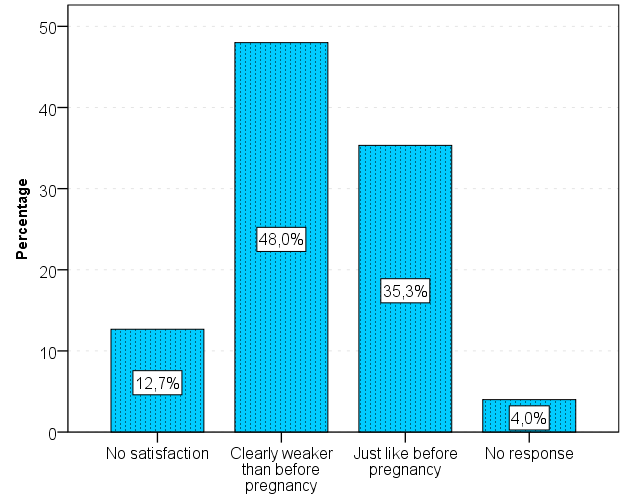
First sexual intercourses after giving birth were most often accompanied by fear (33%), lack of excitement (27%), little or no lubrication (23%). There was rarely any reluctance to have intercourse (13%). About 13% of women did not feel satisfaction with the resumed activity in the first weeks after the postpartum period, 48% felt satisfaction significantly lower than in the pre-pregnancy period, and 36% did not feel any changes (Figure 9).
Most women assessed their attractiveness after giving birth as worse than before pregnancy (62%), 30% assessed it as the same and 8% assessed it better than before pregnancy. However, the partner most often assessed the respondent’s attractiveness in the same way as before the pregnancy (75%), 13% assessed it worse and 9% assessed it better. In most women, the erotic perception of their partner/husband did not change after giving birth (47%), in a large percentage of women the erotic sphere was now less important, and the most important thing was pregnancy and the child (40%), in 10% of respondents the erotic perception of their partner improved, you now felt more desire and passion for your partner. Most women had not experienced sexual dysfunction (SD) before becoming pregnant (91%). The remaining responders experienced lubrication disorders (3%), dyspareunia (1%), or other disorders such as decreased libido and lack of joyful experiences (5%).
During pregnancy, 86% of women did not experience such disorders, 9% had decreased libido, 5% had lubrication disorders, and 1% had dyspareunia. After giving birth, the number of women who did not experience genital disorders decreased (75%), 17% had reduced libido, 10% had lubrication disorders, 2% had dyspareunia. There were no statistically significant differences between women who gave birth for the first time and multiparous women in terms of the need for sex (p = 0.468), satisfaction with sex (p = 0.813), number of intercourses (p = 0.103), and duration of intercourse (p = 0.193), frequency of masturbation (p = 0.087) in the postpartum period.
General Attitude toward Sexuality
In a relationship, sex played an important role for 45% of women, in 37% of women it was the partner who felt the greater need for sex, 8% of respondents claimed that they felt the greater need, and 5% treated it as an element of life, necessary primarily for procreation. After giving birth, 74% of respondents talked to their partner about their sexual needs. Only 28% of women discussed sexuality during pregnancy and postpartum with her gynecologist. Nearly half of the respondents claimed that their gynecologist discussed the topic of sexuality during pregnancy or talked about it freely when asked about it (48%). Thirty-two percent of surveyed women would like a gynecologist to talk to them about sexuality during pregnancy (32%). The main source of information on sexuality during pregnancy/postpartum was the internet (64%), less often a gynecologist (19%), the media (3%) and television (2%). A large percentage of respondents did not look for information on this subject at all (34%). The majority of respondents believed that the topic of sexuality during pregnancy and postpartum was important (72%). Most respondents claimed that their partner understood and respected sexuality that changed during the postpartum period (81%).
Forty-seven (47%) of respondents were afraid of the deterioration of sexual and intimate relationships with their partners during the postpartum period. The respondents most often had a neutral attitude towards their sexuality (45%) or had a relaxed attitude and had no problems talking freely about sexuality (43%). For nearly 11% of respondents, it was a shameful and taboo topic, and they did not talk about it freely. Statistical analysis showed a statistically significant relationship between the place of residence and sexual satisfaction (p < 0.001), number of intercourses (p = 0.042), and frequency of masturbation (p = 0.004) in the postpartum period. Respondents living in large towns experienced less sexual satisfaction during the postpartum period, had fewer sexual intercourses, and masturbated more often during the postpartum period. However, no statistically significant correlations were found between place of residence and the need for sex and closeness (p = 0.130) or duration of intercourse (p = 0.295). Women whose partner accompanied them during childbirth felt a greater need for sex than women whose partner did not accompany them during childbirth (p = 0.019). There were no statistically significant differences between the groups in terms of satisfaction with sex (p = 0.157), number of intercourses (p = 0.725), duration of intercourse (p = 0.326), frequency of masturbation (p = 0.720) in the postpartum period.
There were no statistically significant differences between women who had a healthy child and women who had a sick child in terms of the need for sex (p = 0.765), satisfaction with sex (p = 0.543), number of intercourses (p = 0.472), duration of intercourse (p = 0.883), frequency of masturbation (p = 0.588) in the postpartum period. Respondents who breastfed masturbated less often than women who did not breastfeed (p = 0.016). There were no statistically significant differences between them in terms of the need for sex (p = 0.550), satisfaction with sex (p = 0.656), number of intercourses (p = 0.058), duration of intercourse (p = 0.714) in the postpartum period.
No statistically significant differences were found between women who had topics related to the sexuality of pregnant women and the postpartum period during antenatal classes and women who did not have such classes in terms of the need for sex (p = 0.240) and satisfaction with sex (p = 0.294). number of intercourses (p = 0.404), duration of intercourse (p = 0.386), frequency of masturbation (p = 0.938) in the postpartum period. No statistically significant differences were found between women who discussed the topic of women’s sexuality during pregnancy and the postpartum period with their gynecologist and women who did not discuss such topics in terms of the need for sex (p = 0.956), satisfaction with sex (p = 0.091), and number of intercourses. (p = 0.054), duration of intercourse (p = 0.962), frequency of masturbation (p = 0.401) in the postpartum period.
Discussion
Sexuality is a complex problem influenced by both emotional, psychological and organic issues. Women experience more changes in these spheres because of the conditions that do not affect men, such as menstruation, pregnancy, breastfeeding and postpartum period [9]. In our study a relationship between place of residence and sexual satisfaction, number of intercourses, and frequency of masturbation in the postpartum period were observed. Respondents living in large towns experienced less sexual satisfaction during the postpartum period, had fewer sexual intercourses, and masturbated more often during the postpartum period. However, no statistically significant correlations were found between place of residence and the need for sex and closeness. These results may be explained by the fact that living in a big town gives more opportunity for education, resource and development, thus women are more confident and aware of their sexual needs that make them less satisfied with poor intercourse during postpartum, and more open for masturbation. A metanalysis by Grussu P, et al. [7] on sexual function during pregnancy and after childbirth, showed that sexual activity was resumed around 6-8 weeks after childbirth, to fully recover only after 6 months. A change in sexual function was also found, such as less orgasm, sexual desire and satisfaction, more dyspareunia. Our outcomes are consistent with these results, since most common time to return to intercourse after childbirth was 6-12 weeks (67%), and women felt less need for sex, lower sexual desire and lower satisfaction with sexual intercourse during the postpartum period. These findings can be explained by the physical, psychological and social factors, fears about negative consequences of sexual intercourse, inadequate or absent professional counselling about sexuality, method of delivery and breastfeeding. However, in our study we did not report significant differences in sexual functions between women who discussed this topic with their gynecologist or during antenatal classes and those who did not, which is awkward since we assumed otherwise. Moreover, the only impact of delivery and breastfeeding on sexuality that we observed was that women whose partner accompanied them during childbirth felt a greater need for sex than women whose partner did not do it, and respondents who breastfed masturbated less frequently. These outcomes only confirm a great role of hormones (breastfeeding), as well as closeness and intimacy in the relationship (partner’s participation during childbirth, closeness and breast stimulation during breastfeeding) on sexuality and sexual functions. Fuchs A, et al. [1] studied the impact of motherhood on sexuality, and they observed that pregnancy and childbirth significantly reduce female sexual activity and increase the occurrence of SD [1]. Their results are also consistent with ours. Cattani L, et al. [6] in their study to assess predictors for SD during the 1st year after the childbirth concluded that perineal trauma, rather than mode of birth, increases the odds for SD during postpartum, Our results confirm this outcome, since no correlation between the method of delivery and sexual needs or SD was notated. However, respondents whose partners accompanied them during delivery, which may be assumed as less traumatic for a woman, because partner’s presence may decrease stress and fear, had greater need for sex during the postpartum period. This means that trauma has more impact on sexuality than the way of delivery itself. On the other hand, Spaich S, et al. [10] in their study to explore the influence of the mode of delivery, perineal injury, and peripartum expectations on postpartum sexual function showed that none of these factors, including perianal trauma, influenced women’s postpartum sexuality [10]. In the Turkish study which determined the effect of breastfeeding on sexual activity and sexual quality in postpartum women, the sexual life quality mean scores between the breastfeeding and non-breastfeeding women were moderate and similar to each other, despite the association of a lower sexual desire and frequency of intercourse in the breastfeeding group, suggesting that breastfeeding may serve as a sexual alternative for nursing mothers [11]. Our results confirm this thesis, since breastfeeding women had lower need for masturbation, which means nursing may stimulate them in a way sex does. However, we did not observe any differences between the groups (breastfeeding and not breastfeeding women) in terms of sexual needs, number of intercourses and sexual satisfaction during the postpartum period. Banaei M, et al [12] performed a metanalysis to estimate the prevalence of postpartum dyspareunia, and they reported that this SD accrued to 35% of studied women and decreased with increasing postpartum duration [12]. We also observed that during the first year after childbirth less women did not experience SD, however the most common one was lowered libido, dyspareunia was not such common. However, in contrary to Iranian group we did not focus on the prevalence of dyspareunia, moreover our study was not a metanalysis and included limited number of participants from one gynecological site, therefore it is hard to compere. A very interesting observation from our study was that most women assessed their attractiveness after giving birth as worse than before pregnancy (62%), however the partner most often assessed the respondent’s attractiveness in the same way as before the pregnancy (75%). This outcome may suggest that women usually pay more attention to their appearance, especially to their body and are rather critical towards them, while their male-partners do not care about it that much.
The advantage of the study is its comprehensive approach to the topic and a relatively large study group. The disadvantage is the fact that the survey was performed in the private clinic on physiologically pregnant women, therefore it may not be representative of the entire population of Polish pregnant women.
Conclusion
Postpartum period has significant impact on woman’s sexuality. During the first year after the childbirth most women declare less need for sex and sexual intercourses, decreased number of intercourses with less satisfaction. Surprisingly, sexual education, either through discussion the topic with gynecologist or at the antenatal classes do not improve this situation.
References
-
Fuchs A, Czech I, Dulska A, Drosdzol-Cop A (2021) The impact of motherhood on sexuality. Ginekol Pol 92(1): 1-6.
-
Aribi L, Houidi AB, Masmoudi R, Chaabane K, Guermazi M, et al. (2012) Female sexuality during pregnancy and postpartum: a study of 80 Tunisian women. Tunis Med 90(12): 873-877.
-
Phillips NA (2000) Female sexual dysfunction: evaluation and treatment. American Family Physician 62(1): 127- 136.
-
Zyśk N, Durka P, kobiet WMNS (2015) The impast of motherhood on women’s sexuality. Polski Przegląd Nauk o Zdrowiu 1(42).
-
Fan D, Li S, Wang W, Tian G, Liu L, et al. (2017) Sexual dysfunction and mode of delivery in Chinese primiparous women: a systematic review and meta-analysis. BMC Pregn Childbirth 17(1): 408.
-
Cattani L, Maeyer LD, Verbakel J, Bosteels J, Deprest J (2021) Predictors for sexual dysfunction in the first year postpartum: systematic review and meta-analysis. Br J Obstet Gynaecol 129(7): 1017-1028.
-
Grussu P, Vicini B, Quatraro RM (2021) Sexuality in the perinatal period: a systematic review of reviews and recommendations for practice. Sex Reprod Healthc 30: 100668.
-
Johnson CE (2011) Sexual Health during Pregnancy and the Postpartum (CME) J Sex Med 8(5): 1267-1284.
-
Szymanska E, Kisielewski R (2023) Female sexual functioning during pregnancy. Ginekol Pol: 93464.
-
Spaich S, Link G, Alvarez SO, Weiss C, Sütterlin M, et al. (2020) Influence of Peripartum Expectations, Mode of Delivery, and Perineal Injury on Women’s Postpartum Sexuality. J Sex Med 17(7): 1312-1325.
-
Yılmaz FA, Taplak AS, Polat S (2019) Breastfeeding and Sexual Activity and Sexual Quality in Postpartum Women. Breastfeed Med 14(8): 587-591.
-
Banaei M, Kariman N, Ozgoli G, Nasiri M, Ghasemi V, et al. (2021) Prevalence of postpartum dyspareunia: A systematic review and meta-analysis. Int J Gynaecol Obstet 153(1): 14-24.
- Postpartum Maternal Mental Health - A Narrative Review
- Beta HCG in Cervico-Vaginal Secretion as a Predictor of Preterm Delivery
- Successful Management of Mid Trimester Foetal Death with Major Placenta Previa by Expectant Management Followed by Induction of Labour
- To Evaluate the Expression of Egr2 Gene in Term Low Birth Weight Newborns
- Impact of Maternal Obesity on Maternal and Foetal Outcomes: A Prospective Cohort Study from Northern India
- ‘’Benefit of Pulsatile GnRH Therapy in Treatment of Functional Hypothalamic Amenorrhea (FHA) and Congenital Hypogonadotropic Hypogonadism(CHH) in Infertile Patients Over Canonical Gonadotropins with IVF –A Short Communication’’