
Bladder and Prostate Metastasis from Small Cell Lung Cancer: A Rare Entity
Bladder metastases from lung cancer are extremely rare; in some previously reported cases in with the primitive tumor was a lung adenocarcinoma, the finding of an intact epithelium overlying the bladder tumour was considered suggestive of a secondary lesion. Differentiating primary bladder non-urothelial cancers from metastatic lesions can be difficult. An endoscopic appearance consistent with primary bladder cancer further complicates the differential diagnosis, which heavily relies on pathologic evaluation and specific immunohistochemical staining. Here we describe the first case at our knowledge of bladder metastasis from lung small cell carcinoma, whereby endoscopic appearance was strongly consistent with primary bladder cancer.
Introduction
Primary bladder cancer is the fifth most common diagnosed malignancy, while secondary malignancies of the bladder are rare. They have been classified in 1956 into three groups: those which reach the bladder by direct extension from an adjacent organ, metastases, and lymphomas or leukaemias [1]. Most secondary neoplasms represent direct invasion by tumors originating in adjacent sites, most commonly the female genital tract, prostate and lower gastrointestinal tract, while a smaller proportion are metastases, most commonly from the skin, stomach, breast, or lung [2, 3]. However, metastatic bladder tumors caused by blood-or lymph-borne cancers from any part of the body are extremely uncommon (less than 1% of bladder tumors), and even within this group lung tumors are the origin in a very small number of cases. Moreover, usually diagnosis happens in advanced stages due to the limited symptomatology exhibited. Here we describe the first case at our knowledge of bladder metastasis from lung small cell carcinoma, whereby endoscopic appearance was strongly consistent with primary bladder cancer.
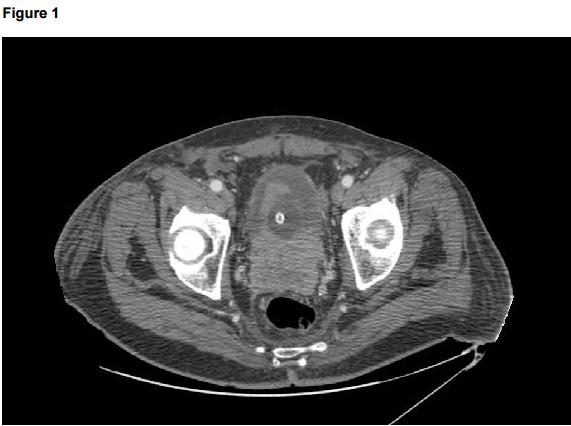
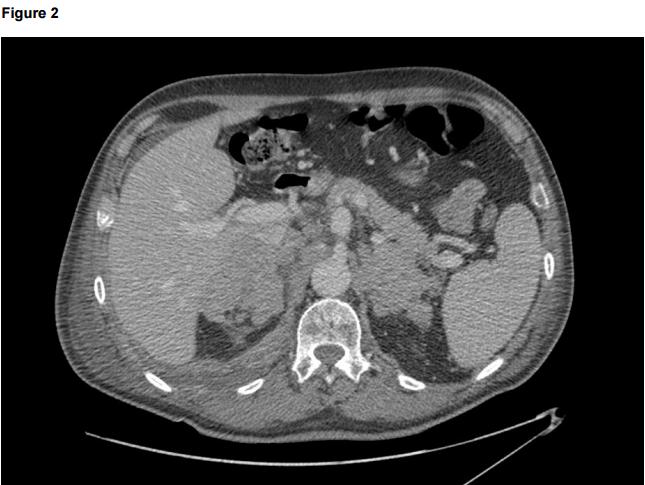
A 65 years-old Caucasian man came to our attention because of gross hematuria with acute urine retention and acute renal failure (creatinine levels 3,5 mg/dl). His past medical history included a small cell neuroendocrine carcinoma of the lungs, treated with radio-chemotherapy a year earlier with an initial good response. Physical examination was within normal limits and digital rectal exploration did not show gross abnormalities. Kidney and bladder ultrasounds showed initial bilateral hydronephrosis. Prostate-specific antigen (PSA) levels were not tested because of the recent catheterization, but a recent PSA assay (3 months before) resulted in normal limits. After an initial period of catheterization until getting clear urine, we performed a urine citology and a cystoscopy under general anesthesia that revealed the presence of a hyperemic and solid lesion at the bladder neck and trigone, without visualizing ureteral orifices. We also performed a biopsy of the bladder lesion and hemostasis. However, because the persistence of renal failure, the recurrence of hematuria and the flank pain onset, we also performed a chest-abdomen CT scan with contrast media, showing the presence of multiple pleural metastasis, multiple bilateral adrenal metastasis (the right one compressing the inferior cava vein), multiple retroperitoneal nodal metastasis and pathological tissue with contrast enhancement involving the prostate, the bladder trigone and the left seminal vesicle (Figures 1&2). Histopathology revealed a great surprise: while urine cytology was negative for malignant urothelial cells, histology revealed the presence of a small cell neuroendocrine carcinoma with benign urothelial mucosa showing reactive changes; immunophenotypically, it was positive for citokeratins (Cam 5.2; AE1/AE3), citochromogranine, synaptofisine and TTF-1, compatible with pulmonary primitiveness. After this diagnosis and seen the CT report, we addressed the patient to palliative treatment. The patient died 20 days after the diagnosis.
Discussion
In general, the bladder is not a favoured site for tumor metastases. In two series of 423 and 162 autopsies of patients with carcinoma of the breast [4, 5] and in 250 autopsies of patients with untreated non-small cell carcinoma of the lung [6] no metastases to the bladder were reported. In 67 cases of gastric carcinoma at autopsy, a bladder metastasis was found in only one case [7]. The rarity of bladder metastases from renal cell carcinoma suggests that the theoretical possibility of seeding of tumour cells along the urinary tract is unimportant [8]. Small cell carcinoma (SCC) is a distinct clinicopathologic entity that usually originates from the lung but can also arise in almost any extrapulmonary sites. Extrapulmonary small cell carcinomas (ESCCs) are rare, and have been described most frequently in the urinary bladder, prostate, esophagus, stomach, colon and rectum, gallbladder, larynx, salivary glands, cervix, and skin. Small cell carcinoma of the bladder is a rare, aggressive, poorly differentiated neuroendocrine neoplasm that is similar to small cell carcinoma of the lung in clinical behavior. In fact, bladder small cell carcinoma is frequently found in conjunction with conventional urothelial carcinoma and/or other histologic variants: squamous and glandular differentiation [9]. In our case, the patient had no history of previous TCC of the bladder or prostate neoplasm, and moreover urinary cytology was negative for malignant transitional cells. Furthermore, the biopsy specimen showed the presence of benign urothelial mucosa. To our knowledge, this is the first case of primary small cell neuroendocrine carcinoma of the lung with metastatic spread to the bladder, prostate and adrenal glands; on the other hand, only four prior cases of primary adenocarcinoma of the lung with metastatic spread to the bladder have been identified in the literature [3]. Often, differentiating primary bladder non-urothelial cancers from metastatic lesions can be difficult. An endoscopic appearance consistent with primary bladder cancer further complicates the differential diagnosis, which heavily relies on pathologic evaluation and specific immunohistochemical staining. In every case, the prognosis is very poor due to the aggressiveness of primary tumor and the advanced stage at diagnosis.
References
-
Ganem EJ, Batal JT (1956) Secondary malignant tumours of the urinary bladder metastatic from primary foci in distant organs. J Urol 75: 965-972.
-
Goldstein AG (1967) Metastatic carcinoma to the bladder. J Urol 98: 209-215.
-
Bates AW, Baithun SI (2000) Secondary neoplasms of the bladder are histological mimics of nontransitional cell primary tumours: clinicopathological and histological features of 282 cases. Histopathology 36(1): 32-40.
-
Saphir O, Parker ML (1941) Metastasis of primary carcinoma of the breast. With special reference to spleen, adrenal glands and ovaries. Arch Surg 42(6): 1003-1018.
-
Warren S, Witham EM (1933) Studies on tumor metastasis. 2. The distribution of metastases in cancer of the breast. Surg Gynec Obstet 57: 81-85.
-
Budinger JM (1958) Untreated bronchogenic carcinoma. A clinicopathological study of 250 autopsied cases. Cancer 11(1): 106-116.
-
Warren S (1933) Studies on tumor metastasis. IV. Metastases of cancer of the stomach. New Engl J Med 209: 825-827.
-
Bates AW, Baithun SI (1999) Renal cell carcinoma metastatic to the bladder. A report of three cases. J Urol Pathol 10: 71-76.
-
Cheng L, Jones TD, McCarthy RP, Eble JN, Wang M, et al. (2005) Molecular genetic evidence for a common clonal origin of urinary bladder small cell carcinoma and coexisting urothelial carcinoma. Am J Pathol 166(5): 1533-1539.
- Results of 6-Month Follow-Up of Patients After B-Turp and Thulep
- The Effect of Drinking Water with a High Content of Antimony and Arsenic on the Dynamics of their Distribution in the Kidneys and the Renal Excretory Function in Rats
- Effectiveness and Safety of Tansurethral Thulium Laser Enucleation of the Prostate in the Treatment of BPH: Review
- A Systematic Review on Molecular Pathophysiology Involved in Chronic Kidney Disease and the Role of Animal Models in Drug Discovery to Manage in Chronic Kidney Disease - An Update
- Functional Development of Kidneys in Human Ontogenesis
- Testicular Metastasis: Uncommon Prostate Cancer Case Report