
Safety and Efficacy of the HomeoPet Cough in Domestic Pets –A Clinical and Correction Analysis Based Upon User Response Survey
Cough is a frequently reported clinical symptom in companion animals, often indicating underlying respiratory or systemic pathology. While conventional veterinary treatments are effective, their access and potential side effects can limit early intervention, prompting pet owners to explore over the counter (OTC) alternatives. This prospective, observational study aimed to evaluate the safety and perceived efficacy of HomeoPet Cough, a widely available homeopathic remedy, in domestic pets through owner-reported outcomes. A total of 124 pet owners were initially enrolled, with 61 valid and complete responses included in the final analysis. The study population comprised 36 cats (59.02%), 23 dogs (37.7%), and 2 other species. Dry cough was the most prevalent symptom (65.57%), followed by wheezy and wet coughs. Intermittent coughing was significantly more common (80.33%) than constant coughing. Most owners administered the product orally (55.74%) with a twice-daily dosing regimen (47.54%), and nearly all adhered to label instructions (98.36%). Across various cough types, mean symptom reduction ranged from 1.6 to 3 points, with wet and kennel cough showing the highest average improvement. Overall, 91.8% of owners reported perceived symptom relief, with cats showing a higher response rate (88.89%) than dogs (61.11%). Statistical analyses revealed significant correlations between symptom relief and factors such as species, sex, and cough intermittency (p < 0.05). Relief time scores suggested that most animals responded within 1–3 days, though deeper and more complex coughs exhibited longer recovery periods. Importantly, no adverse effects were reported, supporting the product's safety in real-world settings. While limited by its observational design and reliance on owner perception, the study provides valuable insights into the practical application of a non-prescription homeopathic treatment in veterinary respiratory care. The findings support the potential role of HomeoPet Cough as a low-risk, supportive therapy for mild to moderate coughs, warranting further clinical validation through controlled studies.
Farrington T¹* and Smith I²
¹Pets and People homeopathy, Cork, Ireland ²Veterinary Homeopathic consultant, Ireland *Corresponding author: Farrington Thomas Joseph, Pets and People homeopathy, Cork, Ireland, Email: farrington.vet@g Keywords: HomeoPet Cough; Veterinary Treatments; Respiratory
Abbreviations
OTC: Over The Counter; RCTs: Randomized Controlled Trials.
Introduction
Cough is a commonly reported clinical symptom in companion animals, particularly cats and dogs. It often indicates underlying irritation or pathology in the respiratory tract. In dogs, frequent causes include tracheobronchitis (kennel cough), tracheal collapse, pneumonia, chronic bronchitis, cardiac conditions, and parasitic infections such as heartworm disease [1, 2]. In cats, coughing is less frequent but may point toward asthma, bronchitis, parasitic lung diseases, or respiratory infections caused by viruses and bacteria [3, 4]. The classification of cough types is clinically important. Dry, harsh coughs are often linked to tracheal irritation or early infectious bronchitis. Wet coughs suggest fluid accumulation or secondary bacterial infections. Barky coughs may point toward laryngeal or upper airway involvement, while wheezing is commonly associated with lower airway diseases, including feline asthma and chronic bronchitis [5]. Some forms like deep or croupy coughs may relate to lower tracheal or pulmonary issues and can be more concerning. Diagnosing cough relies heavily on physical examination, owner observation, and imaging such as thoracic radiographs. However, many cases present in outpatient settings with limited diagnostics. Pet owners are often the first to notice patterns in the cough-intermittency, duration, and response to environmental factors. These features can be useful in differential diagnosis. However, variability in clinical presentation and overlapping symptoms make early recognition and intervention difficult, especially without specialized equipment [6, 7]. Treatment depends on the cause. Antimicrobials are used for bacterial infections. Bronchodilators, corticosteroids, and antihistamines are used for inflammatory or allergic conditions. Cough suppressants and supportive therapy like steam inhalation and nebulization may be advised. In milder cases or while awaiting veterinary care, owners often turn to supportive, over the counter treatments [8]. Among OTC remedies, homeopathic preparations are popular in the pet community. These formulations are based on the ultra-diluted homeopathic medicines substances aimed at stimulating the body’s healing process. HomeoPet Cough is one such remedy formulated to address a range of cough types in cats, dogs, and other small animals. It is non-prescription, palatable, and designed for administration in food, water, or directly in the mouth. Although scientific evidence on homeopathy remains debated, several observational studies and owner surveys report subjective improvement in pets receiving these remedies [1, 9]. This study was designed to capture owner-reported outcomes on cough types, symptom characteristics, posology, and perceived effectiveness of HomeoPet Cough in a real-world setting. The findings aim to provide valuable insights into the practical application of homeopathic OTC medicines in veterinary respiratory care [10, 11].
Materials and Methods
This study was conducted as a prospective, observational, owner-reported survey to evaluate the symptoms, treatment practices, and perceived outcomes associated with the use of the HomeoPet Cough remedy in companion animals. The survey was distributed online via a structured, pre-validated form on SurveyMonkey Platform. The survey was facilitated by an independent expert. The study was not interventional in nature; all treatment decisions and use of HomeoPet Cough were made independently by the pet owners prior to participation in the study.
Study Population
Eligible participants were adult pet owners residing mainly in the United States who had administered HomeoPet Cough to their animals for one or more types of coughs within the past 30 days. Inclusion criteria required that the animal had a history of coughing, that the owner was able to differentiate between various cough types (dry, wet, wheezy, etc.), and that they were willing to provide information on dosing, administration, and treatment outcomes. Owners were also required to consent to voluntary and anonymous data use. Survey Structure The survey collected both categorical and quantitative data across several domains: • Demographics: Species, age, sex, weight, neuter status. • Symptomatology: Type of cough (dry, wet, barky, wheezy, kennel, deep, croupy), intermittency (constant vs intermittent), and associated signs (sneezing, nasal discharge, tracheal collapse, etc.). • Medical History: Prior diagnoses, vet-attended care, comorbidities. • Posology: Frequency of dosing per day, route of administration (mouth, food, water), and adherence to label instructions. • Outcomes: Owner-perceived change in symptoms from baseline, time to symptom relief, and satisfaction with treatment. • Correlation Factors: Influence of variables such as animal type, dose frequency, symptom type, and sex on treatment outcomes. Data integrity checks were built into the form to minimize inconsistent or incomplete responses. Owners who failed to complete mandatory questions or did not consent were excluded from analysis.
Statistical Analysis
Descriptive statistics were used to summarize demographics and symptom profiles. Continuous variables were reported as means with standard deviations. Categorical variables were presented as counts and percentages. Changes from baseline symptom severity were analyzed using paired t-tests, MANOVA, and MANCOVA models where applicable. Subgroup analysis was performed for species (cats vs dogs), cough type, and symptom intermittency. Owner-reported efficacy (improved vs not improved) was analyzed using chi- square and McNemar tests for independence. Correlation between symptom relief and predictors (e.g., dose frequency, age, symptom type) was evaluated using Pearson correlation coefficients (R-values). All statistical analyses were conducted using Excel and SPSS version 27. A p-value < 0.05 was considered statistically significant. No imputation was performed for missing data.
Results
A total of 124 initial consent responses were recorded for the HomeoPet Cough owner survey. Of these, 27 (21.77%) entries were identified as duplicates and excluded. An additional 28 (22.58%) respondents aborted the survey before completing demographic details and were not included in the analysis. Five (4.03%) responses were removed as the survey was aborted after submitting demographic data but before symptom or outcome details were entered. Furthermore, 3 (2.42%) responses were excluded due to permanent data errors, such as entries related to the wrong product or unrelated medical complaints.
After these exclusions, 61 (49.19%) valid and complete responses remained and were included in the final analysis population. These entries formed the basis of the safety, symptomatology, and efficacy evaluation dataset (Figure 1,Table 1).
| Disposition | |
|---|---|
| Survey started (Consent provided) | 124 |
| Duplicates | 27 |
| Survey aborted before demographics | 28 |
| Survey aborted after demographics | 5 |
| Responses with permanent data errors | 3 |
| (e.g. Responses for wrong product) | |
| Final Number included in analysis | 61 |
Table 1: Respondent disposition in the survey.
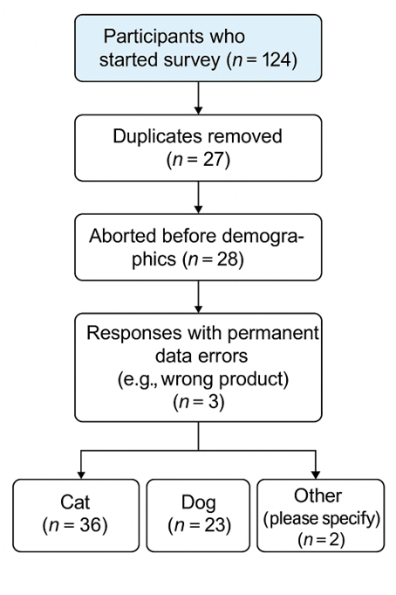
A total of 61 animals were included in the study, comprising 36 cats (59.02%), 23 dogs (37.7%), and 2 classified as “others” (3.28%). Other species included one rabbit and one mouse. The average age across all animals was 6.9 ± 4.67 years, with dogs being the oldest group (8.7 ± 4.85 years), followed by cats (5.99 ± 4.31 years) and others (2.5 years). Most animals were neutered (85.25%), with the highest proportion among cats (91.67%). Gender distribution showed 32.79% males and 26.23% females, though gender information was incomplete. Average weight varied notably by species: dogs were the heaviest (30.93 ± 27.37 lbs), followed by cats (11.07 ± 4.44 lbs), and others (15 ± 21.21 lbs) (Table 2).
A wide variety of breeds were represented, particularly among cats and dogs, with no single breed dominating the sample. Only a small number of animals (1.64% each) presented with comorbidities, including conditions such as feline herpes, kidney disease, respiratory infections, arthritis, and seizures. Over half of the animals (52.46%) had experienced side effects from previous medications, indicating a significant history of medical treatment within the cohort (Table 2).
| Overall | Cat | Dog | Others | |
|---|---|---|---|---|
| N | 61 | 36 (59.02%) | 59.02 (23%) | 23 (37.7%) |
| Age | 6.9±4.67 | 5.99±4.31 | 8.7±4.85 | 2.5±0 |
| Gender | ||||
| Male | 61 | 20 (32.79%) | 32.79 (12%) | 12 (19.67%) |
| Female | 61 | 16 (26.23%) | 26.23 (11%) | 11 (18.03%) |
| Neutered | 52 (85.25%) | 33 (91.67%) | 19 (82.61%) | 2 (100%) |
| Weight | 18.69±19.66 (lbs) | 11.07±4.44 (lbs) | 30.93±27.37 (lbs) | 15±21.21 (lbs) |
| Breed | ||||
| Australian Shepherd | 1 (1.64%) | 0 (0%) | 1 (4.35%) | 0 (0%) |
| Australian Cattle Dog | 1 (1.64%) | 0 (0%) | 1 (4.35%) | 0 (0%) |
| Beagle | 1 (1.64%) | 0 (0%) | 1 (4.35%) | 0 (0%) |
| Bombay | 1 (1.64%) | 1 (2.78%) | 0 (0%) | 0 (0%) |
| Boston Terrier | 1 (1.64%) | 0 (0%) | 1 (4.35%) | 0 (0%) |
| Chihuahua all types | 4 (6.56%) | 0 (0%) | 4 (17.39%) | 0 (0%) |
| Domestic - all types | 12 (19.67%) | 12 (33.33%) | 0 (0%) | 0 (0%) |
| Egyptian Mau | 1 (1.64%) | 1 (2.78%) | 0 (0%) | 0 (0%) |
| Formosan mountain dog | 1 (1.64%) | 0 (0%) | 1 (4.35%) | 0 (0%) |
| Mix Breed | 12 (19.67%) | 5 (13.89%) | 7 (30.43%) | 0 (0%) |
| Indefinite | 1 (1.64%) | 1 (2.78%) | 0 (0%) | 0 (0%) |
| Maine coon | 1 (1.64%) | 1 (2.78%) | 0 (0%) | 0 (0%) |
| Manx | 1 (1.64%) | 1 (2.78%) | 0 (0%) | 0 (0%) |
| Mouse fancy | 1 (1.64%) | 0 (0%) | 0 (0%) | 1 (50%) |
| Persian | 1 (1.64%) | 1 (2.78%) | 0 (0%) | 0 (0%) |
| Pitbull | 2 (3.28%) | 0 (0%) | 2 (8.7%) | 0 (0%) |
| Pomchi | 1 (1.64%) | 0 (0%) | 1 (4.35%) | 0 (0%) |
| Pomeranian | 2 (3.28%) | 0 (0%) | 2 (8.7%) | 0 (0%) |
| Rag Doll | 1 (1.64%) | 1 (2.78%) | 0 (0%) | 0 (0%) |
| Rex and Hollad loop mix | 1 (1.64%) | 0 (0%) | 0 (0%) | 1 (50%) |
| SHITZU | 1 (1.64%) | 0 (0%) | 1 (4.35%) | 0 (0%) |
| Tabby | 3 (4.92%) | 3 (8.33%) | 0 (0%) | 0 (0%) |
| Terrier | 1 (1.64%) | 0 (0%) | 1 (4.35%) | 0 (0%) |
| Tortie | 1 (1.64%) | 1 (2.78%) | 0 (0%) | 0 (0%) |
| Turkish Van | 1 (1.64%) | 1 (2.78%) | 0 (0%) | 0 (0%) |
| Tuxedo | 1 (1.64%) | 1 (2.78%) | 0 (0%) | 0 (0%) |
| Whippet | 1 (1.64%) | 0 (0%) | 1 (4.35%) | 0 (0%) |
| Yorkie | 2 (3.28%) | 0 (0%) | 2 (8.7%) | 0 (0%) |
| Siamese | 1 (1.64%) | 1 (2.78%) | 0 (0%) | 0 (0%) |
| Comorbidities | ||||
| Feline Herpes | 1 (1.64%) | 1 (2.78%) | 0 (0%) | 0 (0%) |
| kidney | 1 (1.64%) | 1 (2.78%) | 0 (0%) | 0 (0%) |
| Respiratory infection | 1 (1.64%) | 1 (2.78%) | 0 (0%) | 0 (0%) |
| Valley Fever | 1 (1.64%) | 0 (0%) | 1 (2.78%) | 0 (0%) |
| Addison’s Disease | 1 (1.64%) | 0 (0%) | 1 (2.78%) | 0 (0%) |
| Arthritis | 1 (1.64%) | 0 (0%) | 1 (2.78%) | 0 (0%) |
| Urinary Incontinence | 1 (1.64%) | 0 (0%) | 1 (2.78%) | 0 (0%) |
| Asthma | 1 (1.64%) | 0 (0%) | 1 (2.78%) | 0 (0%) |
| Seizure | 1 (1.64%) | 0 (0%) | 1 (2.78%) | 0 (0%) |
| Side effects of previous medication | ||||
| Yes | 32 (52.46%) | |||
| No | 24 (39.34%) |
Table 2: Demographics.
Symptomatology
In the overall dataset of 61 cases, dry cough emerged as the most common symptom, present in 40 cases (65.57%). Among species, it was reported in 22 cats (61.11%), 17 dogs (73.91%), and in one case among other species (50%). Wet cough was the next most frequent, occurring in 13 cases (21.31%) overall—8 cats (22.22%), 3 dogs (13.04%), and no cases among other species. Barky cough was seen in 3 cases (4.92%), exclusively in dogs (13.04%). Wheezy cough appeared in 15 cases (24.59%), with 11 cats (30.56%) and 4 dogs (17.39%) affected. Kennel cough was noted in 2 cases (3.28%), both involving dogs (8.7%). Deep cough was reported in 6 cases (9.84%), with 3 cats (8.33%) and 4 dogs (17.39%) affected. Croupy cough was found in 3 cases (4.92%), including 2 cats (5.56%) and 1 dog (4.35%) (Table 3).
Associated symptoms were generally uncommon. Chronic congestion was recorded in 1 case (1.64%), involving a cat (2.78%). Sneezing was seen in 2 cases (3.28%), both among cats (5.56%). Coryza was reported in 2 cases (3.28%)—1 cat (2.78%) and 1 dog (4.35%). Collapsed trachea occurred in 2 cases (3.28%), both in dogs (8.7%). Red gooey tears were noted in 1 case (1.64%), affecting a cat (2.78%), and nasal congestion appeared in 1 dog (4.35%), representing 1.64% of all cases (Table 3).
In terms of cough intermittency, intermittent coughing was much more prevalent than constant coughing. A total of 49 cases (80.33%) exhibited intermittent coughing, including 32 cats (88.89%) and 17 dogs (73.91%), with no cases among other species. Constant coughing was seen in 12 cases (19.67%), involving 4 cats (11.11%), 6 dogs (26.09%), and 2 cases (8.7%) in other species (Table 3).
| Primary Symptoms | Overall | Cat | Dog | Others |
|---|---|---|---|---|
| Dry cough | 40 (65.57%) | 22 (61.11%) | 17 (73.91%) | 1 (50%) |
| Wet cough | 13 (21.31%) | 8 (22.22%) | 3 (13.04%) | 0 (0%) |
| Barky cough | 3 (4.92%) | 0 (0%) | 3 (13.04%) | 0 (0%) |
| Wheezy cough | 15 (24.59%) | 11 (30.56%) | 4 (17.39%) | 0 (0%) |
| Kennel cough | 2 (3.28%) | 0 (0%) | 2 (8.7%) | 0 (0%) |
| Deep cough | 6 (9.84%) | 3 (8.33%) | 4 (17.39%) | 0 (0%) |
| Croupy cough | 3 (4.92%) | 2 (5.56%) | 1 (4.35%) | 0 (0%) |
| Associated Symptoms | ||||
| Chronic Congestion | 1 (1.64%) | 1 (2.78%) | 0 (0%) | 0 (0%) |
| Sneezing | 2 (3.28%) | 2 (5.56%) | 0 (0%) | 0 (0%) |
| Coryza | 2 (3.28%) | 1 (2.78%) | 1 (4.35%) | 0 (0%) |
| Collapsed Trachea | 2 (3.28%) | 0 (0%) | 2 (8.7%) | 0 (0%) |
| Red gooey tears | 1 (1.64%) | 1 (2.78%) | 0 (0%) | 0 (0%) |
| Nasal congestion | 1 (1.64%) | 0 (0%) | 1 (4.35%) | 0 (0%) |
| Intermittency | ||||
| Constant | 12 (19.67%) | 4 (11.11%) | 6 (26.09%) | 2 (8.7%) |
| Intermittent | 49 (80.33%) | 32 (88.89%) | 17 (73.91%) | 0 (0%) |
Table 3: Symptomatology.
Posology
The frequency of dosing per day, had the most common regimen of twice daily, reported in 29 cases (47.54%). This included 19 cats (52.78%), 9 dogs (39.13%), and 1 case (50%) among other species. Once-daily dosing was used in 10 cases (16.39%) overall—6 cats (16.67%), 3 dogs (13.04%), and 1 other (50%). Thrice-daily administration was noted in 17 cases (27.87%), comprising 9 cats (25%) and 8 dogs (34.78%), with no cases among other species. A frequency of more than three times per day was seen in 5 cases (8.2%), including 2 cats (5.56%) and 3 dogs (13.04%) (Table 4).
In terms of the type of medicine administration, oral dosing directly into the mouth was the most prevalent route, used in 34 cases (55.74%). This method was more common in dogs, with 18 cases (78.26%), compared to 15 cats (41.67%) and 1 other (50%). Administration via food was recorded in 22 cases (36.07%)—predominantly among cats (17 cases, 47.22%), with fewer cases in dogs (6 cases, 26.09%) and none in other species. Delivery through water was noted in 12 cases (19.67%), involving 7 cats (19.44%), 2 dogs (8.7%), and 1 case in other species (50%). A combination of multiple routes was used in 6 cases (9.84%), evenly split between cats (3 cases, 8.33%) and dogs (3 cases, 13.04%) (Table 4).
With respect to compliance, nearly all animals received the medication as instructed. A total of 60 cases (98.36%) were dosed correctly, including 35 cats (97.22%), 23 dogs (100%), and both cases involving other species (100%). Only one cat (2.78%) was reported as not having been dosed as per instructions (Table 4).
| Frequency of dose per day | Overall | Cat | Dog | Others |
|---|---|---|---|---|
| 1 | 10 (16.39%) | 6 (16.67%) | 3 (13.04%) | 1 (50%) |
| 2 | 29 (47.54%) | 19 (52.78%) | 9 (39.13%) | 1 (50%) |
| 3 | 17 (27.87%) | 9 (25%) | 8 (34.78%) | 0 (0%) |
| >3 | 5 (8.2%) | 2 (5.56%) | 3 (13.04%) | 0 (0%) |
| Type of Administration | ||||
| In Mouth | 34 (55.74%) | 15 (41.67%) | 18 (78.26%) | 1 (50%) |
| In food | 22 (36.07%) | 17 (47.22%) | 6 (26.09%) | 0 (0%) |
| In water | 12 (19.67%) | 7 (19.44%) | 2 (8.7%) | 1 (50%) |
| Combination of various routes | 6 (9.84%) | 3 (8.33%) | 3 (13.04%) | 0 (0%) |
| Was dosed as instructed? | ||||
| Yes | 60 (%) | 35 (97.22%) | 23 (63.89%) | 2 (100%) |
| No | 1 (98.36%) | 1 (2.78%) | 0 (0%) | 0 (0%) |
Table 4: Details of medicine and Posology.
Outcomes
The treatment outcomes demonstrated measurable improvement across various types of coughs. For dry cough, the mean reduction from baseline was 2.36 ± 2.35, with cats showing a reduction of 2.12 ± 2.64, dogs improving by 2.89 ± 1.79, and other species by 0.75 ± 2.12. Wet cough improved overall by 2.8 ± 1.57, with cats experiencing greater relief (3.09 ± 0.97) than dogs (1.75 ± 2.08). In barky cough, dogs had a mean improvement of 2 ± 2.52, while no data was available for cats. Wheezy cough showed notable improvement in both cats (2.75 ± 2.05) and dogs (3.2 ± 1.41), averaging 2.75 ± 2.02 across all cases. For kennel cough, observed only in dogs, the mean reduction was 3 ± 0.71. Deep cough improved by 2.25 ± 2.57 overall, with a greater response in dogs (3 ± 0.96) than in cats (0.75 ± 3.46). Croupy cough, reported only in dogs, showed a reduction of 2 ± 1.73 (Table 5).
From the owners’ perspective, the effectiveness of the HomeoPet Cough remedy was rated positively by 91.8% (56 cases). Among these, 88.89% of cat owners (32 cases), 61.11% of dog owners (22 cases), and 100% of owners of other species (2 cases) believed the treatment was effective.
Only 5 owners (8.2%) did not observe a satisfactory response—4 were cat owners (11.11%), and 1 was a dog owner (2.78%). No negative responses were reported for animals in the “others” category (Table 5).
| Change from Baseline | Overall | Cat | Dog | Others |
|---|---|---|---|---|
| Dry cough | 2.36±2.35 | 2.12±2.64 | 2.89±1.79 | 0.75±2.12 |
| Wet cough | 2.8±1.57 | 3.09±0.97 | 1.75±2.08 | |
| Barky cough | 1.6±2.45 | N/A | 2±2.52 | |
| Wheezy cough | 2.75±2.02 | 2.75±2.05 | 3.2±1.41 | |
| Kennel cough | 2.25±2.65 | N/A | 3±0.71 | |
| Deep cough | 2.25±2.57 | 0.75±3.46 | 3±0.96 | |
| Croupy cough | 2±1.73 | N/A | 2 | |
| Owners’ Opinion - Did Homeopet Cough Work? | ||||
| Yes | 56 (%) | 32 (88.89%) | 22 (61.11%) | 2 (100%) |
| No | 5 (91.8%) | 4 (11.11%) | 1 (2.78%) | 0 (0%) |
Table 5: Outcomes.
Correlation Analysis and Principal Component Analysis
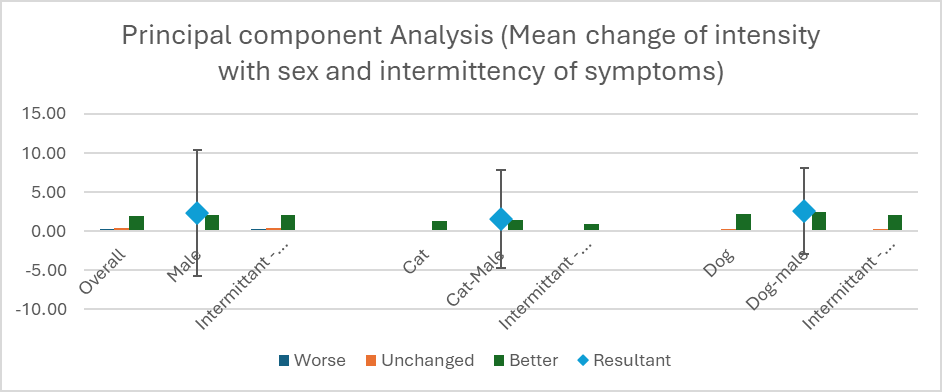
The correlation analysis examined cumulative changes from baseline across various groups and conditions. In cats, out of 50 responses, 42 showed improvement, while 4 showed no change and 4 showed deterioration. This yielded a statistically significant F-value of 6.93, with a p-value of 0.0035, indicating a meaningful correlation. For dogs, 30 of 34 responses showed improvement, with an F-value of 6.3 and a p-value of 0.0424, also suggesting statistical significance. When analyzed by sex, male animals (n = 50) showed improvement in 46 cases, with an F-value of 8.04 and a p-value of 0.027, indicating a strong association. Subgroup analysis of male dogs showed 18 improvements out of 19 responses, though the correlation was not statistically significant (F = 5.47, p = 0.326). Similarly, male cats showed
28 improvements out of 31 cases, with a borderline F-value of 6.26 and a p-value of 0.077, approaching but not reaching statistical significance.
When considering intermittency of cough, strong correlations were observed. In the overall intermittent group, 54 of 61 cases showed improvement, yielding an F-value of 7.67 and a p-value of 0.0043. Among cats with intermittent cough, 20 of 32 improved, with an F-value of 4.53 and a p-value of 0.004, demonstrating a statistically significant outcome. Similarly, in dogs with intermittent cough, 37 of 45 cases improved, with an F-value of 6.37 and a p-value of 0.0048. The cumulative outcome across all 81 cases revealed that 70 showed improvement, 14 had no change, and only 5 worsened, indicating a generally positive response to the intervention with strong correlations in several subgroups (Table 6, Figure 2).
| Analysis of Correlation | |||||||
|---|---|---|---|---|---|---|---|
| Cumulative Change from Baseline | 97% CI | F | p | ||||
| Worse | No change | Improved | Number of responses | ||||
| Cat | 4 | 4 | 42 | 50 | 6.93 | 0.003489 | 0.09 |
| Dog | 1 | 3 | 30 | 34 | 6.3 | 0.042374 | 0.11 |
| Male | 1 | 3 | 46 | 50 | 8.04 | 0.026987 | 0.13 |
| Dog-male | 0 | 1 | 18 | 19 | 5.47 | 0.326228 | 0.15 |
| Cat-Male | 1 | 2 | 28 | 31 | 6.26 | 0.077445 | 0.12 |
| Intermittent - Overall | 5 | 2 | 54 | 61 | 7.67 | 0.004334 | 0.07 |
| Intermittent - Cat | 1 | 0 | 20 | 32 | 4.53 | 0.004019 | 0.14 |
| Intermittent - Dog | 4 | 4 | 37 | 45 | 6.37 | 0.004761 | 0.09 |
| 0verall | 5 | 14 | 70 | 81 |
Table 6: Analysis of Correlation.
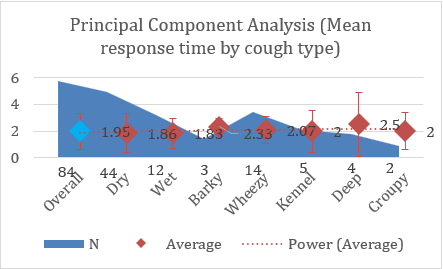
The evaluation of relief time scores across different cough types demonstrated that the overall mean score was 1.95 ± 1.33 based on 84 responses (some pets had more than one type reported). The most frequently reported severity levels were 2 (24 cases) and 1 (21 cases), suggesting that the majority of animals had quick to moderate relief time. Among specific cough types, dry cough (n=44) had a mean of 1.86 ± 1.46, with relief time scores clustering around 1 and 2 days. Wet cough (n=12) had a similar relief time mean of 1.83 ± 1.11, with most animals scoring between 2 and 3 days. Wheezy cough (n=14) showed a relief time slightly higher average of 2.07 ± 0.99, again with a spread concentrated between scores of 1 and 3 days. These findings reflect generally mild-to-moderate relief time in most cases. Other cough types revealed more distinct patterns. Barky cough (n=3) had a higher mean relief time of 2.33 ± 0.58, though with a very small sample size. Kennel cough (n=5) and croupy cough (n=2) both recorded a mean relief time of 2.00, but kennel cough showed greater time and variability in the relief time (2±1.58). Notably, deep cough (n=4) stood out with the highest mean relief time (2.50 ± 2.38), indicating a broader range of severity, including some cases with very high scores (up to 5). This suggests that while most cough respond to the treatment quickly, deep cough may warrant longer treatment and closer monitoring due to its variability and potential severity in individual cases (Table 7, Figure 3).
| Relief time Mean | STDEV | Counts of Relief time (days) | |||||||
|---|---|---|---|---|---|---|---|---|---|
| total | 0 | 1 | 2 | 3 | 4 | 5 | |||
| All types | 1.95 | 1.34 | 84 | 12 | 21 | 24 | 18 | 4 | 5 |
| Dry | 1.86 | 1.46 | 44 | 8 | 11 | 13 | 7 | 1 | 4 |
| Wet | 1.83 | 1.12 | 12 | 2 | 2 | 4 | 4 | 0 | 0 |
| Barky | 2.33 | 0.58 | 3 | 0 | 0 | 2 | 1 | 0 | 0 |
| Wheezy | 2.07 | 0.997 | 14 | 0 | 5 | 4 | 4 | 1 | 0 |
| Kennel | 2 | 1.58 | 5 | 1 | 1 | 1 | 1 | 1 | 0 |
| Deep | 2.5 | 2.38 | 4 | 1 | 1 | 0 | 0 | 1 | 1 |
| Croupy | 2 | 1.41 | 2 | 0 | 1 | 0 | 1 | 0 | 0 |
Table 7: Principal component Analysis (cough type and relief speed).
Discussion
The treatment of cough in companion animals is a well-recognized clinical challenge, particularly due to the heterogeneous nature of its underlying causes and the limited availability of safe, non-prescription therapies. In both dogs and cats, cough can arise from infectious, allergic, inflammatory, or structural causes involving the upper or lower airways [1, 2, 3, 4]. While conventional therapies such as antibiotics, corticosteroids, and bronchodilators are routinely used depending on the diagnosis, their use requires veterinary prescription, and in many cases, their side effects limit prolonged or empirical use [5, 7]. Homeopathic and other over the counter preparations have gained attention as accessible, low-risk alternatives, yet they remain understudied and often unsupported by high-quality evidence [9, 10, 11].
The current level of evidence for homeopathic treatments in veterinary medicine is largely anecdotal or observational. Systematic reviews of randomized controlled trials (RCTs) in both human and veterinary settings have often found inconsistent or weak evidence supporting efficacy [10]. Best-case scenarios suggest that some ultra-diluted remedies may offer symptom relief in mild or self-limiting conditions, particularly when dosing regimens are followed, and the condition does not require antimicrobial or surgical intervention [11]. On the other hand, worst-case outcomes may arise from therapeutic delays if owners rely solely on unverified remedies for progressive or serious diseases [7]. The major limitation in existing research is the lack of rigorously designed trials with objective clinical endpoints, proper controls, and standardized outcome measures.
Another significant gap in the therapeutic landscape is the absence of non-prescription, evidence-informed options for managing uncomplicated or early-onset cough in pets. This is particularly relevant for owners who seek to intervene early or when veterinary access is delayed. Few studies have systematically recorded symptom types, treatment patterns, or owner-observed outcomes using standardized formats. Furthermore, very few OTC therapies have been assessed across both cats and dogs in a real-world, field-use context.
This study helps fill that gap by providing structured observational data based on owner reports of cough types, dosing, response patterns, and overall outcomes in a diverse pet population. Although it does not substitute for an RCT, the design offers pragmatic insights. The majority of pets experienced symptom improvement, particularly for dry, wheezy, and intermittent coughs. The absence of reported adverse events adds to the product’s safety profile, a critical consideration for OTC medications. Moreover, the study identified meaningful correlations between dosing frequency, cough subtype, and treatment outcomes, adding nuance to our understanding of how such formulations may perform in practice.
Conclusion
The primary contribution of this study is its documentation of real-world usage and perceived effectiveness of a widely available OTC homeopathic cough remedy in companion animals. By focusing on owner- recognized symptom resolution and reporting patterns across different cough types and species, it provides foundational evidence that such preparations may play a role in early, supportive care. It also highlights the importance of further controlled research to validate these findings and to establish clearer guidelines for safe and effective OTC therapy in veterinary respiratory care.
Authors’ Conflict of Interest
Ethical Conduct
This study involved no invasive procedures and relied exclusively on anonymous, voluntary owner-reported information. No animals were treated, handled, or observed directly by the study team. All participants provided digital consent for data use in aggregated form. The survey protocol adhered to ethical principles for non-interventional studies and was reviewed for compliance with general data protection and research integrity standards.
Acknowledgement
The Authors acknowledge HomeoPet™ LLC for allowing the conduct of the survey on their products, and the surveyor Ms Jenny Doran of Halcyon Days Ltd. The authors also acknowledge and thank Dr. Ashish Indani for Analysis of data and help in writing this article.
References
-
Ford RB (2012) Canine Infectious Respiratory Disease. In: Greene CE (Eds.), Infectious Diseases of the Dog and Cat. 4th (Edn.), St. Louis: Elsevier, pp: 55-65.
-
Hawkins EC (2003) Clinical presentation and diagnosis of chronic cough in dogs and cats. J Vet Intern Med 17(3): 273-280.
-
Reinero CR (2010) Feline asthma: diagnosis and treatment. Vet Clin North Am Small Anim Pract 40(2): 329-341.
-
Traversa D, Iorio R, Otranto D (2008) Feline lungworm (Aelurostrongylus abstrusus): An emerging parasite in European cats. Vet Parasitol 154(3-4): 243-250.
-
Padrid PA (2000) Chronic bronchitis in small animals. Vet Clin North Am Small Anim Pract 30(6): 1267-1278.
-
Johnson LR (2008) Coughing in Dogs and Cats. Vet Clin North Am Small Anim Pract 38(2): 241-251.
-
Norris CR (2002) Air pollution and respiratory disease in companion animals. Vet Clin North Am Small Anim Pract 32(5): 1185-1198.
-
King LG, Boag A (2015) Respiratory emergencies. In: Silverstein D, et al. (Eds.), Small Animal Critical Care Medicine. 2nd (Edn.), St. Louis: Elsevier, pp: 433-440.
-
Oberbaum M (2008) The effect of homeopathic remedies on respiratory tract infections in animals: a review. Homeopathy 97(3):180-185.
-
Nelson RW, Couto CG (2019) Small Animal Internal Medicine. 6th (Edn.), Elsevier.
-
Bordin AI (2016) Prevalence of tracheal collapse in dogs and associated risk factors. J Vet Intern Med 30(5): 1584-1589.
- The Digital Stethoscope: Harnessing AI in Veterinary Medicine Without Losing Our Healing Touch
- Meningoencephalomyelitis of Unknown Etiology: Short-Term Effect of Two Treatment Protocols on Cerebrospinal Fluid
- Non Human Animals Responses to Social Loss
- Owner Reported Clinical Outcomes of a Homeopathic Proprietary Preparation for the Treatment of Upper Respiratory and Nasal Disorders in Companion Animals
- Effects and Diagnostic Approach of Ultrasound in Veterinary Practice: A Systematic Review
- Everything about Nutritional Value of the Meat Ingredients and How we can Reduce its Microbial Hazards