
The Impact of Covid-19 on Mental Health in Allied Health Undergraduate Students during Lockdown Phase: An Observational Study
Background and aim: A sudden outbreak of a pandemic, named as Covid-19 due to corona virus that widely spreads and majorly affects those with the weak immunity and chronic disease. A lockdown period causes an abrupt shutting down of all universities all over the world, so the students were switched onto the online system for studying and exams that lead to more stress. This study proposed to evaluate the impact of Covid-19 lockdown on mental health in the undergraduate students of allied health sciences. Methods: One hundred seventy-five allied health sciences students, allocated into two groups: male student (MS) group(n=87) and female student (FS) group(n=88), a survey-based questionnaire study for the demographic characteristics, Pittsburgh Sleep Quality Index (PSQI) questionnaire , and Depression Anxiety Stress Scale (DASS 21) were used. Results: The overall results of DASS-21questionnaire revealed significant differences in depression (p= 0.002), anxiety(p=0.004), and stress (p=0.001) in both groups, but female students had more psychological distress as compared to the male students(p=0.000). Conclusion: The mental distress is notable during lockdown phase of Covid-19 in allied health students of both gender, although it is more significant in female. Highly vulnerable students need a specific intervention to reduce the future stress during catastrophe and panic situation.
Introduction
Corona virus is microorganism which attacks the human pulmonary system. The epidemiology and pathogenesis of coronavirus disease (covid-19) outbreak, Wuhan in china is a place of origin. This has become a pandemic and has no present cure. The Novel corona virus name as Covid-19 is named by WHO, 2019 started affecting people in China. This disease mainly affecting older population who have with history of diabetes miletus, cardiovascular diseases, chronic respiratory disease or an immune compromised patient like cancer. Prevalence is mostly in males than females. The possible mild symptoms are fever, cough and fatigue like any other flu, other less common symptoms are headache, diarrhea, headache, sore throat, skin rashes, pain while the more severe symptoms are shortness of breath, loss of speech, or chest pain. On an average the symptoms appear within 5-6 days but it may takes up to 14 days [1]. Severe symptoms may lead to hypoxemia, and dyspnea and acute respiratory distress syndrome and also related with the Middle East Respiratory Syndrome (MERS) [2].
The infection is transmitted via droplets that comes from sneezing and coughing. The most concerning or invisible spread is that even an asymptomatic patient or prior of any symptoms any person who could have been a close contact can contract this infection [3]. This virus is contagious and is directly spread through human to human via coughing and droplets [4].
According to WHO, the transmission is unlikely like other virus spread and it occurs in 4 phases
- No cases reported
- Sporadic cases
- clusters of cases
- Community transmission.
There are public measures especially the prevention as social distancing, wearing mask, gloves, tele- working, reducing contact with contaminated places, remote work. An abrupt flaring up of disease results in the mental health illness specially amongst the who has present history, suspected cases, relatives, friends who had been in a closed contact, health care providers are more prone to the stress, anxiety, depression and other psychological disorders. An individual who may face a fear of dying as a factor from associated health care providers those who are treating these patients. Patient those who in stress and anxiety during isolation and quarantine are facing a huge risk of psychological issues such as anger, depression [5].
Moreover, according to Dar et al study, they showed that due to unstable situation of pandemic, unavailability of its vaccine and the isolation is major cause of stress amongst Chinese patients [6]. Furthermore, a huge exposure to social media about Covid-19, its spread, transmissions, and treatment is building up a huge panic and a social stigma in society. Certain fake and fabricated websites when broadcasting on social media is actually been creating a huge turmoil in the minds of general population [7].
The effect of Covid-19 on the education hubs were closed such as school, colleges, universities in both public and private sectors in Saudi Arabia, according to the latest data available by WHO is Saudi Arabia 229 480, corona virus cases, happened in 8th march, 2020 due to risk of spread of virus and which is still continue till further noticed [8]. All education system switched to distance learning in no time. The e- learning system is well established and an effective mode of learning [9, 10]. Due to non-socialization and face- to face meeting is one of the causes for stress [11]. Moreover, it could be associated with poor sleep quality that can affects students mental health and physical activity [12]. Due to corona virus, it could be seen that the impact on sleep quality was slightly significant in women than in men who are more prone to psychological distress [13]. Previous study also suggested that, in general scenario the prevalence of the depression, stress, and sleep quality among the medical female students are much higher than the male. Moreover, the poor sleep quality, decrease physical fitness also associated with the students who have lower grade points average (GPA) amongst university students [14, 15, 16].
In a recent study focusing on Chinese medical college students, higher levels of anxiety were associated with factors strongly related to Covid-19, such as acquaintance with a Covid-19 diagnosed patient. During this pandemic, a few researches had shown that the cause of psychological distress is depression and anxiety [17]. Furthermore, due to decrease mental health, the quality of sleep results in poor sleep which further leads to decline in physical activity of an individual. These three factors are interlinked with each other and has a direct impact on student’s mental health status [18]. A recent study showed that females are more affected and more vulnerable to depression, but the study is non-specific and includes multiple professions altogether [19, 20]. Therefore, our study objective was to assess and compare the depression, anxiety, and stress between the male and female undergraduates of allied health sciences at time of pandemic lockdown circumstances due to Covid-19.
Methods
Study Design and Setting
This survey-based observational study was conducted from April to May, 2020 at the College of applied medical science, Prince Sattam bin Abdulaziz University (PSAU) in Alkharj, Saudi Arabia. The students mean age at the beginning of college is 18 years old. The higher education system in Saudi Arabia follow particular system to acknowledge their performance according to the grade point average (GPA), this measures as if is out of five and can be described as a grade awarded to the individual student. (GPAs 3 and above are considered as high achievers and less than 3 were considered low achievers).
Subjects and Sample Size
The participants of this study were officially enrolled in allied health science students in PSAU, this gave a total of eight groups for the four academic years. Power test stand on the G*power program was utilized to detect the proper sample size for the study [21]. Prior to beginning of the study, a pilot study to build up the questionnaire for the basic demographic data. Participants with co-morbid diseases, any psychiatric disease, in regular use of anti-psychiatric drugs, previous failed in the study, or any previous disturbing conditions were excluded from the study.
Data Collection and Sampling Technique
The study was analyzed before and approval was taken by the department for ethical committee with the reference number of RHPT/020/029). All the intervention procedures involving human participants followed the ethical guidelines of Declaration of Helsinki 1975. Participants were informed that their participation were informed voluntary, and their responses would be confidential, detailed information included study objective were delivered to them. Prior startup of questionnaire, the eligible students signed their informed consent statement on an electronical portal, while written consent could not be obtained during this lockdown situation. The questionnaires were sent on official student’s university email address and submitted directly after completion. After collecting the data, each questionnaire was given a serial number and no personal identifiers were utilized.
Outcome Measures
The questionnaire consisted of three component: the first component focused on demographic and lifestyle related information, the second component was Pittsburg Sleep Quality Index (PSQI), and the third component Depression, Anxiety and Stress Scale (DASS-21).
Procedure
The study demographic data and lifestyle variables includes age, gender percentage, body weight, height, GPA, and student ID. The BMI was later statistically analyzed by applying formulae dividing weight/height2 for both the groups. They were asked if they are engaged in any kind of participation in range of an organized sports or recreational physical activities at home during lockdown during examination period. The subjective self-reported questionnaire used as an outcome measurement tools which includes physical activities status either active or inactive during the time of pandemic, low achievers and high achievers as per academic university grade point average system (GPA) [15, 16].
Sleep quality was evaluated using Pittsburg Sleep Quality Index (PSQI), where global score could be calculated and analyzed the poor and good sleep quality. This questionnaire includes information on Pittsburg sleep quality Index based on 7 components. Other Furthermore, the student’s quality of sleep was measured on Pittsburg Sleep Quality Index (PSQI). This subjective questionnaire includes seven components sleep latency, day time dysfunction, sleep disturbances, sleep quality, sleep efficiency, sleep duration and use of sleep medication. The global PSQI minimum to maximum score range is from 0-21, high score indicates poor sleep quality. The score greater than 5 was consider as a poor sleep quality. By combining these scores the overall provides an efficient summary of an individual’s quality of sleep and sleep health [22]. The PSQI scale used was in Arabic version validated and used by previous research study. It is easier to understand the native language for the participants [23].
DASS-21 was taken to measure depression, anxiety and stress, the other scale, used in arabic language and validated [24]. It is a Likert scale and have 4 points experienced for the last one week through 3 scales of 21 items, 7 items each. The depression scale assesses dysphoria, hopelessness, depreciation of life, self-disapproval, absence of interest / involvement, anhedonia and inertia. The anxiety scale assesses autonomic arousal, skeletal muscle effects, situational anxiety, and individual experience of anxious affect. The stress scale is sensitive to levels of chronic nonspecific arousal. It evaluates difficulty relaxing, nervous arousal, and being easily upset / agitated, irritable/over-reactive and impatient. After scoring each item, summing the score of it [20]. The short version of the Depression Anxiety Stress Scale-21 showed excellent values of reliability, and strong internal consistency It measures the negative emotional stage of an individual. The DASS-21 has also shown good internal consistency and convergent and discriminated validity [25].
Statistical Analysis
Data collected and later Data were entered in Microsoft Excel 2016. The data analysis was carried out using SPSS software version 25 for Windows. Variables were presented by frequency and percentages. The Continuous variables were calculated by mean and standard deviation. The characteristics of the sample were summarized using means and standard deviations (SD) using dependent t-test. Test with a p-value < 0.05 was declared as statistically significant variable.
Results
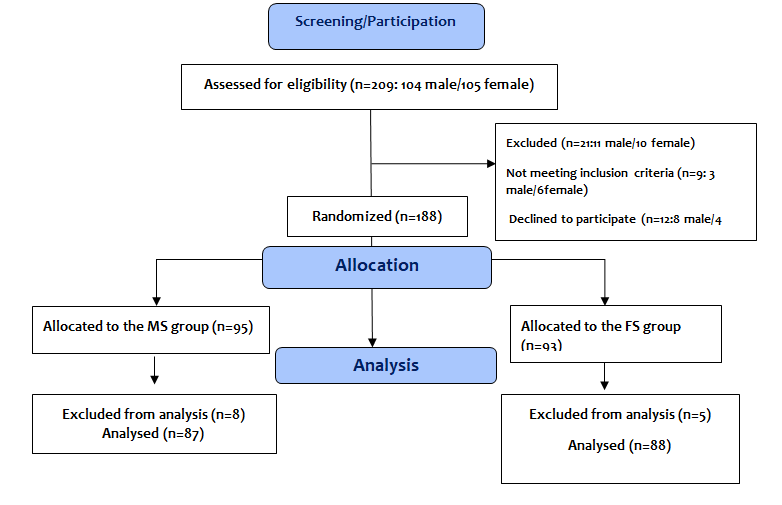
Out of 209 students who assessed for eligibility, where MS(n=105) and FS (n=104). 21 students were excluded (9; 3 MS and 6 FS didn’t meet the inclusion criteria and 12; 8 MS and 4 FS declined to participate). So, total of 188 went through the randomization process, after that, they were allocated into two groups; MS (n=95) and FS (n=93). Further during analysis, 13 students (8 MS and 5 FS) were excluded from the analysis as they wrongly filled the questionnaire, and finally data for 87 MS and 88 FS were analyzed.
The students age ranged from 18 to 26 years and BMI ranged between 20 and 24 kg/, a non-significant difference were found between male and female regarding age (p=0.24) and BMI(p=0.13). Concerning the PSQI global score, a significant change was detected when comparing the two groups (p=0.02) (Table 1).
| MS (Mean ± SD) | FS (Mean ± SD) | p value | |
|---|---|---|---|
| Age | 22.3 ± 2.2 | 21.6±1.9 | 0.24 |
| BMI | 8.02 ± 2.54 | 9.27±2.98 | 0.13 |
| PSQI(Total) | 7.9 ± 2.2 | 8.1 ± 1.9 | 0.02 |
Table 1: Differences in demographic characteristics and sleep quality between both gender.
MS: male students; FS: BMI: body mass index; Pittsburg Sleep Quality Index Table 1: Differences in demographic characteristics and sleep quality between both gender.
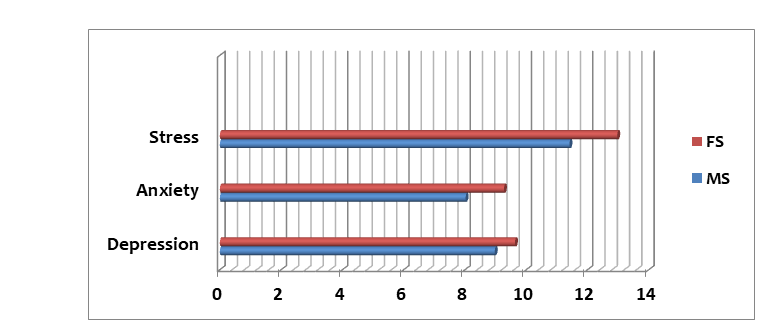
MS and FS contributed in the study with nearly the same proportion relating age (˂20 yr, ≥20 yr and BMI (˂ 23 kg/ m2, ≥ 23 kg/m2) without significant difference;(p=0.407) and (p=0.327) for male and female respectively. The academic level measured with GPA for the last semesters showed a significant difference between the both groups (p=0.043), where females showed higher achievement than males. During corona, the physical activity analysis for MS and FS indicated clearly that their lifestyle became inactive, while, this study showed a significant difference between female and male in physical activity (p=0.013) wherein, the MS were more active in recreational activity during Covid-19 even at the time of their final online examination. According to study analysis for the quality of sleep was better in MS than FS with a significant difference between the two groups (p=0.023). For the mental health analysis, the three components of DASS-21 were analyzed separately on subscales as normal, mild, moderate, severe, extremely severe subcategories for both groups showing significant difference between the MS and FS in the three subscales; Depression, anxiety, and stress [p=0.002, p=0.004, p=0.001] respectively. Percentage differences of demographic, lifestyle, sleep quality, and DASS-21 between both groups were summarized in Table 2. In comparing the scores of mental health (depression, anxiety, and stress) of the participants in the two groups, a significant change were noticed in all measured sub categories (p=0.000) (Table 3).
| Variables | MS(n=87),% | FS(n=88),% | P-value | |||
|---|---|---|---|---|---|---|
| Age | <20 yr | 44(50.6%) | 45(51.1%) | 0.407 | ||
| Age | ≥20 yr | 43(49.4%) | 43(48.9%) | 0.407 | ||
| BMI | <23 kg/m² | 43(49.4%) | 44(50%) | 0.327 | ||
| BMI | ≥23 kg/m² | 44(50.6%) | 44(50%) | 0.327 | ||
| Physical activity | Inactive | 42(48.3%) | 58(66%) | 0.013 | ||
| Physical activity | Active | 45(51.7%) | 30(34%) | 0.013 | ||
| GPA | High achievers | 33(37.9%) | 52(59%) | 0.043 | ||
| GPA | Low achievers | 54(62.1%) | 36(41%) | 0.043 | ||
| Sleep quality | Good sleepers | 40(46%) | 30(34%) | 0.023 | ||
| Sleep quality | Poor sleepers | 47(54%) | 58(66%) | 0.023 | ||
| Depression | Normal | 15(17.3%) | 10(11.3%) | 0.002 | ||
| Depression | Abnormal | Mild | 17(19.5%) | 0.002 | 15(17%) | |
| Depression | Abnormal | Moderate | 40(46%) | 0.002 | 45(51.1%) | |
| Depression | Abnormal | Severe | 10(11.5%) | 0.002 | 12(13.7%) | |
| Depression | Abnormal | Extremely severe | 5(5.7%) | 0.002 | 6(6.9%) | |
| Depression | Anxiety | Normal | 10(11.5%) | 0.002 | 10(11.3%) | 0.004 |
| Abnormal | Anxiety | Mild | 31(35.6%) | 25(28.4%) | ||
| Abnormal | Anxiety | Moderate | 21(24.1%) | 20(22.7) | ||
| Abnormal | Anxiety | Severe | 15(17.3%) | 21(23.9%) | ||
| Abnormal | Anxiety | Extremely severe | 10(11.5%) | 12(13.7%) | ||
| Stress | Normal | 11(12.6%) | 8(9.1%) | 0.001 | ||
| Stress | Abnormal | Mild | 32(36.7%) | 0.001 | 31(35.3%) | 0.004 |
| Stress | Abnormal | Moderate | 37(43.5%) | 0.001 | 38(43.2%) | 0.004 |
| Stress | Abnormal | Severe | 6(6.9%) | 0.001 | 10(11.3%) | 0.004 |
| Stress | Abnormal | Extremely severe | 1(1.2%) | 0.001 | 1(1.1) | 0.004 |
Table 2: Comparison of demographic, lifestyle, sleep quality, and prevalence, of DASS`-21 between both gender (n = 175).
DASS: Depression, Anxiety & Stress; BMI: body mass index; GPA: grade point average Table 2: Comparison of demographic, lifestyle, sleep quality, and prevalence, of DASS`-21 between both gender (n = 175).
| MS (Mean ± SD) | FS (Mean ± SD) | p value | |
|---|---|---|---|
| Depression | 8.97 ± 2.58 | 9.63±3.9 | 0.000 |
| Anxiety | 8.02 ± 2.54 | 9.27±2.98 | 0.000 |
| Stress | 11.41 ± 3.34 | 12.97±4.08 | 0.000 |
Table 3: Differences between scores of depression, anxiety and stress symptoms in both gender.
Discussion
This survey-based observational study aimed to evaluate the impact of Covid-19 on mental health in allied health students during lockdown phase, hypothesizing that mental health in both genders could be affected during lockdown phase. The study findings verified our hypothesis and showed that FS had significantly high mental distress than MS. Covid-19 named as pandemic and imported from China and now spreading in the cluster and community without any vaccine till date which is matter of concern [3]. Under current situation nearly 216 countries are affected by this deadly virus, and approximately 15,785,641 active cases are found all over the world with nearly 640016 deaths [26]. At the time of home confinement since early starting of 2020, the utility of digital media due to online sessions and much more exposure lead to alter the day to day habits of an individual like going to bed, waking up, working load. It had influenced the sleep patterns, which could be due to the stress, anxiety, depression, physical inactivity. Also due to negative sleep pattern directly linked with higher level of depression, anxiety and stress symptoms. To reduce the spread of virus the lockdown had influenced in several ways [27, 28]. The current health emergency situation showed a significant mental health issue crisis [29]. Most of the previous studies lack comparative gender research evidence at the time of outbreak.
Our finding on mental health status in allied health students, as per DASS-21 outcome measurement tool assessment, a significant difference between the MS and FS was found in depression, anxiety and stress, where FS showed more psychological distress at the time of Covid-19. In consistent with these results, a cross-sectional study was conducted amongst various fields of education and university staff, reported a similar adverse impact on psychological health were more on students with respect to university staff members during an initial outbreak of pandemic [30].
Moreover, according to one more research evidence, the sociodemographic study data suggested that the females majorly experienced depression, as they are more prone to mental distress, in terms of depression, anxiety and stress variables [20]. Another study by Wang was done during the starting phase of Covid-19, suggested that female were more negative psychologically impacted and had higher levels of depression, anxiety and stress along with poor self-reported health conditions [29]. Although certain study by U.Rehman showed a contrary findings for psychosocial health status on males and female students during pandemic, where both the genders had mild stress as well depression. Although, the anxiety level in both the genders were found moderately equal during the pandemic [31].
Our study indicates the GPA in the MS was much lower than that of FS with the reduced physical activity. In contrast, AI Almojali demonstrated that the high achievers were linked to have low stress levels with poor sleep quality specially amongst the medical students who have much more pressure than non-medical students [15]. Moreover, according to SA. Moawd, GPA amongst university students depends on their physical fitness. The author reported that with the enhanced physical activity leads to their better academic performance in female university student [16].
The results of the current study illustrated that poor sleep quality was more common and quite significant in FS in contrast to MS. A few studies have been done so far, which evidently found out that the sleep habits are markedly affected more in female gender due to lockdown phase, these are most vulnerable group during Covid-19 which had been impacted but needs further investigation [32]. Also, sleep quality and quantity were related with sleep health where an individual physical well-being was highly affected during this critical period of epidemic turned pandemic [33].
Overall, as per our findings mental health could have a direct impact on the university students during an outbreak of the Corona virus. As this study points out that the FS who are high achievers are more vulnerable with decrease physical activity, poor sleep quality, and had psychological distress. Yao Zhang study was conducted to evaluate and how to mitigate the effects of on mental health, sleep and physical activity factors which are both directly as well indirectly linked factors that impacted students during Covid-19, These variables are of great clinical concerns in university students during Covid-19 needs specific strategies to combat to improve the mental health issues [34].
Therefore, a futuristic study which might needs a detailed analysis of correlation and comparison amidst the factors such as physical activity, sleep quality, mental health. Also, to study the relationship between these above mentioned factors and academic performance amongst the students for further review which could facilitate more insight to research study. In addition, as per the findings of the mental health intervention, Psychological counselling is recommended for prospective research study. A structured program could be enaged to improve the student’s GPA, physical health, mental health, sleep quality before they become clinically noticed they could be priory considered as a matter of great concern especially at the time of outbreak of Covid-19.
The limitations, firstly, a longitudinal study is needed to be evaluated and analyze during the time of medical or health emergencies to combat from these unprecedented pandemics worldwide. Secondly, this study is selection biased as it is a web-based self-reported questionnaire without having clinical and instrumental evaluation. Lastly, a specific group and small sample size was studied. In future, it may need more explorative nature of research study and needs a large sample size extended to general population.
Conclusion
Allied health students have been impacted by the covid-19 confinement. This study investigated that the FS as compared to MS, suffered more depression, anxiety, and stress, during unheard of an outbreak emerged as Covid-19. This study suggests that mental health issues need and utmost attention to evaluate and prevent these issues so as to mitigate the effect of psychological distress amongst the allied health sciences students.
Acknowledgements
We would like to acknowledge allied health students who voluntarily participated in the study.
Authors’ contributions
Moawd SA, Verma A. conceived the study, collected, analyzed and interpreted the data. Moawd SA contributed to data analysis and interpretation. Verma A. prepared the draft manuscript. Two authors read and approved the final manuscript.
Conflicts of Interest: The author declares no competing interest.
References
-
(2020) Coronavirus. World Health Organization.
-
What we know so far: COVID-19 current clinical knowledge and research Author: Mary A Lake
-
Rothe C, Schunk M, Sothmann P (2020) Transmission of 2019- nCoV infection from an asymptomatic contact in Germany. N Engl J Med 382: 970-971.
-
Cascella M, Rajnik M, Cuomo A, Dulebohn SC, Di Napoli R (2020) Features, Evaluation, and Treatment of Coronavirus (COVID-19).
-
Xiang YT, Yu X, Ungvari GS, Correll CU, Chiu HF (2014) Outcomes of SARS survivors in China: Not only physical and psychiatric co-morbidities. East Asian Arch Psychiatry 24(1): 37-38.
-
Dar KA, Iqbal N, Mushtaq A (2017) Intolerance of uncertainty, depression, and anxiety: Examining the indirect and moderating effects of worry. Asian J psychiatr 29: 129-133.
-
Goyal K, Chauhan P, Chhikara K, Gupta P, Singh MP (2020) Fear of COVID 2019: First suicidal case in India!. Asian J psychiatry 49: 101989.
-
(2020) Saudi Arabia closes schools over coronavirus concerns. ARAB News.
-
Zoroja J, Skok MM, Bach MP (2014) E-Learning Implementation in Developing Countries: Perspectives and Obstacles. Methodologies and Case Studies for Successful Learning, pp: 22.
-
Billy M (2020) The Influence of Dynamic Organizations and the Application of Digital Innovations to Educational Institutions in the World during the COVID-19 Pandemic. SSRN, pp: 11.
-
Ahmed MZ, Ahmed O, Aibao Z, Hanbin S, Siyu L, et al. (2020) Epidemic of COVID-19 in China and associated Psychological Problems. Asian J Psychiatr 51: 102092.
-
(2020) Coronavirus disease (COVID-19): Situation Report-174. World Health Organization.
-
Al-Khani AM, Sarhandi MI, Zaghloul MS, Ewid M, Saquib N (2019) A cross-sectional survey on sleep quality, mental health, and academic performance among medical students in Saudi Arabia. BMC Res Notes 12(1): 665.
-
Ibrahim MB, Abdelreheem MH (2015) Prevalence of anxiety and depression among medical and pharmaceutical students in Alexandria University. Alexandria J Med 51(2): 167-173.
-
Almojali AI, Almalki SA, Alothman AS, Masuadi EM, Alaqeel MK (2017) The prevalence and association of stress with sleep quality among medical students. J Epidemiol Glob Health 7(3): 169-174.
-
Moawd SA, Elsayed SH, Abdelbasset WK, Nambi G, Verma A (2020) Impact of different physical activity levels on academic performance of PSAU medical female students. Archives of Pharmacy Practice 11(1): 100-104.
-
Cao W, Fang Z, Hou G, Han M, Xu X, et al. (2020) The psychological impact of the COVID-19 epidemic on college students in China. Psychiatry Res 287: 112934.
-
Ji XW, Chan CHY, Lau BHP, Chan JSM, Chan CLW, et al. (2017) The interrelationship between sleep and depression: A secondary analysis of a randomized controlled trial on mind-body-spirit intervention. Sleep Med 29: 41-46.
-
Liu N, Zhang F, Wei C, Jia Y, Shang Z, et al. (2020) Prevalence and predictors of PTSS during COVID-19 outbreak in China hardest-hit areas: Gender differences matter. Psychiatry Res 287: 112921.
-
Lim GY, Tam WW, Lu Y, Ho CS, Zhang MW, et al. (2018) Prevalence of depression in the community from 30 countries between 1994 and 2014. Sci Rep 8: 2861.
-
Faul F, Erdfelder E, Lang AG, Buchner AA (2007) flexible statistical power analysis program for the social, behavioral and biomedical sciences. Behavior Research Methods 39(2): 175-191.
-
Mollayeva T, Thurairajah P, Burton K, Mollayeva S, Shapiro CM, et al. (2016) The Pittsburgh sleep quality index as a screening tool for sleep dysfunction in clinical and non-clinical samples: A systematic review and meta- analysis. Sleep Med Rev 25: 52-73.
-
Suleiman KH, Yates BC, Berger AM, Pozehl B, Meza J (2010) Translating the Pittsburgh Sleep Quality Index into Arabic. West J Nurs Res 32(2): 250-268.
-
Moussa MT, Lovibond PF, Laube R (2001) Psychometric properties of an Arabic version of the Depression Anxiety Stress Scales (DASS21). Report for New South Wales Transcultural Mental Health Centre, Cumberland Hospital, Sydney.
-
Antony MM, Bieling PJ, Cox BJ, Enns MW, Swinson RP (1998) Psychometric properties of the 42-item and 21-item versions of the Depression Anxiety Stress Scales (DASS) in clinical groups and a community sample. Psychol Assess 10(2): 176-181.
-
WHO, Coronavirus disease (COVID-19). Situation Report -188.
-
Altena E, Baglioni C, Espie CA, Ellis J, Gavriloff D, et al. (2020) Dealing with sleep problems during home confinement due to the COVID-19 outbreak: Practical recommendations from a task force of the European CBT-I Academy. J Sleep Res e13052.
-
Cellini N, Canale N, Mioni G, Costa S (2020) Changes in sleep pattern, sense of time and digital media use during COVID-19 lockdown in Italy. J Sleep Res e13074.
-
Wang C, Pan R, Wan X, Tan Y, Xu L, et al. (2020) Immediate psychological responses and associated factors during the initial stage of the 2019 coronavirus disease (COVID-19) epidemic among the general population in China. Int J Environ Res Public Health 17(5): 1729.
-
Odriozola-González P, Planchuelo-Gómez Á, Irurtia MJ, de Luis-García R (2020) Psychological effects of the COVID-19 outbreak and lockdown among students and workers of a Spanish university. Psychiatry Res 290: 113108.
-
Rehman U, Shahnawaz MG, Khan NH, Kharshiing KD, Khursheed M, et al. (2020) Depression, Anxiety and Stress Among Indians in Times of Covid-19 Lockdown. Community Ment Health J 1-7.
-
Marelli S, Castelnuovo A, Somma A, et al. (2020) Impact of COVID-19 lockdown on sleep quality in university students and administration staff. J Neurol 1-8.
-
Pilcher JJ, Ginter DR, Sadowsky B (1997) Sleep quality versus sleep quantity: Relationships between sleep and measures of health, well-being, and sleepiness in college students. J Psychosom Res 42(6): 583-596.
-
Zhang Y, Zhang H, Ma X, Di Q (2020) Mental Health Problems during the COVID-19 Pandemics and the Mitigation Effects of Exercise: A Longitudinal Study of College Students in China. Int J Environ Res Public Health 17(10): 3722.
- Occupational Stress and Mental Health Outcomes Among Police Officers: A Mini Review
- The Experience of Counterproductive Leadership on Mental Health and Impact on Retention in U.S. Marines: A Phenomenological Study
- Nomophobia in the Digital Age: A Study on College and University Students
- Emotional Regulation in Children with Autism and Learning Disabilities
- Antisemitism on American College Campuses and Its Impact on Jewish Students
- Exploring the Role of Empathy in the Associations of Family Functioning and Purpose in Life with Attitude towards Abortion among Undergraduates: A Moderation Analysis