
A Study to Assess the Level of Knowledge Regarding Menstrual Cup Among Women of Reproductive Age Group in a View to Develop an Information Pamphlet in a Selected Hospital, Bangalore
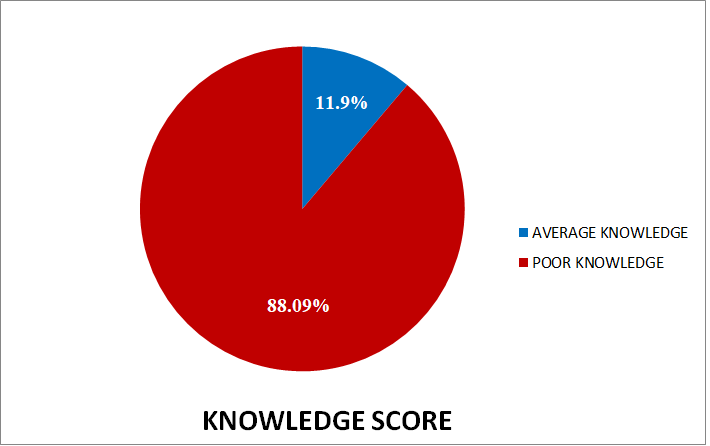
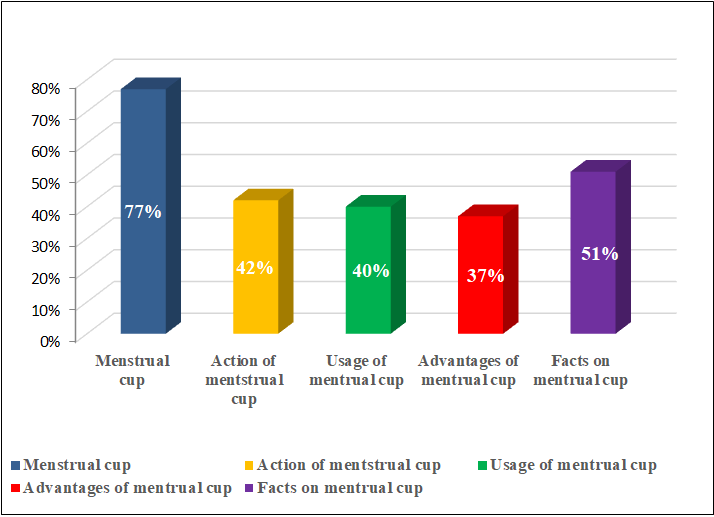
Background: Menstruation is a phenomenon unique to the females. The onset of menstruation is one of the most important changes occurring among the girls during the adolescent years. Hygiene-related practices of women during menstruation are of considerable importance, as it has a health impact in terms of increased vulnerability to reproductive tract infections. A method for menstrual hygiene management, alternative to sanitary pads and tampons, is the menstrual cup. The menstrual cup is a bell-shaped device made of high- grade medical silicon, which is inserted into the vagina during menstruation. The device should be boiled once per month and can be used for 5–10 years. It collects more blood than the standard sanitary pads and is environmentally friendly with few known side. The knowledge about menstrual cup will motivate the women to start using them as it is an ecofriendly, cost effective and sustainable method and will thereby promote menstrual hygiene. The present study was aimed to assess the level of knowledge regarding menstrual cup among the women of reproductive age group. Objectives: To assess the level of knowledge regarding menstrual cup among women of reproductive age group. To determine the association between the levels of knowledge among women of reproductive age group and selected demographic variables. Methods: The research design selected for the study was descriptive design. The study was conducted among the women of reproductive age group from 18 to 45 years who visited the female medicine and female surgery out-patient department of a selected hospital, Bangalore. A structured questionnaire was used to assess the level of knowledge regarding menstrual cup. The data was analyzed using descriptive and inferential statistics. Results: The mean knowledge score was 9.04.With regards to the knowledge score in specific domains, 77% of the subjects knew what a menstrual cup is, 42% had knowledge about the action of menstrual cup, 40% of them knew how to use a menstrual cup, 37% had knowledge about the advantages of menstrual cup and 51% of them knew some facts on menstrual cup. This study result shows that 88.09% of the subjects had poor knowledge regarding 11.9% of them had average knowledge and none of them had good knowledge regarding menstrual cup. As per the statistical analysis there was no significant association between the level of knowledge and baseline variables at 0.05level of significance. The result of the study emphasizes need for sensitization and education regarding menstrual cup. Conclusion: The result of this study indicated that there is poor knowledge among the women of reproductive age group menstrual cup. This also justifies why there is still low prevalence of usage of menstrual cup among women despite of it being an advanced alternative with many benefits. This emphasizes the need for educating women about the benefits and usage of menstrual cup. This can also help in preventing many reproductive tract infections.
Introduction
Menstruation is a phenomenon unique to the females. The onset of menstruation is one of the most important changes occurring among the girls during the adolescent years. Hygiene-related practices of women during menstruation are of considerable importance, as it has a health impact in terms of increased vulnerability to reproductive tract infections (RTI). A method for menstrual hygiene management, alternative to sanitary pads and tampons, is the menstrual cup. The menstrual cup is a bell- shaped device made of high- grade medical silicon, which is inserted into the vagina during menstruation. The device should be boiled once per month and can be used for 5–10 years. It collects more blood than the standard sanitary pads and is environmentally friendly with few known side [1].
Menstrual cups have been available for decades, but their use in India is limited because of lack of awareness and popularity of sanitary pads. Since they are reusable, they reduce solid wastelands are environment friendly. The need of the hour is education, awareness and availability of the eco-friendly practices when it comes to managing menstrual waste effectively [2].
A menstrual cup is a device inserted into vagina during menstruation. It acts by collecting menstrual fluid. They are usually made of flexible medical grade silicone and shaped like a bell with a stem. The stem helps for easy insertion and removal. The bell shape of the cup helps it to get sealed against the vaginal wall below the cervix. The cup has to be removed, emptied, rinsed and reinserted depending on the flow [usually every 6 to 12 hours] [3].
To figure out the right menstrual cup size, consider age, length of cervix, menstrual flow, firmness and flexibility of the cup, cup capacity and strength of pelvic floor muscle. Menstrual cup collects blood rather than absorbing, therefore users are free from toxic shock syndrome [3].
Need for Study
Menstrual cups greatly reduce the waste generated from menstrual cycles as it is reusable, unlike sanitary pads and tampons. Hence, it is more eco-friendly. Since it can be used for five or more years, it’s more economical too. Menstrual Hygiene Management (MHM) is an integral part of the Swach Bharat Mission Guidelines (SBM-G). The MHM Guideline (December 2015) is issued by the Ministry of Drinking Water and Sanitation to support all adolescent girls and women. According to it, the sanitary waste should be wrapped in leak proof pouches provided by producer and should be disposed with dry waste at the time of door to door collection. According to State of India’s Environment 2019 Survey, the Menstrual Hygiene Alliance of India (MHAI) has approximated that there are 336 million menstruating women in India, of which 36 per cent use disposable sanitary napkins - that totals to 121 million women [4].
The corona virus pandemic has triggered what has been described as a “sanitary pad crisis” in India. 15% of girls had access to sanitary pads during the lockdown. This is not only the case in India. Women in Fiji, the US, UK also have reported severe shortage of disposable menstrual products. The sustainable product lines on offer are cloth pads and menstrual cup. Menstrual cups are estimated to have less than 1.5 % of the environmental impact of disposables at 10% of the cost. Menstrual cups, meanwhile, are flexible bell- shaped receptacle that collects menstrual blood. Menstrual cup is made up of silicon which last for up to 10 years [4].
This study can be used to bring awareness about an advanced alternative which has the following advantages over other menstrual products:
- It is eco-friendly and budget friendly.
- Can be used for longer duration.
- Reduce risk for infection and rashes [5].
Statement of the Problem
A study to assess the level of knowledge regarding menstrual cup among women of reproductive age group in a view to develop an information pamphlet in a selected hospital, Bangalore
Objectives
- To assess the level of knowledge regarding menstrual cup among women of reproductive age group
- To determine the association between the levels of knowledge among women of reproductive age group and selected demographic variables.
Inclusion criteria:
- Women of reproductive age group of 18 to 45 years.
- Women who are menstruating.
Exclusion criteria:
- Women who are illiterate.
- Women who underwent hysterectomy and Pregnant women.
Hypothesis: • There will be a significant association between the levels of knowledge of women of reproductive age group regarding menstrual cup with selected baseline variables at 0.05 level of significance.
Review of Literature
- A study was conducted to assess the acceptability and performance of the menstrual cup, by comparing it with tampons or sanitary pads (South Africa), which included 124 women aged 18 to 45 years with regular menstrual cycles were eligible for inclusion if they had no intention of becoming pregnant, were using an effective contraceptive method. They used a computer – generated randomization sequence to assign participants to one of two sequences of menstrual product use. Participants used each method over 3 menstrual cycles (total 6 months) and were interviewed at baseline and monthly follow-up visits. The product acceptability outcome compared product satisfaction question scores using an ordinal logistic regression model with individual random effects. Out of 124 women assessed 110 were eligible and randomly assigned to selected menstrual product. 105 women completed all follow-up visits. By comparison to pads or tampons, the menstrual cup was rated significantly better for comfort, quality, menstrual blood collection and preference. Both of this comparative outcome measures along with likelihood of the continued use, recommending the product, and future purchase, increased for the menstrual cup over time [6].
- A study was conducted to determine the knowledge about menstrual cup energy among 400 UG medical students MBBS, India. All the 400 samples were given a questionnaire, which includes are you aware of menstrual cup? If yes, the samples were asked the following questions which include, is menstrual cup a safe device? , can it be used in virgins? Mechanism of action of menstrual cup, material used for making menstrual cup, usage of menstrual cup and its sterilization. Out of the 400 medical students 28(7% of them) discontinued with the questionnaire stating that they were unaware of what is menstrual cup. Rest 372 (93%) of the students completed the questionnaire, 313 students (84.13%) were for usage of menstrual cup in virgins, 368(99%) knew its mechanism of action, 224 (60%) students said yes for its usage on postpartum (less than 6 weeks) which is not usually done, 20(5.3%) were having a wrong notion that it can be used as a contraceptive device. Finally, among 372 students none of them used it owing to the lack of awareness of benefits of menstrual cups over sanitary pads. Among 344(92.47%) students said menstrual cup to be a safe device. Finally among 372 students who completed the questionnaire, none of them used menstrual cup. 59(15.8%) of them attributed it for cultural reasons, wherein they were not sure it could be used by virgins. 285 (76.6%) said they didn’t look into other options as they were comfortable with sanitary pads [6].
- A cross sectional study was conducted to assess the attitudes towards and acceptability of menstrual cups as a method of managing menstruation ,which included women of age group 18 to 45 years. Data was collected using a performed questionnaire, which included whole data about demographic parameters including age, educational level, and profession, knowledge about menstrual cup, concerns and attitudes towards it. After data being obtained, a descriptive analysis was done by calculating of the percentage. In this study total 120 participants were included, among them 80% were aware of menstrual cup, 36.7% got information from media, 26.7% from the family, 20.8% from friends and 14.2 % from media personnel. The maximum participants were between 21 to 30 years. The main concern is about leakage fear (51.7%) followed by discomfort (26.7%), 65% of participants said if a menstrual cup is made available, they will use it. Only 3.3% of the participants mentioned using other methods 96.7% of the study participants mentioned they are using sanitary pads, none of them reported using menstrual cup. 65.75% of the study participants had good knowledge about menstrual cup usage. Thus, the study concluded that though many of the participants were aware of the usage of menstrual cup the acceptance was still not achieved. There exist a huge gap between the knowledge and willingness of the women to accept the menstrual cup. Even the knowledge level is also poor in most of the participants. Especially in rural parts of India, the use of these cups can be implemented as they are cost effective, eco-friendly and reusable. This study also pointed out that if made available, most of the participants are willing to use the menstrual cup [7].
- A study was conducted to assess the acceptability and feasibility of menstrual cup among school girls in Nepal, based on 4 focused group discussions with a purposive sample of 28 school girls between 13 and 19 years. Use of menstrual cup for menstrual hygiene management among these samples appears feasible and acceptable as it involves practical, economic and employment advantages [7].
- A cross sectional study was conducted to assess the acceptability and safety of menstrual cup among Iranian women of age 18 to 50 years. Participants were selected through continuous sampling and assist through web- based questionnaire. The mean score for the study is 6.54, and leakage had the lowest mean score of 5.25. 98.6% recommended this to others. The high level of acceptability in safety showed this product is a suitable alternative for menstrual management [7].
- A randomized controlled interventional study was conducted to determine the use of menstrual cup among school girls of age 14 to 16 years, 192 girls were enrolled in the study in Kenya. Girls were provided with menstrual cup in addition to training and guidance on use. Objective evidence through cup color change suggests school girls in rural Africa can use menstrual cups with uptake improving with peer group education and overtime [8].
- An interventional study was conducted to determine the acceptability of menstrual cups among students of age 18 to 24 years 509 were enrolled in South Africa; students were given menstrual cup after receiving education and training. Students were followed up for 12 months. More than 90% reported they would continue to use it as they found it cost effective and eco- friendly [9].
- A cross-sectional survey was conducted among 163 obstetricians and gynecologist in the public and private practice to assess the knowledge, attitudes and practices of Obgyns on usage of menstrual cups. 93% of health care providers think that menstrual cups are more environment friendly than sanitary pads. Only 57% of the health care providers actually advised young girls to use menstrual cup, only 35% pro-actively advocate menstrual cups to young girls irrespective of their sexual activity. The results called for better awareness among health care providers of advocacy of eco-friendly measures to promote menstrual hygiene [10].
- A cross- sectional study was conducted to assess the awareness, perception and practices regarding menstruation and menstrual hygiene, among 758 students (Bangalore). A predesigned, face validated structured questionnaire was administered; both male and female were included. 72.3% of females were and 29.6% of males were aware about menstrual hygiene, 42.7% were aware about menstrual cup. Among the female students, 42.6% were expected to follow some social and cultural restrictions during menstruation. Positive attitude towards menstruation was low in both male and female. In this study practices regarding menstrual hygiene were adequate. However, misconceptions were widely prevalent among both genders indicating the need for health Education College going students [11].
- A cross- sectional study was conducted to assess the awareness, perception and practices regarding menstruation and menstrual hygiene, among 758 students (Bangalore). A predesigned, face validated structured questionnaire was administered; both male and female were included. 72.3% of females were and 29.6% of males were aware about menstrual hygiene, 42.7% were aware about menstrual cup. Among the female students, 42.6% were expected to follow some social and cultural restrictions during menstruation. Positive attitude towards menstruation was low in both male and female. In this study practices regarding menstrual hygiene were adequate. However, misconceptions were widely prevalent among both genders indicating the need for Health Education College going students [11].
- A cross-sectional study to assess the experience and adaptability of menstrual cup as menstrual hygiene management method was conducted among its users in Kerala in which 211 who had used menstrual cup for at least consecutive cycles were taken as subjects. Participants were selected using snowball sampling and data was collected by an online questionnaire. The result revealed that 3% of the samples reported allergy and irritation, 1% rashes, 2.5% dryness and 2% infection the studies also revealed that 7.2% had difficulty in availability of clean water, 1.4% to access to clean toilet, 3.8% need for privacy and 21.2% reported other challenges. On this study, 46.5% reported it was difficult to insert at the first use. 91.3% reported that menstrual cup was economically beneficial. The study stated that more awareness campaigns and better availability of cups should be there in the community [12].
- An interventional study to assess adaptability and efficacy of menstrual cup in managing menstrual health and hygiene was conducted among women of reproductive age group,20 -50 years in Gujarat. Participants were provided with menstrual cup to be used for 3 consecutive cycles and feedback was obtained using structured questionnaire. The results revealed that 80% felt insertion was easier, 90% found removal easy, 3-6% faced problem of leakage. There were few side effects like rashes, dryness, or infection. The result demonstrated that reusable vaginal device has no significant health risks and is acceptable to many women without the need for fitting or other medical services [12].
- A cross – sectional study was conducted to assess the awareness regarding menstrual cup among 300 women of reproductive age group 15 -45 years in Karnataka. Data was collected through interviewer administered study preformat. The result revealed that 82% were aware about menstrual cup, but only 2.6% have used it. Insertion was easy for 37.5% participants and 87.5% participants found removal easy. There were few side effects like rashes and dryness. The result demonstrated reusable vaginal menstrual device has no significant health risks and is acceptable to many women [13].
- A pilot study was conducted to assess menstrual cup as a menstrual management method among 60 women who have been experiencing monthly periods and had no intentions of becoming pregnant within one year in Bangalore. The result of the study is that menstrual cup can replace the current methods of menstrual sanitation due to lower cost and improved hygiene. It could be concluded that menstrual cup could be an eco-friendly option in comparison to other used vaginal devices which has great disposable problems [14].
- A community based descriptive cross-sectional study to assess menstrual hygiene and related personal hygiene practices was conducted in rural field of Puducherry among 502 adolescent girls of age between 10-19 years by using a semi-structured questionnaire. Among the total of 502 girls, majority of them (70.5%) complained of abdominal pain during menstruation, followed by low backache in 51.6% girls. 29.1% girls had muscle cramps and nausea or vomiting was reported in 16.5%. Majority 89.2% adolescent girls was using sanitary pad, fresh and reusable clothes were used by 6.6% and 4.2%, respectively. 65.3% girls changed their pad 2-5 times per day. Majority (60.8%) disposed their pads by burying or burning. Even though sanitary pad users were high, unhygienic practices were noticed, so more emphasize is needed to be given on awareness of menstrual hygiene practices among adolescent girls [15].
Methodology
The methodology undertook is the framework for conducting the study. This chapter deals with the description of the methodology and different steps used for collecting and organizing data. This includes description for the research approach, research design, and setting, sampling technique, development of data collection tool, data collection and data analysis.
Research Approach
This research follows a quantitative approach. Quantitative approach is a formal, objective and systematic process for generating information about a research problem where variables are generally studied in numerical form.
Research Design
Research design is also known as the blue print that a researcher selects to carry out their research study. Sometimes, the term research design is used interchangeably with the term methodology. Broadly speaking, research design includes six major elements which are time, place and source of data collection, tools, method of data collection and method of data analysis. The research design used in this study is descriptive study design.
Description of Tool
- Section A: Proforma to collect the baseline variables of women of reproductive age group.
- Section B: Structured Questionnaire consisting of 20 items.
- Section A: Proforma to collect the baseline variables of women of reproductive age group.
- A structured questionnaire was used for the collection of baseline variables of the subjects.
- In this study baseline variables are related to women of reproductive age group which includes, Age, Educational Status, Occupational Status, and Monthly income, Marital Status, Average Menstrual Days, Menstrual Sanitation Method, Source of Information and Religion.
- Section B: Structured Questionnaire consisting of 20 items.
- Scoring: Total questions -20
- Correct answer -1
- Incorrect answer -0
- Interpretation of knowledge scores
- Good knowledge : 18 to 20 scores
- Average knowledge : 17 to 14 scores
- Poor knowledge : < 13 scores
Results
• Section 1: Findings related to baseline variables of women of reproductive age group between 18 to 45 years (Tables 1 & 2).
| Sl. No. | Baseline Variables | Frequency(f) | Percentage (%) |
|---|---|---|---|
| 1 | Age in years | ||
| 18-24 years | 19 | 22.61% | |
| 25-31 years | 35 | 41.66% | |
| 32-38 years | 19 | 22.61% | |
| >/= 39 years | 11 | 13.09% | |
| 2 | Educational Status | ||
| Professional degree | 31 | 36.90% | |
| Graduate | 23 | 27.40% | |
| Intermediate or Diploma | 17 | 20.20% | |
| High school | 11 | 13.10% | |
| Middle school | 1 | 1.20% | |
| Primary school | 1 | 1.20% | |
| Illiterate | - | - | |
| 3 | Occupational status | ||
| Professional | 22 | 26.20% | |
| Semi-professional | 2 | 2.40% | |
| Clerical/shop/farm | 4 | 4.80% | |
| Skilled worker | 5 | 6.00% | |
| Semiskilled worker | 15 | 17.90% | |
| Unskilled worker | 2 | 2.40% | |
| Unemployed | 34 | 40.50% |
Table 1: Frequency and percentage distribution of age, educational status and occupational status of women of reproductive age g
The above table shows that 22.61% of the women belongs to the age group of 18-24 years, 41.66% of them belongs to the age group of 25-31 years, 22.61% of them belongs to the age group of 32-38 years and 13.09% of them belongs to the age group >/= 39 years.
With regards to educational status 36.9% of them have completed professional degree, 27.4% completed graduation, 20.2% completed intermediate or diploma, 13.1% completed high school, 1.2% completed middle school, 1.2% completed primary school and 0% were illiterate.
With regards to occupational status 26.2% of the women were professionals, 2.4% were semi-professionals, 4.8% belonged to clerical/shop/farm work, 6% were skilled workers, 17.9% were semiskilled worker, 2.4% were unskilled worker and 40.5% were unemployed.
| Sl. No. | Baseline Variables | Frequency(f) | Percentage (%) |
|---|---|---|---|
| 1 | Monthly income | ||
| >/= Rs.47348 | 30 | 35.71% | |
| Rs.23674-Rs.47347 | 33 | 39.28% | |
| Rs.17756-Rs.23673 | 6 | 7.10% | |
| Rs.11837–Rs.17755 | 3 | 3.50% | |
| Rs.7102- Rs.11836 | 8 | 9.50% | |
| Rs.2391-Rs.7101 | 4 | 4.70% | |
| < Rs.2390 | - | - | |
| 2 | Marital status | ||
| Married | 46 | 54.80% | |
| Widow | - | - | |
| Divorced | - | - | |
| Separated | - | - | |
| Single | 38 | 45.20% | |
| 3 | Average menstrual days | ||
| 1 to 2 days | 3 | 3.57% | |
| 3 to 5 days | 51 | 60.71% | |
| 6 to 8 days | 29 | 34.52% | |
| 9 to 12 days | 1 | 1.19% | |
| 4 | Menstrual sanitation method | ||
| Sanitary pads | 77 | 91.70% | |
| Clothes | 2 | 2.40% | |
| Tampons | 1 | 1.20% | |
| Menstrual cup | 4 | 4.80% | |
| 5 | Source of information | ||
| YES | 65 | 77.40% | |
| NO | 19 | 22.60% | |
| 6 | Religion | ||
| Hindu | 53 | 63.10% | |
| Christian | 18 | 21.40% | |
| Muslim | 11 | 13.10% | |
| Buddhism | - | - | |
| Sikh | 2 | 2.40% |
Table 2: Frequency and percentage distribution of monthly income, marital status, average menstrual days, menstrual sanitation me
Table 2: Frequency and percentage distribution of monthly income, marital status, average menstrual days, menstrual sanitation method, source of information and religion of women of reproductive age group. n=84 The above table shows that 39.28% have income within Rs.23674-Rs.4734 and 3.5% within Rs.11837–Rs.17755. With regards to marital status, that 54.8% of the women were married and 45.2% of them were single. With regards to the average menstrual days, 3.57% of them had 1-2 days, 60.71% had 3-5 days, 34.52% had 6-8 days and 1.19% had 9-12 days. With regards to menstrual sanitation method, 91.7% of the women used sanitary pads, 2.4% of them used clothes, 1.2% of them used tampons, 4.8% of them used menstrual cup as the menstrual sanitation method. With regards to source of information on menstrual cup, 65% had information, whereas 22.6% had no prior information. With regards to religion, 63.1% of the women were Hindus, 21.4% are Christians, 13.1% were Muslims and 2.4% of them followed other religions.
Section 2: Findings related to level of knowledge among women of reproductive age group regarding menstrual cup (Table 3) (Figures 1 & 2).
Objective: To assess the level of knowledge among women of reproductive age group regarding menstrual cup.
| Knowledge Score | Maximum Score | Range | Mean | Mean % | Standard Deviation |
|---|---|---|---|---|---|
| Values | 20 | 16-Mar | 9.04 | 45% | 3.3 |
Table 3: Mean, range, and SD of overall level of Knowledge score. n=84 The above table depicts that the maximum knowledge score w
Table 3: Mean, range, and SD of overall level of Knowledge score. n=84 The above table depicts that the maximum knowledge score was 20. The range of scores obtained by the women of reproductive age group was from 3 to 16. The mean obtained was 9.04, mean percentage was 45% and the standard deviation was 3.3. Overall Knowledge Score in Specific Domains n=84
Section3: Findings related to association between level of knowledge score and selected baseline variables. Objective: To find the association between level of knowledge and baseline variables of the women of reproductive age group (Figures 4-12). H1: There will be significant association between level of knowledge and the selected baseline variables at 0.05level of significance.
| Sl. No. | Demographic Variable | Character | Level of Knowledge | Test Of Significance | P-Value | |||
|---|---|---|---|---|---|---|---|---|
| Poor Knowledge | Average Knowledge | |||||||
| F | % | F | % | |||||
| 1 | Age | 18-24 years | 15 | 78% | 4 | 21.05% | 4.166 | 0.244 |
| 25- 31 years | 29 | 85.30% | 5 | 14.70% | ||||
| 32-38 years | 19 | 95% | 1 | 5% | NS | |||
| >/= 39 years | 11 | 100% | - | - | ||||
| Poor Knowledge | Average Knowledge | |||||||
| F | % | F | % | |||||
| 1 | Educational status | Professional degree | 27 | 87.09% | 4 | 12.09% | 4.782* | 0.464 |
| Graduate | 18 | 78.26% | 5 | 21.73% | ||||
| Intermediate or Diploma | 16 | 94.10% | 1 | 5.80% | NS | |||
| High school | 11 | 100% | - | - | ||||
| Middle school | 1 | 100% | - | - | ||||
| Primary school | 1 | 100% | - | - |
Table 4: Frequency, percentage and Chi-square of level of knowledge and age. The above table shows that there is no significant a
NS: Not Significant Table 4: Frequency, percentage and Chi-square of level of knowledge and age. The above table shows that there is no significant association between level of knowledge and age.
NS: Not significant Table 5: Frequency, percentage and Chi-square of level of knowledge and educational status n=84. *: Fisher’s exact test the above table shows that there is no significant association between level of knowledge and educational status.
| Sl. No. | Demographic Variable | Character | Level of Knowledge | Test Of Significance | P-Value | |||
|---|---|---|---|---|---|---|---|---|
| Poor Knowledge | Average Knowledge | |||||||
| F | % | F | % | |||||
| 1 | Occupational status | Professional | 17 | 77.27% | 5 | 22.72% | 5.454* | 0.405 |
| Semi professional | 2 | 100% | - | - | NS | |||
| Clerical/shop/farm | 4 | 100% | - | - | ||||
| Skilled worker | 4 | 80% | 1 | 20% | ||||
| Semi-skilled worker | 15 | 100% | - | - | ||||
| Unskilled | 2 | 100% | - | - | ||||
| Unemployed | 30 | 88.20% | 4 | 11.76% |
Table 5: ** Frequency, percentage and Chi-square of level of knowledge and occupational status n=84. *: Fisher’s exact test the a
NS: Not significant Table 6: Frequency, percentage and Chi-square of level of knowledge and occupational status n=84. *: Fisher’s exact test the above table shows that there is no significant association between level of knowledge and occupational status.
| Sl. No. | Demographic Variable | Character | Level of Knowledge | Test Of Significance | P-Value | |||
|---|---|---|---|---|---|---|---|---|
| Poor Knowledge | Average Knowledge | |||||||
| F | % | F | % | |||||
| 1 | Monthly Income | >/= Rs.47348 | 25 | 83.33% | 5 | 16.66% | 2.948* | 0.657 |
| Rs.23674-Rs.47347 | 30 | 90.90% | 3 | 9.09% | ||||
| Rs.17756-Rs.23673 | 6 | 100% | - | - | NS | |||
| Rs.11837–Rs.17755 | 3 | 100% | - | - | ||||
| Rs.7102-Rs.11836 | 6 | 75% | 2 | 25% | ||||
| Rs.2391-Rs.7101 | 4 | 100% | - | - | ||||
| < Rs.2390 | - | - | - | - | ||||
| Poor Knowledge | Average Knowledge | |||||||
| F | % | F | % | |||||
| 1 | Marital Status | Married | 43 | 95.47% | 3 | 6.52% | 2.81 | 0.094 |
| Widow | - | - | - | - | ||||
| Divorce | - | - | - | - | NS | |||
| Separated | - | - | - | - | ||||
| Single | 31 | 81.57% | 7 | 18.42% |
Table 6: ** Frequency, percentage and Chi-square of level of knowledge and Monthly income n=84. *: Fisher’s exact test the above
NS: Not significant Table 7: Frequency, percentage and Chi-square of level of knowledge and Monthly income n=84. *: Fisher’s exact test the above table shows that there is no significant association between level of knowledge and monthly income.
NS: Not significant Table 8: Frequency, percentage and Chi-square of level of knowledge and Marital status n=84. The above table shows that there is no significant association between level of knowledge and marital status.
| Sl. No. | Demographic Variable | Character | Level of Knowledge | Test Of Significance | P-Value | |||
|---|---|---|---|---|---|---|---|---|
| Poor Knowledge | Average Knowledge | |||||||
| F | % | F | % | |||||
| 1 | Average Menstrual Days | 1 to 2 days | 3 | 100% | - | - | 1.869* | 0.692 |
| 3 to 5 days | 46 | 90.19% | 5 | 9.80% | ||||
| 6 to 8 days | 24 | 82.75% | 5 | 17.24% | NS | |||
| 9 to 12 days | 1 | 100% | - | - |
Table 7: ** Frequency, percentage and Chi-square level of knowledge and Average menstrual days n=84. *: Fisher’s exact test the a
NS: Not significant Table 9: Frequency, percentage and Chi-square level of knowledge and Average menstrual days n=84. *: Fisher’s exact test the above table shows that there is no significant association between level of knowledge and average menstrual days.
| Sl. No. | Demographic Variable | Character | Level of Knowledge | Test Of Significance | P-Value | |||
|---|---|---|---|---|---|---|---|---|
| Poor Knowledge | Average Knowledge | |||||||
| F | % | F | % | |||||
| 1 | Menstrual sanitation method | Sanitary pads | 68 | 88.31% | 9 | 11.68% | 4.939* | 0.191 |
| Clothes | 2 | 100% | - | - | ||||
| Tampons | - | - | 1 | 100% | ||||
| Menstrual cup | 4 | 100% | - | - | NS |
Table 8: ** Frequency, percentage and Chi-square level of knowledge and menstrual sanitation method n=84. *: Fisher’s exact test
NS: Not significant Table 10: Frequency, percentage and Chi-square level of knowledge and menstrual sanitation method n=84. *: Fisher’s exact test the above table shows that there is no significant association between level of knowledge and menstrual sanitation method.
| Sl. No. | Demographic Variable | Character | Level of Knowledge | Test Of Significance | P-Value | |||
|---|---|---|---|---|---|---|---|---|
| Poor Knowledge | Average Knowledge | |||||||
| F | % | F | % | |||||
| 1 | Source of information | YES | 57 | 87.70% | 8 | 12.30% | 0.846* | 0.838 |
| NO | 17 | 89.47% | 2 | 10.52% | ||||
| NS | ||||||||
| Sl. No. | Demographic Variable | Character | Level Of Knowledge | Test Of Significance | P-Value | |||
| Poor Knowledge | Average Knowledge | |||||||
| F | % | F | % | |||||
| 1 | Religion | Hindu | 47 | 88.60% | 6 | 11.32% | 3.457 | 0.326 |
| Christian | 17 | 7% | 1 | 5.50% | ||||
| Muslim | 8 | 94.40% | 3 | 27.27% | ||||
| Buddhism | - | - | - | - | NS | |||
| Sikh | 2 | 2% | - | - |
Table 9: ** Frequency, percentage and Chi-square level of knowledge and Source of information n=84. *: Fisher’s exact test the ab
NS: Not significant Table 11: Frequency, percentage and Chi-square level of knowledge and Source of information n=84. *: Fisher’s exact test the above table shows that there is no significant association between level of knowledge and source of information.
NS: Not significant Table 12: Frequency, percentage and Chi-square of level of knowledge and Religion n=84.
The above table shows that there is no significant association between level of knowledge and religion.
Discussion
• Section 1: Distribution of baseline variables of study subjects.
In the present study 22.61% of the women belonged to the age group of 18-24 years, 41.66% of them belonged to the age group of 25-31 years, 22.61% of them belonged to the age group of 32-38 years and 13.09% of them belonged to the age group >/= 39 years. In a similar study conducted in Karnataka, India 58.3% were in the age group of 21 to 30 years and 4.2% were in the age group of 41to 45 years.
In the present study 36.9% of them had completed professional degree, 27.4% completed graduation, 20.2% completed intermediate or diploma, 13.1% completed high school, 1.2% completed middle school, 1.2% completed primary school and 0% was illiterate. In a related study, 50.67% of the subjects were undergraduates and 0.33% were of intermediate or diploma courses.
In the present study 26.2% of the women were professionals, 2.4% were semi- professionals, 4.8% belonged to clerical/shop/farm work, 6% were skilled workers, 17.9% were semiskilled worker, 2.4% were unskilled worker and 40.5% were unemployed. The finding of the study was supported by a study conducted in the year 2020 among Iranian women, in which 48.2% were semiskilled workers, 33.4% were unskilled workers and 18.4% were semiprofessionals.
In the present study 39.28% had a monthly income within Rs.23674-Rs.47347 and 3.5% within Rs.11837–Rs.17755. In a study conducted in Bangalore, India, in the year 2021, 61.67% of women had monthly income < RS.20,000, 26% had between Rs.20,000 to Rs.50,000 and 12.33% had that more than Rs.50,000.
In the present study 54.8% of the women were married and 45.2% of them were single. In contrary to these findings, a study conducted in Bangalore, India, in the year 2021, 22% were married and 78% were unmarried.
In this study, 91.7% of the women were using sanitary pads, 2.4% of them had used clothes, 1.2% of them had used tampons, 4.8% of them had used menstrual cup as the menstrual sanitation method. The findings of the study was supported by a cross- sectional study conducted in the year 2021 in Karnataka, India, in which it showed 96.7% of women used sanitary pads, 3.3% used clothes, 0% used tampons and menstrual cups. With regards to source of information on menstrual cup, 77.4% had information and 22.6% had no prior sources of information. The findings of the study was supported by a study conducted in Karnataka, India, in the year 2021 among 120 samples, 36.7% of women got information from media, 26.7% from family 20.8% from friends and 15.9% from other sources.
• Section 2: Description of level of knowledge regarding menstrual cup among women of reproductive age group. In the present study, 88.09% of subjects had poor knowledge, 11.9% of them had average knowledge and none of them acquired good knowledge regarding menstrual cup and only 40% of the women were aware of the usage of menstrual cup.
A similar study conducted among medical students, Portugal, in the year 2021, and assessed the knowledge regarding menstrual cup, whereas, only 42% heard about the menstrual cup but lacked knowledge about all of its potentialities. In a related study conducted in Karnataka, India, in the year 2021, assessed the knowledge, attitude and practices regarding menstrual cup among reproductive women in a rural tertiary care hospital, whereas 35.8% were aware about the emptying time of menstrual cup and 7.5% were aware of the sterilization of menstrual cup.
• Section 3: Association between the level of knowledge and the selected baseline variables.
In the present study, there was no significant association between the level of knowledge and the selected baseline variables. There are no supportive study findings.
Conclusion
The main aim of the study was to assess the level of knowledge regarding menstrual among the women of reproductive age group in a view to develop an information pamphlet in a selected hospital Bangalore. In the present study, 88.09% of the subjects had poor knowledge, 11.9% average knowledge and none of them had good knowledge regarding menstrual cup. Among the subjects 77% knew what a menstrual cup was, 42% had knowledge about the action of menstrual cup 40% had knowledge about how to use a menstrual cup, 37% knew about advantages of menstrual cup and 51% had knowledge about certain facts on menstrual cup. As per the statistical analysis there was no significant association between the level of knowledge and baseline variables at 0.05 level of significance. The results of the study emphasize need for sensitization and education regarding menstrual cup.
References
-
Shwetha BK, Amritha B (2020) menstrual cup and Awareness among reproductive women International journal of reproduction, contraception, obstetrics and gynecology, India. Jaypee publishers 9(4): 1382-1387.
-
Manorama ETI, Shreya MS, Sailakshmi MPA (2019) knowledge about menstrual cup and its usage among medical students International journal of reproduction, contraception, obstetrics and gynecology, 8th (edn), India. Jaypee publishers 8(12): 4966-4970.
-
Beksinska ME, Smit J, Greener R, Todd CS, Lee MLT, et al. (2015) Acceptability and performance of the menstrual cup, trial study comparing the menstrual cup to tampons or sanitary pads. Journal of women’s health. Wolters Kluwers publishers 24(2): 151-158.
-
Pohhrel D, Bhattarai S, Esmgard M, Schickfus MV, Forsberg BC, et al. (2021) Acceptability and feasibility of using vaginal menstrual cups among schoolgirls, a qualitative pilot study,18th (edn), Nepal. Journal of reproductive health pharmaceutical press 18: 20.
-
Gharacheh M, Ranjbar M, Hajinasab N, Haghani S (2021) Acceptability and safety of the menstrual cups among Iranian women, a cross sectional study, 21st (edn), Iran. Journal of women’s health 21:105.
-
Vanejik AM, Laserson KF, Nyothach E, Oruko K, Omoto J, et al. (2018) Use of menstrual cup among school girls, 43rd (edn), West Kenya. Journal of reproductive health 15(1):139.
-
Arenas-Gallo C, Ramirez-Rocha G, Gonzalez-hakspiel L, Palomino Suarez D, Rueda-Espinel S, et al. (2020) [Acceptability and safety of menstrual cup, a systematic review of the literature. Rev Colomb Obstet Ginecol 71(2): 163-177.
-
Boakye-Yiadom A, Aladago DA, Beweleyir J, Mohammed HB, Salifu MF, et al. (2018) Assessing the knowledge, attitude and practice of menstrual hygiene management among junior high schools adolescent females in the Yendi municipality in the northern region of Ghana. European Scientific Journal ESJ 14(36).
-
Deepa S, Agrawal T, Attokaran T, Fathima FN, Johnson AR (2019) Awareness, perceptions and practices regarding menstruation and menstrual hygiene among students of a college in Bengaluru urban district, South India: A cross sectional study. International Journal of Community Medicine and Public Health 6(3): 1126-1132.
-
Pohhrel D, Bhattarai S, Esmgard M, Schickfus MV, Forsberg BC, et al. (2021) Acceptability and feasibility of using vaginal menstrual cups among schoolgirls in rural Nepal: A qualitative pilot study. Reproductive health 18: 1-10
-
Hema Priya S, Nandi P, Seethraman N, Ramya MR, Nishanthini N, et al. (2017) A study of menstrual hygiene and related personal hygiene practices among among adolescent girls in rural Puducherry. Int J Community Med Public Health 4(7): 2348-2355.
-
Kakani CR, Bhatt JK (2017) Study of adaptability and efficacy of menstrual cup in managing menstrual health and hygiene. Int J Reprod Contracept Obstet Gynecol 6(7): 3045-3053.
-
C Sreedevi, Jayasree AK, Zachariah SM, Divyamol N, Deepak KS (2022) Experience and Adaptability of menstrual cup as a menstrual hygiene management method among its users in Kerala. International Journal of Public health 9(2): 918-921.
-
Van EijkAM, Sivakami M, Thakkar MB, Bauman A, Laseron KF, et al. (2016) Menstrual Hygiene management among adolescent girls in India; a systematic review and meta- analysis. BMJ open 6(3): e010290.
-
Juma J, Nyothach E, Laserson KF, Oduor C, Arita L, et al. (2017) Examining the safety of menstrual cups among rural primary school girls in western Kenya. Observational studies nested in a randomized controlled feasibility study. BMJ open 7(4): e0105429.
- The Need for Partner Education and Mental Health Support During Pregnancy and the Postpartum Period
- Application of Combined PGT-A and PGT-M for Reproductive Management in a Couple Carrying GCDH Mutations with Prior Affected Offspring: A Rare Case Report
- The Effect of Using a New Technique Karman Injector (Elif Technique) on the Healing Process of Wound Infection-Case Series
- GSM: Counseling Points to Discuss with Women Fearful of Vaginal Estrogen
- Antenatal Diagnosis of Meckel Syndrome: A Case Report
- Discrimination and Workplace Harassment (Mobbing) against Women in the Post-Pandemic Era