
Active Pharmaceutical Principles and their Metabolites in the Environment: A Major Health Hazard to the Human Beings and Living Organisms
Usage of drugs has always been a double edged sword. On one hand, they treat the illness while on the other hand, they can cause serious side effects. These side effects are not just limited to the humans as the drug which is unmetabolized or partially metabolized is excreted and enters into our ecosystem, especially water bodies. These drugs in the environment affect almost all of the living organisms in the niche. The toxic effects of the drugs can be seen from the microorganisms to aquatic and terrestrial animals. Therefore, it is essential to assess the toxic effect of the drugs in the environment and frame the policies to conserve the environment against the toxicity of drugs
Introduction
Pollution is one of the major health hazard around the world. It causes a wide spectrum of diseases ranging from psychological and respiratory to gastrointestinal ailments. WHO estimates that almost 12.5 million people die each year due to pollution related diseases, accounting for almost 26% mortality in under 5 population [1]. It is the low to middle income countries which have borne the brunt of the pollution. These countries comprise of almost 92% of all pollution related deaths [2].
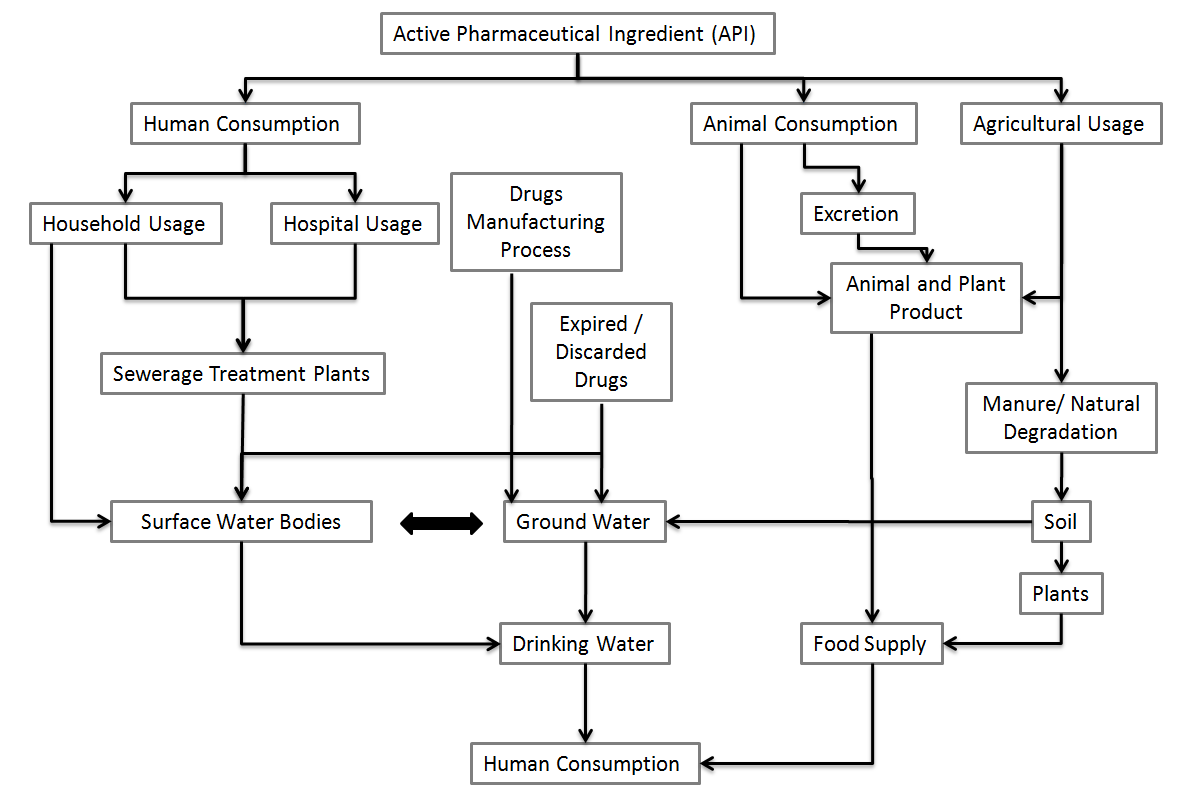
One of the pollutant which is ignored most of the times are “Medicines”. Medicines consist of active pharmaceutical principles (APPs) which are used to treat the diseases. These APPs gain entry into the environment as products discharged through the manufacturing process of the medicines or as unmetabolized and partially metabolized drugs from human waste. These APPs then causes a variety of effects on the flora and fauna living in that niche (Figure 1).
Problem Statement
Paracelsus, the father of Toxicology said “All medicines are poison”. It is indeed true that the medicines are poison not just for the human beings, but for all the living beings. The biological magnification at each step of the food chain makes it much more harmful to the wide range of the organisms. APPs and similar chemicals effect the living organisms in a variety of ways.
Drug Resistance and Antimicrobial Toxicity
The antimicrobial drugs are of special importance because of the potential threat of drug resistance. There are quite a few studies showing presence of coliform bacteria in water of the rivers [5]. Various antimicrobials like ciprofloxacin, metronidazole, macrolides, tetracyclins and sulfonamides have been identified in dangerous levels from the wastewater [6]. There are enough studies to establish correlation between levels of antimicrobials in the waterbodies and prevalence of resistance gene against that antimicrobial drug [7]. In addition to it, it has also been observed that the presence of heavy metals and heavy metal resistance genes correlates with higher degrees of antimicrobial resistance.
Analagesic Toxicity
Dicofenac is one of the most commonly prescribed non- steroidal anti-inflammatory drug. It has been reported that almost 940 tonns of diclofenac is consumed anually around the globe [8]. It is not just the vultures which are being effected but diclofenac is causing considerable harm to the aquatic animals as well. The dicofenc and its metabolite are excreted out by humans and find their way into the major water bodies. Concentration as high as 1030 and 4900 ng/l have been measured in rivers of Germany and Pakistan, respectively [9, 10]. These are very high concentration as environmental toxicity can be seen in 50μg/l of diclofenac, where it can cause severe structural damage to the gills, kidney and liver of brown trout (salmonid fish) [11].
Anticancer Drugs Toxicity
The world wide consumption of anticancer medication have increased from 2004 to 2008 [12]. The levels of drugs found in water are often low and usually hover around 1-5 ng/l or less [13]. Even at these lower concentrations the anticancer drugs like cyclophosphamide, cisplatin, methotrexate, protein kinase inhibitors have potential to cause serious toxicity to living organisms. It has been reported that almost all the anticancer drugs are toxic to crustacean Ceriodaphnia dubia in chronic toxicity studies. Similar results have been demonstrated in the Zebra fish where comet assay showed fragmentation of DNA [14]. In all, there is requirement of research in this area especially when a “mixture” of anticancer drugs are present in a water body.
Oral Contraceptive Pills and Hormonal Toxicity
As mentioned above, estrogen in the environment can lead to the virilization of the frogs. Estrogen is usually consumed as a part of the oral contraceptive pill and excreted in the conjugated form. Ironically, this inactivated conjugated drug is again deconjugated in the water treatment plants, thereby releasing the active drug in the environment. It has been seen that almost 10-16% of all water bodies have been contaminated with hormonal drugs. According to a study conducted in USA, the maximal levels of estradiol and mestranol were found to be 831 and 407 ng/l, respectively [15]. The hormonal drugs pose a grave eco-hazard as very minute quantities of these drugs can cause diverse effects on living organisms.
Psychiatric Drugs Toxicity
As with other drugs, the consumption of psychiatric drugs has shown a steady rise since 1996 -2006. The major drug classes consumed by the patients are antidepressants followed by antianxiety, antipsycotic and anticonvulsant drugs. A variety of psychiatric pharmaceuticals are being found in the environment, including diazepam (1.18 µg/l in Belgium), Oxazepam (0.25 µg/l in Germany), Fluoxetine (0.099 µg/l in Canada) and venlafaxine (1000 ng/l in USA) [16]. These pharmaceuticals poses a major risk to the human beings especially pregnant women and children. It is estimated that just 5% of the dose of the diazepam taken by a pregnant female during 36 weeks of pregnancy (assuming a concentration of 0.235 µg/l in drinking water) may cause severe fetal dysfunction [17]. There is ample evidence to suggest that the psychiatric APPs can result in irreversible damage in aquatic vertibartes and invertibrates. The antidepressant venlafexine causes foot detachment of the freshwater snail [18], fluxetine may result in the changes in the memory processing of the cuttlefish [19] while various CNS active drugs like sertraline, bupropion, fluxetine may cause alteration in reproductory function of the fishes [20]. These are just a few examples from a wide range of drugs found in the our ecosystem. The concentration of these drugs varies a lot across the geographic regions. Although the concentration of drugs in the environment is low, but their levels increase disproportionately through time due to the slow process of degradation [21]. Some of the drugs which are resistant to the transformation are fluroquinolones and sulfonamides. They are closely followed by macrolides, tetracyclines and beta-lacatames [22]. These drugs poses a serious health risk to the humans beings. Degradation and removal of drugs through wastewater treatment plants is not sufficient to completely remove the drug from the wastewater. It is essential to device new strategies like chelation, bacterial fermentation or modified ways of wastewater treatment for preventing these drugs entering the environment. Protocols have to be formulated to prevent and mitigate any ecological disaster resulting from the presence of such drugs in the environment.
Conclusion
It is to be inferred that the consumption of the drugs has been increasing with rising population. The drugs in the unmetabolized form or its degraded product can reach the environment through excretion from humans or animals. They can also find access to the environment during the process of their manufacturing or disposal. These drugs have a wide variety of toxic effects on the living organisms in the niche. It is, therefore, imperative to monitor the levels of the drugs in the environment and correlate them with the effects on the organism, so that a drug-environment policy can be framed.
References
-
Pruss-Ustun A, Wolf J, Corvalan CF, Bos R, Neira MP (2016) Preventing disease through healthy environments: a global assessment of the burden of disease from environmental risks. World Health Organization.
-
Landrigan PJ, Fuller R, Acosta NJR, Olusoji Adeyi, Robert Arnold, et al. (2018) The Lancet Commission on pollution and health. The Lancet 391: 462-512.
-
Oaks JL, Gilbert M, Virani MZ, Watson RT, Meteyer CU, et al. (2004) Diclofenac residues as the cause of vulture population decline in Pakistan. Nature 427: 630-633.
-
Kvarnryd M, Grabic R, Brandt I, Berg C (2011) Early life progestin exposure causes arrested oocyte development, oviductal agenesis and sterility in adult Xenopus tropicalis frogs. Aquat Toxicol 103(1- 2): 18-24.
-
Bilgrami KS, Kumar S (1998) Bacterial contamination in water of the River Ganga and its risk to human health. Int J Environ Health Res 8: 5- 13
-
Nassiri Koopaei N, Abdollahi M (2017) Health risks associated with the pharmaceuticals in wastewater. DARU J Pharm Sci 25: 9.
-
Rodriguez-Mozaz S, Chamorro S, Marti E, Huerta B, Gros M, et al. (2015) Occurrence of antibiotics and antibiotic resistance genes in hospital and urban wastewaters and their impact on the receiving river. Water Res 69: 234-242.
-
Zhang Y, Geissen SU, Gal C (2008) Carbamazepine and diclofenac: removal in wastewater treatment plants and occurrence in water bodies. Chemosphere 73(8): 1151-1161.
-
Scheurell M, Franke S, Shah RM, Hühnerfuss H (2009) Occurrence of diclofenac and its metabolites in surface water and effluent samples from Karachi, Pakistan. Chemosphere 77(6): 870-876.
-
Heberer T (2002) Occurrence, fate, and removal of pharmaceutical residues in the aquatic environment: a review of recent research data. Toxicol Lett 131(1-2): 5-17.
-
Hoeger B, Köllner B, Dietrich DR, Hitzfeld B (2005) Water-borne diclofenac affects kidney and gill integrity and selected immune parameters in brown trout (Salmo trutta f. fario). Aquat Toxicol Amst Neth 75(1): 53-64.
-
Besse JP, Latour JF, Garric J (2012) Anticancer drugs in surface waters: What can we say about the occurrence and environmental significance of cytotoxic, cytostatic and endocrine therapy drugs? Environ Int 39(1): 73-86.
-
Balcerzak W, Rezka P (2014) Occurrence of anti- cancer drugs in the aquatic environment and efficiency of their removal-the selected issues. Czas Tech.
-
Isidori M, Lavorgna M, Russo C, Kundi M, Žegura B, et al. (2016) Chemical and toxicological characterisation of anticancer drugs in hospital and municipal wastewaters from Slovenia and Spain. Environ Pollut 219: 275-287.
-
Kolpin DW, Skopec M, Meyer MT, Furlong ET, Zaugg SD (2004) Urban contribution of pharmaceuticals and other organic wastewater contaminants to streams during differing flow conditions. Sci Total Environ 328(1-3): 119-130.
-
Calisto V, Esteves VI (2009) Psychiatric pharmaceuticals in the environment. Chemosphere 77(10): 1257-1274.
-
Collier AC (2007) Pharmaceutical Contaminants in Potable Water: Potential Concerns for Pregnant Women and Children. Eco Health 4(2): 164-171.
-
Fong PP, Hoy CM (2012) Antidepressants (venlafaxine and citalopram) cause foot detachment from the substrate in freshwater snails at environmentally relevant concentrations. Mar Freshw Behav Physiol 45(2): 145-153.
-
Di Poi C, Darmaillacq AS, Dickel L, Boulouard M, Bellanger C (2013) Effects of perinatal exposure to waterborne fluoxetine on memory processing in the cuttlefish Sepia officinalis. Aquat Toxicol Amst Neth 132-133: 84-91.
-
Schultz MM, Painter MM, Bartell SE, Logue A, Furlong ET, et al. (2011) Selective uptake and biological consequences of environmentally relevant antidepressant pharmaceutical exposures on male fathead minnows. Aquat Toxicol Amst Neth 104(1-2): 38-47.
-
Bendz D, Paxéus NA, Ginn TR, Loge FJ (2005) Occurrence and fate of pharmaceutically active compounds in the environment, a case study: Höje River in Sweden. J Hazard Mater 122(3): 195-204.
-
Roberts PH, Thomas KV (2006) The occurrence of selected pharmaceuticals in wastewater effluent and surface waters of the lower Tyne catchment. Sci Total Environ 356(1-3): 143-153.
- Gallic and Citric Acid Present in the Peels of Tropical Fruits as an Alternative in the Fight against Cancer
- Treating the Forehead Lines with Combination of Forehead and Glabellar Botulinum Toxin Among Japanese Patients
- Clinical Evaluation of Patients Suffering from Breast Cancer & Determination of Treatment Therapies and Better Strategies Related to Breast Cancer
- Medieval Recipes by Al-Zahrāwī for Heart Palpitations Treatment
- Etiology and Prescription Errors of Myocardial Infarction in Different Health Care Systems of Azad Kashmir
- Early Diagnosis and Multidisciplinary Management of Turner Syndrome: A Paediatric Case Study