
Advancing Pharmacovigilance: Safeguarding Drug Safety and Enhancing Public Health
Pharmacovigilance is integral to ensuring the safety and efficacy of pharmaceutical products throughout their lifecycle. This review explores the essential components of pharmacovigilance, highlighting its role in monitoring adverse drug reactions (ADRs), detecting safety signals, and managing risks associated with medications. Key components include adverse event reporting systems, advanced signal detection methodologies utilizing artificial intelligence and real-world data, rigorous data management and evaluation processes, and compliance with regulatory requirements. Effective communication strategies ensure dissemination of safety information to healthcare professionals and the public, promoting informed decisionmaking and enhancing patient safety. Challenges such as data quality, regulatory adaptation, and global harmonization are discussed, alongside future directions aimed at improving pharmacovigilance practices. By continuously evolving to integrate technological advancements and global collaboration, pharmacovigilance contributes significantly to public health by maintaining the integrity and safety of pharmaceutical therapies worldwide.
Abbreviations
FDA: US Food and Drug Administration; EMA: European Medicines Agency; AI: Artificial Intelligence; ML: Machine Learning; EHRs: Electronic Health Records; PV: Pharmacovigilance; PSUR: Periodic Safety Update Reports; WHO: World Health Organization; PROs: Patient-Reported Outcomes; DSIA: Drug Safety And Innovation Act; ICH: International Conference on Harmonisation; NLP: Natural Language Processing.
Introduction
Background
Pharmacovigilance, the science and activities associated with the detection, assessment, understanding, and prevention of adverse effects or any other drug-related problems, plays a critical role in ensuring the safety and efficacy of pharmaceuticals post-marketing. The primary aim of pharmacovigilance is to enhance patient care and safety in relation to the use of medicines, ensuring that the benefits of a drug outweigh its risks [1].
The roots of pharmacovigilance trace back to the early 1960s, notably following the thalidomide disaster, where the use of the drug led to severe birth defects in thousands of children. This tragedy underscored the need for a robust system to monitor and evaluate adverse drug reactions (ADRs), prompting the establishment of systematic pharmacovigilance practices globally. The World Health Organization (WHO) set up the International Drug Monitoring Programme in 1968, which aimed to develop a comprehensive and unified approach to Pharmacovigilance [2].
Over the decades, pharmacovigilance has evolved significantly, adapting to the increasing complexity of the pharmaceutical landscape. Advances in technology, regulatory changes, and the integration of real-world data have all contributed to the growth and sophistication of pharmacovigilance activities. Modern pharmacovigilance not only focuses on ADRs but also encompasses broader safety concerns, including drug interactions, medication errors, and the impact of drug use in special populations such as children, pregnant women, and the elderly [3].
The regulatory framework for pharmacovigilance has also undergone substantial evolution. Regulatory agencies like the U.S. Food and Drug Administration (FDA), the European Medicines Agency (EMA), and other national bodies have developed stringent guidelines and requirements for post-marketing surveillance. These regulations mandate pharmaceutical companies to actively monitor the safety of their products and report any adverse findings promptly.
Technological advancements have further propelled the field forward, with big data analytics, artificial intelligence (AI), and machine learning (ML) playing pivotal roles in signal detection and risk assessment. These technologies enable the processing of vast amounts of data from various sources, including electronic health records (EHRs), social media, and patient registries, leading to more timely and accurate identification of potential safety issues [4].
Pharmacovigilance is defined as the science and activities related to the detection, assessment, understanding, and prevention of adverse effects or any other drug-related problems. The term originates from the Greek words “pharmakon” (meaning drug) and “vigilare” (meaning to keep watch), reflecting its core mission to monitor and ensure the safety of pharmaceutical products [5].
Key Components of Pharmacovigilance
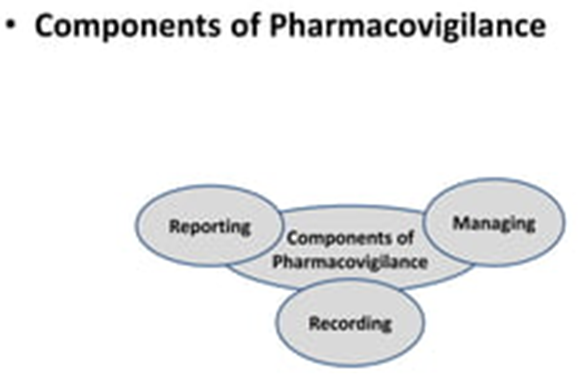
Pharmacovigilance (PV) encompasses several interconnected components that work together to monitor, assess, and manage the safety of pharmaceutical products throughout their lifecycle (Figure 1). These components include: Adverse Drug Reaction (ADR) Reporting Spontaneous Reporting: Healthcare professionals and consumers voluntarily report suspected ADRs to national regulatory authorities or pharmaceutical companies. Stimulated Reporting: Activities such as targeted safety communications, risk minimization measures, and educational campaigns encourage reporting [6].
Signal Detection Data Mining: Analyzing large databases of spontaneous and solicited reports, electronic health records (EHRs), and other sources to detect patterns or signals of previously unrecognized ADRs. Literature Review: Systematically reviewing scientific literature for emerging safety concerns related to specific drugs or drug classes [1].
Data Management and Evaluation Case Management: Collecting, coding, and assessing individual case safety reports (ICSRs) to identify potential safety signals. Aggregate Analysis: Analyzing aggregated data to evaluate the frequency and severity of ADRs and assess risk-benefit profiles [7].
Risk Assessment and Management Benefit-Risk Assessment: Evaluating the overall benefit- risk balance of a drug based on available safety and efficacy data. Risk Minimization: Developing and implementing risk minimization strategies, such as Risk Evaluation and Mitigation Strategies (REMS), to mitigate identified risks.
Regulatory Compliance and Reporting
- Regulatory Requirements: Ensuring compliance with pharmacovigilance regulations and guidelines set forth by regulatory authorities (e.g., FDA, EMA).
- Periodic Safety Update Reports (PSURs): Compiling and submitting comprehensive safety reports to regulatory agencies at specified intervals [8].
Communication and Information Dissemination Healthcare Provider Communication: Disseminating safety information, including updates on emerging risks and recommendations for safe prescribing practices, to healthcare professionals. Public Communication: Providing accessible and comprehensible safety information to patients and the public through various channels.
Quality Assurance and Auditing
Quality Control: Implementing procedures to ensure the accuracy, completeness, and timeliness of pharmacovigilance data and activities. Auditing and Inspections: Conducting internal and external audits to assess compliance with pharmacovigilance requirements and standards [9].
Training and Education Healthcare Professionals: Providing training on pharmacovigilance principles, ADR recognition, and reporting obligations to enhance awareness and reporting. Public Awareness: Educating patients and consumers about the importance of reporting ADRs and their role in drug safety monitoring.
Post-Marketing Surveillance Lifecycle Management: Continuously monitoring the safety profile of drugs after they are marketed to detect, assess, and manage ADRs throughout their lifecycle. Labeling Updates: Updating drug labels with new safety information based on ongoing pharmacovigilance activities.
Global Collaboration and Harmonization International Cooperation: Collaborating with global regulatory agencies, industry stakeholders, and international organizations to harmonize pharmacovigilance practices and standards. Data Sharing: Sharing pharmacovigilance data and safety information across borders to facilitate early detection of safety signals and promote global public health [10].
Importance of Pharmacovigilance
Its importance can be understood through several key aspects: Patient Safety: Pharmacovigilance is fundamentally focused on patient safety. Its primary goal is to ensure that the therapeutic benefits of drugs outweigh their risks. By monitoring and evaluating adverse drug reactions (ADRs), pharmacovigilance helps to prevent harm to patients and ensures that any potential risks associated with drug use are identified and managed appropriately. This vigilance protects patients from potential adverse effects that might not have been apparent during the clinical trial phases [10, 11].
Detection of Adverse Drug Reactions (ADRs): Clinical trials, while rigorous, often involve a limited number of participants and may not capture rare or long-term adverse effects. Pharmacovigilance systems enable the detection of ADRs that occur once a drug is marketed and used by a broader and more diverse population. Post-marketing surveillance is crucial for identifying these ADRs, which can then be communicated to healthcare professionals and patients to mitigate risk.
Risk Management: Effective pharmacovigilance allows for the identification and assessment of risks associated with pharmaceutical products. Once these risks are identified, comprehensive risk management plans can be developed and implemented. These plans may include changes to drug labeling, the introduction of new safety measures, or recommendations for monitoring and reporting. By proactively managing risks, pharmacovigilance helps to minimize the occurrence of adverse effects and enhances the overall safety of drug therapies [11].
Regulatory Compliance: Regulatory agencies such as the U.S. Food and Drug Administration (FDA), the European Medicines Agency (EMA), and the World Health Organization (WHO) require pharmaceutical companies to conduct pharmacovigilance activities. Compliance with these regulations is essential for maintaining market authorization and ensuring that safety standards are upheld throughout a drug’s lifecycle. Regulatory compliance not only safeguards public health but also maintains the integrity and credibility of the pharmaceutical industry [12].
Public Health: Pharmacovigilance contributes significantly to public health by ensuring that medications available in the market are safe and effective. By preventing drug-related morbidity and mortality, pharmacovigilance activities improve health outcomes and enhance the quality of life for patients. The data collected through pharmacovigilance can also inform public health policies and initiatives, leading to better health systems and practices globally [13].
Informed Decision-Making: Healthcare professionals rely on pharmacovigilance data to make informed decisions about prescribing medications. This information helps them balance the benefits and risks of different treatment options, ensuring that they provide the best possible care to their patients. Pharmacovigilance data can guide clinicians in identifying safer alternatives and adjusting treatment plans based on the latest safety information.
Pharmaceutical Industry Benefits: For the pharmaceutical industry, pharmacovigilance is essential for maintaining the trust and confidence of healthcare providers and patients. By identifying safety issues early, companies can take corrective actions to avoid costly recalls, litigation, and damage to their reputation. Pharmacovigilance also supports the ongoing development of safer and more effective drugs, fostering innovation and continuous improvement within the industry [14].
Global Health Initiatives: Pharmacovigilance supports global health initiatives by facilitating the exchange of safety information between countries and regulatory agencies. This global collaboration is vital for identifying and addressing safety concerns that may affect populations worldwide. By harmonizing pharmacovigilance practices, international organizations can work together to ensure consistent and effective drug safety monitoring across borders.
Scientific Advancements: The data collected through pharmacovigilance activities contribute to scientific research and the advancement of medical knowledge. Understanding the mechanisms of ADRs can lead to the development of safer drugs and improved therapeutic strategies. Pharmacovigilance research can also uncover new insights into drug interactions, side effects, and patient responses, driving innovation in pharmacology and medicine [15].
Technological Integration: Advancements in technology, such as artificial intelligence (AI) and machine learning (ML), have significantly enhanced pharmacovigilance practices. These technologies enable more efficient and accurate detection of safety signals, improving the overall effectiveness of drug safety monitoring. The integration of electronic health records (EHRs), real-world data (RWD), and other digital tools has also expanded the scope and depth of pharmacovigilance, providing richer data sources for analysis and decision-making [16].
In conclusion, pharmacovigilance is indispensable for ensuring the safety and efficacy of pharmaceutical products. Its role in detecting ADRs, managing risks, ensuring regulatory compliance, and protecting public health cannot be overstated. As the pharmaceutical landscape continues to evolve, the importance of robust pharmacovigilance systems will only increase, underscoring the need for continuous improvement and innovation in this critical field.
Recent Advancements in Pharmacovigilance
Recent advancements in pharmacovigilance have revolutionized the way drug safety is monitored and managed. These advancements leverage new technologies, methodologies, and regulatory frameworks to enhance the detection, assessment, and prevention of adverse drug reactions (ADRs). Here are the key areas of advancement:
Technological Integration
Example: Artificial Intelligence (AI) and Machine Learning (ML) AI and ML algorithms are increasingly being used for signal detection in pharmacovigilance. These technologies can analyze large volumes of data from diverse sources, such as electronic health records (EHRs), insurance claims databases, and social media, to identify potential safety signals more quickly and accurately than traditional methods [17]. Example: An AI-based system developed by IBM Watson Health analyzes medical literature, adverse event reports, and other sources to identify potential safety signals for drugs on the market. This system can highlight patterns and associations that may indicate previously unknown adverse effects, helping regulatory agencies and pharmaceutical companies to take timely actions.
Real-World Data (RWD)
The integration of real-world data (RWD) from sources like EHRs, claims databases, and patient registries has expanded the scope of pharmacovigilance beyond controlled clinical trials. RWD provides insights into how drugs perform in real-world settings and across diverse patient populations, allowing for a more comprehensive understanding of their safety profiles [17]. Example: The FDA’s Sentinel Initiative utilizes RWD from electronic healthcare databases to monitor the safety of marketed medical products. By analyzing data from millions of patients, Sentinel can detect safety signals earlier and more reliably than traditional methods, contributing to improved public health outcomes.
Improved ADR Reporting
Advances in ADR reporting include the incorporation of patient-reported outcomes (PROs), which allow patients to directly report their experiences with medications. This approach enhances the detection of ADRs that may not be captured through healthcare provider reports alone [18].
Example: The use of mobile apps and online platforms enables patients to report adverse reactions in real-time, providing immediate feedback to healthcare providers and pharmacovigilance authorities. This direct reporting mechanism can lead to faster identification and assessment of safety concerns.
Evolving Regulatory Frameworks
Regulatory agencies such as the FDA, EMA, and WHO have updated their guidelines to incorporate new pharmacovigilance methodologies and address emerging challenges in drug safety. Example: The FDA’s implementation of the Drug Safety and Innovation Act (DSIA) has enhanced its ability to monitor drug safety through increased access to RWD and improved collaboration with other stakeholders. This regulatory framework allows for more proactive and responsive pharmacovigilance practices, ensuring that safety issues are identified and addressed promptly [19].
Global Collaboration
There is a growing emphasis on global collaboration in pharmacovigilance to harmonize practices and facilitate information sharing across borders. This collaboration improves the efficiency and effectiveness of drug safety monitoring on a global scale. Example: The International Conference on Harmonisation of Technical Requirements for Registration of Pharmaceuticals for Human Use (ICH) brings together regulatory authorities and pharmaceutical industry representatives from around the world to develop guidelines and standards for pharmacovigilance. This collaborative effort ensures consistent and rigorous safety monitoring across different regions [20].
Continuous Improvement
Ongoing research and innovation are essential for advancing pharmacovigilance practices further. Continuous improvement efforts focus on refining AI and ML algorithms, enhancing data quality and standardization, and addressing emerging safety concerns associated with new therapeutic modalities (e.g., gene therapies, biologics). Example: Research initiatives aimed at integrating AI with natural language processing (NLP) techniques to extract and analyze safety-related information from unstructured data sources (e.g., clinical notes, social media posts) are ongoing. These advancements aim to improve the speed and accuracy of signal detection and risk assessment in pharmacovigilance [21].
Challenges and Future Directions in Pharmacovigilance
Pharmacovigilance faces several challenges that impact its effectiveness in ensuring drug safety and managing risks associated with pharmaceutical products. Addressing these challenges and exploring future directions are crucial for advancing pharmacovigilance practices. Here are the key areas of challenge and potential future directions:
Data Quality and Standardization
Challenge: Ensuring the quality and standardization of data is essential for accurate analysis and reliable detection of safety signals. Variations in data collection methods, inconsistencies in terminology, and differences in data formats across different healthcare systems pose significant challenges [22]. Future Directions: Harmonization Efforts: Continued efforts to harmonize data standards and terminology globally, facilitated through initiatives like the International Council for Harmonisation (ICH), can improve data quality and interoperability. Advanced Data Analytics: Leveraging AI and ML algorithms for automated data cleaning, normalization, and analysis can enhance the reliability and efficiency of pharmacovigilance activities. 2. Integration of Artificial Intelligence (AI) and Machine Learning (ML).
Challenge: While AI and ML offer promising capabilities for signal detection and risk assessment, challenges include algorithm transparency, validation of predictive models, and ethical considerations surrounding data privacy and bias [23].
Future Directions
- Enhanced Algorithm Transparency: Developing methodologies to improve the interpretability and transparency of AI and ML algorithms used in pharmacovigilance to enhance trust and acceptance.
- Ethical Frameworks: Establishing ethical guidelines and frameworks for the responsible use of AI in pharmacovigilance, ensuring patient privacy and minimizing biases in algorithmic decision-making.
Global Collaboration and Data Sharing
Challenge: Variations in regulatory requirements, data privacy laws, and cultural differences can hinder effective global collaboration and data sharing initiatives in pharmacovigilance [24].
Future Directions Standardized Protocols: Developing standardized protocols and agreements for data sharing and collaboration among regulatory agencies, pharmaceutical companies, and healthcare providers globally. Secure Data Platforms: Implementing secure data sharing platforms with robust privacy protections and encryption technologies to facilitate international cooperation while ensuring compliance with data protection regulations.
Continuous Monitoring of Emerging Safety Concerns
Challenge: Rapid advancements in medicine, including new therapeutic modalities such as gene therapies and biologics, present unique challenges in identifying and assessing emerging safety concerns. Future Directions Adaptive Pharmacovigilance Strategies: Implementing adaptive pharmacovigilance strategies that can quickly adapt to new safety information and evolving therapeutic landscapes. Enhanced Surveillance Methods: Utilizing advanced surveillance methods, including real-time monitoring of social media and patient forums, to capture early signals of adverse events associated with emerging therapies [22, 23].
Stakeholder Engagement and Communication
Challenge: Effective communication and engagement with stakeholders, including healthcare professionals, patients, and the public, are essential for promoting transparency and trust in pharmacovigilance activities.
Technologies that have emerged and continue to shape pharmacovigilance include: Artificial Intelligence (AI): AI is used for automating data analysis, signal detection, and predictive modeling to enhance the efficiency and accuracy of pharmacovigilance processes. Machine Learning (ML): ML algorithms analyze large datasets to identify patterns and trends, aiding in the detection of potential adverse events and understanding medication safety profiles. Blockchain: Blockchain technology ensures secure, transparent, and tamper-proof storage of pharmacovigilance data, improving data integrity and enabling efficient traceability. Natural Language Processing (NLP): NLP techniques extract and analyze information from unstructured text sources like medical records and social media, facilitating faster and more comprehensive adverse event reporting and analysis.
Wearable Devices: These devices enable continuous monitoring of patient health metrics and medication adherence, providing real-time data that supports pharmacovigilance efforts. Big Data Analytics: Advanced analytics techniques handle large volumes of structured and unstructured data, enabling deeper insights into medication safety profiles and enhancing decision-making processes. Telemedicine and Mobile Health (mHealth): Telemedicine platforms and mobile health applications facilitate remote patient monitoring and reporting of adverse events, improving accessibility and timeliness of pharmacovigilance data collection.
These technologies collectively contribute to a more proactive, efficient, and patient-centric approach to pharmacovigilance, improving drug safety monitoring and enhancing public health outcomes. Future Directions Patient-Centered Approaches: Enhancing patient engagement and empowerment in pharmacovigilance through education, accessible reporting tools, and feedback mechanisms. Public Awareness Campaigns: Implementing targeted public awareness campaigns to raise awareness about the importance of reporting adverse events and understanding the role of pharmacovigilance in ensuring drug safety [25].
Regulatory Adaptation to Technological Advancements
Challenge: Regulatory frameworks may lag behind technological advancements in pharmacovigilance, posing challenges in adopting innovative methodologies while ensuring compliance with existing regulations. Future Directions Regulatory Flexibility: Establishing frameworks for regulatory agility and flexibility to accommodate technological advancements, such as AI and RWD, in pharmacovigilance practices. Collaborative Regulatory Approaches: Promoting collaborative approaches among regulatory authorities globally to harmonize guidelines and standards for incorporating new technologies into pharmacovigilance [26].
Capacity Building and Training
Challenge: There is a need for continuous capacity building and training programs to equip healthcare professionals, pharmacovigilance experts, and regulators with the skills and knowledge required to effectively conduct pharmacovigilance activities.
Future Aspects of Pharmacovigilance: In the future, pharmacovigilance will advance with increased use of big data analytics and machine learning to swiftly identify and assess potential drug risks. Enhanced integration of real-world evidence from diverse sources will provide more comprehensive insights into medication safety and effectiveness across populations. Collaborative efforts between regulators, healthcare providers, and pharmaceutical industries will strengthen global surveillance systems, ensuring rapid response to emerging safety concerns. Patient-centric approaches will prioritize patient-reported outcomes and preferences, fostering a more personalized and transparent healthcare experience. Innovations in digital health technologies, such as wearable devices and mobile apps, will enable continuous monitoring of medication effects and adherence in real-time. Regulatory frameworks will evolve to accommodate the complexities of new therapies and technologies, promoting agile and proactive risk management strategies. Overall, future pharmacovigilance aims to optimize healthcare outcomes by leveraging cutting-edge technologies and embracing a proactive approach to drug safety and surveillance. Professional Development Programs: Developing comprehensive training programs and certifications in pharmacovigilance, including courses on emerging technologies and regulatory updates. Knowledge Exchange Platforms: Establishing platforms for knowledge exchange and collaboration among pharmacovigilance professionals globally to share best practices and lessons learned [27].
Conclusion
In conclusion, pharmacovigilance is a multifaceted discipline essential for safeguarding public health by monitoring and managing the safety of pharmaceutical products. The outlined components collectively form a comprehensive framework that ensures continuous surveillance of adverse drug reactions (ADRs), facilitates timely detection of safety signals, and enables informed decision-making by healthcare professionals, regulatory authorities, and pharmaceutical companies.
By embracing advancements in technology, such as artificial intelligence (AI) and machine learning (ML), and leveraging real-world data (RWD) sources, pharmacovigilance is evolving to enhance its capabilities in detecting emerging safety concerns and conducting robust risk assessments. Regulatory compliance, effective communication strategies, and global collaboration are pivotal in maintaining standardized practices and ensuring the dissemination of accurate safety information to healthcare providers and the public.
Looking forward, addressing challenges like data quality, regulatory adaptation, and enhancing stakeholder engagement will be critical for the future of pharmacovigilance. Continuous improvement in these areas, coupled with ongoing training and education initiatives, will strengthen the pharmacovigilance infrastructure and support its pivotal role in maintaining the safety and efficacy of medications worldwide. As pharmaceutical innovation continues to advance, pharmacovigilance remains indispensable in promoting patient safety and enhancing healthcare outcomes on a global scale.
References
-
Meyboom RHB, Egberts ACG, Gribnau FWJ, Hekster YA (1999). Pharmacovigilance in Perspective. Drug Safety 21: 429-447.
-
Evans SJW (2000) Pharmacovigilance: a science or fielding emergencies? Statistics in medicine 19(23): 3199-209.
-
Nelson RC, Palsulich B, Gogolak V (2002) Good Pharmacovigilance Practices. Drug Safety 25: 407-414.
-
Beninger P (2018) Pharmacovigilance: An Overview. Clinical therapeutics 40(12): 1991-2004.
-
Baldo P, Paoli P (2014) Pharmacovigilance in oncology: evaluation of current practice and future perspectives. Journal of evaluation in clinical practice 20(5): 559-569.
-
Baldo P, Fornasier G, Ciolfi L, Sartor I, Francescon S (2018) Pharmacovigilance in oncology. International Journal of Clinical Pharmacy 40: 832-841.
-
Talbot JCC, Nilsson BS (1998) Pharmacovigilance in the pharmaceutical industry. British journal of clinical pharmacology 45 (5): 427-431.
-
Hauben M, Madigan D, Gerrits CM, Walsh L, Puijenbroek EPV (2005) The role of data mining in pharmacovigilance. Expert Opinion on Drug Safety 4(5): 929-948.
-
Rahman S, Khan R, Gupta V, Uddin M (2007) Pharmacoenvironmentology-a component of pharmacovigilance. Environmental Health 6: 20-20.
-
Harmark L, Grootheest AC (2008) Pharmacovigilance: methods, recent developments and future perspectives. European Journal of Clinical Pharmacology 64: 743-752.
-
Crestan D, Trojniak M, Francescon S, Fornasier G, Baldo P (2020) Pharmacovigilance of anti-cancer medicines: opportunities and challenges. Expert Opinion on Drug Safety 19(7): 849 - 860.
-
Fornasier G, Francescon S, Leone R, Baldo P (2018) An historical overview over Pharmacovigilance. International Journal of Clinical Pharmacy 40: 744 - 747.
-
Wise L, Parkinson J, Raine J, Breckenridge A (2009) New approaches to drug safety: a pharmacovigilance tool kit. Nature Reviews Drug Discovery 8: 779-782.
-
Martin LG, Hanssens Y, Paudyal V (2018) Overview of this issue: pharmacovigilance, what is new? International Journal of Clinical Pharmacy 40: 737-739.
-
Hamid AAA, Rahim R, Teo SP (2022) Pharmacovigilance and Its Importance for Primary Health Care Professionals. Korean Journal of Family Medicine 43: 290 - 295.
-
Sewal R, Saini V, Medhi B (2015) Forensic pharmacovigilance: Newer dimension of pharmacovigilance.. Journal of forensic and legal medicine 34: 113-118.
-
Honig P (2013) Advancing the Science of Pharmacovigilance. Clinical Pharmacology & Therapeutics 93(6): 474-475.
-
Naidu M, Sushma D, Jaiswal V, Asha S, Pal T (2020) The role of advanced technologies supplemented with traditional methods in pharmacovigilance sciences. Recent patents on biotechnology 5(1): 34-50.
-
Lavertu A, Vora B, Giacomini K, Altman R, Rensi S (2021) A New Era in Pharmacovigilance: Toward Real‐World Data and Digital Monitoring. Clinical Pharmacology and Therapeutics 109(5): 1197-1202.
-
Dal Pan GJ (2014) Ongoing Challenges in Pharmacovigilance. Drug Safety 37(1): 1-8.
-
Arlett PR, Kurz X (2011) New approaches to strengthen pharmacovigilance.. Drug discovery today. Technologies 8(1): e1-e42.
-
Pitts PJ, Louet HL (2018) Advancing Drug Safety through Prospective Pharmacovigilance. Therapeutic Innovation & Regulatory Science 52: 400-402.
-
Berrewaerts J, Delbecque L, Orban P, Desseilles M (2016) Patient Participation and the Use of Ehealth Tools for Pharmacoviligance. Frontiers in Pharmacology 7: 90.
-
Kalaiselvan V, Srivastava S, Singh A, Gupta S (2018) Pharmacovigilance in India: Present Scenario and Future Challenges. Drug Safety 42: 339-346.
-
Song H, Pei X, Liu Z, Shen C, Sun J, et al. (2022) Pharmacovigilance in China: Evolution and future challenges. British Journal of Clinical Pharmacology 89(2): 510-522.
-
Dikshit RK (2010) Challenges in pharmacovigilance. Indian Journal of Pharmacology 42(6): 333-333.
-
Edwards IR (2017) Causality Assessment in Pharmacovigilance: Still a Challenge. Drug Safety 40: 365-372.
- Gallic and Citric Acid Present in the Peels of Tropical Fruits as an Alternative in the Fight against Cancer
- Treating the Forehead Lines with Combination of Forehead and Glabellar Botulinum Toxin Among Japanese Patients
- Clinical Evaluation of Patients Suffering from Breast Cancer & Determination of Treatment Therapies and Better Strategies Related to Breast Cancer
- Medieval Recipes by Al-Zahrāwī for Heart Palpitations Treatment
- Etiology and Prescription Errors of Myocardial Infarction in Different Health Care Systems of Azad Kashmir
- Early Diagnosis and Multidisciplinary Management of Turner Syndrome: A Paediatric Case Study