
Effect of Some Fruit Peels on Glucose Non-Availability and its Uptake by Saccharomyces Cerevisiae under In-Vitro Digestive Environment
Background: Diabetes mellitus is becoming more common worldwide, and the potential adverse reactions of commercially available antidiabetic drugs have inspired researchers to explore new classes of therapeutic antidiabetic compounds with fewer or hardly side effects. A widely consumed herbal medicine containing phenolic compounds is natural, cost-effective, and more appealing against diabetes and has gained a lot of attention. Purpose: The primary goal of this work is to distinguish between the effects of organic and aqueous extracts of fruit peels on their glucose binding capabilities and their consumption potential by Saccharomyces cerevisiae under GIT simulated conditions. Method: In this study, 40 extracts of ten different fruit peels were used: Orange peels (Citrus reticulata), Mousambi peels (Citrus limetta), Grapefruit peels (Citrus paradisi), Watermelon peels (Citrullus lanatus), Yellow Canary Melon peels (Cucumis melo), Mango peels (Mangifera indica), Banana peels (Musa paradisiaca), Pomegranate peels (Punica granatum), Java Plum (Syzygium cumini) and Apple peels (Malus pumila). For every fruit peel, four different types i.e., autoclaved aqueous, Millipore filtered aqueous, 95% ethanolic, and GIT simulated extracts were prepared. These extracts’ effect on the yeast cells’ overall decrease in glucose content was compared to the control and influence on glucose non-availability. The percentage of glucose uptake by yeast in their presence was measured. Results: The 95% Ethanolic extract of Java Plum had the best glucose absorption efficiency (99.41%), and the percentage of glucose drop was at its highest. The GIT- Simulated extract of Watermelon Rind had the highest glucose non-availability (77.62%). Discussion: Bioactive substances such as saponins, tannins, alkaloids, fibers, coumarin, flavonoids, and phenolic compounds caused glucose absorption and non-availability. The anti-diabetic effect is unaffected when fruit peels are heated to a high temperature, put through the gastrointestinal tract, or even treated with the chemical components found in organic compounds.
Introduction
Diabetes mellitus (DM), an endocrine disorder, is becoming more common. The World Health Organization (WHO) estimates that 10% of people worldwide have diabetes, with a prevalence of 33% in several other countries [1]. Diabetes was directly responsible for approximately 1.6 million deaths worldwide in 2015 [2]. By 2045, this figure is expected to rise from 425 million to 629 million [3]. In low- and middle-income countries, it is one of the leading causes of death. Diabetes is primarily managed with anti- diabetic medications, a healthy diet, and regular exercise. Many pharmaceutical drugs have serious side effects, such as hypoglycemia, severe headaches, nausea, fatal complications, weight gain, increased food consumption, gastrointestinal problems, and sudden cardiac death [4, 5]. It prompted researchers to look for new classes of curative anti-diabetic medications with fewer or no side effects. According to WHO, more than 21,000 plant species, with a variety of pharmacophores, are being used as herbal medicines, and they are safe with few to no side effects [6]. There are 1200 plants known to have antidiabetic properties. There are over 80 million tons of annual production of citrus waste worldwide and only one-third of it is being processed. It is estimated that the global production of citrus waste will exceed 15 million tonnes. Citrus peels have a tradition of usage in folk medicines and are rich in antioxidants, anti- microbial, and anti-inflammatory properties. It may be a natural α-amylase and α-glucosidase inhibitor. Several studies of Oboh and Ademosun in 2011 on orange peels and grapefruit peels revealed that the phenolic extracts had mild α-amylase inhibition but stronger α-glucosidase inhibition activity. In traditional herbal medicine, citrus fruits are recommended as a source of diabetes medication or treatment. The peels are abundant in pectin which has an inverse relationship with coronary heart disease, blood glucose, cholesterol-lowering properties, and heavy metal ions dislodging properties. Moreover, peels of Pomegranate, Mango, Banana, Java Plum, and Apple contain polyphenols that could improve glucose metabolism. The rind of Watermelon and melon also possess a variety of polyphenols such as alkaloids, flavonoids, terpenoids, terpenes, glycosides, and coumarins, which are thought to be responsible for their anti-diabetic effects. These compounds regulate insulin secretion from pancreatic cells, modulate glucose release from the liver, activate insulin receptors, and have an insulin-sparing effect on bioactive compounds (i.e., phenolic compounds) for restoring the function of pancreatic tissues [7]. Glucose non-availability is the amount of glucose that physically cannot be absorbed by the body because it binds with compounds existing in the fruit peel extracts. One of the reasons for glucose non-availability was due to binding of glucose to bioactive compounds which include the saponins, tannins, alkaloids, fibers, coumarin and flavonoids as well as phenolic compounds present in the fruit peels. It suggests that the fruit peels have potential of circulating glucose levels and uptake and therefore has possible use in managing diabetes by lowering the level of free glucose in the digestive canal. GIT simulation, an in-vitro digesting technique, is used extensively to study the gastrointestinal behavior of food and medications. Simulations typically include the oral, gastric, and small intestine phases of digestion, as well as large intestinal fermentation on occasion. Digestion duration, salt concentrations, specific pH, the presence and concentrations of digestive enzymes, and other factors all aim to mimic physiological conditions in vivo. Baking yeast (Saccharomyces cerevisiae) was used as a model organism in a variety of experiments to investigate glucose uptake and to evaluate the impact of natural extracts on diabetes due to the organism’s function in glucose biosynthesis. The incorporation of yeast cells assists in seeing how the fruit peel extracts can affect the glucose levels and its utilization in diabetes studies. S. cerevisiae is chosen for this experiment due to the fact that Saccharomyces cerevisiae is a eukaryotic organism; it has organizational and metabolic similarities to higher organisms including human’s metabolism such as glucose metabolism, so the results can be used to inform studies on diabetes mellitus. It has parallel glucose metabolism like human cell, so it is useful for identification of glucose metabolism. Also, genetic and biochemical modifications are feasible in yeast, the growth conditions of which enable various experimental manipulations. So, by using S. cerevisiae as a model organism helps to make a comparison as to how the human cells might possibly react to the same extracts in the aspects of glucose uptake and distribution. Due to the ability of this S. cerevisiae model to filter the modulators of glucose metabolism, it is possible to further examine the effects of natural products like the fruit peel extracts in higher organisms or clinical research. Moreover, the utilization of yeast is considerably cheap and does not raise ethical issues accompanying animal models, which makes the utilization of yeast more preferable in research studies. In terms of glucose uptake by S. cerevisiae cells and glucose binding capacity, 95 percent ethanolic, aqueous, and GIT-simulated extracts of fruit peels had anti-diabetic effects.
Materials and Methods
Preparation of fruit peels extracts
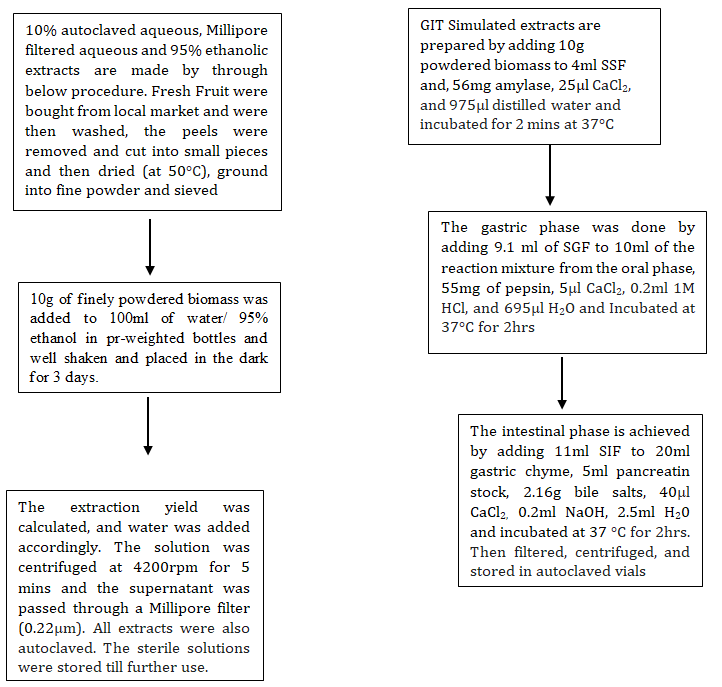
All the fresh fruits: Oranges (Citrus reticulata), Mousambi (Citrus limetta), Grapefruit (Citrus paradisi), Watermelon (Citrullus lanatus), Yellow Canary Melon (Cucumis melo), Mango (Mangifera indica), Banana (Musa paradisiaca), Pomegranate (Punica granatum), Apple peels (Malus pumila) and Java Plum (Syzygium cumini) were brought from a local market in Lahore. Raw Fruits were washed and then the peels were removed and cut into small pieces. They were dried in a hot air oven at 50°C, before being pulverized into a fine powder, and then filtered through a fine test sieve by Sigma-Aldrich® Solutions. Prepare aqueous and 95% ethanolic extracts. A fine fruit peel powder weighing 10g was mixed with 100ml of an extractant. The bottles were tightly lidded and completely covered with aluminum foil before being stored in the dark for three days with periodic shaking and then filtered using Whatman filter paper grade 1. All the culture bottles with the filtrate were held in the hot air oven at 50 °C until the solvent entirely evaporated and the fruit peel extracts were found adhered to the bottom and walls of each culture bottle. To obtain a specified concentration of the extract, distilled water was added to each culture bottle by the extraction yield. Dried extracts were thoroughly dissolved in distilled water before being centrifuged for 10 minutes at 4200rpm at 4°C to sediment any undissolved particles. The supernatant was collected. To extend storage life and eliminate contamination, each extract was passed through a 0.22µm Millipore filter before being kept in a separate, clean, autoclaved vial in the refrigerator. Another batch of the extract was autoclaved at 121°C for 15 minutes before being stored in the refrigerator at 4°C until use.
Preparation of GIT-simulated spice extracts
GIT simulated extracts are prepared by adding 10g powdered biomass to 4ml SSF and, 56mg amylase, 25µl CaCl2, and 975μl distilled water and incubated for 2 mins at 37°C in the oral phase. The gastric phase was done by adding 9.1 ml of SGF to 10ml of the reaction mixture from the oral phase, 55mg of pepsin, 5μl CaCl2, 0.2ml 1M HCl, and 695μl H2O and Incubated at 37°C for 2hrs. The intestinal phase is achieved by adding 11ml SIF to 20ml gastric chyme, 5ml pancreatin stock, 2.16g bile salts, 40μl CaCl2, 0.2ml NaOH, 2.5ml H20 and incubated at 37°C for 2hrs. Then filtered, centrifuged, and stored in autoclaved vials [8].
Preparation of Glucose solution and yeast suspension
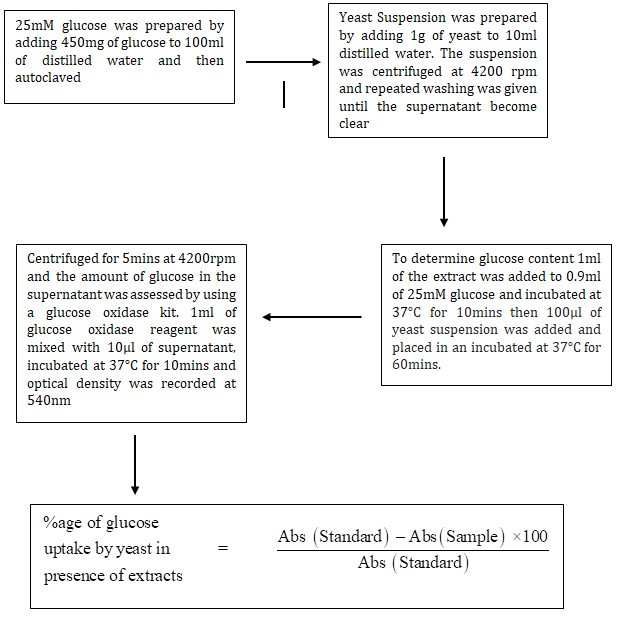
450mg of Glucose was dissolved in 100ml of distilled water to make a 25mM Glucose solution. It was autoclaved to avoid contamination and then refrigerated. The Cirillo [9] method was used to make yeast suspension.
Determination of %age Consumption of Glucose by the yeast cells
The approach used by Bhutkar and Bhise [10] i.e., the glucose oxidase method was highlighted to ascertain the impact of various spices on the yeast cells’ capacity to absorb glucose. Ready to use Glucose Oxidase Activity Assay Kit (MAK097)-Sigma-Aldrich was used to estimate the glucose content in the solution. The following formula was used to determine the percentage of glucose that yeast cells consumed:
Abs -Abs %Age consumption of Glucose by Yeast = Abs
( ) ( ) Standard Sample
( ) Standard
The presence/absence of bioactive components such as saponin, alkaloid, tannin, coumarin, phenol, and flavonoids was determined in crude extracts of fruit peels through various tests (Figure 1) and (Figure 2).
Data Analysis
The data were analyzed by using SPSS software. Two- way ANOVA was used (followed by Tukey’s PostHoc multiple comparison tests) to assess and evaluate the relative efficacies of various fruit peel extracts. Significant results were discovered with p ≤ 0.05 (Table 1) and (Table 2).
Results
The 95% Ethanolic extract of Java Plum demonstrated the highest effectiveness of glucose reduction. Millipore-filtered aqueous extracts, autoclaved aqueous, 95% ethanolic, and GIT-simulated extracts of Grapefruit, Watermelon, Yellow Melon, Pomegranate, and Java Plum decreased the glucose content in the solution from 92.54% to 99.41%.
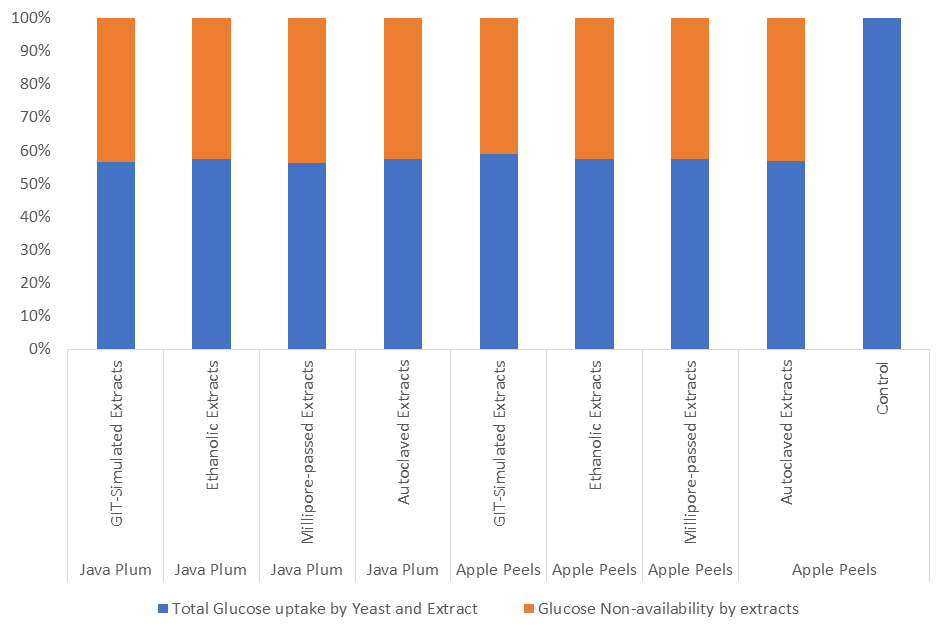
We were able to conclude that some of the glucose got bound to the fruit peel extracts and was no longer available for the detection process based on the percentage of glucose that was not made available by the fruit peel extracts. The GIT simulated extract of the rind Watermelon demonstrated the highest glucose non-availability; in contrast, the autoclaved aqueous Millipore filtered aqueous, and the simulated extracts of Orange Peels, Java Plum, Pomegranate Peels all demonstrated glucose non-availability ranging from 66.91% to 77.62%.
A comparison was made between the autoclaved and Millipore filtered aqueous extracts’ percentage of activity loss. An activity decrease of 5.28% was the highest for Grapefruit. Compared to the Millipore filtered extracts, the autoclaved aqueous extract of the Watermelon, Melon, Mango, and Java Plum did not lose any activity. The presence or absence of bioactive substances, including saponin, alkaloids, tannin, coumarin, flavonoids, and phenol, was checked in fruit peels. All the fruit peels exhibited these bioactive compounds (Figures 3-7).
| S. No. | Fruit peels | Autoclaved Aqueous | Millipore Filtered Aqueous | 95% Ethanolic | GIT Simulated | ||||
|---|---|---|---|---|---|---|---|---|---|
| A | B | A | B | A | B | A | B | ||
| 1 | Citrus reticulata | 73.89± 0.29 | 96.09 ± 0.20 | 73.85 ± 0.16 | 96.48± 0.39 | 73.45 ± 0.21 | 96.60 ± 0.20 | 66.91 ± 0.70 | 96.98 ±1.14 |
| (Orange peels) | |||||||||
| 2 | Citrus limetta | 72.01± 0.39 | 96.59± 0.09 | 70.72 ± 1.31 | 96.35± 0.73 | 72.32 ± 0.39 | 96.43 ± 0.30 | 68.07 ± 2.23 | 95.77 ± 0.10 |
| (Mousambi peels) | |||||||||
| 3 | Citrus paradisi | 72.17± 0.32 | 98.16 ± 0.11 | 66.89 ± 0.23 | 98.10 ± 0.18 | 72.22 ± 0.32 | 98.49± 0.20 | 68.42 ± 0.69 | 98.86 ± 0.15 |
| (Grapefruit peels) | |||||||||
| 4 | Citrullus lanatus | 70.20± 0.26 | 96.56 ± 0.18 | 71.00 ± 1.12 | 96.19 ± 0.13 | 70.52 ± 0.28 | 96.35 ± 0.24 | 77.62± 1.55 | 98.01 ± 0.30 |
| (Watermelon peels) | |||||||||
| 5 | Cucumis melo | 70.53 ± 0.12 | 95.76 ± 0.15 | 70.98 ± 0.30 | 95.54 ± 0.23 | 71.61 ± 0.42 | 97.48 ± 0.26 | 73.72 ± 0.93 | 94.19 ± 0.09 |
| (Yellow Canary Melon) | |||||||||
| 6 | Mangifera indica | 65.98 ± 0.29 | 96.64 ± 0.12 | 69.85 ± 0.11 | 94.40± 0.16 | 66.88 ± 0.74 | 94.42± 0.12 | 66.64 ± 0.33 | 92.54 ± 0.12 |
| (Mango peels) | |||||||||
| 7 | Musa paradisiaca | 71.10 ± 0.40 | 95.89 ± 0.17 | 67.73 ± 0.10 | 94.99 ± 0.15 | 68.05 ± 0.56 | 95.99 ± 0.29 | 69.71 ± 0.27 | 93.66± 0.10 |
| (Banana peels) | |||||||||
| 8 | Punica granatum | 75.4 ± 0.47 | 98.41 ± 0.12 | 74.34 ± 0.17 | 97.58± 0.09 | 75.53 ± 0.53 | 99.11 ± 0.18 | 71.53 ± 0.47 | 96.57 ± 0.09 |
| (Pomegranate peels) | |||||||||
| 9 | Syzygium cumini | 73.01 ± 0.29 | 98.01 ± 0.25 | 76.24 ± 0.09 | 97.98 ± 0.13 | 73.97± 0.36 | 99.41 ± 0.13 | 75.48 ± 0.49 | 98.58 ± 0.10 |
| (Java Plum) | |||||||||
| 10 | Apple peels (Malus pumila) | 71.26 ± 0.12 | 93.57 ± 0.18 | 69.65± 0.15 | 93.62± 0.14 | 69.50± 0.15 | 94.06 ± 0.10 | 65.7 ± 0.22 | 94.31 ± 0.21 |
| 11 | Control | 86.06 ± 0.41 | 88.29 ± 0.21 | 86.14 ± 0.31 | 88.16 ± 0.09 |
Table 1: A. Effect of Autoclaved aqueous, Millipore filtered aqueous, 95% ethanolic, and GIT Simulated extracts of different Frui
| Fruit Peels | %Age of Activity Loss of Autoclave Aqueous Extracts | |
|---|---|---|
| 1 | Citrus reticulata (Orange peels) | 0.04 ± 0.12 |
| 2 | Citrus limetta (Mousambi peels) | 1.29 ± 0.06 |
| 3 | Citrus paradisi (Grapefruit peels) | 5.28 ± 0.11 |
| 4 | Citrullus lanatus (Watermelon peels) | -0.80 ± 0.19 |
| 5 | Cucumis melo (Yellow Canary Melon) | -0.45 ± 0.05 |
| 6 | Mangifera indica (Mango peels) | -3.87 ± 0.27 |
| 7 | Musa paradisiaca (Banana peels) | 3.37± 0.15 |
| 8 | Punica granatum (Pomegranate peels) | 1.06 ± 0.63 |
| 9 | Syzygium cumini (Java Plum) | -3.23 ± 0.16 |
| 10 | Apple peels (Malus pumila) | 1.61 ± 0.10 |
Table 2: %age of activity loss of autoclaved aqueous extract as compared to Millipore filtered aqueous extracts of Fruit peel.
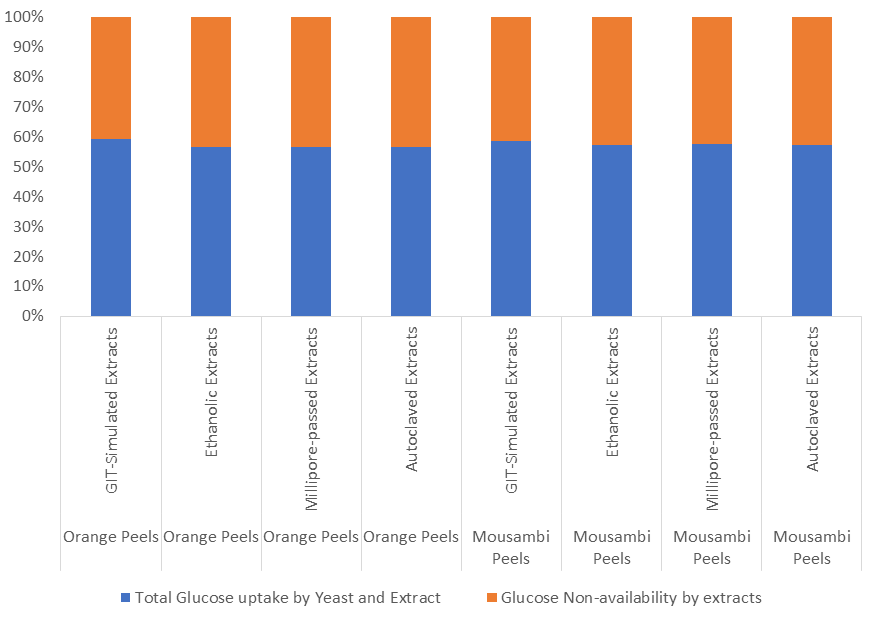
Figure 3: A. Effect of Autoclaved aqueous, Millipore filtered aqueous, 95% ethanolic, and GIT Simulated extracts of Orange Peels and Mousambi Peels on glucose non-availability and total reduction by Saccharomyces cerevisiae and Fruit Peel extracts. B. Determined through glucose oxidase method and estimated through Two-way ANOVA where p-value ≤ 0.05.
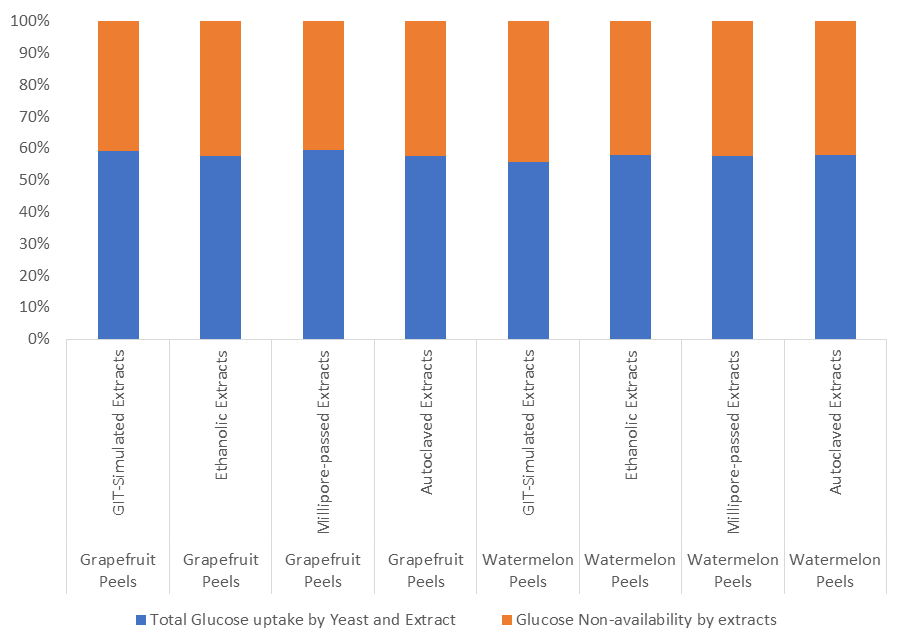
Figure 4: A. Effect of Autoclaved aqueous, Millipore filtered aqueous, 95% ethanolic, and GIT Simulated extracts of Grapefruit Peels and Watermelon Peels on glucose non-availability and total reduction by Saccharomyces cerevisiae and Fruit Peel extracts. B. Determined through glucose oxidase method and estimated through Two-way ANOVA where p-value ≤ 0.05.
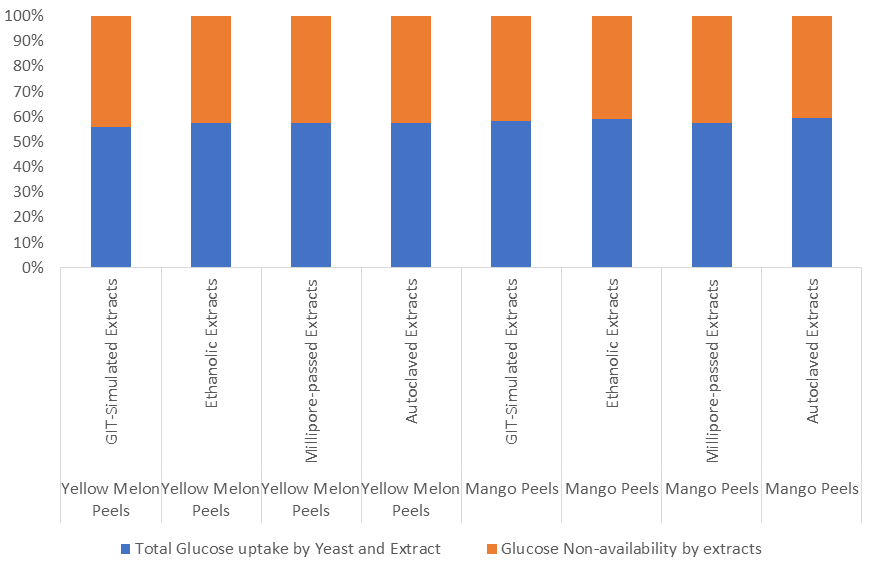
Figure 5: A. Effect of Autoclaved aqueous, Millipore filtered aqueous, 95% ethanolic, and GIT Simulated extracts of Yellow Melon Peels and Mango Peels on glucose non-availability and total reduction by Saccharomyces cerevisiae and Fruit Peel extracts. B. Determined through glucose oxidase method and estimated through Two-way ANOVA where p-value ≤ 0.05.
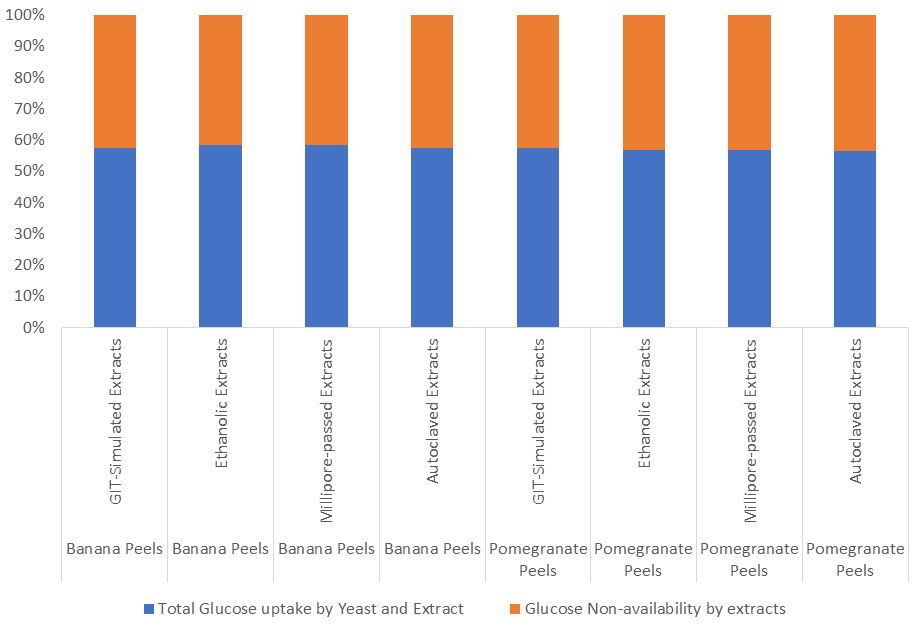
Figure 6: A. Effect of Autoclaved aqueous, Millipore filtered aqueous, 95% ethanolic, and GIT Simulated extracts of Banana Peels and Pomegranate Peels on glucose non-availability and total reduction by Saccharomyces cerevisiae and Fruit Peel extracts. B. Determined through glucose oxidase method and estimated through Two-way ANOVA where p-value ≤ 0.05.
Discussion
In this investigation, various fruit peel extracts enhanced the yeast’s (Saccharomyces cerevisiae) absorption of glucose as they possess different types of bioactive phytochemicals like alkaloids, fibers, saponin, phenol, flavonoids, tannin, and coumarin. Among the fruit peel extracts, the GIT-simulated extract of watermelon rind exhibited the highest glucose non-availability at 77.62%, suggesting that the bioactive compounds in watermelon peel strongly bind to glucose, rendering it unavailable for detection. This high percentage contrasts with the results from the extracts of other fruit peels such as orange, java plum, and pomegranate, which showed glucose non-availability ranging from 66.91% to 73.89%. These differences highlight the varying capacities of fruit peels to bind glucose, likely due to the specific bioactive compounds present in each type of peel. The study compared autoclaved aqueous, Millipore-filtered aqueous, 95% ethanolic, and GIT-simulated extracts of the fruit peels. The 95% ethanolic extract of Java plum demonstrated the highest effectiveness in glucose reduction, achieving a 99.41% decrease in glucose content. This suggests that the ethanolic extraction method effectively concentrates the bioactive compounds responsible for glucose binding and reduction. In contrast, the autoclaved aqueous extracts, although showing some reduction in glucose content, were less effective compared to the ethanolic extracts.
For instance, the autoclaved aqueous extract of grapefruit exhibited a 5.28% decrease in activity, which was the highest among the aqueous extracts, yet it was still lower than the effectiveness of the ethanolic extract. the autoclaved and GIT-simulated extracts retained their bioactive properties despite the high temperatures and simulated gastrointestinal conditions. This resilience suggests that fruit peels could be potential candidates for natural anti-diabetic treatments, as their effectiveness remains stable even after undergoing harsh processing conditions. As the glucose coupled with the fruit peel extracts, most of it became unavailable, and the remainder was absorbed by the yeast cells more effectively than in the control. Due to their accessibility and widespread use in daily life, fruit peels can assist in treating diabetes and have fewer negative effects than commercially available anti- diabetic medications.
Highlights
- Fruit peels may be used as herbal anti-diabetic medicine.
- Fruit peels enhance the uptake of glucose.
- Fruit peels bound with glucose and become non- available.
- Saccharomyces cerevisiae was used as a model organism under various experimental circumstances to explore glucose uptake.
- Spectrophotometric Analysis was performed.
Funding Sources
This research did not receive any specific grant from funding agencies in the public, commercial, or not-for-profit sectors.
Acknowledgment
We would like to thank Prof. Dr. Javed Iqbal Qazi (Institute of Zoology, University of the Punjab, Lahore, Pakistan) for his continuous support and efforts.
Credit Author Statement
Zainab Azaz: Conceptualization, Methodology, Writing original draft preparation, Software, Data correction, Visualization, Investigation, Validation. Dr. Javed Iqbal Qazi: Supervision, Writing-Reviewing and Editing.
References
-
Gomes AC, Bueno AA, De Souza RGM, Mota JF (2014) Gut microbiota, probiotics, and diabetes. Nutr J 13(60): 1-13.
-
World Health Organization (1999) Definition, diagnosis, and classification of diabetes mellitus and its complications: report of a WHO consultation. Part 1, Diagnosis and classification of diabetes mellitus.
-
Balbi ME, Tonin FS, Mendes AM, Borba HH, Wiens A, et al. (2018) Antioxidant effects of vitamins in type 2 diabetes: a meta-analysis of randomized controlled trials. Diabetol Metab Syndr 10(18): 1-12.
-
Seltzer HS (1989) Drug-induced hypoglycemia: a review of 1418 cases. Endocrinol Metab Clin North Am 18(1): 163-183.
-
Campbell IW, Howlett HCS (1995) Worldwide experience of metformin as an effective glucose‐lowering agent: a meta‐analysis. Diabetes Metab Res Rev 11(S1): S57-S62.
-
Modak M, Dixit P, Londhe J, Ghaskadbi S, Devasagayam TPA (2007) Indian herbs and herbal drugs are used for the treatment of diabetes. J Clin Biochem Nutr 40(3): 163-173.
-
Patel DK, Kumar R, Laloo D, Hemalatha S (2012) Diabetes mellitus: an overview of its pharmacological aspects and reported medicinal plants having antidiabetic activity. Asian Pac J Trop Biomed 2(5): 411-420.
-
Minekus M, Alminger M, Alvito P, Ballance S, Bohn T, et al. (2014) A standardized static in vitro digestion method suitable for food-an international consensus. Food & Funct 5(6): 1113-1124.
-
Cirillo VP (1962) Mechanism of glucose transport across the yeast cell membrane. J Bacteriol 84: 485-491.
-
Bhutkar M, Bhise S (2013) In vitro hypoglycemic effects of Albizzia lebbeck and Mucuna pruriens. Asian Pac J Trop Biomed 3(11): 866-870.
- Gallic and Citric Acid Present in the Peels of Tropical Fruits as an Alternative in the Fight against Cancer
- Treating the Forehead Lines with Combination of Forehead and Glabellar Botulinum Toxin Among Japanese Patients
- Clinical Evaluation of Patients Suffering from Breast Cancer & Determination of Treatment Therapies and Better Strategies Related to Breast Cancer
- Medieval Recipes by Al-Zahrāwī for Heart Palpitations Treatment
- Etiology and Prescription Errors of Myocardial Infarction in Different Health Care Systems of Azad Kashmir
- Early Diagnosis and Multidisciplinary Management of Turner Syndrome: A Paediatric Case Study