
Effects of High Intensity Interval Training on Glycemic Behavior of Type 1 Diabetes: A Systematic Review
Introduction: Type 1 diabetes mellitus is characterized by a dysfunction in the pancreas that prevents the production of insulin, responsible for controlling blood glucose, resulting in permanent hyperglycemia, commonly accompanied by dyslipidemia and arterial hypertension. The long-term consequences of this disease have the possibility of compromising the function of different organs such as the heart, eyes, kidneys, blood vessels and susceptibility to infections, resulting in chronic changes such as: coronary heart disease, retinopathy, nephropathy, peripheral nephropathy, diabetic neuropathy and atherothrombotic. Objective: To analyze the effects of high-intensity interval training on glycemic control in type 1 diabetes mellitus. Methods: This is a systematic review, which was conducted in accordance with PRISMA recommendations, of studies that analyzed the effects of interval training on high-intensity (HIIT) in glycemic control of type 1 diabetes mellitus. The screening process and selection of articles was carried out in PubMed, Cochrane, Medline and Google academic databases. Randomized clinical trials that adopted high-intensity interval training interventions were included in this review. Results: 524 studies were identified, of which only nine met the eligibility criteria. It was observed that they worked with a sample between 3 and 17 participants, most of them with men and women, all studies carried out the intervention with an ergometric bicycle with a duration between 25 and 45 minutes of exercise and sprints determined by VO2max interspersed with active rest and/or or at rest. Conclusion: When analyzing the results of the studies included in this review, it is clear that most of them showed relevant results for glycemic control during the practice of high-intensity interval training (HIIT) in order to avoid hypoglycemia and/ or hyperglycemia during carrying out the exercise.
Introduction
According to the international diabetes federation, there are 537 million people living with diabetes, responsible for 6.7 million deaths worldwide and more than 900 billion have already been spent on health [1, 2]. Type 1 diabetes mellitus is characterized by a dysfunction in the pancreas that prevents insulin production, responsible for controlling blood glucose in the bloodstream , resulting in permanent hyperglycemia, commonly accompanied by dyslipidemia and arterial hypertension [2, 3, 4].
The long-term consequences of this disease have the possibility of compromising the function of different organs such as heart, eyes, kidneys, blood vessels and susceptibility to infections, resulting in chronic changes such as coronary diseases, retinopathy, nephropathy, peripheral nephropathy, diabetic neuropathy and atherothrombotic neuropathy [2, 3].
Laboratory diagnosis can be performed by 3 clinical tests, fasting glycemia, blood glucose 2 hours oral glucose tolerance test (TOTG) or glycated hemoglobin (HbA1c), HbA1c presents greater stabilization for the diagnosis of diabetes than other methods used, due to its form of collection and storage giving greater reliability and use of the method, the glycemic goal according to the American Association of Clinical Endocrinologists (AACE) ranges from 5.7% to 6.5% for controlled glycemia [1, 2, 3].
Complications associated with hypoglycemia or permanent hyperglycemia can be combated through adequate nutrition, drug use and physical exercise [1, 4, 5].
The regular practice of physical exercise has the function of improving physical condition, preventing or treating diseases at all ages, reducing cardiovascular risk, weight control, improving muscle strength, reducing cholesterol and improving physical fitness [6]. In type 1 diabetes contributes to the improvement of the immune system, increases insulin sensitivity, improves cardiovascular function, impacting quality of life [5, 6, 7]. However, individuals with type 1 diabetes have difficulties to control blood glucose during exercise, which may lead to hypoglycemia or hyperglycemia during and/or after incorrect practice [8]. Therefore, the aim of this systematic review was to analyze the effects of high intensity interval training on glycemic control of type 1 diabetes mellitus.
Methods
Search Strategy in the Literature
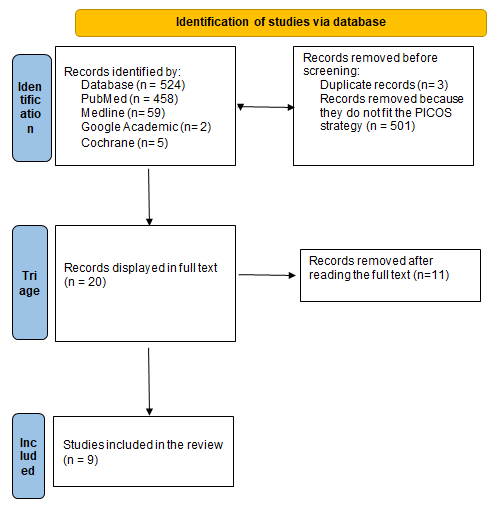
This is a systematic review, which was conducted in accordance with the recommendations of the Preferred reporting items for systematic review and meta-analysis (PRISMA). The strategy was conducted in four stages. 1st stage: preparation of the research question, 2nd stage: selection of studies, 3rd stage: data extraction, 4th stage: evaluation of the methodological quality of the studies included in the review. The articles were searched in the electronic databases PubMed, Cochrane, Medline and Google scholar. For each database, a search strategy was used, following mesh and DECS descriptors. Table 1 represents the search strategy in the databases. Figure 1 represents the flowchart of all stages of the study.
| Search Strategy | Mesh and Decs descriptors |
|---|---|
| PubMed | High-Intensity Interval Training; Interval Training, High-Intensity; Training, High Intensity Interval; High-Intensity Intermittent Exercise; Glycemic Control; Control, Glycemic; Blood Glucose Control; Type 1 Diabetes. |
| Cochrane | High-Intensity Interval Training; Glycemic Control; Diabetes Mellitus, Type I |
| Medline | High-Intensity Interval Training; Interval Training, High-Intensity; Training, High-Intensity Interval; High-Intensity Intermittent Exercise; Glycemic Control; Control, Glycemic; Blood Glucose Control; Type 1 Diabetes. |
| Google acadêmico | High Intensity Interval Training; Glycemic Control; Type 1 Diabetes; Diabetes. |
Table 1: Search Strategy, Mesh and Decs descriptors.
Eligibility Criteria
The eligibility criteria were established according to the PICOS strategy (population, intervention, comparator, outcome). Population: the review included studies that evaluated type 1 diabetics of both sexes, who do not have physical and/or cognitive limitations due to diabetes or not; intervention: The proposal of this review included randomized clinical trials that adopted interventions with high intensity interval training; comparator: a control group was the comparator of high intensity interval training: outcomes: the primary outcome of this review was glycemic control, expressed by glycemia, amount of glucose in the blood.
For the extraction of data from the included articles, an electronic spreadsheet was used, according to the eligibility criteria, independently. The characteristics of the studies (gender, number of participants), the characteristics of the exercise protocols (Equipment, Type of Training, Duration) were summed up and imported into Table 2.
Results and Discussion
The information considered relevant for the present review, based on the nine studies included for analysis, was initially described in each corresponding column, presented in Table 2. Then, the information was compiled and presented descriptively and finally critically analyzed.
| Author/Year | Sample | Equipment | Type of training | Duration (min) | Results HbA1c (%) | ||
|---|---|---|---|---|---|---|---|
| PRÉ | PÓS | PÓS ≤24H | |||||
| MOSER et al. (2016) | Sex: men Number of participants: 6 | Bicycle | HIITbaixa intensidade, HIIT intensidade moderada, HIIT alta intensidade, CON baixa intensidade, CON intensidade moderada, CON alta intensidade | 30 | 7,4 ± 0,6 | ↓ ↔ ↔ ↓ ↓↓ ↑ | - |
| Sex: men and women Number of participants: 12 | Bicycle | HIIT CON | 45 | 7,6 ± 0,7 | ↑ ↓ | ↑↑ ↔ | |
| MARAN et al. (2010) | Sex: men Number of participants: 8 | Bicycle | HIIT CON | 30 | 7,1 ± 0,6 | ↓ ↓ | ↓ ↔ |
| GUELFI et al. (2007) | Sex: men and women Number of participants: 9 | Bicycle | HIIT jejum CON jejum | 30 | 5,0 | ↓ ↓ | ↓ ↔ |
| SCOOT et al. (2018) | Sex: men and women Number of participants: 14 | Bicycle | HIIT CON | 30 40 50 | 7,4 ± 0,3 | ↓ ↓ | ↑ ↔ |
| GUELFI et al. (2005) | Sex: men and women Number of participants: 7 | Bicycle | HIIT CON | 30 | 8,8 ± 2,4 | ↓ ↓↓ | ↔ ↓ |
| HIIT = high intensity interval training; CON = continuous exercise; HIIT10 = 10% reduction in insulin; HIIT20 = 20% reduction in insulin; HIIT30 = 30% reduction in insulin; CON20 = reduction in 20% of insulin; ↓ = low glucose level; ↑ = high level of glucose; ↔ = stabilized glucose level. |
Table 2: Description of randomized clinical trials that used high-intensity interval training in type 1 diabetes.
| Author/Year | Sample | Equipment | Type of training | Duration (min) | Results HbA1c (%) | ||
|---|---|---|---|---|---|---|---|
| PRÉ | PÓS | PÓS ≤24H | |||||
| COCKCROFT et al. (2017) | Sex: men and women Number of participants: 3 | Bicycle | HIIT CON | 30 | 7,0 | ↓ ↓ | ↓ ↔ |
| LI et al. (2019) | Sex: men and women Number of participants: 17 | Bicycle | HIIT jejum + calistenia | 25 | 7,2 ± 0,9 | ↑ | ↑ |
| LEE et al. (2020) | Sex: men and women Number of participants: 12 | Bicycle | HIIT10, 20, 30 CON20 | 25 30 | 8,0 ± 0,8 | ↓ ↓ | ↓ ↔ |
| HIIT = high intensity interval training; CON = continuous exercise; HIIT10 = 10% reduction in insulin; HIIT20 = 20% reduction in insulin; HIIT30 = 30% reduction in insulin; CON20 = reduction in 20% of insulin; ↓ = low glucose level; ↑ = high level of glucose; ↔ = stabilized glucose level. |
Table 3: Description of randomized clinical trials that used high-intensity interval training in type 1 diabetes.
The 9 studies selected and analyzed worked with a sample of between 3 and 17 participants, most of them with men and women, with the exception of two studies, which analyzed only men [9, 10]. Regarding the equipment, all studies performed the intervention with an exercise bike. Regarding the duration and type of training of the studies, the studies performed 30 minutes of intervention, varying HIIT of intensity, low, moderate, high and CON of low, moderate, high intensity; HIIT high intensity and CON; FASTING HIIT and FASTING CON; HIIT and CON; HIIT and CON; HIIT + CON fasting, respectively [9, 10, 11, 12, 13].
One study performed 25 minutes of intervention ranging HIIT10 reduction in insulin application by 10%, HIIT20 reduction in insulin application by 20%, HIIT30% reduction in insulin application by 30% at each intervention session and CON20 reducing insulin application by 20% [14], a study conducted 45 minutes of moderate intensity HIIT intervention and CON [15] and a study of 30, 40 and 50 minutes of HIIT and CON [16] intervention progression.
Specifically on the results obtained, the HIIT and CON (3 sessions for each) were used for the adaptation of insulin therapy, through insulin degludec and the incremental effort test (through the maximum power and the first and second turning point of the lactate) to control the levels of HIIT and CON used in the training of low intensity HIIT with 20 seconds of sprints for 120 seconds of rest ( ratio 1:6), moderate intensity HIIT with 20 seconds of sprints for 60 seconds of rest (1:3% ratio), high intensity HIIT with 20 seconds of sprints for 20 seconds of rest (1:1 ratio), low intensity CON remained 5% below1st lactate turning point, moderate intensity CON remained 5% above the 1st lactate turning point, High intensity CON remained 5% below the 2nd turning point of lactate, every five minutes the glucose level was collected during the session, interventions using HIIT at different intensities proved to be efficient for glucose control during practice, but the effect of exercise on HbA1c
over the long term (9) was not evaluated [17].
Four studies used the same duration for the session time (30 min) and all performed familiarization sessions to determine the VO2 MAX of each participant, modifying the interventions of the studies [10, 11, 12, 13]. The HIIT at 40% of VO2 MAX was performed interspersed with sprints (5 seconds at 85% VO2 MAX) every 2 minutes and CON at 40% of VO2 MAX, blood collection was performed in half (15min) and at the end (30min) then the collection was performed in 45, 60, 75, 90, 120, 150 min after session, during both sessions there was a decrease in glycemia in a non-significant way, but it shows a significant decrease in glucose for the HIIT modality in the short term, after session [10, 18].
Two studies performed HIIT at 40% of peak VO2 interspersing maximum sprints of 4 seconds every 2 minutes and CON at 40% of peak VO2 [11, 12] , the first performed the exercises with patients in night fasting and a constant infusion of insulin during exercise to maintain euglycemia, blood collection was performed every 5 minutes during exercise, for 120 min after exercise, participants were evaluated until the glucose rate was stabilized. During the session, the blood glucose level remained balanced for HIIT and CON, however the glycemia remained significantly higher after exercise for the CON group and the HIIT remained balanced in the short term, but at the end the con group glycemia stabilized while the HIIT group continued to decline [11, 19, 20].
Blood collection of the second study was performed every 10 minutes during the intervention session to determine the blood glucose level, at the end the collection was performed in 0, 5, 10, 15, 30, 45, 60 min after session, the HIIT and CON groups showed a fall in blood glucose levels during exercise, however , in the CON group, the decrease was greater, this decrease was constant in the long-term recovery for the CON group, while there was a stabilization for the HIIT group [12, 21].
The study performed a 1-min VO2 pico sprints intervention interspersing with 1 min and 25 sec of active rest for the HIIT group, the CON group maintained 90% of the continuous aerobic threshold and evaluated post-exercise glycemia in the short term (at the end) and in the long term (up to 24h post-exercise) in both groups through continuous monitoring of glycemia, the results obtained showed a decrease in glycemia in the short term for the HIIT and CON groups not significant between both, but blood glucose levels continue to fall for the HIIT group in the long term compared to the CON group that stabilizes [13, 22].
Two studies had a duration of 25 minutes for the HIIT group, there was no control group for the first study, the CON group of the second study maintained a duration of
30 minutes [14, 23], the intervention performed by the first study consists of 3 5-minute series with 5 minutes of rest between the sets for collection blood glucose for fasting HIIT group, performing 2 sets on the exercise bike with sprints from 30 seconds to 100, 110, 120, 2 times 130% of VO2peak interspersed with active 30-second rests and 1 series of calisthenics in circuit format, after the duration of the exercise, remained 15 min of recovery at rest, glucose levels were evaluated between the 5 min of rest during the series and during the 15 min after exercise, the results indicate that the performance of fasting HIIT causes a significant increase in glucose, enhancing the risk of hyperglycemia evaluated after short and long-termexercises [23].
The second study performed 4 series of sprints at 4 min between 85-95% FCpico interspersing with active intervals of 3 min between 50-70% FCpico for the HIIT group, the COM group performed 30 min continuous to 60-70% FC pico, with the objective of avoiding nocturnal hypoglycemia the participants of the HIIT group were instructed to reduce the insulin dose at each session, with a reduction of 10%, 20% and 30%, for the CON group this reduction remained in 20% reduction after session, both groups showed a similar decrease in blood glucose after exercise, during the night time the drop in blood glucose continued for the participants of the HIITgroup10, HIIT20 and HIIT30, but for the CON20 group the glycemia remained stable [14, 24, 25].
One study carried out the intervention lasting 45 min for both closed chain circuit groups (HIIT and CON) with 6 sets of 4 min of sprints with intervals of 2 min (rest of 4 min between the 3rd and 4th grade) with intensity between the anaerobic threshold and VO2MAX for the HIIT group, the CON group maintained continuous exercise at 70% of VO2MAX, during the session the glucose level showed a reduction causing mild hypoglycemia for the CON group, and an increase for the HIIT group, however, the HIIT group showed to have higher levels, after the exercise session the glycemia remained high for the HIIT group in the short and long term [15, 26].
One study performed an intervention of 6 weeks 3 times a week each session was performed sprints of 1 min to 100% VO2 peak with intervals of 1 min of active rest for the HIIT group, the CON group performed continuous cycling at 65% of peak VO2 increasing every two weeks the session time by 30, 40 and 50 min, of the results obtained on blood glucose, there was a non-significant decrease in the HIIT group during the sessions, however, the CON group showed a consistent decrease during the sessions, after the exercise, the HIIT group showed an increase in blood glucose during the nightperiod [16, 26, 27].
Four studies showed a constant short-term (15 minutes to 24-hour) fall after exercise, increasing the risk of hypoglycemia at night and/or throughout the day (10,13). Three studies showed a steady increase in blood glucose after training session in the short to long term is believed that this increase occurred due to maximum intensity interspersed by similar resting ratios, HIIT applied to resistance exercises, duration of Sprints greater than rest time [15, 16, 23].
After this analysis, it is suggested that more studies be conducted evaluating better the variables and/or frequencies of HIIT intervention on glycemia after practice in the short to long term.
Conclusion
When analyzing the set of results of the studies included in this review, it is noticed that most of them demonstrated relevant results for glycemic control during the practice of high intensity interval training (HIIT) in order to avoid hypoglycemia and/or hyperglycemia during exercise, however they showed a constant decline in the short to long term (15 minutes to 24 hours) after exercise in blood glucose level, risk of hypoglycemia at night and/or throughout the day.
References
-
International Diabetes Federation (2021) IDF Diabetes Atlas, In: 10th (Edn.), International Diabetes Federation, Brussels, Belgium.
-
Editorial C (2020) Diretrizes sociedade brasileira de diabetes. Alamedas 9: 215-217.
-
Lyra R, Cavalcanti N, Santos RD (2019) Diabetes mellitus uma abordagem cardiovascular. pp: 1-406.
-
Diabetes DOF (2011) Diagnosis and classification of diabetes mellitus. Diabetes Care 34(S1): 62-69.
-
WHO (2016) Global Report on Diabetes. IRIS 978: 1-86.
-
Pereira WVC, Vancea DMM, de Andrade Oliveira R, de Freitas YGPC, Lamounier RN, et al. (2023) Position of Brazilian Diabetes Society on exercise recommendations for people with type 1 and type 2 diabetes. Diabetol Metab Syndr 15(1): 2.
-
Codella R, Terruzzi I, Luzi L (2017) Why should people with type 1 diabetes exercise regularly?. Acta Diabetol 54(7): 615-630.
-
Baldi JC, Hofman PL (2010) Does careful glycemic control improve aerobic capacity in subjects with type 1 diabetes?. Exerc Sport Sci Rev 38(4): 161-167.
-
Moser O, Mader JK, Tschakert G, Mueller A, Groeschl W, et al. (2016) Accuracy of continuous glucose monitoring (CGM) during continuous and high-intensity interval exercise in patients with type 1 diabetes mellitus. Nutrients 8(8): 489.
-
Maran A, Pavan P, Bonsembiante B, Brugin E, Ermolao A, et al. (2010) Continuous glucose monitoring reveals delayed nocturnal hypoglycemia after intermittent high- intensity exercise in nontrained patients with type 1 diabetes. Diabetes Technol Ther 12(10): 763-768.
-
Guelfi KJ, Ratnam N, Smythe GA, Jones TW, Fournier PA (2007) Effect of intermittent high-intensity compared with continuous moderate exercise on glucose production and utilization in individuals with type 1 diabetes. Am J Physiol - Endocrinol Metab 292(3): E865-E870.
-
Kj G, Tw J, Pa F (2005) The decline in blood glucose levels is less with intermittent high-intensity compared with moderate exercise in individuals with type 1 diabetes. Diabetes Care 28(6): 1289-1294.
-
Cockcroft EJ, Moudiotis C, Kitchen J, Bond B, Williams CA, et al. (2017) High-intensity interval exercise and glycemic control in adolescents with type one diabetes mellitus: a case study. Physiol Rep 5(13): 1-6.
-
Lee AS, Way KL, Johnson NA, Twigg SM (2020) High-intensity interval exercise and hypoglycaemia minimisation in adults with type 1 diabetes: A randomised cross-over trial. J Diabetes Complications 34(3): 107514.
-
Jayawardene DC, McAuley SA, Horsburgh JC, Gerche A La, Jenkins AJ, et al. (2017) Closed-loop insulin delivery for adults with type 1 diabetes undertaking high-intensity interval exercise versus moderate-intensity exercise: A randomized, crossover study. Diabetes Technol Ther 19(6): 340-348.
-
Scott SN, Cocks M, Andrews RC, Narendran P, Purewal TS, et al. (2018) High-Intensity Interval Training Improves Aerobic Capacity Without a Detrimental Decline in Blood Glucose in People with Type 1 Diabetes. J Clin Endocrinol Metab 104(2): 604-612.
-
Moser O, Tschakert G, Mueller A, Groeschl W, Pieber TR, et al. (2015) Effects of High-Intensity Interval Exercise versus Moderate Continuous Exercise on Glucose Homeostasis and Hormone Response in Patients with Type 1 Diabetes Mellitus Using Novel Ultra-Long-Acting Insulin. PLoS ONE 10(8): e0136489.
-
Guelfi KJ, Jones TW, Fournier PA (2005) The decline in blood glucose levels is less with intermittent high‐ intensity compared with moderate exercise in individuals with type 1 diabetes. Diabetes Care 28(6): 1289-1294.
-
Silverstein J, Klingensmith G, Copeland K, Plotnick L, Kaufman F, et al. (2005) Care of children and adolescentes with type 1 diabetes: a statement of the American Diabetes Association. Diabetes Care 28: 186-212.
-
Colberg SR, Laan R, Dassau E, andKerr D (2015) Physical activity and Type 1 diabetes: time for a rewire?. J Diabetes Sci Technol 9(3): 609-618.
-
Raile K, Kapellen T, Schweiger A, Hunkert F, Nietzschmann U, et al. (1999) Physical activity and competitive sports in children and adolescentes with type 1 diabetes. Diabetes Care 22(11): 1904-1905.
-
Maran A, Poscia A (2002) Continuous subcutaneous glucose monitoring: the GlucoDay system. Diabetes Nutr Metab 15(6): 429-433.
-
Li A, Riddell MC, Potashner D, Brown RE, Aronson R (2019) Time Lag and Accuracy of Continuous Glucose Monitoring during High Intensity Interval Training in Adults with Type 1 Diabetes. Diabetes Technol Ther 21(5): 286-294.
-
Metcalf KM, Singhvi A, Tsalikian E, Tansey MJ, Zimmerman MB, et al. (2014) Effects of moderate -to -vigorous intensity physical activity on overnight andnext -day hypoglycemia in active adolescentes with type 1 diabetes. Diabetes Care 37(5): 1272-1278.
-
Harmer AR, Chisholm DJ, McKenna MJ (2007) High -intensity training improves plasma glucose and acid -base regulation during intermittent maximal exercise in type 1 diabetes. Diabetes Care 30(5): 1269-1271.
-
Makura CB, Nirantharakumar K, Girling AJ, Saravanan P, Narendran P (2013) Effects of physical activity on the development and progression of microvascular complications in type 1 diabetes: retrospective analysis of the DCCT study. BMC EndocrDisord 13(1): 37.
-
Danne T, Nimri R, Battelino T, Bergenstal RM, Close KL, et al. (2017) International consensus on use of continuous glucose monitoring. Diabetes Care 40(12): 1631-1640.
- Investigation of Polymorphisms in PPAR-Ɣ and TRHR Genes and their Impact on Turkish Diabetic and Obese Individuals
- The Impact of Aircraft Noise Exposure on the Efficacy of Empagliflozin Therapy in an Animal Model of Obesity
- Rooibos Mitigates Metabolic and Inflammatory Dysfunctions in Mice Fed a High-Carbohydrate Diet
- Synergistic Effect of Combined Leaf Extract of Vernonia amygdalina, Ocimum gratissimum, and Zingiber officinale Tuber on Phytochemical Profile, Antioxidant Activity, Serum Insulin, and Biochemical Parameters in Streptozotocin-Induced Diabetic Rats
- Investigation of Cardiovascular Responses to Aerobic Exercise in Obese University Students
- A Look at the Phase Angle Obtained by Electrical Bioimpedance