
CRISPR-Cas-Based Epigenome Editing as a Novel Therapeutic Strategy for Metabolic Disorders: Targeting Gene Expression Patterns in Specific Tissues to Treat Diabetes and Obesity
Metabolic disorders such as diabetes and obesity are major public health concerns that affect millions of people worldwide. Epigenetic modifications have been implicated in the development and progression of these disorders, making them attractive targets for therapeutic intervention. The emergence of Clustered Regularly-Interspaced Short Palindromic Repeats (CRISPRCas- based) epigenome editing technology has revolutionized the field of gene editing and holds great promise for the treatment of metabolic disorders. However, there are still significant challenges and ethical concerns that must be addressed before this technology can be safely and effectively used in clinical applications. This review provides an overview of epigenetic modifications and their role in metabolic disorders, as well as an explanation of CRISPR-Cas-based epigenome editing and its potential applications. The current state of research and major findings on using this technology for the treatment of metabolic disorders are discussed, along with the advantages and limitations of different delivery strategies. The potential for off-target effects and unintended consequences, as well as strategies for minimizing or mitigating these effects, are also considered. Ethical and regulatory issues associated with CRISPR-Cas-based epigenome editing for metabolic disorders are discussed, with a focus on the importance of responsible development and implementation of this technology. The potential societal impacts of CRISPR-Cas-based epigenome editing for metabolic disorders are also considered. In conclusion, this review highlights the potential of CRISPR-Cas-based epigenome editing as a therapeutic strategy for metabolic disorders, but also underscores the importance of rigorous safety and efficacy testing and responsible implementation. Ultimately, the success of this technology will depend on a balanced consideration of the scientific, ethical, and societal implications.
Introduction
Metabolic disorders are a cluster of disturbances that hinder metabolism and lead to several adverse health effects [1]. When one suffers from such a disorder, their metabolic processes either decelerate or malfunction [2]. In the contemporary world, common examples of these illnesses include diabetes and obesity [3]. Diabetes is a persistent health challenge that ensues when the body cannot control blood glucose levels effectively [4]. There are two main types of diabetes: Type 1 and Type 2 [5]. Type 1 diabetes is a malady that leads to the expulsion of insulin- manufacturing cells within the pancreas due to an autoimmune response [6]. The absence of insulin causes issues in properly processing glucose, which results in abnormally high blood sugar levels [3]. Type 2 diabetes, on the contrary, manifests as a metabolic dysfunction where either resistance to insulin occurs or insufficient quantities of it are produced by the body further complicating blood sugar level regulation [7]. Both variations of diabetes possess the potential to induce life- threatening health implications, such as cardiovascular disease, renal insufficiency and visual impairment [8]. It is widely known that obesity, or the accumulation of excess body fat, is a prevalent metabolic disorder within our society Typically defined by having a body mass index (BMI) greater than or equal to thirty [9]. This condition poses significant health risks. Excesses in adipose tissue have been shown to be associated with an increased likelihood of developing heart disease, stroke, and certain types of cancer [10]. Both diabetes and obesity are major public health concerns that have reached epidemic proportions in many parts of the world [11]. The World Health Organization (WHO) has stipulated that diabetes currently affects approximately 400 million people worldwide, with projections predicting an escalation to above 600 million by the year 2045. Moreover, WHO estimates suggest that over 650 million people globally suffer from obesity, with forecasts indicating potential escalation to a staggering one billion cases by 2030 [12, 13]. Diabetes and obesity place a major strain on both health and economics. The imperative need for efficient treatments aimed at addressing the fundamental metabolic disturbance deriving from these conditions is clear [14]. CRISPR-Cas based epigenome editing emerges as an auspicious strategy to specifically target the genes and pathways underlying metabolic regulation, offering potential benefits in improving patient outcomes [15].
Brief Overview of Epigenetics and CRISPR-Cas- Based Epigenome Editing
Epigenetics is the analysis of genetic expression changes that happen without affecting the DNA sequence. There are various environmental stimuli like diet, exercising and exposure to toxins or stress which can lead to such changes [16]. Consequently, epigenetic modifications might be inherited through generations and they’re significantly correlated with complex disorders of health including cancer, neurological issues as well as metabolic diseases such as obesity and diabetes [17, 18]. Epigenetic modifications can be explored and controlled effectively through CRISPR- Cas- based epigenome editing, which is a promising too [19]. This gene-editing technology is potent and operates via RNA-guided nucleases, which cut DNA at particular genome sites. Researchers can disable the role of marked genes and investigate their correlation with cellular behavior and disease progression by introducing defined mutations or deletions at these localized points [20]. Recently, scientists have explored using CRISPR-Cas technology for epigenome editing. This technique targets specific epigenetic modifications like DNA methylation or histone modifications to change gene expression patterns [19, 20]. This may possibly help reverse the effects of environmental exposure or genetic mutations that lead to metabolic disorders [21]. Epigenome editing with CRISPR-Cas has been tested in preclinical trials and appears promising as it helps improve outcomes in animal models of diabetes and obesity by effectively modulating gene expression patterns [23, 24]. However, the responsible application of this technology is still being hindered by technical difficulties and ethical issues before human patients can benefit from it safely and efficiently [22]. Despite these challenges, CRISPR-Cas-based epigenome editing represents a promising approach to addressing the underlying genetic and epigenetic factors that contribute to metabolic disorders [22], with the potential to transform the field of personalized medicine in the years to come (Figure 1) [23].
![Figure 2: Schematic summary of CRISPR/Cas endonuclease concepts. (A) Different formats in which Cas protein, gRNA, and HDR templates can be used to achieve gene editing. (B) The active RNP complex acts by cleaving 2 DNA strands at the sgRNA target site in the presence of a PAM sequence (red). Three repair mechanisms can occur: (1) NHEJ, which can induce gene knockout by random indel formation; (2, 3) HDR using a ssDNA or dsDNA template, respectively [45].](/fulltextimages/11437/fig_2.png)
Thesis Statement and Research Questions
This paper aims to explore the potential for CRISPR- Cas-based epigenome editing to treat metabolic disorders, such as diabetes and obesity, by modulating gene expression patterns in target tissues. Specifically, it seeks to answer the research questions of:
- What are the key epigenetic modifications involved in the development of metabolic disorders such as diabetes and obesity?
- How does CRISPR-Cas-based epigenome editing work, and what are the potential benefits and limitations of this technology for treating metabolic disorders?
- What preclinical studies have been conducted to evaluate the efficacy and safety of CRISPR-Cas-based epigenome editing for treating metabolic disorders, and what are the key findings from these studies?
- What are the key technical and ethical challenges associated with translating CRISPR-Cas-based epigenome editing into safe and effective treatments for human patients with metabolic disorders, and how can these challenges be addressed?”
Epigenome Editing with CRISPR-Cas Technology for Metabolic Disorders
Explanation of Epigenetic Modifications and their Role in Metabolic Disorders: Epigenetic alterations are modifications that adjust gene expression without any accompanying updates to the DNA sequence underneath [24, 25]. As opposed to common mutation-based adaptations, these changes can inherit from generation to generation and may also be moldable by environmental factors. The field of metabolic disorders has shed light on epigenetic modifications’ significant role concerning disease progression- specifically in cases involving obesity and diabetes [26, 27, 28]. An important epigenetic alteration that affects metabolic disorders is known as DNA methylation. This involves the addition of a methyl group to a cytosine base in the sequence of DNA [29, 30]. As a result, gene expression can undergo changes by impeding transcription factors or other proteins from bonding with the genetic material. This may ultimately hinder transcription of specific genes [31]. For instance, DNA methylation alterations are seen in obesity impacting genes which govern adipose tissue development and lipid metabolism [32, 33, 34]. An epigenetic modification that is significant in metabolic disorders is histone modification [26]. Histones are proteins responsible for packaging DNA into a compact structure known as chromatin. Altering the structure of a histone can affect the accessibility of DNA to various proteins, including transcription factors, which can consequently impact gene expression [35]. In diabetes, histone modifications contribute to regulating gene expression involved in insulin secretion and glucose metabolism [35, 36].
Overall epigenetic changes carry substantial effects on genes associated with metabolic functions. Any adjustment or alteration to these modifications can cause metabolic disorders development [18, 26], epigenetic changes carry substantial effects on genes associated with metabolic functions. Any adjustment or alteration to these modifications can cause metabolic disorders development [19, 20]. Mechanisms of CRISPR-Cas-based Epigenome Editing and its Potential Applications: The CRISPR-Cas technology has brought about a drastic transformation in the world of genome editing by permitting precise modifications to be made to DNA sequences [37]. Although its primary use was limited to modifying DNA, it has been adapted for epigenome editing as well [32]. Epigenome editing utilizing CRISPR- Cas employs associated proteins that are responsible for altering epigenetic markers such as DNA methylation and histone modification [38]. There are several mechanisms by which CRISPR-Cas can be used for epigenome editing [39]. More specifically, one prevalent technique involves targeting specific sections of the genome through means of guide RNAs and thereby recruiting enzymes with epigenetic- modifying properties in those target areas via the CRISPR- Cas system [40]. The creation of programmable epigenome editor is feasible by attaching these genomes to dCas9 (a deactivated form Cas9) protein that can subsequently evolve along with attached enzymes across genomic loci leading to alterations throughout targeted regions [41]. Guided genetic editors, along with enzymatic interventions lead eventually lead towards desired subsequent changes in locations where appropriate markers may have gone unrecognized or when intervention is required at post-targeting stage [42]. Another approach to CRISPR-Cas-based epigenome editing is to use CRISPR-Cas to modify the expression of endogenous epigenetic-modifying enzymes [43]. In particular, CRISPR- Cas can be used to either delete or enhance genes that impact DNA methylation and histone modification [38]. CRISPR- Cas-based epigenome editing has tremendous potential in treating a wide range of disorders such as metabolic illnesses including diabetes and obesity [20, 23]. Modifying the mechanisms securing the expression levels of metabolic genes through altering their corresponding marker may lead to an organized restoration process in patients suffering from these conditions [26, 33, 44]. However, extensive research is still necessary to fully comprehend the underlying principles of this technique and its practical implications in clinical settings (Figure 2).
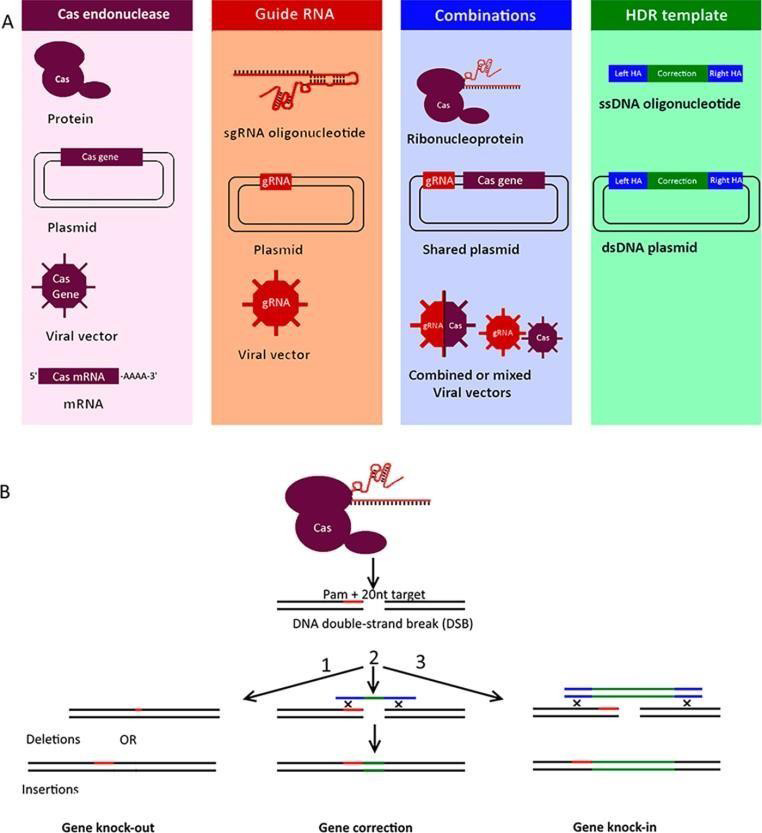
Figure 2: Schematic summary of CRISPR/Cas endonuclease concepts. (A) Different formats in which Cas protein, gRNA, and HDR templates can be used to achieve gene editing. (B) The active RNP complex acts by cleaving 2 DNA strands at the sgRNA target site in the presence of a PAM sequence (red). Three repair mechanisms can occur: (1) NHEJ, which can induce gene knockout by random indel formation; (2, 3) HDR using a ssDNA or dsDNA template, respectively [45].
Current State of Research and Major Findings on using CRISPR-Cas-Based Epigenome Editing for Metabolic Disorders
The subject of using CRISPR-Cas-based epigenome editing to address various metabolic disorders, such as obesity and diabetes, is being researched at present [24, 46, 47]. Although this field is still in the early stages of development, some promising studies have shown. They were conducted on animal models and suggest that this approach could be useful for treating these conditions.
Thus far, researchers have used CRISPR/Cas systems to investigate genes under several factors such as genome modification [48] splicing [49], transcription [50] and epigenetic regulation [51]. In research settings they have been applied towards genetic diseases treatment procedures [52], infectious diseases [53], cancers [54], and immunological diseases [55, 56].
A study by Leuillier, et al. [57] employed a nonviral gene conveyance carrier to purposefully target the white adipocytes through a CRISPR-based interference system that relied on catalytically dead Cas9 and a single guide RNA. Through this method, they’re able to effectively suppress the Fabp4 molecule and in turn decrease the quantity of lipid droplets present within the adipocytes. Confirmation of this success was achieved with Oil Red O staining procedures. It should also be noted that there was no activity detected in mature adipocytes in relation to the dCas9/sgFabp4 system.
In another study by Tsagkaraki E, et al. [58] the rats that were genetically modified to have a soluble epoxide hydrolase phosphatase (sEH-P) knock-in (KI) produced less monoacylglycerols when metabolizing lysophosphatidic acids. These KI rats had a lower body weight with decreased fat mass gain, particularly in the male specimens due to restrained food intake and increased energy usage. During resting conditions and cold exposure, these KI creatures demonstrated heightened lipolysis and thermogenesis in their brown adipose tissue. It was found that blocking peroxisome proliferator-activated receptor γ (PPARγ) or inhibiting both sEH-H domains abolished the potentiation of thermogenesis, suggesting an actionable interrelation between the two domains. In contrast to wild-type rats, it was discovered that sEH-P KI rodents fed a high-fat diet generated less weight at a slower rate with inadequate increase in fat mass while also avoiding insulin resistance development and hepatic steatosis complications. Certain cardiac mitochondria performers showed improved function while enhancing left ventricular contractility correlated with reduced susceptibility of heart muscles to ischemia- reperfusion injury caused by oxygen- deprivation deficiencies during pumping efforts of said organ. Overall these results demonstrate the vital importance of sEH.
A more recent study by Rosenblum D, et al. [59] designed 7 sgRNAs to target the Nrip1 gene in mouse preadipocytes, using SpyCas9/sgRNA RNPs as vehicles for modifications. They modified electroporation methods to optimize the efficiency of Nrip1 gene targeting in mouse preadipocytes without perturbing their differentiation into adipocytes. Indel formation efficiencies were uniformly sustained in the 90% range in preadipocytes and upon their differentiation into adipocytes. High frequencies of frameshift mutations in Nrip1 by all 7 sgRNAs were observed and similar indels were found in the corresponding Nrip1 mRNA species. While the mRNA of Nrip1 was equally abundant in all groups, indicating little or no increased degradation due to disruption, surprisingly, not all of the sgRNAs were effective in eliciting loss of the NRIP1 protein. The researchers identified that sgRNAs targeting the regions of Nrip1 DNA that encode the N-terminal region of the NRIP1 protein are not effective in eliminating synthesis of functional NRIP1 protein. Most likely, additional transcription or translation start sites beyond these target sites are functional under these conditions. The researchers suggest that sgRNAs that are optimal for inducing thermogenic genes must be identified by such screening methods. This study was performed on mice.
A 2016 paper in Cell Metabolism reported that targeting a specific gene related to glucose metabolism in the liver cells of mice with CRISPR/Cas-based epigenome editing improved their glucose tolerance and insulin sensitivity [20]. This suggests that targeted epigenome editing could be a potential therapeutic approach for treating diabetes.
A paper in Nature Communications in 2017 reported that using CRISPR-Cas-based epigenome editing to change a specific gene related to adipogenesis (the process of forming fat cells) in the fat tissue of mice led to lower body weight and better glucose metabolism in the mice. This indicates that epigenome editing could also be a potential therapeutic strategy for treating obesity. More recently, a study published in the journal Science Advances in 2020 [60] demonstrated that using CRISPR-Cas-based epigenome editing to modify a specific gene involved in lipid metabolism in mouse liver cells improved lipid metabolism and reduced liver steatosis (excessive fat buildup in the liver) in the mice. This suggests that targeted epigenome editing could also be a potential therapeutic approach for treating non-alcoholic fatty liver disease (NAFLD), a common complication of obesity.
Another study published in the journal cell press showed that using CRISPR-Cas-based epigenome editing to modify a specific gene involved in fat storage in human adipose cells resulted in decreased fat accumulation in the cells [20].
Overall, these studies provide promising evidence for the potential use of CRISPR-Cas-based epigenome editing for treating metabolic disorders, but more research is needed to fully understand the safety and efficacy of this approach in humans.
In addition to the animal studies mentioned above, there have also been several studies conducted using human cells in vitro. One study published in the journal Diabetes in 2017 showed that using CRISPR-Cas-based epigenome editing to modify a specific gene involved in insulin secretion in human pancreatic cells improved glucose-stimulated insulin secretion in the cells. This suggests that epigenome editing could be a potential therapeutic approach for treating diabetes in humans. Despite these promising findings, there are still several challenges and limitations to using CRISPR- Cas-based epigenome editing for treating metabolic disorders [61]. The CRISPR-Cas system faces two major challenges. The first challenge is delivering the system specifically to the target tissues and cells within the body, which is a major constraint for in vivo applications due to the larger protein size, highly negatively charged long phosphate backbone of the sgRNA, and the barriers such as cell membranes [62]. Another challenge is the potential for off-target effects and unintended consequences of epigenome editing [63]. Despite these challenges, the CRISPR-Cas system has emerged as a powerful tool for manipulating the genome for both research and therapeutic purposes [64].
Therefore, more research is needed to optimize the delivery and specificity of the CRISPR-Cas system, as well as to better understand the potential risks and benefits of this approach in humans. Nonetheless, the current state of research on using CRISPR-Cas-based epigenome editing for metabolic disorders is highly promising and warrants further investigation.
Implications of Altered Gene Expression Patterns for Metabolic Disorders such as Diabetes and Obesity
The ramifications of mutated gene expressions on metabolic diseases like diabetes and obesity are intricate and far-reaching [44]. To truly comprehend these impacts, it is vital to initially explore the function of genetic expression in regards to these types of disorders.
When a gene is used to form a useful product like a protein, it’s called gene expression [65]. This process plays an important role in controlling metabolic activities since several of them are dependent on the correct functioning and expression of certain genes. Alterations in these patterns may lead to significant changes in how our metabolism works [66, 67]. Metabolic disorders like diabetes and obesity can result in a variety of metabolic irregularities caused by modified gene expression patterns [22].
In the case of type 2 diabetes, changes to gene expression in pancreatic beta cells may have an adverse effect on insulin secretion while impairing muscle and adipose tissue’s ability to absorb glucose thereby increasing hepatic glucose production as well. These factors contribute to the disease’s heightened levels of blood sugar [66], among other symptoms resultant from these alterations [68]. Likewise, malformations in gene expression within adipose tissue can result in heightened retention of fat and decreased reception to insulin. These individuals often suffer from insulin resistance as well as metabolic issues [32,69-
71]. CRISPR-Cas-based epigenome editing has potential implications in altering gene expression patterns for the treatment of metabolic disorders like diabetes and obesity [72, 73]. By changing the functioning of specific genes involved in metabolic processes, CRISPR technology can help ameliorate symptoms associated with these conditions such as poor metabolic function. In light of these possibilities, it is intriguing how medicine is progressing towards non-invasive solutions for treating diseases [74]. It’s essential to consider that utilizing epigenome editing to change gene expressions can have intricate and not entirely comprehended outcomes [75]. Such an act could potentially unintentionally influence additional metabolic pathways or result in off-target effects, which needs necessary consideration [76, 77]. The extended outcomes of modifying gene expression patterns by means of epigenome editing remain obscure, and there exists a chance that these impacts might persist or result in unforeseen complications that emerge gradually [78]. Although altering gene expression patterns through epigenome editing using CRISPR-Cas has great potential for metabolic disorder treatment, especially for diabetes and obesity, it is important to approach its use with caution. Before unleashing this technology on a large scale, one should think deeply about its probable risks and benefits [72, 79, 80]. Research must also be conducted to gain full comprehension of the short-term and long-term consequences of modifying gene expression patterns.
One potential criticism of using CRISPR-Cas-based epigenome editing to treat metabolic disorders is the risk of off-target effects [81]. Despite significant advancements in CRISPR-Cas technology, there remains a risk that it could mistakenly target and modify unintended genes or genomic regions [82]. Possibly leading to undesirable outcomes. Such unintended consequences could include altering gene expression in other physiological processes and causing harmful side effects [83]. Therefore, while the potential benefits of this approach are substantial, caution must be exercised when using this technique. Another aspect to ponder is the ethical queries connected with employing this skill for remedial objectives [84]. There are uncertainties about who has permission to utilize this procedure and how its implementation can be standardized responsibly and ethically [85]. Moreover, scholars have not thoroughly comprehended the enduring health implications of epigenome modification on humans or the environment, thus necessitating further investigation to determine potential hazards as well as advantages [86, 87, 88]. It’s vital to think about how using CRISPR-Cas to treat metabolic disorders could affect society [89]. There’s a chance that this technology may create “designer babies” or magnify certain characteristics in people. This raises moral worries and the uncertainty of what constitutes as “acceptable use” with this new ability [84].
Despite these concerns, there is a great potential for CRISPR-Cas-based epigenome editing to revolutionize the treatment of metabolic disorders. With careful consideration and regulation, this technology could provide a safe and effective way to target the root causes of these diseases and improve the lives of millions of people worldwide.
Delivery Strategies for CRISPR-Cas-based Epigenome Editing
Overview of Current Delivery Strategies, Including Viral and Non-Viral Methods: Efficient methods are necessary for the delivery of CRISPR-Cas-based epigenome editing tools to the targeted cell, to enable effective therapy for metabolic disorders [73, 89]. Viral and non-viral methods are two critical approaches for delivering these genetic tools [90]. And come with their respective strengths and weaknesses.
While preferring a method of delivery, one must consider all aspects of it thoughtfully before making a final decision [91]. Viral Delivery Methods: Utilizing viral vectors in the delivery of CRISPR-Cas system to target cells is known as viral delivery methods [92]. These vectors are customizable and can aim for specificity in targeting certain organs or tissues while delivering efficient editing tools, thus becoming highly relevant in this field [85]. However, there is also potential risk associated with viral delivery methods due to possible unwanted immune responses and integration into the host genome, posing safety concerns [93]. As a result, these vectors have gained popularity as the go-to approach for tackling the problem of CRISPR/Cas gene editing system delivery. There are several types of such vectors; lentiviral vector, adeno-associated viral vector and adenoviral vector being among the most extensively studied ones.
| Vector Type | Packaging Capacity | Diameter | Genome Type | Advantages | Disadvantages | Current Examples |
|---|---|---|---|---|---|---|
| AAV | <4.4 kB | 20–22 nm | ssDNA | large variety of target tissues, low immunogenicity on first injection | low packaging capacity | [94] |
| AV | >8 kB | 80–100 nm | dsDNA | large packaging capacity, transient Cas expression | pre-existing antibodies, high immunogenicity | [95] |
| LV | <8.5 kB | 80–120 nm | ssDNA | large packaging capacity | potential insertional mutagenesis | [96-98] |
Table 1: Comparison of the Main Properties, Advantages and Disadvantages of Commonly Used Viral Vectors.
Adeno-Associated Viruses
(AAVs) possess several advantages, such as low immunogenicity and a lengthy expression of the gene without genome integration requirement [99]. However, these viruses have limited packaging capacity leading to insufficient space for essential regulatory elements like promoter and polyadenylation signal sequences when utilizing commonly used spCas9 genetic material [100]. This can be solved by splitting spCas9 into two fragments that can recombine inside the cell so that the truncated genes will fit the AAV vector, but this comes at the cost of efficiency in terms of delivery as well as target DNA cutting [94].
Adenoviral Vectors
The high packaging capacity of Adenoviral vectors (AVs) lends itself to including all the essential elements for genome editing. Such elements include both Cas protein and one or more sgRNAs, which can both be provided by a single vector. Interestingly, large donor DNA sequences required for mediating homology-directed repair may also be co- delivered along with these elements [100, 101]. This bears advantages in that the expression of sgRNA and Cas protein are consistently orchestrated in the same cell inclusive of a fixed ratio. Since AVs do not integrate themselves into cells during replication cycles, temporary expression of Cas is witnessed in actively dividing cells. Although immune- related toxicities occurred whilst testing on mice subjects; however, researchers across different fields have achieved positive results while utilizing AV from in vivo genome modifications [96].
Lentiviral Vectors
Lentiviral vectors (LVs) are the most widely employed kind of viral vector in clinical gene therapy applications [102, 103]. They are advantageous due to their capability of effectively transducing both dividing and non-dividing cells, as well as integrating gene constructs safely into the genome [102, 103]. However, this stable integration can be counterproductive for gene editing purposes if long-lasting expression of a gene is required. In such cases, studies have shown that lentivirus- based delivery methods showed higher off-target frequencies compared to other forms of Cas9 delivery such as delivered as mRNA or ribonucleoprotein (RNP). This is because extended expression of Cas protein leads to an unfavorable on-target/off-target ratio [96, 97, 98].
Indeed, a direct comparison of frequencies of indel formation at three potential genomic off-target sites by spCas9 delivered as mRNA, pDNA, RNP, or lentivirus showed highest off-target frequencies with the lentiviral delivery method [104]. To counteract this, self-inactivating constructs have been designed in which the lentiviral vector encodes for Cas9 protein and two sgRNAs: one against the target sequence of choice and one against the Cas9 gene [105]. In this way, transient expression of Cas9 from an integrating lentiviral vector can be obtained.
Non-Viral Delivery Methods
Various physical and chemical methods can be used for CRISPR-Cas-based epigenome editing, including electroporation, lipid-based transfection, and gene gun delivery. These techniques generally have lower risks of immune response than viral vectors. However, they may not be as effective in delivering the editing tools to the targeted cells [106, 107, 108]. When choosing a delivery strategy for CRISPR- Cas-based epigenome editing, multiple factors should be taken into consideration. The decision depends on various aspects such as specific target cells or organs being aimed at, desired efficiency of delivery, potential immune responses towards it and safety measures associated with it [109, 110]. On-going research is striving to discover innovative ways of safely delivering these tools therapeutically by focusing on efficient and secure means of transmission to target cells [84, 91].
In recent years, a plethora of delivery strategies for CRISPR-Cas-based epigenome editing have been developed and optimized. Viral vectors, such as adenovirus, adeno- associated virus (AAV), and lentivirus, have been widely used due to their high transduction efficiency and long- term expression. However, concerns have been raised regarding their immunogenicity, insertional mutagenesis, and potential off-target effects [111, 112]. On the other hand, non-viral methods, such as electroporation, lipid-mediated transfection, and nanoparticles, have also been explored as alternative delivery strategies [106, 113]. Non-viral methods have the advantage of low immunogenicity, low toxicity, and high versatility in terms of target tissue and cell type. However, non-viral methods still face challenges such as low efficiency and transient expression. Furthermore, the choice of delivery strategy depends on the target tissue and cell type, as well as the specific epigenetic modification being targeted [114]. For example, some delivery strategies may be more efficient for targeting specific cell types, such as hepatocytes or adipocytes, while others may be more effective for specific epigenetic modifications, such as histone methylation or DNA methylation [115]. Therefore, it is important to carefully consider the advantages and disadvantages of different delivery strategies and to optimize the delivery method for each specific application in order to achieve efficient and safe epigenome editing [110, 112].
There are Advantages and Limitations to both Viral and Non-Viral Delivery Strategies for CRISPR-Cas-Based Epigenome Editing
In order to achieve efficient and stable expression of delivered CRISPR-Cas-based epigenome editing, many utilize viral delivery strategies [116, 117, 118, 119]. These methods generally involve lentivirus, adenovirus, or adeno-associated virus (AAV). Lentiviral vectors have an advantage in that they are able to integrate into the host genome, providing long- term transgene expression with larger payloads [92, 116]. Adenoviral vectors are extremely effective at delivering large quantities of genetic material for high levels of transgene expression but do not integrate into the host genome. AAV vectors offer the convenience of being tissue- specific while also reducing risks for DNA mutation insertion; however the capacity for cargo delivery is limited [94].
While viral vectors may offer benefits in therapeutic applications, they are also linked to safety concerns that must be considered. One such concern is the potential for an immune response to the viral vector, which can hinder its effectiveness in treating the patient Furthermore, there is a risk of unintended effects on the host genome through insertional mutagenesis that could be caused by these vectors [116]. These factors highlight the importance of careful screening and evaluation before implementing viral vector-based therapies.
Alternative delivery methods for CRISPR-Cas- based epigenome editing beyond viral vectors include electroporation, lipofection, and nanoparticle techniques [59]. These non-viral Electroporation uses electrical pulses that generate temporary pores in the cell membrane to transfer the CRISPR-Cas complex into the cells [113]. In contrast, Lipofection utilizes carriers based on lipids to ferry the molecule into cells [113]. Nanoparticles such as gold nanoparticles can also transport this complex via chemical associations pathways categorized as nanoparticle-based transfer methods [112].
Although non-viral delivery methods for CRISPR- Cas-based epigenome editing typically result in lower transduction efficiency and transient expression of the delivered payload, these techniques may have distinct advantages over viral vectors [120]. For example, non-viral delivery methods carry a lower risk of immune response or insertional mutagenesis than their viral counterparts [106]. Additionally, they can be more readily optimized for specific applications and utilized for targeted delivery to particular cell types [121].
When deciding on a method for delivering CRISPR-Cas- based epigenome editing, it is crucial to take into account the particular application and circumstances. Although viral vectors generally provide superior transduction efficiency and stable expression, there is an inherent concern when it comes to potential safety risks involved with that approach. Conversely, non-viral delivery techniques are usually safer and quicker to manufacture; however, they often come at the cost of lesser expression stability coupled with reduced transduction efficiency levels. Therefore, striking a balance between the trade-offs associated with each technique becomes important if you aim for optimal results in your sought-specific objectives through the use of either one of them.
Considerations for Specific Tissues and Disease States
While the potential of CRISPR-Cas-based epigenome editing for metabolic disorders such as diabetes and obesity is promising [23], there are several considerations that need to be taken into account for specific tissues and disease states [19]. When seeking to conduct gene editing, it is imperative to take into account the delivery method used and its tissue- specificity [122]. Depending on the targeted organ, various delivery methods may be necessary to guarantee a successful outcome [116]. For instance, while adenoviral vectors are suitable for delivering genes to the liver, they may not be as effective when it comes to skeletal muscle. Consequently, selecting an appropriate delivery method that matches the intended tissue is crucial for effective gene editing [116]. The disease severity of the patient is a factor that must be considered as a second point. In particular, metabolic disorders may appear in varying degrees of severity, which may have implications for gene editing’s effectiveness [123]. An individual’s widespread epigenetic changes due to chronic diabetes could make it more challenging for certain genes to be targeted by gene editing. Consequently, personalized treatment plans based on disease state become necessary [124]. Thirdly, the potential off-target effects of gene editing need to be taken into account. While CRISPR-Cas technology has made significant progress in improving specificity [125], there is still a risk of unintended off-target effects [126]. Therefore, it is essential to carefully design the guide RNA and monitor for potential off-target effects [127].
In conclusion, it is imperative to consider ethical implications when utilizing CRISPR-Cas gene editing technology on humans. Despite its novelty and potential benefits, there are ethical considerations that need to be thoughtfully analyzed. As a result, careful risk-benefit calculations and respect for patient autonomy and proper informed consent must always remain at the forefront of any decision involving such cutting-edge medical procedures [128].
When applying CRISPR-Cas-based techniques for epigenome editing in metabolic disorders, it is essential to take into account the tissues and ailments being treated. It’s critical to consider the delivery method’s specificity to individual tissues, patient-induced disease severity, potential off- target impacts as well as ethical problems for their successful creation of safe treatment options.
Off-Target Effects and Unintended Consequences of CRISPR-Cas-Based Epigenome Editing
Potential for off-Target Effects and Unintended Consequences in the Context of Metabolic Disorder Treatment: Although epigenome editing using the CRISPR- Cas approach shows promise in treating metabolic disorders [129], it is prudent to consider its potential for off-target effects and unintended consequences [48]. These effects may occur when DNA is unintentionally cut by the CRISPR- Cas system at different locations thus leading to undesired changes in gene expression [129]. Such mutations have likely outcomes involving an escalated risk of diseases including cancer [129]. To avoid these harmful results, one needs to ensure accuracy and specificity while using this technique [130]. The implementation of CRISPR-Cas system can potentially have unplanned ramifications that disrupt vital genes or regulatory mechanisms in cells, causing unforeseen effects on development and cellular functions [80]. For instance, the use of CRISPR-Cas for treating obesity by editing the epigenome may unintentionally have an impact on genes involved in metabolic processes beyond weight management resulting in unexpected metabolic consequences [19]. In order to prevent unintended results and unwanted effects, experts are striving to refine the CRISPR-Cas system through novel techniques [131]. One such technique involves utilizing CRISPR-Cas base editors, which have the capability of editing DNA without causing double- strand breaks. This aspect considerably decreases any potential off-target effects [132]. Furthermore, researchers are also formulating new screening methods that can detect any possible negative outcomes before clinically administering CRISPR-Cas-based epigenome editing [131]. Although CRISPR-Cas-based epigenome editing has promising potential in addressing metabolic disorders, it is integral to thoroughly analyze and minimize any unforeseen discrepancies or unintentional results. By doing so, this approach can effectively fulfill its purpose while ensuring the safety of individuals involved [23].
Strategies for Minimizing or Mitigating these Effects
When deploying CRISPR-Cas-based epigenome editing to treat metabolic disorders, it is paramount to contemplate methods for diminishing any inadvertent off- target results and unanticipated outcomes [23]. Haphazard effects must be kept at bay with diligence. Utilizing more precise CRISPR-Cas systems that generate less unwanted effects could be a possible solution [131]. The use of systems commending lengthier guide RNAs or different Cas enzymes can decrease the likeliness of off-target side effects. Employing exceptional bioinformatics tools to design high-specificity guide RNAs and intricate delivery systems with cell or tissue targeting capacity can aid in minimizing unwanted responses. Comparatively, ZFN and TALENs dimeric systems are possibly superior because they exhibit fewer off-target effects as opposed to monomeric CRIPSR/ Cas [133]. Another alternative is operating DNA-mutating by activating only one nuclease domain through CRISPR. To enhance accuracy, the seed sequence based at the gRNA targeting sequence’s 3’ end could be included [126]. The seed sequence at the 3’ end of the gRNA targeting sequence can also be used to improve specificity. Another approach would be to systematically monitor and analyze the impact of CRISPR-Cas-mediated epigenome modification, not only on targeted areas but also unintended ones. Methods such as whole-genome sequencing, transcriptomics, and proteomics could be utilized [21]. By doing so, it is possible to detect any unplanned ramifications and steer the development of delivery methods and CRISPR-Cas systems towards minimizing adverse effects. When considering the use of CRISPR-Cas for epigenome editing, it’s essential to also take into account its ethical implications. Before proceeding with clinical trials and treatments, potential risks and benefits must be carefully balanced and weighed [85]. The cost of germline genome editing is also a bioethical dilemma [85]. Epigenetic editing through CRISPR involves combining catalytically dead Cas9 (dCas9) with epigenetic enzymes or their catalytic domains (CDs) [134]. It is novel genetic modification technique, there are moral considerations to contemplate regarding its application [135]. To combat challenges in utilizing CRISPR-Cas for clinical purposes, researchers are developing new strategies [126]. It’s crucial to ensure that CRISPR-Cas-based epigenome editing is utilized safely and responsibly [85]. Atory groups is pivotal when conducting these procedures for metabolic disorders– taking into consideration all relevant ethical implications before proceeding with any measures at hand.
Importance of Safety and Efficacy in the Development and Implementation of CRISPR- Cas-Based Epigenome Editing
Although CRISPR-Cas-based epigenome editing possesses significant potential for the treatment of metabolic disorders [48], it is important to ensure that any therapeutic interventions using this technology are both efficient and safe [85]. One primary concern regarding safety surrounds the possibility of off-target effects and the unintended consequences of epigenetic modification in target tissues or other organs [136], In addition, immune system reactions may arise due to viral vectors used for delivery [85]. To address these concerns, rigorous preclinical studies must be conducted - evaluating the safety and efficacy of CRISPR- Cas-based epigenome editing in particular [48]. Besides conducting careful selection amongst targets and means of administration which are crucial steps [126], strategies for controling off-target effects should also be explored. Furthermore, implementing ethical guidelines for human use is necessary including informed consent deliberations, awareness of genetic discrimination risks as well as fair access to any prospective treatments offered by this technology’s capabilities [85]. In the realm of developing CRISPR-Cas- based epigenome editing for metabolic disorders, efficacy holds great significance [76]. To fully ascertain the lasting impact and possible adverse effects of a treatment strategy crafted with this technology [48], as well as to assess any potential for adverse effects over time [137].
It is imperative to develop personalized treatment for metabolic disorders since their development and progression are intricate due to various contributing factors [48], in this context, it becomes crucial to consider the genetic and epigenetic profiles of every patient while designing customized treatment approaches. For the safe and effective implementation of CRISPR-Cas-based epigenome editing for these disorders, it will require a concerted effort from researchers, clinicians, and regulatory agencies alike [73, 138].
Ethical and Regulatory Considerations
Overview of Ethical and Regulatory Issues Associated with CRISPR-Cas-Based Epigenome Editing for Metabolic Disorders: The utilization of CRISPR-Cas-based epigenome editing technology has great potential in the treatment of metabolic disorders [20]. Nevertheless, ethical and regulatory concerns must be addressed before it can be deemed safe for clinical practice [19]. A paramount concern pertains to the unforeseen impact and unintended effects [48]. These effects could have serious implications for patient safety and could potentially lead to the development of new diseases [139]. Therefore, it is important to carefully assess the safety and efficacy of CRISPR-Cas-based epigenome editing before it is used in clinical settings [19]. A further moral issue pertains to the probability of manipulating genetics. Although epigenetic modifications do not alter the basic DNA code, they still comprise the willful adjustment of genetic matter [88]. This prompts concerns about whether it is right to modify individuals’ genetic structure and what consequences alterations could have on social dynamics and mental health [85, 140]. Additionally, there are some important concerns about regulation that should not be overlooked. Gene editing is heavily regulated and subject to strict ethical and legal standards in numerous nations [141]. Consequently, if one desires to employ CRISPR-Cas- based epigenome editing for metabolic disorders, it would be imperative to adhere to the laws that already exist while abiding by rigorous oversight procedures [142]. In order to tackle the ethical and regulatory issues associated with CRISPR-Cas-based epigenome editing, it is crucial to engage in honest and transparent discussions with patients, healthcare professionals, policymakers as well as other parties involved [85]. Such conversations can guarantee that this technology is developed and utilized ethically while keeping patient wellbeing and public confidence at the forefront [140].
Discussion of Responsible Development and Implementation of this Technology
When a new technology comes along, it’s necessary to think about how we’ll control and manage it. The use of CRISPR-Cas for epigenome editing in treating metabolic disorders raises concerns from an ethical and regulatory standpoint [89]. One such concern is the possibility of unwanted consequences or effects that were not initially planned, which could potentially result in health risks [143]. Making sure not to harm patients when using this innovative technology is important even as we strive for its benefits [144]. Moreover, the regulatory authorities would have to minutely scrutinize the safety and effectiveness of CRISPR- Cas-based systems for epigenetic modulation before it can be sanctioned for medicinal purposes [80]. This may require testing extensively in preclinical studies and conduction of clinical trials to corroborate that the technology has a secure and worthwhile impact on treating metabolic disorders like diabetes and obesity [80]. Developing and applying this technology in a responsible way necessitates open and collaborative interactions between scientific experts, healthcare professionals, regulatory institutions, and people from all walks of life [145, 146]. Informing the public about the possible advantages and drawbacks linked to this innovation is crucial. Additionally, guaranteeing that patients are well- informed about the associated risks and benefits before receiving treatment demand paramount importance as well [147]. It is crucial to take into account accessibility and fairness when dealing with CRISPR-Cas-based epigenome editing. This innovation has immense potential to enhance medical outcomes of individuals suffering from metabolic disorders. Despite this, it is essential to guarantee that everyone who may profit from the treatments can access them equitably. Addressing affordability concerns and distributing healthcare resources fairly will be necessary [20, 148].
Consideration of the Potential Societal Impacts of CRISPR-Cas-Based Epigenome Editing for Metabolic Disorders
The potential social outcomes of CRISPR-Cas-based epigenome editing for metabolic disorders are extensive and intricate. It is necessary to take these implications into detailed consideration during the development and execution of this technology [148]. One outcome could be unequal access to treatment, whereby people living in low- income or resource-restricted areas may not have enough resources to afford it [148]. Furthermore, there might be ethical quandaries associated with employing CRISPR-Cas- based epigenome editing for non-medical reasons, such as enhancing physical attractiveness [148, 149].
Various studies have detailed the bioethical considerations connected to genome editing through CRISPR-Cas9 technology, mainly in the field of medicine [150]. The subject of concern surrounding this technology is its use for the editing of genes within the human germline and will be ongoing [85]. Chromatin features play a drastic role in impacting the effectiveness of CRISPR- Cas9. Luckily, there are numerous high-resolution epigenomic resources available that can help address these concerns effectively [151]. With its easy-to-use design, low methodology costs, high efficiency levels and precise nature, it is no surprise that CRISPR-Cas genome-editing tool has been used extensively for crop improvement programs [152]. One thing to be mindful of is the possible unintended outcomes of using CRISPR-Cas technology [152]. Despite endeavors to reduce mistakes and unfavorable consequences, there is still a possibility that unanticipated problems may arise. Consequently, it is crucial to keep track of any enduring effects reputable epigenome editing and devise contingency plans in case adverse impacts emerge.
In addition, if CRISPR-Cas-based epigenome editing was extensively adopted to treat metabolic disorders, it could affect people’s views on health and wellness [152]. Instead of emphasizing preventive methods, like making healthy lifestyle choices, there may be greater focus on gene editing as a reaction to medical issues.
In order to safely and effectively utilize CRISPR-Cas-based epigenome editing for metabolic disorders, it is necessary to acknowledge and address any potential societal effects that may arise [152]. This means thoroughly examining the ethical and regulatory implications of such development while prioritizing transparency and clear communication with all involved parties.
Conclusion
In conclusion, this paper has provided a comprehensive overview of the current state of research on CRISPR-Cas- based epigenome editing for metabolic disorders. The paper has discussed the importance of epigenetic modifications and their role in metabolic disorders such as diabetes and obesity, as well as the potential of CRISPR-Cas technology for targeted modification of the epigenome. The paper has also provided an overview of current delivery strategies, including viral and non-viral methods, and the advantages and limitations of each approach. Furthermore, the potential for off-target effects and unintended consequences, as well as strategies for minimizing or mitigating these effects, have been discussed. The importance of safety and efficacy in the development and implementation of CRISPR-Cas- based epigenome editing has been highlighted. In addition, the review has addressed the ethical and regulatory considerations associated with this technology, including the potential societal impacts of CRISPR-Cas-based epigenome editing for metabolic disorders. The paper has discussed the responsible development and implementation of this technology, emphasizing the need for ethical and regulatory oversight to ensure that this technology is used in a safe and responsible manner. Overall, the potential of CRISPR- Cas-based epigenome editing for metabolic disorders is promising, but more research is needed to fully understand its safety and efficacy. It is important that researchers, clinicians, and policymakers work together to ensure that this technology is developed and implemented in a responsible and ethical manner to maximize its potential benefits while minimizing potential risks.
References
-
(2022) What Is Metabolic Syndrome.
-
Balaji R, Duraisamy R, Kumar M, Santhosh P (2019) Complications of diabetes mellitus: A review. Drug Invention Today 12(1).
-
Ginsberg HN, MacCallum PR (2009) The obesity, metabolic syndrome, and type 2 diabetes mellitus pandemic: Part I. Increased cardiovascular disease risk and the importance of atherogenic dyslipidemia in persons with the metabolic syndrome and type 2 diabetes mellitus. J Cardiometab Syndr 4(2): 113-119.
-
(2016) What is Diabetes.
-
Eizirik DL, Pasquali L, Cnop M (2020) Pancreatic β-cells in type 1 and type 2 diabetes mellitus: different pathways to failure. Nature Reviews Endocrinology 16(7): 349- 362.
-
Kahaly GJ, Hansen MP (2016) Type 1 diabetes associated autoimmunity_._ Autoimmunity reviews 15(7): 644-648.
-
Basu R (2017) Type 2 Diabetes.
-
Palmer SC, Tendal B, Mustafa RA, Vandvik PO, Li S, et al. (2021) Sodium-glucose cotransporter protein-2 (SGLT-2) inhibitors and glucagon-like peptide-1 (GLP-1) receptor agonists for type 2 diabetes: systematic review and network meta-analysis of randomised controlled trials. BMJ 13: 372.
-
(2022) Defining Adult Overweight & Obesity.
-
Bray G, Kim KK, Wilding JPH, Federation WO (2017) Obesity: a chronic relapsing progressive disease process. A position statement of the World Obesity Federation. Obesity reviews 18(7): 715-723.
-
Bhupathiraju SN, Hu FB (2016) Epidemiology of Obesity and Diabetes and their Cardiovascular Complications_._ Circ Res 118(11): 1723-1735.
-
Park S (2021) Overweight & Obesity Statistics.
-
Nianogo RA, Arah OA (2022) Forecasting Obesity and Type 2 Diabetes Incidence and Burden: The ViLA- Obesity Simulation Model_._ Frontiers in Public Health 10: 818816
-
Bramante CT, Lee CJ, Gudzune KA (2017) Treatment of Obesity in Patients with Diabetes. Diabetes Spectr 30(4): 237-243.
-
Gemberling MP, Siklenka K, Rodriguez E, Tonn Eisinger KR, Barrera A, et al. (2021) Transgenic mice for in vivo epigenome editing with CRISPR- based systems_._ Nature Methods 18(8): 965-974.
-
Moosavi A, Ardekani AM (2016) Role of Epigenetics in Biology and Human Diseases. Iran Biomed J 20(5): 246- 258.
-
Mazzone R, Zwergel C, Artico M, Taurone S, Ralli M, et al. (2019) The emerging role of epigenetics in human autoimmune disorders. Clinical Epigenetics 11(34).
-
Tzika E, Dreker T, Imhof (2018) A Epigenetics and Metabolism in Health and Disease_._ Frontiers in Genetics 9.
-
Nakamura M, Gao V, Domingue AA, Qi LS (2021) CRISPR technologies for precise epigenome editing. Nature Cell Biology 23(1): 11-22.
-
Goell JH, Hilton IB (2021) CRISPR/Cas-Based Epigenome Editing: Advances, Applications, and Clinical Utility. Trends Biotechnol 39(7): 678-691.
-
Carson C, Lawson HA (2018) Epigenetics of metabolic syndrome. Physiol Genomics 50(11): 947-955.
-
Syding LA, Nickl P, Kasparek P, Sedlacek R (2020) CRISPR/Cas9 Epigenome Editing Potential for Rare Imprinting Diseases: A Review. Cells 9(4): 993
-
Jarrett KE, Lee CM, Yeh YH, Hsu RH, Gupta R, et al. (2017) Somatic genome editing with CRISPR/Cas9 generates and corrects a metabolic disease. Scientific Reports 7(1): 44624.
-
Handy DE, Castro R, Loscalzo J (2011) Epigenetic modifications: basic mechanisms and role in cardiovascular disease. Circulation 123(19): 2145-2156.
-
Kanwal R, Gupta S (2012) Epigenetic modifications in cancer. Clinical genetics 81(4): 303-311.
-
Wu YL, Lin ZJ, Li CC, Shan SK, Guo B, et al. (2023) Epigenetic regulation in metabolic diseases: mechanisms and advances in clinical study. Signal Transduction and Targeted Therapy 8(1): 98.
-
Van Dijk SJ, Tellam RL, Morrison JL, Muhlhausler BS, Molloy PL (2015) Recent developments on the role of epigenetics in obesity and metabolic disease. Clinical epigenetics 7(1): 66.
-
Capparelli R, Iannelli D (2021) Role of Epigenetics in Type 2 Diabetes and Obesity. Biomedicines 9(8): 977.
-
Jin B, Li Y, Robertson KD (2011) DNA methylation: superior or subordinate in the epigenetic hierarchy. Genes Cancer 2(6): 607-617.
-
Yong WS, Hsu FM, Chen PY (2016) Profiling genome- wide DNA methylation. Epigenetics & Chromatin 9(1): 26.
-
Baca P, Mirzaeicheshmeh E, Zerrweck C, Guilbert L, Barajas Olmos F, et al. (2022) DNA methylation and gene expression analysis in adipose tissue to identify new loci associated with T2D development in obesity. Nutrition & Diabetes 12(1): 50.
-
Mahmoud AM (2022) An Overview of Epigenetics in Obesity: The Role of Lifestyle and Therapeutic Interventions. Int J Mol Sci 23(3): 1341.
-
Dong X, Weng Z (2013) The correlation between histone modifications and gene expression. Epigenomics 5(2): 113-116.
-
Yang Y, Luan Y, Feng Q, Chen X, Qin B, et al. (2022) Epigenetics and Beyond: Targeting Histone Methylation to Treat Type 2 Diabetes Mellitus. Frontiers in Pharmacology 12: 807413.
-
Ling C, Rönn T (2019) Epigenetics in Human Obesity and Type 2 Diabetes. Cell Metab 29(5): 1028-1044.
-
(2022) What are genome editing and CRISPR-Cas9.
-
Hille F, Charpentier E (2016) CRISPR-Cas: biology, mechanisms and relevance. Philosophical transactions of the royal society B: biological sciences 371(1707): 20150496.
-
Pulecio J, Verma N, Mejía-Ramírez E, Huangfu D, Raya A (2017) CRISPR/Cas9-Based Engineering of the Epigenome. Cell Stem Cell 21(4): 431-447.
-
Zakrzewska M, Burmistrz M (2023) Mechanisms regulating the CRISPR-Cas systems. Frontiers in Microbiology 14: 1060337.
-
O’Geen H, Ren C, Perez AA, Nicolet CM, Halmaiet J (2017) dCas9-based epigenome editing suggests acquisition of histone methylation is not sufficient for target gene repression. Nucleic acids research 45(17): 9901-9916.
-
Anton T, Karg E, Bultmann S (2018) Bultmann, Applications of the CRISPR/Cas system beyond gene editing. Biol Methods Protoc 3(1): bpy002.
-
Gjaltema RAF, Rots MG (2020) Advances of epigenetic editing. Current Opinion in Chemical Biology 57: 75-81.
-
Wu FY, Yin RX (2022) Recent progress in epigenetics of obesity. Diabetology & Metabolic Syndrome 14(171).
-
Salsman J, Masson JY, Orthwein A, Dellaire G (2017) CRISPR/Cas9 gene editing: from basic mechanisms to improved strategies for enhanced genome engineering in vivo. Current Gene Therapy 17(4): 263-274.
-
Leal AF, Fnu N, Benincore Flórez E, Herreño Pachón AM, Echeverri Peña OY, et al. (2023) The landscape of CRISPR/Cas9 for inborn errors of metabolism. Molecular Genetics and Metabolism 138(1): 106968.
-
Syding LA, Nickl P, Kasparek P, Sedlacek R (2020) CRISPR/Cas9 Epigenome Editing Potential for Rare Imprinting Diseases: A Review. Cells 9(4): 993.
-
Oakes BL, Fellmann C, Rishi H, Taylor KL, Ren SM, et al. (2019) CRISPR-Cas9 circular permutants as programmable scaffolds for genome modification. Cell 176(1-2): 254-267.
-
Yuan J, Ma Y, Huang T, Chen Y, Peng Y, et al. (2018) Genetic modulation of RNA splicing with a CRISPR-guided cytidine deaminase. Molecular cell 72(2): 380-394.
-
Abudayyeh OO, Gootenberg JS, Essletzbichler P, Han S, Joung J, et al. (2017) RNA targeting with CRISPR–Cas13. Nature 550: 280-284.
-
Xie N, Zhou Y, Sun Q, Tang B (2018) Novel epigenetic techniques provided by the CRISPR/Cas9 system. Stem cells international 2018: 7834175.
-
Papasavva P, Kleanthous M, Lederer CW (2019) Rare opportunities: CRISPR/Cas-based therapy development for rare genetic diseases. Molecular diagnosis & therapy 23(2): 201-222.
-
Kennedy EM, Cullen BR (2017) Gene editing: a new tool for viral disease. Annual review of medicine 68: 401-411.
-
Huang CH, Lee KC, Doudna JA (2018) Applications of CRISPR-Cas enzymes in cancer therapeutics and detection. Trends in cancer 4(7): 499-512.
-
Xiong X, Chen M, Lim WA, Zhao D, Qi LS (2016) CRISPR/ Cas9 for human genome engineering and disease research. Annual review of genomics and human genetics 17: 131-154.
-
Ferdosi SR, Ewaisha R, Moghadam F, Krishna S, Park JG, et al. (2019) Multifunctional CRISPR-Cas9 with engineered immunosilenced human T cell epitopes. Nature communications 10: 1842.
-
Chung JY, Ain QU, Song Y, Yong SB, Kim YH (2019) Targeted delivery of CRISPR interference system against Fabp4 to white adipocytes ameliorates obesity, inflammation, hepatic steatosis, and insulin resistance. Genome research 29(9): 1442-1452.
-
Leuillier M, Duflot T, Ménoret S, Messaoudi H, Djerada Z, et al. (2023) CRISPR/Cas9-mediated inactivation of the phosphatase activity of soluble epoxide hydrolase prevents obesity and cardiac ischemic injury. Journal of Advanced Research 43: 163-174.
-
Tsagkaraki E, Nicoloro SM, DeSouza T, Solivan Rivera J, Desai A, et al. (2021) CRISPR-enhanced human adipocyte browning as cell therapy for metabolic disease. Nature Communications 12(6931).
-
Rosenblum D, Gutkin A, Kedmi R, Ramishetti S, Veiga N, et al. (2020) CRISPR-Cas9 genome editing using targeted lipid nanoparticles for cancer therapy. Science Advances 6(47): eabc9450.
-
Modell AE, Lim D, Nguyen TM, Vedagopuram S, Choudhary A (2022) CRISPR-based therapeutics: current challenges and future applications. Trends Pharmacol Sci 43(2): 151-161.
-
Gohil N, Bhattacharjee G, Lam NL, Perli SD, Singh V (2021) Chapter Six - CRISPR-Cas systems: Challenges and future prospects. Progress in Molecular Biology and Translational Science 180: 141-151.
-
Rosenblum D, Gutkin A, Dammes N, Peer D (2020) Progress and challenges towards CRISPR/Cas clinical translation. Adv Drug Deliv Rev 154-155: 176-186.
-
Lino CA, Harper JC, Carney JP, Timlin JA (2018) Delivering CRISPR: a review of the challenges and approaches. Drug Deliv 25(1): 1234-1257.
-
(2022) What is gene expression.
-
Middleton FA, Mirnics K, Pierri JN, Lewis DA, Levitt P (2002) Gene expression profiling reveals alterations of specific metabolic pathways in schizophrenia. J Neurosci 22(7): 2718-2729.
-
Sinkala M, Mulder N, Martin DP (2019) Metabolic gene alterations impact the clinical aggressiveness and drug responses of 32 human cancers. Communications Biology 2(414): 1-14.
-
Patti ME (2004) Gene expression in humans with diabetes and prediabetes: what have we learned about diabetes pathophysiology? Curr Opin Clin Nutr Metab Care 7(4): 383-390.
-
Brunelli DT, Boldrini VO, Bonfante ILP, Duft RG, Teixeira AM, et al. (2022) Obesity Increases Gene Expression of Markers Associated With Immunosenescence in Obese Middle-Aged Individuals. Frontiers in Immunology 12: 1-9.
-
Rodriguez Acebes S, Palacios N, Botella Carretero JI, Olea N, Crespo L, et al. (2010) Gene expression profiling of subcutaneous adipose tissue in morbid obesity using a focused microarray: Distinct expression of cell- cycle- and differentiation-related genes. BMC Medical Genomics 3(61): 1-15.
-
Lu Z, Meng L, Sun Z, Shi X, Yao X, et al. (2021) Differentially Expressed Genes and Enriched Signaling Pathways in the Adipose Tissue of Obese People. Front Genet 12: 1-13.
-
Li H, Yang Y, Hong W, Wu M, Zhao X, et al. (2020) Applications of genome editing technology in the targeted therapy of human diseases: mechanisms, advances and prospects. Signal Transduction and Targeted Therapy 5(1): 1-23.
-
Sharma M, Li Y, Stoll ML, Tollefsbol TO (2020) The Epigenetic Connection Between the Gut Microbiome in Obesity and Diabetes. Frontiers in Genetics 10: 1-15.
-
Gu H, Hu P, Zhao Y, Liu Y, Cai D, et al. (2022) Nuclear Receptor RORα/γ: Exciting Modulators in Metabolic Syndrome and Related Disorders. Front Nutr 9: 1-6.
-
Ueda J, Yamazaki T, Funakoshi H (2023) Toward the Development of Epigenome Editing- Based Therapeutics: Potentials and Challenges. Int J Mol Sci 24(5): 4778.
-
Hendel A, Fine EJ, Bao G, Porteus MH (2015) Quantifying on- and off-target genome editing. Trends Biotechnol 33(2): 132-140.
-
Kawall K, Cotter J, Then C (2020) Broadening the GMO risk assessment in the EU for genome editing technologies in agriculture. Environmental Sciences Europe 32(106): 1-24.
-
Jeffries MA (2018) Epigenetic editing: How cutting-edge targeted epigenetic modification might provide novel avenues for autoimmune disease therapy. Clin Immunol 196: 49-58.
-
Xu Y, Li Z (2020) CRISPR-Cas systems: Overview, innovations and applications in human disease research and gene therapy. Comput Struct Biotechnol J 18: 2401- 2415.
-
Yang Y, Xu J, Ge S, Lai L (2021) CRISPR/Cas: Advances, Limitations, and Applications for Precision Cancer Research. Frontiers in Medicine 8: 1-11.
-
Guo C, Ma X, Gao F, Guo Y (2023) Off-target effects in CRISPR/Cas9 gene editing. Front Bioeng Biotechnol 11: 1-11.
-
Abdelnour SA, Xie L, Hassanin AA, Zuo E, Lu Y (2021) The Potential of CRISPR/Cas9 Gene Editing as a Treatment Strategy for Inherited Diseases. Frontiers in Cell and Developmental Biology 9: 1-17.
-
Li T, Yang Y, Qi H, Li PF, Yu T, et al. (2023) CRISPR/ Cas9 therapeutics: progress and prospects. Signal Transduction and Targeted Therapy 8(36): 1-23.
-
Ayanoğlu FB, Elçin AE, Elçin YM (2020) Bioethical issues in genome editing by CRISPR-Cas9 technology. Turk J Biol 44(2): 110-120.
-
Caplan AL (2015) No time to waste--the ethical challenges created by CRISPR: CRISPR/Cas, being an efficient, simple, and cheap technology to edit the genome of any organism, raises many ethical and regulatory issues beyond the use to manipulate human germ line cells. EMBO Rep 16(11): 1421-1426.
-
Niemiec E, Howard HC (2020) Ethical issues related to research on genome editing in human embryos. Computational and Structural Biotechnology Journal 18: 887-896.
-
Santaló J, Berdasco M (2022) Ethical implications of epigenetics in the era of personalized medicine. Clinical Epigenetics 14(1): 44.
-
Foulkes AL (2019) legal and ethical implications of crispr applications in psychiatry. North carol law rev 97(5): 1359-1398.
-
Liu C (2017) Delivery strategies of the CRISPR-Cas9 gene-editing system for therapeutic applications. J Control Release 266: 17-26.
-
Taha EA, Lee J, Hotta A (2022) Delivery of CRISPR-Cas tools for in vivo genome editing therapy: Trends and challenges. Journal of Controlled Release 342: 345-361.
-
Tadić V (2019) CRISPR/Cas9-based epigenome editing: An overview of dCas9-based tools with special emphasis on off-target activity. Methods 164-165: 109-119.
-
Ahmadi SE (2023) Viral vectors and extracellular vesicles: innate delivery systems utilized in CRISPR/Cas- mediated cancer therapy. Cancer Gene Therapy.
-
Asmamaw Mengstie M (2022) Viral Vectors for the in Vivo Delivery of CRISPR Components: Advances and Challenges. Frontiers in Bioengineering and Biotechnology pp: 10.
-
Zetsche B, Volz SE, Zhang F (2015) A split-Cas9 architecture for inducible genome editing and transcription modulation. Nature biotechnology 33(2): 139-142.
-
Wang D (2015) Adenovirus-mediated somatic genome editing of Pten by CRISPR/Cas9 in mouse liver in spite of Cas9-specific immune responses. Human gene therapy 26(7): 432-442.
-
Banaszynski LA (2006) A rapid, reversible, and tunable method to regulate protein function in living cells using synthetic small molecules. Cell 126(5): 995-1004.
-
Senturk S (2017) Rapid and tunable method to temporally control gene editing based on conditional Cas9 stabilization. Nature Communications 8(1): 14370.
-
Shin J (2018) Targeted genome editing using DNA- free RNA-guided Cas9 ribonucleoprotein for CHO cell engineering. Synthetic Biology: Methods and Protocols pp: 151-169.
-
Wang D, Tai PWL, Gao G (2019) Adeno-associated virus vector as a platform for gene therapy delivery. Nat Rev Drug Discov 18(5): 358-378.
-
Nakanishi T (2021) Construction of adenovirus vectors simultaneously expressing four multiplex, double- nicking guide RNAs of CRISPR/Cas9 and in vivo genome editing. Scientific Reports 11(1): 3961.
-
Milone MC, Doherty U (2018) Clinical use of lentiviral vectors. Leukemia 32(7): 1529-1541.
-
Munis AM (2020) Gene Therapy Applications of Non-Human Lentiviral Vectors. Viruses 12(10): 1106.
-
Lattanzi A (2019) Optimization of CRISPR/Cas9 delivery to human hematopoietic stem and progenitor cells for therapeutic genomic rearrangements. Molecular Therapy 27(1): 137-150.
-
Merienne N, Vachey G, de Longprez L, Meunier C, Zimmer V, et al. (2017) The self-inactivating KamiCas9 system for the editing of CNS disease genes. Cell reports 20(12): 2980-2991.
-
Keeffe Ahern JO, Zhou D, Murillas R, Bonafont J, Mencía A, et al. (2022) Non-viral delivery of CRISPR– Cas9 complexes for targeted gene editing via a polymer delivery system. Gene Therapy 29(3): 157-170.
-
Sinclair F, Begum AA, Dai CC, Toth I, Moyle PM (2023) Recent advances in the delivery and applications of nonviral CRISPR/Cas9 gene editing. Drug Delivery and Translational Research 13(5): 1500-1519.
-
Chandrasekaran AP, Song M, Kim KS, Ramakrishna S (2018) Different Methods of Delivering CRISPR/Cas9 Into Cells. Prog Mol Biol Transl Sci 159: 157-176.
-
Wang J, Li D, Yang J, Chang L, Zhang R, et al. (2022) CRISPR/Cas9-mediated epigenetic editing tool: An optimized strategy for targeting de novo DNA methylation with stable status via homology directed repair pathway. Biochimie 202: 190-205.
-
Lohia A. Sahel DK, Salman M, Singh V, Mariappan I, et al. (2022) Delivery strategies for CRISPR/Cas genome editing tool for retinal dystrophies: challenges and opportunities. Asian J Pharm Sci 17(2): 153-176.
-
Duan L, Ouyang K, Xu X, Xu L, Wen C, et al. (2021) Nanoparticle Delivery of CRISPR/Cas9 for Genome Editing. Frontiers in Genetics 12: 673286.
-
Li L, Hu S, Chen X (2018) Non-viral delivery systems for CRISPR/Cas9-based genome editing: Challenges and opportunities. Biomaterials 171: 207-218.
-
Loscalzo J, Handy DE (2014) Epigenetic modifications: basic mechanisms and role in cardiovascular disease (2013 Grover Conference series). Pulm Circ 4(2): 169-174.
-
Hasanzadeh A, Noori H, Jahandideh A, Haeri Moghaddam N, Kamrani Mousavi SM, et al. (2022) Smart Strategies for Precise Delivery of CRISPR/Cas9 in Genome Editing. ACS Applied Bio Materials 5(2): 413- 437.
-
Xu CL, Ruan MZ, Tsang SH, Mahajan VB (2019) Viral Delivery Systems for CRISPR. Viruses 11(1): 28.
-
Akinc A, De S, Qin J, Frankm Kamenetsky M, Jayaprakash KN, et al. (2010) Targeted Delivery of RNAi Therapeutics With Endogenous and Exogenous Ligand- Based Mechanisms. Mol Ther 18(7): 1357-1364.
-
Alsaiari SK, Patil S, Alyami M, Alamoudi KO, Aleisa FA, et al. (2018) Endosomal Escape and Delivery of CRISPR/Cas9 Genome Editing Machinery Enabled by Nanoscale Zeolitic Imidazolate Framework. J Am Chem Soc 140(1): 143-146.
-
Zhang Z, Wan T, Chen Y, Sun H, Chen Y, et al. (2019) Cationic Polymer-Mediated CRISPR/Cas9 Plasmid Delivery for Genome Editing. Macromol. Rapid Commun 40(5): 1800068.
-
He ZY, Men K, Qin Z, Yang Y, Xu T, et al. (2017) Non-viral and viral delivery systems for CRISPR-Cas9 technology in the biomedical field. Science China Life Sciences 60(5): 458-467.
-
Wu P, Chen H, Jin R, Weng T, Ho JK, et al. (2018) Non-viral gene delivery systems for tissue repair and regeneration. Journal of Translational Medicine 16(1): 29.
-
Gantenbein B, Tang S, Guerrero J, Higuita Castro N, Salazar Puerta AI, et al. (2020) Non-viral Gene Delivery Methods for Bone and Joints. Frontiers in Bioengineering and Biotechnology 8: 598466.
-
Shalaby K, Aouida M, El Agnaf O (2020) Tissue- Specific Delivery of CRISPR Therapeutics: Strategies and Mechanisms of Non-Viral Vectors. Int J Mol Sci 21(19): 7353.
-
Aravalli RN, Steer CJ (2018) CRISPR/Cas9 therapeutics for liver diseases. J Cell Biochem 119(6): 4265-4278.
-
Hirakawa MP, Krishnakumar R, Timlin JA, Carney JP, Butler KS (2020) Gene editing and CRISPR in the clinic: current and future perspectives. Biosci Rep 40(4): BSR20200127.
-
Wienert B, Cromer MK (2022) CRISPR nuclease off- target activity and mitigation strategies. Frontiers in Genome Editing 4: 1050507.
-
Kang SH, Lee WJ, An JH, Lee JH, Kim YH, et al. (2020) Prediction-based highly sensitive CRISPR off-target validation using target-specific DNA enrichment. Nature Communications 12(1): 198.
-
Wienert B, Cromer MK (2022) CRISPR nuclease off- target activity and mitigation strategies. Front Genome Ed 4: 1050507.
-
Brokowski C, Adli M (2019) CRISPR Ethics: Moral Considerations for Applications of a Powerful Tool. J Mol Biol 431(1): 88-101.
-
Hilton IB, DIppolito AM, Vockley CM, Thakore PI, Crawford GE, et al. (2015) Epigenome editing by a CRISPR-Cas9-based acetyltransferase activates genes from promoters and enhancers. Nat Biotechnol 33(5): 510-517.
-
Thiel D (2021) A CRISPR View of Human Genome Editing in the 21st Century.
-
Zhang XH, Tee LY, Wang XG, Huang QS, Yang SH, et al. (2015) Off-target Effects in CRISPR/Cas9-mediated Genome Engineering. Molecular Therapy Nucleic Acids 4(11): e264.
-
Eid A, Alshareef S, Mahfouz MM (2018) CRISPR base editors: genome editing without double-stranded breaks. Biochem J 475(11): 1955-1964.
-
Modrzejewski D, Hartung F, Lehnert H, Sprink T, Kohl C, et al. (2020) Which Factors Affect the Occurrence of Off-Target Effects Caused by the Use of CRISPR/Cas: A Systematic Review in Plants. Frontiers in Plant Science 11: 57495.
-
Rasul MF, Hussen BM, Salihi A, Ismael BS, Jalal PJ, et al. (2022) Strategies to overcome the main challenges of the use of CRISPR/Cas9 as a replacement for cancer therapy. Molecular Cancer 21(1): 64.
-
Roberts R (2021) Exploring the Ethical Puzzle of Epigenome Editing. CRISPR Medicine News.
-
Huerne K, Palmour N, Wu AR, Beck S, Berner A, et al. (2022) Auditing the Editor: A Review of Key Translational Issues in Epigenetic Editing. The CRISPR Journal 5(2): 203-212.
-
You L, Tong R, Li M, Liu Y, Xue J, et al. (2019) Advancements and obstacles of CRISPR-Cas9 technology in translational research. Molecular Therapy-Methods & Clinical Development 13: 359-370.
-
Kurishev AO, Karpov DS, Nadolinskaia NI, Goncharenko AV, Golimbet VE (2022) CRISPR/Cas- Based Approaches to Study Schizophrenia and Other Neurodevelopmental Disorders. Int J Mol Sci 24(1): 241.
-
(2023) Epigenetic Editing with CRISPR/Cas9.
-
Zeps N, Lysaght T, Chadwick R, Erler A, Foo R, et al. (2021) Ethics and regulatory considerations for the clinical translation of somatic cell human epigenetic editing. Stem Cell Reports 16(7): 1652-1655.
-
Asquer A, Morrison M (2022) Editorial: Regulation and governance of gene editing technologies (CRISPR, etc.). Frontiers in Political Science 4.
-
Kohn DB, Porteus MH, Scharenberg AM (2016) Ethical and regulatory aspects of genome editing. Blood 127(21): 2553-2560.
-
Gonzalez Avila LU, Vega López JM, Pelcastre Rodríguez LI, Cabrero Martínez OA, Hernández Cortez C, et al. (2021) The Challenge of CRISPR-Cas Toward Bioethics. Frontiers in Microbiology 12: 657981.
-
Anliker B, Childs L, Rau J, Renner M, Schüle S, et al. (2022) Regulatory Considerations for Clinical Trial Applications with CRISPR-Based Medicinal Products. The CRISPR Journal 5(3): 364-376.
-
Thimbleby H (2013) Technology and the future of healthcare. J Public Health Res 2(3): e28.
-
Badal K, Lee CM, Esserman LJ (2023) Guiding principles for the responsible development of artificial intelligence tools for healthcare. Communications Medicine 3(1): 47.
-
Cripps M, Scarbrough H (2022) Making Digital Health Solutions Sustainable in Healthcare Systems: A Practitioner Perspective. Frontiers in Digital Health 4: 727421.
-
Bock C, Datlinger P, Chardon F, Coelho MA, Dong MB, et al. (2022) High-content CRISPR screening. Nature Reviews Methods Primers 2(1): 9.
-
Kumar D, Yadav A, Ahmad R, Dwivedi UN, Yadav K (2022) CRISPR-Based Genome Editing for Nutrient Enrichment in Crops: A Promising Approach Toward Global Food Security. Frontiers in Genetics 13: 932859.
-
Alexander J, Findlay GM, Kircher M, Shendure J (2019) Concurrent genome and epigenome editing by CRISPR-mediated sequence replacement. BMC Biology 17(1): 90.
-
Weiss T, Crisp PA, Rai KM, Song M, Springer NM, et al. (2022) Epigenetic features drastically impact CRISPR– Cas9 efficacy in plants. Plant Physiology 190(2): 1153- 1164.
-
Sandy Sufian RGT (2021) The Dark Side of CRISPR.
-
Naeem M, Majeed S, Hoque MZ, Ahmad I (2020) Latest Developed Strategies to Minimize the Off-Target Effects in CRISPR-Cas-Mediated Genome Editing. Cells 9(7): 1608.
-
Pei WD, Zhang Y, Yin TL, Yu Y (2019) Epigenome editing by CRISPR/Cas9 in clinical settings: possibilities and challenges. Briefings in Functional Genomics 19(3): 215-228.
- Investigation of Polymorphisms in PPAR-Ɣ and TRHR Genes and their Impact on Turkish Diabetic and Obese Individuals
- The Impact of Aircraft Noise Exposure on the Efficacy of Empagliflozin Therapy in an Animal Model of Obesity
- Rooibos Mitigates Metabolic and Inflammatory Dysfunctions in Mice Fed a High-Carbohydrate Diet
- Synergistic Effect of Combined Leaf Extract of Vernonia amygdalina, Ocimum gratissimum, and Zingiber officinale Tuber on Phytochemical Profile, Antioxidant Activity, Serum Insulin, and Biochemical Parameters in Streptozotocin-Induced Diabetic Rats
- Investigation of Cardiovascular Responses to Aerobic Exercise in Obese University Students
- A Look at the Phase Angle Obtained by Electrical Bioimpedance