
Chemical, Anti-Nutritional Factors and Sensory Properties of Maize-Kidney Bean Flours
In recent years, research efforts in developing countries have focused on the improvement of protein quality of food products due to mass malnutrition. TUWO is a traditional food made from maize flour and consumed by all ages in Nigeria. Flours blends were obtained from Maize and kidney bean flours using the following proportions: A= (100% maize flour as control), B= (90:10), C= (85:15), D= (80:20), E= (75:25). Products were analysed for proximate, functional, pasting, antinutrients and sensory properties. Proximate analysis showed increased in moisture, protein, ash, fiber contents while the reverse was the case for carbohydrate and fats. Functional analysis revealed bulk, water absorption and swelling capacities decreased while foaming, gelatinization, oil absorption capacities increased as substitution of kidney bean flour increased indicating good attributes suitable for food production. Pasting analysis showed increased in peak, trough, final, setback, and peak temperature as the kidney bean flour increased while the reverse was the case for peak time and breakdown viscosities. The antinutrients factors (Phytate, Tannins, Oxalate and Trypsin inhibitor) were found to be within the acceptable levels. The result of the sensory scores showed that sample C was the most liked among the entire samples at the ratio of (85% maize flour and 15 % kidney beans flours). Kidney beans and maize flour can be used to improve the nutrient composition and other quality attribute of TUWO.
Introduction
Maize a cereal grain, also known as corm has become a staple food in many parts of the world, with total production surpassing that of wheat or rice. However, not Chemical, Anti-Nutritional Factors and Sensory Properties of Maize-Kidney Bean Flours all of this maize is consumed directly by humans. Some of the maize production is used for corn ethanol, animal feed and other maize products, such as corn starch and corn syrup. The six major types of corn are dent corn, flint corn, pod corn, popcorn, flour corn, and sweet corn [1].
Food Sci Nutr Technol
Maize TUWO is one of the food products that can be obtained from Maize in Nigeria. It is essentially a food gel or dumpling which is stiff, has a yield value and can be moulded into shapes [2]. However, the utilization of TUWO and maize generally is limited by its extremely low protein content and so the consumption of its products has been implicated in malnutrition. Kidney bean is popular additions to various cuisines due to their high protein content and delicacy, along with the presence of some antioxidants, minerals and polyphenols. Kidney bean is rich in protein; one cup of boiled kidney bean (177g) contains approximately 15g of protein, accounting for 27% of the total caloric content.
Starch is predominantly made up of long chains of glucose, called amylose and amylopectin. Bean have a relatively high proportion of amylose (30-40%) compared to most other dietary sources of starch. Amylose is not as digestible as amylopectin [3]. For this reason, bean starch is a slow-release carbohydrate, its digestion takes longer and it causes lower and more gradual rise in blood sugar than other types of starch, making kidney bean particularly beneficial for people with diabetes. Resistant starch has been defined as the fraction of starch, which escapes digestion in the large intestine [4]. Resistant starch offers an exciting new potential.
The study therefore aimed at evaluating the chemical, Anti-nutritional Factors and Sensory Properties of Maize- Kidney bean flours.
Materials and Methods
Kidney beans and maize samples were collected randomly from the market in Plateau state during the period under review and the flour were prepared for the various analyses. Measuring Scale, Bowls, spoons, weighing balance, Soxhet apparatus, muffle cobalite, ground glass stopper retort stand and Pots were obtained from the Veterinary Biochemistry Department, Federal University of Jos, Plateau State.
Preparation of Maize and Kidney Bean Flour
The method of Bolade MK, et al. [5] was used to prepare the both flours as shown in Figure 1. Picking out stones and some debris, was followed by grinding to homogenization using pestle and mortar and was passed through 250mm sieve clothe to obtain the flour. Flour samples for chemical analysis were kept in air tight plastic bottles and frozen at - 260c in a laboratory freezer ready for the trials. Flow chart for composite TUWO production is showed in Figure 2 & Table 1.
Preparation of Maize flour
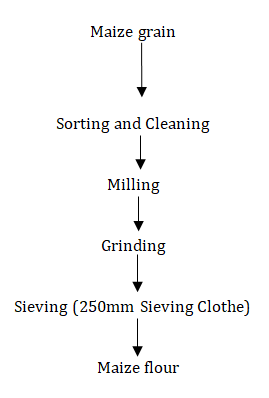
![Figure 2: Flow chart for composite TUWO production. Source: [5] with modification.](/fulltextimages/4740/fig_2.png)
| SAMPLES | MAIZE FLOUR (MF | ) | (KBF) | TOTAL | |||||||
|---|---|---|---|---|---|---|---|---|---|---|---|
| A | 100 | - | 100 | ||||||||
| B | 90 | 10 | 100 | ||||||||
| C | 85 | 15 | 100 | ||||||||
| D | 80 | 20 | 100 | ||||||||
| E | 75 | 25 | 100 |
Table 1: Flour Blends Formulation. Blend formulation for maize and kidney beans composite flours is presented in table 1.
Production of TUWO
Maize “TUWO” was prepared using the method described by Bolade MK, et al. [5]. In the first step, cold slurry of the flour was first prepared by mixing 20% of the desired quality of flour (40g) with 25% of the desired quantity of water (1.5l). This was followed by bringing 60% of the water into boiling and the initially prepared cold slurry was added to boiling water coupled with vigorous stirring, using a wooden flat spoon, to form a pap-like consistency. The remaining quantity of the flour (80%) was added gradually to the boiling pap-like paste with continuous stirring, and allowed to cook for about 7 min after which it was stirred vigorously to ensure smoothness of the gel. The final product obtained was called maize “TUWO”.
Analyses
Proximate Composition of the Maize and Kidney Bean Composite Flour (%).Ingredients (G/100g): Samples of composite flour were chemically analysed to determine their moisture, crude protein, fat, fiber content, total ash and carbohydrate levels according to AOAC [6]. Functional Properties of Maize and Kidney Bean Composite Flour: The method of AOAC [7] was used to determine the bulk density, weight of 10 ml capacity graduated measuring cylinder was gently filled with the sample and the bottom of the cylinder was tapped on the laboratory bench several times until there was no further dimunition. The bulk density was taken as the weight of the sample divided by the volume of sample. The modified method of Abbey & Ibeh [8] was used to determine the water absorption capacity (WAC), OAC and swelling power. A known weight of flour samples was mixed (in a varl-whirl mixer) with 10ml of distilled water and allowed to stand for 30 minutes at ambient room temperature (28-29°C) before being centrifuged at 5,000 rpm for 30 minutes. Measuring out the volumes of the supernatants was used to find the volumes of the remaining absorbed liquids (water and oil). Multiplication of the respective absorbed volumes by the respective liquid density (mass/volume) was used to get the expression of the WAC and OAC in g liquid/g sample. The method of Abbey & Ibeh [8] was used to determine the gelation capacity of the flour samples. Samples suspension of 2-20% (W/V) was prepared in 5ml distilled water in test tubes. The test tube containing the suspensions was then heated for one hour in boiling water bath followed by rapid cold tap water cooling. The test tubes containing the samples were further cooled for two hours at 40C. The gelation concentration was determined as that concentration when the sample from the invented test tube did not fall or slip. Pasting Properties of Maize and Kidney Bean Composite Flours: 2.5g of samples was weighed into a dried empty canister, then 25ml of distilled water was dispensed into the canister containing the sample. The solution was thoroughly mixed and the canister was well fitted into the RVA as recommended. The slurry was heated from 50 to 950C with a holding time of 2 min followed by cooling to 500C with 2 min holding time. Peak , trough, breakdown, final and set back viscosities as well as peak time and pasting temperature were read from the pasting profile with the aid of thermocline for windows software connected to a computer [9]. Antinutritional Factors of Maize and Kidney Bean Composite Flours: The method used for the determination of phytate given by Vaintraub & Lapteva [10] was used. Tannins, Folin-Denis spectrophotometric method as described by Pearson [11] was used. The trypsin inhibitor activity (TIA) assay was determined by Spectrophotometric method of Arntfield, et al. [12] also, Oxalate determination was by the method described by Nelson SS, et al. [13]. Sensory Scores: Randomly selected 20 screened and trained panelists who are conversant with TUWO eating quality were used to organoleptically assess the fresh experimental TUWO samples for mouth feel, flavour, appearance, colour and overall acceptability using the method of Iwe MO, et al. [14].
Statistical Analysis
Data obtained was subjected to Analysis of Variance (ANOVA) followed by Tukey’s Least Significant Difference(LSD) test to compare treatment means; differences was considered significant at 95% (P≤0.05) (SPSS V21 software).
Results and Discussion
Proximate Composition (%) of Maize and Kidney Beans Flours
The proximate analysis of the maize and kidney bean data is depicted in Table 2, down the column, the moisture, protein, Ash and fiber content of the samples increased (p˂0.05) significantly with increasing supplementation of kidney beans with maize flour. Their values ranged from (8.59-9.86, 6.82-11.63, 2.82-5.94 and 2.82-5.94)% while the crude fat and carbohydrate content decreased (P˂0.05) significantly from 3.38-3.78 and 65.99-76.20 respectively. The results of the moisture, protein, ash content and fiber content fat and carbohydrate content are within the range for Ogi produced from composite flours of maize Ogi fortified with periwinkle meat flour blends reported by Ufot I, et al. [15], SON [16], Ezeama CF [17] reported that low moisture levels positively affect long shelf life of food as they discourage microbial proliferation that could lead to spoilage. In comparison to the Nigerian regulatory standards for moisture content values of whole Food the moisture contents of the current study were within regulatory specifications of moisture 40% maximum [16]. The consistent increased in protein content with increasing levels of kidney beans flour supplementation could be attributed to higher protein content in Kidney beans. Similar observations were reported by Aminigo & Akingbala [18], Aremu, et al. [19], Fasasi, et al. [20], Oluseyi, et al. [21] for maize fortified with groundnut flour, maize fortified with okra seed meal and maize ogi fortified with tilapia flour. Proteins do most of the work in cells and are required for the structure, function, and regulation of the body’s tissues and organs [22]. The increase in the ash content of the composite flour maybe due to high ash content of kidney beans as compared to maize flour. The higher ash content in the fortified flours relative to 100% maize flour is an indication that kidney beans flour addition would contribute to higher mineral content in the TUWO. The increase in the fiber content of the composite flour maybe due to high fiber content of kidney beans as compared to maize flour. The decrease in the fat and carbohydrate content of the composite flours maybe due to low fat and carbohydrate content of kidney beans.
| Samples | Moisture | Protein | Fat | Ash | Fiber | Carbohydrate | ||||||||||||||
|---|---|---|---|---|---|---|---|---|---|---|---|---|---|---|---|---|---|---|---|---|
| A | 8.59a±0.01 | 6.82a±0.01 | 3.78d±0.03 | 2.82a±0.04 | 1.81a±0.01 | 76.20e±0.06 | ||||||||||||||
| B | 8.68b±0.01 | 8.00b±0.01 | 3.59c±0.01 | 3.51b±0.02 | 1.98b±0.02 | 74.23d±0.02 | ||||||||||||||
| C | 9.27c±0.04 | 9.25c±0.09 | 3.50b±0.03 | 4.03c±0.02 | 2.28c±0.01 | 71.69c±0.13 | ||||||||||||||
| D | 9.52d±0.12 | 10.91d±0.16 | 3.45b±0.00 | 4.57d±0.04 | 2.88d±0.02 | 69.19b±1.05 | ||||||||||||||
| E | 9.86e±0.04 | 11.63e±0.52 | 3.38a±0.00 | 5.94e±0.01 | 3.22e±0.01 | 65.99a±0.55 | ||||||||||||||
| LSD | 0.07 | 0.66 | 0.06 | 0.40 | 0.08 | 0.09 |
Table 2: Proximate Composition of Maize and Kidney beans flours (%).Ingredients (g/100g). Values are means standard of duplicate
Table 2: Proximate Composition of Maize and Kidney beans flours (%).Ingredients (g/100g). Values are means standard of duplicate determinations Means with same superscript in the same column are not significantly (p˃0.05) different LSD: Least Significant Difference Keys: A = (100 % Maize flour control) B = (90 % Maize and 10% kidney beans flour) C = (85% Maize and 15% kidney beans flours) D (80% Maize and 20% Kidney beans flours), E (75% Maize and 25% Kidney beans flours)
Functional Analysis
The results of the functional properties of maize and kidney beans composite flours are showed in Table 3. The bulk density, water absorption and swelling capacities decreased (p˂0.05) significantly, their values ranged from 0.60-0.86g/ml, 1.11-1.39ml/g and 2.44-3.07 respectively. The results of these values are within the range reported by Ufot I, et al. [15]. The observed decreased in bulk density with increased in kidney bean flour supplementation could be attributed to decrease in carbohydrate as the level of kidney bean flour increased. Similar observations were reported by Fasasi, et al. [20] for fermented maize and nile tilapia flour blends. The reduction in bulk density due to kidney beans flour supplementation would be an advantage in the formulation of children foods where high nutrient density to low bulk is desired [23, 24]. Water absorption capacity determines flours consistency is dependent on the compositional structure of the sample [24, 25]. The water absorption capacity obtained in this study for 100% maize flour (1.39) was higher than 0.67g/g reported by Alka, et al. [26] but lower than 1.12 - 1.46g/g reported by Beugre, et al. [27] for fermented maize flour this may be due to difference in variety. The decrease in water absorption with increasing levels of kidney beans flour addition could be an advantage because flours with low water absorption would provide more nutrients - dense foods [24]. Decreased in the swelling index could be due to weak bond forces in maize and kidney bean flours and reduction in the carbohydrate content of the composite flours [26]. The oil absorption capacity increased (p˂0.05) significantly with varying amount of kidney beans supplementation with maize, the value of the oil Absorption capacity ranged from 0.77-0.93ml/g. The foaming and gelatinization capacity increased (p˂0.05) significantly, from 2.79-3.85 and 8.01-13.07 respectively. This agrees with the result of Ufot I, et al. [15]. This could be attributed to increase in protein content in the blends with increasing levels of kidney bean flour supplementation. Sathe, et al. [28] noted that the ability of the flours to form foam depends on the presence of flexible protein molecules which may decrease the surface tension of water. The variation in gelation concentration could be attributed to the relative ratios of different constituents including proteins, carbohydrates and lipids in the flour samples Fasasi, et al. [20].
| SAMPLES | Bulk density | C | Oil Absorptio | n ) | Water Absorption | Foaming | Swelling Index | Gelatinization | ||||||||
|---|---|---|---|---|---|---|---|---|---|---|---|---|---|---|---|---|
| (g/ml) | apacity (ml/g | capacity(ml/g) | capacity | Capacity | ||||||||||||
| A | 0.86c±0.01 | 0.77a±0.01 | 1.39d±0.01 | 2.79a±0.01 | 3.07d±0.01 | 8.01a±0.01 | ||||||||||
| B | 0.81c±0.01 | 0.80ab±0.01 | 1.29c±0.01 | 2.96b±0.01 | 2.92c±0.01 | 8.92b±0.09 | ||||||||||
| C | 0.74b±0.01 | 0.83b±0.01 | 1.26bc±0.01 | 3.19c±0.04 | 2.89c±0.01 | 10.05c±0.01 | ||||||||||
| D | 0.70b±0.03 | 0.89c±0.01 | 1.21b±0.01 | 3.40d±0.01 | 2.66b±0.01 | 10.08c±0.01 | ||||||||||
| E | 0.60a±0.01 | 0.93c±0.02 | 1.11a±0.01 | 3.85e±0.04 | 2.44a±0.01 | 13.07d±0.03 | ||||||||||
| LSD | 0.06 | 0.05 | 0.06 | 0.16 | 0.04 | 0.04 |
Table 3: Functional properties of Maize and Kidney beans composite flours. Values are means standard of duplicate determinations
Table 3: Functional properties of Maize and Kidney beans composite flours. Values are means standard of duplicate determinations Means with same superscript in the same column are not significantly (p˃0.05) different LSD: Least Significant Difference Keys: A = (100 % Maize flour control) B = (90 % Maize and 10% kidney beans flour) C = (85% Maize and 15% kidney beans flours) D (80% Maize and 20% Kidney beans flours), E (75% Maize and 25% Kidney beans flours).
Pasting Analysis of Maize and Kidney Bean Composite Flours
The results of the pasting properties of maize and kidney beans flours are showed in Table 4. The (peak, trough, set back, final) viscosities and pasting temperature increased (p˂0.05) significantly across the row as kidney beans flour increased. Results ranged from 239.55-265.50, 177.48-196.26, 135.58-200.61, 363.06- 395.21 and 64.42-68.41 respectively. The results of these values are within the range reported by Idowu A [29]. That the final viscosities of the composite flours increased when he supplemented maize with African yam bean seed and Mbata, et al. [30]. Peak viscosity is an index of the ability of starch to swell freely before their physical break down [31]. Trough viscosity measures the ability of the paste to withstand break down during cooling [32]. The higher the setback viscosity the lower the retrogradation of the flour paste during cooling and the lower the staling rate of the product made from the flour [33]. The increase in final viscosity, gives a measure of the resistance of paste to shear force during stirring [31, 34]. Pasting temperature is the temperature at which initial rise in viscosity occurs when starch granules and proteins begin to absorb water and swelled as the temperature increased [33]. The breakdown viscosity and peak time decreased down the row results ranged from 40.90-70.49.55 and 4.38-5.44 respectively. The results of these values are within the range reported by Idowu A, et al. [29], Mbata I, et al. [30]. Peak time is the measure of the cooking time [34].
| Samples | A | B | C | D | E | LSD | ||||||||||||||
|---|---|---|---|---|---|---|---|---|---|---|---|---|---|---|---|---|---|---|---|---|
| Peak vel | 239.55a±0.65 | 240.58b±0.57 | 241.93c±0.01 | 255.72d±0.38 | 265.00e±2.66 | |||||||||||||||
| Trough vel | 177.48a±0.55 | 180.85b±0.19 | 182.52c±0.72 | 188.64d±0.49 | 196.26e±0.07 | 1.65 | ||||||||||||||
| Brk vel | 70.49e±0.68 | 55.71d±0.39 | 45.99c±0.01 | 43.55b±0.65 | 40.90a±0.04 | 1.77 | ||||||||||||||
| Final vel | 363.06a±0.05 | 365.59b±0.56 | 370.48c±0.61 | 390.65d±0.44 | 395.21e±0.04 | 2.00 | ||||||||||||||
| Setback Vel | 135.58a±0.57 | 141.96b±1.34 | 147.09c±0.01 | 149.06d±1.46 | 200.61e±0.55 | 1.23 | ||||||||||||||
| Peak Time | 5.44d±0.06 | 4.82c±0.01 | 4.77c±0.03 | 4.70b±0.01 | 4.38a±0.02 | 0.06 | ||||||||||||||
| Peak Temp | 64.42a±0.09 | 65.37b±0.01 | 66.95c±0.05 | 67.16d±0.09 | 68.41e±0.02 | 0.09 |
Table 4: Pasting properties of Maize and Kidney beans composite flours. Values are means standard of duplicate determinations Mea
Table 4: Pasting properties of Maize and Kidney beans composite flours. Values are means standard of duplicate determinations Means with same superscript in the same column are not significantly (p˃0.05) different LSD: Least Significant Difference Keys: A = (100 % Maize flour control) B = (90 % Maize and 10% kidney beans flour) C = (85% Maize and 15% kidney beans flours) D (80% Maize and 20% Kidney beans flours), E (75% Maize and 25% Kidney beans flours).
Antinutritional Analysis of Maize and Kidney Beans Composite Flours
The Antinutritional analysis of the maize and kidney beans composite flour is shown in Table 5. Down the column the phytate content increased (p˂0.05) significantly, there were also significant differences in the tannins, oxalate and TIA. Their values are 5.21-5.99 mg/100g, 3.84-4.80 mg/100g, 2.44-2.66 mg/100g and 0.99-1.21 respectively. Results support the claim [33, 34, 35]. Phytate are known to form complexes with iron, zinc, calcium and magnesium making them less available and thus inadequate in food samples especially for children however, the phytate content are far lower than the minimum amount of phytic acid reported by Siddhuraju p, et al. [36] to hinder the absorption of iron and zinc. It is known that 10-50 mg phytate per 100g will not cause a negative effect on the absorption of zinc and iron. The reduction in the tannin content maybe due to hydrolysis of tannins by enzyme into lower inositol phosphate which are believe to be activated during the soaking process by organism (yeast). Oxalate is known to form complexes with calcium to form insoluble calcium -oxalate salt. Siddhuraju p, et al. [36] reported a safe normal range of 4- 9 mg/100g for oxalates. The oxalate content of the composite flour was far lower than the reported value. Protease inhibitors such as trypsin inhibitor activity (TIA) in diets lead to formation of irreversible trypsin-enzyme inhibitor and subsequently indigestibility of dietary protein, thus leading to slower growth in people especially children [37].
| Samples | Phytate | Oxalate | Tannins | TIA | ||||||||||
|---|---|---|---|---|---|---|---|---|---|---|---|---|---|---|
| A | 5.21a±0.01 | 2.66b±0.02 | 4.80c±0.01 | 1.21d±0.01 | ||||||||||
| B | 5.63b±0.02 | 2.65b±0.02 | 4.68b±0.01 | 1.14c±0.01 | ||||||||||
| C | 5.75c±0.05 | 2.61b±0.01 | 5.38e±0.01 | 1.13bc±0.01 | ||||||||||
| D | 5.97d±0.01 | 2.49a±0.01 | 4.88d±0.01 | 1.08b±0.01 | ||||||||||
| E | 5.99d±0.01 | 2.44a±0.02 | 3.84a±0.05 | 0.99a±0.01 | ||||||||||
| LSD | 0.03 | 0.06 | 0.07 | 0.06 |
Table 5: Antinutrients analyses of Maize and Kidney beans composite flours. Values are means standard of duplicate determinations
Table 5: Antinutrients analyses of Maize and Kidney beans composite flours. Values are means standard of duplicate determinations Means with same superscript in the same column are not significantly (p˃0.05) different LSD: Least Significant Difference Keys: A = (100 % Maize flour control) B = (90 % Maize and 10% kidney beans flour) C = (85% Maize and 15% kidney beans flours) D (80% Maize and 20% Kidney beans flours), E (75% Maize and 25% Kidney beans flours). Keys: A = (100 % Maize flour control) B = (90 % Maize and 10% kidney beans flour) C = (85% Maize and 15% kidney beans flours) D (80% Maize and 20% Kidney beans flours), E (75% Maize and 25% Kidney beans flours).
Sensory Scores of TUWO from Maize and Kidney Beans Composite Flours
Table 6 gives the sensory Scores of TUWO samples, down the column, the mouth feel, aroma, texture and appearance increased (p˂0.05) significantly. Results ranged from 3.95-8.45, 4.25-8.60, 3.75-8.60 and 5.70-8.20 respectively. Results is in arrangement with the work of Olanipekun O, et al. [38], Otunola ET, et al. [39]. Mouth feel is an important sensory attribute of any food. Samples from pure blend of 80: 20 and 75:25 maize and kidney beans, showed high sensory scores on Mouthfeel. However, some panelists still expressed liking for the other samples. This observation may be attributed to personal (physiology) of choice or an influence of the experimental conditions. The high aroma scores implies that the addition of the kidney bean flour in the production of TUWO improved the aroma of the food. The panellists’ preference for the control sample in terms of texture over other samples may be due to increase in the concentration of kidney bean flour in the other samples, which may have influenced the texture of the samples negatively contrary to what they know. The panellists’ preference for the control in terms of appearance sample over other samples made from the composite flours may be due to the alteration in the physical properties of the TUWO due to the inclusion of kidney bean flour. Edema, et al. [40] got a similar result and reported that addition of soy flour to maize flour in the production of sour maize bread affected the physical properties. The overall acceptability is inclusive of all sensory attributes: Mouthfeel, aroma, texture and appearance. The scores of the overall acceptability shows that the food sample C with the mean score (8.70) was most preferred over other samples made from composite maize and kidney bean flours. The control sample A was least accepted by the panelists. This result indicates that addition of kidney bean flour to maize flour for TUWO processing increased the consumer acceptance of the product. This is in agreement with past works by Mbata I, et al. [30], Otunola ET, et al. [39], Edema MO, et al. [40] in which consumers were reported to prefer products made from composite mixtures of legume and maize to products from 100% maize flour. In this report, the most accepted product (Sample C) was made from maize flour and kidney bean flour at the ratio 85:15.
| Samples | Mouthfeel | Aroma | Texture | Appearance | Overall accp. | ||||||||||||
|---|---|---|---|---|---|---|---|---|---|---|---|---|---|---|---|---|---|
| A | 3.95a±1.36 | 4.25a±1.25 | 8.60e±0.68 | 8.20e±0.62 | 4.45a±1.15 | ||||||||||||
| B | 4.75b±1.12 | 6.05b±0.39 | 6.50d±1.57 | 6.90d±0.79 | 7.70d±0.47 | ||||||||||||
| C | 5.65c±0.81 | 6.85c±1.09 | 6.00c±1.81 | 6.60c±0.94 | 8.70e±0.47 | ||||||||||||
| D | 5.65c±0.59 | 7.55d±0.69 | 4.95b±1.79 | 5.90b±1.12 | 7.40c±0.94 | ||||||||||||
| E | 8.45d±0.76 | 8.60e±0.68 | 3.75a±1.52 | 5.70a±1.38 | 5.25b±1.07 | ||||||||||||
| LSD | 0.02 | 0.55 | 0.21 | 0.10 | 0.20 |
Table 6: Sensory Analyses of TUWO from Maize and Kidney Beans composite flours. Values are means standard of duplicate determinat
Conclusion
The study was able to develop composite flour from maize and kidney beans for TUWO which were able to meet the functionality of raw material which determine product quality and process effectiveness. Also, the proximate, functional, pasting, Antinutritional factors as well as sensory properties were examined. TUWO produced have increased nutrients which are desirable for good health and wellbeing. This would provide nutritious food to combat malnutrition problems of all aged group in developing countries and enhanced food security. From the research, supplementation is hereby recommended to improve the nutritional quality of TUWO.
References
-
Andrew FS (2013) The Oxford Encyclopedia of Food and Drink in America. 2nd (Edn.), Oxford University Press, pp: 551-558.
-
Mulle HG (1970) Traditional cereal processing in Nigeria and Ghana J Agric Sci 31: 187-195.
-
Thoma MJ, Thompson LU, Jenkins DJ, AMJ (1983) Clinical Nutrition 38(3): 481-8
-
Englyst HN, Cummings JH (1992) Digestion of the polysaccharides of some cereal foods in the human small intestine. American Journal of Clinical Nutrition 42: 778-787.
-
Bolade MK, Usman MA, Rasheed AA, Benson EI (2002) Influence of hydrothermal treatment of maize grains on the quality and acceptability of TUWOn Masara (traditional maize gel). Food chemistry 79(4): 479-483.
-
AOAC (2012) Official Methods of Analysis. 16th (Edn.), Association of Official Analytic Chemists. Washinton DC.
-
AOAC (2005) Official methods of analysis 18th (Edn.), Arlington, VA Association of Official Analytical Chemist, pp: 806-842.
-
Abbey BW, Ibeh GO (1988) Functional properties of Raw and Heat processed cowpea (Vignaungiculum, Walp) flour. Journal of Food Science 53(6): 1775- 1778.
-
Awolu 00 (2017) Optimization of the functional characteristics, pasting and rheological properties of pearl millet-based composite flour. Heligon 3(2): 1- 17.
-
Vaintraub IA, Lapteva NA (1988) Colarimetric determination of phytate in unpurified extracts of seeds and the the products of their processing. Analytical Biochemistry 175(1): 227-230.
-
Pearson DA (1976) Chemical analysis of foods 7th (Edn.), Churchill living tone Eduinburge.
-
Arntfield D, Ismond MAH, Murray ED (1985) The fate of antinutritional factors during the preparation of faba bean protein isolate using micellization technique. Food Science Innovation Journal 18(2): 137-143.
-
Nelson SS (1992) Introduction to the chemical Analysis of Foods, International Thomson Publishing, New York, pp: 93-96, 113-115, 137-148.
-
Iwe MO (2002) Handbook of sensory methods and analysis. Projoint Communications Services Ltd, Enugu, pp: 70-72.
-
Ufot I, Winifred EE (2016) Chemical, functional and sensory properties of Maize Ogi fortified with periwinkle meat flour. International Journal of Nutrition and Food Sciences 5(3): 195-200.
-
SON (2004) Standard on whole wheat bread. Standards Organization of Nigeria.
-
Ezeama CF (2007) Food Microbiology: Fundamentals and applications. Natural Prints Ltd. Lagos 64.
-
Aminigo ER, Akingbala JO (2004) Nutritive composition and sensory properties of ogi fortified with okra seed meal. Journal Applied of Science and Environmental Management.
-
Aremu MO, Osinfade BG, Basu SK, Ablaku BE (2008) Development and nutritional quality evaluation of kerstings groundnut-ogi for African weaning diet. American Journal of Food Technology 6: 1021-1033.
-
Fasasi OS, Adeyemi IA, Fabenro OA (2007) Functional and pasting characteristics of fermented maize and nile tilapia (Oreochromis niloticus) flour diet. Pakistan Journal Nutrition 6(4): 304-309.
-
Oluseyi AK, Oluwafunmilalo A, Oluwasegun ST, Abimbola AA, Oluwatoyin AC, et al. (2013) Dietary fortification of sorghuin using crayfish (_Paranephrops_ _planifrons_) as supplements in infancy. Food Sci. Quality Mangt 15: 1-9.
-
WHO (1994) Food and Agriculture Organization of the united Nations and World Health Organization (1994) Fats and Oil in human nutrition. Report of a joint expert consultation. Rome, pp: 57.
-
Iwe MO, Onadipe OO (2001) Effect of addition of extruded full-fat soy flour into sweet potato flour on functional properties of the mixture. Journal Sustainable Agriculture and Environment 3: 109-117.
-
Ayo Omogie H, Ogunsakin R (2013) Assessment of chemical, rheological and sensory properties of fermented maize-Cardaba banana complimentary food. Food Nutrition Science. 4(8): 844-850.
-
Alka S, Neelam Y, Shruti S (2012) Effect of fermentation on physico-chemical properties and in vitro starch and protein digestibility of selected cereals. International Journal Agricultural Food Science 2(3): 66-70.
-
Adebowale ARA, Sanni SA, Oladapo FO (2008) Chemical, functional and sensory properties of instant yam-bread fruit flour. Nigeria Food journal 26(1): 2- 12.
-
Beugre GAM, Yapo BM, Blei SH (2014) Effect of fermentation time on the physico-chemical properties of maize flour. International Journal Research Studies and Bioscience 2(8): 30-38.
-
Sathe SK, Desphande SS, Salunkhe DK (1982) Functional properties of lupin seed (_Lupinus_ _mutabilis_) protein and protein concentrate. J Food Sci 47: 491-497.
-
Idowu A (2015) Chemical composition, sensory and pasting properties of blends of Maize- African Yam bean Seed. Journal of Health and Food Science 3(3): 1- 6.
-
Mbata I, Ikenebomeh M, Ahonkhai I (2005) Improving the quality and nutritional states of maize fermented meal by fortification with Bambara nut. Internet Microbiology 2(2): 8339-8344.
-
Sanni OL, Adebeowale A, Filani TA, Oyewole OB, Westby A (2008) Quality of flash and rotary dryer dried fufu flour. J Food Agric Environ 4: 74-78.
-
Adeyemi IA, Idowu MA (1990) The evaluation of pregelatinized maize flour in the development of Maissa, a baked product. Nigereria Food Journal 8: 63-73.
-
Chaoui HI, Zibilske LM, Ohno TO (2003) Effects of of earthworm casts and compost on soil microbial activity and plant nutrient availability. Soil Biology and Biochemistry 35: 295-302.
-
Oluwabukola OJ, Ndigwe EV (2016) Physico-Chemical Properties, chemical composition and Acceptability of instant ‘Ogi’ from blends of fermented
-
Uchechukwu IO, Adebunkola MO, Adewale OO, Mobol aji OB, Samuel AO (2017) Nutritional composition and Antinutritional properties of maize co-fermented with pigeon pea 6(2): 424-439.
-
Siddhuraju P, Becker D (2001) Effect of various domestic processing methods on anti-nutrients and in-vitro protein and starch digestibility of two indigenous varieties of Indian tribal pulse (Mucuna pruriens varutilis). J Agri Food Chemistry 49: 3058- 3067.
-
Pugalentin M, Vidival V, Siddhuraji P (2009) Alternative food/feed perspective of underutilized legume mucuna pruriensvan.utili. A review. Plant chem for Human Nutrition 60 (4): 201-218.
-
Olanipekun O, Olapade O, Suleiman P, Ojo S (2015) Nutrients and sensory analysis of abari made from composite mixture of kidney bean flour and maize flour 4(2): 019-023.
-
Otunola ET, Sunny Roberts EO, Adejuyitan JA, Famakinwa AO (2012) Effects of partially defatted groundnut paste on some properties of _kokoro_ (a popular snack from maize paste). Agriculture and Biology journal of North America 3(7): 280-286.
-
Edema MO, Sanni LO, Abiodun I (2005) Evaluation of maize-soybean flour blends for sour maize bread production in Nigeria. Africa Journal of Biotechnology 4(9): 911-918.
- The Role of Podocyte Apoptosis and the Involvement of SIRT1 in Diabetic Nephropathy
- Dealcoholization of Beer by Osmotic Distillation for the Beverage Industry
- Biopolymer-Based Edible Packaging- Biomaterials, Methods, and Applications in Food Industry: An Updated Review
- Influence of Bioprocessing Methods on 'China Rice' (Gawal R1), and Soyabean Supplementation on the Quality of Complementary Food
- Cassava (Manihot esculenta) Varietal Growth, Yield and Cyanide Content Performance in Three Sites in the South- Eastern Semi Arid Regions of Kenya
- Food Waste Treatment, Recycling, Management and Production of Value-Products-An Update on Methodologies and Current Trends