
Antioxidant and Sensory Properties of Herbal Teas Formulated From Dried Moringa (Moringa Stenopetala) and Stevia (Stevia Rebaudiana Bertoni) Leaves
Herbal teas are gaining popularity and acceptance due to their sensory and health benefits. The demand for moringa tea currently increased in Ethiopia due to its nutritional and medicinal values. However, using moringa alone is difficult due to its poor sensory appeal and adding sugar to enhance the sensory has implications for health. The purpose of this study was to optimize the sensory properties (taste and aroma) of formulated herbal teas in addition to evaluating the antioxidant properties of the formulated herbal tea from dried moringa and stevia leaves. Seven moringa-based herbal teas were brewed with stevia ranging from 0 to 35% with five-level (5) and compared for their sensory and antioxidant properties. The moringa tea infusion and commercial green tea were considered as control. The results of sensory analysis showed that herbal tea brewed with 20-35% stevia in the formulation results in higher sweetness compared to 100%-moringa and green tea. Herbal tea brewed with 20-35% stevia in the formulation results in the highest in antioxidant (DPPH scavenging capacity, ferric reducing power and total antioxidant activities) values comparable to 100%-moringa. This study provides evidence that adding stevia to moringa improves the sensory and antioxidant properties without compromising its health-promoting compounds.
Introduction
Background of the Study
Herbal teas that refer to any green or leafy part of a plant are gaining popularity among consumers [1]. Herbal teas are distinguished from caffeinated beverages like the true tea (black, green, white, yellow and oolong.) or decaffeinated tea, in which the caffeine has been removed by their preparation from plants other than Camellia [2, 3]. Herbal tea promotes better night sleep because it is caffeine-free and its antimicrobial activity [4, 5]. Some of the popular herbal teas are chamomile, ginger, ginseng, peppermint, and cinnamon [6]. Herbal teas are made by infusion or decoction from fresh and dried leaves, seeds, grasses, nuts, barks, fruits, and flowers, or other botanical elements [7, 8]. They have been extensively consumed because of their health benefits and sensory characteristics [4, 9]. Antioxidants are chemical substances that inhibit the oxidation of other molecules and protect cells from the damages caused by free radicals in the human body by alleviating and prevent various diseases related to the cardiovascular system, heart, brain, liver, kidney, and cancer and it helps to retard the aging process, these are: - 2, 2-diphenyl-2-picrylhydrazyl (DPPH), ferric reducing-antioxidant power (FRAP) and total antioxidant activity using phosphomolybdenum assay[10, 11]. Generally, the mechanism behind the free radical scavenging activity of polyphenols is to contribute to the reduction of oxidative stress and to prevent the onset of free radicals [12].
The fresh and dried leaf of moringa is widely sold and consumed in cities of Ethiopia, due to its perceived awareness of health and nutritional benefits [13]. Moringa is becoming a very important plant rich in antioxidants, protein, calcium, and iron compared to other commonly consumed fruits and vegetables [14]. Stevia is recently cultivated on a large scale by entrepreneurs in Ethiopia for herbal production due to its potential uses [15]. Stevia is also grown like other vegetables in the kitchen garden [15, 16]. Stevia leaves are used in food products as calorie free intense natural sweetener [15, 17].
The demand for moringa currently increased in Ethiopia due to its nutritional and medicinal values [13]. However, using it alone is difficult as it has poor sensory appeal [18]. Enhancements of sensory appeal of moringa based foods by adding cereals and sugar has been studied [19] improve the sensory properties. However, increasing consumption of sugar (sucrose) and sugar-rich products has resulted in several health problems [20]. Hence, natural low calories sweeteners are considered as best substitutes of cereals and sugar to enhance the sensory apples of moringa. Stevia is assumed as the main substitution of natural sugar, due to the presence of steviol glycosides that has great potential in the food industry as a strategy to reduce sugar consumption [21]. Partial replacement of sugar with stevia and modifying the sensory appeal of moringa tea has not been studied. In this study, alternative herbal tea development from moringa and stevia leaves blend was investigated for its nutraceutical and sensory properties.
The general objective of the study was to evaluate the sensory and antioxidant properties of herbal teas formulated from dried moringa and stevia leaves to optimize the sensory appeal of moringa tea and partially replace sugar with stevia (i.e. natural low caloric sweetener).
Materials and Methods
Sample Collection and Preparation
Fresh moringa and stevia leaves were obtained from Arba Minch and Wondo Genet Agriculture research centers (Ethiopia), respectively. The samples were packed in polyethylene (plastic) bags and transported to Wondo Genet Natural Product Research Laboratory.
The fresh leaves of uniform shape, color and size were selected and subjected to shade drying at ambient temperature for about one week according to Killedar SG, et al. [4]. The leaves were spread thinly on paper-lined wooden trays and protected from direct sunlight to prevent the loss of volatile aroma compounds and also photooxidation.
The dried samples were separately milled using an electric Blender (Model BLG401, Zhejiang YiLi Tool Co., Ltd., China). The milled samples were sieved using 2 mm sieve size to separate the milled leaves. From the sieved samples, formulations were prepared and kept in an air-tight container and stored at room temperature until further analysis.
Treatments and Experimental Design
The dried moringa and stevia leaves were mixed in varying proportions to obtain 7 different formulations (Table 1) based on the preliminary test. The sensory acceptability and antioxidant activities of their tea were analyzed. The experimental design was a completely randomized design (CRD).
| Moringa leaves % | Stevia leaves (%) | |
|---|---|---|
| TF1 | 100 | 0 |
| TF2 | 95 | 5 |
| TF3 | 90 | 10 |
| TF4 | 85 | 15 |
| TF5 | 80 | 20 |
| TF6 | 75 | 25 |
| TF7 | 70 | 30 |
| TF8 | 65 | 35 |
| TF9 | 0 | 100 |
| GT (100%-Green tea) |
Table 1: Formulations of herbal tea in the experimental design. Formulations of herbal tea in the experimental design.
Preparation of Herbal Tea
The herbal tea was prepared according to the method developed by Horzic D, et al. [22]; formulated samples 2 g were infused in 200 ml boiling water for 5 minutes at 97oC to mimic normal tea preparation till it becomes an appealing fragrance. Herbal tea was prepared from all formulated herbal teas and controls. The formulated herbal teas were unsweetened using sugar and considered for the analysis in this experiment.
Preparation of Extracts from Herbal Tea
The extract was prepared according to Koh GY, et al. [23] and Mingarro D, et al. [24]. the decoction was boiled for 5 min at 97 oC as usual for normal tea prepared. The decoction was filtered through a double-layered muslin cloth to get rid of the large particles and filtered through a filter paper (Whatman no.1). The filtered product was then allowed to concentrate at 45oC for three consecutive days by evaporate excess water and obtain the dried. The extract was weighed and its respective percentage yield was recorded. The crude extract 1 g was dissolved in 50 ml of respective solvent (methanol) to make a stock solution of 20 mg/mL. The prepared stock solution was kept at 4°C in a refrigerator, to serve as the working solution for all the phytochemicals and antioxidant tests.
Descriptive Sensory Analysis
The descriptive sensory analysis of formulated herbal tea infusions was conducted using trained sensory panels of 9 people. Only panelists who voluntarily accepted and signed a consent form after they have been informed about the nature of study materials and the activity involved were considered. The sensory profiling of the products was performed using a generic descriptive analysis method[25]. The panelists were trained in two sessions of 3 hrs per day using reference samples for green tea and lexicon terms were developed [26]. Profiles of aroma, appearance tastes, aftertaste and overall evaluation sensory properties of the formulated herbal tea infusions were generated with their definition, reference standard, and anchors (Table 3). The attributes were evaluated on 10- scale anchored with verbal descriptions at extreme ends [27]. Evaluation of formulated herbal tea infusions was performed on single products in replicated sessions. The actual product evaluation was done in the Wondo Genet Research center hall room. The formulated herbal tea infusions were presented in a transparent teacup with random three-digit codes. A glass of drinking water was provided for rinsing between tastes.
Antioxidant Activities
DPPH Radical Scavenging Activity: The 2, 2-diphenyl-1- picrylhydrazyl (DPPH) radical scavenging activity of the herbal extract was determined as described by Brand- Williams W, et al. [28]. Different concentrations (50 to1000 µg/mL) of the extracts were taken in different test tubes. Freshly prepared DPPH solution (2 mL, 0.06%, and w/v) in methanol was added in each of the test tubes containing 1mL of the extract. The reaction mixture and the reference standards (ascorbic acid and BHT) were vortexed and left to stand at room temperature in the dark for 30 min. The absorbance of the solutions was measured using a UV- visible spectrophotometer (JANEWAY, 96500, UK) at 520 nm. Methanol (100%) was used as a blank. The ability to scavenge the DPPH radical was calculated using equation 1 Radical scavenging effect (%) =(Ac-As)/ Ac×100……………………………………………….1 Where Ac = Absorbance of the control; As = Absorbance of the sample The antioxidant activity of the extract was expressed as EC50 and the EC50 value is the concentration in (μg/mL) of extracts that scavenges the DPPH radical by 50%.
Ferric Reducing Antioxidant Power: This assay was carried out according to Safdar N, et al. [29]. One milliliter of the herbal extract with a concentration of 1 mg/mL was mixed with 2.5 mL sodium phosphate buffer (0.2 M, pH 6.6) and 2.5 mL of 1% potassium ferricyanide. Then the mixture was incubated at 50oC for 20 min. Trichloroacetic acid (2.5 mL, 10%) was added to the mixture. Finally, 2.5 mL of the supernatant solution was mixed with 2.5 mL of distilled water and 0.5 mL FeCl3 (0.1%) and the absorbance of the solutions was measured using a UV-visible spectrophotometer (JANEWAY, 96500, UK) at 700 nm. The reducing power was expressed as mg of ascorbic acid equivalents/g of dried extract (mg AAE/g) using the calibration curve (y=0.0063x+0.148, R2=0.99(p<0.01)).
Total Antioxidant Activity Using Phosphomolybdenum Assay: The total antioxidant activity of formulated herbal tea was determined by phosphomolybdenum assay according to Prieto P, et al. [30]. Sample of 0.3 mL of extract (1 mg/ mL) in the solution was mixed with 3 mL phosphomolybdenum reagent (28mM sodium phosphate and 4mM ammonium molybdate in 0.6 M sulphuric acid) in capped test tubes. The samples were incubated for 90 min in a water bath at 95°C. After cooling to room temperature, the absorbance of the solutions was measured using a UV- visible spectrophotometer (JANEWAY, 96500, UK) at 695 nm against a blank (3 mL methanol without plant extract). The total antioxidant activity was expressed as milligram butylated hydroxytoluene equivalent/gram of dried extract (mgBHTE/g) using a calibration curve (y=0.0094x+0.112, R2=0.99(p<0.001)).
Statistical Analysis
All data were analyzed using one-way ANOVA with traits as an independent variable. The means were separated using Tukey’s HSD test at p<0.05. Principal Component Analysis
(PCA) for all numerical results was performed using XLSTAT version 2016.03.30882 (Addinsoft, New York).
Results and Discussions
Antioxidant Activities of the Formulated Herbal Teas
The antioxidant activities g for formulated herbal tea were determined using DPPH Scavenging activity, Ferric reducing power (FRAP) and total antioxidant activity assay. DPPH Scavenging activity, FRAP and total antioxidant activity measured the hydrogen, electron-donating abilities of primary antioxidants and reduction of Mo (Molybdenum) (VI) to Mo (Molybdenum) (V) in the presence of the antioxidant compound and subsequent formation of a green phosphate/ Mo (V) complex at acidic pH and at higher temperature were studied, respectively according to Lim Y, et al. [31] and presented in Figure 1 and Table 2.
| Herbal tea | DPPH scavenging | Ferric reducing power (mg AAE/g) | Total antioxidant |
|---|---|---|---|
| (IC50, g/mL) | (mg BHTE/g) | ||
| TF1 | 0.73 ± 0.02a | 1.01±0.07f | 0.44±0.03f |
| TF2 | 0.55 ± 0.01ab | 1.41±0.12f | 0.62±0.05e |
| TF3 | 0.26 ± 0.15bcd | 1.73±0.13ef | 0.69±0.03e |
| TF4 | 0.21 ± 0.02dc | 2.39±0.05de | 1.04±0.06d |
| TF5 | 0.05 ± 0.01d | 2.79±0.36cd | 1.14±0.03cd |
| TF6 | 0.05 ± 0.03d | 3.42±0.39bc | 1.40±0.02b |
| TF7 | 0.17 ± 0.09d | 4.24±0.12b | 1.43±0.01b |
| TF8 | 0.48 ± 0.12bac | 2.27±0.02de | 1.23±0.02c |
| TF9 | 0.04± 0.01d 6.67±0.25a | 1.92±0.02a | |
| AA | 0.03±0.02d |
Table 2: -2, 2-Diphenyl-1-picrylhydrazyl (DPPH) scavenging IC50 values, ferric reducing power, and total antioxidant activities o
Values are mean ± SD (n=2). Means with a different letter with a column of superscripts are significantly different at p<0. 05. AAE/g: Ascorbic acid equivalents per gram of dried extract; BHTE/g: Butylated hydroxytoluene equivalents per gram of dried extract;
Where TF1( 100% moringa), TF2 (95% moringa and 5% stevia), TF3 (90% moringa and 10% stevia), TF4 (85% moringa and 15% stevia), TF5 (80% moringa and 20% stevia),TF6(75% moringa and 25% stevia),TF7(70% moringa and 30% stevia),TF8(65% moringa and 35% stevia),TF9 (100% stevia) and AA (Ascorbic acid).
DPPH scavenging activity
The concentration of an antioxidant needed to decrease the initial DPPH concentration by 50% (IC50) is a parameter widely used to measure antioxidant activity [32]. The lower the IC50 the higher is the antioxidant activity [28]. All the formulated herbal teas had considerable variation and ranged from 0.05 to 0.73 g/ml (Table 2). The IC50 of herbal teas of TF6, TF7 and TF8 were lower (p<0.05) compared to the infusions of 100% moringa (TF1) (Table 2). These samples had comparable (p>0.05) IC50 to the references ascorbic acid (AA). All other formulations had higher (p<0.05) IC50 compared to samples of TF6, TF7, and TF8. This is indicative of the samples with a higher level of stevia (25-35%) improved the DPPH Scavenging Activity of the herbal tea formulations. This can be attributed to the high level of phytochemicals in the dried stevia leaves (Table 2).
As shown from the dose dependence curve for the DPPH radical scavenging activity, the concentration of the sample increased, the percent inhibition of DPPH radical scavenging activity also increased (Figure 1). At a concentration of 1 mg/ml, the scavenging effect of ascorbic acid and formulated herbal tea from dried moringa and stevia, the DPPH radical scavenging decreased in the order of the ascorbic acid, stevia and formulated herbal tea. The DPPH radical scavenging activity (IC50) of formulated herbal tea infusions was higher than the moringa leaves tea infusion. The variations in the results of the present study could be due to the difference in addition to stevia to the moringa.
Ferric Reducing Antioxidant Power (FRAP)
The ferric reducing antioxidant powered (FRAP) of all the formulated herbal tea ranged between 1.01 and 4.24 mg AAE/g with a considerable variation (Table 2). Herbal tea samples with a relatively high level of stevia (TF7 and TF8) had higher (p<0.05) FRAP compared to the 100% moringa (TF1). Whereas the samples with a lower level of stevia (TF2 and TF3) had lower FRAP compared to the 100% moringa, this is due to a stable protein– antioxidant activity interaction, resulting in a decrease or increasing of antioxidant activities [33]. Indeed, binding to food proteins may have implications in terms of bioavailability, as the antioxidant capacity of polyphenols can be modified by the presence of proteins [34]. Herbal teas of TF4, TF5 and TF6 had similar (p>0.05) FRAP to the reference sample (100% moringa) (Table 2). The increased FRAP in the herbal tea formulations that have a higher level of stevia is due to the high level of phytochemicals in the dried stevia leaves (Table 2).
Total Antioxidant Activity (TAA)
The total antioxidant activity (TAA) of all the formulated herbal tea ranged between 0.44 and 1.92 mg BHTE/g with considerable variations (Table 2). Herbal tea samples with a relatively high level of stevia (TF7 and TF8) had higher (p<0.05) TAA compared to the 100% moringa (TF1). Whereas the samples with a lower level of stevia (TF2, TF3, TF4 and TF5) had lower TAA compared to the 100% moringa tea infusion is due to a stable protein– antioxidant activity interaction, resulting in a decrease or increasing of antioxidant activities [33]. Indeed, binding to food proteins may have implications in terms of bioavailability, as the antioxidant capacity of polyphenols can be modified by the presence of proteins [34] Only herbal teas of TF6 had similar (p>0.05) TAA to the reference sample (100% moringa). The enhanced total antioxidant activity in the herbal tea formulations that have a higher level of stevia is due to the high level of phytochemicals in the dried stevia leaves (Table 2). Values are mean ± SD (n=2). Means with a different letter with a column of superscripts are significantly different at p<0. 05. AAE/g: Ascorbic acid equivalents per gram of dried extract; BHTE/g: Butylated hydroxytoluene equivalents per gram of dried extract;
Where TF1( 100% moringa), TF2 (95% moringa and 5% stevia), TF3 (90% moringa and 10% stevia), TF4 (85% moringa and 15% stevia), TF5 (80% moringa and 20% stevia),TF6(75% moringa and 25% stevia),TF7(70% moringa and 30% stevia),TF8(65% moringa and 35% stevia),TF9 (100% stevia) and AA (Ascorbic acid).
Descriptive Sensory Analysis of the Formulated Herbal Tea
The sensory panels generated twenty-five moringa-stevia herbal tea quality descriptors and their definition, reference standards and anchors are given (Table 3). The aroma and appearance attributes were not affected (p<0.05) by the formulation (Table 4). However, taste attributes (sweetness and bitterness), after-taste attributes (sweet aftertaste) and overall sensory appeal (sweetness and sweet after-taste) properties of the herbal teas were affected (p<0.05) by the formulations. Furthermore, taste attributes (astringency, grassy taste, leafy taste and sour), after-taste attributes (leafy aftertaste, astringent aftertaste, grassy aftertaste, and lingering aftertaste) and overall sensory appeal (tea/herbal aroma) of the herbal teas were not significantly affected (p<0.05) by the formulation (Table 4).
| Attributes | Definition /reference | Scale anchors (0, 10) | |
|---|---|---|---|
| Aroma | Grassy | Aromatics associated with newly cut grass. | Not grassy, intense grassy |
| Aroma | Leafy | Odorants typically associated with Sharp and slightly pungent aromatics | No leafy aroma, intense leafy aroma |
| Aroma | fruity | Containing fruity aroma | No fruity aroma, intense fruity aroma |
| Aroma | musty/ stale * | Having stale odor | No musty aroma, intense musty aroma |
| Aroma | tea | Having a normal tea smell. | No tea aroma, intense tea aroma |
Table 3: -The lexicon used to describe the sensory properties of herbal tea formulated from moringa and stevia leaf. Attributes w
clear Transparent in color or bright No clear look, Very clean look Cloudy Not transparent or clear Not cloudy, very cloudy Sediments A collection of small particles No sediments, much sediment Appearance leafy extract Having leafy smell No leafy extract, intense leafy extract
- Tea appearance
- The act of appearing to normal tea
- No tea appearance, tea appearance
- Sweetness
- Taste sensation typical of sucrose
- Reference
- No sweetness, intense sweetness
- Astringency
- Shriveling taste sensation on the tongue or puckering of the oral tissue
- No astringency, intense astringency
- Grassy taste
- Taste-related to grassy
- No Grassy taste, intense Grassy taste
- Taste
- Leafy taste*
- Taste that has leafy
- No Leafy taste, intense Leafy taste
- Sour
- Taste sensation typical of acidic fruits.
- No sour, intense sour
- Bitter
- Taste sensation typical of kola nut
- No bitter, intense bitter leafy aftertaste*
- Taste of tea that persists when it is no longer present as leafy
- No leafy aftertaste, intense leafy aftertaste sweet aftertaste*
- The sweetness persists of tea as sweet after taste
- No sweet aftertaste, intense sweet aftertaste astringent aftertaste*
- A substance which draws tissue together after taste of herbal tea
- No astringent aftertaste, intense astringent aftertaste
- Aftertaste bitter aftertaste*
- Having an acrid taste usually from a basic substance after tasting herbal tea grassy aftertaste*
- The taste which exit after tasting herbal tea grassy
- No grassy aftertaste, intense grassy aftertaste lingering aftertaste*
- The act of waiting after tasting herbal tea
- No lingering aftertaste, intense lingering aftertaste tea/herbal aroma*
- Normal tea aroma
- No tea/herbal aroma, intense tea/herbal aroma
- Sweetness
- The taste stimulated by sucrose and other sugars, such as fructose, glucose, saccharin, Aspartame, etc. overall evaluation sweet aftertaste*
- The persistence of sweetness after taste
- No sweet aftertaste, intense
Table 4: -The lexicon used to describe the sensory properties of herbal tea formulated from moringa and stevia leaf.
| Attributes | Formulated Herbal Tea | |
|---|---|---|
| Aroma | Grassy | NS |
| Aroma | Leafy | NS |
| Aroma | fruity | NS |
| Aroma | musty/ stale | NS |
| Aroma | tea | NS |
| Appearance | clear | NS |
| Appearance | Cloudy | NS |
| Appearance | Sediments | NS |
| Appearance | leafy extract | NS |
| Appearance | Tea appearance | NS |
| Taste | Sweetness | *** |
| Taste | Astringency | NS |
| Taste | Grassy taste | NS |
| Taste | Leafy taste | NS |
| Taste | Sour | NS |
| Taste | Bitter | *** |
| Aftertaste | leafy aftertaste | NS |
| Aftertaste | sweet aftertaste | *** |
| Aftertaste | astringent aftertaste | NS |
| Aftertaste | bitter aftertaste | NS |
| Aftertaste | grassy aftertaste | NS |
| Aftertaste | lingering aftertaste | NS |
| overall evaluation | tea/herbal aroma | NS |
| overall evaluation | Sweetness | *** |
| overall evaluation | sweet aftertaste | *** |
Table 5: One-way ANOVA table and summary of significance for herbal tea formulated from moringa and stevia. *** P-value < 0.001;
The herbal teas formulated showed considerable variation in sweetness (Table 5). Herbal tea of TF8, TF7, and TF6 was sweeter (p<0.05) compared to reference samples TF1 (100% moringa) and GT (green tea) with no significant difference among them. Herbal teas of TF2, TF3, TF4, and TF5 were lower (p<0.05) in sweetness compared to TF8 (teas with a higher level of stevia) and were sweeter (p<0.05) than 100% moringa. Furthermore, TF2, TF3, TF4, and TF5 herbal teas were lower (p<0.05) in sweetness compared to the sample having a high level of stevia (TF8). This revealed that the addition of stevia to moringa tea infusion improved its sweetness.
| Sensory category | Attributes | Formulations | ||||||||
|---|---|---|---|---|---|---|---|---|---|---|
| TF1 | TF2 | TF3 | TF4 | TF5 | TF6 | TF7 | TF8 | GT | ||
| Aroma | Grassy | 3.83a | 3.44a | 3.39a | 3.61a | 4.06a | 3.44a | 3.61a | 2.44 a | 3.39 a |
| Leafy | 6.44a | 6.33a | 6.22a | 6.56a | 6.11a | 5.61a | 6.44a | 5.94a | 5.22a | |
| fruity | 2.28a | 1.61a | 1.44a | 1.28a | 1.39a | 1.56a | 1.28a | 1.39a | 2.17a | |
| musty/ stale | 0.78a | 0.61a | 0.61a | 0.50a | 0.39a | 0.50a | 0.50a | 0.50a | 1.39a | |
| tea | 2.89a | 2.33a | 2.89a | 3.33a | 3.28a | 3.44a | 2.67a | 4.11a | 2.67a |
- clear
- 5.22a
- 5.01a
- 5.44a
- 5.56a
- 5.50a
- 4.94a
- 4.89a
- 5.89a
- 6.72a
- Cloudy
- 3.89a
- 3.94a
- 4.28a
- 3.78a
- 4.11a
- 4.39a
- 3.89a
- 3.83a
- 3.06a
- Sediments
- 3.72a
- 2.17a
- 2.56a
- 2.50a
- 2.83a
- 3.39a
- 4.67a
- 3.22a
- 2.83a
- Appearance leafy extract
- 3.83a
- 3.39a
- 3.78a
- 3.33a
- 4.11a
- 3.72a
- 3.67a
- 2.94a
- 4.44a
- Tea appearance
- 3.67a
- 4.22a
- 3.94a
- 4.83a
- 4.44a
- 4.89a
- 4.11a
- 5.89a
- 5.11a
- Sweetness
- 1.39e
- 2.50de
- 3.33ce
- 5.44bc
- 4.61bc
- 7.00ab
- 7.39ab
- 7.83a
- 3.44cde
- Astringency
- 4.61a
- 5.22a
- 4.44a
- 5.00a
- 5.17a
- 4.28a
- 4.89a
- 4.61a
- 5.89a
- Grassy taste
- 6.28a
- 5.67a
- 5.50a
- 6.11a
- 6.33a
- 6.39a
- 5.28a
- 6.28a
- 5.11a
- Taste
- Leafy taste
- 3.06a
- 3.39a
- 3.28a
- 3.06a
- 3.44a
- 3.39a
- 2.56a
- 3.06a
- 3.22a
- Sour
- 1.72a
- 1.50a
- 1.78a
- 1.50a
- 1.89a
- 1.61a
- 1.83a
- 1.72a
- 2.78a
- Bitter
- 4.06ab
- 2.50b
- 2.89b
- 2.78b
- 2.67b
- 1.94b
- 2.44b
- 2.06b
- 7.06a leafy aftertaste
- 5.67a
- 5.22a
- 5.00a
- 5.39a
- 5.94a
- 5.72a
- 5.50a
- 5.39a
- 3.94a sweet aftertaste
- 2.83bc
- 2.28c
- 3.50bc
- 4.39abc
- 4.94ab
- 6.61a
- 6.61a
- 6.50a
- 3.44bc astringent aftertaste
- 4.94a
- 4.17a
- 4.56a
- 4.33a
- 4.72a
- 4.06a
- 4.39a
- 3.83a
- 4.78a
- Aftertaste bitter aftertaste
- 3.44a
- 2.83a
- 3.61a
- 3.11a
- 2.83a
- 3.00a
- 3.00a
- 2.22a
- 5.39 a grassy aftertaste
- 2.72a
- 2.78a
- 3.06a
- 2.72a
- 3.33a
- 3.11a
- 3.06a
- 1.94a
- 3.56a lingering aftertaste
- 6.39a
- 4.94a
- 5.44a
- 5.50a
- 6.44a
- 6.78a
- 6.89a
- 6.61a
- 5.94a tea/herbal aroma
- 3.94a
- 3.67a
- 3.78a
- 4.78a
- 4.50a
- 5.50a
- 4.94a
- 5.78a
- 4.11a overall evaluation
- Sweetness
- 1.50d
- 2.89cd
- 3.67bcd
- 4.78ab
- 4.33bc
- 6.94ab
- 5.83a
- 6.67a
- 3.44cd sweet aftertaste
- 2.11e
- 2.89de
- 3.83cde
- 4.67abcd
- 4.17cde
- 6.28ab
- 5.61abc
- 6.61a
- 3.33cde
Table 7: Descriptive sensory profile of herbal tea formulated from moringa and stevia leaf.
The principal component analysis (PCA) of the herbal teas formulated showed that formulations with a relatively high level of stevia TF4, TF5, TF6, TF7, TF8 were aligned with sweetness (Figure 2). These herbal teas were on the same PC1 quadrant as sweetness. Furthermore, the principal component analysis (PCA) showed that teas with a low level of stevia TF2, TF3, TF1 (100% moringa) and GT (green tea) were negatively associated with sweetness. Hence, the addition of stevia in herbal tea is highly associated with the sweetness of the product. The finding of this study is in agreement with Abdo B [35] that found the sweetness equivalence ratio of stevia with sugar adopted in Ethiopia.
The herbal teas formulated showed considerable variation in bitterness (Table 5). All the formulated herbal teas were less (p<0.05) in bitterness compared to GT (green tea) and the TF1 (100% moringa) was similar (p>0.05) in bitterness with all the formulated herbal teas and green tea (GT). This shows that the addition of stevia to moringa tea infusion does significantly affect the bitterness of the herbal teas in the limit of the study. However, principal component analysis (PCA) of the herbal teas formulated revealed that formulations with relatively high level of moringa TF1 (100% moringa), TF2 and TF3 were aligned with bitterness (Figure 2). These herbal teas were on the same PC1 quadrant as bitterness. Furthermore, the PCA showed that teas with a high level of moringa TF1, TF2 and TF3 were negatively associated with bitterness. Hence, the presence of high level moringa in herbal tea is highly associated with the bitterness of the product. It has been described that the presence of moringa is responsible for the increasing bitterness.
The herbal teas formulated showed considerable variation in the sweet aftertaste (Table 4). Herbal tea of TF6 TF7 and TF8 had a sweeter aftertaste (p<0.05) compared to reference samples TF1 (100% moringa) and GT (green tea) with no significant difference among them. Herbal teas of TF5 had higher (p<0.05) sweet after taste compared to TF2 and it was similar (p>0.05) in sweet after taste to TF4, TF3
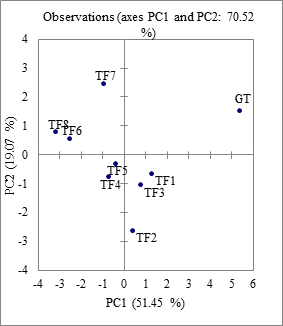
Figure 2: Principal component analysis of herbal tea with different formulations and their taste, Aftertaste and overall evaluation sensory quality. A: Tea formulations: TF1( 100% moringa), TF2 (95% moringa and 5% stevia), TF3 (90% moringa and 10% stevia), TF4 (85% moringa and 15% stevia), TF5 (80% moringa and 20% stevia),TF6(75% moringa and 25% stevia),TF7(70% moringa and 30% stevia),TF8(65% moringa and 35% stevia) and GT(green tea ). B: PCA Loadings: Sweetness, sweet aftertaste, lingering, sour, grass after taste, bitter, bitter after taste, astringency, astringency after taste, grassy taste, leafy taste, and leafy after taste.
The herbal teas formulated showed considerable variation in overall sensory appeal (sweetness and sweet after-taste) (Table 5). Herbal teas of TF4, TF5, TF6, TF7 and TF8, were sweeter (p<0.05) in overall sensory appeal compared to control TF1 (100% moringa). TF2 and TF3 were comparable (p>0.05) in sweetness to TF1 and GT (green tea). Furthermore, herbal teas of TF4, TF6, TF7, and TF7 had a sweeter aftertaste (p<0.05) in overall sensory appeal compared to control TF1 (100% moringa). TF2 and TF3 were comparable (p>0.05) in the sweet aftertaste to TF1 and GT (green tea). This result of overall sensory appeal showed that the addition of stevia to moringa improved the sensory and the controls (TF1 and GT). Herbal teas of TF2 and TF3 had lower (p<0.05) sweet aftertaste compared to TF6, TF7, and TF8 (teas with a higher level of stevia) and were similar (p>0.05) in the sweet aftertaste to TF1 (100% moringa). This also showed that the addition of stevia to moringa results increased the sweet aftertaste of herbal tea infusions.
The principal component analysis (PCA) of the herbal teas formulated indicates that formulations with a relatively high level of stevia TF4, TF5, TF6, TF7, and TF8 were aligned with sweet aftertaste (Figure 2). These herbal teas were on the same PC1 quadrant as sweet aftertastes. Hence, it seems that the addition of stevia in herbal tea is highly associated with the sweet aftertaste of the herbal tea formulation.
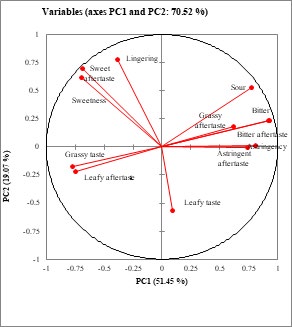
quality of moringa herbal tea infusions. The PCA of the herbal teas formulated revealed that the formulations with relatively high level of stevia TF4, TF5, TF6, TF7 and TF8 were aligned with an overall sensory appeal of sweetness and sweet after- taste (Figure 3.2). These herbal teas were on the same PC1 quadrant as an overall sensory appeal (sweetness and sweet after-taste). This is indicative that the addition of stevia in herbal tea highly associated with the overall sensory appeal (sweetness and sweet after-taste). The finding of this study is in agreement with [35] that found the sweetness equivalence ratio of stevia with sugar adopted in Ethiopia.
Conclusions and Recommendations
This study to investigate the sensory and chemical composition of moringa (moringa stenopetala) leave tea with partial replacement of stevia (stevia rebaudiana bertoni) leaves. The result of sensory properties all the formulated herbal teas have the similar in aroma and appearance, especially herbal teas brewed from TF5, TF6, TF7 and TF8 were the most preferred in sweetness and sweetness after taste compared to that of TF2, TF3, TF4, TF1 and GT (Green tea). The blending of moringa and stevia produced herbal teas with the most appealing sensory characteristics as compared with herbal tea brewed from only moringa and green teas which are regularly consumed. The results of the antioxidants show that the herbal tea brewed from 20-35% of stevia had the highest DPPH scavenging, ferric reducing power and total antioxidant activities than the herbal tea brewed from 100% moringa herbal tea infusion. This implies that the formulated teas could have better sensory and nutraceutical benefits. It concludes that using these formulated herbal teas due to their sensory, nutraceutical, and economical advantage to the consumer rather than using moringa alone or with table sugar is evident from this work.
Based on this findings of this study the optimization of aroma and taste of moringa (moringa stenopetala) leave tea with partial replacement of stevia (stevia rebaudiana bertoni) leaves and the characterization chemical composition of dried moringa and stevia leaves, formulation of herbal teas and analyzing of their sensory properties and antioxidant (DPPH scavenging activity, ferric reducing assay power and total antioxidant) activity. However, there is a need to carry out further herbal tea composition profile using GS-MS, HPLC and UPLC to explore the potential chemicals present in the formulated herbal tea. The determination of steviol glycoside, antimicrobial activities, the commercialization and promotion of herbal tea including this product.
Conflicts of Interests: -The authors declare that there are no conflicts of interests regarding the publication of this paper.
Acknowledgments: The authors would like to thanks, the Ethiopian Institute of Agricultural Research, for allowing as pursuing the work and financial support and Hawassa University for allowing us the laboratories and other facilities for doing this work.
References
-
Adnan M, Ahmad A, Ahmed A, Khalid N, Hayat I, et al. (2013) Chemical composition and sensory evaluation of tea (Camellia sinensis) commercialized in Pakistan. Pak J Bot 45(3): 901-907.
-
Alakali JS, Ismaila AR, Alaka IC, Faasema J, Yaji TA, et al. (2016) Quality evaluation of herbal tea blends from ginger and Pavetta crassipes. European Journal of Medicinal Plants 12(4): 1-8.
-
Teye E, Philip FO, Ransford OD, Frank KA (2017) Evaluation of composite tea made from roselle (Hibiscus sabdarffa), ginger (Zingiber officinale) and turkey berry (Solanum torvum). African Journal of Food and Integrated Agriculture 1(1): 39-44.
-
Killedar SG, Pawar AV, Suresh CK (2017) Preparation of Herbal Tea from Mulberry Leaves. Journal of Medicinal Plants 5(2): 325-328.
-
Omogbai BA, Ikenebomeh M (2013) Microbiological characteristics and phytochemical screening of some herbal teas in Nigeria. European Scientific Journal 9(18): 149-160.
-
Ravikumar C (2014) Review on herbal teas. Journal of Pharmaceutical Sciences and Research 6(5): 236-238.
-
Shashank K, Abhay KP (2013) Chemistry and biological activities of flavonoids: An overview. The Scientific World Journal.
-
Hicks A (2009) Current status and future development of global tea production and tea products. Au JT 12(4): 251-264.
-
Kazimierczak R, Ewelina H, Anna R, Ewa R (2015) Polyphenols, tannins and caffeine content and antioxidant activity of green teas coming from organic and non-organic production. Renewable Agriculture and Food Systems 30(3): 263-269.
-
Reza AG, Adlin A, Ehsan K, Uma RS, Mallappa KS (2015) Phytoconstituents and antioxidant properties among commercial tea (Camellia sinensis L.) clones of Iran. Electronic journal of biotechnology 18(6): 433-438.
-
Le K, Chiu F, K Ng (2007) Identification and quantification of antioxidants in Fructus lycii. Food Chemistry 105(1): 353-363.
-
Yu Ling H, Chien Chih C, Ying Jen C, Ray Ling H, Bor Jinn S (2001) Three xanthones and a benzophenone from _Garcinia mangostana_. Journal of natural products 64(7): 903-906.
-
Habtemariam S, Varghese G (2015) Extractability of rutin in herbal tea preparations of Moringa stenopetala leaves. Beverages 1(3): 169-182.
-
Glærum N (2012) Usage and acceptance of Moringa stenopetala in the diet in Ethiopia. University of Agder.
-
Kassahun BM, Zigene Z, Kebede W, Gebremeskel H (2012) Performance of Stevia (Stevia Rebaudiana Bertoni) for morphological and economic traits under different ecologies of Ethiopia.
-
Goyal SK, Samsher RKG (2010) Stevia (Stevia rebaudiana) a bio-sweetener: a review. Int J Food Sci Nutr 61(1): 1-10.
-
Gupta E, Shalini P, Shanthy S, Rai GK (2013) Nutritional and therapeutic values of Stevia rebaudiana: A review. Journal of Medicinal Plants Research 7(46): 3343-3353.
-
De-Heer NEA (2011) Formulation and sensory evaluation of herb tea from Moringa oleifera, Hibiscus sabdariffa and Cymbopogon citratus.
-
Hamza TA, Azmach NN (2017) The miraculous moringa trees: From nutritional and medicinal point of views in tropical regions. Journal of Medicinal Plants Studies 5(4): 151-162.
-
Gasmalla MAA, Ruijin Y, Issoufou A, Xiao H (2014) Nutritional composition of Stevia rebaudiana Bertoni leaf: effect of drying method. Tropical Journal of Pharmaceutical Research 13(1): 61-65.
-
Ahmad U, Ahmad R (2018) Nutritional, Physicochemical and Organoleptic Evaluation of Low Calorie Muffins Using Natural Sweetener Stevia (Stevia rebaudiana Bertoni). Journal of Nutrition & Food Sciences 8(673): 2.
-
Horžić D, Drazenka Komes, Ana B, Karin K, Damir I, et al. (2009) The composition of polyphenols and methylxanthines in teas and herbal infusions. Food chemistry 115(2): 441-448.
-
Koh GY, G Chou, and Z. Liu (2009) Purification of a water extract of Chinese sweet tea plant (Rubus suavissimus S. Lee) by alcohol precipitation. Journal of agricultural and food chemistry 57(11): 5000-5006.
-
Mingarro D, Acero N, Llinares F, Pozuelo JM, A Galán de M, et al. (2003) Biological activity of extracts from Catalpa bignonioides Walt. (Bignoniaceae). Journal of Ethnopharmacology 87(2-3): 163-167.
-
Einstein M (1991) Descriptive techniques and their hybridization. Sensory science theory and applications in foods, pp: 317-338.
-
Lee J, Chambers D (2009) Sensory descriptive evaluation: brewing methods affect flavour of green tea. Asian Journal of Food and Agro-Industry 2(4): 427-439.
-
Muñoz AM, Civille GV (1998) Universal, product and attribute specific scaling and the development of common lexicons in descriptive analysis. Journal of Sensory Studies 13(1): 57-75.
-
Brand-Williams W, Cuvelier ME, Berset C (1995) Use of a free radical method to evaluate antioxidant activity. LWT-Food science and Technology 28(1): 25-30.
-
Safdar N, Amina S, Zehra K, Azra Y (2016) Ten different brewing methods of green tea: comparative antioxidant study. Journal of Applied Biology & Biotechnology 4(03): 033-040.
-
Prieto P, Pineda M, Aguilar M (1999) Spectrophotometric quantitation of antioxidant capacity through the formation of a phosphomolybdenum complex: specific application to the determination of vitamin E. Analytical biochemistry 269(2): 337-341.
-
Lim Y, Lim T, Tee J (2007) Antioxidant properties of several tropical fruits: A comparative study. Food chemistry 103(3): 1003-1008.
-
Sánchez‐Moreno C, Larrauri JA, Saura‐Calixto F (1998) A procedure to measure the antiradical efficiency of polyphenols. Journal of the Science of Food and Agriculture 76(2): 270-276.
-
Gallo M, Giovanni V, Giulia G, Carmela De S, Pasquale F (2013) The interaction of cocoa polyphenols with milk proteins studied by proteomic techniques. Food research international 54(1): 406-415.
-
Yildirim-Elikoglu S, Erdem YK (2018) Interactions between milk proteins and polyphenols: Binding mechanisms, related changes, and the future trends in the dairy industry. Food reviews international 34(7): 665-697.
-
Abdo B (2016) Sweetness equivalence ratio of Stevia (Stevia Rebaudiana Bertoni) with sugar adopted in Ethiopia. IJABBR 4(1): 58-61.
- The Role of Podocyte Apoptosis and the Involvement of SIRT1 in Diabetic Nephropathy
- Dealcoholization of Beer by Osmotic Distillation for the Beverage Industry
- Biopolymer-Based Edible Packaging- Biomaterials, Methods, and Applications in Food Industry: An Updated Review
- Influence of Bioprocessing Methods on 'China Rice' (Gawal R1), and Soyabean Supplementation on the Quality of Complementary Food
- Cassava (Manihot esculenta) Varietal Growth, Yield and Cyanide Content Performance in Three Sites in the South- Eastern Semi Arid Regions of Kenya
- Food Waste Treatment, Recycling, Management and Production of Value-Products-An Update on Methodologies and Current Trends