
Functional and Microstructural Characterisation of Bambara Groundnut (Vigna Subterranea) Starch as Affected by Varying Degrees of Succinylation
Bambara groundnut (Vigna subterranea) is an under-exploited pulse rich in starch. Scientific data about the impact of varying degrees of succinylation on its starch content are sparse. Amidst the rising demand for such modified starch variants, bridging this information gap is necessary. Isolated starch from Bambara groundnut seeds was succinylated (2-14g succinic anhydride /100g starch extracted) and thereafter the degree of succinylation was evaluated. Physicochemical, functional, and microstructural characteristics of native and succinylated variants of the Bambara starch (SBS) were investigated using established procedures. Amylose content increased marginally (av.17%) among some samples. Water and oil absorption capacities peaked at 2.498 and 0.7185g /g of starch respectively. Pasting viscosities (5682-7025.5cP) increased irrespective of the order of substitution. X-ray diffract grams indicated an increase in crystallinity (A-type) with a strong peak at approximately 23o (2ϴ). This was however lost at higher treatment levels. FTIR spectra of the starches reflected a typical absorption band of a starch backbone. Scanning electron micrographs of succinylated starches were generally oval, exhibiting surface cracks sizes (13.55-44.25µm). Succinylated Bambara groundnut starches at low treatment levels (2-4%) may prove valuable in soups and gravies requiring a high viscosity, stability, and clarity. At higher treatment levels, non-food applications may just be the right outlet.
Introduction
The need to explore the potentials of succinate- derivatized starches from unconventional sources like Bambara groundnut has become, to say the least very auspicious. This is against the backdrop of rising demand for such modified starch variants from traditional sources (corn, wheat, cassava, etc) that also serve as food staples to the world’s burgeoning population (Global modified starch market report [1, 2]. Bambara groundnut is an underutilized legume crop grown (4-6months) at low levels of yield (300- 800kg/ha) in sub-Saharan Africa and Southeast Asia [3]. The hard-to-cook nature of this legume has not in any way promoted its exploitation. Its comparatively high starch yield of about 30% however makes it a good resource base for the starch industry [4]. Studies involving modification of Bambara groundnut starch so far include but are not limited to annealing [5], hydrothermal treatment [6], high- pressure homogenization [7], micro waving [8]. Others are oxidation [9], acetylation [9], phosphorylation [10], carboxymethylation [11], complexation with lipids and phenolic compounds [12, 13]. Succinylation of Bambara starch remains largely unexplored. Just as starches (in terms of structure and make-up) differ from one botanical source to another, so is the impact of succinylation (even with the same degree) on their properties. Unarguably, this is one of the most common starch chemical modifications in today’s food industry [14]. This is understandably so, given the fact that starch succinates generally offer much-sought-after properties: improved viscosity, stability at low temperatures, higher thickening propensity, gelation at low temperature and decreased retrogradation tendency [15] and other benefits depending on the botanical source and variety. These have found ready application in broths, fried meat chops, snacks, food products (refrigerated), and hydrogels amongst many others.
Notably, starch succinylation can best be described as a process of esterification. It is affected essentially through the application of succinic anhydride, an acclaimed reagent for purposes of esterification. During this chemical process, the intermolecular bonds holding the granules together get weakened. It thus becomes easier to introduce succinyl groups in the polymeric chains [16]. The process is largely dependent on factors such as reactant concentration, reaction time, pH, and presence of a catalyst. Bhandari & Singhal [16] posted that at a low degree of substitution (DS), starch succinates hold good potentials. Studies on succinylation of native starches from acha rice [17], corn [16], amaranth [16], white and red sorghum [15] have shown varied significant effects on their physical, chemical, functional, and pasting properties. Information gaps though remain as to what are the precise functional and morphological properties of Bambara groundnut starch per se associated with varying levels of succinylation. Bridging this knowledge gap would expand the range of food and non-food application of Bambara groundnut succinylated starches. In view of the foregoing, therefore, it is the objective of this work to characterize the physicochemical, functional, and microstructural properties of Bambara groundnut starch as affected by varying degrees of succinylation.
Materials and Methods
Materials
Bambara groundnut seeds (cream) (TVSU 1395) purchased in Ibadan, Oyo State, Nigeria and verified at the International Institute of Tropical Agriculture(IITA), Ibadan, was used in this study. The seeds were screened to eliminate the defective ones. All chemicals and solvents used were of analytical grade (Sigma Aldrich, USA).
Processing of Bambara Groundnut Into Flour
Flour from Bambara groundnut was obtained following the procedures of Sirivongpaisal [18] with few adjustments. Throughout 13hrs, grains of Bambara were soaked, thereafter manually dehulled and dried (24hrs) at temperatures ranging between 40 and 45. The dried dehulled grains were ground into flours and sieved using a 250 µm sieve and the resulting fine flour were stored (in sealed plastic bags at room temperature, 30) before use.
Starch Isolation
Starch was extracted following the methods described by Oyeyinka, et al. [19] with slight modification. One kilogram of Bambara groundnut flour (TBF) was dispersed in 10 L of NaOH (0.3%, w/v) solution (1:10) forming a slurry. Stirring of the entire mix continued for 4 hr under ambient conditions (28) and allowed to stand. Thereafter, the supernatant was decanted, and the sediment was resuspended in distilled water. The starch suspension was left to stand for 12 hrs, after which the supernatant was decanted and the resulting starch slurry sieved (180µm). The starch obtained was washed repeatedly with distilled water, centrifuged at 471.23radian/ sec for 30 mins, and then neutralized with 0.1 M HCl. The starch so extracted was oven-dried at 45. The dried Bambara starch (TBS) was stored in plastic bags and kept at room temperature until analysis.
Succinylation of Bambara Groundnut Starch
Bambara starch obtained above was succinylated according to the method of Awokoya, et al. [20] with some modifications. Starch (100 g) was dispersed in 250 milliliters of distilled water and stirred magnetically with constant heating at 45 until well dissolved (30-60 mins), while the pH of the slurry was adjusted to 9.0 using 0.5 M NaOH (drop wise). Two grams (2 g) of Succinic Anhydride (SA) was dissolved in 50ml of boiling water and allowed to cool for few minutes. The warm SA solution (40) was added to the starch slurry and the reaction allowed to proceed (pH 8.0-9.0) for a period of 2hrs with constant stirring and on low heat (70). At the end of this reaction period, the pH was reduced to 6.0 through a dropwise addition of 0.5M HCl. The mix was subjected to filtration and the starch so modified was washed some 6 times using distilled water and dried in the oven (45-50) over a 24 hr duration. To obtain starch succinate of six different degrees of substitution, the procedures were repeated with different amounts of succinic anhydride (3, 4, 7, 9 and 14 g/100g starch).
Determination of Degree of Substitution of Succinylated Bambara Groundnut Starch
The method of alkali saponification as described by Alummoottil, et al. [21] was used. An accurately weighed quantity (0.5 g) of the starch sample was taken in a 100 ml conical flask and dispersed in 25 milliliters of 75% ethanol, mixed thoroughly and 20 ml of 0.5 M aqueous sodium hydroxide solution was then added. The solution was kept for 72 h with an occasional swirling of the flask. The excess alkali was titrated with 0.5 M hydrochloric acid using 2 drops of phenolphthalein as an indicator. Percentage succinyl and Degree of substitution (DS) were calculated using Eqs. 1 & 2 respectively.
(Blank titer-sampletiter)×0.1×molarity of acid×100 %succinyl = weight of sample ...........Eq 1 (162×%succinyl) Degree of substitution = 10000-(99×%succinyl) ……..Eq 2
Proximate, physicochemical and Functional Properties of Succinylated Bambara starches
Proximate Analysis: The moisture, protein, fat, and ash contents were determined according to AOAC [22].
Physicochemical Properties Amylose and Amylopectin: Total amylose contents of the starch and starch succinates were evaluated iodometrically using the established method described by Morrison & Laignelet [23]. The standard reference solution employed was sigma branded Amylose and Iodine-Potassium Iodide solution. Some quantities (40mg) of starch were put in a flask (conical) to which was also added 10ml solution of U-DMSO (6M urea+90ml DMSO). Using a boiling water bath, the mixture was heated for some 15min while shaking continuously. After being kept for 15mins, the absorbance was read at 635nm. Using a standard curve, the concentration related to the determined absorbance was established. Amylopectin concentration was obtained by difference.
Determination of pH: Two grams of Bambara native starch and starch succinates were weighed into 20 milliliters of distilled water and mixed properly. The slurry’s pH was established with the help of a pH meter (kent EIL 7055).
Clarity of Paste: This was evaluated according to the method of Oyeyinka, et al. [19] with minor adjustment. One percent of moisture-free samples (Bambara native starch and derivatives) were prepared in distilled water. The starch-water mix was heated at 90(30mins, accompanied by stirring). This mix was allowed to cool (room temp) and transmittance was evaluated at 650nm with the help of a UV spectrophotometer (Jenway, 7305 Bibby Scientific UK). Blank water served as the reference Functional Properties Loose and Tapped Bulk Densities: The method described by Emeje, et al. [24] was used to determine the bulk densities of the starch and its derivatives. A small quantity (2g) of the sample in powdered form was transferred into a measuring cylinder (10ml).it is left untapped and the volume so occupied is recorded (VO) Tapping (100taps) of this cylinder followed and the resulting filled volume (V100) noted. The ratio of weight to volume (VO and V100) corresponds to loose and tapped bulk densities respectively.
Water and Oil Absorption Capacities (WAC and OAC): The method described by Abbey & Ibeh [25] was employed for the evaluation of water and oil absorption capacity with slight modifications. A pre-determined quantity (1g) of each of native and succinylated starch samples were separately weighed into centrifuge tubes and 10millilitres of distilled water was added and stirred (3mins. at room temp 26- 28. Centrifugation for some 15mins duration at 3500rpm followed. The clear supernatant was thrown off, after which the tube and the residue again weighed. The increase in weight of the starch residue corresponds to the water absorption capacity of the sample. A similar procedure was used to determine the oil absorption capacity. An aliquot (0.5 gram) of the sample was mixed thoroughly with 5millilitres of oil in a weighed centrifuge bottle. Thereafter, the contents were centrifuged at 366.52radian/sec for 15 mins and the supernatant was poured into an appropriately graduated cylinder and the volume noted. The centrifuge tube and its content after decanting were also weighed. Water and oil densities were assumed to be 1g/ml and 0.93g/ ml respectively. The average of three determinations was recorded.
Impact of Different Temperatures on the Swelling Power and Solubility of the Starches: The impact of selected temperatures on these parameters was determined according to procedures employed by Awokoya, et al. [20] with slight modifications. A small quantity of the starch (1g) was taken in a clean dry centrifuge tube and its combined weight was noted. Mixing the starch with some distilled water (10ml) followed. The slurry that came thereof was subjected to heat at 50, 60, 70, 80, 90 respectively for 30 min in a water bath and allowed to cool. The cooled mixture was centrifuged at 366.52radian/sec for 15 min and the supernatant was decanted into weighed stainless dishes (W3). The centrifuge tubes and filtrate were weighed (W2) and the supernatant in the stainless dishes was subjected to a drying operation at 110 until constant weight (W4) was attained. The quantum of residues derived from the dried supernatant amounts to the solubility in water and is the difference between W4 and W3.
Swelling power was calculated as gram per gram of starch on a dry weight basis.
2 1 (W - W ) Swellingof starch= weight of sample ……….Eq 3
4 3 (W - W ) Swelling of starch = weight of sample ………Eq 4
Pasting Properties of Starch: Starch pasting properties of Bambara native and modified starches were determined through the use of Rapid Visco Analyzer (New port Scientific, Australia). An amount (2.5g) of dried starch was transferred into some distilled water to make a suspension whose cumulative weight was adjusted to twenty-eight grams. A minute-long equilibration of this sample at 50, incremental rise in temperature to 92 at 5-7 / min, standing for additional 5mins at this temperature, gradual temperature reduction to 50 at an interval of 5-7 for every minute and standing again at 50 for a minute, all followed in that order. Pasting characteristics ranging from initial viscosity to setback viscosity (SV) were captured by the Rapid Visco Analyser.
X-ray Diffraction, XRD
This was investigated following the techniques employed by Oyeyinka, et al. [19] with few adjustments. Operating at 40KV and 40mA, an X-ray diffractometer(Empyrean, PANalytical Netherlands) was deployed for the evaluation. Firstly, equilibration of the starch samples was undertaken (temp, 25; relative humidity 100%) in a low-temperature incubator (MTIE10, central Lab, ABU, Zaria). The samples so equilibrated were transferred to and properly positioned in a rectangular glass cell. This was next scanned at a speed of 0.060/min over a region of 4-40((2ϴ) o.
Using the equation below, the relative crystallinity was calculated.
100Ac Relative crystallinity (%)= Ac+ Aa
………Eq 5 Wherein in the diffractogram, Ac represents the crystalline area whereas Aa corresponds to the Amorphous area.
Infra-Red Spectroscopic Evaluation of Starch Variants
The method described by Gbenga, et al. [26] was applied in evaluating the infrared spectra of the starches. Operating in a range of frequency (350-40,000 cm-1 or more), the starches were run as pellets of potassium bromide on an FTIR analyzer (Spectrum BX PerkinElmer, England). Some milled quantities (2mg) of the test sample were blended with pure potassium bromide powder and pelletized at a pressure of 10000-15000lb. This is to minimize possible polymorphic changes in the sample under investigation. Using a cell holder (Universal Demountable Cell), the sample was so pelletized was transferred into the FTIR analyzer for scanning in the aforementioned frequency range. A vivid starch spectrum was seen on the screen of the computer.
Scanning Electron Microscopy
With a scan electron microscope (SEM) (model: EVO 15 HD SEM) operating at an accelerating potential of 4KV, the surface characteristics were closely investigated. Using the specimen holder (Aluminium) by a double-sided tape, samples of native and succinylated Bambara starch were mounted separately in a thin layer. Next, a thin film of Gold (30nm thick) was applied in coating the starch layer after which their electron micrograph was taken [20].
Statistical Analysis
All Analysis was carried out in duplicates. Specifically, analysis of variance (ANOVA) of the SPSS version 20 was deployed for the data analysis. The means so obtained were compared with the help of Fischer’s Least Significant Difference Test (p < 0.05). The means were separated using Duncan’s multiple range tests at a 5% level of probability.
Results and Discussion
Degree of Substitution (Ds) of Succinylated Bambara Starch Derivatives
In this study, the range of percentage succinyl and degree of substitution (DS) achieved were around 4-7.5% and 0.07- 0.13, respectively (Table 1). The degree of substitution (DS) is defined as the average number of substitutions per anhydroglucose unit (AGU) varied between 0 and 1.5. DS in each level of starch modification (2g - 14g treatment level) is majorly a function of the level succinyl groups introduced into the structure of the Bambara groundnut starch. A general increase in the value % succinyl and DS was observed across treatment as the concentration of succinic anhydride used increased (2-9%), while not exceeding the standard DS value of 3. The increase observed could be as a result of increases in reaction contact between the starch and the esterifying agent. As the concentration of succinic anhydride increases from 2g to 14g, there is greater availability of the Succinic anhydride molecules for reaction and consequently greater diffusion and absorption, culminating in the formation of starch derivatives with a higher degree of substitution. The swelling ability of the Bambara starch granules could also cause an increase in Degree of substitution. Arueya & Oyewale [17] made a similar conclusion from the investigation of the effect of varying degrees of succinylation on the functional and morphological properties of starch from acha. A reduction was noted in % succinyl and DS value at 14%. Singh, et al. [27] investigated the DS for acetylated starches prepared from diverse origins and reported significant variation. The variations may be due to individual characteristics of the starch succinates or the succinylation conditions [16, 28]. Generally, the % succinyl and DS values in this study were not significantly different (p < 0.05).
| Sample | % Succinyl | DS |
|---|---|---|
| SBS1 (2g SA) | 4.00 ± 0.71a | 0.07 ± .01a |
| SBS2 (3g SA) | 4.50 ± 0.71a | 0.08 ± .01a |
| SBS3 (4g SA) | 5.00 ± 0.71a | 0.09± .01a |
| SBS4 (7g SA) | 6.00 ± 0.71a | 0.10± .01a |
| SBS5 (9g SA) | 7.50 ± 3.54a | 0.13 ± .07a |
| SBS6 (14% SA) | 6.50 ± 0.71a | 0.11± .01a |
Table 1: Degree of Modification of starch succinate showing % succinyl groups. Mean ± SD. Mean with the same superscript down the
Proximate, Physicochemical, and Functional Properties Of Succinylated Bambara Starches
Proximate Composition: The composition of native Bambara groundnut starch includes moisture content of 13.38%, protein 0.27%, ash 0.83%, total carbohydrate 85.52%, excluding fat and fiber. The range of the chemical composition of succinylated Bambara groundnut starch samples was as follows: moisture, 11.240 to 13.705%; crude protein, 0.00 to 0.2535%; Carbohydrate, 84.9395 to 86.77%; ash, 0.6085 to 2.6665%.
Generally, moisture was reduced after succinylation except for sample SBS1 (2g of succinic anhydride) whose moisture content exceeded that of the native starch. The observed reduction in moisture content in this study might be fallout of the substitution of the hydroxyl groups on the starch molecules [29]. There has been reported a reduction in moisture after succinylation [30]. Pure starches often have low nitrogen and consequently low ash content. The ash content reported in this study (Table 2) for native and succinylated starches is higher than the 0.5/0.6% recommended values for grade A industrial starches. Generally, reduction in protein, fat, and fiber may be a function of structural disintegration and losses during chemical modification processes.
| Sample | Moisture content | Crude Protein | Ash | Carbohydrate | Fat | Crude Fibre |
|---|---|---|---|---|---|---|
| TBF | 11.78 ± .01g | 23.89 ± 0.03a | 3.00 ± 0.47a | 57.70 ± 0.64d | 1.78 ± 0.32a | 1.86 ± 0.19a |
| TBS | 13.38 ± 0.01b | 0.27 ± 0.00b | 0.83 ± 0.24cd | 85.52± 0.22bc | 0.00 ± 0.00b | 0.00 ± 0.00b |
| SBS1 (2g SA) | 13.71 ± 0.01a | 0.19 ± 0.01 c | 1.17 ± 0.71cd | 84.94 ± 0.69c | 0.00 ± 0.00 b | 0.00 ± 0.00b |
| SBS2 (3g SA) | 12.81 ± 0.04e | 0.10 ± 0.00d | 1.50 ± 0.24bcd | 85.60 ± 0.27bc | 0.00 ± 0.00 b | 0.00 ± 0.00b |
| SBS3 (4g SA) | 11.24 ± 0.01h | 0.00 ± 0.00e | 1.99 ± 0.48abc | 86.77 ± 0.49a | 0.00 ± 0.00 b | 0.00 ± 0.00b |
| SBS4 (7g SA) | 13.21 ± 0.01c | 0.18 ± 0.00c | 0.61 ± 0.08d | 86.00 ± 0.09ab | 0.00 ± 0.00 b | 0.00 ± 0.00b |
| SBS5 (9g SA) | 12.73 ± 0.07f | 0.25 ± 0.00b | 2.67 ± 0.94ab | 85.34 ± 0.39bc | 0.00 ± 0.00 b | 0.00 ± 0.00b |
| SBS6 (14% SA) | 12.95 ± 0.04d | 0.18 ± 0.00c | 0.63 ± 0.05d | 86.23 ± 0.10ab | 0.00 ± 0.00b | 0.00 ± 0.00b |
Table 2: The Proximate composition of native and succinylated Bambara groundnut starch (%). Mean values of duplicate determinatio
Table 2: The Proximate composition of native and succinylated Bambara groundnut starch (%). Mean values of duplicate determinations ± standard error. Values in the same column with the same superscript are not significantly different (p ≥ 0.05). SA- Succinic anhydride; TBF- Bambara groundnut flour; TBS- native starch Physicochemical Properties: After succinylation, there were increases as high as 20% in the amylose content of some samples (SBS2 SBS3 and SBS5). A decrease of as much as 7% was observed in others (SBS1, SBS4) while sample SBS6 remained at par with the native starch. Amylopectin, another key fraction of starch followed an opposite trend. In previous studies on succinylation of acha starches, Arueya & Oyewale [17] posited that as the concentration of succinic anhydride increases, there was a rise in amylose content of starch succinates (up to 7% succinylation) and thereafter a decrease. They opined that the presence of succinyl groups interferes with the functioning of amylose and amylopectin fractions of starch. In their report, they also mentioned that this factor further affected the absorption of iodine during amylose estimation, yielding increased values. The functional properties of starches depend largely on the amylose content, a component closely associated with gel formation. An increase in pH was evident following succinylation (6.30-6-
87), an occurrence at variance with previous studies. Arueya & Oyewale [17] reported a decline in pH after succinylation of acha rice starch (6.6-5.7) an occurrence which is in tandem with studies on succinylated hybrid maize [31].
Functional Properties: A cursory examination of the functional properties(bulk density, water, and oil absorption capacities reveal significant differences (p < 0.05) in their values among the starch variants (Table 3).
| Samples | Amylose (%) | Amylopectin (%) | Bulk density (Loose) | Bulk density (Tapped) | pH value | Paste clarity |
|---|---|---|---|---|---|---|
| TBS | 34.91±0.04d | 65.09±0.04c | 0.47±0.00c | 0.77±0.00b | 6.31±0.11d | 1.27±0.06b |
| SBS1 (2g SA) | 34.55±0.04e | 65.45±0.04b | 0.48±0.00bc | 0.77±0.00b | 6.87±0.06c | 1.24±0.06b |
| SBS2 (3g SA) | 42.14±0.04a | 57.87±0.04f | 0.50±0.03b | 0.80±0.00a | 6.82±0.01ab | 1.27±0.07b |
| SBS3 (4g SA) | 38.65±0.13c | 61.35±0.13d | 0.48±0.00bc | 0.71±0.00d | 6.83±0.08a | 1.40±0.03a |
| SBS4 (7g SA) | 32.47±0.05f | 67.53±0.05a | 0.59±0.00a | 0.74±0.00c | 6.37±0.04d | 0.84±0.01c |
| SBS5 (9g SA) | 41.13±0.09b | 58.87±0.09e | 0.43±0.01b | 0.71±0.00d | 6.85±0.03a | 1.26±0.01b |
| SBS6 (14% SA) | 34.85±0.04d | 65.15±0.04c | 0.50±0.00b | 0.77±0.00b | 6.67±0.03c | 0.84±0.00ssc |
Table 3: Physicochemical and functional properties of native and succinylated Bambara groundnut starches. Mean values of duplicat
Loose and Packed Bulk Densities: The loose bulk densities of native and succinylated Bambara groundnut starches were compared favorably (p > 0.05) with each other. The loose and tapped bulk densities of the native starch were 0.47 and 0.77 respectively (Table 3). These values were higher than the loose (0.31) and tapped (0.52) bulk densities reported for acha starch (native) [17] a development that may not be unrelated to differences in origin and degree of purity of the starches. There was a general rise in the densities (loose ) of the starches succinylated, SBS5 being the only exception, having had the least (0.43). A similar observation was reported for loose bulk densities of succinylated acha starches [17]. The tapped densities of succinylated Bambara groundnut starch on the other hand fluctuated across the treatment levels. Arueya and Oyewale [17] reported a general increase in the tapped bulk density of acha starch after succinylation with a sudden drop at 14% treatment. The increase in bulk densities could be due to a decrease in particle size following succinylation, as alluded to by scanning electron microscopy (see later). The range of loose and tapped bulk densities of succinylated Bambara groundnut starches were 0.43-0.59 and 0.71-0.80 respectively, a factor not ignored in considering packaging requirements.
Water and Oil Absorption Capacities: An overview of the results showed that the water absorption capacity of succinylated Bambara groundnut starches was about twice that of oil (Figure 1). After succinylation, there were increases observed in the WAC and OAC across succinylated Bambara groundnut starches except for SBS2 where a WAC dropped to 0.89 at a 3% treatment level. Curiously, this development runs against the usually expected rise since this sample(SBS2) had the highest amylose content (42%) among the succinylated starches. This could suggest a probable interference of amylose on succinylation’s propensity to enhance WAC. Instructively, this is a proposition that must be evaluated side by side with the observation that SBS5 which had the second-highest amylose content (41%) exhibited the second most improved WAC (2.33g of water/g of starch). The increase in WAC after succinylation may indicate enhanced hydrophilic tendency and a slight expansion of the amorphous region. Perhaps, this may have been possible by the introduction of functional groups (bulky) whose likely electrostatic repulsive tendency promoted percolation and water imbibition within the starch structure. A rise in such capacity to absorb water after esterification is not new as it has been observed elsewhere too [3, 16]. Admittedly, a rise in OAC of succinylated Bambara starches may reflect the lipophilic nature of the outer covering formed in the granule surface during succinylation. Mirmoghtadaie, et al. [32] reported an increase in water and oil binding capacity of succinylated oat starches, following an increase in the degree of substitution. Arueya & Oyewale [17] observed an initial reduction in OAC of succinylated acha starches at a lower treatment level (3%-7%) but an increase at higher levels of succinylation (9%-14%).
![Figure 1: Water and Oil absorption capacity of Bambara native and succinylated starch TBS- native bambara groundnut starch SBS1- succinylated bambara groundnut starch at 2% treatment level SBS2- succinylated bambara groundnut starch at 3% treatment level SBS3- succinylated bambara groundnut starch at 4% treatment level SBS4- succinylated bambara groundnut starch at 7% treatment level SBS5- succinylated bambara groundnut starch at 9% treatment level SBS6- succinylated bambara groundnut starch at 14% treatment level **Impact of Varying Temperature on Swelling Power** **and Solubility of Succinylated Starches:** Following succinylation, the swelling power of Bambara groundnut starch followed different patterns across temperature and treatment levels (Figure 2). As an example, at 50 the swelling power of SBS2 (3%), SBS4 (7%), and SBS5 (9%) were higher than that of native starch (TBS). On attaining 60, all succinylated starches had higher swelling power across treatment than TBS but plummeted at 70. Samples SBS2 (3%) and SBS3 (4%) at 80 exhibited higher swelling power than TBS when compared with other treated starches having lower swelling capacity. The boost in the ability to swell is traceable to starch crystallites melting, a phenomenon establishing that gelatinization must have taken place [19]. It is noteworthy that at 90, there was no significant difference (p > 0.05) in the swelling power of all starches (native and succinylated starches). Succinylation generally reduced the swelling power of native starch at 2% (SBS1), 4% (SBS3), and 14% (SBS6) treatment levels with only a few exceptions. The reduction in swelling power following succinylation may be due to higher starch granule association, with an extensive strengthening of the micellar structure culminating in greater resistance to swelling [33]. Test samples SBS1 and SBS3 had similar swelling patterns while SBS1 and SBS6 increased progressively across temperatures. . These variations observed in swelling power could be attributed to several factors: fluctuations in granular sizes [16], differences in the molecular organization, and bonding forces within the granules [9]. Others include the structure of amylopectin at the molecular level and the quantum of intrinsic interaction in amorphous and crystalline regions [34]. Furthermore, higher swelling power could be linked to the effect of starch molecules becoming more thermodynamically activated with a temperature rise. This phenomenon culminates in granular mobility and enhancement of water penetration along with attendant improved swelling capacities [20]. Notably, SBS4 (7%) with the lowest amylose content (Table 3) had the highest swelling power among all succinylated starches, within the temperature range (50-90). The amylose content of starches has been proposed as a restricting factor in starch swelling behavior [35]. Oyeyinka, et al. [19] reported that starch extracted from Bambara genotype with lower amylose contents exhibited higher swelling power. However in some other cases, amylose content did not quite inhibit swelling abilities[36,37]](/fulltextimages/7781/fig_1.png)
Figure 1: Water and Oil absorption capacity of Bambara native and succinylated starch TBS- native bambara groundnut starch SBS1- succinylated bambara groundnut starch at 2% treatment level SBS2- succinylated bambara groundnut starch at 3% treatment level SBS3- succinylated bambara groundnut starch at 4% treatment level SBS4- succinylated bambara groundnut starch at 7% treatment level SBS5- succinylated bambara groundnut starch at 9% treatment level SBS6- succinylated bambara groundnut starch at 14% treatment level Impact of Varying Temperature on Swelling Power and Solubility of Succinylated Starches: Following succinylation, the swelling power of Bambara groundnut starch followed different patterns across temperature and treatment levels (Figure 2). As an example, at 50 the swelling power of SBS2 (3%), SBS4 (7%), and SBS5 (9%) were higher than that of native starch (TBS). On attaining 60, all succinylated starches had higher swelling power across treatment than TBS but plummeted at 70. Samples SBS2 (3%) and SBS3 (4%) at 80 exhibited higher swelling power than TBS when compared with other treated starches having lower swelling capacity. The boost in the ability to swell is traceable to starch crystallites melting, a phenomenon establishing that gelatinization must have taken place [19]. It is noteworthy that at 90, there was no significant difference (p > 0.05) in the swelling power of all starches (native and succinylated starches). Succinylation generally reduced the swelling power of native starch at 2% (SBS1), 4% (SBS3), and 14% (SBS6) treatment levels with only a few exceptions. The reduction in swelling power following succinylation may be due to higher starch granule association, with an extensive strengthening of the micellar structure culminating in greater resistance to swelling [33]. Test samples SBS1 and SBS3 had similar swelling patterns while SBS1 and SBS6 increased progressively across temperatures. . These variations observed in swelling power could be attributed to several factors: fluctuations in granular sizes [16], differences in the molecular organization, and bonding forces within the granules [9]. Others include the structure of amylopectin at the molecular level and the quantum of intrinsic interaction in amorphous and crystalline regions [34]. Furthermore, higher swelling power could be linked to the effect of starch molecules becoming more thermodynamically activated with a temperature rise. This phenomenon culminates in granular mobility and enhancement of water penetration along with attendant improved swelling capacities [20]. Notably, SBS4 (7%) with the lowest amylose content (Table 3) had the highest swelling power among all succinylated starches, within the temperature range (50-90). The amylose content of starches has been proposed as a restricting factor in starch swelling behavior [35]. Oyeyinka, et al. [19] reported that starch extracted from Bambara genotype with lower amylose contents exhibited higher swelling power. However in some other cases, amylose content did not quite inhibit swelling abilities[36, 37]
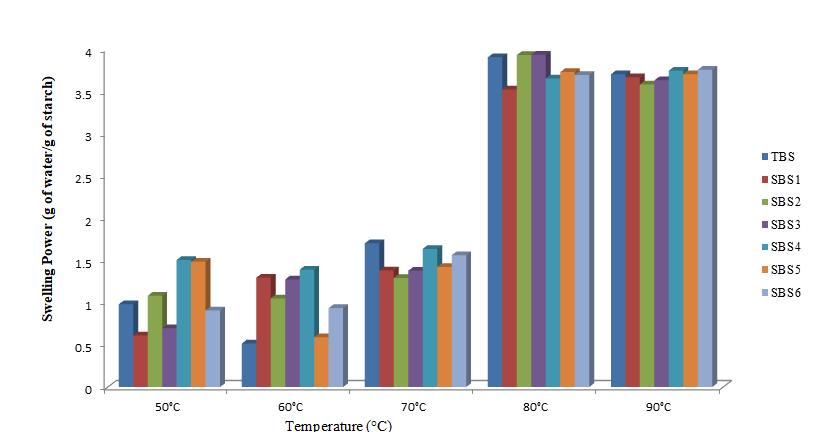
Figure 2: Effect of temperature on Swelling power of native and succinylated Bambara groundnut starch TBS- native bambara groundnut starch SBS1- succinylated bambara groundnut starch at 2% treatment level SBS2- succinylated bambara groundnut starch at 3% treatment level SBS3- succinylated bambara groundnut starch at 4% treatment level SBS4- succinylated bambara groundnut starch at 7% treatment level SBS5- succinylated bambara groundnut starch at 9% treatment level SBS6- succinylated bambara groundnut starch at 14% treatment level
![Figure 3: Effect of temperature on Solubility (g of water/g of starch) of native and succinylated Bambara groundnut starchTBS- Native bambara groundnut starch SBS1- succinylated bambara groundnut starch at 2% treatment level SBS2- succinylated bambara groundnut starch at 3% treatment level SBS3- succinylated bambara groundnut starch at 4% treatment level SBS4- succinylated bambara groundnut starch at 7% treatment level SBS5- succinylated bambara groundnut starch at 9% treatment level SBS6- succinylated bambara groundnut starch at 14% treatment level The solubility of TBS increased progressively across the temperature range (50-80) but slightly declined at 90 (Figure 3). This may be because higher temperatures promoted mobility of starch chains, increased dispersion of starch molecules, and hence improved solubility [38]. Awokoya, et al. [20] observed a similar trend with native cocoyam starch in water. After succinylation of Bambara groundnut starch, the solubility was not exactly of the same pattern across various temperatures and treatment levels(Fig 3). For instance, at 50, all succinylated starches except SBS1 and SBS6 exhibited decreased solubility when compared with that of TB. All the succinylated starches at 60 (except SBS2) exhibited higher solubility in water than that of TBS. However, at 70 and 80, all succinylated starches except for SBS2 and SBS3 showed lower solubility. On evaluation at 90, all the succinylated Bambara groundnut starches had lower solubility than that of their native variant. Generally, there was a decrease in solubility after succinylation, a development attributable to the incorporation of bulky succinyl group in the modified starch molecule restricting the mobility of starch chains [11].](/fulltextimages/7781/fig_3.png)
Figure 3: Effect of temperature on Solubility (g of water/g of starch) of native and succinylated Bambara groundnut starchTBS- Native bambara groundnut starch SBS1- succinylated bambara groundnut starch at 2% treatment level SBS2- succinylated bambara groundnut starch at 3% treatment level SBS3- succinylated bambara groundnut starch at 4% treatment level SBS4- succinylated bambara groundnut starch at 7% treatment level SBS5- succinylated bambara groundnut starch at 9% treatment level SBS6- succinylated bambara groundnut starch at 14% treatment level The solubility of TBS increased progressively across the temperature range (50-80) but slightly declined at 90 (Figure 3). This may be because higher temperatures promoted mobility of starch chains, increased dispersion of starch molecules, and hence improved solubility [38]. Awokoya, et al. [20] observed a similar trend with native cocoyam starch in water. After succinylation of Bambara groundnut starch, the solubility was not exactly of the same pattern across various temperatures and treatment levels(Fig 3). For instance, at 50, all succinylated starches except SBS1 and SBS6 exhibited decreased solubility when compared with that of TB. All the succinylated starches at 60 (except SBS2) exhibited higher solubility in water than that of TBS. However, at 70 and 80, all succinylated starches except for SBS2 and SBS3 showed lower solubility. On evaluation at 90, all the succinylated Bambara groundnut starches had lower solubility than that of their native variant. Generally, there was a decrease in solubility after succinylation, a development attributable to the incorporation of bulky succinyl group in the modified starch molecule restricting the mobility of starch chains [11].
Pasting Characteristics: There were reductions in the pasting temperatures and peak times of native Bambara starch after succinylation (Table 4). Drop-in pasting temperatures after succinylation have been observed in other experimentations [20, 31]. This phenomenon is a fallout of a weakening in structure as well as a breakdown occurring during the process of chemical modification. Increases were observed in the peak viscosity value of the native Bambara starch. In previous studies [39], higher swelling power has been associated with greater peak paste viscosity. Among the succinylated starches, SBS3 (4% treatment) with the highest swelling power (at 80 had the highest peak viscosity (7025.5cP). Comparatively, SBS2 (3% treatment) with the next highest swelling power at 80 had the lowest peak viscosity (5682cP). Succinyl groups introduced into the polymer chain have been linked to an increase in the viscosity of the solution. Interplay of electrostatic repulsion and osmotic pressure exerted by the ions in the system [17] has made this possible. This claim is validated by a food system containing starch. A good example is a granule cold water swelling starch (from alcoholic - alkaline treatment) where the granule swells to the highest capacity without any form of mechanical shear [41]. Higher peak viscosities of the succinylated derivatives may suggest that the succinylated granules were more rigid or less elastic. Chung, et al. [40] and Olayinka [15] reported a similar rise in the peak viscosity of succinylated waxy corn starch and succinylated red /white sorghum starches respectively. This rise has been known to impart higher stability and clarity to starch pastes [13]. Although starch paste expansion and subsequent rise in the pasting temperature is limited by the Amylose content, SBS2 with the highest amylose content (42%) exhibited the lowest pasting temperature (81.9oC) and peak viscosity when compared with native and other modified starches. This may suggest that succinylated Bambara starches had high amylose leaching tendencies [42].
| Sample | Peak (cP) | Trough (cP) | Breakdown (cP) | Final Viscosity (cP) | Setback (cP) | Peak Time (mins) | Pasting Tempe rature (°C) |
|---|---|---|---|---|---|---|---|
| TBS | 5482.00±203.65d | 3143.50±75.66d | 2338.50±10.61bcd | 5007.50±127.99b | 1864.00±203.65b | 4.87±0.09a | 84.10±0.14a |
| SBS1 (2g SA) | 6263.00±0.00b | 3626.50±55.86bc | 2636.50±147.79b | 6092.50±567.81a | 2466.00±623.67ab | 4.73±0.00a | 83.10±0.00a |
| SBS2 (3g SA) | 5682.00±28.99cd | 3184.00±0.00d | 2498.00±0.00bc | 5454.00±0.00b | 2270.00±0.00ab | 4.13±0.00c | 81.90±0.64a |
| SBS3 (4g SA) | 7025.50±108.19a | 4065.00±49.50a | 2960.50±20.51a | 6183.00±46.67a | 2118.00±96.17ab | 4.33±0.00b | 84.03±0.04a |
| SBS4 (7g SA) | 5747.50±16.26bcd | 3706.00±118.79bc | 2041.50±10.61d | 6366.50±163.34a | 2660.50±44.55a | 4.33±0.00b | 83.95±0.00a |
| SBS5 (9g SA) | 5797.50±533.16bcd | 3575.00±11.31c | 2222.50±4.95cd | 6134.50±71.42a | 2559.50±60.10a | 4.77±0.14a | 82.73±3.01a |
| SBS6 (14% SA) | 6106.00±203.65bc | 3859.50±214.25ab | 2246.50±318.91cd | 6561.00±251.73a | 2701.50±37.48a | 4.27±0.00bc | 82.73±0.67a |
Table 4: Pasting properties of native and succinylated bambara groundnut starches. Mean values of duplicate determinations ± stan
Table 4: Pasting properties of native and succinylated bambara groundnut starches. Mean values of duplicate determinations ± standard error. Values down the same column with the same superscript are not significantly different (p ≥ 0.05). SA- Succinic anhydride; TBS- native starch The breakdown value for native Bambara starch is 2338.5cP and the values obtained for the treated variants showed a pattern. The breakdown values of the native Bambara starch increased after the first three treatments (SBS1-2%, SBS2-3%; SBS3-4%) and thereafter decreased with higher treatments (SBS4-7%; SBS5-9%; SBS6-14%). The breakdown value is a measure of the fragility of the starch [20]. The results indicated that succinylation at a lower treatment level resulted in partially degraded starches. This provides a basis for the modified starches having higher breakdown values. On the other hand, those with lower breakdown values when compared to native Bambara starch suggest that higher treatment levels rendered the starch granules less fragile.
The setback value of Bambara native starch increased after succinylation. The setback value is an indication of the tendency of starch to retrograde. A similar increase in setback values has been reported after succinylation of native cocoyam starches [20].
X-Ray Diffraction (XRD)
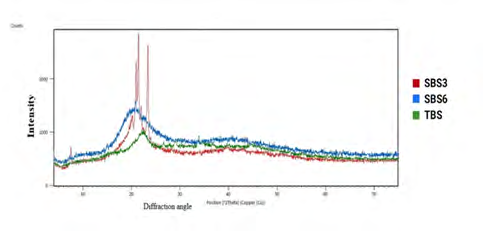
The native Bambara groundnut starch(control) showed a C-type crystallinity pattern with strong peaks at approximately 23, 27, 30, and 34 (2ϴ) and weak peaks at approximately 6, 18, 25, 40, and 45(2ϴ). There were also few small peaks observed at approximately 50 and 60 (2ϴ). Some previous studies have presented C-type crystallinity generally for pulse starches such as Bambara [11]. A deviation from this trend is isolated reports of an A-type pattern exhibited by Bambara starch [4, 18]. The X-ray diffractogram of the representative succinylated Bambara groundnut starches (SBS3 and SBS6) were significantly different from that of native Bambara starch (Figure 4). The X-ray diffraction pattern of SBS3 (4% treatment) showed more pronounced peaks indicating an increase in crystallinity and exhibited a typical A-type crystallinity with a strong peak at approximately 23o (2ϴ), doublets at 21o, 22o (2ϴ) and weak peaks at 8o, 20o, and 22.5o (2ϴ)(Fig 4). A similar observation was made with succinic acid-treated wheat starch [43]. The X-ray diffraction pattern of SBS6 (14% treatment) showed a marked reduction in crystallinity along with a weak peak of increased diffraction intensity at approximately 22o (2ϴ). This result suggests that higher succinic anhydride treatment on native Bambara starch inevitably results in loss of crystallinity. Generally, crystalline patterns reflect the molecular and structural organization of a sample, and the clarity of starch crystalline peaks is reported to be affected by the inherent moisture content.
FTIR
FTIR spectra of native Bambara groundnut and succinylated Bambara starches showed typical absorption bands of a starch backbone (Figure 5). The absorption band of TBS (native Bambara starch) at 3440cm−1 is associated with O-H stretching vibrations and it lies within 3700 and 3000cm-1. This stretching is due to vibrational stretches associated with interred-and intramolecular associations between hydroxyl groups that make up the polymeric chains forming the gross structure of starch [11]. The absorption band of succinylated Bambara starches does not differ significantly from that of the native starch with peaks ranging from 3438 to 3456cm-1. While the Absorption range for O-H vibration is known to lie within 3700-3500cm-1, the native and succinylated Bambara starches exhibited a slightly different pattern with the lower wavelength of O-H stretching peaks (Figure 5).
4400.0 4000 3600 3200 2800 2400 2000 1800 1600 1400 1200 1000 800 600 350.0 22.9 25 cm-1
522.19 Figure 5: Superimposed FTIR of native and succinylated Bambara groundnut starch (TBS, SBS1, SBS2).
The characteristic band with peaks at 2926.16, 2352.44, and 2149cm-1 were attributed to C-H asymmetric stretching of TBS and this lies within the range of 2000-3000cm−1. This is similar to the report on Acha starch [15] and Bambara starch [11, 19]. The succinylated starches also showed a similar pattern with no significant difference in the first and second peaks. However, there was significant dissimilarity in the third peak. Native starch (TBS), SBS1 (2% treatment) and SBS6 (14% treatment) gave similar peaks at 2149, 2151 and 2154cm-1 respectively. The other succinylated starches, SBS2, SBS3, SBS4, and SBS5 exhibited peaks with lower wavelength at 2089, 2083, 2070, and 2078 cm-1 respectively. According to Oyeyinka, et al. [19], starch absorbance in this region may be affected by the amylose/amylopectin ratio. Some other studies have shown that vibrations associated with water imbibed in the regions of starch that are amorphous in infra- red ranges are broader [44]. For instance, Kizil, et al. [44] linked the vibration seen around 1642 cm-1 to molecules of water found in the amorphous region of the starch. Also, the authors under reference here revealed that peak intensities are functions of starch crystalline types. Native starch in this study exhibited a C-type polymorph comprising of a mixture of A and B-types the peak intensity changes may be traceable to variations of A as well as B of starch and starch succinates [17]. The -CH2 symmetrical bands of TBS were evident between 1500 and 1300cm-1 exhibiting two peaks at 1457.90 and 1374cm -1. On the other hand, the peaks of succinylated Bambara starches(SBS1-6) gave similar doublets, the first peak ranged from 1453 to 1460.43cm-1 and the second from 1370.72 to 1379cm-1.
Notably, the absorbancies within 1300-800 cm−1 are associated with the stretching of the C-O part in C-O-C and C-O-H that make up the ring of glycosidic origin in starch from Bambara groundnut. Similar reports have highlighted this association [17, 19]. The peaks observed for the native Bambara starch (TBS) within this region (1166.12, 988.05, 855.45cm-1 ) and those of the succinylated variants are not significantly different. Broad and weak bands found at low wavenumbers (below 800 cm-1) are associated with complex vibrations. According to Oyeyinka, et al. [19] the FTIR of Bambara starches’ indicating complex vibration underscores in particular the skeletal mode vibration of glucose pyranose ring. Previous studies by Zeng et al. [45] tallies with this observation.
SEM
Scanning electron microscopy was used to investigate the granule morphology of the native starch as well as the effect of succinylation in two representative modified starches SBS3 and SBS6. Studies revealed that the native Bambara starch had mostly oval-shaped granules and few round and irregular-shaped granules (more like bean- shaped). The surface of most of the granules was smooth with the same pattern of multimodal distribution of sizes ranging from 13.55 to 44.25µm in diameter (granule size mean diameter 29.87µm). A similar observation had been reported in previous studies on Bambara groundnut starch [18]. In the present investigation, the conditions of modification significantly altered the granular structure of the succinylated starch. There were observable cracks on the granule surface of SBS3 (Figure 6) and SBS6. A comparable pattern has been reported for succinylated cocoyam starch [20]. . The tendency of starch granules becoming rough following esterification has long been recognized with its potential for starch-to-starch adhesion through synthetic polymers [46]. On the other hand, the granule size was found to be from 21.01µm to 36.29µm for SBS3 (Figure 6) and 23.63µm to 42.66µm for SBS6 [granule size mean diameter: SBS3(29.71µm), SBS6(31.25µm)]. The relative reduction of this parameter among the succinylated variants compared to those of the native starch positively correlated with the increase in the bulk densities of succinylated Bambara starch samples earlier reported. Awokoya, et al. [20] posited that the alkaline environment during the succinylation process may have accounted for the aforementioned structural changes. Native starch crystallinity allowed the succinylating agents to have more access to the starch molecules [20].
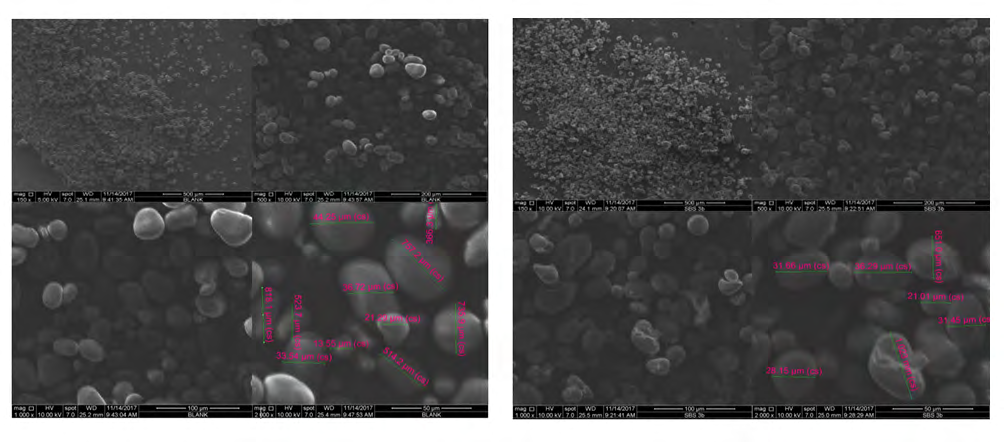
Figure 6: The scanning electron micrographs (SEM) of (a) native (control) and (b) representative succinylated (SBS3) Bambara starches at 500, 200, 100 and 50µm.
Succinylated Bambara groundnut starch showed enhanced functional characteristics such as higher swelling power, oil, and water absorption potentials at different levels depending on the degree of substitution. At the low level of treatment (2-4%), succinylation rendered the starch much more fragile (in comparison to native starch) than at higher levels.
The result of this investigation presents succinylated Bambara groundnut starch at lower treatment levels as a potential and cheaper alternative for application in food systems requiring higher thickening power, texture improving qualities, as well as crispy texture after frying. In contrast at higher treatment levels (7-14%), succinylated Bambara groundnut starches hold great promise as effective replacement binders in non-food applications.
The authors do not have any conflict of interest as far as this work is concerned. They have not received any financial support from the public, commercial, or not-for-profit sectors
References
-
Global Modified Starch Market (2020) Global Modified Starch Market Report 2020-2026: Market will Surpass $14.9 Billion - Increasing Consumption of Processed and Convenience Food.
-
Raji AO (2020) Utilization of Starch in Food and Allied Industries in Africa: Challenges and Prospects.
-
Mayes S, Ho WK, Chai HH (2019) Bambara groundnut: an exemplar underutilised legume for resilience under climate change. Planta 250: 803-820.
-
Oyeyinka SA, Singh S, Amonsou EO (2017**)** Physicochemical and mechanical properties of bambara groundnut starch films modified with stearic acid. Journal of Food Science 82(1): 118-123.
-
Adebowale KO, Lawal O (2002) Effect of Annealing and Heat moisture conditioning on the physicochemical characteristics of bambara groundnut starch. Nahrung/ Food 46(5): 311-316.
-
Afolabi TA, Opara AO,Kareem SO,Oladoyinbo FO(2017) In vitro digestibility of hydrothermally modified bambara groundnut (Vigna subterranean L.) starch and flour. Food Science and Nutrition 6(1): 36-46.
-
Oyeyinka SA, Singh S, Ma Y, Amonsou EO (2016) Effect of high-pressure homogenization on structural, thermal and rheological properties of bambara starch complexed with different fatty acids. RSC Advances 83(6): 80174- 80180.
-
Oyeyinka SA, Umaru E, Olatunde SJ, Joseph JK (2019) Effect of short microwave heating time on physicochemical and functional properties of bambara groundnut. Food Bioscience 28: 36-41.
-
Adebowale KO, Afolabi TA, Lawal O (2002) Isolation, chemical modification and physicochemical characterisation of bambarra groundnut (Voandzeia subterranean) starch and flour. Food Chemistry 78(3): 305-311.
-
Mensah NG (2011) Modification of bambara groundnuts starch, composited with defatted bambara groundnut flour for noodle formulation. Thesis: Food science and technology, Biosciences. Kwame Nkrumah University of Science and Technology, Kumasi.
-
Afolabi TA (2012) Synthesis and physicochemical properties of carboxymethylated bambara groundnut (Voandzeia subterranea) starch. International Journal of Food Science and Technology 47: 445-451.
-
Oyeyinka SA, Singh S Venter SL, Amonsou EO (2016) Effect of lipid types on Complexation and some physicochemical properties of bambara groundnut starch. Starch- Starke 69: 1-10.
-
Gulu NB, Jideani VA, Jacobs A (2019) Functional characteristics of Bambara groundnut starch-catechin complex formed using cyclodextrins as initiators. Heliyon 5(4): 1-25.
-
Calderon-castro A, Jacob-velenzuela N, Felix Salazar LA, Zazueta J, Morale F, et al. (2019) Optimization of corn starch acetylation and succinylation using the extrusion process Journal Food Sci and Technology 56(8): 3949- 3950.
-
Olayinka OO, Olu-Owolabi BI, Adebowale KO (2011) Effect succinylation on the physicochemical, rheological, thermal and retrogradation properties of red and white sorghum starches. Food Hydrocolloids 25(3): 515-520.
-
Bhandari PN, Singhal RS (2002) Effect of succinylation on the corn and amaranth starch pastes. Carbohydrate. Polymers 48: 233-240.
-
Arueya GL, Oyewale TM (2015) Effect of varying degrees of succinylation on the functional and morphological properties of starch from acha (Digitaria exilis Kippis Stapf). Food Chemistry 177: 258-266.
-
Sirivongpaisal P (2008) Structure and functional properties of starch and flour from bambarra groundnut. Sonklanakarin Journal of Science and Technology 30(1): 51-56.
-
Oyeyinka SA, Singh S, Adebola PO, Gerrano AS, Amonsou EO (2015) Physicochemical properties of starches with variable amylose contents extracted from bambara groundnut genotypes. Carbohydrate Polymers 133: 171- 178.
-
Awokoya KN, Nwochocha IM, Moronkola BA, Moronkola DO (2011) Pelegia Research library. Der chemical sinicia 2(6): 228.
-
Alummoottil NJ, Kallikat NR, Subvamoney NM, Janardhanan S (2005) Synthesis and characterization of low DS succinate derivatives of cassava (Manihot esculenta crantz) starch. Starch/Stärke 57(7): 319e324.
-
AOAC (2000) Official methods of analysis of association of official analytical chemists international 17th (Edn.), Gaithersburg,
-
Morrison WR, Laignelet B (1983) An improved colorimetric procedure for determining apparent and total amylose Cereal Science 1(1): 9-20.
-
Emeje M, Kalita R, Isimi C, Buragohain O, Kunle SO (2012) Synthesis, physicochemical characterization, and functional properties of an esterified starch from an underutilized source in Nigeria. African Journal of Food, Agriculture, Nutrition and Development 12(7): 7001- 7018.
-
Abbey BW, Ibeh GO (1998) Functional Properties of Raw and Heat Processed Cowpea (Vigna Unguaculta Walp) Flour. J of Food Sci 53(6): 1775.
-
Gbenga LB, Olakunle O, Adedayo MA (2014) Influence of pregelatinization on the physicochemical and Compressional characteristics of starches obtained from two local varieties of Dioscorea Rotundata. Journal of Pharmacy 4(6): 24.
-
Singh J,Kaur L,McCarthy OJ (2007) Factors influencing the physico-chemical, morphological, thermal and rheological properties of some chemically modified starches for food applications - A review. Food Hydrocolloids 21: 1-22.
-
Luo Z, Zhou Z (2012) Homogenous synthesis and characterization of starch acetates in ionic liquid catalysts. Starch/Stärke 64(1): 37-44.
-
Adebowale KO, Olu-Owolabi BI, Olayinka OO, Lawal OS (2005) Effect of heat moisture treatment and annealing on physicochemical properties of red sorghum starch. African journal of Biotechnology 4: 928-933.
-
Ariyantoro AR, katsuno N,Nishizu TN (2018) Effects of Dual Modification with Succinylation and Annealing on Physicochemical, Thermal and Morphological Properties of Corn Starch**.** Foods 7(9): 133.
-
Lawal OS (2004) Succinyl and acetyl starch derivatives of a hybrid maize: Physicochemical characteristics and retrogradation properties monitored by differential scanning calorimetry Carbohydrate. Research 339(16): 2673-2682.
-
Mirmoghtadaie, L, Kadivar M, Shahedi M (2009) Effect of modified oat starch and protein on batter properties and quality of cake. Cereal Chemistry 86(6): 685-691.
-
Leach HW, McCowen LD, Schoch TJ (1950) Structure of the starch granule I. Swelling and solubility patterns of various starches. Cereal Chemistry 36: 534-544.
-
Singh N, Singh J, L Kaur, Sodhi NS, Gill BS (2003) Morphological, thermal and rheological properties of starches from different botanical sources: A review. Food Chemistry 81(2): 219-231.
-
Tester RF, Morrison WR (1990) Swelling and gelatinization of cereal starches. Cereal Chem 67(6): 558-563.
-
Kaur M, Sandhu KS (2010) In Vitro Digestibility, Structural and Functional Properties of Starch from Pigeon Pea (Cajanus Cajan) Cultivars Grown in India. Food Research International 43(1): 263-268.
-
Kaur M, Sandhu KS, Lim S (2010) Microstructure, physicochemical properties and in vitro digestibility of starches from different Indian lentil (Lens culinaris) cultivars. Carbohydrate Polym 79(2): 349-355.
-
Kittipongpatana OS, Kittipongpatana N (2011) Preparation and physicochemical properties of modified jackfruit starches. LWT Food Science and Technology 44(8): 1766-1773.
-
Bhandari P, Singhal R, Kale D (2002) Effect of succinylation on the rheological profile of starch pastes. Carbohydrate Polymer 47(4): 365-371.
-
Chung HJ, Lee SE, Han JA, Lim SI (2010) Physical properties of dry-heated octenyl succinylated waxy corn starches and its application in fat-reduced muffin. Journal of Cereal Sci 52(3): 496-501.
-
Majzoobi M, Farahnky A( 2021) Granular cold-water swelling starch; properties, preparation and applications, a review. Food Hydrocolloids 111: 106393.
-
Varavinit S, Shobsngob S, Varanyanond W, Chinachoti P, Naivikul O (2003) Effect of amylase content on gelatinization, retrogradation and pasting properties of flours from different cultivars of Thai rice. Starke 55(9): 410-415.
-
Alcazau-Alay SC, Meireles MAA (2015) Physicochemical properties, modifications and applications of starches from different botanical sources. Food Sci and Tech (campinas) 35(2): 215-236.
-
Kizil R, Irudayaraj J, Seetharaman K (2002) Characterization of irradiated starches by using FT- Raman and FTIR spectroscopy. Journal of Agricultural and Food Chemistry 50(14): 3912-3918.
-
Zeng J, Li G, Gao H, Ru Z (2011) Comparison of A and B starch granules from three wheat varieties. Molecules 16(12): 10570-10591.
-
Shi M, Jing Y, Yang L, Huang X, Wang H, et al. (2019) Structure and physicochemical properties of malate starches from corn, potato and wrinkled pea starches. Polymers 11(9): 1523.
- The Role of Podocyte Apoptosis and the Involvement of SIRT1 in Diabetic Nephropathy
- Dealcoholization of Beer by Osmotic Distillation for the Beverage Industry
- Biopolymer-Based Edible Packaging- Biomaterials, Methods, and Applications in Food Industry: An Updated Review
- Influence of Bioprocessing Methods on 'China Rice' (Gawal R1), and Soyabean Supplementation on the Quality of Complementary Food
- Cassava (Manihot esculenta) Varietal Growth, Yield and Cyanide Content Performance in Three Sites in the South- Eastern Semi Arid Regions of Kenya
- Food Waste Treatment, Recycling, Management and Production of Value-Products-An Update on Methodologies and Current Trends