
Technological, Processing and Nutritional Aspects of Banana and Plantain: A Review
Banana is an excellent nutrient source, grown mainly in tropical and subtropical humid regions and the fruits are available throughout the year. Dessert bananas are primarily consumed fresh or used in several desserts when completely ripe, while plantains are culinary bananas, which are utilized for cooking purposes. Consumers frequently choose one type over another depending on the quality preference. Both banana and plantain belong to the genus musa. Dessert banana is a popular fruit because of its flavor, texture, and high convenience value. Plantains have a high nutritional value since they contain resistant starch, phenolic acids, minerals, and vitamins A and C that benefit human health. Banana is an excellent source of vitamin B6. The positive health benefits of bananas in reducing and treating disease conditions such as ulcers, infections, diabetes, diarrhea, and colitis have recently sparked a research interest in its utilization. Technological aspects of various common processed products of banana such as puree, jam, chips, flour, starch, juice, and wine are covered under the present review. Banana being the highest biomass generating fruit crop also yield substantial amount of waste during the growth and after harvesting of fruits. The aspects of possible and effective utilization into various byproducts are emphasized. Considering the facts of the covered global scenario of banana production and productivity, with the help of little efforts may assist in solving global hunger problem to a significant extent.
Introduction
Banana (Musa species) is one of the world’s most widely grown tropical fruits. The ripe sweet and yellow bananas are known as dessert bananas. At the same time, plantains are generally consumed as green bananas and, known as culinary or cooking bananas differ in their physical appearance and taste. Several banana varieties are grown worldwide, with three common species musa as (Musa cavendishii, Musa paradisiaca, and Musa sapientum). Dessert banana (M.
cavendishii) is sweeter and less starchy than M. paradisiaca, but true banana (M. sapientum) is generally consumed raw when completely ripe [1].
The Musa cavendish is the most marketed, high-yielding, and resistant to environmental change. It is referred to as Kalpatharu. Bananas are monocotyledons and belong to the family Musaceae. They are tree-like herbs, two to nine meters with an underground rhizome or corm, a pseudo stem composed of leaf sheaths, and a terminal crown of leaves through which an inflorescence emerges. Some seven to nine months after planting of sucker, an inflorescence emerges at the apex of the pseudo stem. Fruits may be suitable for harvest after 90-150 days of inflorescence emergence. Absence of pollination, parthenocarpy fruits with seedless pulp is produced. The fruit is easily digestible and is an excellent food for people with gastritis and other stomach problems. The male flower bud and the central pseudo stem are used as vegetables. The pseudo stem juice is claimed to help with kidney stones, while the leaf sheaths are used in fiber and paper industries.
Because of their nutritional value, dessert bananas are famous in current westernized diets. Green banana products have been investigated to minimize waste generation and enhance the bioavailability and use of nutrients found in this fruit. Green banana products are becoming increasingly popular owing to their nutritional value and physiological advantages to human health. With the emergence of gluten- related illnesses, some of which have been known for a long time, such as celiac disease and dermatitis herpetiformis, and others, such as gluten sensitivity, it has become critical to extending the gluten-free food market. Using green bananas and their derivatives as a wheat or gluten substitute in food could be an exciting option. Green bananas may be used to produce biomass, banana flour, beverages, and chips. Green banana is used in gluten-free food manufacturing, which might improve these goods’ nutritional, sensory, and technological quality and make them more available to the target market at a cheaper cost. Green bananas appear to be an excellent source of fiber, vitamins, minerals, and bioactive substances, including phenolic compounds and resistant starch (RS), all of which contribute to the health advantages that make them a functional food.
History and Domestication
In Sanskrit literature, such as the Ramayana, Kautilya’s “Arthashastra,” and the Tamil classic “Shilappadikaram” [2], there is a definite reference to banana. According to specific evidence, banana cultivation may have been common in Harappan civilization (2500–1900 BC). Such research might yield compelling evidence for the ancient spread of bananas in Southeast Asia. Bananas are described in Greek texts from 327 BC in the Indus Valley during Alexander the Great’s journey to India [3, 4]. According to most botanists, bananas are thought to have been brought to Arabs from India through the Middle East and to North America. The Portuguese and the Spanish had a vital role in the global spread of bananas and plantains, particularly in America [5]. This evidence points to the presence of bananas in India as early as the 15th century. According to historical evidence, the Arabs brought the banana from India to Palestine and Egypt in the seventh century AD. The seedless edible bananas evolved from seeded wild species through a complex process. Recent genomic investigations have indicated that the process entailed a lengthy hybridization phase involving a variety of species [6]. Thousands of musa species with significant genetic variation were engaged in the evolution process, indicating that it may have many origins. In situ hybridization methods utilizing DNA probes that can identify the A and B genomes have revealed that the whole set of X = 11 chromosomes of the A genome are present [7], and most cultivars contain 11 chromosomes with complete genomes. In situ hybridization was used to show that the variety “Pelipita” (2 n = 3 X = 33) had 8 A genome chromosomes and 25 B genome chromosomes instead of 11 A and 22 B genome chromosomes as expected in the ABB type, whereas two other AAB plantain types with 33 chromosomes had more than 11 B genome chromosomes [8]. This study also confirmed the existence of complete “S” and “T” genomes from Musa schizocarpa and Musa textilis, respectively.
Botanical and Taxonomic Classification
Bananas are Musa species native to Southeast Asia, although they are now widely cultivated in all tropical nations for their fruit, fibre, and leaves. Banana plants are sometimes mistaken for trees because they are tall and robust, however their primary or upright stem is actually a pseudo stem (meaning “false stem”). The botanical classification of banana is –
- Kingdom: - Plantae
- Sub kingdom: - Tracheobionta
- Super division: - Spermatophyta
- Division: - Magnoliphyta
- Class: - Liliopsida
- Sub class: - Zingiberidae
- Order: - Zingiberidae
- Family: - Musaceae
- Genus: - Musa Bananas are large monocotyledons native to warm, humid parts of South Asia. They are placed by Huchinson in the order Zingiberales, while by Bentham and Hooker in Genera Plantarum, they are classified in the order Scitamineae. Musa belongs to the Musaceae family, which includes the genera Musa and Ensete. The genus Musa is split into four divisions, two of which, Callimusa and Australimusa, have species with chromosomal numbers of 2n = 20. The fundamental chromosomal number of the other two parts, Eumusa and Rhodochlymus, is 2n = 22. Rhodochlymus and Callimusa are aesthetic plants with no edible fruits; however, Australimusa contains M. textilis, which is used to produce Manila hemp. The fundamental chromosomal number of the other two parts, Eumusa and Rhodochlymus, is 2n = 22. Bananas are monocotyledon, large plants native to warm, humid regions of South Asia. Edible bananas were previously classified as M. paradisiaca L. for plantain and M. sapientum L. for banana (Linnaeus), but were subsequently shown to be hybrids of two major species, M. acuminata and M. balbisiana, based on 15 morphological characteristics [9]. The section Eumusa and its group of plants gave rise to all banana and plantain cultivars. This is the largest and most widely distributed genus section. Based on numerical taxonomy, the section comprises 11 species [10].
The edibility of diploid M. acuminata (AA) fruits arose from two mutation events involving female sterility induction and parthenocarpy. These diploids may have evolved through crossings between edible diploids and wild M. acuminata subspecies, resulting in a wide range of AAA cultivars (Table 1). People may have brought diploid and triploid acuminata cultivars to areas where balbisiana was discovered, resulting in natural hybridization and the development of novel hybrid progenies with various genome compositions such as AB, AAB, and ABB. Human influence was considered to have caused the later dispersion of these edible bananas from Asia. Eumusa and Rhodochlymus are found in Assam (India) and Thailand, whereas Callimusa and Rhodochlymus are found in Borneo and its neighboring islands, as well as Indonesia. Australimusa is mostly found in the islands of Malaya. Musa acuminata subspecies are mostly found in Assam, Indo-China, the Malayan Islands, and Papua New Guinea, which is also the major source of farmed AA kinds. M. balbisiana was found in the islands of Ceylon, India, Burma, Siam, and Malaya, where the A× B hybrids developed.
Almost all cultivated banana and plantain variants are hybrids and polyploids of Musa acuminata Colla (genome A) and Musa balbisiana Colla (genome B), two wilds, seeded banana species (genome B). They are divided into categories depending on the number of chromosomes in the plant, whether it is diploid, triploid, or tetraploid, and a genome- based classification [11] with 15 distinct characteristics.
| Species | Subgroups | Characteristics | |
|---|---|---|---|
| AA | Musa acuminata (A) | - | Edible diploids, such as AA cultivars, are highly sweet, but they have been subplanted by more producing triploids. |
| AB | Musa acuminata (A) and Musa balbisiana (B) | - | - |
| AAA | Musa acuminata (A) | Cavendish, East African highland banana and Gros Michel | Breeders have been able to use cultivars’ residue fertility to develop better hybrids despite the fact that they are basically sterile and reproduction is vegetative through suckers. |
| AAB | Musa acuminate (A) and Musa balbisiana (B) | Iholena, Maoli-Popoulu, Mysore, Plantain, Pome and Silk | - |
| ABB | Musa acuminata (A) and Musa balbisiana (B) | Bluggoe | It’s a drought-resistant plant that grows aggressively. |
| AAAB, AABB, ABBB | Musa acuminate (A) and Musa balbisiana (B) | Dessert types are similar to “Gros Michel” (AAAB): FHIA-17, FHIA-23, and SH-3436. Dessert types are similar to “Pome” (AAAB): FHIA-01 or “Goldfinger,” FHIA-28, and SH-3640. Cooking types similar to “Bluggoe” (AAAB): FHIA-20 and FHIA-21. Special bananas: SH-4001. | Breeding programs have resulted in cultivars that are resistant to Fusarium wilt black Sigatoka and adapt well to a variety of climates. |
Table 1: Botany of banana species along with sub-groups and characteristics [12-17].
Production
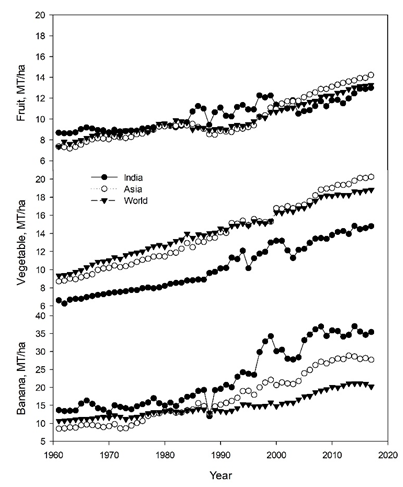
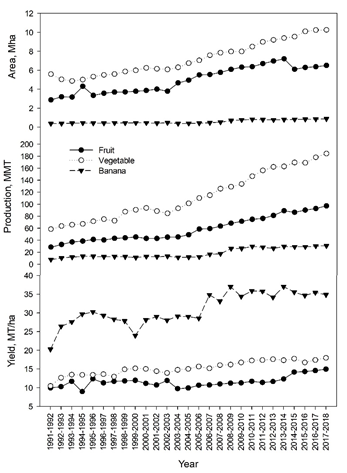
India is the second largest producer of horticultural crops and pioneer in banana production with the contribution of more than 25% (30.808 MMT) share in the world. Out of total cropped area of 197.016 Mha, 74.02% area is under the cultivation for the food crop, 3.67% for fruits and only 0.40% share for the banana cultivation [18]. Comparative year wise growth of India in respect of Asia and Word for the area, production and productivity of banana are represented in Figure 1. Although productivity of banana in India (34.86MT/ ha) is well below Indonesia (51.19MT/ha) but is well ahead figure of Asia and World. The comparative productivity of fruits, vegetable and banana are presented in Figure 2 [18].
The productivity of banana is far beyond the productivity of either fruits or vegetable in global scenario [18]. Considering the fact if banana cultivation is emphasized then the problem for the availability of fruits and vegetable will be solved considerably being banana is used as fruits and plantain for vegetable as well (Figure 3).
![Figure 1: Although productivity of banana in India (34.86MT/ ha) is well below Indonesia (51.19MT/ha) but is well ahead figure of Asia and World. The comparative productivity of fruits, vegetable and banana are presented in Figure 2 [18].](/fulltextimages/9457/fig_1.png)
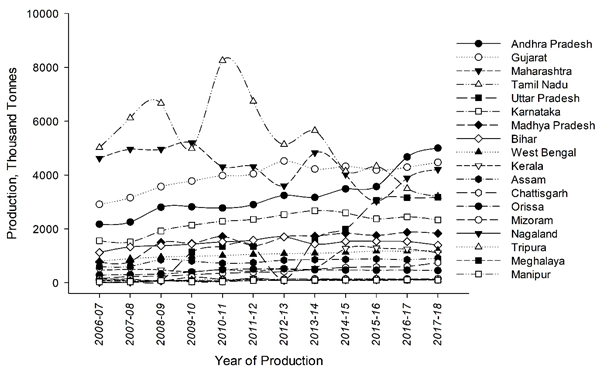
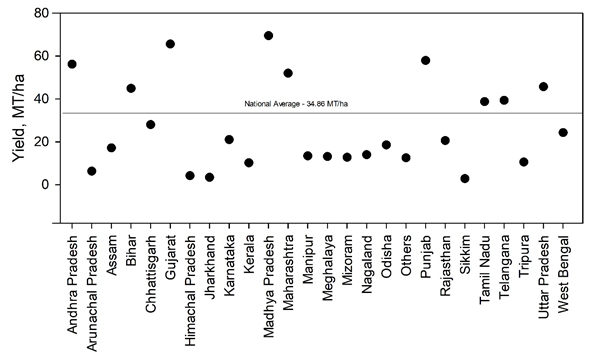
Comparative state wise banana production is presented in Figure 4 with the comparative productivity performance of different states in Indian scenario (Figure 5) [19]. It further revealed that the productivity of banana in many states is above the global highest productivity. Following the cultivation practices of those states may further improve the banana production substantially in India, which can be a potential effort toward solving global hunger problem to some extent.
Banana Plant and Fruit Growth
During banana plant growth, there are two distinct phases: a vegetative phase indicated by leaf emission and a reproductive phase represented by bunch emission.
Banana plants are giant perennial monocotyledon herbs that grow to be 2–9 m tall and 20–50 cm wide, depending on the type, while wild variants like Musa genus may grow to be 15 m tall and 80 cm wide (Figure 6). The root system of all monocotyledons is adventitious, extending out as far as 5.5 meters laterally and producing a thick mat mostly in the first 15 cm of the soil. Aerial shoots emerge from the lateral buds of the corm, developing into eyes and subsequently suckers. Sword suckers have narrow leaves and a large rhizome, with a strong connection to the mother plant coming from deep axillary buds in the mother rhizome; while water suckers have broad leaves and a small rhizome, with a weak connection to the mother plant coming from buds closer to the surface. The follower or ratoon is the sucker chosen to replace the mother plant after fruiting. It is the one that develops rapidly at the furthest distance from the mother plant since it is the first to emerge and grow quicker. This allows the crop alignment to be sustained. The above-ground “trunk” is a pseudo stem, which is made up of huge overlapping leaf bases firmly coiled in an anticlockwise spiral to produce a cylindrical structure [20]. A “stalk” (petiole) and a blade make up the leaves (lamina). For a bunch of fruit to mature properly, it needs at least 8–10 functioning leaves. In the summer, banana leaves can unfurl at a pace of one per week, but in the winter, just one per month is possible in the subtropics [21]. Since it emerges from the foliar crown, the leaf takes between six to eight days to fully unfold. Plantains are yellowish-green with brown spots, but sweet bananas are mainly green to dark green with black markings [22]. The meristem of the apical bud, which initially gives rise to the leaves, then elongates up through the pseudo stem, and a large terminal inflorescence (a compound spike of female, pistillate) develops 6–9 months after planting in the tropics or 8–10 months in the subtropics, about the time the eleventh-last leaf has been formed (only one for each pseudo stem). The ovary in cultivated bananas develops into a seedless fruit by parthenocarpy (without being pollinated), whereas male flowers generate pollen that is more or less fertile, and hermaphrodite or neutral flowers do not grow into fruit and do not produce pollen. Before being shed, the bracts unfold in order (one per day) from the base to tip and bend backward. The male flowers are generally lost when the hands of fruits grow from the female flowers, leaving the peduncle naked except for the very tip, which has a “male bud” holding the last-formed male bracts and flowers. The number of hands in the bunch ranges from 4 to 30 depending on the crop’s genotype, crop cycle, climatic circumstances, and agronomic management. Thus, the weight of a Cavendish AAA bunch varies from 15 to 70 kg depending on the number of fingers per hand (10– 30), but a Williams AAA weighs approximately 40 kg with an average of 12 hands and 22 fingers per hand [23].
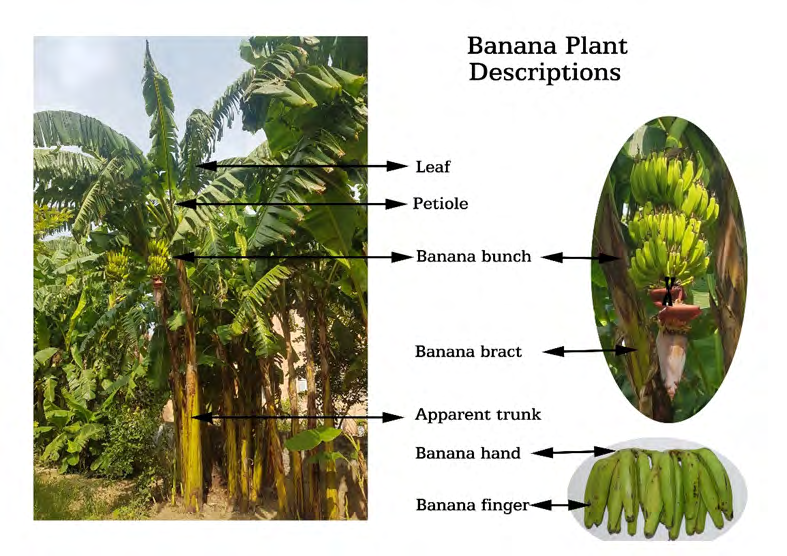
Each fruit is classified as a berry. The skin, also known as the peel, is a fusion of the pericarp’s hypanthium (floral receptacle) and outer layer (exocarp), and it is readily separated from the fleshy pulp that comes mostly from the endocarp. The tepals, style, and staminodes abscise during the growth of the fruit from the ovary, producing a distinctive calloused scar at the fruit’s tip. The shape of the fruit apex, which might be tapered, rounded, or blunt, can be utilized to identify different kinds. The cultivar determines common bananas color, size, shape, texture, and flavor. Fibrous skin varies in thickness and can be green, yellow, or red in color.
Composition of Banana
Banana is one of the most cost-effective food crops. The nutritional value of banana, like that of any other food, is determined by a number of factors, including its maturity, the climatic circumstances in which it is cultivated, the soil quality, and, most importantly for the banana, the amount of sugar it contains (Tables 2-4). The carbohydrate, fat, and protein components of a food determine its energy worth, with the carbohydrate portion being the most important in the case of the culinary banana. Starch and sugars make up the majority of the carbohydrate in a banana.
According to research, the nutritional contents of culinary banana Musa ABB are altered by several growing phases. The pulp-to-peel ratio and total soluble sugars indicate that 50 DAE (days after emergence) is the best time to harvest [24]. Bananas are plucked when they become 75-80% mature in order to transport them across great distances, which takes around three weeks. The plantain is a considerably starchier food than the banana, the plantain contains 66% sugar and 17% starch [25].
| Culinary Banana (unripe) (g) | Dessert Banana (ripe) (g) | |
|---|---|---|
| Moisture content | 59.40 - 74.00 | 74.00- 75.70 |
| Carbohydrates | 24.40 - 47.42 | 21.80- 23.20 |
| Proteins | 1.00 - 12.71 | 1.10- 1.20 |
| Fats | 0.20- 6.69 | 0.20- 0.30 |
| Dietary fiber | 0.50- 15.48 | 0.50- 2.00 |
| Ash | 0.90- 6.86 | 0.50- 0.80 |
Table 2: Basic nutritional composition of culinary and dessert banana (per 100 g) [25-32].
| Vitamin | Culinary Banana (unripe) (mg) | Dessert Banana(ripe) (mg) |
|---|---|---|
| Thiamine (B1) | 0.05- 0.08 | 0.04-0.60 |
| Riboflavin (B2) | 0.04-0.05 | 0.07-0.23 |
| Niacin (B3) | 0.60-0.70 | 6.1-12.10 |
| Pantothenic acid (B5) | 0.26- 0.37 | 0.28-0.70 |
| Pyridoxine (B6) | 0.42-0.51 | 0.47-3.20 |
| Ascorbic acid | 11.00-20.00 | 3-11.7.00 |
| Folic acid | - | 0.023-0.95 |
| β- carotene | 0.03- 1.20 | 0.068-2.00 |
| Mineral | Culinary Banana (unripe) (mg) | Dessert Banana(ripe) (mg) |
| Sodium | 2.00 - 4.00 | 0.50-1.00 |
| Potassium | 440 - 500 | 385- 400 |
| Calcium | 3.00 -13.20 | 7.00-8.00 |
| Magnesium | 3.43 - 40.00 | 30.00 - 34.00 |
| Iron | 0.50 - 3.34 | 0.10 - 0.42 |
| Phosphorus | 30.00 – 35.00 | 22.00 – 28.00 |
| Zinc | 0.10 - 1.33 | 0.18 - 0.20 |
Table 3: Vitamins in culinary and dessert banana (per 100 g) [17,26-37].
Major Constituents
Water
The most common element in the pulp and peel of a banana is water, and the pulp of a banana contains more water than the pulp of a plantain. Due to respiratory degradation of starch and osmotic transfer of water from peel to pulp, the water percentage in the pulp increases during ripening. The stomata, which are equivalent in number in plantains and Cavendish bananas, remain functioning during ripening. As a result, the stomatal opening closes when the fruit is stored in saturated water vapor. Low atmospheric pressure causes the epidermal and stomatal tissues to degrade, decreasing gaseous exchanges. During ripening, transpiration, which contributes to the apparent loss of water from the peel, follows a pattern like climacteric respiration.
Carbohydrates
Almost all of the carbohydrate at the pre-climacteric stage, when bananas and plantains are typically harvested, is in the form of starch. The overall carbohydrate content is gradually decreased (to offer a fuel source for respiration) and the starch is subdivided into reducing and non-reducing sugars during successive ripening [38]. Beta-amylase activity in green fruits is higher than alpha-amylase activity, but phosphorylase activity is relatively low [39, 40]. A significant rise in alpha-amylase activity has been reported during starch breakdown [41].
During ripening, there is a noticeable rise in the quantity of total sugars in both the skin and the pulp. The conversion of starch to sugars is the most noticeable change in fruit pulp during ripening, and peel colour is strongly connected to the starch: sugar ratio. The ratio of sugars in the early stages of ripening is around 65:20:15 (sucrose: glucose: fructose), suggesting that sucrose comes first, and hexose sugars appear later. Sucrose is the main sugar during early stages of ripening, while glucose and fructose take over later [42]. The maximum time for starch to sucrose conversion is two days following the ethylene peak? The amount of carbohydrate lost through respiration is little, and total carbohydrate remains relatively stable during the ripening process. Many enzymes appear to be involved in the entire conversion process, and fructose 2, 6-bisphosphate appears to control the beginning of enzymatic starch hydrolysis during the ethylene peak.
The starch content of plantains is higher than that of dessert bananas. Dessert bananas’ starch practically vanishes at full maturity, but plantains’ starch breakdown and sugar synthesis continue in completely ripe and even senescent fruits. During ripening, the starch content of the peel and pulp decreased significantly. In the peel, the decrease was more severe. During ripening, the concentrations of cellulose in the skin and pulp remained rather unchanged.
Proteins
In plantain and dessert banana protein is present in small amount. The 16 amino acids were discovered in plantain pulp protein hydrolysates. The latter was exceptionally high in arginine, aspartic acid, and glutamic acid; their contents increased significantly throughout ripening. The percentages of several amino acids such as lysine, methionine, histidine, proline, and phenylalanine increased as the pulp ripened, but the quantities of alanine and threonine decreased slightly. Methionine deficiency was discovered in plantain pulp. Cysteine and tryptophan were noticeably missing. Also, low amounts of valine, threonine, and isoleucine were found [25].
Lipids
Polyunsaturated fatty acids, particularly linolenic acid, make up the majority of the lipid constituents. There is no cholesterol. Although the degree of saturation rises, the lipid content remains nearly constant throughout the ripening process. During the pre - climacteric phase, lipids are extensively hydrolyzed and resynthesized, with palmitic, linoleic, and linolenic acid concentrations rising sharply before the climacteric. Because these acids are involved in the biogenesis of aroma components, their concentration decreases as the maximal scent is produced.
Banana contains unsaturated fatty acids, especially linoleic and palmitoleic acids, dropped by nearly 3-fold in the pulp, whereas stearic acid increased by more than 2-fold. Unsaturated fatty acids reduced in both the pulp and the peel as the fruit ripened. The banana peel has about four times the amount of lipid as the pulp [43].
Minor Constituents
Vitamins and Minerals
Plantains have a higher vitamin A concentration than bananas and the B vitamins thiamine, niacin, and riboflavin are found in equal amounts in both plantains and bananas. Vitamin B6 and vitamin B5 being especially abundant in banana pulp when compared to other fruits. Vitamin C is abundant in bananas. It’s crucial to remember that the vitamin C content of a food is decreased over time and through a variety of cooking techniques. Plantains can lose up to 70% of their vitamin C value when peeled and cooked. With a decrease of only 47%, roasting looks to be a somewhat superior approach [28].
Bananas and plantains also have a low sodium and high potassium content, which is important in terms of nutrition. Bananas and plantains have more than double the amount of potassium in their mature pulp than most other tropical fruits. Potassium is essential for muscle growth (potassium is an essential nutrient that aids in electrochemical regulation and nerve signal transmission) and blood pressure regulation (potassium relieves blood vessel tension and lowers blood pressure). The sodium-potassium pump is an active transport mechanism that uses the energy generated by sodium, potassium, and ATPase to remove sodium from a cell and bring potassium in, allowing the cell to sustain a low sodium concentration and a high potassium concentration in relation to the surrounding medium. This allows system to maintain a good balance between sodium and potassium concentration [44].
The peels had greater amounts of iron, calcium, magnesium, phosphorus, and copper than the pulps at all stages of ripening. Both culinary and dessert bananas have a high magnesium content. Magnesium regulates glucose transport across cell membranes as a cofactor of hexokinase and pyruvate kinase. Iron and zinc are found in low amounts in plantains and dessert bananas. Iron is a key component of hemoglobin, as well as the immune system’s and energy production’s appropriate functioning whereas, zinc regulates insulin synthesis in pancreatic tissues as well as glucose consumption in muscles and fat cells [45].
Organic Acids
Organic acids are naturally occurring chemicals in bananas that contribute to the fruit’s acidity. The pH of the peel and pulp during harvest ranges between 5.4 and 6.0, although the pulp’s free acidity is greater. Both the pulp of Cavendish bananas and the free acidity of plantains rise as they ripen, with the pH dropping until it reaches 4.0 at the fully ripe stage, and then steadily increasing thereafter.
Citric, malic, and oxalic acids, as well as oxaloacetic, succinic, cis- and trans-aconitic, aspartic, pyruvic, glyoxylic, glutamic, and adipic acids, have the greatest amounts among the many other organic acids found in the pulp [46].
Organic acid levels drop as fruit ripens, coupled with the buildup of sugars in the flesh. The fluctuation in malic acid is related to the fruit’s respiration rate. It rises until the ripening process begins, then drops. The most prevalent organic acids in banana flesh were malic acid and citric acid. Citric acid predominated at the fully green stage, while malic acid predominated at the totally yellow stage [47].
Pectin
Water soluble pectin in bananas increase as they mature, which is one of the main reasons bananas get softer as they ripen. The relative concentration of fructose in contrast to other sugars grows as their water-soluble pectin rise. This increase in water-soluble pectin and relative fructose content helps regulate carbohydrate digestion and moderates the blood sugar impact of banana intake. The softness of the tissues is linked to the formation of pectic compounds. Under the control of the pectin methylesterase, protopectins (0.2-0.5 percent of the fresh weight) are hydrolyzed to soluble pectin and pectates during ripening. And its activity stays constant throughout the ripening process. Cavendish banana (dessert banana) pulp has three times more cellulose than lignin at full maturity, with non-cellulosic insoluble polysaccharides being most prevalent fibre component [27].
Pigment
Chlorophylls and carotenoids are the most common pigments found in banana and plantain peels. The colour of the peel changes from dark green to bright yellow as it ripens, due to the breakdown of chlorophyll, which progressively reveals the carotenoid pigments present in the unripe peel [48]. As a result, the colour changes are largely due to the yellow pigments being revealed. These processes are easily triggered at controlled ripening temperatures of 16–18°C, but when ripening happens spontaneously at temperatures over 25°C, chlorophyll degradation is inhibited while the pulp rapidly ripens.
Flavors
The development of the flavour of banana and plantain is influenced by changes in phenolics, carbohydrates, and acids as they ripen. However, many additional compounds are involved. The amyl esters and butyl esters were responsible for the fruit’s unique banana flavour and scent, as well as a fruity flavour and aroma [49]. Other esters, as well as aldehydes, alcohols, and ketones, have been linked to fruit flavour, and their synthesis rates have been shown to rise throughout banana ripening [50].
Phytochemicals
A phytochemical is a natural bioactive molecule found in plant food that protects against illness by interacting with nutrients and dietary fiber. High amounts of phenolic chemicals may be found in banana and plantain, particularly in the skin [51].
The major phytochemicals present in banana are alkaloids, flavonoids, tannins, and polyphenols. Phenolics like tannins cause the astringency of bananas before they ripen, as well as certain browning processes. They are mostly found in the pulp and peel’s latex vessels. It is used to treat wounds also. As fruit ripens, its astringency decreases, which appears to be due to a change in the structure of tannins, rather than a decrease in their concentration, in that they form polymers [51]. When the pulp of fruit (especially immature fruit) is cut, phenolics are also responsible for the oxidative browning reaction. This process is catalyzed by the enzyme polyphenol oxidase [52].
Flavonoids decrease hyaluronidase activity and aid in the maintenance of connective tissue proteoglycans. This would inhibit bacterial or tumor metastases from spreading. Catechin is an antioxidant that is resistant to oxidation. Gallic acid has a hepatoprotective and antioxidant action. p-Coumaric acid has antioxidant effects as well as the ability to lower the incidence of stomach cancer. Quercetin improves blood flow, which benefits cardiovascular health. Ferulic acid is an antioxidant that also has antibacterial, anti-allergic, and antiviral properties. Trans-alpha and beta carotene are vitamin A precursors that lower cancer and cardiovascular disease risks. Lung cancer may be reduced by cryptoxanthin (a food colorant).
Serotonin is present in higher amount. The presence of greater levels of serotonin in the pulp of ripe bananas generates a sense of well-being and pleasure. The dopamine and norepinephrine levels in bananas are likewise high. Dopamine lowers oxidative stress in the blood. Catecholamines aid in the elevation of blood pressure, glucose levels, and the pace of pulse. Beta-sitosterol has the ability to lower cholesterol levels in the blood [53].
Health Benefit of Banana
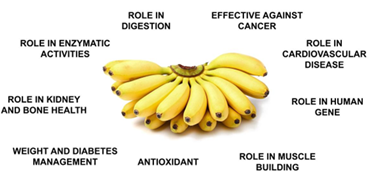
Banana is a good source of nutrient and helps in maintaining good health (Figure 7). Green bananas are a good source of fiber, resistant starch, vitamin A, vitamin B6, vitamin C, and potassium, among other nutrients. Banana flour, produced from dehydrated or naturally dried green bananas, is used as a gluten-free alternative in various recipes.
Anti-Diarrheal Activity
Children’s diarrhea is a frequent gastrointestinal issue. In certain trials, a green banana diet has been proven to reduce diarrhea activity, and infants with a history of diarrhea have been effectively cured after eating cooked green bananas.
Cooked green bananas were given to 73 toddlers aged 6-60 months infected with intestinal Shigella, resulting in 59 % of the children having no mucus within 5 days, according to a study. After five days, 96% of the participants had no fecal blood and a considerably lower quantity of stools each day. According to this research, green bananas might be used as a supplement in the treatment of Shigellosis [54]. Green banana flavonoids and saponins may have anti-diarrheal properties by reducing intestinal motility and hydro electrolytic secretion and preventing histamines’ production. Green banana flour, high in resistant starches, has anti- inflammatory properties in the intestine. Green bananas are said to offer anti-ulcer properties, which are linked to the flavonoid leucocyanidin as the active component. When given orally, leucocyanidin extracted from green bananas and synthetic leucocyanidin enhanced the thickness of gastrointestinal mucus in aspirin-induced gastric ulcer mice [55]. Banana leaf extracts from several Musa banana species exhibit antibacterial properties, with Musa paradisiaca and Musa acuminata being the most effective against multidrug- resistant nosocomial infection pathogens [56].
Antioxidant Effect
Banana, which are high in Vitamin C, are a strong antioxidant. Vitamin C serves an essential role in the body, such as tissue repair and growth. Some of the key functions of Vitamin C in the human body include antioxidant action, aiding or stimulating specific enzymes, hormone activation, collagen production, phagocytic function of leukocytes, hydroxylation of proline, and nitrosamine generation [31].
The presence of antioxidant compounds such as dopamine and ascorbic acid and banana consumption have been linked with reduced plasma oxidative stress [57]. Besides ascorbic acid, banana is also a rich source of other bioactive components such as flavonoids, phenolics, carotenoids, etc., that provide several health benefits. Among carotenoids, banana consists of lutein and provitamin A carotenoids such as α- carotene, β- carotene and β- cryptoxanthin [58]. Both, banana peel and pulp are rich in phenolic compounds. Hydro cinnamic acid derivatives are major phenolics in pulp, whereas, peel consisted mainly of rutin (flavanol glycoside) [59]. These phenolics are associated with various health benefits such as anti-inflammatory and anti-allergenic, also exhibit anti-viral and antibacterial activities [60].
Role in Cardiovascular Diseases and Stressful Conditions
Banana is beneficial for cardiovascular and heart patients since they are low in fat and contain less sterols such campesterol, stigmasterol, and sitosterol. Banana fibre content is especially beneficial to heart patients. The heart’s function is also regulated by potassium. Banana is a high- potassium food that is highly recommended for hypertensive patients. Potassium aids in the regulation of water and mineral balance in the human body, as well as blood pressure regulation [61]. According to research done on people over the age of 65, people who consume less potassium are 50 % more likely to have a stroke. Potassium consumption is linked to a lower risk of heart attack and stroke [62].
Role in Diabetes
Banana peel and inflorescence are reported to have anti- diabetic activities. Consumption of banana rich in resistant starch is also helpful in weight loss [63]. The diet consisting of banana flower was fed to the diabetic rats (Streptozotocin induced diabetes), it resulted in a decrease in fasting blood sugar as well as urine sugar [64]. Type-2 diabetes is associated with an imbalance of glucose homeostasis caused by the impairment of glucose uptake by the cells as the cells become insulin resistant. In the study conducted on Ehrlich ascites tumor cells, it was found that extract of inflorescence of Musa sp. was effective in stimulating the glucose uptake by cells [64]. The flavonoids in banana inflorescence have also been found to have improved insulin signaling pathway by activating the tyrosine kinase- an insulin receptor [65].
Role in Kidney and Bone Health
Banana is high in potassium, which helps the kidneys function properly. It also aids in the treatment of osteoporosis, or bone demineralization. Bananas are also high in Vitamin C, which aids in the regulation of bone health. Bananas are high in magnesium as well. Magnesium has an important role in the structure of cell membranes and bones. Phosphorus in bananas interacts with calcium to provide bone strength [31].
Other Health Benefits
The fibre content of banana is substantial. Fiber helps keep the digestive tract in excellent shape and ensures regular bowel movements. Digestive speed is accelerated by higher fibre content. The magnesium content of bananas has been found to be an effective cancer-fighting agent. Copper is a transition metal that plays a role in a variety of enzymatic processes in the human body. Magnesium is essential for the correct functioning of a variety of enzymes. Magnesium helps to keep chromatin and DNA structures stable. Magnesium is required to produce several key antioxidants like glutathione. Magnesium is the second most abundant intracellular element after potassium and the body’s fifth most important electrolyte [66]. Phosphorus is an essential component of RNA and DNA (Deoxyribonucleic Acid). Banana aids in the retention of calcium, phosphorus, and nitrogen, all which aid in the maintenance of healthy tissues. Muscle cramps can be avoided with a sufficient potassium intake. Potassium also aids in the correct functioning of the muscle [31].
Juice of banana stem has also been reported to have antilithiatic activity, preventing kidney stones formation. Stones in the body are mainly formed from traces of calcium oxalate and magnesium ammonium phosphate. The administration of banana stem juice helped break down and prevent the stones in urinary bladder in the case of albino rats [67].
Banana Derived Products
Banana Puree
Banana puree is made by pulping ripe bananas and preserving the pulp in one of three ways: aseptic canning, acidification followed by conventional canning, or quick- freezing. Aseptic canning is used to prepare most of the world’s banana puree. Peeled, ripe fruits are fed into a pump that drives them through an 8-mm-holed plate, then through a homogenizer, a centrifugal deaerator, and finally into a receiving tank with a 100-kPa vacuum, where air is removed to avoid discoloration. The sterilized puree is then aseptically packed into steam-sterilized cans and sealed in a steam environment [68]. Plantain texture and organoleptic characteristics are altered by blanching in hot water, steam, microwave treatment, or calcium chloride treatment. The banana pulp is also used in the production of fruit bars [69, 70].
Banana Jam
Jam is a product of intermediate moisture that is prepared using the pulp of fruits, sugar, pectin, acid, and other ingredients that allow the conservation of such products for long periods of time, which allows the association of fruits to create new flavors. Fruit jam is a product prepared by mixing (fruit juice, sugar, pectin, acid) and cooking up to soluble solid content of 65% and to a final brix of 70° The low- calorie banana jam can be prepared by heating banana pulp at temperature 75 - 90°C for a period of 1 -3hrs after adding sugar 10-40%. Banana pulp contains 0.7-1.12% pectin which is helpful in jam and jellies as a thickener, texturizer, and sugar replacer [71, 72, 73].
Banana Chips/Crisps
In many banana-growing countries, manufacturing banana and plantain chips is a common practice. In Bangladesh, chips are the most popular snack in many fast- food outlets [74], while in Nigeria; chips are the most popular plantain product [75]. Chips may be kept for a long time if properly packaged and stored. The maturation stage of the banana and the application of antioxidants significantly impact the quality and storability of banana chips. Plantain chips absorb less frying oil than chips prepared from dessert and cooking bananas [76]. Alginate, carboxyl methyl cellulose, and pectin are hydrocolloids that have been proven to reduce oil absorption in banana chips [77].
Plantains also have the advantage of not turning brown during chip preparation, and antioxidizing treatments are unnecessary [76]. Banana chips could play an important role in intervention programs to combat micronutrient deficiencies by virtue of their iron, zinc, and total carotenoid content. It was already shown that chips made from some banana varieties could contribute substantially to the recommended daily allowance (RDA) of retinol, iron, and zinc of both children and adults [78]. And the vacuum frying (VF) method can be used to eliminate oily products and retain product quality [79].
Banana Flour
The total starch, resistant starch, and dietary fiber levels in green banana flour are all high. Unripe banana flour contains antioxidant compounds. Eating unripe bananas will prevent you from getting high cholesterol, constipation, and colon cancer. Banana flour is produced on a large scale by peeling and slicing green bananas, then drying to 8 % moisture content in a countercurrent tunnel drier with an intake temperature of 75°C and an exit temperature of 45°C for 7–8 hours, and then grinding [68]. The right amounts of starch and sugar are present in full-matured fruits, resulting in high-quality flour. Because of the high tannin concentration in immature fruits, the flour produced tastes bitter and astringent. It was discovered that the various dehydration processes used to make flour considerably impacted its proximate composition and physical properties [80].
In a study conducted in Brazil, the chemical composition and nutritional value of unripe banana flour were evaluated. Dietary fiber was abundant, while accessible starch and soluble carbohydrates were in little supply. Phytosterols were discovered to be campesterol, stigmasterol, and beta- sitosterol. Green banana flour demonstrated significant antioxidant activity despite low quantities of minerals, phytosterols, soluble carbohydrates, and total polyphenols [81].
With the emergence of industries that use green and ripe bananas, the amount of waste from the banana peel is predicted to increase. Banana peels can also be used to make flour, as the pulp. The skin of banana includes a lot of dietary fiber, mostly hemicelluloses and pectin polysaccharides. The flour that had been supplemented with peel exhibited increased antioxidant activity and better pasting capabilities. Unripe banana flour was acid-treated to generate a fiber- rich product that might be useful in the development of culinary and medicinal applications [82]. Unripe banana and plantain are commonly used to make banana flour. Flour made from ripe fruits has the potential to provide new industrial and household products. Banana flour is used in a variety of culinary preparations and infant food formulas as an adjuvant. In Uganda, banana is a popular weaning meal [83]. Due to the starch content of the pulp and high amounts of cellulose, hemicelluloses, and lignin, an unripe banana is a rich source of indigestible carbohydrate. Bread prepared largely from banana flour included substantially more resistant starch, dietary fibre, and indigestible components than bread made mostly from wheat flour. Banana flour- based baked goods have a low glycemic index and might be utilized as a dietary supplement for those with low caloric intake [84]. Bananas have a wide diversification in terms of their products. Processing banana into banana flour is a good diversity manifestation for people’s food. Processing bananas into banana flour is a good example of how people’s diets can be diverse.
Banana Starch
Starch is the most significant carbohydrate source in the food, accounting for 80-90% of all polysaccharides consumed. Digestible and resistant starch are the two kinds of starch. In the largest banana-producing countries, the manufacture of starch from discarded bananas may be a significant source of revenue and employment [85]. Green bananas have a lot of starch in them, mostly in the form of resistant starch [86].
The starch extracted from green banana flour has a high viscosity and a good tendency to retrograde [87]. Because of its relevance for food and other industrial reasons, there is a rising interest in processing banana starch [86, 88]. A number of studies on the separation and characterization of starch from various banana cultivars have been undertaken [89, 90, 91, 92]. This research revealed that banana starch has the potential to be utilized in processed meals and to become a commercially viable starch due to its digestive and functional characteristics. These investigations also revealed that banana starch is not recommended for use in frozen goods due to its low freezing stability. Banana starch might be used in foods that need high- temperature processing, such as jellies, sausages, baked goods, and canned goods [33]. Chemical modifications of banana starch can enhance the chemical characteristics of the starch. Phosphorylated and hydroxy propylated banana starches, for example, improved clarity, whereas phosphated starches demonstrated the greatest freeze–thaw performance [87].
Banana Juice
Bananas have a distinctive flavour and aroma, and they will be able to compete well in the fruit juice market, whether as banana juices or combined with other juices. Simple pressing or centrifugation will not generate juice from banana pulp because it is too pectinaceous [93]. This approach results in a sticky, lumpy mass that is devoid of juice [94]. As a result, several methods for extracting banana juices have been used. Calcium oxide and sulfuric acid were used in previous juice extraction procedures. A clear translucent juice to the extent of 75–80 percent of pulp weight may be produced by pectolytic enzyme clearing, with a TSS concentration of 23–26°Brix depending on the cultivar [95]. By adjusting the TSS to 18–20°Brix and the acidity to 0.3 % using sugar, citric acid, and water, the clarified juice might be dispensed as a “ready-to-serve” (RTS) beverage. After cooling, it becomes a delicious thirst-quenching and healthy beverage. When generating banana juice, the combinations of pectinase, cellulase, and hemicellulase were more efficient in decreasing viscosity and increasing filterability of both green and ripe banana purees [96].
Banana Beer and Wine
Making banana beer and wine by fermenting banana juice is an age-old custom. The juice from ripe “beer banana” fruits is drunk either fresh or fermented to a low alcohol level with a short shelf life in Central and East. In East Africa, there are four primary phases in making banana beer: (1) green banana forced maturation, (2) pressing and mixing, (3) filtered juice recovery and fermentation, and (4) racking, filtering, and chilling [97].
Many researchers from various continents have reported on ways for making banana wine from various banana types [95, 98, 99]. One technique involves crushing ripe pulp with about 10% water, then sterilizing and inoculating with wine yeast, Saccharomyces cerevisiae var. ellipsoideus, and incubating at 24–26°C for 7 days with occasional aeration after adjusting the TSS to 26°Brix. After a week, the fermented juice is filtered and stored for secondary fermentation under anaerobic circumstances with a water seal. The secondary fermentation is finished after another two weeks. The wine is racked or centrifuged before being bottled and pasteurized for 20 minutes at 50°C. The pasteurized wine is aged to give it a distinct flavour and aroma [95].
Banana Waste Utilization
Banana being the highest biomass generating fruit crop yield substantial amount of waste during the growth and after the harvest of the fruits, which may effectively be utilized into various byproducts. The pseudo stem of banana is fibrous and is used to make ropes for agriculture use locally and textile globally. Even the pseudo stem is degraded and utilized for growing mushroom. Banana leaves can be found in abundance in banana-growing regions. Leaves are traditionally used to serve meals. During the cooking process, several dishes are wrapped in banana leaves. Banana leaves are dried and used as a cooking fuel to meet the local requirements at domestic and agricultural purposes. Banana waste is high in cellulosic matter and is also used to make paper. The fibres from banana waste are extracted using both manual and mechanical processes [100]. The banana peel is a great site for filamentous fungus to attach itself. Banana peel is often used as the better support-substrate for solid-state fermentation (SSF) operations due to its fungal adhesion characteristic with high fermentable sugar content [101]. Banana fibre has other applications too as it acts as a natural absorbent for spillages, including oil; as a base material for bioremediation and recycling; as a natural water purifier; for handicrafts and textiles; for printing currency; and as a cottage industry for handicrafts [102, 103].
Conclusion
There has already been abundant research to show that banana appears to offer a wide range of medicinal properties. However, data is scarce to back up specific medical or functional advantages. Plantain is a good source of resistant starch. The physiological effects of resistant starch are comparable to those of dietary fiber. Green banana flour is a low-cost, high-nutrient ingredient that can help reduce banana waste. Many studies have shown that using green banana flour as a partial replacement for wheat flour has positive effects. There is evidence that green banana flour might be a novel product with several advantages for both the food industry and consumers and can be effectively utilized in further developing various functional foods. Green banana products are becoming increasingly popular owing to their nutritional value and physiological advantages to human health. The use of the green banana in gluten-free food manufacturing might assist improve the nutritional, sensory, and technological quality of these goods. Green banana appears to be an excellent source of fiber, vitamins, minerals, and bioactive substances including phenolic compounds and resistant starch (RS), all of which contribute to their health benefits. Thus, considering the facts if banana cultivation is emphasized then banana production will substantially improve, which can be a potential effort toward solving global hunger problem to significant extent.
Author Contribution
Ram Kaduji Gadhave, Divyanshi, and Ravneet Kaur: writing original draft and visualization; Rahul Das: visualization; Shubhra Shekhar: data analysis, graphing and writing the production data; Kamlesh Prasad: Conceptualization and editing of manuscript.
Conflict of Interest
The authors declare that they have no known competing interests or personal relationships that could have appeared to influence the work reported in this paper.
References
-
Mohapatra D, Mishra S, Sutar N (2010) Banana post harvest practices: Current status and future prospects-A review. Agric Rev 31(1): 56-62.
-
Krishnamurthi S, Seshadri VS (1958) Origin and evolution of cultivated bananas. Indian J Hortic 15(1): 135-145.
-
Kervegant D (1935) The banana and the banana trade. Paris.
-
Reynolds PK (1927) The banana: its history, cultivation and place among staple foods. 1st(Edn.), Houghton Mifflin, pp:181.
-
Price NS (1995) The origin and development of banana and plantain cultivation. In: Gowen S (Ed.), Bananas and plantains. World Crop Series. Springer, Dordrecht.
-
Perrier X, Bakry F, Carreel F, Jenny C, Horry JP, et al. (2009) Combining biological approaches to shed light on the evolution of edible bananas. Ethnobotany Research and Applications 7: 199-216.
-
Osuji JO, Harrison G, Crouch J, Heslop-Harrison JS (1997) Identification of the Genomic Constitution ofMusaL. Lines (Bananas, Plantains and Hybrids) Using Molecular Cytogenetics. Annals of Botany 80(6): 787-793.
-
d’Hont A, Paget-Goy A, Escoute J, Carreel F (2000) The interspecific genome structure of cultivated banana, Musa spp. revealed by genomic DNA in situ hybridization. Theoretical and Applied Genetics 100(2): 177-183.
-
Dodds KS, Simmonds NW, Cheesman EE (1948) Genetical and cytological studies ofMusa. IX. The origin of an edible diploid and the significance of interspecific hybridisation in the banana complex. J Genet 48: 285-296.
-
Simmonds NW, Weatherup STC (1990) Numerical taxonomy of the wild bananas (Musa). New Phytol 115(3): 567-571.
-
Simmonds NW, Shepherd K (1955) The taxonomy and origins of the cultivated bananas. Botanical Journal of the Linnean Society 55(359): 302-312.
-
Kole C, Henry RJ (2010) Genetics, genomics and breeding of crop plants, 1st(Edn.), Science Publishers, USA, pp: 300.
-
Pillay M, Tenkouano A (2011) Banana breeding: progress and challenges, 1st (Edn.), CRC press, Boca Raton, USA, pp:383.
-
Robinson JC, Saúco VG (2010) Bananas and plantains. 2nd(Edn.), CABI, Wallingford, England, pp: 311.
-
Seymour GB, Taylor JE, Tucker GA (2012) Biochemistry of fruit ripening. Springer, Dordrecht, pp: 454.
-
Simmonds NW (1966) Bananas. Longman, London, UK, pp: 523.
-
Stover RH, Simmonds NW (1987) Bananas. 3rd(Edn.), Longman Scientific & Technical, Harlow,Uk, pp: 468.
-
FAOSTAT (2022) FAOSTAT Database. Food and Agricultural Organization Rome, Italy.
-
Indiastatagri (2022) Socio-Economic Statistical Information about Agriculture in India.
-
Barker WG, Steward FC (1962) Growth and development of the banana plant: I. The growing regions of the vegetative shoot. Annals of Botany 26(3): 389-411.
-
Morton J (1987) Banana Fruits of warm climates. Florida Flair Books Miami, Florida, USA, pp: 446-448.
-
Pillay M, Tripathi L (2007) Banana. In: Kole C (Ed.), Fruits and nuts. 1st(Edn.), Springer-Verlag GmbH, Germany, pp:
-
Robinson JC, Galán Saúco V (2010) Taxonomic classification, cultivars and breeding. 2nd(Edn.), Bananas and plantains, pp: 21-49.
-
Khawas P, Das AJ, Sit N, Badwaik LS, Deka SC (2014) Nutritional composition of culinary Musa ABB at different stages of development. American Journal of Food Science and Technology 2(3): 80-87.
-
Ketiku AO (1973) Chemical composition of unripe (green) and ripe plantain (Musa paradisiaca). Journal of the Science of Food and Agriculture 24(6): 703-707.
-
Adepoju OT, Sunday BE, Folaranmi OA (2012) Nutrient composition and contribution of plantain (Musa paradisiacea) products to dietary diversity of Nigerian consumers. African Journal of Biotechnology 11(71): 13601-13605.
-
John P, Marchal J (1995) Ripening and biochemistry of the fruit. In: Gowen S (Ed.), Bananas and plantains. 1st (Edn.), Springer Dordrecht, pp: 434-467.
-
Chandler S (1995) The nutritional value of bananas. In: Gowen S (Ed.), Bananas and plantains. 1st (Edn.), Springer, pp: 468-480.
-
Elayabalan S, Subramaniam S, Shobana V, Ashok Kumar K (2017) An overview on phytochemical Composition of Banana (Musa spp.). Int Bimon Indian J Nat Sci 7(42): 12408-12419.
-
Sidhu JS, Zafar TA (2018) Bioactive compounds in banana fruits and their health benefits. Food Quality and Safety 2(4): 183-188.
-
Ranjha MMAN, Irfan S, Nadeem M, Mahmood S (2022) A comprehensive review on nutritional value, medicinal uses, and processing of banana. Food Reviews International 38(2): 199-225.
-
Ajijolakewu KA, Ayoola AS, Agbabiaka TO, Zakariyah FR, Ahmed NR, Et al. (2021) A review of the ethnomedicinal, antimicrobial, and phytochemical properties of Musa paradisiaca (plantain). Bulletin of the National Research Centre 45(1): 1-17.
-
Aurore G, Parfait B, Fahrasmane L (2009) Bananas, raw materials for making processed food products. Trends in Food Science & Technology 20(2): 78-91.
-
Champion J (1963) The banana. G P Maisonneuve & Larose, Paris, French, pp: 236.
-
Marchal J (1993) The quality of dessert bananas and plantains. Fruits 48(1): 40-44.
-
Marriott J, Lancaster PA (1983) Bananas and plantains. In: Chan HT (Ed.), Handbook of tropical foods. California, Berkeley, USA, pp: 85-143.
-
Nakasone HY, Paull RE (1999) Tropical fruits. CABI, Wallingford, UK, pp: 103-131.
-
Barnell HR (1943) Studies in Tropical Fruits: XV. Hemicellulose Metabolism of the Banana Fruit during Storage and Ripening. Annals of Botany 7(28): 297-323.
-
Mao WW, Kinsella JE (1981) Amylase activity in banana fruit: properties and changes in activity with ripening. Journal of Food Science 46(5): 1400-1403.
-
Terra NN, Garcia E, Lajolo FM (1983) Starch‐sugar transformation during banana ripening: the behavior of UDP glucose pyrophosphorylase, sucrose synthetase and invertase. Journal of Food Science 48(4): 1097-1100.
-
Agravante JU, Matsui T, Kitagawa H (1990) Effect of ethanol on ripening and amylase activity of banana. Nippon Shokuhin Kogyo Gakkaishi 37(3): 235-238.
-
Hubbard NL, Pharr DM, Huber SC (1990) Role of sucrose phosphate synthase in sucrose biosynthesis in ripening bananas and its relationship to the respiratory climacteric. Plant Physiol 94(1): 201-208.
-
Goldstein JL, Wick EL (1969) Lipid in Ripening Banana Fruit. Journal of Food Science 34(6): 482-484.
-
Feraille E, Doucet A (2001) Sodium-potassium- adenosinetri phosphatase-dependent sodium transport in the kidney: hormonal control. Physiol Rev 81(1): 345- 418.
-
Liu M, Dudley SC (2020) Magnesium, oxidative stress, inflammation, and cardiovascular disease. Antioxidants 9(10): 907.
-
McGlasson WB, Wills RBH (1972) Effects of oxygen and carbon dioxide on respiration, storage life, and organic acids of green bananas. Aust J biol Sci 25(1): 35-42.
-
Maduwanthi SDT, Marapana RAUJ (2019) Comparative Study on Aroma Volatiles, Organic Acids, and Sugars of Ambul Banana (Musa acuminata, AAB) Treated with Induced Ripening Agents. Journal of Food Quality 2019: 7653154.
-
Seymour GB, Thompson AK, John P (1987) Inhibition of degreening in the peel of bananas ripened at tropical temperatures: I. Effect of high temperature on changes in the pulp and peel during ripening. Annals of applied biology 110(1): 145-151.
-
McCarthy AI, Palmer JK, Shaw CP, Anderson EE (1963) Correlation of Gas Chromatographic Data with Flavor Profiles of Fresh Banana Fruita. Journal of Food Science 28(4): 379-384.
-
Tressl R, Jennings WG (1972) Production of volatile compounds in the ripening banana. J Agric Food Chem 20(2): 189-192.
-
Von Loesecke HW (1950) Bananas: chemistry, physiology, technology. Interscience Publishers, New York, USA, pp: 214.
-
Palmer JK (1971) The banana. In: Hulme AC, et al. (Eds.), The biochemistry of fruits and their products. Academic Press, London, UK, 2: 65-105.
-
Havsteen BH (2002) The biochemistry and medical significance of the flavonoids. Pharmacol Ther 96(2-3): 67-202.
-
Rabbani GH, Ahmed S, Hossain MI, Islam R, Marni F, et al. (2009) Green banana reduces clinical severity of childhood shigellosis: a double-blind, randomized, controlled clinical trial. Pediatr Infect Dis J 28(5): 420- 425.
-
Lewis DA, Shaw GP (2001) A natural flavonoid and synthetic analogues protect the gastric mucosa from aspirin-induced erosions. J Nutr Biochem 12(2): 95-100.
-
Sivasamugham LA, Nimalan V, Subramaniam G (2021) Antibacterial effects of Musa sp. ethanolic leaf extracts against methicillin-resistant and susceptible Staphylococcus aureus. South African Journal of Chemical Engineering 35(2021): 107-110.
-
Qamar S, Shaikh A (2018) Therapeutic potentials and compositional changes of valuable compounds from banana-A review. Trends in Food Science & Technology 79: 1-9.
-
Erdman JW, Bierer TL, Gugger ET (1993) Absorption and transport of carotenoids. Ann N Y Acad Sci 691(1): 76- 85.
-
Kevers C, Falkowski M, Tabart J, Defraigne J-O, Dommes J, et al. (2007) Evolution of antioxidant capacity during storage of selected fruits and vegetables. J Agric Food Chem 55(21): 8596-8603.
-
Cook NC, Samman S (1996) Flavonoids—Chemistry, metabolism, cardioprotective effects, and dietary sources. The Journal of Nutritional Biochemistry 7(2): 66-76.
-
Mateljan G (2007) The world’s healthiest foods: essential guide for the healthiest way of eating. GMF Publishing, Chicago, IL, pp: 880.
-
Bakirci I, Kavaz A (2008) An investigation of some properties of banana yogurts made with commercial ABT‐2 starter culture during storage. International Journal of Dairy Technology 61(3): 270-276.
-
Ble-Castillo JL, Aparicio-Trápala MA, Francisco-Luria MU, Córdova-Uscanga R, Rodríguez-Hernández A, et al. (2010) Effects of native banana starch supplementation on body weight and insulin sensitivity in obese type 2 diabetics. Int J Environ Res Public Health 7(5): 1953- 1962.
-
Bhaskar JJ, Shobha MS, Sambaiah K, Salimath PV (2011) Beneficial effects of banana (Musa sp. var. elakki bale) flower and pseudostem on hyperglycemia and advanced glycation end-products (AGEs) in streptozotocin- induced diabetic rats. J Physiol Biochem 67(3): 415-425.
-
Ganugapati J, Baldwa A, Lalani S (2012) Molecular docking studies of banana flower flavonoids as insulin receptor tyrosine kinase activators as a cure for diabetes mellitus. Bioinformation 8(5): 216-220.
-
Watson RR, Preedy VR, Zibadi S (2013) Magnesium in human health and disease: Nutrition and Health. 1st (Edn.), Humana Totowa, New Jersey, US, pp: 309.
-
Prasad K, Bharathi K, Srinivasan KK (1993) Evaluation of Musa (Paradisiaca Linn. cultivar)-”Puttubale” stem juice for antilithiatic activity in albino rats. Indian J Physiol Phannacol 37(4): 337-341.
-
Sole P (2005) Bananas (processed). In: Barrett DM, et al. (Eds.), Processing fruits. 2nd (Edn.), CRC, Science and technology, Boca Raton, pp: 658-678.
-
Prasad K (2009) Protein fortification of mango and banana bar using roasted Bengal gram flour and skim milk powder. Agricultural Engineering International: CIGR Journal 9: 1390.
-
Prasad K (2010) Dehydration Behaviour of Plain and Fortified Banana Pulps in the Preparation of Bars. Asian Journal of Dairy and Food Research 29(1): 37-41.
-
Ngoh Newilah GB, Njapndounke B, Tembe Tembe J, Nkouandou M, Ngombi Ngombi E, et al. (2018) Optimization of process conditions for jam production from plantain-like hybrid (CARBAP K74) grown in two agro-ecological zones of Cameroon. International Journal of Agricultural Policy and Research 6(4): 50-63.
-
Smith NJ, Seymour GB, Jeger MJ, Tucker GA (1990) Cell wall changes in bananas and plantains. Acta Horticulturae 269: 283-290.
-
Emaga TH, Ronkart SN, Robert C, Wathelet B, Paquot M, et al. (2008) Characterisation of pectins extracted from banana peels (Musa AAA) under different conditions using an experimental design. Food chemistry 108(2): 463-471.
-
Molla MM, Nasrin TAA, Islam MN (2009) Study on the suitability of banana varieties in relation to preparation of chips. Journal of Agriculture & Rural Development 7(2): 81-86.
-
Onyejegbu CA, Olorunda AO (1995) Effects of raw materials, processing conditions and packaging on the quality of plantain chips. Journal of the Science of Food and Agriculture 68(3): 279-283.
-
Lemaire H, Reynes M, Ngalani JA, Guillaumont A (1997) The suitability of plantain and cooking bananas for frying. Fruits 4(52): 273-282.
-
Singthong J, Thongkaew C (2009) Using hydrocolloids to decrease oil absorption in banana chips. LWT-Food Science and Technology 42(7): 1199-1203.
-
Adeniji TA, Tenkouano A (2007) Effect of processing on micronutrient content of chips produced from some plantain and banana hybrids. Fruits 62(6): 345-352.
-
Yamsaengsung R, Ariyapuchai T, Prasertsit K (2011) Effects of vacuum frying on structural changes of bananas. Journal of Food Engineering 106(4): 298-305.
-
Pacheco-Delahaye E, Maldonado R, Pérez E, Schroeder M (2008) Production and characterization of unripe plantain (musa paradisiaca l.) Flours. Interciencia 33(4): 290-296.
-
Bezerra CV, Rodrigues AMdC, Amante ER, Silva LHMd (2013) Nutritional potential of green banana flour obtained by drying in spouted bed. Rev Bras Frutic 35(4): 1140-1146.
-
Narayana CK, Pillay M (2011) 14 Postharvest Processed. In: Pillay M, et al. (Eds.), Banana Breeding: Progress and Challenges. CRC Press, Boca Raton, USA, pp: 269.
-
Bukusuba J, Muranga FI, Nampala P (2008) Effect of processing technique on energy density and viscosity of cooking banana: implication for weaning foods in Uganda. International journal of food science + technology 43(8): 1424-1429.
-
Juarez-Garcia E, Agama-Acevedo E, Sáyago-Ayerdi SG, Rodriguez-Ambriz SL, Bello-Perez LA (2006) Composition, digestibility and application in breadmaking of banana flour. Plant Foods Hum Nutr 61(3): 131-137.
-
Zhang P, Whistler RL, BeMiller JN, Hamaker BR (2005) Banana starch: production, physicochemical properties, and digestibility—a review. Carbohydrate polymers 59(4): 443-458.
-
Rani R, Prasad K (2021) Banana Starch: Isolation, Modification and Characterization. Scholars Press, Germany.
-
Zhang P, Hamaker BR (2012) Banana starch structure and digestibility. Carbohydrate Polymers 87(2): 1552- 1558.
-
Waliszewski KN, Aparicio MA, Bello LsA, Monroy JA (2003) Changes of banana starch by chemical and physical modification. Carbohydrate polymers 52(3): 237-242.
-
Lii CY, Chang SM, Young YL (1982) Investigation of the physical and chemical properties of banana starches. Journal of food Science 47(5): 1493-1497.
-
Bello-Pérez LA, Agama-Acevedo E, Sánchez-Hernández L, Paredes-López O (1999) Isolation and partial characterization of banana starches. J Agric Food Chem 47(3): 854-857.
-
Bello‐Pérez LA, Agama‐Acevedo E, Sáyago‐Ayerdi SG, Moreno‐Damian E, Figueroa JDC (2000) Some structural, physicochemical and functional studies of banana starches isolated from two varieties growing in Guerrero, México. Starch‐Stärke 52(2‐3): 68-73.
-
Nunez-Santiago MC, Bello-Perez LA, Tecante A (2004) Swelling-solubility characteristics, granule size distribution and rheological behavior of banana (Musa paradisiaca) starch. Carbohydrate polymers 56(1): 65- 75.
-
Aurore G, Parfait B, Fahrasmane L (2009) Bananas, raw materials for making processed food products. Trends in Food Science & Technology 20(2): 78-91.
-
Viquez F, Lastreto C, Cooke RD (1981) A study of the production of clarified banana juice using pectinolytic enzymes. International Journal of Food Science & Technology 16(2): 115-125.
-
Surendranathan KK, Ramaswamy NK, Radhakrishna P, Nair JS (2003) Value added products from ripe banana: banana juice and ripe banana powder. BARC Newsletter (249): 188-190.
-
Narayana CK, Mustaffa MM, Sathiamoorthy S (2002) Effect of postharvest application of calcium chloride on ripening, shelf life and quality of banana cv. Poovan. South Indian Horticulture 50(4-6): 308-316.
-
Koffi EK, Sims CA, Bates RP (1991) Viscosity reduction and prevention of browning in the preparation of clarified banana juice. Journal of Food Quality 14(3): 209-218.
-
Davies G (1995) Banana and plantain in the East African highlands. In: Gowen S (Ed.), Bananas and plantains. World Crop Series (WOCS), Chapman & Hall, 2-6 Boundary Row, London, pp: 493-508.
-
Adeniji TA (1995) Recipe for plantain/banana wine. MusAfrica 8: 23-24.
-
Akubor PI, Obio SO, Nwadomere KA, Obiomah E (2003) Production and quality evaluation of banana wine. Plant Foods for Human Nutrition 58(3): 1-6.
-
Chauhan S, Sharma AK (2014) Utilization of pectinases for fiber extraction from banana plant’s waste. Int J Waste Resources 4(4): 1000162.
-
Osma JF, Herrera JLT, Couto SR (2007) Banana skin: A novel waste for laccase production by Trametes pubescens under solid-state conditions. Application to synthetic dye decolouration. Dyes and Pigments 75(1): 32-37.
-
Uma S, Kalpana S, Sathiamoorthy S, Kumar V (2005) Evaluation of commercial cultivars of banana (Musa spp.) for their suitability for the fibre industry. PGR newsletter (142): 29-35.
- The Role of Podocyte Apoptosis and the Involvement of SIRT1 in Diabetic Nephropathy
- Dealcoholization of Beer by Osmotic Distillation for the Beverage Industry
- Biopolymer-Based Edible Packaging- Biomaterials, Methods, and Applications in Food Industry: An Updated Review
- Influence of Bioprocessing Methods on 'China Rice' (Gawal R1), and Soyabean Supplementation on the Quality of Complementary Food
- Cassava (Manihot esculenta) Varietal Growth, Yield and Cyanide Content Performance in Three Sites in the South- Eastern Semi Arid Regions of Kenya
- Food Waste Treatment, Recycling, Management and Production of Value-Products-An Update on Methodologies and Current Trends