
Biochemical Properties and Molecular Characterization of Fermented Alcoholic Honey (Muratina) Microbes from Mbeere-Kenya
Muratina is an alcoholic beverage (wine) amongst the communities around The Mt. Kenya, obtained from spontaneous fermentation of honey in a gourd with dried Kigelia africana (Lam.) Benth.fruits. The wine production is still carried out using traditional technology and has never been scaled up. It serves cultural and social value amongst the communities. The objective of this study was to characterize and document the product process and to evaluate the chemical and microbiological quality of Muratina. The production process involves mixing water and honey in a ration of 17L water to 3Kg honey, then allowing it to ferment in a gourd with pre-cured K.africana fruits for 3-5 days at 30°C after which it is ready. Muratina has an alcohol content of 19.66± 0.47 (mL/100ml), pH of 4.06 ± 0.12 and titratable acidity of 7.57± 0.45 (g tartaric acid/100 mL). Microbiological analysis of Muratina showed aerobic mesophiles at 2.1-5.5 x 10³ CFU/mL, LAB at 3.2-7.7 x 10⁴ CFU/mL and yeasts at concentration of 5.6 – 7.0 x 10³ CFU/mL. Biochemical analysis of LAB isolates revealed various resistances to ox gal, pH and NaCl indicating their potential use as probiotics. All the isolates tested were able to withstand 3% ox-gal, although none were able to grow at pH 1-3. Identification of LAB was carried out using API 50 CHL and the sequencing of the 16s rRNA while those of yeasts was carried out using API ID 32. The isolates were identified as Lactobacillus plantarum, Lactococcus spp and Pediococcus spp. Saccharomyces cereviseae was the major yeast isolated. The high alcohol content of Muratina indicates that it has yeasts that could be of commercial value.
Introduction
Traditional fermentation technologies still play a major role in African communities as a means of food preservation, diversification, source of livelihood and cultural values [1, 2]. The existence of many tribes with diverse food preferences and cultural practices has contributed to the existence of these traditional foods technologies passed from generation to another. Fermentation of honey into wine is one such technology that has remained relevant over years in many communities [2, 3, 4]. The tribal and cultural diversity in many African countries Kenya included has played a major role in the maintenance of traditional fermented foods and beverages amongst various tribes. One such product is Muratina. Muratina is an alcoholic beverage (wine) amongst the communities around The Mt. Kenya (Mbeere, Embu, Kikuyu, Meru, Tharaka, and Kirinyaga), obtained from spontaneous fermentation of honey in a gourd with dried K.africana fruits. The wine production is still carried out using traditional technology and has never been scaled up. Muratina has a cultural value where it forms a key component in marriage rites e.g “Uuki wa muragi”-was a mandatory first wine guard that the father of a boy had to take to the girl’s father to report the intention to marry the girl; others like “Uuki/Njovi/Njohi ya Mwana” –was a mandatory guard of honey wine which had to be delivered by the boy’s father during the first sitting to negotiate the dowry. This wine had to be taken by everyone to bless the marriage irrespective of if you are an alcohol drinker or not, hence the traditional value (This paper-personal interview with elders). This tradition is still practiced to-date although it is fading with many homes adopting Christianity. However the importance of honey wine in these communities cannot be under scored. Many African traditional fermented products have been extensively studied in terms of their microbial populations, chemical constitution as well as scaling up production to industrial scale [5, 6, 7, 8]. However most studies have documented cereal based fermented products [9, 10] and very little attention has been given to their non-cereal counterparts such as honey wine and Palm-wine from Kenya [1, 11, 12]. A related cereal based product from the same community where muratina was sampled is Kimeere [13]. The objective of this study therefore was to explore the microbial population of fermented honey (Muratina) from Mbeere using molecular sequencing of the 16S rDNA. This paper details the traditional production process of Muratina, its microbiological quality, isolation of microbes there in and testing their biochemical properties.
Justification
This study was inspired by the fact that in Kenya, Honey wine is categorized as illicit brew while in the rest of the world mead demand is in an upward surge. The technology is slowly dying because the government bans its production. As a matter of fact, most young people less than 45 years have no clue how it is brewed. This is contrary to the trend in other parts of the world. In the USA for example, honey wine has become so popular that there is an association “The American Mead Makers Association”, an organization whose sole purpose is to promote the brewing and consumption of honey wine in the USA.
Materials and Methods
The Process
The production process involves diluting honey with water (3:17) ratio as showed in Figure 1. This is followed by mixing in a gourd with dried K. africana fruits. The fruit comes from a tree commonly called the “sausage tree” (Kigelia africana) due to the long sausage like fruit that it bears. The fruits hang down on a strong like twigs that drop from the tree branches [14]. The mixture is then left to ferment for 3-5 days after which it is filtered and it’s ready for consumption.
![Figure 1: This is followed by mixing in a gourd with dried _K. africana_ fruits. The fruit comes from a tree commonly called the “sausage tree” (Kigelia africana) due to the long sausage like fruit that it bears. The fruits hang down on a strong like twigs that drop from the tree branches [14]. The mixture is then left to ferment for 3-5 days after which it is filtered and it’s ready for consumption.](/fulltextimages/12065/fig_1.png)
Sample Collection
About 500g-fermented honey was originally transported from Kenya to Germany for personal consumption. In the process, when explaining the product production process to the institute colleagues, it aroused some interest, which led to this study. We conducted routine microbiological and nutritional analysis on the sample. The samples was originally from a pooled sampled of Muratina from three homesteads in Kirii, Mbeere North in Embu County at the end of fermentation for a research project in Technical University of Kenya.
Biochemical Analysis
pH and Titratable Acidity:
- pH was measured in triplicates using a bench pH meter (mettler Toledo-five easy) at room temperature by the use of the pH meter.
- T.A was done by volumetric analysis using basic titration as described by Kiribhaga, et al. [1] with slight modification. Briefly 15 ml of the sample was measured into a flask and 100 millilitres of distilled water was added followed by 3 drops of phenolphthalein indicator and then titrated against 0.1N NaOH solution, until colour changed to pink. The volume of 0.1N NaOH used was recorded. This was done in triplicates and results recorded for analysis.
Alcohol Content: Alcohol content was determined following the method described by Biri, et al. [15]. Briefly, 50ml of Muratina was measured into a volumetric flask followed by distillation. 45ml of the distillate was collected and made up to 50ml with distilled water. The specific gravity was determined using the specific gravity bottle. The corresponding alcoholic content was calculated using the formula below:- W -W Specific Gravity= x100 W -W
2 1
3 1 Where, W1= Weight of empty bottle W2= Weight of empty bottle+ sample W3= Weight of empty bottle + sample+ water This was done in triplicates and results recorded for analysis. The results were confirmed using an alcohol-meter.
Microbiological Methods
Isolation of Microorganisms: Isolation of Total aerobic mesophiles, lactic acid bacteria and yeasts was carried out using routine MBT established protocol. Total aerobic mesophiles were isolated on Medium 17 (M17, Merck,
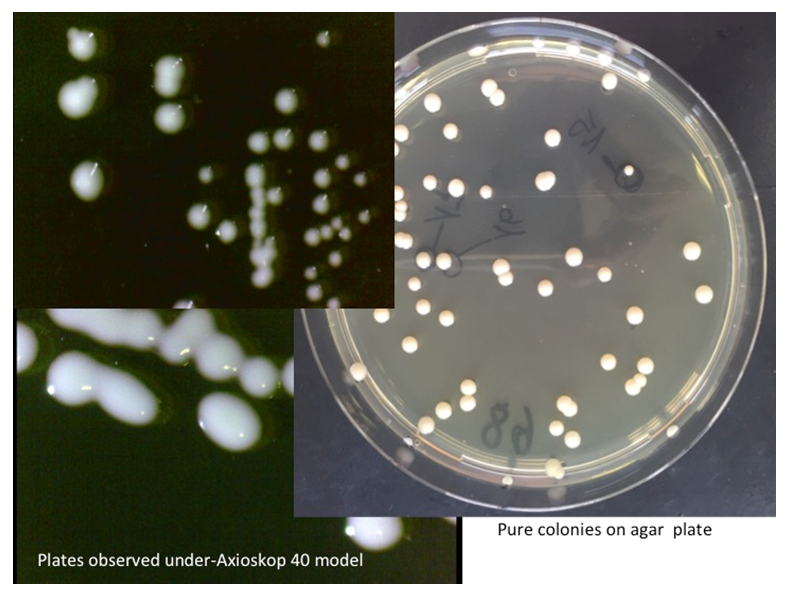
115108) incubated at 32oC aerobically. Lactic acid bacteria (LAB) were isolated on MRS agar (BIO-RAD, France), after incubation at 37°C for 48h under anaerobic conditions. Yeasts were isolated on Sabouraud Chloramphenicol agar medium (BIO-RAD, France) and plates were incubated at 30°C for 3-5 days as described by Njeru, et al. [7]. The colonies from different media were counted and expressed as cfu/ml of sample. Colonies were selected from the agar media for further characterization and identification. Randomly selected colonies were sub-cultured through streaking method onto respective media three times until pure colonies were achieved. The purity of colonies was controlled using microscope (Axioskop 40 model). Biochemical Tests for Colonies: Pure colonies were tested for their morphology and biochemical characteristics. Briefly the following tests were done using routine MBT established protocols and as described by Njeru, et al. [7].
- Morphological Identification –Microscopic
- API 50 CHL identification for LAB and API-System ID 32 for yeasts
- Gram Staining
- Catalase test
- Oxidase test
- KOH-test
- Bile salt tolerance at 1%, 2% and 3%,
- Low pH tolerance at pH 1, 2 and 3
- NaCl test (3.5% and 6.5%)
- Temperature test (15°C and 45°C)
DNA Isolation & 16S rDNA Sequencing
LAB Isolates were grown overnight at 37°C in MRS broth (Merck KGaA, Darmstadt, Germany). From this culture; 5ml was sampled from which total DNA was extracted following the protocol and purified using PCR clean kit according to manufacturer’s instructions. DNA was confirmed and visualized on agarose gel.
Primers & Sequencing
Primers (27F-1492R) used for specific amplification of bacterial 16S rRNA genes have been described previously [16] and 16S rRNA amplicons were sequenced by GATC- Biotech (Eurofins Genomics).
Multiple Sequence Alignment and Phylogeny Construction
16SrRNA sequences from the isolated LAB together with reference sequences of LAB obtained from National Center for Biotechnology (NCBI) GenBank were subjected to Multiple Sequence Alignment (MSA) using MUSCLE algorithm [17] in MEGA X [18]. Consequently, a neighbour joining tree phylogenetic tree from the MSA was constructed in MEGA
X using p-distance as the substitution model and bootstrap resampling as a test of phylogeny; number of bootstrap iterations were set at 1000 [19]. Phylogeny construction helped in identification and showing the relationships of Muratina LAB isolates.
Species Identification
The nucleotide sequences of the 16S rRNA genes from all LAB isolates were subjected to sequence similarity search in the GenBank data library of 16S ribosomal RNA sequences using nucleotide BLAST program (blastn) on the NCBI website http://www.ncbi.nlm.nih.gov/18 LAB isolates’ 16S rRNA were also subjected to sequence similarity search in other bacterial and Archeal 16SrRNA databases recommended for taxonomic identification of bacteria which include Ribosomal Database Project (RDP) [20] and SILVA RNA database [21]. Based on sequence similarity results from the three databases, it was possible to identify LAB bacteria from Muratina. 16S rRNA sequence similarity 98% has been accepted as a threshold for bacterial species demarcation of which Similarity Index/Percentage Identity of >98 indicates that the query sequence is of same bacterial species and below 98 % indicates that the query sequence of a different strain or species [22].
Results
pH, Titratable Acidity and Alcohol Content
Results for pH, Titratable acidity and percentage alcohol content of Muratina are shown in Table 1 below as 4.06 ±
0.12., 7.57± 0.45 and 19.66± 0.47 respectfully.
| Analysis | Mean |
|---|---|
| pH | 4.06±0.12 |
| Titratable acidity (g tartaric acid/100 mL) | 7.57±0.45 |
| Ethanol (mL/100 mL) | 19.66±0.47 |
Table 1: Biochemical characteristics of _Muratina_.
Microbiological Analysis
The results for Aerobic mesophiles, Lactic acid bacteria and Yeasts are shown in Table 2. Aerobic mesophiles ranges from 2.1-5.5 x 10³ CFU/mL, Lactic acid bacteria 3.2-7.7 x10⁴ CFU/mL and Yeasts ranged from 5.6-7.0x 10³ CFU/mL. The morphological characteristics of various isolates are tabulated in Table 3. The samples microbiological analysis shown a significant difference from the beginning when samples were fresh to the end at 96hours as shown in Table 2.
| Media/Analysis | Range | Sign, Diff |
|---|---|---|
| M17 (Aerobic Mesophiles) | 2.1-5.5 x 10³ CFU/mL | P=0.0380 |
| MRS (Lactic Acid Bacteria) | 3.2-7.7 x 10⁴ CFU/mL | P=0.0150 |
| Sabouraud Chloramphenicol agar (Yeasts) | 5.6-7.0 x 10³ CFU/mL | P=0.0247 |
Table 2: Microbiological analysis.
| Origin | Description | |
|---|---|---|
| 03190524 01 | MRS, *Muratina*, 10^-2 | Small, white, raised around |
| 03190524 02 | MRS, *Muratina*, 10^-2 | Small, white, raised around |
| 03190524 03 | MRS, *Muratina*, 10^-2 | Uneven, bulged, tall, greasy |
| 03190524 04 | MRS, *Muratina*, 10^-2 | Small, white, round, slightly dull |
| 03190524 05 | MRS, *Muratina*, 10^-3 | Small, white, round, slightly dull |
| 03190524 06 | MRS, *Muratina*, 10^-3 | Tiny, round, slightly white, transparent border |
| 03190524 07 | MRS, *Muratina*, 10^-3 | Small, white, raised around |
| 03190524 08 | MRS + 20% Glucose, *Muratina*, 10^-3 | Tiny, round, slightly white, transparent border |
| 03190524 09 | MRS + 20% Glucose, *Muratina*, 10^-3 | Small, white, raised around |
| 03190524 10 | MRS + 20% Glucose, *Muratina*, 10^-3 | Tiny, round, slightly white, transparent border |
| 03190524 11 | M17 + 20% Glucose, *Muratina*, 10^-2 | Large, slightly uneven, white bacilli |
| 03190524 12 | M17 + 20% Glucose, *Muratina*, 10^-2 | Large, uneven, white to transparent, shiny - bacilli |
| 03190524 13 | M17 + 20% Glucose, *Muratina*, 10^-2 | Large, white, uneven, wrinkled - bacilli |
| 03190524 14 | YGC, Muratina, 10^-2 | White, round, raised in the middle |
| 03190524 15 | YGC + 20% Glucose, *Muratina*, 10^-2 | White, round, raised in the middle |
| 03190524 16 | YGC + 20% Glucose, *Muratina*, 10^-2 | White, round, raised in the middle |
| 03190524 17 | YGC + 20% Glucose, *Muratina*, 10^-2 | White, round, raised in the middle |
| 03190524 18 | YGC + 20% Glucose, *Muratina*, 10^-2 | White, round, pointed in the middle + slightly yellowish beige, medium in size |
| 03190524 19 | YGC + 20% Glucose, *Muratina*, 10^-2 | Small, round, white, flat |
| 03190524 20 | YGC, *Muratina*, 10^-3 | Large, beige, round, center pointed |
Table 3: Colony Characteristics.
Observations
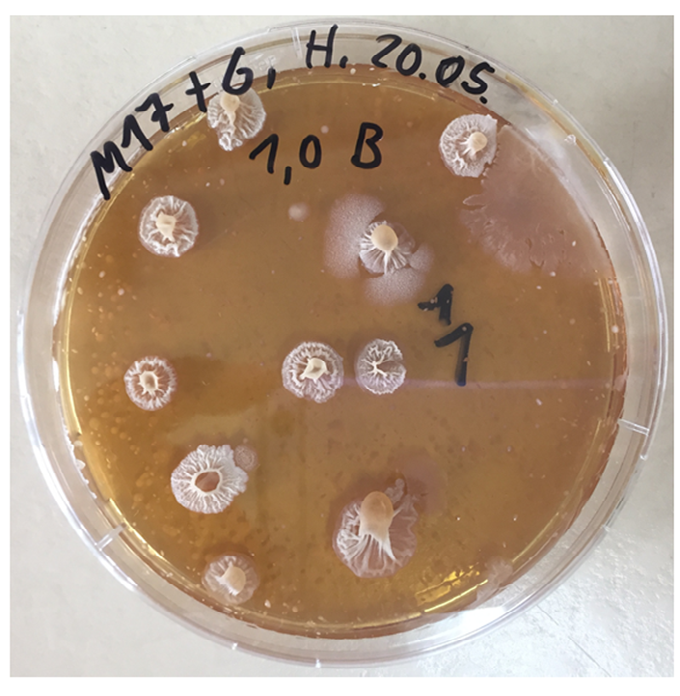
The colonies on the M17 agar were large and irregular with a blunt surface. Partly the colonies formed strong mucus that dripped down during incubation as shown in the Figure 1 below. The microscopic image showed that they are aerobic spore formers as shown in Figure 2 and 3 below.
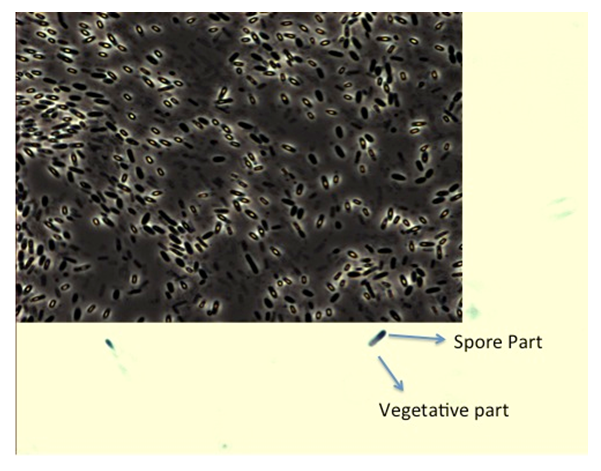
Pure colonies were isolated by streaking in relevant media and controlled using a phase contrast microscope until clean colonies were achieve as shown in the Figure 4 below.
Biochemical Characterization of LABs
Pure colonies from MRS agar were subjected to Gram staining, Oxidase test, Catalase test, growth in media adjusted to various pH, NaCl and Ox-bile concentrations and results recorded in the Table 4 below.
| Isolate No.** | Gram- Staining* | Oxidase | Catalase | Growth in MRS with additive | |||||||
|---|---|---|---|---|---|---|---|---|---|---|---|
| pH | NaCl (%) | Ox – bile (%) | |||||||||
| Gram- Staining | Oxidase - test | 3% H2O2 | 1 | 2 | 3 | 3.50% | 6.50% | 1% | 2% | 3% | |
| 1 | + | - | - | - | - | - | + | + | + | + | + |
| 3 | + | - | - | - | - | - | + | + | + | + | + |
| 6 | + | - | - | - | - | - | + | + | + | + | + |
| 8 | + | - | - | - | - | - | + | + | + | + | + |
| 10 | + | - | - | - | - | - | + | + | + | + | + |
| 11 | + | - | - | - | - | - | + | + | + | + | + |
| 13 | + | - | - | - | - | - | + | + | + | + | + |
Table 4: Biochemical Characterization of LAB. *KOH rapid test / Gram staining **Isolate numbers start with 03190524 as in Table 4
Identification of LAB
Based on sequence similarity search in GenBank, RDP and SILVA databases, LAB isolates were identified based on Similarity Indices which were above 98 % which was considered a perfect match. LAB bacteria identified belonged to four genera which include: Pediococcus, Lactobacillus, Lactococcus and Enterococcus. Phylogenetic tree constructed shows the relationship between the LAB isolates together with “the perfect match”/reference species (REF) retrieved from the online 16S rRNA databases. Phylogenetic tree constructed is shown in Figure 5 below while the species identified tabulated in Table 5.
| Isolates No. | Species Identity | Similarity Index | GenBank Accession No. of Reference species 16S rRNA |
|---|---|---|---|
| 77BF71 | Enterococcus durans | 99.73 | NR_113257.1 Enterococcus durans |
| 77BF60 | Lactococcus lactis | 99.01 | NR_113960.1 Lactococcus lactis |
| 77BF61 | Pediococcus pentosaceus | 99.32 | NR_042058.1 Pediococcus pentosaceus |
| 77BF63 | Lactococcus lactis | 99.03% | NR_113960.1 Lactococcus lactis |
| 77BF64 | Pediococcus pentosaceus | 98.11% | NR_042058.1 Pediococcus pentosaceus |
| 77BF65 | Pediococcus pentosaceus | 98.94% | NR_042058.1 Pediococcus pentosaceus |
| 77BF66 | Lactococcus lactis | 99.57% | NR_113960.1 Lactococcus lactis |
| 77BF67 | Pediococcus pentosaceus | 99.13% | NR_042058.1 Pediococcus pentosaceus |
| 77BF68 | Lactobacillus plantarum | 99.37% | NR_104573.1 Lactobacillus plantarum |
| 77BF69 | Lactococcus lactis | 98.89% | NR_113960.1 Lactobacillus lactis |
| 77BF70 | Lactobacillus fermentum | 98.60% | NR_113335.1Lactobacillus fermentum |
| 77BF72 | Pediococcus pentosaceus | 99.14% | NR_042058.1 Pediococcus pentosaceus |
| 77BF73 | Lactobacillus fermentum | 98.94% | NR_113335.1 Lactobacillus fermentum |
| 77BF74 | Pediococcus pentosaceus | 98.87% | NR_042058.1 Pediococcus pentosaceus |
| 77BF75 | Pediococcus pentosaceus | 98.96% | NR_042058.1 Pediococcus pentosaceus |
| 77BF78 | Lactococcus lactis | 98.86% | NR_116443.1 Lactococcus lactis |
| 77BF79 | Lactococcus lactis | 99.78% | NR_113960.1 Lactococcus lactis |
Table 5: LAB isolates Identified through Similarity search.
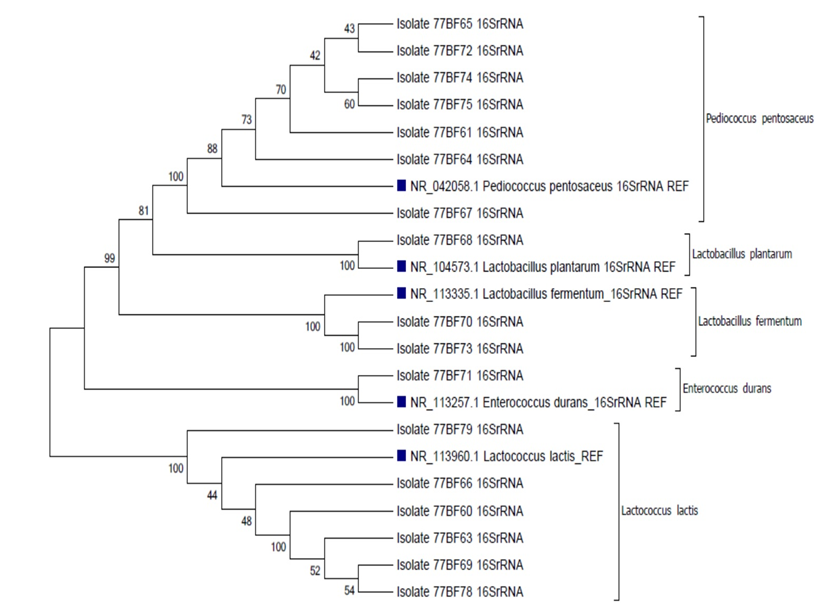
Based Similarity index, isolate 77BF61, 77BF64, 77BF65, 77BF77, 77BF72, 77BF64 and 77BF75 were identified as Pediococcus pentosaceus, 77BF68 was identified as Lactobacillus plantarum, 77BF70 and 77BF73 was identified as Lactobacillus fermentum, 77BF71 was identified as Enterococcus durans while 77BF60, 77BF63, 77BF66, 77BF69, 77BF78 and 77BF79 were identified as Lactococcus lactis. Phylogenetic tree also shows that based 16S rRNA, Pediococcus genus is more closely to Lactobacillus genus compared to Enterococcus and Lactococcus genus. From the tree, Pediococcus and Lactobacillus species form a monophyletic group which is well supported by a bootstrap value of 99.
Discussion & Conclusion
Production Process
The production process of Muratina has been briefly been described in Figure 1. The curing of Kigelia africana fruits that act as microbes immobilizer has been studied and documented before [23]. Through the curing process it is presumed that there is natural selection of microbes which tends towards a pure culture immobilized in the Kigelia africana fruits. This is indicated by the presence of few strains compared to other spontaneously fermented products studied before [7, 23]. In this study less than
10 strains were isolated with yeast strain being only Saccharomyces cereviseae. To maintain high temperatures of 30oC, the brewers either remove the gourd out in the sun when it’s sunny or they place the gourd near the fire place during the process of fermentation. The product is ready in 3-5 days after which it is filtered and consumed. The optimization results can be seen in the high alcohol content of almost 20%, which is comparable to commercial wines. This process is similar to other traditionally fermented wines studied before [1, 3, 24, 25, 26].
Chemical Characteristics
Muratina has an alcohol content of 19.66± 0.47 (mL/100ml) , pH of 4.06 ± 0.12 and titratable acidity of 7.57± 0.45 (g tartaric acid/100 mL). The alcoholic content of muratina seems higher than other traditional wines studied before while the pH and titratable acidity were comparable [1, 24, 25, 26, 27, 28, 29]. This suggests that the yeast cultures from Muratina could possess high alcohol content tolerance and hence very good candidates for starter cultures in wine manufacture.
Microbiological Quality
Microbial diversity in muratina was observed to be very low. Only 4 strains of LAB and only one strain of yeast (Saccharomyces cerevisiae) were isolated. This could be due to the immobilization of these strains in Kigelia africana fruit. Strains of Saccharomyces cerevisiae and Lactobacillus plantarum have been reported before as responsible for spontaneous fermentation of wines [4, 24, 25, 30]. The lack of diversity has been reported before by Gangl, et al. [3], this could be due to the fact that not many microorganisms are adapted to the high alcohol content in wines. With alcohol content of approximately 20%, it is expected that only strains with high osmotic potential can survive. Lactobacillus and Lactococcus has been isolated before in high alcohol content media [31]. It is able to survive higher alcohol content. The ability of yeasts to withstand harsh environment such as high osmotic pressure and high alcohol content makes them key fermenting microorganisms of most traditional brews and commercial ones too [32, 33, 34, 35]. The presence of Kigelia African fruits could the primary source of Lactobacillus spp. since it is predominantly found in plants as the name suggests. It has also been isolated in wines and suggested to play a role in malolactic fermentation in wine making [36, 37, 38]. Hence the presence of LAB strains is very consistent with earlier studies. LAB plays a major role in malolatic fermentation, a process that is responsible for aroma in wines [36, 37, 38, 39, 40]. The microbial balance in muratina could explain its popularity even if it is spontaneously fermented. It tends to have balanced characteristics of flavor/ aroma and alcohol content. The microbial balance between the yeasts and lactic acid bacteria could play a role in this. The strains isolated from Muratina also showed high resistance to bile salts which suggests that they could be good candidates as probiotics. The probiotic potential of these identified strains need be further investigated. Strains isolated from wine have been tested for probiotic potential before [25, 41, 42]. It would hence be worthwhile to carry on more studies and identify more suitable candidates from these muratina isolates.
Conclusion
The study has showed that microbial populations mi muratina shows a very low diversity towards few strains which seem to play specific roles in the muratina fermentation. In our study, Saccharomyces cerevisiae was the major fermenting microorganism in combination with LABs. This is a very unique natural selection where the yeast S. cerevisiae produces ethanol and LAB spp is responsible for malo-lactic fermentation. Our studies show that muratina has high alcohol content comparable to other commercial brands. This suggests that the yeast strains there in could be good candidates for starter culture development. We however recommend further studies with the isolated strains to test their performance individually and in combination. There is also need to have a microbiome study to capture all the microbes taking part in the fermentation of muratina.
This property indicates that isolates from honey wine could survive under gastric conditions and hence could be good candidates for probiotics. Presence of high numbers of Saccharomyces cerevisiae yeast strains indicated that the yeast was able to colonize and become dominant. The isolates could be purified and used as starter cultures since they produce and survive in high alcohol content. The role of Kigelia africana fruit in the fermentation of muratina also need to be investigated.
References
-
Kiribhaga S, Gomez MJS, Gopal S, Panjikkaran ST (2020) Biochemical changes of banana wine during storage. IJCS 8(1): 119-124.
-
Motlhanka K, Zhou N, Lebani K (2018) Microbial and Chemical Diversity of Traditional Non-Cereal Based Alcoholic Beverages of Sub-Saharan Africa. Beverages 4(2): 36.
-
Gangl H, Lopandic K, Tscheik G, Mandl S, Leitner G, et al. (2018) Fermentation characteristics of mead and wine generated by yeasts isolated from beehives of two Austrian regions. BioRxiv, pp: 300780.
-
Pereira AP, Oliveira JM, Mendes-Ferreira A, Estevinho LM, Mendes-Faia A (2017) 14-Mead and other fermented beverages. In Current Developments in Biotechnology and Bioengineering. Elsevier, pp: 407-434.
-
Roger DD, Daoudou B, James B, Etoa F (2014) Artisanal production of “kuri” an honey made alcoholic beverage from adamaoua cameroon. Global Journal of Scientific Researches GJSR 2(3): 65-70.
-
Lee M, Regu M, Seleshe S (2015) Uniqueness of Ethiopian traditional alcoholic beverage of plant origin, tella. J Ethn Foods 2(3): 110-114.
-
Njeru P, Rösch N, Ghadimi D, Geis A, Bockelmann W, et al. (2010) Identification and characterisation of lactobacilli isolated from Kimere, a spontaneously fermented pearl millet dough from Mbeere, Kenya (East Africa). Beneficial Microbes 1(3): 243-252.
-
Nwachukwu IN, Ibekwe VI, Nwabueze RN, Anyanwu BN, Ezeji U, et al. (2008) Production of high-ethanol- yielding Saccharomyces cerevisiae of palm wine origin by protoplast fusion. Life Science 5: 64-68.
-
Peyer LC, Zannini E, Arendt EK (2016) Lactic acid bacteria as sensory biomodulators for fermented cereal- based beverages. Trends in Food Science & Technology 54: 17-25.
-
Blandino A, Al-Aseeri ME, Pandiella SS, Cantero D, Webb C (2003) Cereal-based fermented foods and beverages. Food research international 36(6): 527-543.
-
Onwumah M, Okoronkwo CP, Effiong E (2019) Molecular characterization of yeast isolated from palm wine in Alakahia, Rivers State, Nigeria. World Scientific News 130: 297-304.
-
Iglesias A, Pascoal A, Choupina AB, Carvalho CA, Feás X, et al. (2014) Developments in the fermentation process and quality improvement strategies for mead production. Molecules 19(8): 12577-12590.
-
Nduti N, Macmillan A, Sheny S, Sumarah M, Njeru P, et al. (2016) Investigating probiotic yoghurt to reduce an aflatoxin B1 biomarker among school children in eastern Kenya; Preliminary study. International Dairy Journal 63(2016): 124-129.
-
Gabriel OA, Olubunmi A (2009) Comprehensive scientific demystification of Kigelia africana: A review. African Journal of Pure and Applied Chemistry 3(9): 158-64.
-
Biri HB, Pan OG, Yahaya MM, Ezeribe A (2015) Wine from water melon juice using palm wine yeast isolate. International Journal of Research in Engineering and Science 3(1): 35-40.
-
Frank JA, Reich CI, Sharma S, Weisbaum JS, Wilson BA, et al. (2008) Critical evaluation of two primers commonly used for amplification of bacterial 16S rRNA genes. Appl Environ Microbiol 74(8): 2461-70.
-
Edgar RC (2004) MUSCLE: multiple sequence alignment with high accuracy and high throughput. Nucleic acids research 32(5): 1792-1797.
-
Kumar S, Stecher G, Li M, Knyaz C, Tamura K (2018) MEGA X: molecular evolutionary genetics analysis across computing platforms. Molecular biology and evolution 35(6): 1547-1549.
-
Hillis DM, Heath TA, John KS (2005) Analysis and visualization of tree space. Systematic biology 54(3): 471-482.
-
Cardenas E, Cole JR, Tiedje JM, Park J (2009) Microbial community analysis using RDP II (Ribosomal Database Project II): methods, tools and new advances. Environmental Engineering Research 14(1): 3-9.
-
Yilmaz P, Parfrey LW, Yarza P, Gerken J, Pruesse E, et al. (2014) The SILVA and “all-species living tree project (LTP)” taxonomic frameworks. Nucleic acids research 42(D1): D643-D648.
-
Kim M, Oh HS, Park SC, Chun J (2014) Towards a taxonomic coherence between average nucleotide identity and 16S rRNA gene sequence similarity for species demarcation of prokaryotes. International journal of systematic and evolutionary microbiology 64(2): 346-351.
-
Wahome JN (2003) Microbiological and chemical characterisation of the traditional manufacture of _Muratina_ wine (Doctoral dissertation, University of Nairobi).
-
Khatab CO, Bou N, Faye PG, Ayessou NC, Mathieu G, et al. (2018) Traditional Mead “Bessoudioury” from Senegal: Process and Characterization. Food and Nutrition Sciences 9(12): 10.
-
Omole U, Oranusi S (2019) Wine production from Hibiscus sabdariffa calyxes using probiotics starter cultures. In IOP Conference Series: Earth and Environmental Science. IOP Publishing 331(1): 012066.
-
Shittu AA, Orukotan AA, Mohammed SSD (2019) Comparative Studies of Rice Wine Production From Synergistic And Individual Activities of Lactic Acid Bacteria and Yeast Isolated from Fermented Foods. Science World Journal 14(2): 93-100.
-
Nikhanj P, Kocher GS, Boora RS (2017) Fermentative production of guava wine from pectinase treated and untreated juice of ‘punjab pink’cultivar of Psidium guajava L. Agric Res J 54(2): 244-247.
-
Joshi VK, Panesar PS, Rana VS, Kaur S (2017) Science and Technology of Fruit Wines: An Overview. In: Kosseva MR, et al. (Eds.), Science and Technology of Fruit Wine Production, pp: 1-72.
-
Anil SK, Praveen G, Praveen J (2020) Study on Optimization of Must and Fermentation Conditions for Production of Jack Fruit (Artocarpus heterophyllus L.) Wine. International Journal of Current Microbiology and Applied Sciences 9(6): 438-447.
-
Jespersen L (2003) Occurrence and taxonomic characteristics of strains of Saccharomyces cerevisiae predominant in African indigenous fermented foods and beverages. FEMS yeast research 3(2): 191-200.
-
Bahiru B, Mehari T, Ashenafi M (2006) Yeast and lactic acid flora of tej, an indigenous Ethiopian honey wine: variations within and between production units. Food microbiology 23(3): 277-282.
-
Bi CYT, Amoikon TL, Kouakou CA, Noémie J, Lucas M, et al. (2019) Genetic diversity and population structure of Saccharomyces cerevisiae strains isolated from traditional alcoholic beverages of Côte d’Ivoire. International journal of food microbiology 297: 1-10.
-
Jolly NP, Varela C, Pretorius IS (2014) Not your ordinary yeast: non-Saccharomyces yeasts in wine production uncovered. FEMS yeast research 14(2): 215-237.
-
Snoek T, Verstrepen KJ, Voordeckers K (2016) How do yeast cells become tolerant to high ethanol concentrations?. Current genetics 62(3): 475-480.
-
Stanley D, Fraser S, Chambers PJ, Rogers P, Stanley GA (2010) Generation and characterisation of stable ethanol-tolerant mutants of Saccharomyces cerevisiae. Journal of industrial microbiology & biotechnology 37(2): 139-149.
-
Brizuela N, Tymczyszyn EE, Semorile LC, La Hens DV, Delfederico L, et al. (2019) Lactobacillus plantarum as a malolactic starter culture in winemaking: A new (old) player?. Electronic Journal of Biotechnology 38: 10-18.
-
Gil-Sánchez I, Suáldea BB, Moreno-Arribas MV (2019) Malolactic Fermentation. ed Wine Technology, Academic Press, pp: 85-98.
-
Lombardi SJ, Pannella G, Iorizzo M, Testa B, Succi M, et al. (2020) Inoculum Strategies and Performances of Malolactic Starter Lactobacillus plantarum M10: Impact on Chemical and Sensorial Characteristics of Fiano Wine. Microorganisms 8(4): 516.
-
Krieger-Weber S, Heras JM, Suarez C (2020) Lactobacillus plantarum, a New Biological Tool to Control Malolactic Fermentation: A Review and an Outlook. Beverages 6(2): 23.
-
Wade ME, Strickland MT, Osborne JP, Edwards CG (2019) Role of Pediococcus in winemaking. Australian journal of grape and wine research 25(1): 7-24.
-
Borah T, Gogoi B, Khataniar A, Gogoi M, Das A, et al. (2019) Probiotic characterization of indigenous Bacillus velezensis strain DU14 isolated from Apong, a traditionally fermented rice beer of Assam. Biocatalysis and Agricultural Biotechnology 18: 101008.
-
Sampaolesi S, Gamba RR, Antoni GLD, Peláez ÁML (2019) Potentiality of yeasts obtained as beer fermentation residue to be used as probiotics. LWT 108251.
- The Role of Podocyte Apoptosis and the Involvement of SIRT1 in Diabetic Nephropathy
- Dealcoholization of Beer by Osmotic Distillation for the Beverage Industry
- Biopolymer-Based Edible Packaging- Biomaterials, Methods, and Applications in Food Industry: An Updated Review
- Influence of Bioprocessing Methods on 'China Rice' (Gawal R1), and Soyabean Supplementation on the Quality of Complementary Food
- Cassava (Manihot esculenta) Varietal Growth, Yield and Cyanide Content Performance in Three Sites in the South- Eastern Semi Arid Regions of Kenya
- Food Waste Treatment, Recycling, Management and Production of Value-Products-An Update on Methodologies and Current Trends