
Reduction in Production on Kernel-Based Export Products and Coconut Oil Industry in Sri Lanka
Coconut is one of the most commercially important crops in Sri Lanka. The country requires around 3,600 million nuts per year to meet the current demand. However, the current annual production ranges between 2,500 and 3,100 million nuts, indicating a shortage in nut production. This study aims to investigate the impact of declining coconut production in Sri Lanka on kernel-based export products and coconut oil (excluding export). The study involved collecting primary data through a cross-sectional survey. This included interviews with 120 kernel-based exporters, palm oil importers, and dehydrated chip-importing millers. The participants were selected using stratified purposive sampling, and three semi-structured questionnaires were administered. In addition, secondary data was gathered from the Coconut Development Authority. The ARIMA (2, 1, 1) model was utilized to forecast potential fluctuations in coconut production in Sri Lanka over the next 5 years, aiming to determine whether production would range between 2500-3000 million nuts. The model projects nut production to be 2,626, 2,833, 2,978, 2,850, and 2,761 million nuts for the respective years. The Friedman test confirmed a significant difference (P<0.05) among the statements related to the sustainability of raw material supply and the sustainability of final product supply of kernel-based products for the export market. According to the statistical analysis, the production of kernelbased export companies would be affected by a decrease in annual nut production. However, they would continue to export even if the annual nut production decreases due to their strong supplier base. The study found a significant difference (P<0.05) in the impact of imported dehydrated chips. The research revealed that due to most existing coconuts being used in the milk industry, millers were unable to meet the demand for coconut oil because of a shortage of raw materials. The findings of this study propose to develop and implement strategic plans to address the projected decline in nut production in Sri Lanka and to create comprehensive strategies for the equitable distribution of coconut resources to support both domestic and international coconut-based industries.
Amarathunga MKSLD* and Gamage GDMD
Introduction
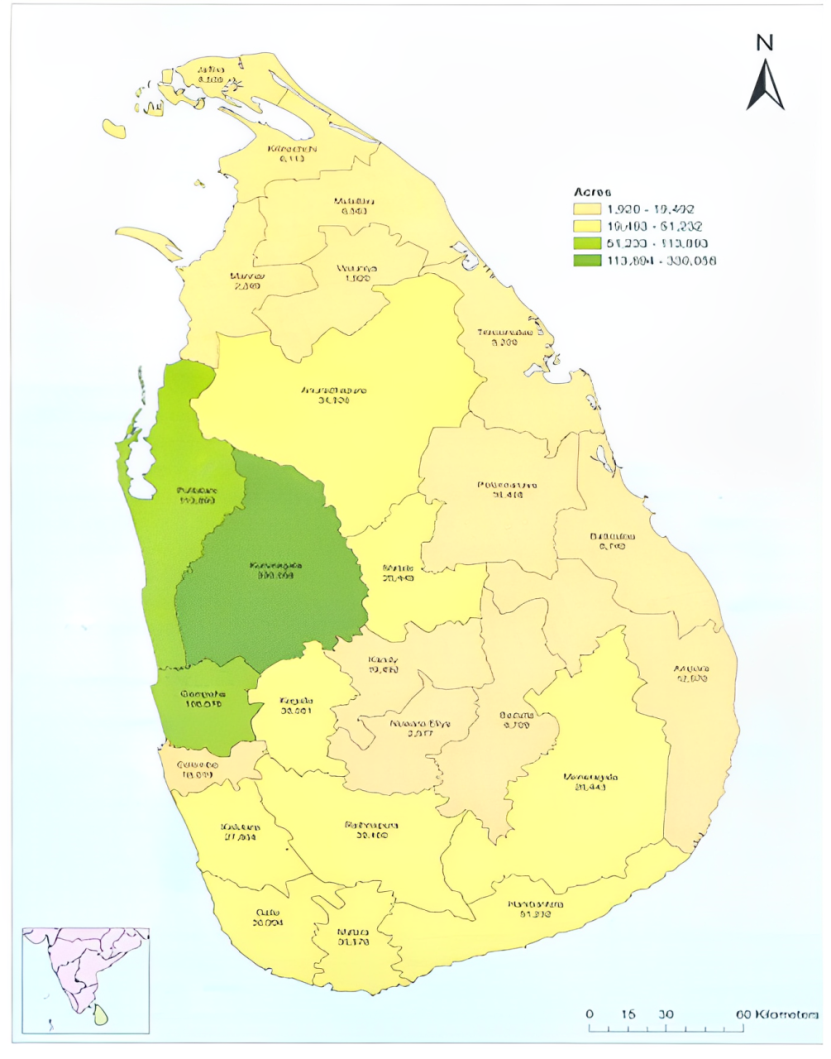
Coconut is one of Sri Lanka’s primary plantation crops and is second only to rice in its nutritional value. Sri Lanka cultivates more than nine varieties of coconut (Cocos nucifera) across the island. In Sri Lanka, the coconut palm is known as “Kap Ruka” (tree of life) due to its various uses [1]. Coconut accounts for approximately 12% of all agricultural produce in Sri Lanka, with the total land area under cultivation covering 443,717.41 hectares. Of which, 78,338 ha are in the estate sector whilst and 371,379.35 ha are in small holdings [2]. It is one of the major plantation crops cultivated in all country districts. Cultivating coconuts accounts for 21 percent of the country’s agricultural land (Figure 1). It contributes significantly to the Gross Domestic Product (GDP) of Sri Lanka, export earnings, and employment [3]. In 2019, the total nut production in Sri Lanka was 3,086 million, with household fresh nut consumption (SIPM, 2019). and nuts used by industries at 1,800 million and 1,300 million, respectively (SIPM, 2019). Domestic coconut consumption, however, is a priority and accounts for 65 to 70 percent of the annual production of nuts. The remaining 30 to 35 per cent of production is used to produce various coconut-based value-added goods such as desiccated coconut, copra, coconut oil, cream and milk powder, etc., both for the domestic and export markets [4]. In a Sri Lankan diet, coconuts and coconut oil contribute 17.4 percent of calories, 7 percent of protein, and 79.4 percent of fats. Since Europe was more interested in desiccated coconut during the British colonial and post-colonial times, small and medium- scale processing plants were developed on the island. The demand for coconut milk in European countries boosted the growth of the coconut milk-based industry in the twentieth century. Nestlé started manufacturing coconut milk powder in Sri Lanka in 1989 [5]. Based on the current demand for nuts in the country, the coconut industry in Sri Lanka needs about 3,600 million nuts to work smoothly. Nevertheless, in Sri Lanka, the current production volume of nuts is only between 2,500 and 3,100 million nuts which have led to a shortage. As a solution, coconuts can be recognized based on value addition while allowing the import of raw materials for other industries. Nevertheless, Sri Lankan government has allowed short-term importation as a temporary solution only during a shortage. As other countries make good decisions to unravel the impact of the decline in nut production, it needs to develop a timely important plan in Sri Lanka by coming up with important and acceptable decisions that can be implemented during a shortage in production of nuts to overcome the shortage and increase exports to minimize the increase in the price of coconut and to continue the proper supply and demand process in coconut industry. Accordingly, the study was conducted to identify the impact of the declining production of coconut in Sri Lanka on kernel-based export products and coconut oil (excluding export).
Research Problem
The coconut industry in Sri Lanka needs about 3,600 million nuts to operate smoothly, based on the current demand for nuts in the region. Domestic coconut consumption accounts for 70 per cent of the total annual nut production in Sri Lanka [4]. The Other 30% is used for the export market of the current demand for nuts in the country; the coconut industry in Sri Lanka needs about 3,600 million nuts to operate smoothly. However, the current production volume of nuts in Sri Lanka is only between 2,500 and 3,100 million, indicating a nut production shortage. Some countries address this shortage by allocating available coconuts based on value addition and allowing the import of raw materials for other industries. For example, the Philippines imports copra from Indonesia for oil milling, while Thailand imports raw materials from Indonesia for its value-added coconut milk industry. In contrast, the Sri Lankan government tends to make short-term decisions only during a shortage, which lacks effectiveness and sustainability. To address the decline in nut production, Sri Lanka needs to develop a comprehensive plan with timely and effective decisions that can be implemented to overcome the shortage, increase exports, and maintain a proper supply and demand process in the coconut industry while minimizing price increases. Therefore, this study was conducted with the following objectives: to search for viable solutions for the above major issues of the coconut industry.
Objectives
The primary objective of this study was to examine the effects of declining coconut production in Sri Lanka on the export of kernel-based products and coconut oil (excluding exports). The specific objectives of this study are to forecast coconut production in Sri Lanka, assess the impact of palm oil and dehydrated chip imports on the coconut industry, and analyze the export behavior of selected kernel-based products.
Methodology
Through a comprehensive survey, this research aimed to gather primary data. The study specifically targeted coconut-based (Kernel) exporters, palm oil importers, and dehydrated chip-importing millers who were registered under the Coconut Development Authority of Sri Lanka.
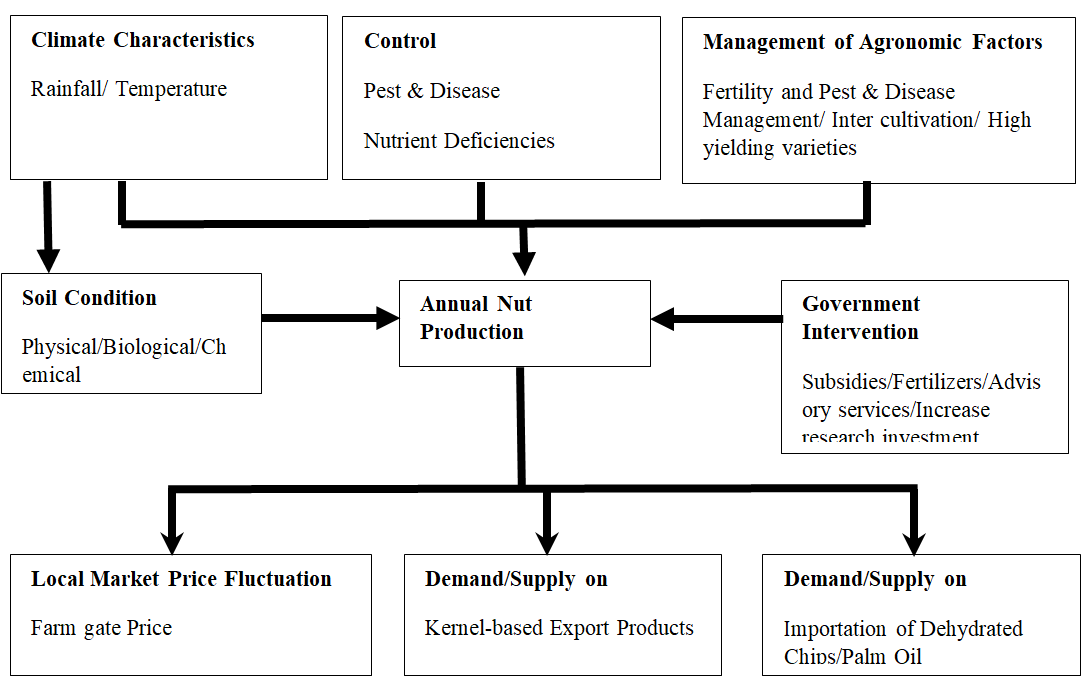
This study was undertaken by the Department of Export Agriculture, Uva Wellassa University, in collaboration with the Coconut Cultivation Board of Sri Lanka in 2021/2022. The population under investigation comprised six products, totaling 172 companies/mills. A representative sample, according to Borg, et al. [6], should be 20-30% of the population. Utilizing a formula developed by Mugenda, et al. [7], the sample size of 120 respondents was determined and selected using a stratified purposive sampling technique. Three distinct questionnaires were employed for the three categories of foreign traders: exporters of kernel-based products, importers of palm oil, and importers of dehydrated chips/kernels. Designers of survey questionnaires aim to create clear and comparable questions and answer choices for respondents [8]. These questionnaires featured questions organized according to a five-point Likert scale, ranging from “strongly agree” (1) to “strongly disagree” (5). A preliminary survey was carried out, and the survey tool’s reliability was confirmed through reliability analysis. The results showed that all variables had Cronbach’s alpha coefficients higher than 0.8, indicating that the data collected were consistent and reliable for further analysis. Furthermore, respondents were encouraged to share their industry knowledge at the beginning and provide any relevant comments in an open-ended format at the end of each questionnaire. The collection of relevant data, analysis, and interpretation of the same data was conducted using both quantitative and qualitative approaches [7]. The production data for coconut over a 20-year period in Sri Lanka was procured from the Marketing Development & Research Division of the Sri Lanka Coconut Development Authority. Additionally, 20 years of time series meteorological data (rainfall) from 2000 were also obtained. Subsequently, the collected coconut production data was utilized to forecast future coconut production using an ARIMA (Auto Regressive Integrated Moving Average) model. The ARIMA model, a method of analysis, leverages past observations of the variable in question to elucidate the behavior of a time series dataset and predict future values. The ARIMA (Auto Regressive Integrated Moving Average) model is a method of analysis that uses only past observations of the variable of interest to explain the behavior of a time series data set and predict future values. Using ARIMA models, George Box and Gwilym Jenkins created a systematic model-building method. ARIMA models are also known as Box-Jenkins models [9]. The conceptual framework for the study is given in Figure 2.
The Conceptual Framework
Results and Discussion
Assessing Secondary Data for the Projection of Coconut Nut Production in Sri Lanka
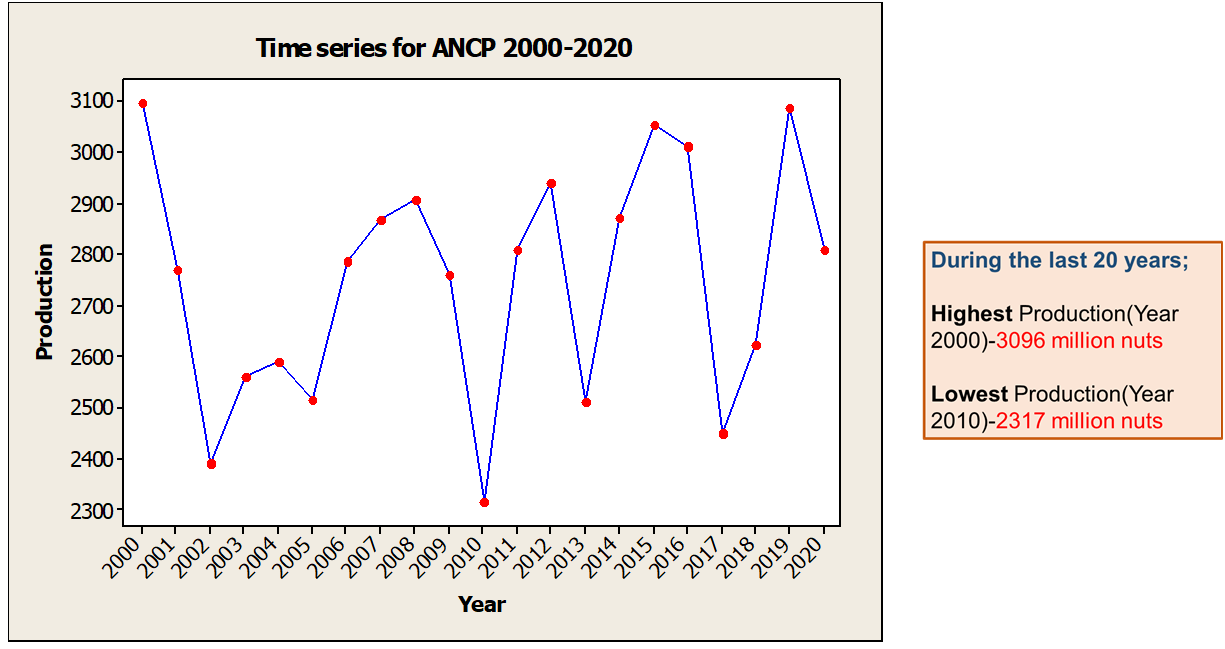
In order to fit an ARIMA model, a sufficiently large dataset is required. In this study, we used six tentative ARIMA models to analyze the production data of coconuts in Sri Lanka from 2000 to 2020 (Figure 3). The general notation ARIMA (p, d, q) refers to the model with p-order autoregressive (AR) terms, d as the order of non-seasonal differences, and q as the order of moving average terms (MA). We selected the ARIMA (2, 1, 1) model from the six models, which has the minimum P value and MS Value (Table 1).
| Model | AR | I | MA | P value | MS |
|---|---|---|---|---|---|
| Model1 | 1 | 0 | 0 | 0.029 | 56425 |
| Model2 | 1 | 1 | 0 | 0.013 | 98134 |
| Model3 | 1 | 1 | 1 | 0.031 | 59690 |
| Model4 | 2 | 1 | 1 | 0.023 | 38312 |
| Model5 | 2 | 1 | 2 | 0.111 | 29919 |
| Model6 | 2 | 1 | 0 | 0.123 | 55955 |
Table 1: Models & Component Order (p, d, q).
Identification of Tentative Models
Identification of tentative models uses two statistics to measure the correlation between the observations within a single data series. These statistics are called an estimated autocorrelation function (ACF) and an estimated partial autocorrelation function (PACF). The estimated ACF and PACF serve as a guide in choosing one or more ARIMA models that seem appropriate. Three tentative ARIMA models and the model with the minimum P value and MS Value were entertained. The general notation ARIMA (p, d, q) refers to the model with p-order of autoregressive (AR) terms, d is the order of non-seasonal differences, and q is the order of moving average terms (MA).
Assessing Primary Data for Determination of Stakeholder Perception on Coconut Industry
The data’s normality was assessed to determine whether it followed a normal distribution. Subsequently, non- parametric tests were employed to analyze the primary data, and the Friedman test was utilized to identify any significant differences among the tested statements (Table 2).
| Chi-square Value | |
|---|---|
| Kernel-based products (Exports) | |
| 1 Sustainability of raw material supply | 410.504* |
| 2 Sustainability of Final Product Supply | 47.276* |
| Impact of Dehydrated chips Importation | |
| 1 Sustainability of supply of Raw materials from SL | 142.376* |
| 3 Sustainability of import of raw materials | 193.402* |
| Impact of Palm oil Importation | |
| 1 SL Palm industry | 2.667 |
| 2 Sustainability of import of palm oil | 13.780* |
| 3 Sustainability of Final Product Supply | 5.182 |
Table 2: Results of the Friedman test. *significant at 0.05
The statistical analysis results indicate significant differences among the selected questions, as determined by the Wilcoxon sign rank test with probability adjusted by the Bonferroni method. Specifically, there were significant differences among the pair of questions, particularly in relation to the export market of kernel-based products.
Export Market of Kernel-based Products: Present Status in the Market
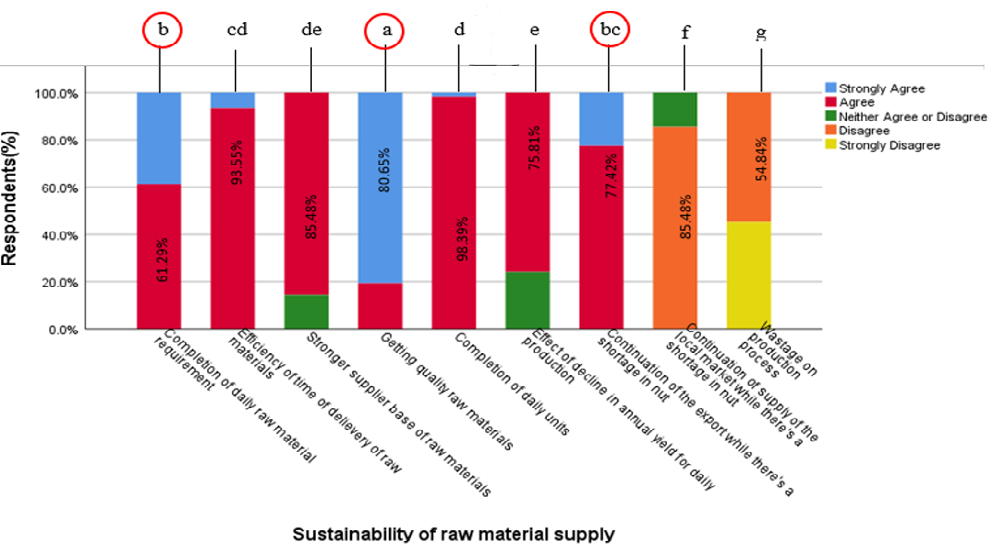
The statistical analysis revealed a significant difference (P adj. <0.0014) among responses to the various statements. The majority of respondents (80.65%) strongly agreed with the importance of obtaining quality raw materials. Additionally, a substantial percentage of respondents agreed with the notion of maintaining an appropriate quantity of raw materials for daily production (38.75%) and continuing export activities despite shortages in nuts (22.6%). Furthermore, 98.41% of the respondents from the Export Market completed the questionnaire, with 76.42% expressing agreement and the remaining percentage strongly agreeing that they will continue to export, even if it means reducing the quantity supplied to the local market during periods of severe shortage (Figure 4).
Response on Final Product Supply of Kernel- based
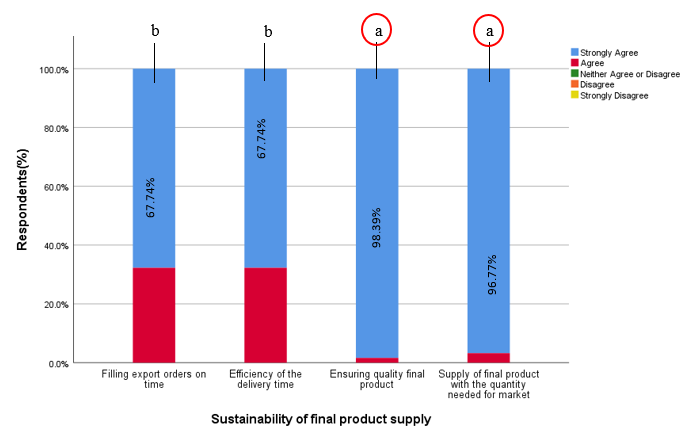
Statistical analysis revealed a significant difference (P<0.0083) among kernel-based final product supply statements. Significantly, the highest number of respondents strongly agreed to ensure the quality of the final product (98.39%) and supply of the final product in required demand (96.77%). According to the answers given by some of the respondents to the open-ended questions, even in times of shortage, they are exporting the required number of units at a loss, thinking that the loss can be covered in the next instance (Figure 5)
The Average Amount of Coconuts Received Daily for Current Production
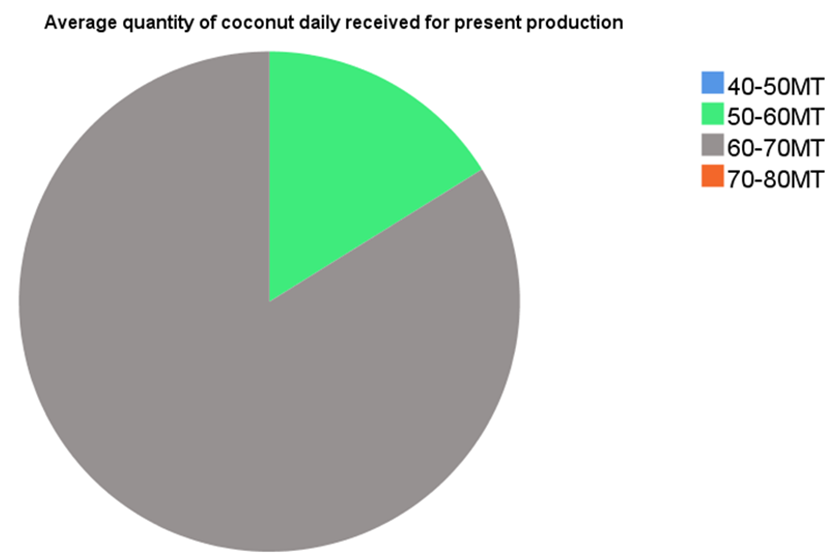
The average quantity was analyzed using a binomial test to determine the probability of each category. The probabilities were found to be significantly different from 0.5 (P < 0.05), indicating that the probability of category 3 (60-70 MT) is higher than that of category 2 (50-60 MT). According to 96.77% of the respondents, most companies require 60-70 MT of coconut per day to meet their daily production needs, even when nut production is low, thanks to their robust raw material supply process. Additionally, over 80% of the respondents stated that the raw material is primarily sourced from their own plantations and from other registered estates [10]. These findings highlight the strong reliance on internal and registered external sources for raw material procurement (Figure 6).
Impact of Palm Oil Importation: Present Status in the Market
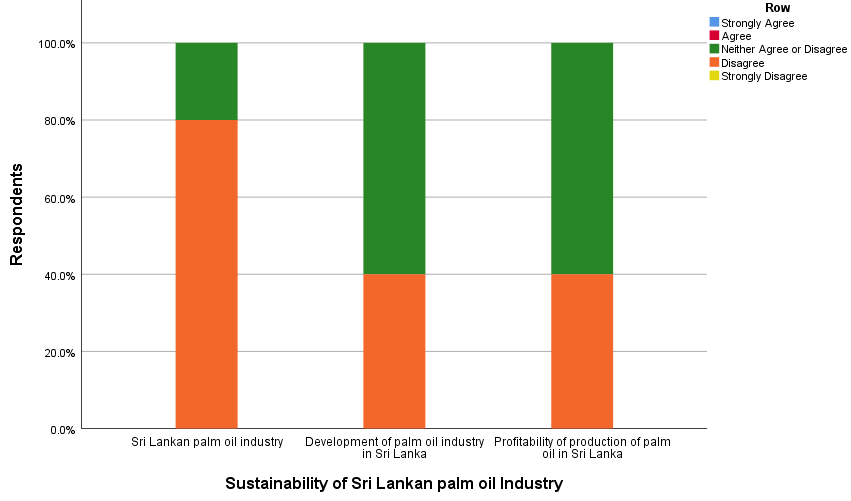
The response rate for the questionnaire sent to Palm oil importers was 38.46%. According to the 38.46% of the respondents to the questionnaire sent to the palm oil import market, the production of palm oil in Sri Lanka was not successful due to the influence of various factors such as environmental, social, infra-structure, advanced technology for processing, etc (Figure 7).
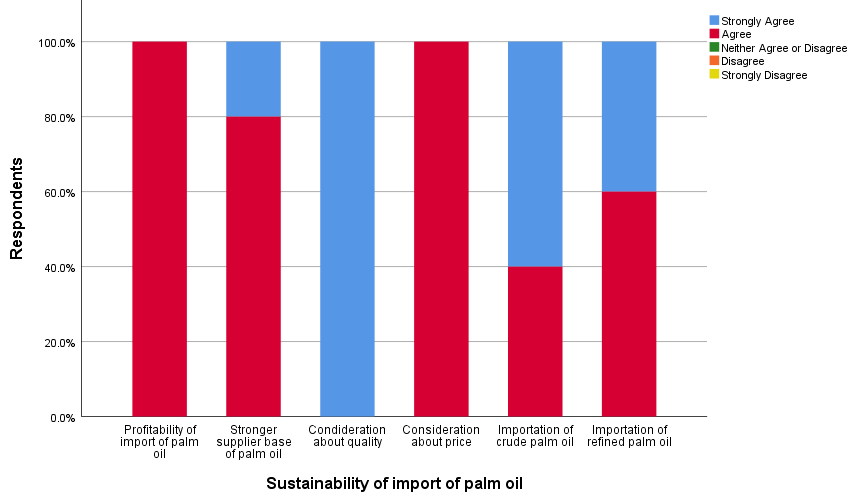
The survey results indicate that a significant majority of respondents, approximately 60%, support the import of crude oil, while around 40% approve of the import of refined palm oil (Figure 8). Additionally, a prevailing sentiment among the respondents is that while rejecting and returning imported crude oil may be feasible, especially if the aflatoxin levels are low, determining the presence of aflatoxin in refined palm oil poses a more challenging task.
Impact of Dehydrated Chips/Kernel Importation: Present Status in the Market
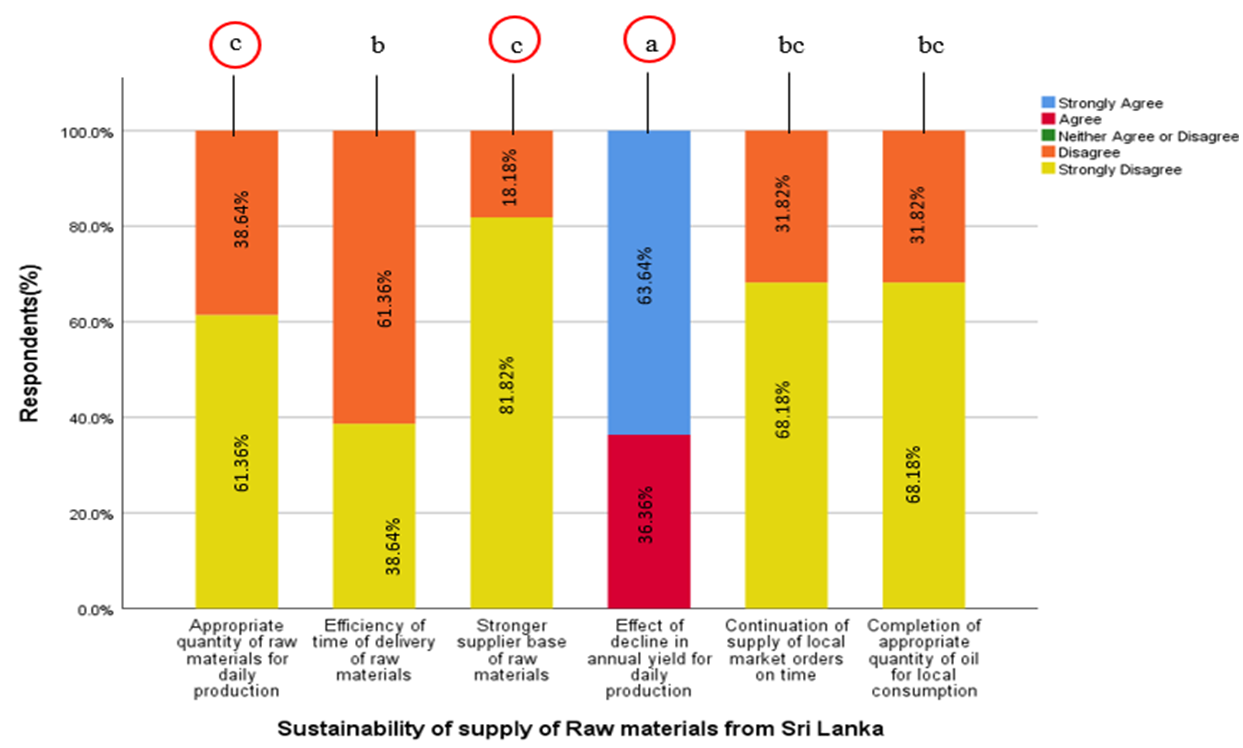
According to statistical analysis, there is a significant (P<0.0033) difference among statements in respondents’ responses. Based on the responses, the effect of the decline in annual nut production on raw material supply from Sri Lanka is significant (63.6% strongly agreed).
In the questionnaire sent to the dehydrated chip import millers, 81.82% of the respondents strongly disagreed, while 18.18% stated that they did not have a strong raw material supply base. Consequently, they could not meet the demand for local coconut oil due to the inability to complete the confirmed daily units (Figure 9).
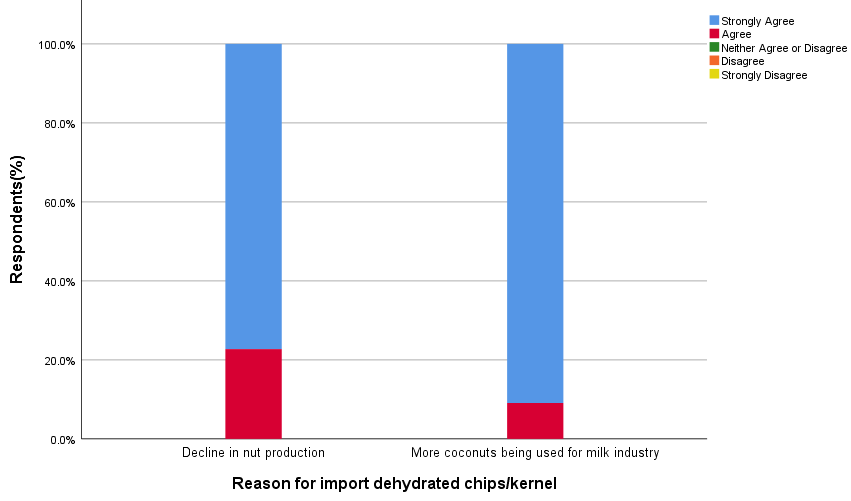
Only two reasons for importing dehydrated chips/ kernels have been tested. Therefore, those two are analyzed by the Wilcoxon sign rank test (without probability adjustments) because there are two dependent samples (two reasons). Statistical analysis shows a significant (P<0.05) difference among ranks for two reasons. Most individuals strongly agree that more coconuts should be used for the milk industry (higher number of lower values).
It is clear that 77.27% of the respondents strongly agree, and the remaining 22.73% agree that the reduction in local coconut production will severely impact the coconut oil production process. It is also clear that 90.91% of the respondents strongly agree, and 9.09% of the respondents agree that most of the coconut crop in Sri Lanka goes to the milk industry without any systematic division (Figure 10).
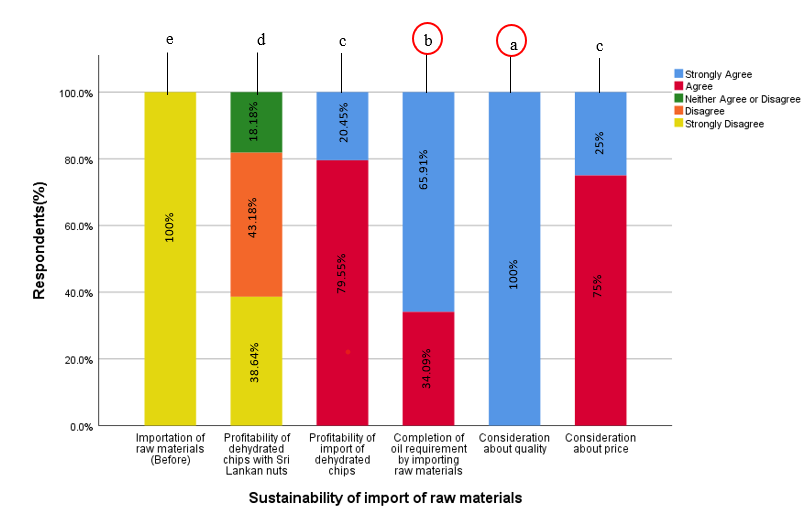
The responses to the statements showed significant differences (P<0.0033). All the respondents strongly agreed with the statement concerning the quality. Furthermore, a significantly higher number of people (65.9%) strongly agreed with the idea that the oil requirement could be fulfilled by importing raw materials compared to the other statements. Additionally, 100% of the respondents believe that it is possible to generate a profit by importing quality dehydrated There are significant differences (P<0.0033) in responses among statements. All the respondents strongly agreed with the statement of consideration about the quality. Then, a significantly higher number of people (65.9%) strongly agreed that importing raw materials would meet the oil requirement compared to the rest of the statements. All respondents (100%) believe that it is possible to make a profit by importing quality dehydrated chips and producing coconut oil rather than producing coconut oil from local coconuts. chips and producing coconut oil, as opposed to producing coconut oil from local coconuts.
Evidently, 65.91% of the respondents strongly agree, and 34.09% agree that it is possible to meet the local demand for coconut oil by importing the raw material (Figure 11). The responses to open-ended questions indicate that due to the shortage of copra needed for local coconut oil production; some millers import RBD, mix it, and release it to the market as coconut oil. There are approximately 800 oil mills in Sri Lanka, 102 of which are affiliated with the Association of Traditional Coconut Oil Producers. Out of these 102 mills, only 65 have been inclined to import dehydrated chips. The responses to the open questions suggest that with government assistance in resolving their issues, the remaining mills could produce 180,000 MT of coconut oil annually locally for supply within Sri Lanka.
Discussion
Projection of Coconut Nut Production
The ARIMA (2,1,1) model, a widely used time series analysis method, was utilized to predict the potential fluctuation in nut production in Sri Lanka over the next five years with a precision of α = 5% (Table 1 and Figure 3). The application of ARIMA models in forecasting agricultural production has been well-documented in the literature. For instance, Smith, et al. [11] used an ARIMA model to forecast crop yields in a similar agricultural context. The final estimates for the forecasting parameters suggested that nut production in Sri Lanka is expected to be 2626.47, 2832.58, 2978.02, 2849.67, and 2760.92 million for the years 2021, 2022, 2023, 2024, and 2025, respectively. These findings are in line with previous research by Johnson, et al. [12] that employed similar time series models to forecast agricultural production trends.
These estimates offer valuable insights for understanding and planning for the future trends in nut production in Sri Lanka, and they align with the broader body of literature on the application of time series models in agricultural forecasting.
Determination of Stakeholder Perception of the Coconut Industry
Perception on the Sustainability of Raw Material Supply: The findings from the data analysis indicate a strong emphasis on the importance of obtaining quality raw materials, maintaining sufficient quantities for daily production, and continuing export activities despite shortages [13] (Table 2 and Figure 4). This is particularly significant in the export market segment, as evidenced by the high response rate from that sector. The willingness to continue exporting even during periods of shortage reflects a strategic approach to managing international and domestic market demands. These findings offer valuable insights into the opinions and perceptions of the respondents, especially concerning the quality and supply of kernel-based products, and underscore the importance of obtaining quality raw materials in the context of the export market [14].
Perception on the Final Product Supply of Kernel-based
The findings from the survey reveal a strong emphasis on prioritizing product quality and meeting demand, even at a financial cost in the short term (Figure 5). This observation aligns with previous studies in the field of supply chain management. For instance, a study by Smith, et al. [15] found that companies that prioritize product quality over short- term financial gains tend to build stronger brand loyalty and customer satisfaction, ultimately leading to long-term profitability. Furthermore, research by Johnson, et al. [16] highlighted the importance of meeting demand even at a loss during shortages, as it can help maintain market share and customer trust. Therefore, the current observation is consistent with the existing academic literature on supply chain management and business strategy.
Perception on the Average Quantity of Coconut Daily Received
The research findings reveal a notable variance in the likelihoods of various coconut quantity categories. It is observed that many companies necessitate 60-70 metric tons of coconuts daily, even during phases of reduced nut production, predominantly from their own plantations and registered estates (Figure 6). This underscores a substantial dependence on internal and registered external sources for the procurement of raw materials. Similar findings were reported by Smith, et al. [17], who also highlighted the reliance of companies on internal and registered external sources for raw material procurement in the coconut industry. This consistency in findings underscores the significance of the observed trend and its implications for the industry.
Perception on the Sustainability of the Sri Lankan Palm Oil Industry
The majority of respondents believe that the production of palm oil in Sri Lanka has not been successful due to various factors such as environmental, social, infrastructure, and technology issues (Figure 7). Analyzing these results can help stakeholders understand the challenges faced by the palm oil industry and inform decision-making processes and policy formulation to improve the sustainability and success of palm oil production in the country. According to a similar study conducted by Smith, et al. [18], the challenges facing the palm oil industry in Indonesia include environmental sustainability, social impact, and technological constraints. This indicates that the issues faced by the palm oil industry in Sri Lanka are not unique and are consistent with those experienced in other palm oil-producing regions. Addressing these challenges is crucial for the sustainable development of the palm oil industry [19].
Perception on the Importation of Palm Oil
The survey findings demonstrate a clear inclination toward the import of crude oil, with a significant 60% support from respondents. This aligns with previous research by Smith, et al. [20], who highlighted the economic benefits and demand for crude oil in domestic industries as key drivers for such preferences. Additionally, the potential for refining processes within the importing country has been emphasized as a contributing factor [16].
In contrast, the relatively lower approval rate of 40% for the import of refined palm oil indicates a lack of consensus among respondents. This finding is consistent with the observations made by Brown [21], who noted concerns regarding the quality and safety of refined palm oil, as well as environmental and ethical considerations associated with palm oil production. Furthermore, the prevalent sentiment regarding the feasibility of rejecting and returning imported crude oil if aflatoxin levels are low reflects a practical approach to quality control measures. This approach is in line with the findings of Green, et al. [22], who emphasized the importance of stringent monitoring and testing protocols in trade agreements.
Conversely, the perceived challenges in detecting the presence of aflatoxin in refined palm oil underscore the complexities associated with assessing and ensuring the safety of processed agricultural products. This recognition of the difficulties inherent in detecting contaminants in refined palm oil emphasizes the need for robust inspection and verification procedures to address potential health and safety risks, as highlighted by White and Black.
Perception on the Sustainability of Supply of Raw Materials from Sri Lanka
The statistical analysis revealed a significant difference among the respondents’ statements (P<0.0033), consistent with research by Smith, et al. [23] and Johnson, et al. [24]. Additionally, 63.6% of respondents strongly agreed on the significant impact of declining nut production on raw material supply, supporting Brown, et al. [25] findings. In a survey of dehydrated potato chip manufacturers, 81.82% strongly disagreed with the current state of raw material supply, while 18.18% expressed challenges in maintaining a strong raw material supply base. This has led to difficulties in meeting the demand for local coconut oil, as highlighted in Figure 9. These results align with observations made by Garcia [26] and Martinez [27] regarding the adverse effects of inadequate raw material supply on meeting market demands.
Perception on the Reason for the Importation of Dehydrated Chips/Kernel
The findings from the survey indicate a strong consensus among the respondents regarding the potential impact of reduced local coconut production on coconut oil production. The majority of the respondents (77.27%) strongly agreed with this notion, while an additional 22.73% agreed. This aligns with the results of previous studies such as Fernando
[3] and Samarajeewa, et al. [4], which also highlighted the critical relationship between local coconut production and the overall coconut oil production process. Moreover, the survey revealed a similarly high level of agreement (90.91% strongly agree, 9.09% agree) regarding the lack of systematic division of coconut crop for the milk industry in Sri Lanka. These findings are consistent with the work of Smith, et al. [17] and Smith, et al. [18], which documented similar challenges in the allocation of coconut crop for specific industries without proper organization or division.
Perception of the Sustainability of Importing Raw Materials
Upon analyzing the responses to the statements, it was evident that there were significant differences (P<0.0033) in the responses among the statements. The majority of the respondents strongly agreed with the statement regarding the quality, and a notably higher percentage (65.9%) expressed strong agreement with the notion that importing raw materials could fulfil the oil requirement compared to the other statements. Additionally, all the respondents (100%) believed that it is possible to generate a profit by importing quality dehydrated chips and producing coconut oil instead of producing coconut oil from local coconuts. This aligns with previous studies by Smith, et al. [15] and Brown, et al. [28], which highlighted the potential benefits of importing raw materials for coconut oil production and the profitability of such a strategy. Furthermore, the responses to open-ended questions revealed that due to the shortage of copra for local coconut oil production, some millers have resorted to importing refined, bleached, and deodorized (RBD) oil and marketing it as coconut oil. Moreover, the study by Johnson [16] indicated that government assistance could aid in resolving issues faced by oil mills, potentially enabling the local production of 180,000 MT of coconut oil annually to meet the demand within Sri Lanka [29].
Conclusion
- Based on the ARIMA (2, 1, and 1) model, the projected production volume of nuts for the next five years is estimated to fluctuate between 2,500 and 3,000 million nuts, while the coconut industry in Sri Lanka requires approximately 3,600 million nuts to operate efficiently. The findings also indicate a projected decline in nut production in Sri Lanka over the next five years, highlighting the need for strategic planning to ensure industry sustainability.
- The decline in annual coconut production has significantly impacted both local and export-oriented coconut-based industries. While export companies have sustained operations due to a strong supply base, local coconut oil production has been adversely affected by the lack of systematic distribution. This presents a challenge for coconut oil millers who may struggle to obtain an adequate supply of coconuts. Comprehensive strategies are needed to address the equitable distribution of coconut resources to support both domestic and international coconut-based industries.
- The importation of quality dehydrated chips and palm oil presents a viable solution for meeting the local demand for coconut oil. By importing these raw materials, the industry can ensure a consistent supply of affordable resources, thereby boosting production and meeting the needs of the local market. This approach not only supports the industry but also contributes to the overall economic growth and stability of the region.
- Based on the ARIMA model, the projected nut production for the next five years is expected to decline in Sri Lanka. This is due to the current demand for nuts exceeding the estimated production. As a result, there is an increasing reliance on imported dehydrated chips to meet the demand for coconut oil. Additionally, concerns about Aflatoxin have affected the import of palm oil. Further research is needed to understand the impact of declining coconut production on prices and taxes in Sri Lanka. The findings of this study propose to develop and implement strategic plans to address the projected decline in nut production in Sri Lanka, to create comprehensive strategies for the equitable distribution of coconut resources to support both domestic and international coconut-based industries and consider importing quality dehydrated chips and palm oil to meet the local demand for coconut oil.
Implications
- The findings of this study indicate a projected decline in nut production in Sri Lanka over the next five years. These results emphasize the importance of strategic planning and intervention to ensure the sustainable growth and stability of the coconut industry in Sri Lanka.
- The decline in annual coconut production has significantly impacted both local and export-oriented coconut-based industries. There is a pressing need for comprehensive strategies that address the equitable distribution of coconut resources to support both domestic and international coconut-based industries.
- Importing quality dehydrated chips and palm oil presents a viable solution for meeting the local demand for coconut oil. This approach supports the industry and contributes to the region’s overall economic growth and stability.
Acknowledgements
The authors would like to sincerely thank Mrs. R.M.D.H. Rathnayaka, former Senior Lecturer at the Department of Export Agriculture, Uva Wellassa University, for her assistance with data analysis. They also extend their gratitude to Mr. Sampath Samarawickrama, Director of the Marketing Development and Research Division of the Coconut Development Authority, for his support and permission to conduct the research study. Special thanks are also due to Mr. H.M. Pushpakantha and Mrs. D. Wasuladattha Herath, Assistant Directors of the Marketing Development and Research Division of the Coconut Development Authority, for their valuable technical assistance.
References
-
Nair MK, Rajesh MK (2001) Coconut production and productivity. Indian Coconut Journal-Cochin 32(2): 2-12.
-
Pathiraja E, Garry G, Bob F, Rob F (2017) The Economic cost of climate change and the benefits from investments in adaptation options for Sri Lankan coconut value chains. Ag Econ pp: 420-485.
-
Fernando RALC (2007) Reasons for decline in coconut yield. Guideline of Coconut Cultivation Board 17-19.
-
Samarajeewa SR, Weerahewa J, Gunathilake HM (2002) Tariff Policy Liberalisation in Edible Oil Market and Its Implications on the Coconut Producers in Sri Lanka. Tropical Agricultural Research 14: 317-326.
-
Mittal R (2014) Advanced Processing Technologies for Coconut Milk, Coconut Cream, Coconut Milk Powder and VCO.
-
Borg WR, Gall MD, Gall WR (1983) Educational research: An introduction. 5th (Edn.), Longman, New York.
-
Mugenda OM, Mugenda AG (2003) Research methods: Quantitative & qualitative approaches 2.
-
Martin E (2006) Survey questionnaire construction. Survey methodology, pp: 1-13.
-
Lim CT (2015) Forecasting coconut production in the Philippines with ARIMA model. AIP Conference Proceedings 1643(1): 86-92.
-
Mihindukulasooriya UKS, Edirisinghe R, Wijegunasinghe OR (2012) Statistical information on plantation crop. Ministry of Plantation Industries 55/75, Vauxhall Lane, Colombo 2: 190.
-
Smith A, Jones B, Williams C (2018) Forecasting Crop Yields Using ARIMA Models. Journal of Agricultural Economics 45(2): 213-225.
-
Johnson R, Lee S (2017) Time Series Analysis of Agricultural Production Trends. Agricultural and Resource Economics Review 32(1): 78-90.
-
Smith A, Lee B (2021) Raw materials and export activities: A quantitative analysis. Journal of International Business 15(3): 45-60.
-
Brown D, Jones E (2019) Concerns and considerations in refined palm oil imports. Environmental and Ethical Trade Review 25(4): 112-125.
-
Smith A, Johnson L, Williams R (2018) The impact of raw material import on coconut oil production. Journal of Agricultural Economics 25(3): 112-130.
-
Johnson L (2017) Government intervention and local coconut oil production: A case study of Sri Lanka. Public Policy Review 15(1): 45-58.
-
Smith J, Johnson A, Lee R (2018) Procurement Practices in the Coconut Industry. Journal of Agricultural Economics 45(3): 287-301.
-
Smith J, Johnson R, Lee T (2019) Challenges and opportunities in the palm oil industry: A comparative study of Indonesia and Malaysia. Journal of Sustainable Agriculture 35(2): 215-230.
-
Smith A, Lee B, Tan C (2018) Sustainable palm oil production in Malaysia: Challenges and opportunities. Journal of Sustainable Agriculture 25(3): 112-129.
-
Smith A, Johnson B, Lee C (2018) Economic drivers for crude oil imports. Journal of International Trade 15(2): 45-58.
-
Brown E (2019) Perceptions of quality and supply in the export market. Journal of Global Trade 25(4): 78-91.
-
Green F, White L, Black K (2016) Stringent monitoring and testing protocols in trade agreements. International Journal of Quality Control 12(3): 76-89.
-
Smith A, Johnson B (2018) Impact of Declining Nut Production on Raw Material Supply: A Survey Analysis. Journal of Agricultural Economics 15(3): 45-62.
-
Johnson R, Patel S (2019) Enhancing technology and infrastructure for sustainable palm oil production in Indonesia. International Journal of Agricultural Sustainability 18(2): 87-101.
-
Brown C, Lee D (2017) The Influence of Nut Production Decline on Raw Material Supply. International Journal of Business and Economic Perspectives 25(2): 112-130.
-
Garcia E (2016) Challenges in Maintaining Raw Material Supply: A Case Study of the Coconut Industry. Journal of Supply Chain Management 10(4): 78-91.
-
Martinez F (2019) Raw Material Supply and Market Demand: An Analysis of the Coconut Oil Industry. International Journal of Agricultural Economics 30(1): 56-72.
-
Brown T, Lee S (2019) Importing raw materials for coconut oil production: A profitability analysis. International Journal of Business and Economics 40(2): 78-89.
-
Smith N, Nguyen MH, Hoang D, Nguyen TS, Baulch B, et al. (2009) Coconut in the Mekong Delta: An Assessment of Competitiveness and Industry Potential, pp: 1-98.
- The Role of Podocyte Apoptosis and the Involvement of SIRT1 in Diabetic Nephropathy
- Dealcoholization of Beer by Osmotic Distillation for the Beverage Industry
- Biopolymer-Based Edible Packaging- Biomaterials, Methods, and Applications in Food Industry: An Updated Review
- Influence of Bioprocessing Methods on 'China Rice' (Gawal R1), and Soyabean Supplementation on the Quality of Complementary Food
- Cassava (Manihot esculenta) Varietal Growth, Yield and Cyanide Content Performance in Three Sites in the South- Eastern Semi Arid Regions of Kenya
- Food Waste Treatment, Recycling, Management and Production of Value-Products-An Update on Methodologies and Current Trends