
Bioproducts of Amazonian Fruits for the Prevention and Alternative Treatment of Noncommunicable Diseases- A Mini Review
The Amazon biome offers fruits with an exceptional content of bioactive compounds in their chemical composition, including essential fatty acids, tocopherols, carotenoids, ascorbic acid and phenolic compounds, which strengthen the endogenous system by reducing oxidative and inflammatory stress. The technological development of products based on Amazonian fruits stands out as they boost antioxidant and anti-inflammatory content, bioavailability and health safety, characterizing bioproducts with functional property claims as alternative sources in the prevention and treatment of non-communicable diseases. In this context, this brief literature review aims to raise awareness of the use of Amazonian bioproducts to improve the quality of life of the population suffering from non- communicable diseases, especially obesity and its comorbidities, which are of great importance to global public health and which have been increasing in prevalence in all countries, especially middle- income countries and some low-income countries. It is also technologically viable, low-cost and has great potential for the food and pharmaceutical industries, strengthening the bioeconomy.
Projected Increase in Global Overweight and Obesity and its Impacts
Based on data trends projected since 2000, the ineffectiveness of the interventions is evident and reveals the number of children and young people bearing the early signs of noncommunicable diseases (NCDs) which are attributable to overweight and obesity, in addition to the increase on the prevalence of adults affected by high BMI. Out of the 41 million annual deaths attributed to NCDs, 5 million are propelled by high BMI (≥ 25 kg/m2) and, as based on current trends, by 2035, more than 750 million children (aged in between 5 and 19) will have to live overweighted and obese, as measured by their body mass index [2].
According to the study on Global Burden of Disease [3], recent estimates indicate that more than 56 million people die every year and 2.5 billion years of healthy life are lost due to disease or injury or other causes of ill health or decrease on adult life years (DALYs). Of these, around 41 million adult deaths and 1.6 billion DALYs are caused by chronic non- communicable diseases (NCDs). Two- thirds of these NCDs deaths and 40% of NCDs DALYs are caused by just four conditions: cancer (neoplasms), coronary heart disease, stroke and diabetes. Each of these conditions is associated with and accelerated by overweight and obesity.
The above-mentioned study also provides estimates, on the proportion of these deaths and DALYs, for which risk factors are known including the risk factor of high body mass index (BMI ≥ 25kg/m2). As shown in Table 2, the latter is responsible for between 5% and 42% of adult deaths and the four main NCDs, for 5% to 52% of DALYs.
| Total number of deaths in 2019 | Deaths due to high BMI | |
|---|---|---|
| All causes of disease | 50.3 | 5.0 (10%) |
| NCDs | 41 | 5.0 (12%) |
| The following NCDs | ||
| Diabetic mellitus (Type 2) | 1.47 | 0.62 (42%) |
| Coronary disease | 9.1 | 1.7 (19%) |
| Cancer | 9.9 | 0.46 (5%) |
| Cerebrovascular disease | 6.5 | 1.1 (17%) |
Table 2: Adult deaths attributable to high BMI (million). IHME, 2024.
It is worth mentioning that Brazil is one of the 25 countries, which were selected by the WHO Acceleration Plan, to ensure the commitment to implement the Recommendations for the Prevention and Management of Obesity through Life, ranking 5th for adults (55%) and 4th for children (30%) among the Latin American countries holding high prevalence of overweight and obesity [2].
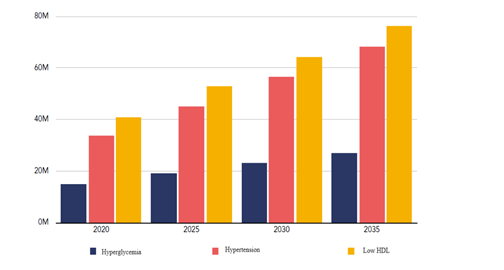
- Keywords: Amazon Fruits; Bioproducts; Bioative Compounds; Noncommunicable Diseases; Bioeconomy
- 2020
- 2025
- 2030
- 2035
- Overweight
- 1.39 billion
- 1.52 billion
- 1.65 billion
- 1.77 billion
- Obesity
- 0.81 billion
- 1.01 billion
- 1.25 billion
- 1.53 billion
- Proportion of overweight or obesity adults worldwide
- 42%
- 46%
- 50%
- 54%
Table 1: Global estimate (2020) and projected number of
Emerging Healthy Alternatives to Curb the Impact of NCDs
Due to the notorious ineffectiveness of conservative treatment, the Amazon fruit-based bioproducts technological development, has shown to be effective on the prevention and alternative treatment of obesity and its comorbidities without imparting any side effects, as one may observe in allopathic or invasive treatments [4, 5, 6]. It can also serve both as a strategy for adherence to a low- cost alternative treatment that yields both substantial reduction and improvement in anthropometric and biochemical parameters along with, a better quality of life [7, 8, 9, 10, 11, 12].
Figure 2, highlights the Amazon fruits’ high bioactive compounds and antioxidants levels, their hypolipidemic and anti-inflammatory effects, which are important for the treatment of overweight and obesity and their comorbidities [13, 14]. Whether in the form of extracts, drinks, oils or in the preparation of nutritional bars, since added valued- bioproducts increase their macro and micronutrients, bioactive compounds and antioxidants content, in addition to avoiding waste, due to keeping fresh for a long time, being available throughout the off-season, enabling access to geographically distant locations, surpassing the unfeasibility of cultivation and, facilitating their distribution and standardization in suitable quantities for human consumption [15, 16, 17].
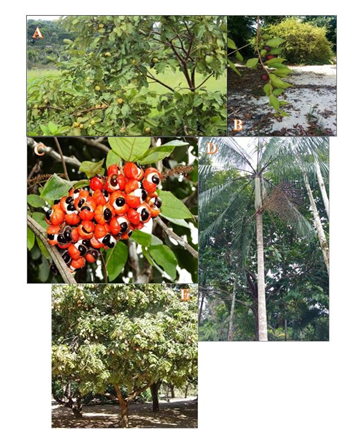
Figure 2A: Endopleura uchi, B: Myrciaria dubia (H.B.K.) McVaugh, C: Paullinia cupana, D: Euterpe precatória Mart, E: Castanha-de-cutia tree.
Hence, food technology contributes to palatability, digestibility, nutritional value and bioavailability, by implementing long lasting sanitary quality, through emerging food processing technologies [18]. Moreover, the development of new Amazon biodiversity-derived bioproducts and technological applications aims to add value to raw materials and become an alternative for the region’s sustainable socioeconomic development, opening great prospects for trade in the food and pharmaceutical industries [19, 20, 21, 22].
As a matter of fact, overweight and obesity, is a major global challenge to be faced, however, strategies have been established by the World Health Organization and approved by all governments in 2013, to reduce their harm by 2030. The World Health World Obesity Atlas 2022 [23] has projected global obesity to have probably been doubled over this period. It should be remembered that the individual’s environment modulates their lifestyle and is considered one of the main causes of obesity [24].
The impact of overweight and obesity on the poorest communities not only increased vulnerability, in terms of health, but economic and social crises as well, with an economic impact of 2.4% of global GDP in 2020, estimated to rise to 4.32 trillion dollars by 2035 [2].
Conclusion
Bioproducts based on Amazonian fruits are promising for the emerging therapy of obesity with antioxidant and anti-inflammatory effects, aiming for greater reach and impact, associated with psychological support, nutritional therapy and exercise, for the implementation of effective public health policies applied to food and health, in high, middle or low income countries and in all populations.
Acknowledgements
The author thanks the Federal University of Amazonas.
Conflicts of Interest
The author declares no conflicts of interest.
References
-
WOF (2023) Data supplied by RTI International (personal communications). London, pp: 232.
-
WOF (2024) World Obesity Atlas 2024, London, pp: 237.
-
IHME (2024) Global Burden of Disease. University of Washington, USA.
-
Zerrweck C, Espinosa O (2020) New technologies and advances in weight loss therapy. Revista de Gastroenterología de México 85(4): 452-460.
-
Oliveira NM, Pereira JR (2023) Possible risks of using medications for obesity. Research, Society and Development 12(14): e07121444474.
-
Trabulsi RK, Oliveira AFSM, Bezerra CMFMC, Lima JB, Sousa CES, et al. (2023) The clinical consequences of the use of Ozempic for the treatment of obesity: a literature review. Brazilian Journal of Health Review 6 (3): 12297- 12312.
-
Yamaguchi KKL, Pereira LFR, Lamarão CV, Lima ES, Veiga- Junior VF (2015) Amazon acai: Chemistry and biological activities: A review. Food Chemistry 179: 137-151.
-
Salomão-Oliveira A, Costa SS, Marinho HA (2018) Metabolic syndrome: Intake of Camu- Camu (_Myrciaria_ _dubia_ (Kunth) McVaugh). International Journal of Food Science and Nutrition 3 (6): 5-13.
-
Salomão-Oliveira A, Lima ES, Marinho HE, Carvalho RP (2018b) Benefits and Effectiveness of Using Paullinia cupana: A Review Article. Journal of Food and Nutrition Research 6(8): 497-503.
-
Salomão-Oliveira A, Pontes GC, Dos Santos KSCR, Lima ES, Carvalho RP (2020) Amazonian Fruits Antioxidant Capsules: Quality Control and Stability. Journal of Food and Nutrition Research 8(4): 189-194.
-
Salomão-Oliveira A, Acho LDR, Magalhães AAS, Sumita TCS, Matos LB, et al. (2021) Hypolipidemic Effect of Supplements Containing the Bioactive Compounds Found in Amazonian Fruits. HSOA Journal of Food Science and Nutrition 7(94): 1-9.
-
Onseca FCF, Carvalho RP, Salomão-Oliveira A, Barcellos JFM (2022) Salomão- Oliveira A (Ed.), Process of the protective effect of Bergenin and Uchi Endopleura dry extract in the treatment of obesity and hepatic steatosis induced in mice.
-
Araujo CPD, Simões IM, Rosa TLM, Mello TD, Canal GB, et al. (2023) Functional Fruit Trees from the Atlantic and Amazon Forests: Selection of Potential Chestnut Trees Rich in Antioxidants, Nutrients, and Fatty Acids. Foods 12(24): 4422.
-
Mittal M, Siddiqui MR, Tran K, Reddy SP, Malik AB (2014) Reactive oxygen species in inflammation and tissue injury. Antioxid. Redox Signal 20(7): 1126-1167.
-
Salomão-Oliveira A, Silva AMG, Carvalho RP (2020) Protective Effect of the Castanha-de- cutia (_Couepia_ _edulis_ Prance) in Regards to Metabolic Illnesses and Its Socioeconomic Aspects: A Systematic Review. Journal of Agricultural Science 12(12): 120-133.
-
Bezerra K, Aguiar JPL, Silva EP, Souza FCA, Taglialegna T (2021) Effects of water-soluble extract of açaí (Euterpe oleracea Mart.) on Wistar rats with induced obesity, diabetes, and cholesterol. Research, Society and Development 10(13): e380101320981.
-
Aguiar JPL, Yuyama K, Souza FCA (2021) Nutritional Value of Camu-Camu (_Myrciaria dubia_), Harvesting and Marketing. Novel Research in Sciences 9(4): 1-2.
-
PAHO (2019) Conservation technologies applied to food safety. Washington, USA,
-
Almeida AF, Santos CCAA (2020) Amazonian fruits: biotechnology and sustainability. Portal De Livros Da Editora, 1(24), EDUF, Palmas-TO, Brazil, pp: 117.
-
Aguiar JPL, Souza FCA (2020) Fruits of the Amazon: a window of opportunity. Horticult Int J 4(2): 45-46.
-
Emon JMV (2020) Omics in fruit nutrition: Concepts and application. In: Srivastava AK, et al. (Eds.), Fruit Crops. Diagnosis and Management of Nutrient Constraints, pp: 121-130.
-
Pérez-Jiménez F (2022) The future of diet: what will we be eating? Clínica e Investigación en Arteriosclerosis 34(1): S17-S22.
-
WOF (2022) World Obesity Atlas, London, pp: 289.
-
Silva VGD, Santo FHE, Ribeiro MNS (2022) Psychological interventions in the treatment of obesity: an integrative review. Research, Society and Development 1(9): e18511931689.
- The Role of Podocyte Apoptosis and the Involvement of SIRT1 in Diabetic Nephropathy
- Dealcoholization of Beer by Osmotic Distillation for the Beverage Industry
- Biopolymer-Based Edible Packaging- Biomaterials, Methods, and Applications in Food Industry: An Updated Review
- Influence of Bioprocessing Methods on 'China Rice' (Gawal R1), and Soyabean Supplementation on the Quality of Complementary Food
- Cassava (Manihot esculenta) Varietal Growth, Yield and Cyanide Content Performance in Three Sites in the South- Eastern Semi Arid Regions of Kenya
- Food Waste Treatment, Recycling, Management and Production of Value-Products-An Update on Methodologies and Current Trends