
Carbon Monoxide Poisoning Death in the Wild Environment in Tropical Areas: a Case Report
Carbon monoxide (CO) poisoning is a major public health concern and a common cause of death. Deaths caused by carbon monoxide poisoning in the wild of tropics are rare and special. In this case, the measurement of percentage carboxyhemoglobin in the heart blood of the deceased was only 17.5%. After eliminating the causes of death such as self disease, mechanical injury, mechanical asphyxia and other toxicosis, the body was considered to have died from CO poisoning. The particularity of this case can prompt the identification thinking and broaden the judgment method for forensic scientists suspected of CO poisoning death.
Introduction
Carbon monoxide (CO) is a colorless, tasteless, non- irritating toxic gas. Exogenous carbon monoxide is usually produced by incomplete combustion of carbon-containing compounds, such as car exhaust leakage, fire and unsafe heating systems [1, 2, 3]. Carbon monoxide poisoning is common in forensic practice under hermetic environment in cold regions due to keep warm needs, but rare in tropical areas, especially in the field environment [4, 5]. After entering the blood, carbonmonoxide can combine with hemoglobin (Hb) to form carboxyhemoglobin (COHb). The affinity of CO and Hb is 200 to 250 times greater than the affinity of oxygen and Hb, and the dissociation rate of COHb is 3600 times slower than that of oxygenated hemoglobin, thus reducing the oxygen carrying capacity of hemoglobin [6, 7]. Finally, it will lead to hypoxia of tissues and organs, so that make blood vessel compensatory dilation and extravasated. ATP is rapidly consumed in oxygen-free environment, resulting in the accumulation of sodium ions in cells, which cause tissue edema. When the body suffers from severe hypoxia, a series of pathophysiological changes will follow, and CO poisoning can cause death at last [8]. The measurement of percentage carboxyhemoglobin in the corpse (%COHb) is an important reference index for judging the death of CO poisoning. However, due to the influence of many factors such as postmortem time, temperature, corruption, pathological state of the body and individual differences, the identification of the cause of death in CO poisoning cases has increased difficulty [9]. This article reports a case suspected of CO poisoning and incisive wound with hesitation mark in the wild in tropical areas, which provides a reference for the identification of similar forensic cases.
Case Story and Scene Investigation
In October 2022, located in a natural scenic spot in northern Hainan Island, China, which in the tropical region, a woman’s body was found in the grass beside a remote forest. The body is in a prone position, with the face tilted to the left, the upper limbs flexed and stretched forward, and the hands placed under the face. Beside the body, it is a single camouflage waterproof tent with both lower limbs placed in the tent. The site investigation found that there was burnt charcoal left in a stainless steel bowl in the tent, as well as a number of unused strips of charcoal. At the same time, a carbon monoxide alarm was also found, which required three batteries to work properly, and one of the batteries fell off. All items on the scene are placed in order. The possibility of criminal cases is excluded after comprehensive investigation.
According to the ID card of the deceased found at the scene, the police investigated the track of the deceased’s life activities before her death. After reviewing the camera image data at the entrance and exit of the scenic spot, it was determined that the woman entered the scenic spot alone with the items found at the scene two days before the body was found. She expressed suicidal tendencies when contacting with her family before her death. The local climate conditions at the time of the discovery of the body were cloudy, with temperatures ranging from 21°C to 30°C, and northwesterly winds 2-4 (Figures 1-3).
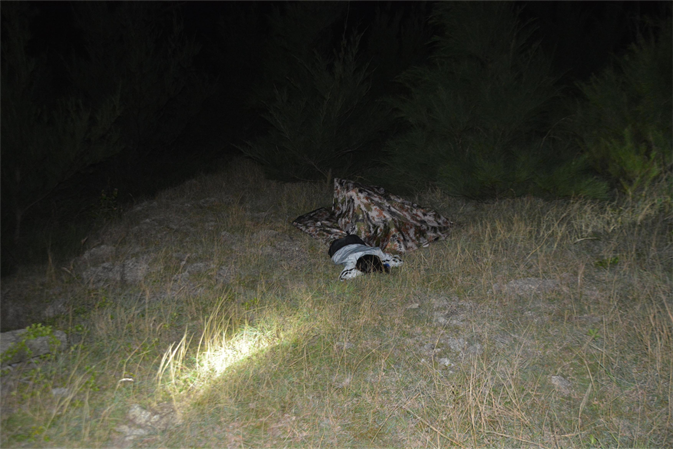
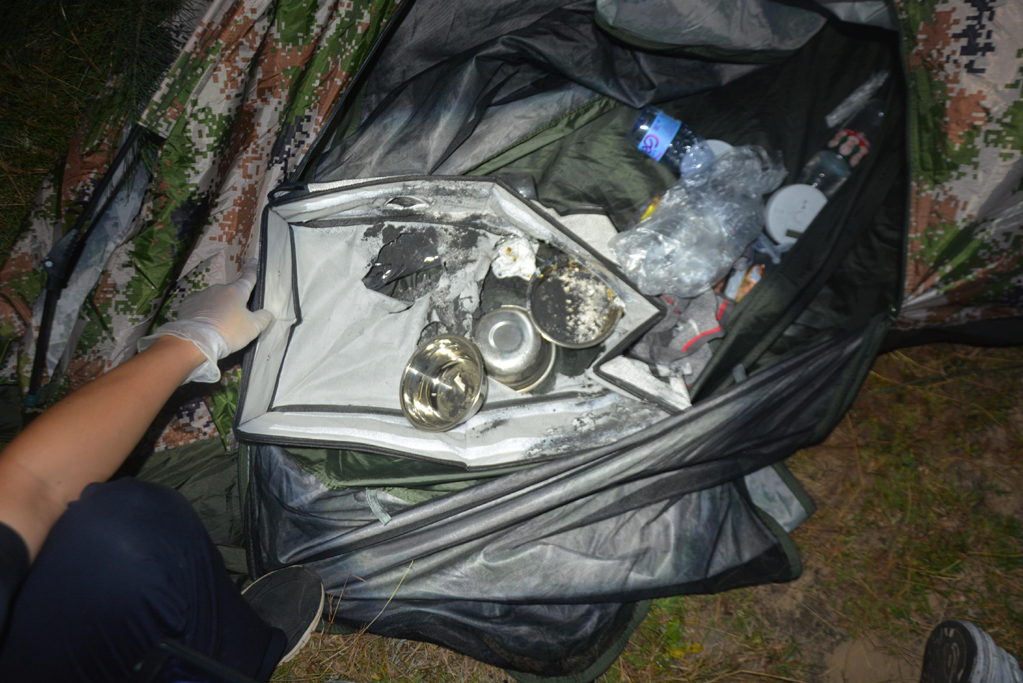
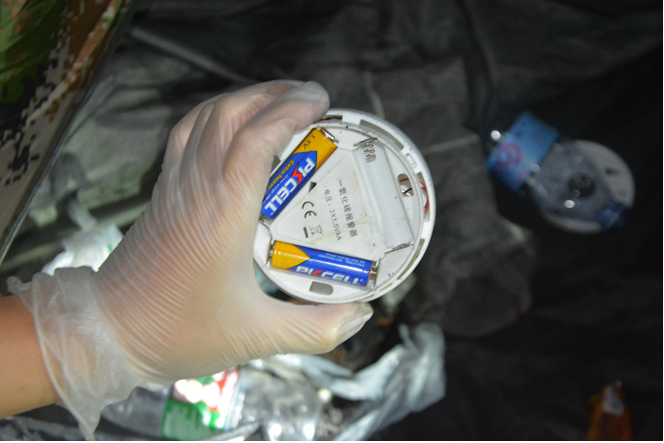
One of the batteries fell off and could not work normally. Figure 3: Carbon Monoxide Alarm Found on Site.
Corpse External Examination
The postmortem surface examination was carried out immediately after the site inspection. The main findings were as follows: The lividity was slightly bright red and located at the un- pressed part of the ventral side, which could fade under strong pressure. Rigor mortis existed at all joints of the body, strong and hard. Bilateral eyelid conjunctiva hyperemia, cornea moderately turbid. No foreign matter found in the oral and nasal cavity. The nail bed of both hands were cyanotic. The left forearm was wrapped by bandage. After the bandage was removed, multiple parallel incisions with different depth and direction were seen from the left elbow joint to the front of the left wrist joint. The wound margin was neat, the wound angle was sharp. The shallow one reached deep into the skin epidermis, the deep one reached deep into the subcutaneous fat, and partial wound formed scab. No special findings were found in the remaining postmortem surface examination. The intracardiac blood was extracted by cardiac puncture for the measurement of percentage carboxyhemoglobin, and its content was 17.5%. The corpse was immediately stored in the -30 ℃ ice coffin after the postmortem surface examination (Figure 4).
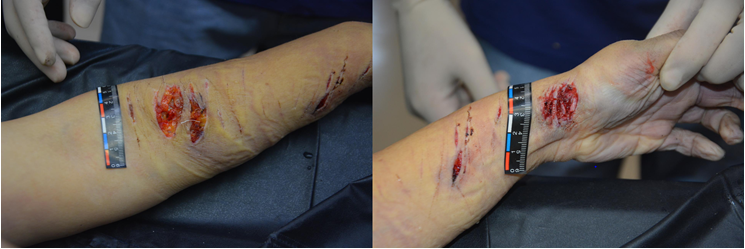
Medico-Legal Autopsy and Microscopic Observation
Because we must obtain the informed consent of her family, the autopsy was carried out 7 days after the discovery of the body. During this period, the body was kept in the ice coffin without power failure or removal.
After thawing at room temperature, the body was examined and no obvious corruption was found. The body surface and all organs are slightly bright red. Except for the incisive wound seen on the left upper limb, no forensic pathological changes of mechanical injury and mechanical asphyxia were found in all parts and organs of the body. Macroscopic and histopathological examination of brain (including cerebrum, cerebellar and brainstem), heart, lung, liver, kidney, pancreas, spleen, adrenal gland and other important organs mainly found vascular dilation, congestion and tissue edema. We had not detected other injuries or diseases of important organs.
Medico-Legal Toxicological Analysis
During autopsy, the cardiac blood of the deceased was extracted for examination of common toxic drugs, drugs and carboxyhemoglobin. The methods and results are as follows:
- Qualitative and quantitative detection of toxic (drug) components: Refer to the relevant technical specifications for forensic toxicological examination and judicial identification of the People’s Republic of China (standard number: SF/ZJD0107005-2016, SF/ZJD0107008-2010, SF/ZJD0107014-2015, SF/ ZJD0107018-2018) for qualitative detection of common toxic (drug) components, and the results showed that no toxic (drug) components were detected.
- Qualitative and quantitative detection of common drugs: refer to the relevant technical specifications and industrial standards for forensic toxicological examination and judicial identification of the People’s Republic of China (standard number: SF/ZJD0107005- 2016, SF/T0116-2021, SF/T0114-2021) to conduct qualitative detection of common drug components, and the results showed that no drug components were detected.
- Carboxyhemoglobin detection: Carboxyhemoglobin was detected in cardiac blood, and the content percentage was 16.98% (reference value 0.0% - 1.5%).
Discussion
Based on comprehensive analysis of various information, the death time of the deceased should exceed 12 hours. The most special aspect of this case is that the CO poisoning death site is located in the wild in tropical areas. Due to the high temperature all the year round in tropical areas, no additional heating equipment is usually needed, so there will be no CO poisoning caused by the burning of firewood, coal and other carbonaceous organic substances for heating. However, according to the on-site prompt, the case occurred in a tent built in the field. The deceased may burn charcoal in the tent and cause CO poisoning.
Forensic pathologists generally believe that COHb ≥ 50% can be confirmed as CO poisoning death. In this case, COHb in cardiac blood was detected in two different institutions, and the content was both about 17%, which could at least confirm that the body had CO poisoning (COHb ≥ 10% must be exogenous CO poisoning) [10, 11]. The clinical manifestations of CO poisoning are often non-specific and depend on several factors, mainly including (1) the concentration of CO, (2) the duration of continuous exposure, and (3) the health status of individuals (lung ventilation, physical condition, and respiratory speed and efficiency) [2]. The overall volume of the tent is small enough for the dead to climb from the inside to the outside. It was conceivable that the consciousness of the deceased had not completely disappeared after poisoning, and she climbed out of the tent at the last stage of her life, active or unconscious behavior. The head, face, upper limbs and trunk of the deceased were all exposed outside the tent. After she climbed out of the tent, there was still breathing behavior. At this time, there was a level 2-4 wind outside, so the COHb content detected in the blood of the deceased was low. This may be the main reason for the lower content of carboxyhemoglobin in the body of the deceased. In addition, studies have shown that with the prolongation of postmortem time, COHb in the body will decrease, and low temperature is conducive to the stability of COHb, while with the increase of temperature, the content of COHb can decrease due to the release of CO [10].
Therefore, the environmental conditions of the dead body may accelerate the release of CO from COHb in the body, which also constitutes the reason for the low content of COHb detected in the blood of the dead body. The content of COHb in heart blood after 7 days of frozen preservation of the corpse only decreased from 17.5% at the time of discovery to 16.98%, with a small change. On the other hand, it confirmed that low temperature is conducive to the stability of COHb in the corpse. Some studies also suggest that under the same conditions, women with CO poisoning sometimes detect relatively lower COHb in the blood. On the one hand, it may be due to the smaller lung capacity of women, on the other hand, it may be due to poorer tolerance [11, 12].
We often describe that COHb is cherry red. In this case, the content of COHb is relatively small, so the cherry red livor mortis of the corpse is also relatively light, and the muscle tissue does not show obvious cherry red visible to the naked eye. In addition, cherry red is not unique to carbon monoxide poisoning, but also needs to be distinguished from cyanide poisoning, drowning, freezing and frozen corpses [13]. In particular, the color of livor mortis observed by naked eyes often depends on the empirical judgment of forensic scholars, and other phenomena cannot be objectively ruled out. Therefore, other possible causes of CO poisoning death should still be ruled out.
However, after a comprehensive autopsy, toxicological examination and histopathological examination, no evidence of its own disease and death caused by common toxic drugs and drugs was found. Although multiple incisions were found on her left upper limb and the wound was locally scabbed, the wound was not enough to cause death based on the comprehensive analysis of its severity and the information that no blood stain was found in the field survey. According to other autopsy and field investigation, the evidence of death due to mechanical injury and mechanical asphyxia is also insufficient. Consequently, after excluding deaths caused by other causes, all kinds of evidence point to the death of the deceased from CO poisoning. CO poisoning first affects tissues and organs with high oxygen demand, such as brain and heart.
Severe hypoxia of brain tissue can cause severe brain edema and lead to death. Severe myocardial ischemia caused by acute CO poisoning can directly lead to fatal myocardial infarction, and cardiac conduction system can also cause sudden cardiac arrest and death due to ischemia [6, 14].
In addition, the multiple incisions of different length and depth and parallel arrangement found from the left elbow to the left wrist of the deceased in this case have the characteristics of “hesitation marks” common in typical suicide cases in terms of their location and characteristics [15].
According to the investigation of the case, the deceased had a suicidal tendency. However, blood scab had formed on the cut wound, and there were bandages on it, no blood was found at the scene, so it was not consistent with the formation of the deceased before her death, above all which further explained the planning process of the deceased for suicide. Combined with the above findings and the field investigation, it seems that the nature of the case is to ignite a charcoal fire in the tent to commit suicide. The reason for finding half of her body climbing out of the tent at the scene of her death may be the unconscious behavior after CO poisoning or the regret behavior. Although the carbon monoxide alarm found in the on-site inspection also seems to indicate that the deceased was worried about the risk of CO poisoning and bought the device, we can’t prove whether one of the batteries fell off accidentally or intentionally. Nevertheless, it is clear that the evidence obtained in this case can exclude the possibility of homicide [16].
All in all, there are few accidental deaths of CO poisoning caused by carbon fire heating in the outdoor environment of tropical areas. Especially because of the different climatic conditions from other regions, it sometimes leads to difficulties in forensic identification. To sum up, the principle of “comprehensive consideration and specific case analysis” should be followed for death cases suspected of CO poisoning in actual cases. Combined with site survey, system inspection and attention to identify whether there are other factors involved. After analyzing the case comprehensively, fully and scientifically, then make a conclusion, so as to make an objective, fair and realistic appraisal conclusion [17].
References
-
Mattiuzzi C, Lippi G (2020) Worldwide epidemiology of carbon monoxide poisoning. Hum Exp Toxicol 39(4): 387-392.
-
Kinoshita H, Türkan H, Vucinic S, Naqvi S, Bedair R, et al. (2020) Carbon monoxide poisoning. Toxicol Rep 7: 169- 173.
-
Eichhorn L, Thudium M, Jüttner B (2018) The diagnosis and treatment of carbon monoxide poisoning. Dtsch Arztebl Int 115(51-52): 863-870.
-
Al Kaabi JM, Wheatley AD, Barss P, Al Shamsi M, Lababidi A, et al. (2011) Carbon monoxide poisoning in the United Arab Emirates. Int J Occup Environ Health 17(3): 202- 209.
-
Alberreet MS, Ferwana MS , Alsalamah MA, Alsegayyiret AM, Alhussaini AI, et al. (2019) The Incidence and Risk Factors of Carbon Monoxide Poisoning in the Middle East and North Africa: Systematic Review. Journal of Health Informatics in Developing Countries 13(2): 1-18.
-
Palmeri R, Gupta V (2022) Carboxyhemoglobin Toxicity In: StatPearls [Internet] Treasure Island (FL): StatPearls Publishing.
-
Rose JJ, Wang L, Xu Q, McTiernan CF, Shiva S, et al. (2017) Carbon monoxide poisoning: Pathogenesis, management, and future directions of therapy. Am J Respir Crit Care Med 195(5): 596-606.
-
Nañagas KA, Penfound SJ, Kao LW (2022) Carbon Monoxide Toxicity. Emerg Med Clin North Am 40(2): 283-312.
-
Weaver LK, Deru K, Fletcher B, Daniel SD (2022) Three cases of clinically significant inaccurate carboxyhemoglobin measurement. Undersea Hyperb Med 49(2): 171-177.
-
Hampson NB (2018) Carboxyhemoglobin: a primer for clinicians. Undersea Hyperb Med 45(2): 165-171.
-
Al-Matrouk A, Al-Hemoud A, Al-Hasan M, Alabouh Y, Dashti A, et al. (2021) Carbon Monoxide Poisoning in Kuwait: A Five-Year, Retrospective, Epidemiological Study. Int J Environ Res Public Health 18(6): 8854.
-
Ergözen S, Demir A, Acar E (2020) A carbon monoxide poisoning case due to lung diffusion test. American Journal of Emergency Medicine 38(5): 1047e1-1047e2.
-
Nazari J, Dianat I, Stedmon A (2010) Unintentional carbon monoxide poisoning in Northwest Iran: a 5- year study. J Forensic Leg Med 17(7): 388-391.
-
Carson HJ, Esslinger K (2001) Carbon monoxide poisoning without cherry-red livor. Am J Forensic Med Pathol 22(3): 233-235.
-
Haliga RE, Morărașu BC, Șorodoc V, Lionte C, Sîrbu O, et al. (2022) Rare Causes of Acute Coronary Syndrome: Carbon Monoxide Poisoning. Life (Basel) 12(8): 1158.
-
Racette S, Kremer C, Desjarlais A, Sauvageau A (2008) Suicidal and homicidal sharp force injury: a 5-year retrospective comparative study of hesitation marks and defense wounds. Forensic Sci Med Pathol 4(4): 221- 227.
-
Hampson NB (2008) Stability of carboxyhemoglobin in stored and mailed blood samples. The American Journal of Emergency Medicine 26(2): 191-195.
- Narcotics and Digital Forensics: Bridging Crimes in the Digital Age
- Ethics in Forensic Psychiatry: Principles, Dilemmas, and Human Rights
- Impact of Acute Stress on Attentional Orienting to Social Cues
- Head Injury and Intracranial Hemorrhage in Western Region of Libya
- A Forensic Study on Handedness: Examination of Handwriting Features in Right and Left Handed Writers
- Techniques for Latent Fingerprint Development Using Natural and Synthetic Powders: A Review