
Challenge of Aquaculture in Bangladesh during CORONA 19
Data and information sources are used from the direct interview with individual, publication of the Department of Fisheries (DoF), internet and related non-published grey literature. The country has an inland water area of about 4.72mill.ha and about 710km long coastal belt. Fisheries sector contributes 3.57% to the national GDP, 25.30% to the agricultural GDP and more than 2.0% to the total export earnings. The target of fish production was crossed by producing 4.28 mill.mt fish in 2017-2018, whereas in 2017-18, inland culture fisheries contribute 56.0% to total fish production. This sector has been contributing about 60% animal protein in daily dietary requirement comes from fish, which is significant in food security through proving safe and quality animal protein. About 162.18 million (11%) people more than of total population are engaged with this sector on full and part time basis for their livelihoods. Bangladesh is blessed with an enriched aquatic diversity, comprising almost 260 freshwater fish species and 740 marine water fish species with other aquatic lives. But due to COVID 19 decline and degradation of wetland resources, the stock of inland capture fisheries has been reduced remarkably. In recent years, the fisheries sector is faced with challenges posed by numerous natural and anthropogenic causes such as climate change, natural disaster, environmental pollution, industrialization, overfishing, using destructive fishing gears, pesticide and agrochemicals and COVID 19. Very recently some important national program and biological management technology is developed for hilsha production, fish production and open water management to restrict the declination of resources and enhance production. But about 11% people are going to be jobless and maximum worker are workless in the country by affecting of COVID 19. The effect of COVID 19 is posing significant threat to the production, income, food security and livelihood of the population.
Introduction
Bangladesh lies in the north eastern part of South Asia between 88o01’ and 92o41’ east longitude and 20o34’ and 26o38’ north latitude. The country is bounded by India on the west; north and northeast while Myanmar on the south-east and the Bay of Bengal on the south. The area of the country is 1, 47,570sq. km. The population of the Bangladesh is at 162.18 million in 2016. The alluvial soil enriched by heavy silts deposited by rivers during the rainy season. There are six seasons in a year. Winter, summer and monsoon are prominent. Winter begins in November and ends in February. In winter minimum temperature is recorded at 7oC and maximum temperature recorded in summer months at 37oC. This period accounts for 80% of the total rainfall. The average annual rainfall varies from 1429 to 4338 millimeters Figure 1.
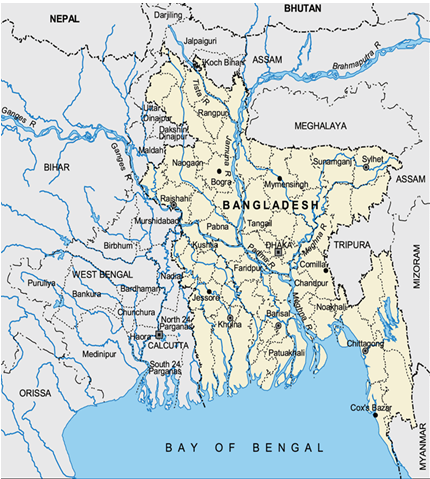
Fish Habitats in Bangladesh is primarily a deltaic country in the Ganges, Brahmaputra and Meghna (GBM) drainage systems. Important Rivers the Padma, Jamuna, Teesta, Brahmaputra, Surma, Meghna and Karnaphuli exists in the country. There are about 700 rivers including 230 tributaries with a total length of about 24140km and these form the main perennial water areas which provide both breeding and feeding habitats. Bangladesh is mainly an agrarian economy is naturally endowed with a huge fresh and coastal water resources and the world’s longest continuous sea beach. Bangladesh is blessed with huge open water resources with a wide range of enriched aquatic diversity, comprising almost 260 freshwater fish species [1]. Of the reported species, 104 are considered riverine species, 36 migratory (travelling rivers and floodplains) and the rest 113 are floodplain resident species [2]. Besides, a total of 20 species of prawns, 4 species of crabs and 26 species of molluscs are known to occur in freshwaters of Bangladesh [3]. But due to mainly decline and degradation of wetland resources, the share of inland capture fisheries has been reduced remarkably during recent past decades.
It has been estimated that Bangladesh has total open water bodies 3.917m.ha, inland closed (culture) water bodies 0.80m.ha and marine water bodies 710km. Once, these three areas were a rich biodiversity of native wild fish species, prawn, snail, crabs and turtles. Due to over-exploitation and various ecological changes, some important fish species has disappeared from the wetland.
Bangladesh is among the top thirty-five countries in the world in terms of the number of people diagnosed with COVID-19 (coronavirus disease 2019) [4]. Till April 12, 2021, there has been 691,957 confirmed COVID-19 positive cases with 9,822 total death toll reported in this country [5]. After identifying the first COVID-19 case on the 8th March 2020, there has been a full shut down of the economy and strict restriction on people’s movement from March 26th, with most of the people locked out of their homes continuously for more than two months. After that, the economy reopened to some extent despite the continuous increase of Corona cases and deaths. There were restrictions on people’s movement, activities and businesses had to oblige with COVID-19 related health guidelines and social distancing. The economy and livelihoods of the people seemed to have been affected a lot due to these circumstances. A preliminary study in the context of Bangladesh shows that about 95% of people reported a decrease in income due to these impacts where there was a 76% reduction of average household income during April and May, with an alarming 62% of complete loss of job in low-income and daily wage populations [6]. Among all occupations, transport workers, wage earners and house helpers have the highest impact where there has been around 80% reduction of income to the agricultural wage earners [6]. In Bangladesh, the aquaculture and fisheries sector is considered as one of the most dynamic and productive sectors contributing significantly to the economy which is believed to be amongst the most affected by the coronavirus pandemic - the sector is already vulnerable to different factors including pollution and climate change [7]. In this country, this sector supports livelihoods of 18 million people directly and indirectly, produces 4.38 million metric tons of fish, and contributes 3.50% to GDP, 60% to animal protein intake and 501 million USD in export earnings (DoF, 2018-19). However, the sudden outbreak of the novel coronavirus is believed to have changed the scenario greatly. Restriction in movement, activities and business at the early stage of COVID-19 outbreak has impacted the livelihood of the fishers and related stake holders. Harvesting of fish, transportation restriction and cost after lockdown period have potentially impacted the economics of fishers and fish farmers as they had difficulty in transporting fish which will ultimately affect the livelihood of fisher’s households [8].
Methodology
Study Areas
The study was conducted among the sixty four districts under eight administrative divisions of Dhaka, Chittagong, Khulna, Barisal, Rajshahi, Rangpur, Sylhet and Mymensingh.
Data Collection
The study was conducted based on primary and secondary data sources. Primary data were collected by employing a number of qualitative tools such as individual interviews, key informant interviews with knowledgeable persons, oral history and mobile interview during October 2021 to January 2022.
Primary data were collected following a semi-structured questionnaire. The questionnaires were pilot tested with a small sample of respondents. The final questionnaire was improved, rearranged and modified following the experience of pilot test. The final questionnaire focused the questions on COVID-19 pandemic, impact on fishing, fish transportation and preservation, status of aquaculture input, market and consumer demand, most affected section and government response. About 90 individual interviews above (40 individual interviews and 64 telephonic interviews), 21 key informant interviews or cross-check interviews were conducted with government officials, NGO personnel and local entrepreneurs to collect and verify necessary information.
Secondary data of COVID-19 was collected from the Institute of Epidemiology, Disease Control and Research (IEDCR), and Department of Fisheries (DoF). The data included production, food demand, supply and relevant fisheries and aquaculture related data was collected from Department of Fisheries (DoF). Data was also collected from scientific articles, technical reports and newspaper reports for further materials.
Analysis of Experimental Data
The data were analyzed through one way ANOVA using SPSS program to find out whether any significant difference existed among different data [9, 10]. Standard deviation in each parameter was calculated and expressed as mean ±S.D.
Results and Discussion
Fish Production
Fisheries sector contributes 3.57% to the national GDP, 25.30% to the agricultural GDP and more than 2.0% to the total export earnings [11]. In 1983-84, the contribution of inland and culture fisheries to total fish production were 62.59% and 15.53% , respectively; whereas in 2017-18, inland capture fisheries contributes only 28.45% and inland culture fisheries contributes 56.24 % to total fish production. The total fish production was recorded at 2.70mill.mt in the year 2008-2009. But the total fish production reached at 4.28mill.mt in 2017-2018 [11]. The total fish production of Bangladesh is presented in the figure (Figure 2). In 2001-02, 2002-03, 2003-04, 2004-05, 2005-06, 2006-07, 2007-08, 2008-09, 2009-10, 2010-11, 2011-12, 2012-13, 2013-14, 2014-15, 2015-16, 2016-17 and 2017-18 the production was recorded at 1.89, 2.0, 2.10, 2.22, 2.33, 2.44, 2.56, 2.70, 2.90, 3.06, 3.26, 3.41, 3.55, 3.69, 3.88, 4.13 and 4.28 mill.mt, respectively. The production growth was increased 31.36% in comprises to the base line year of 2001-2002 [11]. The production was noted at lowest level (1.89mill.mt) in the year 2001-02 and highest production was recorded at 4.28mill. mt in 2017-18 and regression type was Exponential and the equation was y=1.8017e0.0518x and where, R2 is 0.9983 . An increasing tendency was recorded from 2001-02 to 2017-18 due to apply sustainable biological management technology and socio-eco-friendly programs. These programs include community based fisheries management, establishment of beel nurseries, stocking of fingerlings, establishment of sanctuaries, expansion of cage and pen farming, issuing of fishers’ identity card and enforcement of fish conservation acts, adoption of climate smart technologies, etc.
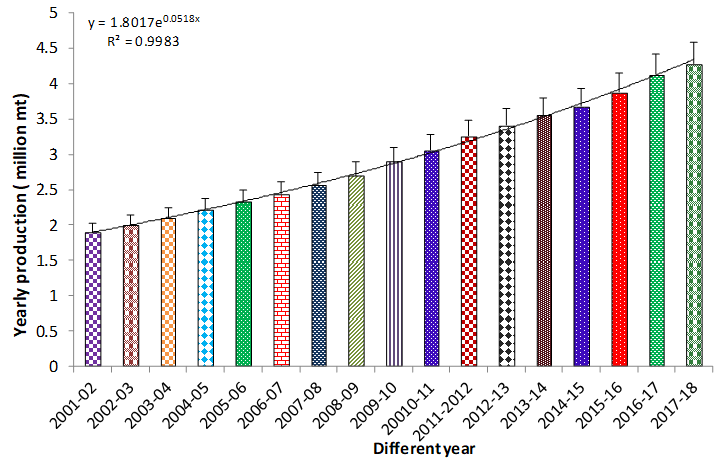
In 2001-02, the total production was 1.89mill.mt. But in 2017-18, the total production was increased gradually and reached at 4.28mill.mt, whereas, open water contributes 28.27%, inland culture fisheries donate 56.31% and marine fisheries sector provided 15.42% [11]. The catch statistics indicate that fishing pressure of the inland capture fisheries was increased rapidly between 2001-02 and 2017-18. As a result, a decreasing trend in production percentage of the inland capture fisheries was clearly pronounced which is very similar to the report of [12]. According to Moyle and Leidy (1992), worldwide 20% of all freshwater species are extinct, endangered or vulnerable. The total catch statistics of aquatic lives in the inland capture fisheries indicated that percentage of aquatic lives was sharply decreased which are very similar to the study of [13, 14]. Different types Open water bodies and Production Different types of open water bodies with an area of 3.92mill.ha donated the production at1.236 mill.mt, inland close water bodies contributed at 2.49mill.mt and production of Marine water bodies was recorded at 0.66mill.mt (Table 1). Finally the total production was recorded at 4.48mill.mt.
| Types of water bodies | Area (mill.ha) | Production (m.mt) | |
|---|---|---|---|
| Open water bodies | |||
| 1 | River and estuary | 0.854 | 0.326 |
| 2 | Sundarbans Mangrove area | 0.178 | 0.018 |
| 3 | Beel | 0.114 | 0.01 |
| 4 | Kaptai Lake | 0.069 | 0.0106 |
| 5 | Wetland | 2.702 | 0.7815 |
| Total | 3.917 | 1.236 | |
| Inland closed (culture) water bodies | |||
| 1 | Ponds | 0.392 | 1.975 |
| 2 | Seasonal cultured waterbody | 0.14 | 0.217 |
| 3 | Baor | 0.005 | 0.01 |
| 4 | Shrimp/Prawn Farm | 0.26 | 0.258 |
| 5 | Crab | 0.0098 | 0.012 |
| 5 | Pen Culture | 0.005 | 0.0124 |
| 6 | Cage Culture | 1.29 Cu.m. | 0.0038 |
| Total | 0.8 | 2.49 | |
| Marine water bodies and Production | |||
| 1 | Marine Water (Territorial) | 2,680 sq. NM | 0.66 |
| 2 | Marine Water (EEZ) | 41,040 sq. NM | 0.66 |
| 3 | Coast line | 710 km | 0.66 |
| Total | 0.66 | ||
| Grand total | - | 4.384 |
Table 1: Different types Open water bodies and production of 2018-19 [11].
About inland close water contributed at 2.49mill.mt is mostly affected during COVID 19. Table 1: Different types Open water bodies and production of 2018-19 [11].
Carp and Cat Fish Hatchling
Carp hatchling production was recorded in different river at 2.496mt and about 926 government and private carp and cat fish hatcheries produced at 664.02mt hatchling in the year 2018-19. Total production of hatchling was recorded at 666.516 696.03mt in 2018-19 (Table 2).
| Sl. No. | Name of population | Number |
|---|---|---|
| 1 | Freshwater fish species | 260 |
| 2 | Exotic fish species | 12 |
| 3 | Marine Fish species | 486 |
| 4 | Fresh and marine water shrimp | 48 |
Table 2: Annual production of carp and cat fish hatchling and PL (FRSS, 2018-19).
PL Production
The number of PL production in government and non- government Galda hatcheries was recorded at 1.58 cores and the number of PL production in government and non- government Bagda hatcheries was noted at 979.37 cores in the year 2018-19. Total production of PL was recorded at 980.95 cores in 2018-19 (Table 3).
| No. of hatchery | PL production(Core) | |
|---|---|---|
| Govt. Galda hatchery | 27 | 0.4 |
| Private Galda hatchery | 8 | 1.18 |
| Govt. Bagda hatchery | 0 | 0 |
| Private Bagda hatchery | 42 | 979.37 |
| Total | 77 | 980.95 |
Table 4: Annual production of carp and cat fish hatchling and PL.
Enriched in Fish Biodiversity
A well enrich fish biodiversity status is existing in Bangladesh (Table 4). Fresh water fish species number is recorded 260, exotic fish species 12, marine fish species 486, fresh and marine shrimp species 48, tortoise 36 and crab 12, respectively [1, 15].
| Sl. No. | Name of population | Number |
|---|---|---|
| 1 | Freshwater fish species | 260 |
| 2 | Exotic fish species | 12 |
| 3 | Marine Fish species | 486 |
| 4 | Fresh and marine water shrimp | 48 |
| 5 | Tortoise | 36 |
| 6 | Crab | 12 |
Table 3: Well enriched in Fish Biodiversity.
Fisheries sector of the country is under danger due to COVID 19. The aquatic lives are under severe threat due to over exploitation and environmental degradation [16]. Indiscriminate destructive fishing practices, soil erosion, siltation, construction of flood control and drainage structures, agro-chemicals and lastly COVID 19 have caused havoc to the aquatic biodiversity in Bangladesh.
COVID-19 Pandemic
The COVID-19 pandemic was confirmed to have to spread Bangladesh in March 2020. The first three known cases were reported on 8 March 2020 by the country’s epidemiology institute, IEDCR. Both lives and livelihoods are at risk from COVID 19 pandemic. Pandemic situation of some countries has been slowing down and decreasing, in others, COVID-19 is continuing to spread quickly.
Generally carp and other fishes breed in February to July in every year. The hatchery owners produced hatchlings but did not sale 30% and above produced hatchlings. The farmer cannot sale their produced fish in the market due to discontinue supply chain. This shock affects significant elements of both food supply and demand. There is a risk a looming food crisis unless measures are taken fast to protect the most vulnerable. It is essential to keep global food supply chains alive and mitigate the pandemic’s impacts across the food system. Border closures, quarantines, market, supply chain and trade disruptions are restricting people’s access to diverse and nutritious sources of food by the virus or already affected by high levels of fish food insecurity. The significant slowdown of all economies is vulnerable ones. Because unemployment rates have risen, and COVID-19’s economic impacts will be felt more. Demand and prices is to be decreased and this will have a negative impact on farmers. Expect disruptions in the supply chains especially in the high value commodities (hatchlings, fingerlings, fish, vegetables, meat, milk, etc.). Shortage of feed, fertilizers, medicines and other input has been affecting aquaculture production. Closures of restaurants and less frequent grocery shopping diminish demand for fisheries products, affecting producers and suppliers. Sectors in agriculture, fisheries and aquaculture are particularly affected by restrictions on tourism, closure of restaurants, and institutional meals suspension.
Freshwater Pond Aquaculture
The pandemic created mostly negative impacts on the freshwater pond aquaculture. The negative impacts were mainly due to an increase in inputs and transport costs and decreased of demand and fish price. Due to the restrictions on transport and less availability of manpower as well as difficulty in production operation was identified. The fish feed companies incorporated approximately 12-15% increased feed price due to the restrictions on transport and less availability of manpower as well as difficulty in production operation [17]. More production cost due to increase in feed price, more transport cost due to unavailability of the usual transport vehicle and less selling price of fish, the fish farmers did not harvest the fish. They keep them in the ponds for a longer period for waiting accepted increase price. Rearing fish in ponds for a long period ultimately incurred more cost for foods and maintenance and there was a shortage of ready feed and feed ingredients in the market. These shortages and higher price of feeds induced the farmers to apply lesser feeds in the ponds which ultimately led to slower growth of fish. The pandemic has also induced a reduced rate of stocking of fish fry/ fingerling [18].
According to 40% of the online questionnaire survey respondents, the impact of coronavirus in freshwater pond aquaculture sector is moderately negative; whereas 17% reported it highly negative and 11% said severely negative (Table 5). Though about 29% of respondents reported that novel coronavirus was normal (neither positive nor negative) impact on freshwater pond aquaculture, but 03% of respondents have reported a positive impact on this sector.
Impact on Brackish Water Shrimp Aquaculture
The export-oriented crab and shrimp aquaculture in Southwest Bangladesh impacted negatively mainly because of sudden reduction of demand in markets, disruption of transportation, and reduction of price. About 64% of respondents perceived that impact of coronavirus on crab and shrimp aquaculture as negative. Export oriented crab and shrimp processing plants used to buy almost all the shrimps. But due to the pandemic, many of them stopped or reduced buying the crab and shrimps due to fear, labour shortage, harvesting delay, insufficient shrimp supply and quarantine rules and regulations imposed by the importing countries affected the shrimp industry of Southeast Asia [19].
According to 38% respondents, the impact of coronavirus in Shrimp & crab aquaculture sector was moderately negative; whereas 16% reported it highly negative and 10% said severely negative (Table 5). Though about 31% of respondents reported that novel coronavirus was normal (neither positive nor negative) impact on freshwater pond aquaculture, but 05% of respondents have reported a positive impact on this sector.
| Positive impact | Normal (%) | Moderately negative impact (%) | Highly negatively impact (%) | Severely negative impact (%) | |
|---|---|---|---|---|---|
| Pond aquaculture | 3 | 29 | 40 | 17 | 11 |
| Shrimp & crab aquaculture | 5 | 31 | 38 | 16 | 10 |
| River and floodplain | 38 | 30 | 22 | 10 | 0 |
| Estuarine and coastal fisheries | 32 | 41 | 17 | 9 | 1 |
| Marine off-shore fisheries | 25 | 36 | 19 | 16 | 4 |
| Processing plant | 0 | 25 | 35 | 26 | 15 |
| Fish feed factories | 0 | 11 | 30 | 37 | 22 |
| Fish/shrimp hatcheries | 0 | 13 | 34 | 27 | 26 |
| Fish marketing | 0 | 12 | 28 | 31 | 19 |
| Fishers | 2 | 13 | 42 | 23 | 20 |
| Fish farmers | 0 | 18 | 38 | 26 | 18 |
| Fish habitats | 43 | 30 | 16 | 10 | 1 |
Table 5: Impact of the CVID 19 in different sectors of aquaculture and fisheries sector in Bangladesh (n = 125).
Impact on River and Floodplain Capture Fisheries
A positive impact on river and floodplain ecosystem was recorded due to the timely onset of rain and less disturbance by humans. Around 38% of respondents said that a positive impacts on fish habitats due to the pandemic situation as there was less disturbance by fishers in the open waterbody (Table 5). COVID 19 helped in recovering and rebuilding the resources and habitats [20]. The fishers faced troubles in catching fish as a group in rivers because it is not possible to maintain social distance in the boat. Scarcity and higher price of fuel due to transportation restrictions have also limited the fishing operations in some countries [21]. The price of the fish has decreased as they could not transport fish from one place to another.
Impact on Estuarine and on-Shore Fisheries
The pandemic was slight positive impacts on the fish stock in most estuarine and on-shore areas of Bangladesh. Shortening the duration of the marketing hours and halting the usual transportation system affected the fisher. Lockdown in landing centers and harbors impacted the costal fishers of that country [22]. Hilsa was mainly caught from the estuarine and near shore areas was affected by the pandemic. The hilsa fish production has positively or negatively impacted. During pandemic there was lesser illegal fishing or overfishing of juvenile hilsa (locally called jatka) which was ultimately resulted in higher hilsa yield. On the other hand the negative impact was less patrolling and surveillance by law enforcers resulting in an increased level of illegal fishing during these ban periods.
According to 17% respondents, the impact of coronavirus in Estuarine and coastal fisheries sector was moderately negative; whereas 9% reported it highly negative and 1% said severely negative (Table 5). Though about 41% of respondents reported that novel coronavirus was normal (neither positive nor negative) impact on Estuarine and coastal fisheries, but 32% of respondents have reported a positive impact on this sector.
Impact on Off-Shore Marine Fisheries
According to 25% respondents said that the pandemic resulted in slightly positive impacts on the off-shore marine fish stock (Table 5). The regions of positive impacts were of fewer disturbances by humans due to lockdown and labour shortage. As a result a possible benefit and break in the marine ecosystem which positively impacted the overall stock of fish [23]. Again with a negative impact on fishers and other workers was due to wage reduction, unemployment and loan cycle [24]. The fishers along with the investors suffered from a loss due to similar reasons like transport restrictions, reduction of demand and price, and lack of storage facilities of fish.
Impact on Feed Industry
The pandemic impacted the fish feed industries due to the crisis of raw materials and labours, lesser sale of feed, increased transportation cost (30-60%), and more operating cost to maintain health guidelines and social distancing. About 30% of respondents reported that the impacts of the pandemic in fish feed industries are moderately negative, 37% were highly negatively impact and 22% were severely negative impact (Table 5). The pandemic forced to shut down the factories temporarily leaving an economic crisis to the workers. Once reopened, maintaining health guidelines and social distancing inside the factory is somehow difficult which hindered the production process.
Impact on Hatcheries
The fish and shellfish hatcheries also affected by the pandemic due to the decrease in the sale price of fry and shortages of labours, increase in transportation cost and increase in the cost of maintenance to follow health guidelines and social distancing. The demand for fish seed was also reduced by nearly 50% in the year 2020 during the start of fish culture. Like other sectors, the transportation of fry throughout the country has been disrupted seriously due to this pandemic. At that time regular labours brought a crisis to the hatcheries and forcing them to hire temporary labour daily. Labour cost increased. That situation was worst over time unless some recovery actions are taken. According to 34% respondents, the impact of coronavirus on hatcheries was moderately negative; whereas 27% reported it highly negative and 26% said severely negative (Table 5). Though about 13% of respondents reported that novel coronavirus was normal (neither positive nor negative) impact on hatcheries.
Processing Plants and Export
The shellfish (shrimps and prawns and crabs) processing plants are export-oriented and impacted by the pandemic mainly due to cancellation of order by the buyer and increased operating cost. The buyers were regularly cancelling their orders due to safety issues. In Khulna region of Bangladesh alone between March and June 2020, 41 out of 70 shrimp processing plants was stopped production and another 29 are operating on a very limited scale [18]. During the same period, the export reduced significantly with a 47% reduction of shrimp in 2020 [25]. About 65% of reduction of export trade was also observed in Turkey [26]. One crab export industry mentioned about the cancellation of six orders from April-June 2020 [18]. Crabs and other shellfish factories were forced to decrease their production amount as they were not able to sell most of their products to the foreign buyers, very little demand in the local market and decrease of the product prices. There has been a 50% decrease in the price of prawn in the Philippines due to export reduction [27]. The import of live, fresh and chilled seafood in the US has declined by 37% due to a drop in consumer demand [28]. During the same period, the export reduced significantly with a 47% reduction of shrimp only in May-June 2020 (48). Sixty-five percentage of reduction of export trade has also been observed in Turkey et al (2020).
According to 35% respondents, the impact of coronavirus on Processing plants and export was moderately negative; whereas 26% reported it highly negative and 15% said severely negative (Table 5). Though about 25% of respondents reported that novel coronavirus was normal (neither positive nor negative) impact on Processing plants and export.
Impact on Fish Marketing
Overall impacts of coronavirus on stakeholders of the aquaculture and fisheries sector are mostly negative. According to 28% respondents, the impact of coronavirus on fish marketing was moderately negative; whereas 31% reported it highly negative and 19% said severely negative (Table 5). Though about 12% of respondents reported that novel coronavirus was normal (neither positive nor negative) impact on fish marketing.
Impact on Fishers
According to 42% respondents, the impact of coronavirus on fish marketing was moderately negative; whereas 23% reported it highly negative and 20% said severely negative (Table 5). Though about 13% of respondents reported that novel coronavirus was normal (neither positive nor negative) impact on fishers.
Impact on Fish Farmer
According to 38% respondents, the impact of coronavirus on fish marketing was moderately negative; whereas 26% reported it highly negative and 18% said severely negative (Table 5). Though about 18% of respondents reported that novel coronavirus was normal (neither positive nor negative) impact on fishers.
Impact on Fish Farmer
According to 38% respondents, the impact of coronavirus on fish farmer was moderately negative; whereas 26% reported it highly negative and 18% said severely negative (Table 5). Though about 18% of respondents reported that novel coronavirus was normal (neither positive nor negative) impact on fish farmer.
Impact on Fish Habits
According to 43% respondents, the impact of coronavirus on fish habits was positive impact, 16% was moderately negative; whereas 10% reported it highly negative and 01% said severely negative (Table 5). Though about 30% of respondents reported that novel coronavirus was normal (neither positive nor negative) impact on fish habits. This study has found that all of the stakeholders’ livelihood capital affected due to the impacts of COVID 19. The fishers and small-scale fish farmers-most of whom are poor- are amongst the worst affected by the pandemic [18].
The study clearly indicated that the ecosystem health is changing due to global affect, construction of flood control barrage, soil erosion, siltation and drainage structures and agro-chemicals. Stock of the wildlife brood fishes in their breeding ground was also suffered significant damages resulting in a reduction of biodiversity as noted by [14, 29, 30, 31].
Current Scenario
There are 162.18 million peoples live in Bangladesh. Near about 17.84 million (18%) people are somehow directly or indirectly related with fisheries sector. Now about 11% people are going to be jobless and maximum worker are workless in the country by affecting of COID 19, which are shown in the Figure 3. Information about aquaculture sector is in highly risk position except open water of Bangladesh. According to interviewing, different stakeholders (Fisher’s, Fish farmer, Arotder, Paiker, Local social person, Department of Fisheries, DoF) about more than 30% of production was affected by dropping of supply chain (seeds, feed and medicine to smallholder farmers) and others regular factors of environmental degradation.
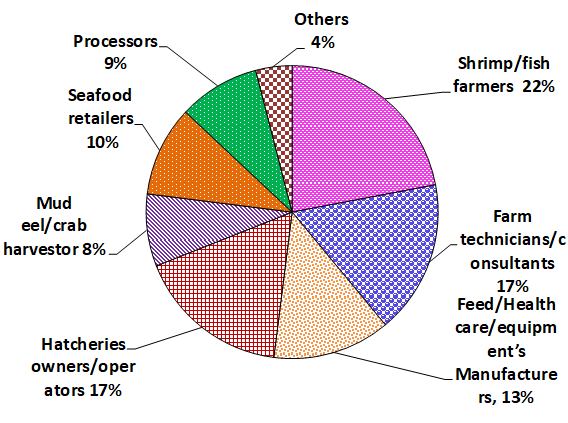
The fisheries sector in Bangladesh is challenged with arrange of environmental, economic and Institutional concerns. So achieving targeted 45.52 lakh mt fish production will be somehow affected by COVID-19 and will be a challenge for fisheries sector. A community co-management committee was formed in every site of wetland to participate the activities of fingerling stocking, beel nursery, fish sanctuary and breeding ground conservation to maintain social distance from pandemic COVID 19. Participation of communities and their active involvement played an important role in overall management of open water body [32, 33].
Conclusion
To avoid disruptions to the supply chain and production to keep international trade open and take measures that protect their supply chain (seed, fingerling, feed and medicine to smallholder farmers). Keep their domestic fish supply value chains alive and functioning. Taking necessary precautions on seeds, feed, fertilizer and medicine must continue to flow to fish farmers. Protect aquaculture supply chains for the safety and wellbeing of everyone working along the chain. Support farmers and their organizations for protecting to allow movement of seasonal workers and transport operators across domestic and international borders. Another good practice would be identified that a collection centers is closer to producers, where farmers can deliver their production without the need to go to markets. Allow local markets to remain open, while putting in place strict physical distancing measures within and outside markets. Relocate markets to larger premises, while ensuring the appropriate infrastructure is in place to maintain quality and food safety. Ensure emergency needs are met to adjust and expand social protection programmes; ensure to deliver of seed, fingerling, and fish from local farmers and fishers/ fish workers and must be used of digital tool to improve communication on access points for food deliveries to reduce the risk of COVID-19. Arrange to inject funds in the aquaculture sectors, through a grant facility. Government reduces trade-related costs and don’t enforce measures to restrict trade and mobility of commodities; resolve logistics bottlenecks; immediately review trade and policy options and their likely impacts; reduce import tariffs when governments think is appropriate to minimize, temporarily reduce VAT and other taxes and avoiding any trade restrictions to keep food and feed supplies, as well as those of agricultural and fishery inputs, strained by COVID-19 response measures.
References
-
Fisheries Survey System (FRSS) (2017-18) Fisheries Statistical Yearbook of Bangladesh. Department of Fisheries, Dhaka, Bangladesh, pp: 1-131.
-
FAP 17 (1994) Fisheries Studies and Pilot Project, Final Report. Government of Bangladesh Flood Action Plan. Ministry of Irrigation, Water Development and Flood Control, Government of Bangladesh, Dhaka.
-
Siddiqui KU, Islam MA, Kabir SMH, Ahmad M, Ahmed ATA, et al.. (2008a) Encyclopedia of Flora and Fauna of Bangladesh. . Molluscs 17: 415.
-
WHO (2020) WHO Coronavirus Disease (COVID-19) Dashboard.
-
COVID 19 (2021) Bangladesh Computer Council (BCC).
-
BRAC (2020) Rapid perception survey on COVID 19 awareness and economic impact. Dhaka, Bangladesh, pp: 1-14.
-
Islam MMA, Barman A, Kundu GK, Kabir MA, Paul B (2019) Vulnerability of inland and coastal aquaculture to climate change: evidence from a developing country. Aquac Fish 4(5): 183-189.
-
Giannakis E, Hadjioannou L, Jimenez C, Papageorgiou M, Karonias A, et al. (2020) Economic consequences of coronavirus disease (COVID-19) on fisheries in the Eastern Mediterranean (Cyprus). Sustainability 12(22): 9406.
-
Duncan DB (1955) Multiple range and multiple F-testes. Biometrics 11: 1-42.
-
Zar JH (1984) Biostatistics Analysis. 2nd (Edn.), Prentice- Hall, Inc. Englewood Cliffs, New Jersey, USA, pp: 718.
-
Fisheries Statistical Yearbook of Bangladesh (2018-19) Fisheries Resources Survey System (FRSS), Department of Fisheries; Dhaka, Bangladesh.
-
Moyle PB, Leidy RA (1992) Loss of biodiversity in aquatic ecosystems: Evidence from fish faunas. In Conservation Biology: The Theory and Practice of Nature Conservation, Preservation, and Management. Chapman and Hall, New York, USA, pp: 127-169.
-
Chakraborty BK (2009) Aquatic biodiversity of Someswari and Nethai River; Gharia and Nidaya Beel of Northern Bangladesh. In Aquaculture Research Progress, Nova Science Publishers, New York, USA, pp: 3231-3268.
-
Chakraborty BK (2010) Status and Position of Aquatic Biodiversity of Four Beels and its Floodplain Level of Northern Bangladesh with a Good Practice of Beel Nurseries and Community Based Co-Management Policy. In: Advances in Environmental Research Nova Science Publishers, New York, USA, 8: 121-164.
-
IUCN (2000) Red book of threatened Fishes of Bangladesh. IUCN, UK
-
Disaster E (1990) Floodplain protection in Central Europe. World Wildlife Found (WWF) Institute of Floodplains Ecology, Germany.
-
Kaewnuratchadasorn P, Smithrithee M, Sato A, Wanchana W (2020) Capturing the impacts of COVID-19 on the fisheries value chain of Southeast Asia. Fish People 18(2): 2-8.
-
Islam MM, Khan MI, Barman A (2021) Impact of novel coronavirus pandemic on aquaculture and fisheries in developing countries and sustainable recovery plans: Case of Bangladesh. Marine policy, 131: 104611.
-
Kakoolaki S, Ebne al Torab SMA, Ghajari A, Anvar AA, Sepahdari A, et al. (2020) Socio-economic impacts of Coronavirus (COVID-19) outbreak on world shrimp aquaculture sector, Iran. J Aqua Anim Heal 6(1): 1-18.
-
Chanrachkij I, Laongmanee P, Lanmeen J, Suasi T, Sornkliang J, et al. (2020) Severity of the impacts of COVID-19 pandemic on small- scale fisheries of Thailand: a preliminary assessment. Fish People 18(2): 43-47.
-
Campbell SJ, Jakub R, Valdivia A, Setiawan H, Setiawan A, et al. (2021) Immediate impact of COVID-19 across tropical small-scale fishing communities, Ocean Coast. Manag 200(1): 105485.
-
Purkait S, Karmakar S, Mali P, Kanta Sau DS (2020) Impacts of novel coronavirus (COVID-19) pandemic on fisheries sector in India: a Minireview. Indian J Pure Appl Biosci 8(3): 487-492.
-
Jigeesh A (2020) Distressed fisheries sector demands immediate support - The Hindu Business Line.
-
Avtar R, Singh D, Umarhadi DA, Yunus AP, Misra P, et al. (2021). Impact of COVID-19 lockdown on the fisheries sector: a case study from three Harbors in Western India. Remote Sens 13(2): 183.
-
Tuhin AH (2020) Covid-19 eats away shrimp exports. The Business Standard.
-
Demirci A, Imsek ES, Can MF, Akar O, Demirci S (2020) Has the pandemic (COVID 19) affected the fishery sector in regional scale? A case study on the fishery sector in Hatay province from Turkey. Mar Life Sci 2(1): 13-17.
-
Manlosa AO, Hornidge AK, Schluter A (2021) Aquaculture-capture fisheries nexus under Covid-19: impacts, diversity, and social-ecological resilience. Marit Stud 20: 75-85.
-
White ER, Froehlich HE, Gephart JA, Cottrell RS, Branch TA, et al. (2021) Early effects of COVID-19 on US fisheries and seafood consumption. Fish Fish 22(1): 232-239.
-
Allendroff FW (1988) Conservation Biology of Fishes. Conservation Biol 2(2): 145-148.
-
Nishat A (1993) Freshwater wetlands in Bangladesh: status and issues. In Freshwater wetlands in Bangladesh: Issues and Approaches for management. IUCN, Gland Switzerland, pp: 9-22.
-
Zaman SMH (1993) Agricultural development and sustainability of wetlands. In Freshwater wetlands in Bangladesh: Issues and Approaches for management. IUCN, Gland Switzerland, pp: 63-178.
-
Chakraborty BK (2018) Aquatic Biodiversity status of the Goneser Haor in the northern part of Bangladesh and prospect for using waterbody as a beel nursery. In: Mohapatra DK, et al. (Eds.), Sustainable management of Aquaculture Resource, Norandra Publishing House, Delhi, India, pp. 121-145.
-
Chakraborty BK, Maduri AV, Khatun A (2021) Status of aquatic resources and their harvest from Someswari River in Northern Bangladesh Sustainable. J Inland Fish Soc India 53 (1&2): 36-50.
- Genetic Improvement of Nile Tilapia (Oreochromis niloticus): Advances in Selective Breeding and Genomic Approaches for Sustainable Aquaculture
- Microplastics, Contaminants, and Waste Hotspots: Divergences and Faults in Prioritizing Control Efforts
- Creating a Healthier, More Vibrant Open and Closed Aquatic Environment. A Submersible, Centrifugal Magnetically Affixed Current Changing Aquarium Pump
- An Attempt to Assess Alpha Diversity and Sample Size: Using the Ostracod Assemblages off Kumamoto Port, Japan
- Assessment of the Efficiency of Common Fishing Gears and Crafts Used at Mohananda River of Chapai Nawabganj, Bangladesh
- Fish Productivity and Biodiversity Status of Sundarban Mangrove in Bangladesh