
Microplastics, Contaminants, and Waste Hotspots: Divergences and Faults in Prioritizing Control Efforts
No longer is it possible to get rid of contaminants, as fragments of plastics spread everywhere, with their micropollutants and microorganisms loads. Microplastics are currently classified as emerging contaminants due to their negative ecological or health effects. Governments demand clear and user-friendly information for decisions where they should address efforts to reduce plastic emissions, chemical pollutants and healthcare waste. A case study of Brazil was used to classify hotspots and priorities for intervention in relation to sources of plastic emissions. and mismanaged plastic waste along the coastline. Correlations between sources of emissions in the country's rivers and results of national beach cleanup campaigns appear divergent, but allow redirections, focusing on where pollution problems accumulate. However, this research also offers new perspectives and insights, moving away from the commonplace of merely a solid waste management problem. Fault Tree Analysis serves to verify the failures that result in microplastics as marine contaminants, to correct them and establish a Strategic Intervention Plan to reduce plastic pollution, even reformulate cleanup campaigns, for greater social benefits. We recommend that an International Fund should be essential to support least developed countries in implementing the guidelines from a Global Treaty on Plastics and their own internal tasks.
Introduction
The water that makes up and maintains us also threatens. The marine environment may contain synthetic and natural contaminants, plastic items and fragments, as well as microorganisms that can pose a danger to people. These microelements often reach the sea via rivers, or floating through the air, intentionally discarded or facilitated by individual habits uncommitted to urban cleaning. Researchers are often unable to fully measure these dangers, only with their field or laboratory tests, presenting results and potential evidence to society that the threat is out there or very close to us. Therefore, we need to act with caution, thinking about changes in the way we see the phenomena and even the actions taken, if we are contributing to generating or increasing the hazardous plight that threatens. However, there is no way to control some natural phenomena, such as hurricanes, tornadoes, typhoons and tsunamis, which worsen the scenario, contributing to further increasing the spread of plastic waste. Sometimes humanity itself produces stressors, such as greenhouse gas emissions, which increase the frequency and intensity of these phenomena, such as climate change, leading to extreme events that combine with other vectors to bring pollution to the marine environment.
If a hotspot of plastic emissions can be identified, then it is possible to act on it, seeking to control, reduce or extinguish it. This information needs to be clear, dynamic and friendly for decision-making. But action plans to combat marine litter do not always work as expected [1], sometimes the benefits generated are not as significant as expected or efforts are directed to places that are not as high a priority, generating discrepancies in the control of mismanaged plastic waste that reaches the marine environment. It is then necessary to evaluate what is being done wrong for this scenario to be so complex for public and private managers, and decision makers, the faults that occurred so that the system did not provide the desired effects, seeking course corrections through strategic interventions and investments. It is about the individuality and association of dangers, whose side effects are channeled into the marine environment, that this article deals firstly with microplastics, that are connecting elements of many harmful vectors that move through rivers, soils, the food chain and the air, unbalancing ecosystems and species, representing a threat to human health itself. The article also presents a case study with comparative analysis to assess whether beach cleanup campaigns carried out within the scope of the Brazilian National Plan to Combat Marine Litter converged in their spatial focuses with data on hotspots of mismanaged plastic waste along the country’s coastline. Finally, yet importantly, Fault Tree Analysis (FTA) methodology was applied to identify the causes that lead to an undesirable fault of a system, resulting in microplastics as marine contaminants.
The Background of the Problem
It has been almost 70 years since Carson [2] expressed that “to find a diet free from DDT (Dichlorodiphenyltrichloroethane) and related chemicals, it seems one must go to a remote and primitive land, still lacking the amenities of civilizations. Such a land appears to exist, at least marginally, on the far Arctic shores of Alaska – although even there one may see the approaching shadow”. This possibility no longer exists due to plastics, their fragments and their dangerous companions, because they are everywhere, omnipresent, particularly in the marine environment. Polymers are divided into plastics, fibers and elastomers, depending on their mechanical behavior [3]. However, in general, when talking about microplastics in the sea, this distinction is not made, although they are not conceptually the same thing, everything is plastic pollution. On the other hand, there is a generalization of referring to microplastics as pieces and fragments of plastic smaller than 5 mm, but there is no consensus about that [4]. The estimate on the total annual intake of microplastic particles for adult males and females is, respectively, 114,000 and 94,000 (L/ day) [5].
The petrochemical industry produces microplastics, called pellets or nurdles, among other names, which have a spherical, domed or rounded, cylindrical shape, of different colors, which are used by the transformation industry in the extrusion or molding of larger plastics. When part of exfoliants, toothpaste, powdered detergents, for example, they are also called microbeads. After using these products, the tendency for microbeads is to make their way through the kitchen, bathroom and balcony drains towards wastewater treatment plants, if they exist, but which are not capable of retaining 100% of the load [6], even with tertiary treatments, with microfiltration, thus reaching up water bodies and entering the trophic chain.
Microplastics also come from weathering, fragmentation, and degradation of larger plastics when they fall to the ground and break. When exposed to the sun and UV rays for a long time, they fade and become fragile. In situations of extreme events, such as storms, hurricanes, tornadoes, floods, and earthquakes, they are ripped out from where they are fixed and thrown against trees, buildings and asphalt, they shatter into many pieces, or even resulting from tire wear when rubbing against asphalt, concrete or unpaved areas. In tsunamis, they are dragged, caused to crash into walls, ships, furniture, moved to great distances, even floating without boundaries between ocean currents and gyres, visible or invisible to the naked eye. Natural and synthetic fibers are also released from fabrics in washing machines or, equally, from rugs and carpets. Fishing gears abandoned or lost are sources of microplastics in the marine environment, as well as containers that fall from ships in distress or facing thunderstorms and large waves, letting their pellet loads escape. In the incident involving the ship “X-Press Pearl” in Sri Lankan waters in June 2021 alone, around 84 billion pellets that were being transported as cargo were spilled into the sea [7].
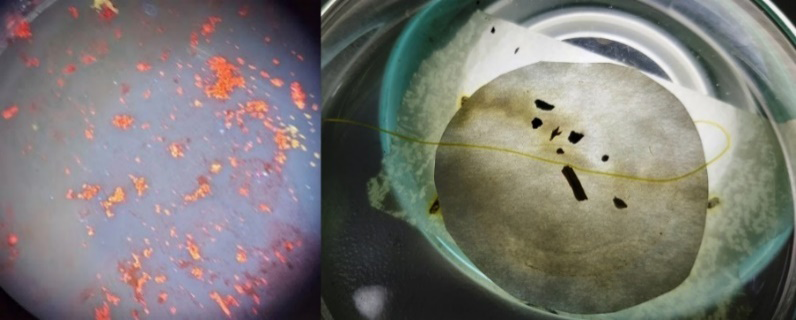
They float through the air reaching isolated and distant areas, and are inhaled by humans in their own homes, worsening respiratory problems. Microplastic particles are also inhaled by bottlenose dolphins [8], ingested by fish, filtered by bivalves [9], eaten by seabirds [10] , which also transport them in their beaks and feet. Domestically, oven bags are a concern, as they are made of Polyethylene Terephthalate (PET) and resistant to high temperatures, but depending on the time and temperature applied for baking, they can become fragile and fragmented, dispersing through the air or directly contaminating the food itself, allowing inhalation and ingestion of nano and microplastic at the same time. The reality is that we ingest, absorb and inhale microplastics and release them in our physiological needs [11], there is no way to escape from or deny that. Especially because it is very difficult to identify the presence and real resistance of microplastics, with the naked eye, to avoid them, unless it is a colored and elongated fiber, otherwise it is only via Stereomicroscopes (Figure 1) or with devices such as Fourier-Transform Infrared Spectroscopy - FTIR, to check whether they are really polymers.
Emerging contaminants refer to chemicals that are not included in systematic environmental monitoring, but may be introduced to the environment, including the marine environment, and cause known or potential negative ecological or health effects [12]. They include pharmaceuticals and personal care products, endocrine disrupting chemicals (EDCs), persistent organic pollutants (POPs) and microplastics [12]. Stapleton, et al. [13] also classify as such, not only because chemicals that compose them, such as additives, are pollutants, but due to microplastics serving as vehicles to move them from one place to another, transporting other emerging contaminants available in the environment, transferring to host organisms capable of incorporating them. Yes, nowadays microplastics are classified as emerging contaminants. Brandt, et al. [14] expand the contaminants with analgesics, antibiotics, lipid regulators, anti-inflammatories, synthetic hormones, and compounds used in the production of resins and plastics, pesticides, and natural hormones (as estrogen) and their byproducts as well. These substances are currently categorized as micropollutants, occurring at concentrations on the order of micrograms per liter or lower, as in nano measurements [14].
Among the micropollutants, the ones that cause the most alarm, in their guise of the key (active ingredient)- lock (organism’s bioreceptor proteins) coupling, are EDCs, defined as “an exogenous substance or mixture that alters function(s) of the endocrine system and consequently causes adverse health effects in an intact organism, or its progeny, or (sub) populations” [15]. Human and other species need a healthy endocrine system to reproduce and develop normally [15], but there is evidence that EDCs interfere with this system and the production of hormones, causing disorders and anomalies. Among them, in people, the incidence of [15]: (i) genital malformations, such as non-descending testicles (cryptorchidisms) and penile malformations (hypospadias); (ii) adverse pregnancy outcomes, such as preterm birth and low birth weight; (iii) Neurobehavioural disorders associated with thyroid disruption affect a high proportion of children in some countries and have increased over past decades; (iv) endocrine-related cancers (breast, endometrial, ovarian, prostate, testicular and thyroid).
In marine species, there are evidences about [16]: (i) accumulation of high levels in fatty tissue in marine mammals that may cause adverse effects; (ii) severe population declines in birds due to due to eggshell thinning which caused the eggs to break during incubation; (iii) effects in vertebrates are gonadal defects and reproductive effects including feminization of males, masculinization of females and reduced fertility in fish. One of the most significant examples of the effects and impacts of EDCs on marine species refers to the biocide Tributyltin (TBT) used in antifouling paints, because it induces two types of male characteristics in female gastropods, imposex and intersex, in doses of ng per liter, the reason it was banned by the the International Maritime Organization - Imo. Imposex refers to the growth of an entire or partial male organ in females, while remaining with their female organs without changes, and intersex is the transformation of the female sexual organ into a male organ [16]. Both types of changes result in sterile individuals, causing reproductive failures and subsequent population declines [16].
Laboratory tests carried out with the gastropod Nucella lapillus in England verified that imposex is readily induced by exposure to 0.02 μg/l of tin leaked from a TBT antifouling paint [17]. Male characteristics were induced in the bivalve Mytilus edulis and aswell as Nucella lapillus at concentrations as low as 2 ng/l [18]. Within the freshwater environment, the feminization of male river fish occurred due to the exposition to oestrogens present in effluent from United Kingdom sewage-treatment premises [19]. An experiment conducted at the Experimental Lakes Area in north-western Ontario, Canada, showed that chronic exposure of fathead minnow (Pimephales promelas) to low concentrations (5– 6ng/l) of the potent 17α-ethynylestradiol, a synthetic oestrogen, led to feminization of males through the production of vitellogenin mRNA and protein [20]. Vitellogenin (glycolipoprotein) mRNA is used as a biomarker to detect the presence of EDCs.
The plastic chain is complex and highly fragmented, as there are 100,000 plastic formulations and more than 30,000 additives, 16,000 pigments and 8,000 monomers [21]. Besides, there still are 15 groups of chemicals associated with plastics being of major concern due to their toxicity and potential to be released from plastics [21]. One of these groups that has not been talked about much refers to Per- and polyfluoroalkyl substances (PFAS) which due to their stability and persistence, are known as “Forever Chemicals” [22]. PFAS fluoropolymer resins together with reinforcing additives, cover saucepans, casseroles and pans widely sold as utensils in department stores, used on a daily basis by families to cook their food. PFAS are also widely used in firefighting foams, pesticides, cosmetics (lipsticks, for example) and as waterproofing agents in fabrics, rain coats and carpets.
If there is something that is extremely abundant in seas and oceans, in addition to microplastics, it is microorganisms (or microbes) and both are related, so much that this link was called “Plastisphere” [23], which may contain communities distinct from the environment where microplastics were collected, in general, and distinct from each other in the colonization of the polymers. The high ratio between microplastic surface and volume, which favors the adsorption of contaminants, also represents a suitable space for the establishment of biofilm, that is, the base of the “Platisphere”. Biofilm is defined as a community of microorganisms that are capable of living and reproducing in the form of a colony, but possessing a sophisticated social structure, which serves as a protection and expansion mechanism [24].
It is a fact that biofilms can protect microorganisms from external stressors (UV, toxic substances that can be aggressive to the colony) and facilitate nutrient accumulation, in addition to horizontal gene exchanges [25]. Besides, they may harbour pathogens that multiply only after they have infected a host [25]. It is also worth mentioning that bacteria that live in biofilms can increase resistance to antibiotics [26]. Fungi are also present in the marine environment, in much smaller numbers, but they also swarm microplastics [27] and in high diversity [28]. In the transport service offered by microplastics to organisms that inhabit seas and oceans, it is not uncommon to find, for instance, coastal and even terrestrial species cruising through the ocean [28, 29], which involves the process of transferring potentially invasive exotic species. Not only that, the transport service offers the chance to move pathogenic species [30], such as the Vibrio cholerae, common bacteria in marine and estuarine environments, associated with cholera outbreaks in different parts of the world [31].
The first observed spherical plastic particles in plankton nets in the coastal waters of New England, USA, was reported in January 1971 [32]. The spherules varied in size, between 0.1 and 2 mm, with crystalline (clear) forms and white, opaque forms [32]. Analysis indicated that they were made of polystyrene and polychlorinated biphenyls (PCBs) and bacteria covering their surfaces. Fish and a chaetognatha ate them. That very important report, from the 1970s, of the 20th century, recognized the contamination by POPs in the sea, that microplastics were already spreading throughout the marine environment, being incorporated by the trophic chain, and microorganisms populate them, likely trough biofilm. Under this background, it can be stated that microplastics are connecting elements between micropollutants and microorganisms in the marine environment. There are already scientific clues, through various research on the impacts they are having on marine species, such as swelling, changes in the digestive tract, satiety induced by synthetic food instead of natural food, reduction in fertility. Could these repercussions be caused by the physical presence of plastic? Due to the contaminants they carry? Because of the respiratory diseases they cause? Because of the species from different habitats that they carry? By the microorganisms that organize and protect themselves in biofilms? Or the set of these possibilities?.
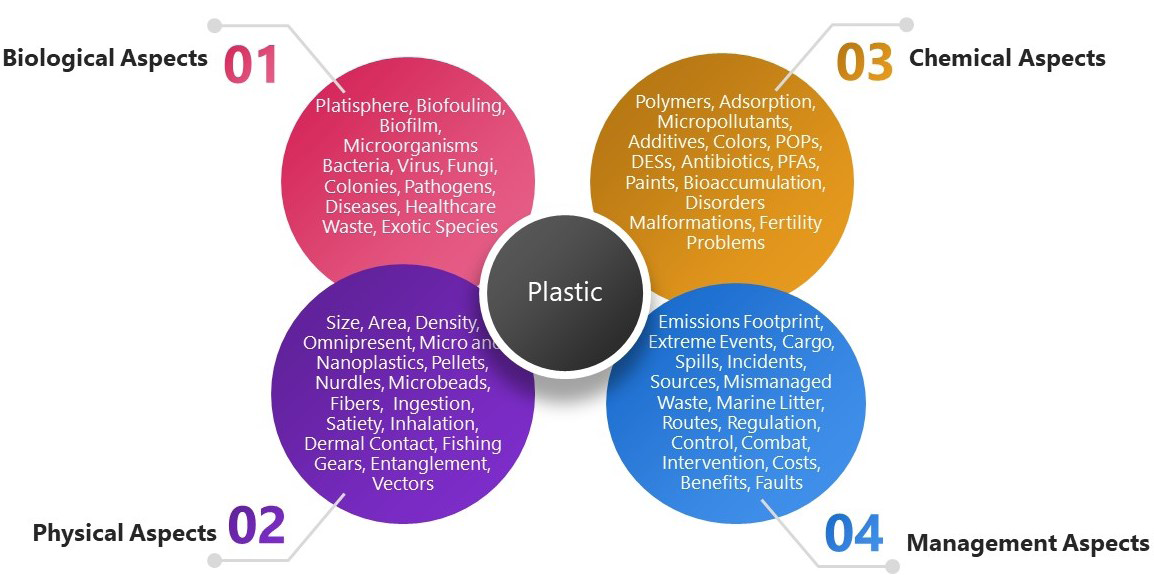
It is not very well known yet how microplastics facilitate diseases or the harm that they may be doing to humans, requiring more investment and more research to resolve doubts and show ways to be followed [33]. The adoption of an International Treaty or Agreement on Plastics, even if it brings brilliant regulations and solutions, and serves as a reference, will not be enough, and there is a long road ahead, including for its successful implementation [34]. Countries must take very concrete solutions to stop the load of plastic waste they generate, identifying point and diffuse sources, mapping the paths, land, water and air routes, to the sea. A summary of the different aspects related to plastic pollution is presented in Figure 2.
Hotspots-Brazil as a Case Study
In the case of Brazil, with almost 11,000 km of coastline, around 5,600 municipalities, and 55% (117 million) of the population living up to 150 km from the coast [35], with refining plants in almost all regions, petrochemical plants distributed in three coastal states (Bahia, São Paulo and Rio Grande do Sul), with activities linked to these industries in practically all states, but with asymmetries and deficiencies in solid waste management and sanitation, it is quite complicated to control and combat plastic marine litter. There was a first attempt with the Brazilian National Plan to Combat Marine Litter, but it was not successful because it was primarily invested in beach cleanup campaigns, with few social benefits [1]. Regardless of failures and need for revisions, it is necessary to be proactive and within the scope of Brazil’s continental dimensions, envision priorities, what to do, where to act and stop the polluting plastic load.
Rivers flow into the sea and thus channel their plastic loads towards them. These telluric loads are attributed to a coastal strip of 50 to 200 km and are assumed to be proportional to the amount of mismanaged plastic waste (MPW) generated [36]. Several researchers have sought to calculate the global plastic burden from rivers into the sea. Table 1 presents a summary of their estimates, with different approaches, different criteria, different calculations, and different resulting numbers. Regarding Brazil, there are different numbers also (Table 2). Again, different numbers and uncertainties, which reveal the urgency for the Brazilian Government to take the necessary measures, internally, and invest in knowledge of its plastic load to control it.
| Author | Global Mismanaged Plastic Waste (tonnes/year) |
|---|---|
| Jambeck, et al. [37] | 4,800,000 – 12,700,000 |
| Schmidt, et al. [36] | 410,000 – 4,000,000 |
| Lebreton, et al. [38] | 1,150,000 – 2,410,000 |
| Lebreton, et al. [39] | 5,100,000 (3,100,000 – 8,200,000) |
| Meijer, et al. [40] | 800,000 – 2,700,000 |
Table 1: Global Mismanaged Plastic Waste, which enters into the sea estimated by different researchers.
| Author | Brazilian Mismanaged Plastic Waste (tonnes/year) |
|---|---|
| Jambeck, et al. [37] | 470,000 |
| Lebreton, et al. [38] | Amazon River about 38,900 (32,200 – 63,800) – 7th among the top 20 polluting rivers |
| Lebreton, et al. [39] | 3,680,000 (3,190,000 – 3,840,000) |
| Meijer, et al. [40] | 3,296,700 |
| Oceana Brazil [41] | 1,300,000 |
Table 2: Mismanaged Plastic Waste burden from rivers into Brazilian maritime waters under national jurisdiction, under different
Although no official consolidated data exists, is there any scientific reference that could be used to help Brazil define its hotspots, in its continental dimensions? Meijer, et al. [40] reviewed previous studies and based on precipitation, wind, land use, slope, distance to river, river discharge and distance to the river mouth, recalculated the probability for MPW produced inside a river basin to leak into aquatic environments. The results suggest that small- and medium- sized rivers account for a substantial fraction of global plastic burden emissions, and unlike [38], place the Pavuna River, which flows into Guanabara Bay, in the state of Rio de Janeiro, Brazil, as 35th among the top 50 plastic emitting rivers, with 2,600 tonnes/year. Guanabara Bay is one of the main Brazilian inputs of plastic waste into the sea [42]. However, is this information enough for the Brazilian Government to adopt concrete measures to manage, prevent and reduce the plastic load that reaches its maritime waters?
Materials and Methods
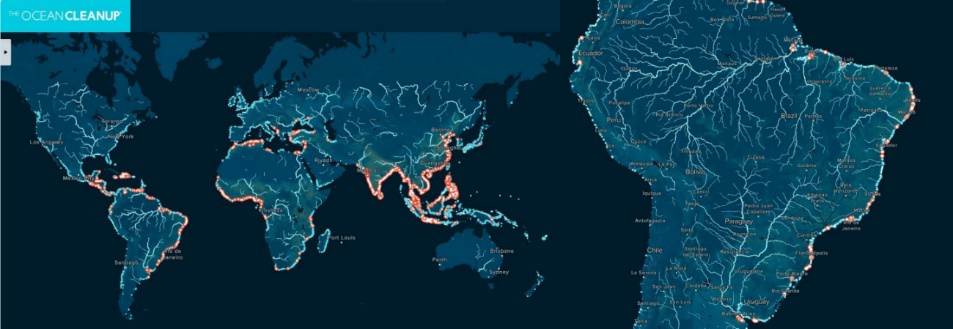
The modeling studies Meijer [40] served as the basis for the launch of the website “River Plastic Emissions to the World’s Oceans” (RPEWO) by the company the Ocean Cleanup (https://theoceancleanup.com/sources/). The website presents a world map with several reference points located at the mouths of rivers in different countries, signaling river discharges into the marine environment. In the case of Brazil (Figure 3), there are 71 main discharge points (red dots) along its coast, with information regarding MPW (kg/year), plastic emissions (kg/year), surface area covered (km2), population and rainfall (mm/year). However, the website does not indicate the geographic coordinates of the points, a general MPW table, a ranking of information, and the names of the rivers are not always clearly defined, requiring searches in national sources for clarification. The website is very useful and explicitly requests “sharing information about the rivers and spreading the mission to solve the problem”, but it is not possible to immediately conclude the gradations of the MPW, plastic emissions and what the priorities for intervention would be, among the dozens of points flagged, in the case of Brazil.
To make the available information user-friendly and decoded, as in a large visualization panel, a rework was carried out with the help of the Microsoft Excel and Power BI software, filling in information gaps, providing a ranking and adding more precise spatial location data, from the Artcom Google Earth software. For instance, to cover gaps in information regarding river names, maps from the Hydro-Telemetry System (in Portuguese), from the National Hydrometeorological Network were used, accessing https:// www.snirh.gov.br/hidrotelemetria/Mapa.aspx.
On the other hand, in the context of the Brazilian National Plan to Combat Marine Litter, 577 cleanup campaigns were accomplished [1], from March 2019 to January 2023, when it was suspended for reformulation. The quantities of litter and the types of materials collected were recorded and the percentages regarding its composition have already presented [1]. However, no analysis was carried out about relative predominance of the plastic loads among the different collection points. This is what we intend for the current work, trying to verify whether it is possible to establish any correlation and convergences with the website RPEWO, ratify them or even capture new thoughts. After an analysis of data quality and consistency on plastic load collected (kg), we kept data from 538 cleanup campaigns restricted to the 17 coastal states.
Results
The Dashboard created, exclusively for analyzes referring to Brazil (Figure 4), offers a completely different new graphic design and allows a quick visualization of the data expressed by the website RPEWO, responding in a colorful and friendly way to the following aspects: what is the ranking of the rivers with the highest plastic emissions on the country’s coast, their names, their total and relative plastic loads, corresponding MPW, spatial location and nominal details, regional group, percentage in relation to the total load, rainfall, population involved. From data, we moved on to information and then to visual guidance where, with more clarity, control efforts, investments and intervention actions can be directed. Thus, a handful of individual numbers spread across a coastline of almost 11,000 km gain new meaning, allowing for quick visual comparisons, aggregating and cross-referencing information on where to prioritize efforts to control and combat MPW hotspots.
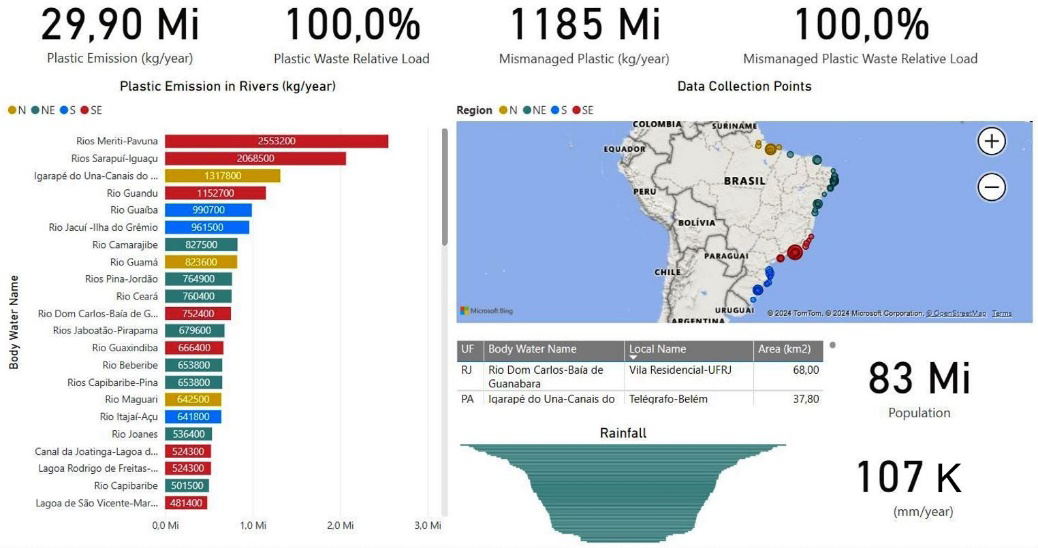
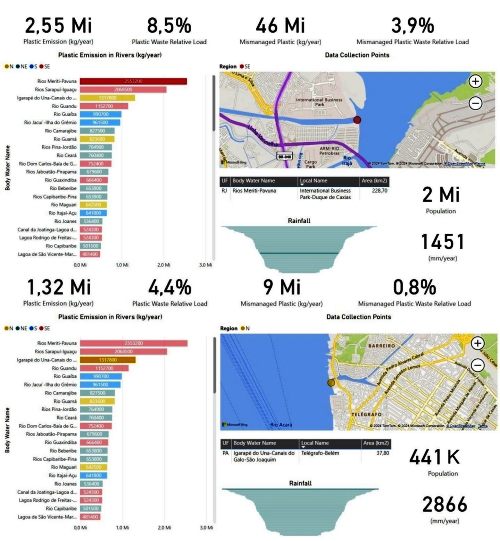
Figure 5 shows two examples of details via Dashboard, with the Meriti-Pavuna River, which flows into Guanabara Bay, Southeast, confirmed as being in first place in terms of plastic emissions in Brazil, and the Una Stream-do Galo-Sao Joaquim Channels, in the North Region, in third place. Table 3 presents details of the eight rivers with the highest plastic emissions, when it is noted that the Sarapuí-Iguaçu River, which also releases its waters into Guanabara Bay, has plastic emissions very close to the Meriti-Pavuna. It is noteworthy that among these eight, only the Camarajibe River flows directly into the sea, the others flow into semi-enclosed water bodies.
| Position | River Name | Region | Plastic Emission (kg/year) | MPW (kg/year) |
|---|---|---|---|---|
| 1º. | Meriti-Pavuna (Guanabara Bay) | SE | 2,55 Mi | 46 Mi |
| 2º. | Sarapuí-Iguaçu (Guanabara Bay) | SE | 2,07 Mi | 42 Mi |
| 3º. | Una Stream-do Galo-São Joaquim Channels | N | 1,32 Mi | 9 Mi |
| 4º. | Guandu (Sepetiba Bay) | SE | 1,15 Mi | 34 Mi |
| 5º. | Guaíba | S | 990,70 K | 27 Mi |
| 6º. | Jacuí River-Gremio Island | S | 961,50 K | 41 Mi |
| 7º. | Camarajibe | NE | 827,50 K | 2 Mi |
| 8º. | Guamá | N | 823,60 K | 18 Mi |
Table 3: The eight Brazilian rivers with the highest plastic emissions.
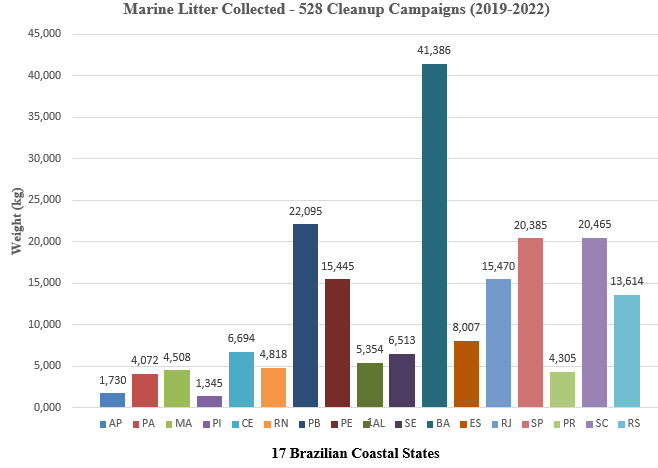
The analyzes of the cleanup campaigns [1] showed (Figure 6) very different results, with the state of Bahia, where the Camarajibe River is located, having the highest rate of marine litter collected (41,386 kg) and the state of Rio de Janeiro, where the Guanabara Bay, in fifth place (15,470 kg). Another aspect is that there was no concern about weighing plastic items separately from others. The collection aimed to remove litter and aesthetic aspects, not differentiated analyzes aimed at guiding public managers, visitors and the local population itself on how to reduce the problem. Therefore, comparisons with the RPEWO website values are not possible, but these differences provide other understandings about prevention and control prioritization (upstream), where to focus efforts according to locational characteristics and response actions (downstream).
Discussion
As a rule, cleanup campaigns are carried out on open beaches, full of glamour, popular for sunbathing, leisure, sea bathing and diving. Aesthetic aspects are valued. The litter to be collected is on the beach, in the intertidal zone or floating on the sea surface. There is ease of circulation and movement of volunteers and their equipment. When divers are available, litter that has sunk and is sitting on the sediments can be collected. The focus is on litter and collection. On the contrary, when litter accumulates in locations with significant social asymmetries, deserts, difficult to access and more complicated, whose bodies of water are more polluted, unpleasant in appearance and have a bad smell, everything presents itself as a challenge. This is exactly what was pointed out to the case of Brazil [40], redefined by Dahsboard, the focus for prevention, control and response, hotspots, should not primarily and mainly be focused on open beaches, but on bodies of water whose neighborhoods are industries such as petrochemicals and tanneries.
Focused on industrial effluents and untreated sewage flows into semi-closed bodies, where urban waste management systems are fragile or lacking, riverbanks are occupied in a disorderly manner, slums and precarious settlements are established, diseases proliferate, with clandestine storm water connections, where litter is burned in the open and emissions of particulate matters spread through the air. Hotspots are, in this case, intrinsically associated with emerging micropollutants, the microplastics that adsorb them and the microorganisms that stick to, colonize and stabilize, carrying out gene exchange and become resistant to vital pharmaceutical drugs – a synergistic effect. This is the case of rivers such as Meriti-Pavuna and Sarapuí-Iguaçu, both at the top of plastic emissions, as well as the Una Stream and the Guandu river, the third and the fourth on the list.
The blatant and ubiquitous presence of plastic litter in the marine environment is a catastrophic and unwanted event, a fault of the economic system, of the chain of responsibility. The null hypothesis (H0) assumes that “a fault tree can be successful only if the analyst has a clear and complete understanding of the system to be modeled” [43]. This postulate suited the occasion well, however, it contradicts Principle 15 of the Rio 92 Declaration on the Precautionary Principle, that is, “(...) Where there are threats of serious or irreversible damage, lack of full scientific certainty shall not be used as a reason for postponing cost- effective measures to prevent environmental degradation” [44]. Therefore, the null hypothesis is rejected and the alternative hypothesis (Ha) is accepted, which states that it is necessary to adopt cost-effective measures to significantly reduce the problem. In Agenda 21 itself, there is already a prescription that favors preventive and control actions (upstream) over response actions (downstream) [45]: “17.21. A precautionary and anticipatory rather than a reactive approach is necessary to prevent the degradation of the marine environment. This requires, inter alia, the adoption of precautionary measures, environmental impact assessments, clean production techniques, recycling, waste audits and minimization, construction and/or improvement of sewage treatment facilities, quality management criteria for the proper handling of hazardous substances, and a comprehensive approach to damaging impacts from air, land and water”.
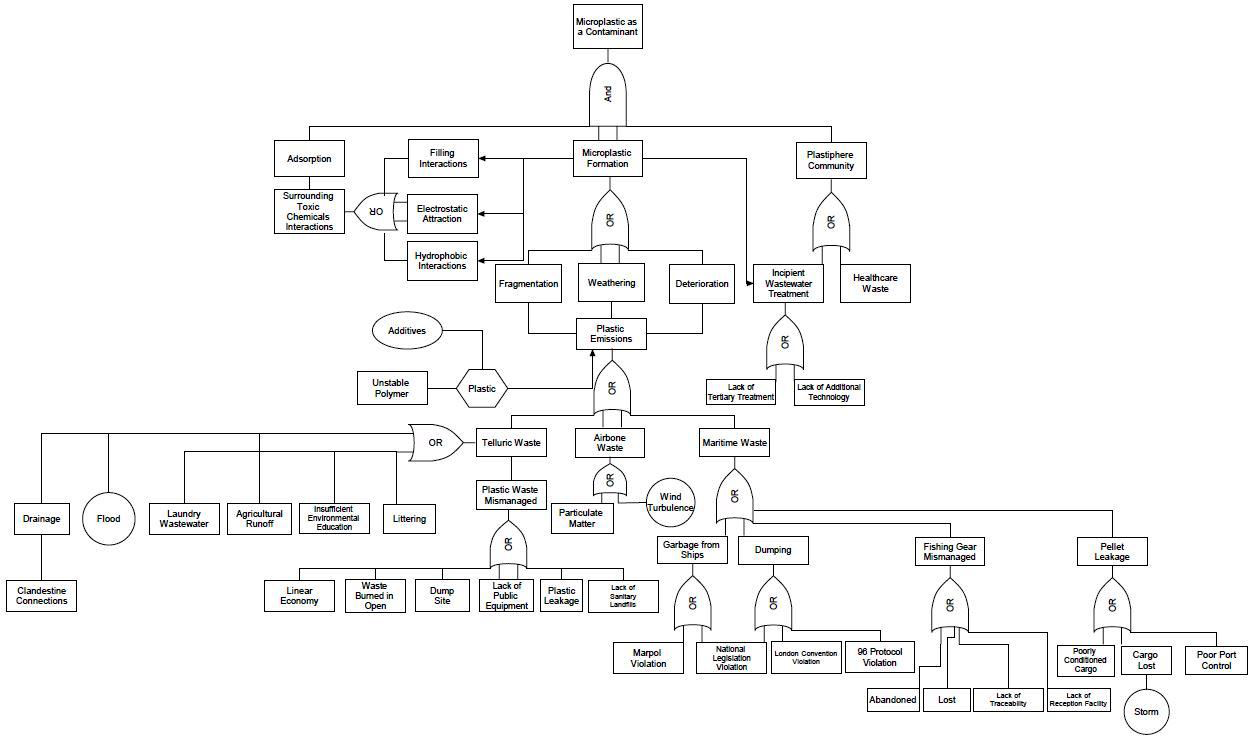
Fault Tree Analysis (FTA) is a top-down deduction methodology using logical operators for obtaining information about the causes that can lead to an undesirable fault of a system, aiming at its correction. The methodology was applied to a reliability analysis of a wastewater treatment plant in Iran, to identify the system’s deficiencies [46]. The basic postulates for FTA [43], applied to marine plastic litter, allows the obtaining of a simple and non-exhaustive tree, with several sublevels of problems, resulting microplastics as marine contaminants (Figure 7).
This tree is in line with that prescribed by Agenda 21, as well as with the United Nations Sustainable Development Goal 14 on conservation and sustainably use of the oceans, seas and marine resources for sustainable development, translating the complexity of the commands and controls to be established. Examining the tree makes it obvious that summarizing the problem of plastic litter into the sea due to a simple failure in waste management and incipient economic circularity [47], as is common, expresses a simplistic view of its multiple facets and stakeholders. It is necessary to think of new paths, new approaches, observing the problem in its different sources of threat, comprehensively. The tree also confirms that due to these multiple facets, sectors, activities, actors and interest groups, the adoption of a Global Treaty on Plastics will not be enough. There will be a lot to do internally, but there is no denying that having an international reference diploma is a good point to catalyze the intervention process.
The FTA obtained is generic, but could serve as a reference for any country, for the development and implementation of a Strategic Intervention Plan, to be applied, for example, in the eight Brazilian hotspots with the highest plastic emissions, intending to close the taps on plastic emissions, pollutants and potential sources of microenvironments favorable to the proliferation of pathogenic species and resistance to antibiotics.
The intervention must be accompanied by a search for additional information, for the purposes of detailing and adjustments to the FTA. the acquisition stages would comprise [43]: (i) definition of what types of complementary information are relevant; (ii) implementation of a monitoring scheme to obtain pertinent information; (iii) carrying out analytical diagnosis, modeling and decision- making for supplementary interventions.
The FTA, together with the information obtained by the Dashboard, can also assist in reviewing the procedures for carrying out cleanup campaigns, aiming to make them more effective in light of the breakdown of flaws in their intentions linked to a National Plan to Combat Marine Litter, in particular where they should prioritize their efforts in waste collection, with greater social benefits and healthcare. Instead acting only on open beaches, actions should migrate to areas around petrochemical industries, with social asymmetries, with untreated sewage flows and lacking of urban waste management systems. Specific environmental standards need to be nationally adopted also and more restrictive environmental permitting and inspection procedures must be strengthened, aiming for greater environmental safety.
Conclusions
That idyllic, remote, escape place, where one could stay safe or have a contaminant-free diet [2], no longer exists, not even on the seabed. Plastic pollution is the cause of this loss and the solastalgia imposes itself. Since the Second World War, our relationship with plastic has been a bit schizophrenic. From cultural positivity due to its multiple uses and important functions, in cutting-edge industries, cheap price, visual attractiveness, to negativity. The change occurred because plastic waste started to be poorly managed, it has become trash on the streets, it was spread by the wind, it has become debris in the sea [48]. This negative perception may increase when more and more people discover the reality of what they cannot see in plastics and their fragments and represents a hazardous plight and a warning sign: (i) their physical presence internally in the species, with physiological repercussions; (iii) the contaminating chemical substances that compose or micropollutants carry adsorbed; (iii) the pathogenic microorganisms they can transport and move fouled out. But the plastic itself is one thing, the chemical pollutants and microorganisms that exist in the environment are another.
In favor of plastics, attention must be paid to the freedom of creation and production that they have provided since their emergence, in terms of the process of replacing natural materials from endangered species such as turtles and elephants, in addition to innovations in the design sector [48]. Against, the point is when plastics no longer met the utility for which they were created, due to loss of quality, as they were framed within an aesthetic of the expendable, in addition to being considered of lower quality than natural materials [48]. Rejection increased when it was seen as litter, due to the large amount of waste generated and the ubiquity of its fragments. The peak occurred when they began to be seen as potentially harmful to species and human health.
In relation to the litter produced by maritime activities, Imo defined a Strategy to Address Marine Plastic Litter from Ships, especially concerning fishing vessels. The strategy aims to reduce the contribution of marine plastic litter, improve the effectiveness of port reception and facilities, enhanced public awareness, education and seafarer training, and strengthen international cooperation [49]. Imo established and expanded, with financial support from the Government of Norway and partnerships via the Global Industry Alliance - GIA, an international cooperation project, the GloLitter Partnerships Project (https://glolitter.imo.org/project/ about). GloLitter works with 30 countries engaged as either Lead Partner Countries, as Brazil, or Partner Countries, to support them in implementing the maritime strategy to combat plastic litter.
For its part, the United Nations Environment Assembly (Unea) has been leading the process of adopting a new global agreement on plastics, comprising its full lifecycle, from preventive measures in upstream to waste management in downstream, despite the resistance it has been facing from powerful political-economic agents. However, without an International Fund that supports less developed countries in changing their own production matrices, improving their waste management and environmental permitting licensing systems, engaging in sustainable entrepreneurship in recycling plastics and replacing them with biodegradable materials without toxic additives, and implementing intervention, control and combat actions against plastic waste, all of this will be very costly compared to other more prominent demands. Furthermore, it will involve a long time span and outside the forecasts defined in the global agreement, given the complexities and multifaceted solutions involved in the process. The website “River Plastic Emissions to the World’s Oceans” serves as a reference for countries to assess their response and the new Dashboard developed has the potential to assist the Brazilian Government with greater clarity in prioritizing rivers and areas where the highest plastic emissions and mismanaged waste at high rates occur along its wide coast, jointly redirecting efforts to reduce chemical effluents, airborne particulate matters and expanding control over healthcare waste destination. The Dashboard highlighted the Meriti-Pavuna and Sarapuí- Iguaçu rivers, in the state of Rio de Janeiro, as high priorities for intervention. The FTA methodology, in addition to the Dashboard, proves to be an important instrument for countries to define Strategic Intervention Plans on plastic litter spreading, which needs to be accompanied by the collection of additional information for its detailing and improvement, facing supplementary actions. Artificial Intelligence resources can also be added to this kind of analysis and in defining the strategies and actions.
Marine plastic litter is as a cross-cutting crisis impacting globally natural and human environments [50] and for its solution an interdisciplinary approach is necessary, requesting better science, policy inventories, communication- oriented efforts and scholarly research. In addition to these aspects, investments must be channeled to foster innovations in areas such as marine biotechnology, so that in the coming decades there can be a sustainable replacement of plastic from oil.
Finally, it is worth highlighting that this research offers new perspectives and insights into marine plastic pollution, moving away from the commonplace of approaching it as merely a solid waste management problem, focusing solely on cleanup campaigns, collections, recycling, and economic circularity. Given the real environmental challenges to be stared at, which extend into our future, this perspective is highly questionable, if not harmful to everyone.
CRediT Authorship Contribution Statement
Robson Jose Calixto de Lima: Conceptualization. Ricardo Coutinho: Supervision. Declaration of competing interest: The authors declare that they have no known competing financial interests or personal relationships that could have appeared to influence the work reported in this paper. Data availability: The authors do not have permission to share national data, but the data from the Ocean Cleanup (https://theoceancleanup.com/sources/) is open. Acknowledgements: Robson Jose Calixto de Lima is a member of the staff of the Ministry of the Environment and Climate Change of Brazil and this article is part of his doctorate with the Marine Biotechnology Program, of the Instituto de Estudos do Mar Almirante Paulo Moreira (IEAPM), associated with Federal University Fluminense (UFF), Rio de Janeiro, Brazil. Ricardo Coutinho thanks National Council for Scientific and Technological Development of Brazil (CNPq) for his Research Productivity Fellowships and Carlos Chagas Filho Foundation for Research Support in Rio de Janeiro (FAPERJ) for the Scientist of State Grant. The authors would like to thank Dr. Flavio da Costa Fernandes for his comments on the article.
References
-
Calixto de Lima RJ, Coutinho R (2024) The Brazilian National Plan to Combat Marine Litter: A critical assessment. Marine Pollution Bulletin 206: 116785.
-
Carson R (1962) Silent Spring. In: 14th (Edn.), Edward O Wilson (Ed.), A Mariner Book. ISBN o-618-23505-X.
-
Canevarolo SV (2013) Polymer science: a basic test for technologists and engineers (in Portuguese). In 3rd (Edn.), Sao Paulo, Artliber Editora.
-
Hartmann NB, Hüffer T, Thompson RC, Hassellöv M, Verschoor A, et al. (2019) Are We Speaking the Same Language? Recommendations for a Definition and Categorization Framework for Plastic Debris. Environmental Science & Technology 53(3): 1039-1047.
-
Cox KD, Covernton GA, Davies HL, Dower JF, Juanes F, et al. (2020) Correction to Human Consumption of Microplastics. Environ Sci Technol 54: 10974-10974.
-
Csiro (2020) Microplastics in wastewater. Quantities and hazards associated with their release into the marine environment. Commonwealth Scientific and Industrial Research Organisation-Csiro.
-
Rubesinghe C, Brosché S, Withanage H, Pathragoda, Karlsson T (2022) X-Press Pearl, a ‘new kind of oil spill’ consisting of a toxic mix of plastics and invisible chemicals. International Pollutants Elimination Network (IPEN).
-
Dziobak MK, Fahlman A, Wells RS, Takeshita R, Smith C, et al. (2024). First evidence of microplastic inhalation among free-ranging small cetaceans. Plos One 19(10).
-
Avio CG, Gorbi S, Milan M, Benedetti M, Fattorini D, et al. (2015) Pollutants bioavailability and toxicological risk from microplastics to marine mussels. Environmental Pollution 198: 211-2222014.
-
Navarro A, Luzardo OPL, Gómez M, Acosta-Dacal A, Martínez I, et al. (2022) Microplastics ingestion and chemical pollutants in seabirds of Gran Canaria (Canary Islands, Spain). Published by Elsevier Ltd.
-
Liebmann B, Köppel S, Königshofer P, Bucsics T, Reiberger T, et al. (2018) Assessment of Microplastic Concentrations in Human Stool - Final Results of a Prospective Study. Conference on Nano and microplastics in technical and freshwater systems, Microplastics.
-
Wang B, Yu G (2022) Emerging contaminant control: From science to action. Front Environ Sci Eng 16(6): 81.
-
Stapleton MJ, Hai FI (2023) Microplastics as an emerging contaminant of concern to our environment: a brief overview of the sources and implications. Published by Informa UK Limited, trading as Taylor & Francis Group. Bioengineered 14: 1-2244754.
-
Brandt E, Queiroz MF, Afonso FB, Aquino RJCF, Chernicharo SF, et al. (2013) Behaviour of pharmaceuticals and endocrine disrupting chemicals in simplified sewage treatment systems. Journal of Environmental Management 128: 718e726.
-
Unep/Who (2013) State of the Science of Endocrine Disrupting Chemicals-2012. An assessment of the state of the science of endocrine disruptors prepared by a group of experts for the United Nations Environment Programme and World Health Organization.
-
Ingre-Khans E, Ågerstrand M, Rudén C (2017) Endocrine disrupting chemicals in the marine environment. ACES report number 16. Department of Environmental Science and Analytical Chemistry, Stockholm University.
-
Bryan GW, Gibbs PE, Hummerstone LG, Burt GR (1986) The Decline of the Gastropod Nucella Lapillus around South-West England: Evidence for the Effect of Tributyltin from Antifouling Paints. J mar biol Ass UK 66: 611-640.
-
Asselman M (2009) Tributyltin‐induced imposex in marine gastropods: A diminishing environmental problem? Master Program: Limnology and Oceanography. University of Amsterdam, IBED/AEE.
-
Jobling S, Nolan M, Tyler CR, Brighty G, Sumpter JP (1998) Widespread Sexual Disruption in Wild Fish. Environ Sci Technol 32(17): 2498-2506.
-
Kidd KA, Blanchfield PJ, Mills KH, Palace VP, Evans RE, et al. (2007) Collapse of a fish population after exposure to a synthetic estrogen. PNAS 104: 21-8901.
-
Wagner M, Monclús L, Arp HPH, Groh KJ, Løseth ME, et al. (2024) State of the science on plastic chemicals - Identifying and addressing chemicals and polymers of concern. PlastChem.
-
Antea Group (2024) Managing PFAS Risks: A Business Leader’s Guide to Environmental Responsibility.
-
Zettler ER, Mincer TJ, Amaral-Zettler LA (2013) Life in the “Plastisphere”: Microbial Communities on Plastic Marine. Debris Environ Sci Technol 47: 7137-7146.
-
Sharma S, Mohler J, Mahajan SD, Schwartz SA, Bruggemann L, et al. (2023) Microbial Biofilm: A Review on Formation, Infection, Antibiotic Resistance, Control Measures, and Innovative Treatment. Microorganisms 11: 1614.
-
Who (2022) Dietary and inhalation exposure to nano- and microplastic particles and potential implications for human health. World Health Organization. ISBN 978-92- 4-005460-8.
-
Schulze A, Mitterer F, Pombo JP, Schild S (2021) Biofilms by bacterial human pathogens: Clinical relevance- development, composition and regulation-therapeutical strategies. Microbial Cell, February 8: 2.
-
Furno MF, Poli A, Ferrero D, Tardelli F, Manzini C, et al. (2022) The Culturable Mycobiota of Sediments and Associated Microplastics: From a Harbor to a Marine Protected Area, a Comparative Study. Journal of Fungi 8: 927.
-
Lacerda ALF, Proietti MC, Secchi ER, Taylor JD (2020) Diverse groups of fungi are associated with plastics in the surface waters of the Western South Atlantic and the Antarctic Peninsula. Molecular Ecology. Wiley.
-
Kim SH, Lee JW, Kim JS, Lee W, Park MS, et al. (2022) Plastic‑inhabiting fungi in marine environments and PCL degradation activity. Antonie van Leeuwenhoek. Journal of Microbiology 115: 379-1392.
-
Witso IL, Basson A, Aspholm M, Wasteson Y, Myrme M (2024) Wastewater associated plastispheres: A hidden habitat for microbial pathogens?. PLoS ONE 19(11): e0312157.
-
Munn CB (2020) Marine Microbiology. Ecology and Applications. In: 3rd (Edn.), CRC Press. Taylor & Francis Group. ISBN-13: 978-0-367-18356-1.
-
Carpenter EJ, Anderson SJ, Harvey GR, Miklas HP, Peck BB (1972) Polystyrene Spherules in Coastal Waters. Woods Hole Oceanographic Institution. Science 178: 4062.
-
Song Y, Zhang J, Yang L, Huang Y, Zhang N, et al. (2024) Internal and external microplastic exposure in young adults: A pilot study involving 26 college students in Changsha, China. Published by Elsevier Inc.
-
de Sousa FDB (2024) Will the Global Plastics Treaty break the plastic wave? The beginning of a long discussion road. Cambridge Prisms: Plastics 2(e16): 1-12.
-
Ibge (2024) 2022 Census – Panorama (In Portuguese). Updated. Brazilian Institute of Geography and Statistics – Ibge.
-
Schmidt C, Krauth T, Wagner S (2017) Export of Plastic Debris by Rivers into the Sea. Environ Sci Technol 51: 12246-12253.
-
Jambeck JR, Geyer R, Wilcox C, Siegler TR, Perryman M, et al. (2015) Plastic waste inputs from land into the ocean. Science 347(6223).
-
Lebreton LCM, der Zwet J, Damsteeg JW, Slat B, Andrady A, et al. (2017) River plastic emissions to the world’s oceans. Nat Commun 8-15611.
-
Lebreton L, Andrady A (2019) Future scenarios of global plastic waste generation and disposal. Palgrave Communications. 5: 6.
-
Meijer LJJ, Emmerik V, van der Ent TR, Schmidt C, Lebreton L (2021) More than 1000 rivers account for 80% of global riverine plastic emissions into the ocean. Science Advances. Environmental Studies.
-
Oceana Brazil (2024) Fragments of destruction: impacts of plastic on marine biodiversity Brazilian (In Portuguese). ISBN 978-65-980818-5-0.
-
Alencar MV, Gimenez BG, Sasahara C, Elliff CI, Velis CA, et al. (2023) Advancing plastic pollution hotspotting at the subnational level: Brazil as a case study in the Global South. Marine Pollution Bulletin 194: 115382.
-
Haasl DF, Roberts NH, Goldberg FF, Vesely WE (1981) Fault Tree Handbook. Nureg-0492. U.S. Nuclear Regulatory Commission.
-
Unga (1992) Report of the United Nations Conference on Environment and Development (Rio de Janeiro, 3-14 June). United Nations General Assembly - Unga. Annex I - Rio Declaration on Environment and Development. A/ CONF.151/26 1.
-
UNSD (1992) United Nations Conference on Environment & Development. (Rio de Janeiro, Brazil, 3 to 14 June). Agenda 21. United Nations Sustainable Development.
-
Taheriyoun M, Moradinejad S (2015) Reliability analysis of a wastewater treatment plant using fault tree analysis and Monte Carlo simulation. Springer Nature 187: 4186.
-
Barra R, Leonard SA, Whaley C, Bierbaum R (2018) Plastics and the circular economy. Scientific and Technical Advisory Panel (STAP) to the Global Environment Facility (GEF). Washington, DC. Article shared under a Creative Commons Attribution-Non Commercial-No Derivative Works License.
-
Dennis L (2024) A brief history of the use of plastics. Cambridge Prisms: Plastics 2(e19): 1-7.
-
Imo (2021) Strategy to Address Marine Plastic Litter from Ships. Resolution MEPC.341(77). MEPC 77/16/ Add.1, Annex 2, International Maritime Organization – Imo, pp: 1.
-
Vincea J, Stoettc P (2018) From problem to crisis to interdisciplinary solutions: Plastic marine debris 96: 200-203.
- Genetic Improvement of Nile Tilapia (Oreochromis niloticus): Advances in Selective Breeding and Genomic Approaches for Sustainable Aquaculture
- Creating a Healthier, More Vibrant Open and Closed Aquatic Environment. A Submersible, Centrifugal Magnetically Affixed Current Changing Aquarium Pump
- An Attempt to Assess Alpha Diversity and Sample Size: Using the Ostracod Assemblages off Kumamoto Port, Japan
- Assessment of the Efficiency of Common Fishing Gears and Crafts Used at Mohananda River of Chapai Nawabganj, Bangladesh
- Fish Productivity and Biodiversity Status of Sundarban Mangrove in Bangladesh
- Assessment of Population Growth and Fishing Vulnerability of Helicolenus dactylopterus along the Syrian Coast (Eastern Mediterranean Sea)