
Fish Market and Marketing System in the Cuddalore District Chidambaram and Parangipettai Regions
The fish production in the country in 2022 was 8.13 million tonnes, of which 4.2 million tonnes was contributed by the marine sector and the rest by inland sector. Fish and fish products accounted for approximately Rs.9,200 crore towards country’s exports, which constitutes 20% of the national agricultural exports. Marine fisheries sector forms the source of livelihood for over 7.5 million traditional fishermen inhabiting about 5,600 coastal fishing villages situated along the country’s coastal belt. It provides direct and indirect employment for several million people in fishing, processing, trading and ancillary activities. The present study aims to find out the marketing problems of fisherman in Chidambaram and Parangipettai Villages in the Cuddalore District. A large number of people are concerned with fish production, distribution and marketing systems in both the fish markets of the Cuddalore District, viz., the Chidambaram fish market and the Parangipettai fish market. The main aim of this study is to describe the present status of fish marketing system of fish and dry fish products. The description is based on primary data and secondary data collected in the different markets.
Introduction
A fish market is a marketplace for selling fish and fish products. It can be dedicated to wholesale trade between fishermen and fish merchants, or to the sale of seafood to individual consumers, or to both. Marketing of fish involves all the activities in the flow of fish or fish products from the farmer to the consumers. It includes various operations required to move the fish or fish products from the producer to the consumer [1, 2].
Fish production is an integral part of the marketing process as fish and fishery products are highly traded commodities. Fish market is such kind of place where people gather for selling and buying of fishes. Fish market is also be defined that a periodical gathering of people for buying and selling of fish or fisheries product. Fish marketing system is the system through which fishes reach to consumers from producers [2, 4, 5, 6, 7, 8]. Fish consumers are to depend on an effective fish marketing system. In India, fish marketing is almost exclusively a preserve of the private sector where the livelihoods of a large number of people are associated with fish production and marketing systems [9, 10]. However, the most serious marketing difficulties seem to occur in remote communities, with lack of transport, ice, and poor road facilities and where the farmers are in particularly weak position in relation to intermediaries [11]. Domestic markets and distribution of fish are dominated by a large number of intermediaries. All fish traded internally and for export pass through private channels. Fish distribution usually involves four levels such as the primary market, the secondary market, the higher secondary market. To develop fisheries sector, is important to know the fish marketing system. Without developing fish marketing system, the fish farming communities and fishermen will be unable to derive their benefit from aquaculture and open water fisheries [12, 13, 14]. Establishment of modern fish landing centre and retail markets near the fish landing port, introduction of government fish shops and insulated and refrigerated fish vans and fish carriers, training of all personnel related to fish marketing about fish handling, quality of fish, hygiene practices, improvement of existing fish market structure, provision for government and private funding assistance for fishers/fish farmer, formulation and enactment of independent act/ordinance for fish landing and marketing are highly recommended by Ali, et al. [15], the following are the goals of this investigation: To study the existing fish marketing systems in Chidambaram and Parangipettai fish market, to know pricing mechanism of fish at different levels and to identify marketing problems that have negative impacts on poor fishermen, traders and other associated groups and recommendation for improvement of the marketing system.
Materials and Method
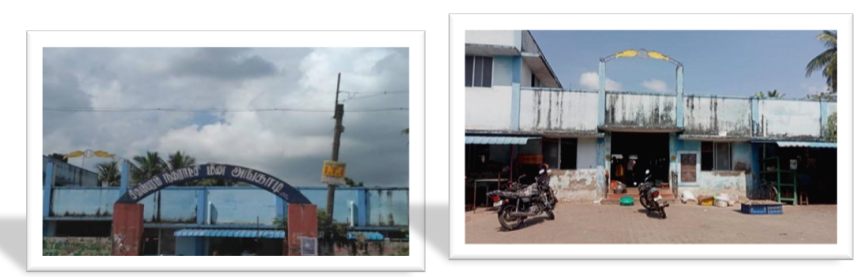
Two fish markets of the Cuddalore district namely, the Chidambaram fish market and the Parangipettai fish markets were selected for the study. Data were collected from February 2023 to April 2023 (Figure 1).
Selection of Target Group and Sample Size
The target groups were the fishermen who were involved in selling fish permanently (as the primary income source) and partially (as the secondary income source) for their livelihood. As Parangipettai market is a primary category market, 10 aratdars were selected from Chidambaram while 17 retailers were selected from both the fish markets.
Data Collection
Physical market visits and questionnaire -based interview methods were used for data collection. Data were collected from both primary and secondary sources. Face to face interview was followed during data collection from aratdar and retailers. Various books, reports, journals, bulletins, thesis paper were also used as secondary sources for collecting data.
Data Analysis
The collected data were presented in textual, tabular and graphical form and analyze the data by using simple statistical tools such as mean and percentage using Microsoft excel 2007 (Table 1).
| Survey Area | Information Gathered | |
|---|---|---|
| Eye to eye observation and Questionnaire survey | Chidambram and Parangipettai fish market wholesale fish market | Building information, Fish shed, drainage condition, land use and environmental condition |
| FGD and KII | Electricity, ice and water supply, sanitation facility and infrastructural constraints. |
Table 1: Data collection technique research tools for the study.
Data Processing and Analysis
After collection of data from the field, these were verified to eliminate errors and inconsistencies. Some of the collected data were in local units due to respondent’s familiarity with those units. Data of local units were converted into international units before transferring to the computer. Preliminary data sheets were compared with the original questionnaire and result sheets to ensure the accuracy of the data entry. Data were processed and finally analyzed using Microsoft Excel Software.
Results
The results of the present study are based on the data collected from two different markets, Chidambaram and Parangipettai of the Cuddalore District (Table 2).
| S.no | Name of the market | Day of the market |
|---|---|---|
| 1 | Chidambaram fish market | Daily |
| 2 | Parangipettai fish market | Daily |
Table 2: The following is the day- wise list of whole sale market and retail markets. Season and Time of Fish Trading Fishes are
Table 2: The following is the day- wise list of whole sale market and retail markets. Season and Time of Fish Trading Fishes are marketed year-round. But during rainy season, the availability of captured fishes is very high before winter and during winter the availability of cultured fish is higher than captured fish. It was found that the Chidambaram fish market activities ran from 7am to 6pm every day while the Parangipettai fish market activities ran from 7am to 6pm every day.
Quantity of Fish Sold
According to the study, it was found that daily supply of fishes in the Chidambaram fish market was approximately 1-2 tons, and that of the Parangipettai fish market is 40 kg per day.
Composition of Fishes in the Two Markets
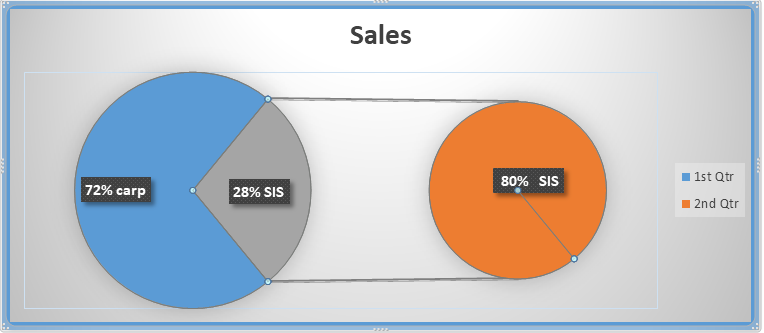
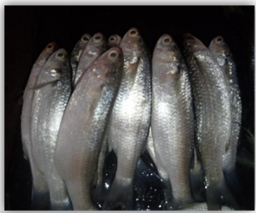
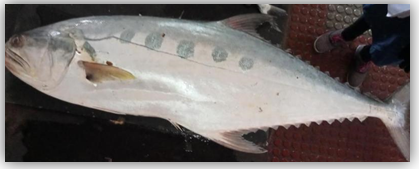
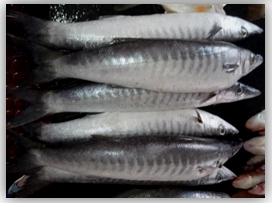
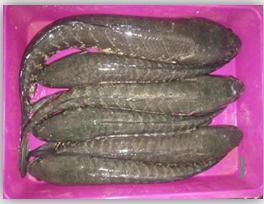
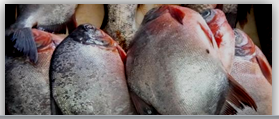
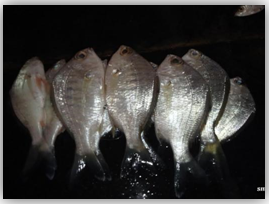
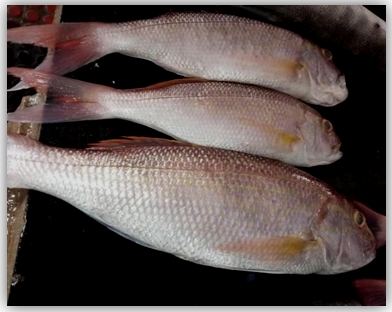
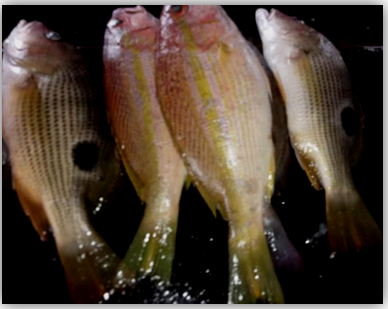
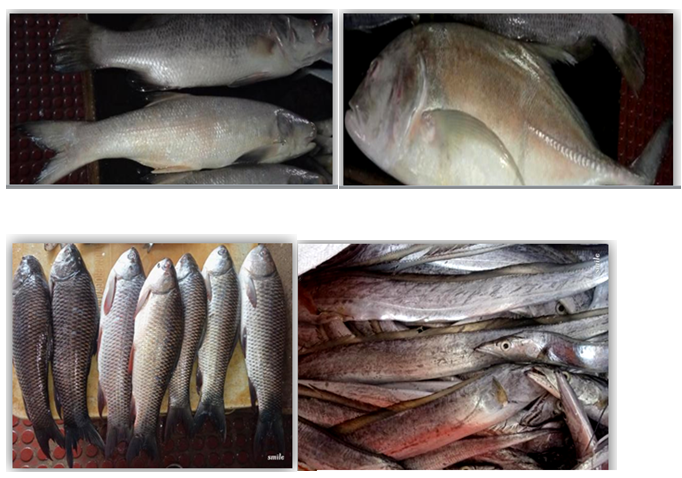
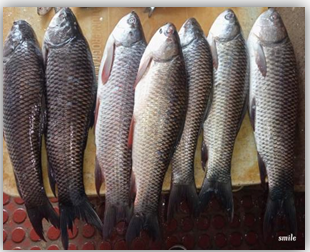
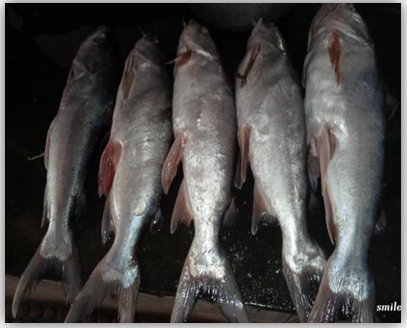
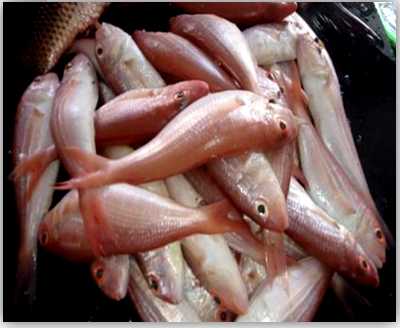
According to the survey results, it was estimated that most of the fishes in these markets were Indian major carps and exotic carp. High quantities of other fishes such as Small Indigenous Species (SIS), catfishes, sardine, prawn, shrimp, tilapia, and other fish including marine are seen in the two markets. The market share of different fish species in the two markets are shown in Figure 2, Tables 3 and 4.
| S.No | Family | Local name | Scientific name | Price of species (Rupees /Kg) |
|---|---|---|---|---|
| 1 | Mugilidae | Mullet | Mugil cephalus | 200 |
| 2 | Clupeidae | Sardine | Sardinella longiceps | 100 |
| 3 | Scombridae | Mackeral | Rastrelliger kanagurta | 150-200 |
| 4 | Cyprinidae | Carp | Catla catla, labio rohitta, Cirrhinus mrigala | 130-150 |
| 5 | Embiotocidae | Pink perch | Zalembius rosaceus | 200- 250 |
| 6 | Albulidae | Lady fish | Albula vulpes | 250 |
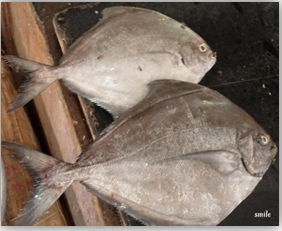
| 7 | Bramidae | Pomfret | Brama brama | 100-150 |
| 8 | Gadidae | Cod | Gadus morhua | 300 |
| 9 | Channidae | Murrel | Channa striata | 300-400 |
| 10 | Ictaluridae | Cat fish | Siluriformes | 300 |
| 11 | Engraulidae | Malabar anchovy | Thryssa malabarica | 50 |
| 12 | Sphyraenidae | Barracuda | Perciformes | 150 |
| 13 | Trachipteridae | Ribbon fish | Trachipterus ishikawae | 100 |
| 14 | Cichlidae | Tilapia | Oreochromis niloticus | 50-100 |
| 15 | Scombridae | Seer fish | Scomberomorus commerson | 700 – 800 |
| 16 | Engraulidae | Anchovy | Stolephorus indicus | 150- 200 |
| 17 | Oegopsina. | Squid | Decapodiformes | 300 |
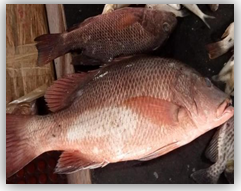
| 18 | Lutjanidae | Red snapper | Lutjanus campechanus | 300- 500 |
| 19 | Acanthuridae | Unicorn fish | Naso brevirostris | 300 |
| 20 | Leiognathidae | Pony fish | Leiognathus equulus | 50 |
| 21 | Carangidae | Horse mackeral | Trachurus trachurus | 150 – 200 |
| 22 | Myliobatidae | Ray fish | Batoidea | 300-350 |
| 23 | Soleidae | Sole fish | Solea solea | 100-150 |
| 24 | Serranidae | Sea bass | Centropristis striata | 300-400 |
| 25 | Gerreidae | Silver biddy fish | Gerres oyena | 50 |
| 26 | Latidae | Barramudi | Lates calcarifer | 150 |
| 27 | Cichlidae | pearlspot cichlid, | Etroplus suratensis | 100 |
| 28 | Penaeidae | White leg shrimp | Litopenaeus vannamei | 300-350 |
| Indian prawn | Fenneropenaeus indicus | 500 | ||
| Caramote prawn | Melicertus kerathurus | 500 | ||
| Tiger shrimp | Penaeus monodon | 500 | ||
| 29 | Polynemidea | Ootan | Eleutheronema tetradactylum | 100 |
| 30 | Regalecidae | Oar fish | Regalecus glesne | 80-100 |
| 31 | Pleuronectidae | Flat fish | Hippoglossuss tenolepis | 100-150 |
| 32 | Sparridea | Sudan | Leptobarbus hoevenii | 80- 100 |
| 33 | Carangidea | Malabar trevally | Carangidea malabaricus | 100 |
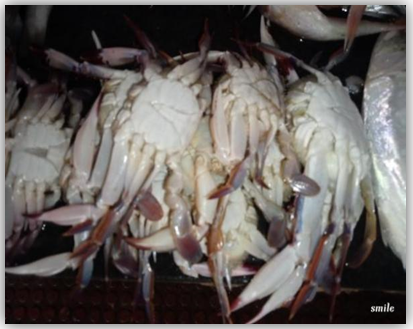
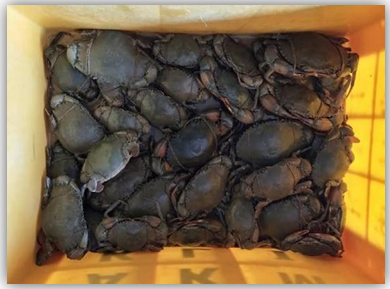
| 34 | Malacostraca | Blue swimming crab | Portunus pelagicus | 250 |
| 35 | Beloonidea | Gar fish | Belone belone | 100 |
| 36 | Scombridea | Tittle tunny | Euthynnus, alletteratus | 50-100 |
Table 3: Family, local name, scientific name of species recorded in both markets during the study period.
| Order | Species | Price (Rs) | |
|---|---|---|---|
| 1. | Clupeiformes | Sardine | 100-120 |
| 2. | Lampriformes | Ribbon fish | 200 |
| 3. | Gonorynchiformes | Milk fish | 150 |
| 4. | Siluriformes | Cat fish | 50 |
| 5. | Perciformes | Pony fish | 50-70 |
| 6. | Perciformes | Tilapia | 50 |
| 7. | Perciformes | Mackeral | 150-200 |
| 8. | Cypriniformes | Carp | 150-200 |
| 9. | Decopoda | Prawn | 350 |
| 10. | Perciformes | Jew fish | 150 |
| 11. | Decopoda | Tiger shrimp | 500 |
| 11. | Decopoda | White leg shrimp | 500 |
| 12. | Perciformes | Red snapper | 350-500 |
| 13. | Perciformes | Cod | 250-300 |
| 14. | Mugiliformes | Mullet | 200 |
| 15. | Cypriniformes | Sudan | 100 |
| 16. | Clupeiformes | Llish | 100-150 |
| 17. | Cypriniformes | Squid | 150 |
| 18. | Decopoda | Crab | 300 |
| 19. | Perciformes | Rabbit fish | 150 |
| 20. | Elopiformes | Lady fish | 200 |
| 21. | Pleuronectiformes | Sole fish | 150 |
| 22. | Carangidea | Malabar trevally | 50-70 |
| 23. | Scombridea | Bluefin | 150 |
| 24. | Scombridea | Little tunny | 50-100 |
| 25. | Scombriformes | Seer fish | 800-900 |
Table 4: Price of Parangipettai fish market.
Women Involvement
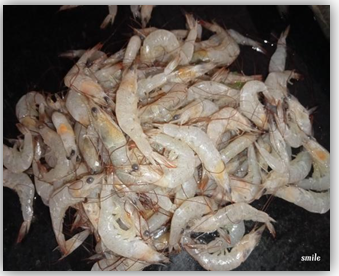
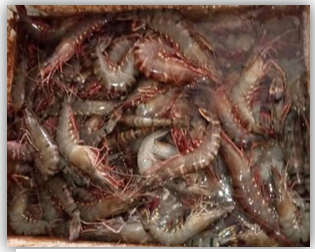
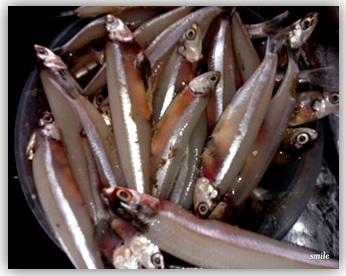
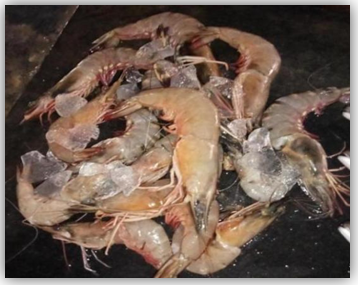
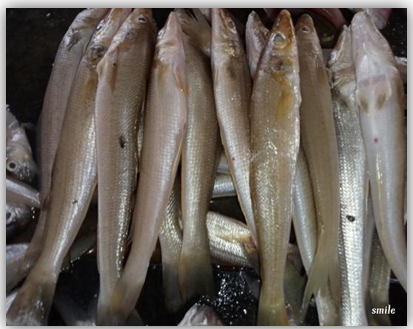
Women are involved in many fishery activities such as aquaculture, fishing, and capture. Mostly fisherwomen are observed selling fish and shrimps in both the markets
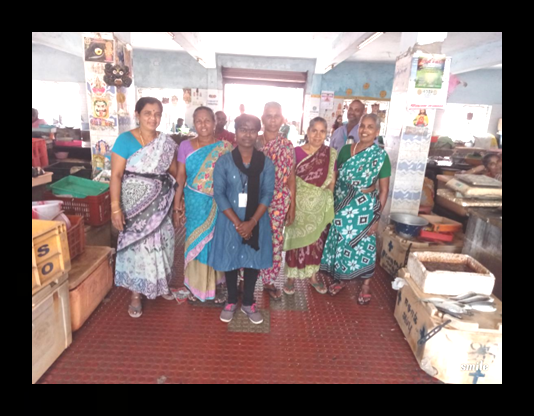
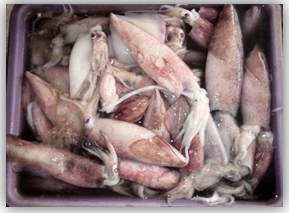
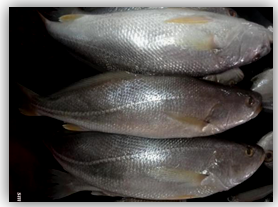
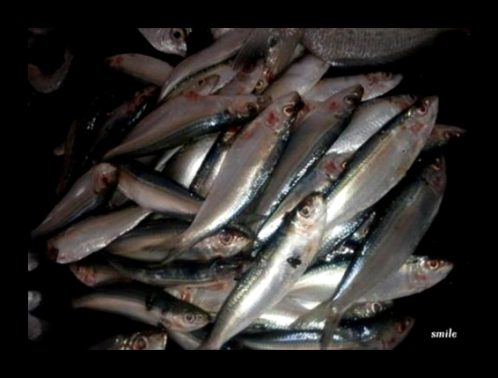
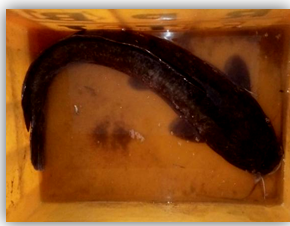
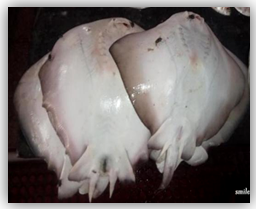
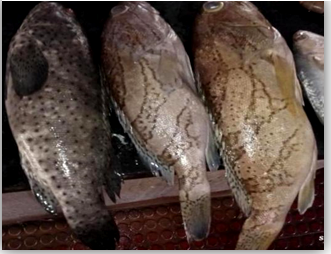
(Chidambaram and Parangipettai). They are engaged in selling fish signifying their major role in marketing (Figures 3-32).
Dry Fish Species
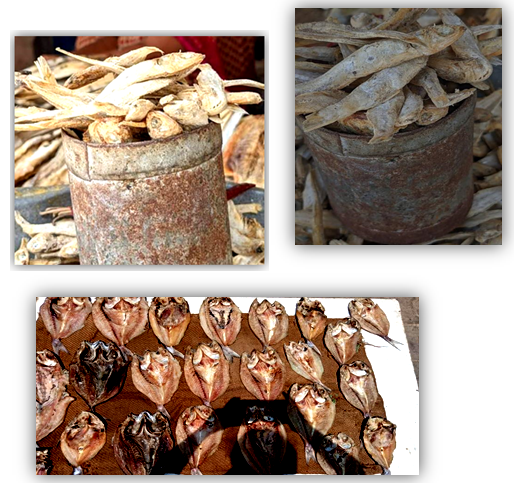
Different types of fish found in these fish markets are salted and dried to prepare dry fishes. Freshwater (inland and brackish) and marine water species were dried (Figure 33) and (Table 5).
| S. No | Local name | Scientific name | Family | Price |
|---|---|---|---|---|
| 1. | Clupeidae | Sardine | Sardinella longiceps | (50) -100 Rs |
| 2. | Engraulidae | Anchovy | Stolephorus indicus | 200-250 Rs |
| 3. | Gadidae | Cod | Gadus morhua | 200 Rs |
| 4. | Clupeidae | Cat fish | Sardinella longiceps | 100 Rs |
| 5. | Mugilidae | Mullet | Mugil cephalus | 100 Rs |
| 6. | Trachipteridae | Ribbon fish | Trachipteru sishikawae | 150 Rs |
| 7. | Bramidae | Pomfret | Brama brama | 100 Rs |
| 8. | Leiognathidae | Pony fish | Leiognathus equulus | 70 Rs |
| 9. | Lutjanidae | Red snapper | Lutjanus campechanus | 200Rs |
| 10. | Cyprinidae | Carp | Laeo rohita | 200 Rs |
| 11. | Cichlidae | Tilapia | Oreochromis niloticus | 100Rs |
| 12. | Scombridae | Mackeral | Rastrelliger kanagurta | 150 Rs |
| 13. | Sparridea | Sudan | Leptobarbus hoevenii | 100 Rs |
| 14. | - | Dried shrimp | - | 50 Rs |
| 15. | - | Dry prawn | - | 200 Rs |
Table 5: Dry fish family, local name and scientific name.
Price of Fish
The price of fish varied considerable depending upon the freshness, availability, season, size, species and quality of the specimen being sold. Alam Md, et al. [16] reported that market structure, species quality, size and weight influence the price of fish. In two markets of Chidambaram and Parangipettai fish market, pricing policy is not fixed by the government and trade association. The price of fish was usually set through open auction and bidding bargain between wholesalers and retailers. According to policy of auction system, the price for an allotment of fish was settled firmly through open, competitive bidding. The highest bidder takes prompt delivery of the commodity in exchange of cash payment. Generally, bidding was announced loudly by auctioneer in front of retailers. Auctioneer usually charges about 2-3% commission of the sale price from wholesalers. Different kind of fishes like shrimp, prawn, crab, seer fish etc. were also sold in these markets. These kinds of fishes also have good economic importance. Among them seer fish (<25cm) average price was 400 TK./kg and the big size(26- 40cm) was about 700 -800TK./kg. and the lowest for pony fish (TK. 50 per kg).
Profit Margin
In the present study it is found that the primary producers barely get 45-50% of the retail market prices for their products. Middlemen get 35-40% of the retail market prices. The cost of transportation, preservation and tools paid to leaseholders determine how much share of the retail market prices get fishermen/farmers. The quality/weight loss of 5-10% and the remaining 15-20% was spent for transportation, preservation and other charges.
Income of Wholesalers and Retailers
The result of the study showed that average daily income of wholesaler in Chidambaram fish market was TK.700, while in Parangipettai fish market at TK. 500. Wholesalers engage themselves a short period (3 to 5 hours) for fish selling as middlemen and earn a considerable amount of money in comparison with retailers. The average gross profit of the retailers of the Chidambaram fish market was estimated to be 500 TK./day and Parangipettai fish market about 300TK./ day. It is true that the wholesalers are influential persons in the fish markets and they have a strong relationship with other intermediaries.
Constraints Present
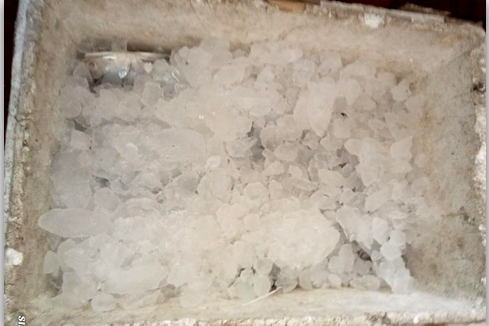
A number of constraints for fish marketing were reported by the retailers. The constraints were lack of storage facilities, poor supply of ice, exploitation by middlemen, lack of money and lack of infrastructure. On the basis of findings of the study the following recommendations have been made for the improvement of existing marketing of fishes:
- Introduction of modern wholesaling and retailing facilities with maintaining the quality of products;
- Introduction of fish quality control measures
- Establishment of ice factories in every fish market area
- An efficient market developing system should be developed
- Improvements of hygienic and sanitary facilities of fish trading centers and fish markets
- Provision of governmental, institutional and banking assistance
- Training of fish market operators on fish preservation, handling, icing, curing and hygiene
- Institutional credit can be provided on easy term for the retailers at their crisis moment.
Conclusion
A large number of people are concerned with fish production, distribution and marketing systems in both the fish markets of the Cuddalore District. The main aim of this study is to describe the present status of fish marketing system of fish and dry fish products. The description is based on primary data and secondary data collected in the different markets. The following is the summary of the present study:
- Fishes are marketed year-round in both markets.
- It was found that the Chidambaram fish market activities ran from 7am to 6pm every day while the Parangipettai
fish market activities ran from 7am to 6pm every day.
- The daily supply of fishes in the Chidambaram fish market was approximately 1-2 tons, and that of the Parangipettai fish market is 40 kg per day.
- High quantities of other fishes such as Small Indigenous Species (SIS), catfishes, sardine, prawn, shrimp, tilapia, and other fish including marine are seen in the two markets.
- Mostly fisherwomen are observed selling fish and shrimps in both the markets (Chidambaram and Parangipettai).
- They are engaged in selling fish signifying their major role in marketing.
- Different types of fish found in these fish markets are salted and dried to prepare dry fishes.
- The price of fish varied considerable depending upon the freshness, availability, season, size, species and quality of the specimen being sold.
- In the present study it is found that the primary producers barely get 45-50% of the retail market prices for their products.
- Middlemen get 35-40% of the retail market prices.
- The cost of transportation, preservation and tools paid to leaseholders determine how much share of the retail market prices get fishermen/farmers.
- The average gross profit of the retailers of the Chidambaram fish market was estimated to be 500 TK./ day and Parangipettai fish market about 300TK./day.
- A number of constraints for fish marketing were reported by the retailers. The constraints were lack of storage facilities, poor supply of ice, exploitation by middlemen, lack of money and lack of infrastructure.
- Recommendation has also been made for the improvement of existing marketing system.
References
-
Rahman Md, Mosaddequr Md, Hossain A, Fatematuzzhura, Tasnoova S, et al. (2013) Fresh Fish Marketing Status in the Northwestern Bangladesh: Recommendations for Sustainable Management. Our Nature 10(1): 128-136.
-
Uddin MH, Sirazunnesa, Shahidul Md, Haq Z, Ahmed F, et al. (2018) Structural performance of fish market in Bogura district, Bangladesh. Research in Agriculture Livestock and Fisheries 5(3): 399-410.
-
Husen Akbal Md (2019) Fish Marketing System in Nepal: Present Status and Future Prospects.” International Journal of Applied Sciences and Biotechnology 7(1): 1-5.
-
Islam SR, Mia H, Islam MA, Reza MJ, Mannan M (2015) Availability of fishes and their marketing in the Pultakanda fish landing Center, Bhairab, Bangladesh. International Journal of Fisheries and Aquatic Studies 3(2): 218-223.
-
Leela M, Farid Uz Zaman Md, Abdulla Al Asif, Abul Hossain Md (2018) Availability of fish species in fish markets and fish marketing in Noakhali district, Bangladesh. Journal of Entomology and Zoology Studies 6(4): 1332-1344.
-
Kleih U, Greenhalgh P, Oudwater N (2002) A guide to the analysis of fish marketing systems using a combination of sub-sector analysis and the sustainable livelihoods approach. Natural Resources Institute.
-
Asogwa VC (2019) Marketing of fish products. Journal of Aquaculture & Marine Biology 8(2): 55-61.
-
Vala SR, Lende SR, Jora K, Dhimmar H, Mevada J, et al. (2020) A Study on Fish Marketing System in Himmatnagar, Sabarkantha, Gujarat. Int J Curr Microbiol App Sci 9(1): 1054-1058.
-
Ajay Tita (2011) Marketing Strategies for Frozen Fish Exporters in India. Indian Journal of Applied Research 3(1): 18-19.
-
Kumar SR (2020) Fish Marketing Environment in India. Indian Journal of Pure & Applied Biosciences 8(6): 166- 172.
-
DFID (1997) DFID fisheries Bangladesh. Department for International 75 Development (DFID) of United Kingdom, pp: 38.
-
Ayo Olalusi (2010) Fish market of study areas is faced many problems like greater uncertainty in fish production, highly perishable nature of fish, assembling of fish from numerous landing centers.
-
Ganesh Kumar B, Datta KK, Joshi PK, Katiha JK, Suresh R, et al. (2008) Domestic Fish Marketing in India– Changing structure, conduct, performance and policies. Agriculture Economics Research Review 21: 345-354.
-
Hasan M, Alam J, Akter OR, Karim M (2014) An Infrastructural Analysis of the Selected Wholesale Fish Markets in Dhaka City, Bangladesh. World Journal of Fish and Marine Sciences 6(2): 142-145.
-
Ali Mir Mohammad, Md Mosaddequr Rahman, Md Yeamin Hossain, Md Zillur Rahman, Md Alomgir Hossen, et al. (2014) Fish Marketing System in Southern Bangladesh: Recommendations for Efficient Marketing. Our Nature 12(1): 28-36.
-
Yasmin Rumana, Rahman Arifa, Nahar N, Pinky NI (2010) A Study on Fish Marketing System in Swarighat, Dhaka, Bangladesh. Nature and Science 8: 96-103.
- Genetic Improvement of Nile Tilapia (Oreochromis niloticus): Advances in Selective Breeding and Genomic Approaches for Sustainable Aquaculture
- Microplastics, Contaminants, and Waste Hotspots: Divergences and Faults in Prioritizing Control Efforts
- Creating a Healthier, More Vibrant Open and Closed Aquatic Environment. A Submersible, Centrifugal Magnetically Affixed Current Changing Aquarium Pump
- An Attempt to Assess Alpha Diversity and Sample Size: Using the Ostracod Assemblages off Kumamoto Port, Japan
- Assessment of the Efficiency of Common Fishing Gears and Crafts Used at Mohananda River of Chapai Nawabganj, Bangladesh
- Fish Productivity and Biodiversity Status of Sundarban Mangrove in Bangladesh