
Growth of Spiny Butterfly Ray Gymnura altavela Population and Vulnerability to Fishing along the Syrian Coast (Eastern Mediterranean Sea)
The research on Gymnura altavela in the Syrian coastal region revealed that 18 distinct age groups were among the 67 specimens captured. The second age group was the most dominant, comprising 26.87% of the population. The largest recorded disc width was 134.66 cm in an 18-year-old specimen. The species exhibited negative allometric growth with a coefficient of 2.91, and a growth performance index (Φ’) was 3.63. The mortality coefficients were estimated as follows: Z= 0.51 year-1, F= 0.11 year-1, M= 0.40 year-1, and E= 0.22 year-1, with a survival coefficient (S) of 0.60. The population growth (FP= 42.9) indicates moderate growth in the coastal environment. However, the species faces a significant threat due to a fishing vulnerability score of 59 FV. This study offers valuable insights into the population dynamics of Gymnura altavela in the Syrian coastal region and emphasizes the importance of conservation measures to ensure sustainable management. The findings contribute to our understanding of the species’ growth, mortality, and susceptibility to fishing, providing a foundation for future research.
Abbreviations
FP: Fishery Population; MLP: Multilayer Perceptron; CNNs: Convolutional Neural Networks; FV: Fishing Vulnerability; DW: Disc Width.
Introduction
Chondrichthyans, a group of organisms that includes approximately 1,150 known species, have ancient evolutionary origins and have thrived in a wide range of marine and aquatic environments for over 400 million years.
However, many species within this group face increasing threats of overexploitation due to specific life history characteristics and human activities [1].
The Gymnura altavela (Spiny Butterfly Ray) belongs to the Gymnuridae family. This significant ray can grow to over 2 meters in width. It inhabits shallow, brackish, and coastal waters with soft sandy or muddy bottoms in waters ranging from 5 to 100 meters. While the species is generally considered rare, it can be locally abundant in suitable habitats. Female individuals prefer to remain in deeper water but move closer to the shore for breeding [2].
This ray species can grow up to 220 cm in disc width and has a relatively small litter size, producing 1-8 embryos depending on the geographic location. This low reproductive output makes it inherently vulnerable to population depletion [1].
A gravid (pregnant) female endangered spiny butterfly ray, Gymnura altavela, was captured at a remarkable depth of approximately 200 meters in the northern Mediterranean Sea, specifically in the Adriatic Sea. This individual had a disc width of 173 cm and a total weight of 43.25 kg, making it the deepest recorded capture of this species in addition to the maximum size at birth and the highest number of embryos (7) reported from the Mediterranean region [3].
The spiny butterfly ray exhibits relatively high population densities during the summer and autumn. Large aggregations of these rays, composed primarily of females, have been observed in specific shallow areas (with depths around 20 meters) within the Canary Islands archipelago. These aggregations appear to be related to seasonal changes in water temperature. Spiny butterfly rays, particularly the females, indicate a preference for congregating in shallow waters during the summer, potentially driven by mating or reproductive activity [4].
The spiny butterfly ray was last evaluated for inclusion in the IUCN 2019 as Endangered under criteria A2d [5, 6]. This species has a slow reproductive rate and is highly valued for its meat, leading to its capture for human consumption. While spiny butterfly rays pose no threat to humans, stepping on their tail spine can result in a painful injury. In some regions, these rays are categorized as game fish and targeted by recreational anglers [7].
Traditional age-reading methods for fish are challenging and require experienced readers to examine annual growth ring precision. However, recent studies have shown that convolutional neural networks (CNNs) can accurately predict the fish`s age using images of otoliths [8].
The high-resolution X-ray computed tomography technique was utilized in the northwest Atlantic Ocean to analyze vertebral centra for age estimation, and multiple growth models were employed to study growth patterns [9].
The maturity and age of the G. altavela were predicted using a Multilayer Perceptron artificial neural network model with a configuration of Hamwi NI, et al. [10, 11].
Some studies that have utilized modern methods, such as expert systems, include:
- Fuzzy logic expert system to estimate the intrinsic extinction vulnerability of marine fish due to fishing [12].
- Utilizing an expert system to assess the vulnerability and conservation risks of the marine species from fishing [13].
- The application of fuzzy logic to determine the vulnerability of marine species to climate change [14].
- Assessing the vulnerability of selected Sparidae species in the eastern Mediterranean (Syrian coastal waters) through fuzzy logic analysis [15].
- A model has been suggested to estimate the growth of fishery populations using an expert system based on fuzzy logic [16].
Biological studies on cartilaginous fish are extremely limited along the Syrian coast. That is the first study of its type on the Syrian coast, which examines the growth and vulnerability of fishing for this endangered species of cartilaginous, using modern and advanced methods for the expert system (such as artificial neural networks and fuzzy logic).
Materials and Methods
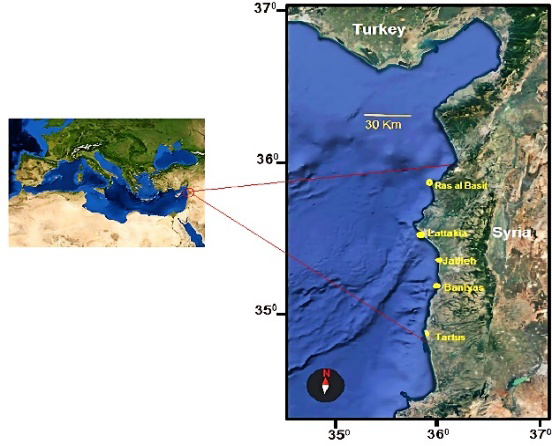
Through bycatch and using trawls, longlines, and occasionally with trammel net and purse seines nets, a total of 67 random samples of Gymnura altavela, the Spiny Butterfly Ray, were collected by local fishermen over one year (January 2023 - December 2023). After obtaining the necessary measurements, such as disc width (cm), it was arranged with the fishermen to release the live specimens into the sea (Figure 1).
Age and Maturity
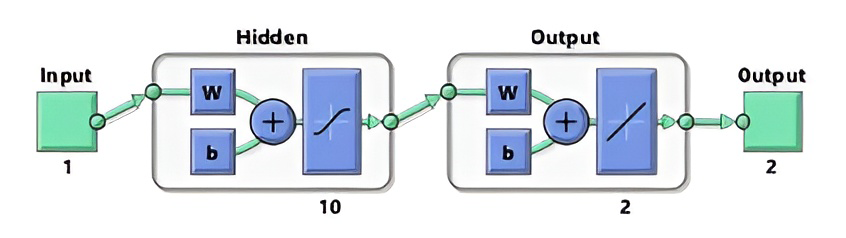
A Multilayer Perceptron artificial neural network model (1, 10, 2) is used to predict the maturity and age outputs of G. altavela based on the disc width input into the updated network model [10, 11] (Figure 2).
Growth of Fishery Population (FP)
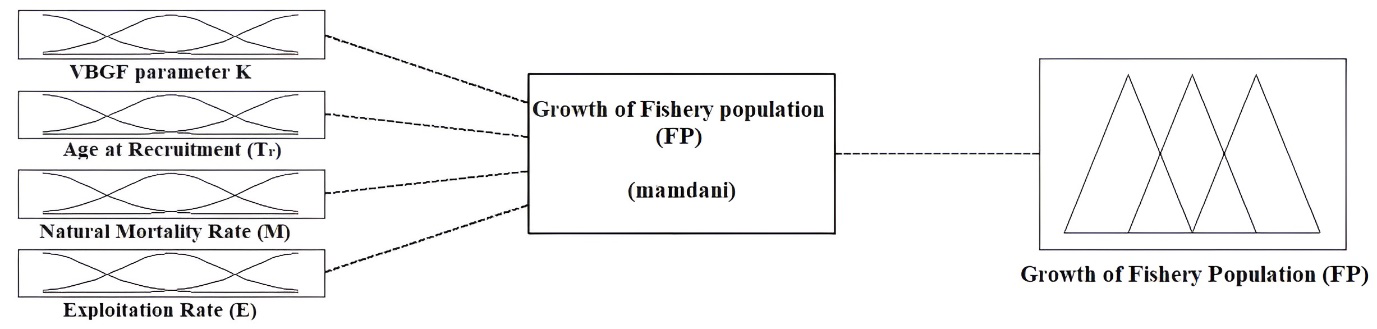
The growth of the G. altavela population on the Syrian coast is estimated using the expert system model (fuzzy logic) developed by Hamwi, et al. [16] with the parameters (K, Tr, M, E) as inputs to the system, employing fuzzy logic techniques to analyze and interpret the data (Figure 3).
The following parameters (K, DW∞) are determined using the von Bertalanffy equation, relying on the Akaike Information Criterion (AIC) [AIC = N ln (WSS) + 2M] for comparing available models describing the growth of the fish species [17]. Here, N represents the number of data points, WSS stands for the weighted sum of squares of residuals, and M denotes the number of model parameters: DWt = DW∞ / [1 + e-K(t-t0)] where DWt is the disc width at age t, DW∞ is the hypothetical asymptotic disc width (cm) that the fish can reach, K is the growth coefficient, and t0 is the hypothetical age when the length is equal to zero.
The total mortality rate (Z) is estimated using the Ricker method [18] by calculating the regression equation for the catch curve (ln Nt = a - Zt) for the entire population.
The natural mortality rate (M) is estimated using the relationship:
Log M = -0.0066 -0.279 log DW∞ + 0.6543 log K + 0.4634 log T [19] where DW∞ and K are von Bertalanffy parameters, and T is the average surface water temperature in the fishing area (21.7 °C during our study period). The fishing mortality rate (F) was calculated as F = Z - M [18].
The exploitation rate (E) was calculated as E = F / Z [20], where F is the fishing mortality rate, and Z is the total mortality rate.
The survival rate (S) was given by the equation S = e-Z [18].
Disc width and age at first capture (DWc, Tc) are estimated using the equations proposed by Beverton and Holt [21]: DWc = DW’ - [K (DW∞ - DW’) / Z ]
Tc = - (1/K) * ln (1 - DWc / DW∞) + t0 where DW’ is the average disc width of captured fish, K, DW∞, and t0 are von Bertalanffy parameters, and Z is the total mortality rate.
Disc width and age at recruitment (DWr, Tr) are estimated by the equation [21]: DWr = DW’ - [K (DW∞ - DW0) / Z ]
Tr = - (1/K) * ln (1- DWr / DW∞) + t0 where DW0 is the Disc width when the age of the fish is zero (hatching moment).
The growth performance index (ΦDW`) is estimated as follows: ΦDW` = logK + 2logDW∞ [22].
Fishing Vulnerability (FV)
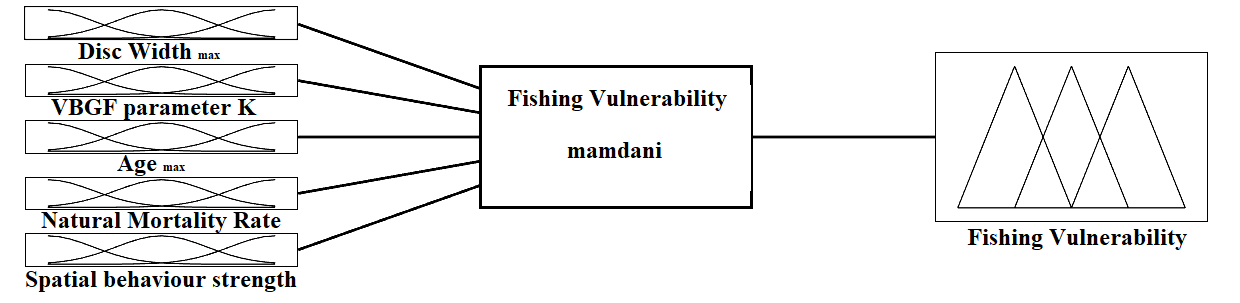
To determine the fishing vulnerability of G. altavela, the model proposed by Hamwi, et al. [15] is applied. The parameters (DWmax, K, Tmax, M, S) are inputs to the expert system (fuzzy logic) (Figure 4).
Results
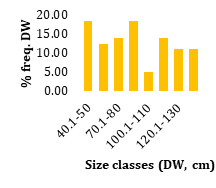
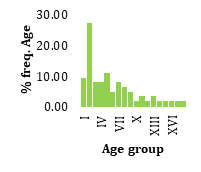
The age composition analysis of Gymnura altavela revealed the presence of 18 age groups. The second age group dominated, accounting for 26.87% of the total population, and the eighteenth age group represented only 1.49% of the overall catch (Figure 5). The relative frequency of individuals
A
B
in different disc width (DW) categories indicated a prevalence of individuals with disc widths ranging from 40.1-50 cm and 90.1-100 cm, each accounting for 17.91% in both age groups. The least represented category was individuals with disc widths of 100.1-110 cm, comprising only 4.48% of the population.
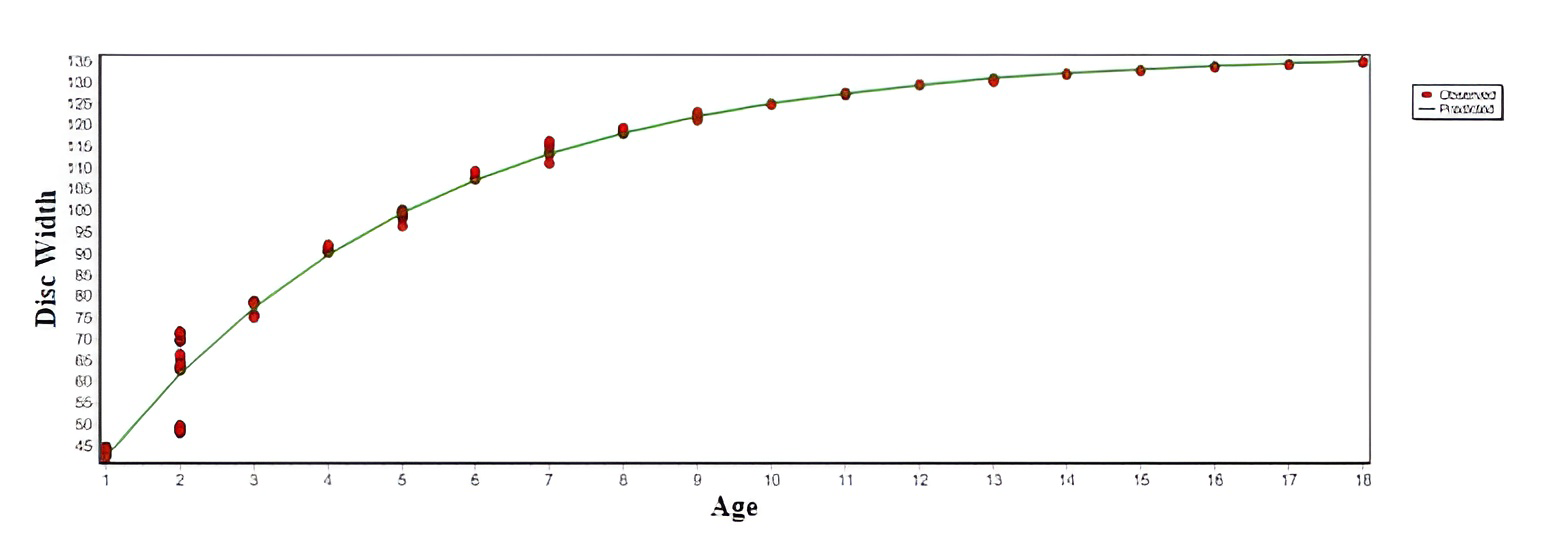
In this study, the disc width of G. altavela individuals from the Syrian coast reached a maximum of 134.66 cm at age 18. The smallest recorded disc width for an individual was 42.42 cm at the age of 1.
The parameters in the von Bertalanffy growth equation for disc width were as follows: DWt = 136.79 (1- e-0.23(t - 0.60)) (AIC= 499.805; WSS= 1588.01; 95% confidence= 0.454) (Figure 6). The growth rate of disc width in G. altavela was estimated using the growth coefficient (k) derived from the von Bertalanffy equation. The calculated value for disc width growth was 0.23 (Figure 6).
The allometric relationship between disc width (DW) and total weight (TW) of the butterfly ray (Gymnura altavela) was characterized by the power function DW = 0.026TW2.91, which exhibited a very strong goodness of fit (r2 = 0.91).
The current study found that the average age and disc width of G. altavela individuals at first capture was 2.78 years and 73.91 cm, respectively. Similarly, the individuals` average age and disc width at recruitment were 1.26 years and 47.71 cm, respectively.
The ratio of the length at first capture to the asymptotic length (Lc/L∞) indicates whether the prevalence of the catch consists of juvenile or mature fishes. If the (Lc/L∞) ratio is less than 0.5, it signifies that the greater of the catch consisted of juvenile fish species [23]. The (Lc/L∞) ratio estimated from the present study was 0.51, approximately equal to 0.5, showing that mature fishes made up most of the bycatch in the G. altavela fishery. Furthermore, the growth performance index (Φ’) for disc width growth was calculated and recorded as 3.63.
In the present study, the total mortality coefficient (Z) of Gymnura altavela was 0.51 year-1. The fishing mortality coefficient (F) was calculated as 0.11 year-1, while the survival rate (S) was 0.60 year-1. The exploitation mortality coefficient (E) was 0.22 year-1 (Table 1).
| Locality and Author | Survival (S) | Natural (M) | Total Mortality (Z) | Fishing (F) | Exploitation (E) |
|---|---|---|---|---|---|
| Syrian coast (present study) | 0.6 | 0.4 | 0.51 | 0.11 | 0.22 |
| Levant Basin coast (Northeastern Mediterranean) [24] | 0.41 | 0.91 | 0.5 | 0.55 |
Table 1: The Survival Rate and Mortality Rates of Gymnura altavela.
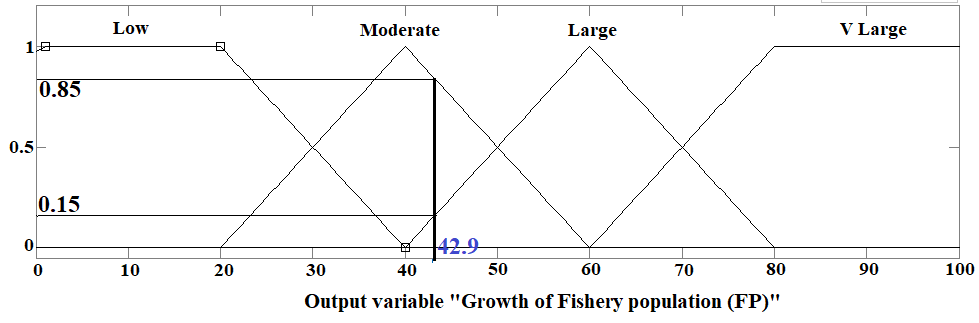
The proposed expert system (fuzzy logic), introduced by Hamwi, et al. [16] provided a value for the growth of G. altavela population from the Syrian coast (FP= 42.9), where the maximum value for fishery population growth (FP) is 100. This value represents 0.85 moderate growths and 0.15 high growth (Figure 7).
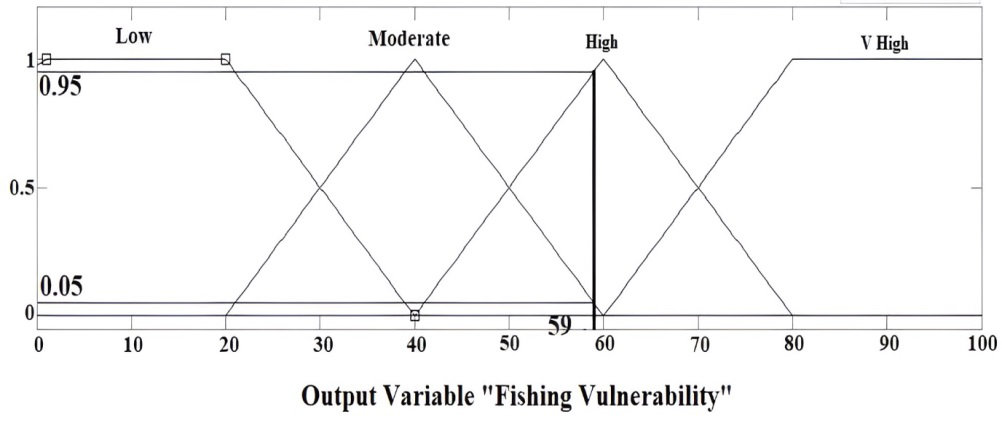
According to the expert system (fuzzy logic) proposed by Hamwi, et al. [15] G. altavela had a fishing vulnerability of 59 FV (where the maximum value for fishing vulnerability, FV, is 100).
Discussion
The reported disc width measurements for Gymnura altavela across its range demonstrate considerable spatial variability. In Turkish waters, disc widths have been recorded ranging from 39 to 165 cm in the Gulf of Antalya [25], 30 to 127 cm in Iskenderun Bay [26], 19.60 to 135 cm in the northeastern Mediterranean [27] and 28.6 to 135.5 cm in the eastern Mediterranean [28].
Disc width data from the western North Atlantic region indicates a similarly large maximum size, with the largest observed individual measuring 135.5 cm at 11 years of age [9]. However, the disc width range reported along the northeastern coast of the United States was broader, spanning from 20 to 217 cm [27], potentially indicating more variability in size at this location.
In the Adriatic Sea, part of the northeastern Mediterranean, disc widths have been documented ranging from 32.8 to 173 cm [3], overlapping with but extending beyond the size ranges reported for the Turkish Mediterranean coast.
Collectively, these findings demonstrate that the butterfly ray is capable of achieving very large disc widths, likely exceeding 2 meters in some cases, across its distribution in the Mediterranean Sea and western North Atlantic. The spatial variability in maximum and observed disc width ranges likely reflects differences in environmental conditions, prey availability, and population demographics between these various study locations.
| Location and author | Age | Disc width | |
|---|---|---|---|
| (Dw, cm) | |||
| min | max | ||
| Iskenderun Bay, Turkey [26] | 30 | 127 | |
| Northeast coast of the United States [27] | 20 | 217 | |
| Levant Basin coast (northeastern Mediterranean) [24] | 19.6 | 135 | |
| Eastern Mediterranean [28] | 28.6 | 135.5 | |
| Syrian marine waters [29] | 38 | 137 | |
| Gulf of Antalya, Turkey (Levantine Sea) [25] | 39 | 165 | |
| Adriatic Sea (Northeastern Mediterranean) [3] | 32.8 | 173 | |
| western North Atlantic [9] | 18 | 52.7 | 215 |
| Syrian coast (present study) | 18 | 42.42 | 134.66 |
Table 2: Maximum-minimum disc width and age of Gymnura altavela from different water bodies.
The literature reports various estimates of the hypothetical asymptotic disc width for G. altavela across different regions. In the western North Atlantic, the asymptotic disc width was estimated to be 217.53 cm for males and 128.55 cm for females [9]. This suggests notable sexual dimorphism in the maximum attainable disc width for this species in the western Atlantic.
For the northeastern Mediterranean Sea, a pooled estimate of the asymptotic disc width was reported as 136.25 cm [24]. When considering the sexes separately, the asymptotic disc width was estimated to be 131.25 cm for males and 136.25 cm for females in this region [24]. These northeastern Mediterranean values are generally lower than the western North Atlantic estimates, particularly for males.
Interestingly, the present study estimated the hypothetical asymptotic disc width of G. altavela in Syrian coastal waters to be 136.79 cm. This value falls squarely within the range of asymptotic disc widths reported for the northeastern Mediterranean (131.25-136.25 cm) [24].
The similarity between the present study’s estimate and the northeastern Mediterranean values suggests that the overall growth potential and maximum size attainable by G. altavela is relatively consistent across this regional scale in the eastern Mediterranean. This may indicate that the environmental conditions, prey availability, and other factors influencing growth are comparable between the Syrian coast and the broader northeastern Mediterranean areas where previous studies were conducted.
The contrasting higher asymptotic disc width estimates for the western North Atlantic population [9] could reflect regional differences in growth dynamics and maximum size potential for this species. Further research would be needed to elucidate the underlying drivers of these spatial variations in the hypothetical maximum disc width of G. altavela.
The values of mortality coefficients are lower than those documented in the Levant Basin coast (northeastern Mediterranean) (Z= 0.91; F= 0.50; E= 0.55) [24], indicating a relatively lower fishing pressure on the G. altavela population on the Syrian coast. However, the natural mortality rate of G. altavela in the current study is equal to that observed in the Levant Basin (northeastern Mediterranean) (0.40 and 0.41, respectively) (Table 1).
The growth of the G. altavela population from the Syrian coast (FP = 42.9) was estimated by the proposed expert system (fuzzy logic), in addition to the productivity of G. altavela according to Musick’s criterion for the growth coefficient (k), ranging from moderate (0.16-0.30) [30], indicating a significant tendency towards moderate growth within the Syrian coastal environment.
A fishing vulnerability of 59 FV indicates a high vulnerability of 0.95 and a moderate vulnerability of 0.05 (Figure 8), suggesting a stronger predisposition towards being highly vulnerable to fishing activities. Consequently, these fish face a significant threat on the Syrian coast. Furthermore, the intrinsic vulnerability assessment on Fishbase classifies this species as having a moderate to high vulnerability, with a rating of 51 out of 100 [31].
Conclusion
The study offers valuable insights into the population dynamics of Gymnura altavela along the Syrian coast, emphasizing the significance of conservation measures for ensuring the sustainable management of this species. The findings contribute to our understanding of G. altavela’s growth, mortality, and vulnerability to fishing, providing a foundation for future research and management strategies.
Acknowledgments
The author would like to express their gratitude to Tishreen University for their support and assistance in conducting this research, as well as extend a great appreciation to the artisanal fishermen, particularly the professional fisherman Abu Bassam.
References
-
Kyne PM, Carlson JK, Ebert DA, Fordham SV, Bizzarro JJ, et al. (2012) The Conservation Status of North American, Central American, and Caribbean Chondrichthyans. IUCN Species Survival Commission Shark Specialist Group, Vancouver, Canada, pp: 1-156.
-
Wikipedia Contributors (2024) Spiny butterfly ray. The Free Encyclopedia.
-
Gajic AA, Karalic E, Besirovic H, Sulikowski J (2023) The first record of gravid spiny butterfly ray (_Gymnura_ _altavela_) in the northern Mediterranean Sea, with description of near‐term foetuses. J Fish Biol 102(6): 1506-1509.
-
Espino RA, Castro JJ, Guerra MA, Couce ML, Meyers EK, et al. (2023) Aggregative Behaviour of Spiny Butterfly Rays (_Gymnura altavela_, Linnaeus, 1758) in the Shallow Coastal Zones of Gran Canaria in the Eastern Central Atlantic. Animals 13(9): 1455.
-
Dulvy NK, Charvet P, Carlson J, Badji L, Blanco PMP, et al. (2021) _Gymnura altavela_. The IUCN Red List of Threatened Species.
-
IUCN (2024) The IUCN Red List of Threatened Species 1.
-
Conrath C, Scarbrough R (2009) Biological Profiles: Spiny Butterfly Ray. Florida Museum of Natural History Ichthyology Department.
-
Ordonez A, Eikvil L, Salberg AB, Harbitz A, Murray SM, et al. (2020) Explaining decisions of deep neural networks used for fish age prediction. PLoS One 15(6): e0235013.
-
Parsons KT, Maisano J, Gregg J, Cotton CF, Latour RJ (2018) Age and growth assessment of western North Atlantic spiny butterfly ray _Gymnura altavela_ (L. 1758) using computed tomography of vertebral centra. Environ Biol Fish 101: 137-151.
-
Hamwi NI (2024) Predicting age and maturity of endangered Spiny butterfly ray, _Gymnura altavela_ (Linnaues 1758) using artificial neural network (multilayer perceptron). Damascus University Journal for the basic sciences 40: 55-68.
-
Hamwi N (2024) Population Growth of Thunnus thynnus and Vulnerability to Fishing along the Syrian Coast (Eastern Mediterranean Sea). International Journal of Oceanography & Aquaculture (IJOAC) 8(2): 000311.
-
Cheung WWL, Pitcher T, Pauly D (2005) A fuzzy logic expert system to estimate intrinsic extinction vulnerabilities of marine fishes to fishing. Biol Conserv 124(1): 97-111.
-
Cheung WWL (2007) Vulnerability of marine fishes to fishing: from global overview to the northern South China Sea. A Thesis in the University of British Columbia, pp: 354.
-
Jones MC, Cheung WWL (2017) Using fuzzy logic to determine the vulnerability of marine species to climate change. Glob Change Biol 24(2): 719-731.
-
Hamwi N, Ali Basha N (2019) Estimation of the vulnerability of some Sparidae species to fishing in the Eastern Mediterranean Sea (Syrian coast) by fuzzy logic method. Journal of Al-Baath University 41: 129-160.
-
Hamwi N, Ali-Basha N, Al-Tajer H, Farah T (2022) A proposed model to estimate the growth of the fishery populations by expert system. Journal of Hama University 5(9): 92-106.
-
Hamwi N (2018) Use Akaike (AIC) and Schwartz (SC) information criterions in the differentiation between nonlinear growth models of different fish species. Journal of Al-Baath University 40(3): 45-66.
-
Ricker WE (1975) Computation and interpretation of biological statistics of fish populations. Bull Fish Res Board Can 191: 382.
-
Pauly D (1980) A new methology for rapidly acquiring basic information on tropical fish stocks: growth, mortality and stock recruitment relationships. In: Saila SB, Roedel PM (Eds.), stock assessment for tropical small-scale fisheries. ICMRD, Univ. Rhode Island, Kinston pp: 154-172.
-
Sparre P, Venema SC (1998) Introduction to tropical fish stock assessment-Part 1: Manual. FAO Fisheries Technical Paper 306(1): 407.
-
Beverton RJH, Holt SJ (1957) On the dynamics of exploited fish population. Fishery Investigations, Series II (London) 19: 533.
-
Pauly D, Munro JL (1984) Once more on the comparison of growth in fish and invertebrates. Fish Byte 2(1): 21.
-
Pauly D, Soriano ML (1986) Some practical extensions to Beverton and Holt’s relative yield-per-recruit model. In: Maclean JL (Ed.), The First Asian Fisheries Forum, pp: 491-496.
-
Yeldan H (2018) Estimating some population parameters and stock assessment of spiny butterfly ray, _Gymnura altavela_ (Linnaeus, 1758) the Levant Basin coast (Northeastern Mediterranean). Indian J Anim Res 52(12): 1790-1796.
-
Ozbek EO, Cardak M, Kebapcioglu T (2016) Spatio- temporal patterns of abundance, biomass and length- weight relationships of _Gymnura altavela_ (Linnaeus, 1758) (Pisces: Gymnuridae) in the Gulf of Antalya, Turkey (Levantine Sea). JBSME 22(1): 16-34.
-
Basusta A, Basusta N, Sulikowski JA, Driggers WB, Demirhan SA, et al. (2012) Length–weight relationships for nine species of batoids from the Iskenderun Bay, Turkey. Journal applied ichthyology 28: 850-851.
-
Wigley SE, McBride HM, McHugh NJ (2003) Length- weight relationships for 74 fish species collected during NEFSC research vessel bottom trawl surveys, 1992-99. NOAA IR Home, pp: 1-36.
-
Taylan B, Bayhan B, Saglam C, Kara A (2019) First observation of the embryos of spiny butterfly ray, _Gymnura altavela_ (Linnaeus, 1758) (Chondrichthyes: Gymnuridae) from Eastern Mediterranean, a species critically endangered. Fresenius Environ Bull 28: 3147- 3152.
-
Alkusairy HH (2018) The study of catches composition (quantitative and qualitative) of Chondrichthyes, and reproductive biology and diet of _Dipturus oxyrinchus_ in Syrian marine waters. A thesis in Ichthyology, Department of Animal Production-Faculty of Agriculture Engineering, Tishreen University, pp: 221.
-
Musick JA (1999) Criteria to define extinction risk in marine fishes. Fisheries 24(12): 6-14.
-
Froese R, Pauly D (2024) FishBase. World Wide Web electronic publication.
- Genetic Improvement of Nile Tilapia (Oreochromis niloticus): Advances in Selective Breeding and Genomic Approaches for Sustainable Aquaculture
- Microplastics, Contaminants, and Waste Hotspots: Divergences and Faults in Prioritizing Control Efforts
- Creating a Healthier, More Vibrant Open and Closed Aquatic Environment. A Submersible, Centrifugal Magnetically Affixed Current Changing Aquarium Pump
- An Attempt to Assess Alpha Diversity and Sample Size: Using the Ostracod Assemblages off Kumamoto Port, Japan
- Assessment of the Efficiency of Common Fishing Gears and Crafts Used at Mohananda River of Chapai Nawabganj, Bangladesh
- Fish Productivity and Biodiversity Status of Sundarban Mangrove in Bangladesh