
Indian Flying Fox: Their Acceptance, Myth and Role on Nature
Bats either they are small or large have many ecological impacts. For observing their social interaction as well as the pollination of plants the best time was at dawn and evening. Four months was good for accumulating the information on their social behavior. Some people beside that Banyan Tree, Ficus benghalensis where those bats were available always got trouble by their high-pitched noise and excreta. Some people believed that bats flesh has the power for healing human asthma so some animal poachers killed those bats. Due to strong wildlife
Introduction
Bats are incipient and utmost species either they small or large are found across abroad range of the world. It is estimated that there are 900 to over 1200 species of bats in the world, making up one-fifth of Earth’s total mammalian population, the second largest order after rodents (www. google.com, 15 January 2018). Within these 35 species are found all over Bangladesh [1]. From the IUCN reports, this bat is globally positioned in Lower Risk (LR) [2, 3]. Since Saidpur is very small upazilla under Nilphamari district of Bangladesh but its biodiversity is more dominant than the other adjacent areas. A large bat colony was found at the centre of the town, municipality road of Saidpur. A very old Banyan Tree was their shelter. Superstitional point of view, some people who are affected by asthma they know that bats flesh is a medicine for them. Its hind legs spur or claw helps for hanging on trees. Its repellent and body color is used in their defense mechanism. It has reverse knee joint which allows good flying. Chiropteran exhibits remarkable diversity and its broad geographic distribution. Pteropus has 65 species in the world [4]. Out of 65 in Indian sub- continent has 5 species [5]. It is main mammalian diversity with more than 1200 known extant taxa [6]. Bats can be pest and sometimes it is called ‘Blood Sucker’. There are some misconceptions about bats and it has lots of beneficial effects on vegetation [7]. Nipah virus spreads from bat to human then from human to human [8]. Nipah encephalitis bats are responsible to infect dog, cat, ferret, pig, and horse. Bats’ saliva and urine are the source of Nipah Virus [9] which was shown in India [10] and Bangladesh [11]. The objective of this study is to observe why bats are killed by the poachers and their impacts on nature.
Regular Activities of those Bats
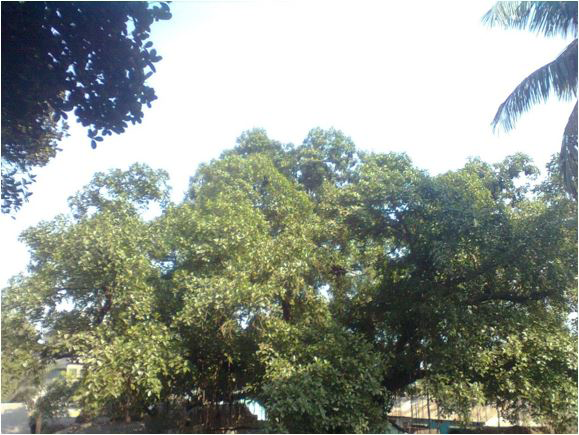
There was a Large Bat (Indian Flying Fox—Pteropus medius, formerly Pteropus giganteus) colony in Kolim mor (turn), Notun Babupara of Saidpur town of Bangladesh where near about 300 individuals with adult and juveniles. All day long they hung on the Banyan Tree (Ficus benghalensis) by their spur of leg and in cool season it used their wing for reducing excess hot. This Banyan Tree had very few remarkable holes for showing their birth. According to villagers, more than 30 years, this colony is living here. Every evening they used to go to near fruit trees especially Kadam (Neolamarckia cadamba) and after passing whole night then they got back to their own territory. Month and day-wise observation on their number, age, breeding, resting, and leaving and returning to their territory at every evening and morning were observed. Bats are left their trees for feeding in summer at 6:45 pm. This study period was from 01 January 2016 to 30 April 2016.
Natural Selection of Bats and Humans Hunting History
Bats’ voice is very rough which made irritant to the people beside the Banyan Tree. Unusual muscle of larynx is unexplained which produce bats’ supersonic sound. It shows winter hibernation with lethargic sleep. The natural enemies were owls, hawks, and crows. Its flesh is eaten in many parts of the country [12]. Bats always destroy feed than their demand. It has occasional vomiting tendency. Bats were used same route every day. In the month of January- February it gave single birth where the gestation period was 140-150 days. Only about 1 in 20,000 bats has rabies. And bats with rabies rarely bite humans. Usually they become paralyzed and fall to the ground. Most people who have been bitten by rabies-infected bats have tried to pick up a sick bat [13]. Some little educated and low-income people belief this tradition and take those parts of animals as medicine. In this regard, they took mammalian species more (44.44%) in other animals [14]. Traditional medical practice among the tribal people is guided by their culture and life-style on the use of plant and animal parts [15]. The hunting of Akbar and Jahangir were well known [16]. Among other hunting palaces which Shahjahan built, one is located near Palam at Delhi which had a hunting tower and this is resemble ‘Qutb Mina’ [17]. Mughal emperor Akbar was expert on hunting, sports, horse-riding, arrow throwing, and wrestling. He declared that who will slaughter animals need not to make relation with them [18]. People took wild or cage animals not only pet but also food, medicine, decoration, and export [19].
Crow destroys birds nest and snatches egg and young from variety species [20]. In highly fragmented tropical habitats, nectar bats play an important role in maintaining the genetic continuity of plant population and thus have considerable conservation value [21]. The foraging radius of these colonies can be 30-50 km, and these bats are excellent long-distance pollen movers [22, 23].
Conclusion
We should take some plans for planting huge fruit trees where these bats can live well all the year round. Small bats are totally live on insects, flying fox are lived on fruits, and vampire bats are carnivorous. A lot of fruits trees are available in Bangladesh like Mango (Mangifera indica), Jackfruit (Artocarpus heterophyllus), Guava (Psidium guajava), Banana (Musa sapientum), and Kadam (Neolamarckia cadamba). In Bangladesh, at the time of date and palm juice festival, bats are available and very dangerous for spreading Nipah Virus. Bats are rabid animal and responsible not only Nipah Virus but also newly invented Zika Virus and so on. At the field level, people of Bangladesh are not cordial. They cannot deliver information to the researcher. In village level they take any research as a fun. Area-wise information as well as their role on biodiversity needs to preserve by the nearest authorized sectors for the researcher [24]. This is totally non-scientific that bats flesh is useful for human diseases.
References
-
IUCN, Bangladesh (2015) Red List of Bangladesh 2: 250.
-
Mickleburgh SP, Hutson AM, Racey PA (1992) Old world fruit bats. An action plan for their conservation. IUCN ISSC Chiroptera Specialist Group. IUCN, Gland, Switzerland, pp: 1-16.
-
Walker S, Molur S (2003) Summary of the status of south Asian chiroptera. Extracted from CAMP 2002. Report. Zoo Outreach Organization. CBSG South Asia and Wild, Coimbatore, India.
-
Simmons NB (2005) Chiroptera: The Rise of Placental Mammals. KD Rose and JD Archibald, Johns Hopkins University Press, Baltimore pp: 159-174.
-
Bates PJJ, Harrison DL (1997) Bats of the Indian Subcontinent. 2nd (edn.), Harrison Zoological Museum, UK, pp: 258.
-
Schipper J, Chanson JS, Chiozza F, Cox NA, Hoffmann M, et al. (2008) The status of the world’s land and marine mammals: diversity, threat, and knowledge. Science 322(5899): 225-230.
-
Khan MAR (2001) Status and distribution of bats in Bangladesh with notes on their ecology. Zoo’s Print Journal 16(5): 479-483.
-
Chong HT, Abdullah S, Tan CT (2009) Nipah virus and bats. Neurology Asia 14: 73-76.
-
Chua KB, Koh CL, Hooi PS, Wee KF, Khong JH, et al. (2002) Isolation of nipah virus from Malaysian island flying- foxes. Microbes Infect 4(2): 145-151.
-
Chadha MS, Comer JA, Lowe L, Rota PA, Rollin PE, et al. (2006) Nipah virus-associated encephalitis outbreak, Siliguri, India. Emerg Infect Dis 12(2): 235-240.
-
Hsu VP, Hossain MJ, Parashar UD, Ali MM, Ksiazek TG, et al. (2004) Nipah virus encephalitis reemergence, Bangladesh. Emerg Infect Dis 10(12): 2082-2087.
-
Prater SH (2005) The Book of Indian Animals. Bombay Natural History Society, New Delhi, India.
-
Clark H (2018) https://wenatcheemomblog. com/2018/07/09/fear-of-bats-is-natural-but- unnecessary/
-
Kabir MA (2014) Available cage birds in Bangladesh. Global Journal of Environmental Science and Management 2(1): 1-4.
-
Qureshi MS (1984) Tribal culture in Bangladesh. Institute of Bangladesh Studies. Rajshahi University, Bangladesh.
-
Kabir MA (2019) Mughal paintings of hunt with their aristocracy. Arts and Humanities Open Access Journal 3(1): 65-67.
-
Divyabhanusinh (1999) Hunting in mughal painting; ‘Flora and Fauna in Mughal Art’. In: Som Prakash Verma, Editor. Marg Publications; Mumbai 50(3): 94-98.
-
Kabir MA (2014) Superstitions and traditional uses of animal in Bangladesh. Standard Journal of Biological Sciences 1(1): 5-8.
-
Martin ES, Phipps M (1996) A review of the wild animals trade in Cambodia. Traffic Bulletin 16(2): 45-60.
-
Kabir MA, Hawkeswood TJ, Makhan D (2020) The vertebrate fauna of the teachers’ quarters-2 of Saidpur Cantonment Public School and College, Nilphamari, Bangladesh. Calodema 730: 1-6.
-
Fleming TH, Gieselman C, Kress WJ (2009) The evolution of bat pollination: a phylogenetic perspective. Annals of Botany 104(6): 1017-1043.
-
Horner MA, Fleming TH, Sahley CT (1998) Foraging behaviour and energetics of a nectar-feeding bat, Leptonycteris curasoae (Chiroptera: Phyllostomidae). Journal of Zoology 244(4): 575-586.
-
Fleming TH (2004) Nectar corridors: migration and annual cycle of lesser long-nosed bats. In: Nabhan GP. ed. Conserving migratory pollinators and nectar corridors in western North America. Tucson: University of Arizona Press 23-42.
-
Kabir MA (2017) Research limitations at field level of Bangladesh. International Journal of Research in Pharmacy and Biosciences 4(2): 26-28.
- In Situ Evaluation of the Anthelmintic Effect of the Aqueous Extract of Syzygium aromaticum (L) Merr and Perry on Bovine Strongyles
- Successful in Vitro Embryo Production with Oocytes Aspirated from Live White-Tailed Deer (Odocoileus Virginianus Texanus) Donors under Captivity in Northeast Mexico
- Bangladeshi Finches with their Evolutionary Thoughts (Aves: Passeriformes)
- Note on the Survival Status of Przewalski’s Horse, Equus ferus przewalskii (Perissodactyla: Equidae)
- In-Situ and Ex-Situ Protection of White-Breasted Waterhen (Amaurornis Phoenicurus) (Pennant, 1769) (Aves: Rallidae)
- Meat Examination in the Laboratory, the Acceptability and the Human Health