
Development of a Standardized Protocol for Free Student-Run Orthopaedic Clinics
Introduction: Student-run free clinics (SRFCs) reduce healthcare inequities by providing essential care to underserved populations while offering medical students valuable clinical experience. Despite their benefits, SRFCs face challenges such as time management, resource limitations, and inconsistent protocols, which hinder patient outcomes and satisfaction. The Free Orthopaedic Clinic (FOC) at Howard University Hospital exemplifies both the successes and challenges of SRFCs. This study aims to develop a standardized protocol to optimize SRFC operations, improve patient care, and ensure long-term sustainability. Methods: A comprehensive scoping review was conducted using the NIH PubMed database and the Journal of Student- Run Clinics. Articles published since 2014 were included if they addressed SRFC management or patient care. Search terms included "student-run free clinic," "protocols," "management," "experience," and "improve”. The review discovered findings on mission statements, team building, resource management, time optimization, patient feedback mechanisms, and sustainability strategies. Results: Ten key papers were identified, highlighting critical components for establishing and enhancing SRFCs. Findings emphasized the importance of a clear mission statement, effective team recruitment, and structured operations. Time management emerged as a consistent challenge, scheduling systems and workflow optimization, proved effective in improving clinic efficiency. Studies also underscored the significance of patient feedback, community partnerships, and long-term sustainability through funding and alignment with broader healthcare systems. These insights informed a 10-step action plan addressing clinic design, team training, patient logistics, progress monitoring, and sustainability. Discussion: The proposed protocol addresses core SRFC challenges, offering a replicable framework to enhance operations and patient outcomes. Standardized guidelines reduce inefficiencies, improve satisfaction, and foster trust within underserved populations. By equipping medical students with tools for equitable care, the protocol bridges gaps in healthcare access and quality. Future research should evaluate these protocols across diverse SRFC settings to optimize their impact.
Guo L¹, Ross D¹, Hatcher L¹, Hackett N¹, Baasansukh T¹, Willacy R²* and Richardson JA¹
¹Howard University College of Medicine, USA ²University of California Irvine, Department of Orthopaedics, USA Keywords: Orthopaedic Clinics; Healthcare; Protocols
Abbreviations
SRFCs: Student-Run Free Clinics; FOC: Free Orthopaedic Clinic.
Introduction
Student-run free clinics (SRFCs) share a common goal of decreasing healthcare inequity in underserved populations. They are a beneficial organization within the U.S. medical school system. While SRFCs provide necessary care for those who are underserved, they also provide an opportunity for students to utilize their knowledge from the classroom and implement it clinically. Studies by Alhallak, et al., and Chow, et al., support the claim that SRFCs are relatively cost-friendly for institutions and patients, as they often use medical students for coordinating integral aspects of the program and performing the majority of examinations [1, 2].
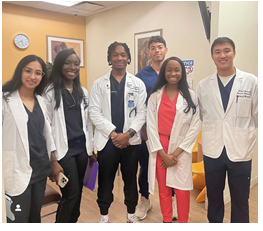
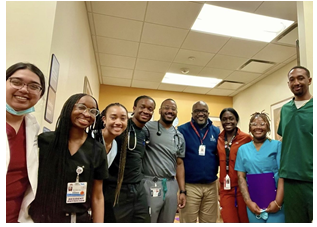
The Free Orthopaedic Clinic (FOC) at Howard University Hospital, which was created on April 10th, 2023, has positively impacted many underserved and uninsured patients who may require orthopedic care (Figures 1 and 2). Although the FOC has had success in the short amount of time it’s been implemented, there were limitations such as resources and availability. While each clinic may have varying policies, many papers do not disclose the specifics of their clinic’s protocols. The degrees of success also vary depending on what aspects are being focused on, as universally, SRFCs often have difficulties with time management and organization, leading to overall patient dissatisfaction and insignificant patient outcomes [3]. Recent literature by Lee., et al. and Kamal, et al., reported addressing the difficulty with time management, communication, and clinical resources which resulted in improved wait times for patients, while also increasing availability between physicians and students [4, 5]. Additionally, there are limited research articles regarding an orthopaedic free clinic, as the majority of research has been focused on general care. This paper aims to review and analyze the purpose and role of SRFCs, discuss common barriers to their development, and how to mitigate them.
Methods
For this study, SRFCs are characterized by two key attributes: 1) serving as primary care providers to address healthcare needs in underserved populations, and 2) functioning as educational platforms for medical students, emphasizing skills in history-taking and physical examination [6]. A comprehensive scoping review was conducted using the NIH PubMed database and the Journal of Student-Run Clinics to identify diverse protocols and guidelines pertaining to SRFC operations and their impact on patient care. Given the structural similarities across various SRFCs, articles included those addressing SRFCs of different specialties, including OB/GYN.
Search terms included “student-run free clinic,” “protocols,” “management,” “experience,” and “improve.” Inclusion criteria were manuscripts written in English
since 2014 that provided insights into the structure and management of SRFCs as defined above. Exclusion criteria included manuscripts written in languages other than English and those published before January 2014.
Results
Ten key papers provided insights into various aspects of developing and enhancing student-run free clinics. Four papers emphasized the importance of creating a clear mission statement to define the clinic’s purpose and align its goals with community needs [3, 5, 7, 8]. The role of medical student involvement and recruiting volunteers was addressed in two papers [8, 9]. These papers appreciated factors such as educational opportunities as well as challenges such as time constraints. Three studies discussed the technical areas of operating a clinic in terms of location selection, scope of practice, and hours of operation to ensure the efficient use of resources [5, 7, 10]. Additionally, the efficiency of the clinic flow and time management strategies were discussed in two papers, which mentioned enforcing specific time limits and the use of scheduling systems to ensure operational efficiency [3, 4].
Another factor that was examined in previous studies noted the importance of patient feedback. The need for feedback from patients was highlighted in two papers, noting that specific mechanisms, such as satisfaction surveys, would aid in the delivery of care [5, 9]. One study discussed the need for collaboration and emphasized the importance of partnerships with local organizations, faculty, and interdisciplinary teams.11 Some of these partnerships included faculty as well as other professionals, not only enhancing clinical efficiency but also contributing to student education. These studies also addressed sustainability, specifically focusing on funding and aligning the goals of the clinic with broader healthcare systems. Lastly, one paper documented the growth of SRFCs in medical schools over time, demonstrating their sustainability and the potential for expansion [11]. We utilized this information and constructed a standardized list of steps and action items that can be applied and tailored to the development of SRFCs (Table 1).
| Action | Key Considerations | |
|---|---|---|
| 1. Define Mission Statement | Identify and define the purpose and goal of the clinic | Focus on serving underserved communities, enhancing student education |
| 2. Identify Target Population | Identify the population you plan to serve in the clinic | Examine the demographics of the surrounding community |
| 3. Identify Team Members | Recruit individuals to serve on the team | Recruit a team consisting of students, residents, community health workers, and attendings |
| 4. Operation Design | Choose a location, define services, set hours of operation, create eligibility criteria | Consider the population needs, accessibility, and availability of team members |
| 5. Train Volunteers | Create a protocol that provides team members with instructions for providing care | The attending physician supervises care |
| 6. Patient Logistics and Management | Develop and implement a system for scheduling patients and saving data | Use an HIPPA-compliant electronic health record system or paper-based system |
| 7. Promotion of the Clinic | Curate advertisements through social media, flyers or local newspaper | Use methods to bring awareness to the clinic and establishing trust within the community |
| 8. Progress Monitoring | Utilize a review system to understand the impact of the clinic | Obtain feedback from patients and team members to improve care and services |
| 9. Partnerships | Collaborate with local community organizations and student organizations | Utilize partnerships to leverage resources and expand the network |
| 10. Sustainability | Determine evolving goals of the clinic and secure funding to support future goals and sustainability | Determine long term community needs |
Table 1: Free Ortho Clinic Proposed Plan.
Discussion
Student-Run Free Clinics (SRFCs) continue to be a valuable resource for uninsured and underinsured patients seeking quality patient care. There remains room for improvement, with time management consistently emerging as a crucial area for development. This study highlights the importance of certain protocols and guidelines in establishing and maintaining an SRFC. However, there is a noticeable gap in the literature regarding specific, actionable steps to implement these protocols. Developing a standardized protocol tailored to the unique needs of SRFCs such as optimizing clinic workflows, enhancing flexibility, and leveraging external resources can address these challenges systematically.
This would not only streamline clinic operations but also provide a replicable foundation for SRFCs across various medical programs, enabling them to deliver more efficient and effective care. By improving time management and organizational structure, these protocols can directly enhance patient satisfaction and outcomes, fostering trust among underserved and uninsured populations.
A protocol can help medical students from different programs gain the tools and confidence needed to provide equitable care, addressing disparities in healthcare access and quality. Standardized guidelines also encourage the adoption of best practices that have demonstrated success.
This collaborative approach ensures that clinics in resource-limited settings can benefit from proven strategies, ultimately mitigating disparities in providing adequate care. Future research should prioritize developing detailed, scalable, evidence-based protocols to empower SRFCs to address healthcare inequities comprehensively. Providing systematic protocols will enable SRFCs to not only provide quality care to underserved populations but also train the next generation of medical professionals to be leaders in reducing healthcare disparities.
References
-
Alhallak I, Williams DK, Eudy R, Puryear E, Clark M (2021) Impact of Student-Run Free Clinics in Urgent Care. Journal of Community Health 46: 522-526.
-
Chow N, Snitman A, Rafael J, Bui S, Bennett K, et al. (2022) Cost savings analysis of prescription assistance programs at a student-run free clinic. Baylor University Medical Center Proceedings 35(3): 319-321.
-
Stephens D, Ramedani S, Tupinio M, Lambert K, Artrip R (2020) Using Time Limits to Improve Patient Visits & Clinic Flow at a Student-Run Free Clinic. Journal of Student-Run Clinics 6(1).
-
Lee JS, Combs K, Pasarica M (2017) Improving Efficiency While Improving Patient Care in a Student- Run Free Clinic. The Journal of the American Board of Family Medicine 30(4): 513-519.
-
Kamal S, Hoge A, DeRussy A, Austin EL, Pollio DE, et al. (2023) Understanding the Primary Care Experience in a Student-Run Free Clinic. Journal of Student-Run Clinics 9(1).
-
Rupert DD, Alvarez GV, Burdge EJ, Nahvi RJ, Schell SM, et al. (2022) Student-Run Free Clinics Stand at a Critical Junction Between Undergraduate Medical Education, Clinical Care, and Advocacy. Academic Medicine 97(6): 824-831.
-
McAndrew R, Kaskutas V (2020) A Logic Model for Planning, Implementing, and Evaluating a Student-Run Free Clinic. Journal of Student-Run Clinics 6(1).
-
McIntire B, Greni S, Radil S, Menning M (2022) A Look into Motivations and Barriers to Student Involvement at the SHARING Clinic, a Student-Run Free Clinic. Journal of Student-Run Clinics 8(1).
-
Nourse SE, Franco CL, Johnson EH, Williams BC (2019) A Case Study of Complex Care Management at a Student- Run Free Clinic. Journal of Student-Run Clinics 5(1).
-
Brown L, Gensel A, Steele E, Aksu E, McCarty S, et al. (2023) Creating a Women’s Health Coalition at a Student Run Free Clinic: A Model for Increasing Access to and Quality of Care. Journal of Student-Run Clinics 9(1).
-
Smith S, Thomas R, Cruz M, Griggs R, Moscato B, et al. (2014) Presence and Characteristics of Student-Run Free Clinics in Medical Schools. JAMA 312(22): 2407.
- Return to Work Among Manual Workers After the Latarjet Procedure: A Cohort Study of 43 Patients
- Refractory Pelvic Collection Following Modified Stoppa Approach for Both-Column Acetabular Fracture Fixation: A Case Report
- Comparative Study of Dynamic Knee Phenotypes Under Loaded and Unloaded Conditions: Clinical Impact
- Locked Intramedullary Nailing of the Tibia Using a Humeral Nail: A Care Case Report
- Subtalar Dislocation: About a Case Report
- Surgical Site Infection in Orthopedics in a Country with LimitedResources: Indications, Treatment and Results