
The Relationship between Organizational Culture and Employees’ Work Attitudes in Hospitals in Greece
Purpose: The volatile socioeconomic conditions that prevail in Greece, significantly affect the healthcare sector. The match of employees’ and organizational values is considered as the critical factor in determining the level of employees’ work attitudes, such as work engagement, job satisfaction, and job burnout. The more employees accept the organization’s values and beliefs, assumptions, the stronger the Organizational Culture is, and the more influence has on the employees’ work attitudes. Thus, Organizational Culture is recognized to be the essential tool to shape the employee’s behavior and work attitudes. This paper aims to explore the Organizational Culture that prevails on Hospitals in Greece and at what extent the organizational culture is related to employees' working attitudes as work engagement, job satisfaction and job burnout. It also analyses these elements of the Greek hospital culture that cause negative affect to employees' working attitudes and how this may change. Method: This study collected data from public healthcare organizations, using questionnaires which are reliable from other researches in order to verify the results. These questionnaires were used to examine the culture of the hospitals in Greece that prevails and at what extent this culture affects employees' working attitudes. It is analyzed the correlation between the variables by using the structural equation model SEM. Findings: In the specific research our results support that Organizational Culture cannot predict employees’ Work Engagement and Job Satisfaction. Organizational Culture significantly influences the level of employees’Job Burnout. From the SEM analysis, we indicate a good fit of the hypothesized model. The type of Organizational Culture that prevails in the Health sector in Greece is the Hierarchic type. Originality: This research emerges the importance of organizational culture and at what extent affects employees' working attitudes. It reveals which is the prevailing culture of the hospitals in Greece in the public sector. Also, it shows the specific characteristics of the culture that can be improved in order to affect positively employees' working attitudes.
Introduction
In the recent years where economic growth and global competition arises, many healthcare organizations are trying to implement the suitable Organizational Culture to increase their productivity and the quality of services to patients. Moreover, a healthcare job such as nurse or doctor is not just a simple task but requires a high responsibility towards patients’ wellbeing and thus involves lot of intense social interaction with patients, relatives and colleagues. Organizational culture guides the members’ behavior of the healthcare organization and affects the quality of their work [1]. The leadership style, the decision making, the performance evaluation and the level of communication developed are strongly influenced by Organizational Culture [2].
The role of human resources for the health organizations is critical. Healthcare personnel have a great impact on the delivered healthcare services, contributing to the determination of the quality and value of the healthcare services produced [3]. The promotion of employees’ health and well being are considered to be the most crucial issue for the organizational success. According to scholars, a positive Organizational Culture that provides innovative practices to encourage employees, career opportunities, opportunities for initiatives, rewards, good reputation and effective communication, it also contributes to the development of work engagement [4]. Consequently, when the work engagement is enhanced by the organizational culture, employees tend to offer discretionary effort if they agree with the organizations’ values [4].
It is also suggested that [1], supportive supervision, feedback and work autonomy are essential factors that shape the level of work engagement in the organization. Though, it is indicated that in the healthcare sector, there is a low level of engagement to health care employees, owing to weak decision-making, lack of autonomy, low pay, and low feedback. So, the work engagement of health employees depends strongly on the working environment and on the factors such as introspection, sensitivity, professional status, thoughts of resigning, social interaction, family life, and criticism [5]. Organizational culture also affects both directly and indirectly employees’ satisfaction or job satisfaction by giving motives to employees to enhance their performances [6]. There several studies support that organizational culture affects productivity, efficiency, job performance, job satisfaction, innovation, leadership and decision making [7, 8, 9].
Moreover, organizational culture has also been linked to work-related stress, low job engagement, reduced job satisfaction and burnout syndrome [10, 11]. It is argued that when there is an appropriate organizational structure such as autonomy, feedback, effective communication with the supervisor and social support, the drivers of creating the burnout syndrome (such as overtime and job demands), lose their significant impact on the employee [12]. It appears that organizational culture can play an essential role in increasing the level of both work engagement and job satisfaction of employees in achieving organizational goals more efficiently and more effectively. Precisely, it is to be analyzed the Organizational Culture that prevails on Hospitals in Greece and at what extent the organizational culture is related to employees’ working attitudes (work engagement, job satisfaction and job burnout). The elements of the Greek hospital culture that cause negative affect to employees’ working attitudes are also to be analyzed, as and the way that this may change.
Literature Review
Organizational Culture
Organizational Culture is defined as the corporation’s core values, and beliefs, the way the company deals with the multiple issues appear in every aspect of working day. It represents the personality of the company, the unwritten leading principles [13]. Organizational Culture defines the way people will behave in and what issues are important or not. Hence, it is necessary for an employee, if he wishes to remain in the organization, to learn and adopt the working behavior and personal characteristics that are transmitted through specific procedures, from the top management levels [14]. These patterns of behavior determine how organizational members approach their working tasks and interact with each other. Organizational Culture can be considered as both dynamic and structural. “Dynamic, in the sense that culture shapes and determines the complex interactions of human behavior and structural in the sense that these interactions produce specific patterns (or structures) which in turn affect the interactions themselves” [15].
In recent years, the importance of organizational culture for the well-being of the employees has become more evident. Organizational culture includes knowledge, belief, art, rules, customs, beliefs, philosophy and other abilities from the members of the organization. It is important, therefore, to understand the diversity of each culture because it will lead to better organizational results [16].
It is a valid fact that the work environment in Greece is exceptionally volatile and it is suggested that each healthcare organization should have the ability to adapt quickly and appropriately to any change that is crucial to its survival. Creating, managing and changing the culture of an organization are critical functions for the organizational success [17]. In the healthcare area the staff of nursing institutions needs positive work attitudes, such as Work Engagement and Job Satisfaction. This can be explained by the fact that hospitals with the ongoing intense social interaction between staff and patients, healthcare employees are more exposed to harmful behavior trends, such as Job Burnout. Therefore, organizations need devoted, engaged employees. Engaged employees increase the appearance of behaviors that promote the efficient and effective functioning of the organization. In the healthcare sector, organizational culture has a positive relationship with organizational results that contribute to the quality of services provided, such as job satisfaction, the safety of employees and patients [13].
Organizational Culture in the Healthcare Sector
In the field of nursing institutions, organizational culture has a great impact on employee job performance and the quality of services offered by the organization. Organizational culture in hospitals, depending on its orientation, significantly affects both patient satisfaction and employee job performance [18]. Organizational culture is an important element of the organization that substantially influences the effectiveness or ineffectiveness of quality healthcare services. The lack of sufficient organizational support might lead to a reduction in job satisfaction and an increase in job burnout [19]. According to Schein, et al. [20], Culture is a structured set of key assumptions that have been discovered - invented or developed by a given group, to deal with external adaptation or internal integration problems - which have yielded in satisfactory results in the past. These assumptions and beliefs are to be considered valid and can, therefore, be taught to new members as the right way to perceive, think and feel about the possible problems. Especially in hospitals, the values, rules, and assumptions are strictly enforced by the entire workforce [21].
According to a study it was found that organizational culture could directly affect the organization’s ability to effectively manage human resources and serve patients and ultimately to have a substantial impact on economic performance [22]. Healthcare professionals, with their skills, are one of the most critical factors that can positively or negatively affect a culture of the healthcare organization. Another study confirmed that a productive organizational culture in the health sector leads to higher employee’s job performance, through educational programs. Moreover, this study shows that the highly qualified nursing staff has a positive impact on the hospital’s performance. The nursing institution is also characterized by its high professional level, its family atmosphere and the high level of engagement of the employees [23].
The positive organizational culture will shape the employees’ job performance in critical areas such as health services, priority being given to patient safety, patient satisfaction, and organizational efficiency. When the organizational culture address leaders to achieve defined goals and give to employees the tools and guidance they need to accomplish their job goals, the desired results are to be delivered. Stronger cultures tend to thrive, even in times of crisis, because employees can face the challenges posed before them [24].
In conclusion, organizational culture in the healthcare sector is the critical element that significantly affects the employees’ job performance as it determines the norms and behaviors of individuals in the work environment and at the same time strengthens the organizations for their timely adaptation to the environmental, political and economic changes [25]. It is also important for the leaders to keep the channels of communication open to employees so that they are aware of the possibility of changing organizational culture. Finally, we must emphasize that organizational culture has a significant impact on employees’ positive attitudes towards their work tasks and the organization.
Relationship of Organizational Culture and Work Attitudes
• Organizational Culture and Work Engagement The proper fit of personal values to the organizations’ is the most important factor in determining the level of positive work attitudes in the workplace. In addition, it has been found the positive relationship between the organizational environment, job performance and employees’ working attitudes [26].
According to the research of Schaufeli, et al. [27, 28], work engagement was defined as the positive state of mind. It is the result of the positive experiences of the work and consists of three primary dimensions, i.e., the vigor, the dedication, and the absorption. In other words, work engagement is the level of employee’s involvement, satisfaction, and enthusiasm concerning his work. The first component of the work engagement, vigor, is the high level of energy and rapid recovery during work, the desire to work and persistence in difficulties. The second component, dedication, means great involvement with work, and experience a sense of significance, enthusiasm, inspiration, pride, and challenge. Finally, the third component, absorption, suggests that the employee is focused on his work [29, 30].
In the healthcare sector, work engagement is important due to the lack of sufficient staff and the continuing reduction in health care costs. Several studies have highlighted the positive relationship between work engagement, quality of service, customer loyalty and profitability [26, 31, 32]. Recent studies have linked the positive relationship between organizational culture and work engagement [23, 33, 34, 35]. More specifically, according to Katz Navon, et al. [36], it was found that beurocratic culture and production culture had a significant impact on employees’ work engagement level, as long to patients’ services received. Additionally, Mijakoski, et al. [32], argued that nurses had greater work engagement levels in a specific type of culture, the clan, while doctors were more engaged when it was existed the hierarchic type of culture.
Thus, work engagement is the most critical component of an organization’s success. The reason is that the dedicated and engaged workforce is much more likely to offer the highest quality health service, the most compassionate and effective care. A coordinated and prolonged effort is required by the organization to create a high level of employee engagement and continued support. Therefore, we hypothesize that:
Hypothesis 1: The organizational culture of each hospital will affect employees’ work engagement.
Organizational Culture and Job Satisfaction
From Locke’s study [37], job satisfaction affects considerably many functions of everyday life. Locke, et al. [37] defines Job Satisfaction as the general attitude and positive emotional state reflecting a sufficient answer, reaction, or appraisal of an individual toward his or her work experience, conveying the meaning of work success.
Scholars link job satisfaction with many factors, e.g. impartiality of rewards, development opportunities, participation in decision-making, support for senior executives and compensation, etc. Thus, employees who fit with organizational culture will have a high level of Job Satisfaction [31]. It is noticed that job satisfaction cannot be developed on its own but needs a healthy working environment. The organizational variables that affect the level of work satisfaction are structure, size, rewards, working conditions and leadership. Therefore, job satisfaction is one of the most important success factors of a health organization. This is explained by the fact that work-satisfied employees are very likely to be more productive and dedicated to their work, which means a higher quality of health services and greater patient satisfaction. Moreover, job satisfaction can be considered as an indicator of emotional well-being. The positive psychological status of employees translates into a more efficient and efficient performance of their daily working tasks.
Scholars have identified the great importance that the organizational culture has on employees’ satisfaction level [35]. Another study recognizes the effect that demographic characteristics have on the positive relationship between organizational culture and job satisfaction [38]. In addition, it was found in a different study that organizational culture has a great impact on employees’ job satisfaction, along with other variables. Thus, a positive climate should be fostered in order to increase satisfaction levels [39]. Hierarchic type of culture seemed to have a positive impact on employees’ job satisfaction levels, as it was found in Korean hospitals [33]. From the above, it appears that organizational culture is a significant factor in shaping the level of both work engagement and job satisfaction, and this could be achieved only by ensuring the appropriate types organizational culture, to match the values, attitudes and behaviors of the healthcare employees. Therefore, we hypothesize that:
Hypothesis 2: The Organizational Culture will affect employees’ Job Satisfaction.
Organizational Culture and Job Burnout
More and more research has been drawn to Job Burnout, which is the result of long-term job stress. Burnout reflects a physical and mental exhaustion, and is a particular type of work stress which exceeds the individual’s limits. It can be described as the increasing depletion of emotional and physical strength of an individual, the depersonalization, reduced sense of personal achievement, the feeling of failure and low self-esteem because of the working conditions encountered in the workplace [41, 42]. It refers to the psycho- emotional conflict between the human being and the object of his work. It is supported that employees often get alienated because of conflict in values, dignity, spirit, and desires [43].
Healthcare employees tend to be more vulnerable to the burnout syndrome, the majority of which is found in western countries [43]. Job burnout also causes financial costs because, in addition to reducing the quality of service provided [44], it requires continuous training of new employees. Especially in humanitarian professions such as teachers, police officers, lawyers, and nurses, job burnout rates are significantly high. Job burnout in Healthcare is a common phenomenon, but it requires immediate treatment. Therefore, burnout prevention programs are an essential part of reducing hospital costs and risk management and require knowledge of the determinants of burnout.
A more recent study in Greece [34] indicates that organizational culture can have a great impact either on job burnout or in work engagement among nursing personnel. Additionally, she found that organizational values are more important in healthcare than organizational practices. Therefore, we hypothesize that:
Hypothesis 3: The organizational culture will affect employees’ job burnout.
Material and Methods
Research Design and Tools
This study adopts a quantitative research method. The questionnaire survey was carried out between June 2019 and March 2020. It focused on public hospitals of the country. In the beginning, the questionnaire was handled to the HRM department of each hospital and then the HRM department distributes the questionnaire to its employees.
The structured questionnaire consisted of two parts, Organizational Culture, and Work Attitudes (Engagement, satisfaction, Burnout), and the response format was a 5-point Likert type scale ranging from “rare” to “always”.
Organizational Culture was measured using the Organizational Culture Assessment Instrument (OCAI), which indicates the difference between existing and desired culture and is based on its competitive values [45]. The OCAI, consists of two parts: In the first part, six individual questions are given to distinguish the existing culture of an organization, while in the second part, which is similar to the first one, the questions are defined in terms of the expected position we want the organization to have in the next five years, ie the desired organizational culture is distinguished. It is a tool that helps organizations identifies the core elements of corporate culture. It focuses on six factors that reflect who the organization is and how it approaches possible changes. The Dominant characteristics of the organization, i.e., what are the predominant elements of the entire organization (results, innovation, rules, participation). Organizational leadership, i.e., the style of leadership that characterizes the organization (authoritarian, guiding, organizational, cooperative). Employee management, i.e., how the organization manages its staff (productivity, freedom of movement, compliance, empowerment of individuals). Organizational cohesion, i.e., which mechanisms keep the organization united (winner mentality, research & development, standardization, loyalty). The strategic emphasis, i.e., what strategy the organization follows (profitability, innovative products, stability, empowerment of individuals). Criteria for Success, i.e., what rules are defined for organizational success (competitiveness, innovative ideas, consistency, teamwork). Cronbach α indices were high (existing culture α = .81, and preferred culture α = .86).
The second part of the questionnaire was referred to Work Attitudes; Work Engagement was assessed using the Utrecht Work Engagement Scale questionnaire (UWES).
UWES consists of 17 questions that evaluate the three dimensions of work engagement included in the Schaufeli model, namely; Vigor, 6 questions (I feel alive and strong when I work...), Devotion, 5 questions (I am thrilled with my work...), Absorption, 6 questions (Time goes fast when I work...). Cronbach α indices were high (Vigor α = .81, Devotion α = .91 and ‘Absorption’ α = .86).
Job Satisfaction was measured using the Minnesota Satisfaction Questionnaire (MSQ), created by Weiis, Dawis, et al. [46]. Its importance is that it recognizes the existence of individual differences in employee satisfaction even if it is the same job position in the same organization. According to this tool, employees are asked to rate satisfaction or dissatisfaction with closed Answers ranging from very satisfied to very unhappy. This scale appears in the shortest version containing 20 items. The short version is used to calculate either total job satisfaction or factors that are relevant to estimating endogenous and exogenous satisfaction. The 20 dimensions of the MSQ scale are: Work Activity, Independence, Variety, Status, Supervision-in the field of human relations, Supervision - regarding technical support, Ethical values, Security, Social Contribution, Power, Use of skills, Organization policy, Salary, Development, Responsibility, Creativity, Working conditions, Colleagues, Recognition, Achievement. The above dimensions showed a high degree of consistency (a=.85).
Job Burnout was evaluated using the Maslach Burnout Inventory (MBI-GS), which consists of 22 self- assessment statements, 9 for emotional exhaustion, 5 for depersonalization and 8 for personal achievement. Emotional exhaustion means that people feel emotionally and physically overworked and cannot offer anything to others. Depersonalization means, the person presents a negative, cynical attitude towards others. A feeling of inefficiency means that the individual evaluates himself negatively, as he is dissatisfied with the results of his work [40]. Cronbach α indices were high (Emotional exhaustion α =.85, Depersonalization α = .89 and feeling of inefficiency α = .88).
Population and Sampling
The target population of this research comprises employees from the public health sector in Greece. Purposive sampling method was used to come up with the research sample. The sample was determined on the basis of hospital characteristics, such as size, area and category. Therefore, participants were selected on the basis of their knowledge in the healthcare sectors. In addition, snowball sampling was introduced to enable the participants to recruit other respondents. In total, 330 questionnaires were distributed to the targeted study population and 269 were returned, corresponding to a 81,5% rate. Respondents include 85 doctors, 139 nurses and 45 administrative, working in seven public hospitals. This technique enabled the researcher to balance professional categories of the participants.
Ethical Consideration
It is crucial to note that the present study was subject to ethical issues. Ethical consideration is significant to studies involving human subjects. The ethics certificate was obtain from the administration of each hospital. All respondents expressed their written consent to participate in the study. Respondents were informed of the purpose and objectives of the study and how the information collected would assist in achieving research objectives and they participated willingly. Further, they were assured of total anonymity and confidentiality of the information provided.
Data Strategy and Analysis
The structural equation models (SEM) are a group of multivariate statistical techniques, which identifies and assesses the possible model’s linear relationships between a set of measured variables and latent constructs as well as between several latent constructs variables. SEM follows a confirmatory approach to the analysis of relationships between variables. In the present study a confirmatory method used in the sense that the researcher proposes and controls a series of statistical cases [47]. SEM model identifies the effects of the variables simultaneously. Because of this ability, to model complex relationships, the sample size should be more than 200 observations or at least 50 more than eight times the number of variables in the model. Also, in this research, we have assumed a normal distribution of data which was used. The data used in this study have normally been distributed as indicated by the value of CR Kurtosis and CR Skewness. With the SEM equations, simulation theories are significantly improved, because of their comparative advantage to simultaneous estimation of the contribution of the variable, which allows the testing of various connections and direct estimation of the respective indicators. Equations SEM are capable of determining the independent variable measurement error [48], as opposed to the multiple linear regression, where deemed participating independent variables measured without error [49].
Reliability and Validity Analysis
As suggested by Hu, et al. [50], the acceptable fit of the model is indicated when the indices of Non-Normed Fit Index NNFI and the Normed Fit Index. A value of 0.90 is characterized as acceptable model fit, and the value 0.95 is described as good model fit. Also, the acceptable fit of the model is indicated when the indices of RMSEA (root mean square error of approximation) are less than 0.080. The second one is when the GFI (goodness-of-fit index) is higher than 0.900. Moreover when the RMR (root mean square residual). The RMR is acceptable or reasonable when the value is less than 0.050 [50]. Lastly, the model is indicated when the CMIN/DF (chi-square fit index divided by degrees of freedom) is below 3 [51].
Results
In this sector the results of four main topics of the overall findings of this study is provided; descriptive statistics regarding job satisfaction, job burnout and work engagement; and regression tests of the three professional categories of healthcare employees.
Work Attitudes Descriptive Statistics
The level of Work Engagement was 3.62 out of 5, that suggests employees in the healthcare sector show high engagement in their work. The results show that employees are devoted, absorbed and energetically involved in completing their work tasks.
The level of Job Satisfaction was 3.71 out of 5, that suggests employees in the healthcare sector show high job satisfaction. Especially dimensions of security, social contribution, variety and work autonomy are the most significant factors that determine the employees’ job satisfaction.
The level of Job Burnout was 2.5 out of 5, that shows employees in the healthcare sector show important physical and mental exhaustion in their work (Table 1).
| Doctors | Nurses | Administrative | Mean | |
|---|---|---|---|---|
| Job Satisfaction | 3,85 | 3,55 | 3,75 | 3,71 |
| Work Engagement | 3,74 | 3,48 | 3,64 | 3,62 |
| Job Burnout | 2,20 | 2,90 | 2,40 | 2,50 |
Table 1: Descriptive statistics of work attitudes.
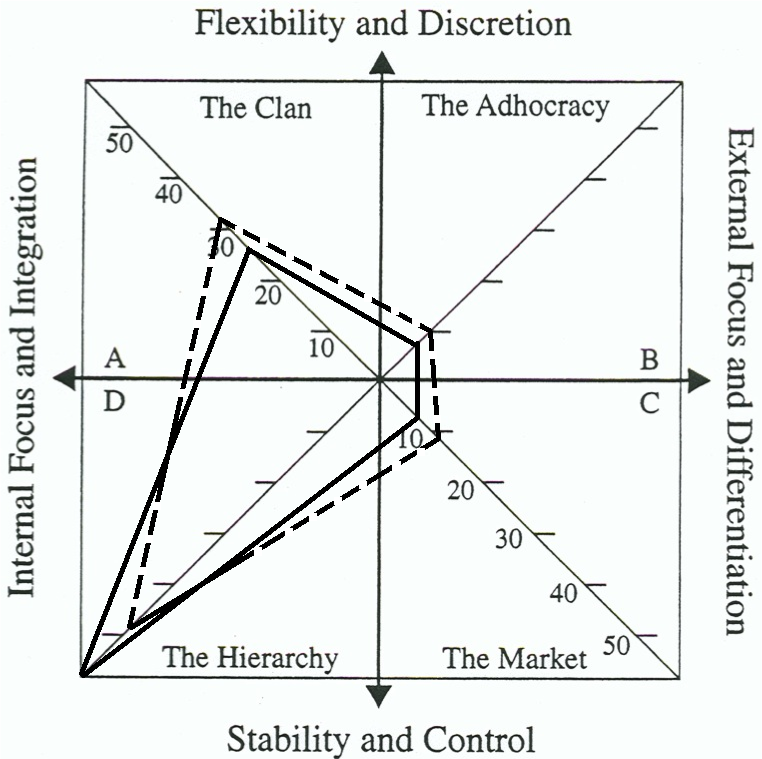
From the answers given, we found that the Organization Culture applied in the Health Sector is 59% of Hierarchy Culture and second is of Clan Culture 25%. The other types of Culture have lower degrees. Adhocracy Culture is located at 8% and Market Culture at 8% (Figure 1).
Results
From the results of the SEM method we got significant outcomes. The RMR (root mean square residual) is 0.04<0.05, the indices RMSEA (root mean square error of approximation) was 0.05, CFI was 0.91, NFI was 0.90 and the TLI =0.91, all of them are more than 0.9. Moreover, CMIN is 1.5 (< 3.0 good fit) GFI=0.90 which show that the conceptual model has acceptable fitness. The regression coefficients of each criterion are mentioned in the Table 2.
All indicators loaded significantly on their corresponding latent construct and the model indicated a good fit to the data supporting the hypothesized structure.
| β | CR | p.value | |
|---|---|---|---|
| Organizational Culture Work Engagement | ,210 | 2,312 | ,079 |
| Organizational Culture Job Satisfaction | ,115 | 1,219 | ,064 |
| Organizational Culture Job Burnout | ,088 | 1,047 | ,010 |
| R squared | |||
| Job Satisfaction | ,41 | ||
| Work Engagement | ,31 | ||
| Job Burnout | ,30 |
Table 2: All indicators loaded significantly on their corresponding latent construct and the model indicated a good fit to the da
From the Table 2, we conclude that Organizational Culture does not influence statistical significantly the Work Engagement. The regression coefficient between Emotional Intelligence and Job Satisfaction is 0.210 (with p.value 0.079).
As for the second aim, we argue that Organizational Culture predicts positively but not statistical significantly the Job Satisfaction of the employees. The regression analysis between job satisfaction and Organizational Culture is 0.115 (with pvalue 0.064).
Additionally, we found that Organizational Culture influence statistical significant employees’ Job Burnout level. Our results indicate that there is a positive relationship between the particular two terms (pvalue 0.010). This type of Culture increases the level of job burnout. This may happen because employees may be opposed to how problems are solved, or how leadership is exercised, or what elements are considered effective criteria for success.
Discussion
From the results in the present study, the health sector is characterized as a controlled and organized place.
More specifically, this type of organizational culture, the Hierarchical, mainly focuses on internal procedures, rules, and regulations. This type of culture determines the work behavior of individuals within the organization. We notice that the organization preserves bureaucracy and seeks to adhere to rules and regulations. This type of leadership could be a negative factor to the determination of positive work attitudes, as it undermines every aspect of initiative. At the same time, however, in the Health sector, the Clan Culture seems to gain of great importance. The implementation of this culture has basic characteristic the existence of strong interpersonal relations, teamwork, collaboration, trust and commitment to employees. Support, empowerment and participation are the key factors to develop membership.
Regarding the preferred Culture in the health sector, it was found that the formation of a culture that will contain elements from all four models of culture is sought. More specifically, it was observed that the desired culture is the Culture of the Hierarchy with a percentage of 48%, while the second is the Culture of Intimacy with a percentage of 32%. They are followed in the same order by the Innovative Culture and the Culture of the Market with a percentage of 10% (Figure 1). It has been observed, therefore, that the health sector seeks to strengthen the anthropocentric character of public hospitals, in order to provide better quality health services to patients and a more environmentally friendly work environment for employees. Applying the Culture of Intimacy also means creating a more anthropocentric orientation. This means more interest in man, with a strong sensitivity to the needs of both employees and patients.
Overall, public nursing organizations prefer to maintain Hierarchical Culture as the dominant type, but with reduced characteristics, such as the application of formal rules and procedures, the assurance of centralized leadership, two elements through which the maintenance of control and control is ensured in the organization. At the same time, a significant increase in Clan Culture is sought, which will create smooth working relationships between employees and maintain a friendly atmosphere in the work environment, and core values will be teamwork, participation and commitment of employees.
An organizational culture that provides appropriate organizational support and innovative practices to encourage employees, job development opportunities, initiative opportunities, rewards, good reputation and effective communication, then it also contributes to the development of employee ‘s work engagement [4]. From the results of the analysis it was observed that the organizational culture has a positive, but not statistically significant, effect on the employees’ work engagement level in the health sector. This means that the existing culture applied in public nursing institutions does not contribute to the creation of positive work behaviors and attitudes, as it focuses more on the application of rules and regulations and less on employee development and the adoption of individual initiatives.
Studies have shown that organizational culture influences productivity, efficiency, performance, job satisfaction, innovation, and leadership and decision making [7, 9]. The level of high job satisfaction is dependent on the match of organizational culture and employees’ values. From the results of the present study it was observed that the organizational culture has a positive but not statistically significant effect on the job satisfaction of the employees in the health sector. This means that the existing culture does not contribute to creating conditions for employee satisfaction. In addition, we should emphasize that the type of culture, such as hierarchical, has a statistically significant but opposite orientation.
Organizational culture is the element that determines the ways and means of dealing with problems, can at various levels, cause both positive and negative behaviors of employees and organizations. The hallmarks of a culture that are the criteria for success, the way employees are managed, the strategic management, can have a positive or negative effect on employee stress and exhaustion. From the results of the analysis it was observed that the organizational culture has a positive and statistically significant effect on the work exhaustion of the employees in the health sector. More specifically, the type of Hierarchical Culture is the most powerful factor in shaping this relationship. This shows that the existing type of culture applied in public hospitals, is characterized by adherence to the rules, procedures; hierarchy contributes to the creation of routine and negative situations, which contributes to further physical and mental exhaustion of employees, especially in the field of Health where there is intense and negative interpersonal interaction with patients and their relatives.
Conclusions and Implications
It’s obvious that culture plays the most important role to enhance organisational performance. Particularly, the culture of Intimacy enhances the humanitarian approach of this sector . It shows more interest in man with strong sensitivity to the needs of both employees and patients. Therefore, it endeavors employees’ work engagement, and their satisfaction, as at the same time decrease employees’ exhaustion.
Though, in the Greek hopsitals there is a cultural type which combines both of Hierarchy and Clan types. At the first part there is the focus on certain rules, procedures and policies, and at the second part there is focus on employees development and teamwork.
Hierarchical culture has an internal orientation and focuses on adherence to rules, procedures and bureaucracy and, therefore, will not lead to positive work attitudes, but instead will increase the pressure on employees and negatively affect their performance [52].
It is noticeable that scholars have identified the negative relationship between Hierarchical Culture and patient satisfaction [53]. Adherence to predetermined rules and procedures comes first, while individual initiative comes second, which leads to a negative work attitude (engagement, satisfaction) of employees in hospitals [53].
As a consequence, we must emphasize to the sensitivity of healthcare organizations to changes that take place either internally or externally, which can be physical, social, political and economic. However, change finds obstacles, such as the rigor of existing culture and the presence of members with different interests and requirements. Studies have shown that in order for organizations to succeed in achieving the required organizational change, leaders must focus their efforts on identifying the existing culture of their organizations, which is characterized by a specific set of beliefs, values and rules. Failure to follow these steps before quality improvement actions complicates the path to success [54].
To avoid Healthcare organisations where intense social interactions take place, leading to the burnout syndrome, there are referred some implications. Precisely, it must be adapted the proper Culture that concerns over employees’ well-being and needs, and provide a positive work environment. In that way it could improve the level of positive work attitudes. Additionally, healthcare organizations should embrace technology to improve their employees’ skills and performance. The leaders’ value system, ethical standards and actions affect greatly employees’ work attitudes. Positive working attitudes must be created and maintained through a positive organizational environment, providing effective communication, autonomy, participation and mutual trust, which lead to high job performance [55].
Thus, the overall conclusion of this study is that the suitable Cultural type should be aligned with employees’ values in order to decrease their burnout syndrome. As a positive organizational environment is developed by effective communication, autonomy and participation. Organizational practices such as empowerment, information sharing, decision making freedom and support; create trust that favors employee performance as well as patient’s satisfaction. These practices reduce stress and job burnout syndrome and increases the level of work engagement and job satisfaction.
Additionally, the positioning of emotional intelligent leaders who have the ability to convey the organizations’ mission, to handle subordinates’ emotions and moods and avoid emotional explosions, to perceive the feelings and needs of their subordinates and behave accordingly, to communicate positively with others, will create a climate of trust and build strong relationships, where the levels of stress and burnout would be decreased [57, 58].
Finally, this research presents at what extent organizational culture affects employees’ working attitudes and especially in the Healthcare organisations in Greece. These results may be used for further research in order to find the main reasons of this outcome and ways that Healthcare organisations in Greece may adopt a better culture which will enhance organizational performance.
One of the limitations is that this research is limited only to the central areas of the country. Also, it is implied to public hospitals and not to the private hospitals of the country. Moreover, the sample of this research includes doctors, nurses and administrative personnel. These limitations can also be used for further research.
References
-
Demerouti E, Bakker AB, Janssen PPM, Schaufeli WB (2001) Burnout and engagement at work as a function of demands and control. Scandinavian Journal of Work, Environment & Health 27(4): 279-286.
-
Goffee R, Jones G (2001) Organizational culture: A sociological perspective. In: Cooper CL, Cartwright S, Early PC, et al. (Eds.), The international handbook of organizational culture and climate. New York, NY: John Wiley, pp: 3-20.
-
Sigalas I (1999) Basic Principles of Health Business Administration, Hellenic University of Patras. pp: 1-171.
-
Evangeline ET, Gopal Ragavan VP (2016) Organisational Culture and Motivation as Instigators for Employee Engagement. Indian Journal of Science and Technology 9(2).
-
Demerouti E, Bakker AB, Nachreiner F, Schaufeli WB (2000) A model of burnout and life satisfaction among nurses. Journal of Advanced Nursing 32: 454-464.
-
DeMato D, Curcio C (2004) Job satisfaction of elementary school counselors: a new look. Professional School Counseling 7 (4): 236-245.
-
Kreis K, rockopp DY, Educ (1986) Autonomy: A component of teacher job satisfaction. Education 107(1): 110-115.
-
Ritchie M (2000) Organizational Culture: An Examination of its Effect on the Initialization Process and Member Performance. Southern Business Review 25(2): 1-13.
-
O’Reilly CA, Caldwell DF (1980) Job choice: the impact of intrinsic and extrinsic factors on subsequent satisfaction and commitment. Journal of Applied Psychology 65: 559-565.
-
Larsson R, Brousseau KR, Kling K, Sweet PL (2007) Building motivational capital through career concept and culture fit; the strategic value of developing motivation and retention. Career Development International 12(4): 361.
-
Kleinman G, Siegel P, Eckstein C (2002) Teams as a learning forum for accounting professionals. The Journal of Management Development 21(5): 427-459.
-
Bakker AB, Demerouti E, Euwema MC (2005) Job resources buffer the impact of job demands on burnout. Journal of Occupational Health Psychology 10: 170-180.
-
Brian TG, Stanley G, Armenakis AA, Shook CL (2009) Organizational culture and effectiveness: A study of values, attitudes, and organizational outcomes. Journal of Business Research 62(7): 673-679.
-
Cooke, Rousseau (1988) Behavioral norms and expectations: A quantitative approach to the assessment of organizational culture. Group and Organization Studies 13: 245-273.
-
Chapman R, Combs S (2005) Collaboration in the emergency department: an innovative approach. Accident and emergency Nursing 13(1): 63-69.
-
Ravasi D, Schultz M (2006) Responding to organizational identity threats: exploring the role of organizational culture. Academy of Management Journal 49(3): 433- 458.
-
Sovie MD (1993) Hospital culture-why create one?. Nursing Economics 11(2): 69-75.
-
Ping Z, Bundorf K, Chang JL, Huang JX, Xue D (2011) Organizational Culture and Its Relationship with Hospital Performance in Public Hospitals in China, Health Services Research 46(6pt2): 2139-2160.
-
Aiken LH, Clarke SP, Sloane DM, Sochalski J, Silber JH (2002) Hospital nurse staffing and patient mortality, nurse burnout, and job dissatisfaction. Journal of the American Medical Association 288 (16): 1987-1993.
-
Schein E (1996) Leadership and organizational culture, San Francisco Jossey Bass pp: 61-62.
-
Rakich JS, Longest BB, Darr K (1993) Managing health services organizations. In: 3rd (Edn.), Baltimore: Health Professions Press.
-
Kotter JP, Heskett JL (1992) Corporate culture and performance. New York: Free Press.
-
Hsi‐Chi H, Jen‐Chia C, Ya-Ling T (2012) The influence of hospital organizational culture on organizational commitment among nursing executives. African Journal of Business Management 6 (44): 10888-10895.
-
Robbins SP, Judge TA (2011) Organizational behavior. In: 14th (Edn.), Upper. Saddle River, NJ: Prentice Hall.
-
Shortell SM, Levin DZ, O’Brien JL, Hughes EFX (1995) Assessing the impact of continuous quality improvement/total quality management: concept versus implementation. Health Services Research 30(2): 377-401.
-
Hulin CL, Judge TA (2003) Work Attitudes. In: Borman WC, linen DR, Klimoski RJ, et al. (Eds.), Handbook of psychology: Industrial and organizational psychology. Hoboken, NJ: Wiley, pp: 255-276.
-
Schaufeli WB, Martinez I, Marques Pinto A, Salanova M, Bakker AB (2002a) Burnout and engagement in university students: Across national study. Journal of Cross-Cultural Psychology 33: 464-481.
-
Schaufeli WB, Salanova M, Bakker AB, Gonzales Roma V (2002b) The Measurement of Engagement and Burnout: A two sample confirmatory Factor Analytic Approach. Journal of Happiness Studies 3: 71-92.
-
Bakker AB, Demerouti E (2007) The job demands resources model: state of the art. Journal of managerial psychology 22(3): 309-328.
-
Schneider B, Reicher AE (2006) On the Etiology of Climates. Personnel Psychology 36: 19-37.
-
Chang S, Lee MS (2007) A study on relationship among leadership, organizational culture, the operation of learning organization and employees’ job satisfaction. The Learning Organization 14(2): 155-185.
-
Mijakoski D, Bislimovska J, Basarovska V, Montgomery A (2015) Burnout, Engagement, and Organizational Culture: Differences between Physicians and Nurses. Macedonian Journal of Medical Sciences 3: 3. **33.** Hwang E (2018) Effects of the organizational culture type, job satisfaction, and job stress on nurses’ happiness: A cross sectional study of the long term care hospitals of South Korea. Japan Journal of Nursing Science 16(3): 263-273.
-
Matziari A, Montgomery A, Georganta K, Doulougeri K (2016) The Relationship Between Organizational Practices and Values with Burnout and Engagement. Current Psychology 36: 276-285.
-
Sow M, Murphy J, Osuoha R (2017) The Relationship between Leadership Style, Organizational Culture, and Job Satisfaction in the U.S. Healthcare Industry. Management and Economics Research Journal 3: 1-10.
-
Katz Navon T, Rivard P (2014) Employee Engagement, Organizational Culture and Healthcare Outcomes. Academy of Management Annual Meeting Proceedings 2014(1).
-
Locke EA (1976) Nature and the causes of job satisfaction. In: Dunnette MD, et al. (Eds.), Handbook of Industrial and Organizational Psychology. Chicago: Rand Mc Nally.
-
Sharma (2017) Organizational culture as a predictor of job satisfaction: the role of age and gender. Journal of Contemporary Management Issues 1(14): 35-48.
-
Fleury MJ, Grenier G, Bamwita JM, Chiocchio F (2018) Associated and Mediating Variables Related to Job Satisfaction among Professionals from Mental Health Teams. Psychiatric Quarterly 89: 399-413.
-
Maslach C, Jackson SE (1981) The measurement of experienced burnout. Journal of Occupational Behavior 2(2): 99-113.
-
Maslach C, Leiter MP (1997) The Truth about Burnout- How organizations cause personal stress and what to do about it. Jossey- Bass. An imprint of Wiley.
-
Maslach C, Shaufeli W, Leiter M (2001) Job burnout. Annual Review of Psychology.
-
Aiken LH, Clarke SP, Sloane DM (2002a) Hospital staffing, organizational support, and quality of care: cross- national findings. Int J Qual Health Care 14: 5-13.
-
Shanafelt TD, Balch CM, Bechamps G, Russell T, Dyrbye L, et al. (2010) Burnout and medical errors among American surgeons. Annual Surgery 251(6): 995-1000.
-
Cameron K, Quinn R (2006) Diagnosing and changing the organizational culture: Based on the competing values framework, Jossey Bass Inc Publication pp: 1-12.
-
Weiss DJ, Dawis RV, England GW, Lofquist LH (1967) Manual for the Minnesota Satisfaction Questionnaire. Minnesota Studies in Vocational Rehabilitation, Minneapolis: University of Minnesota, Industrial Relations Center 22.
-
Hair JF, Gabriel ML, Patel VK (2014) Amos covariance- based structural equation modeling (cb-sem): Guidelines on its application as a marketing research tool. Brazilian Journal of Marketing 13(2): 44-55.
-
Swami V (2012) Social psychological origins of conspiracy theories: the case of the Jewish conspiracy theory in Malaysia. Frontier Psychology 6(3): 280.
-
Mishra D, Min J (2010) Analyzing the Relationship between Dependent and Independent Variables in Marketing: A Comparison of Multiple Regression with Path Analysis. SSRN Electronic Journal. pp: 28.
-
Hu L, Bentler PM (1999) Cutoff criteria for fit indexes in covariance structure analysis: Conventional criteria versus new alternatives. Structural Equation Modeling: A Multidisciplinary Journal 6(1): 1-55.
-
Carmines EG, McIver JP (1981) Analyzing Models with Unobserved Variables: Analysis of Covariance Structures. In: Bohrnstedt GW, Borgatta EF, et al. (Eds.), Social Measurement: Current Issues pp: 65-115.
-
Bellou V (2010) Organizational culture as a predictor of job satisfaction: the role of gender and age. Career Development International 15(1): 4-19.
-
Meterko M, Mohr DC, Young GJ (2004) Teamwork culture and patient satisfaction in hospitals. Medical Care 42: 492-498.
-
Mallak LA, Bringelson LS, Lyth DM (1997) A cultural study of ISO 9000 certification. International Journal of Quality & Reliability Management 14 (4): 328-348.
-
Argyris C (1990) Integrating the Individual and the Organization. New York: Routledge.
-
Schaufeli WB, Salanova M (2007) Work engagement: An emerging psychological concept and its implications for organizations. In: Gilliland SW, Steiner DD, Skarlicki DP, et al. (Eds.), Research in social issues in management: Managing social and ethical issues in organizations 5: 135-177.
-
Schaufeli W, Bakker A (2003) UWES, Utrecht Work Engagement Scale. Preliminary manual. Valencia: Utrecht University.
- Capacity Constraints in Pediatric Inpatient Psychiatric Care: A Cross-Sectional Analysis of Bed Availability and Geographic Access in North Carolina
- Why Healthcare Analytics Still Optimizes the Wrong Things
- Coding, Coverage, and Care: The Infrastructure of Transgender Health Inequities
- The Effect of Classroom Attendance on Academic Achievement of Management and Leadership Discipline of Nursing Students at Instituto Superior Cristal and Universidade de Dili, Timor-Leste, 2024: A Case Study
- The Role of Social Bonds in Facilitating Shared Investments and Resource Allocation: Addressing the “Wrong Pocket Problem” in Public Health and Healthcare
- Social-Cultural Factors Contributing to Antimicrobial Resistance in Livestock Farmers and Community Households in Kayonza District, Rwanda