
Implementation and Monitoring of the Vaccination Campaign against SARS-Cov-2 Virus in the Local Health Authority of Viterbo
Introduction: The COVID emergency has been of great impact for health systems, among the various causes mainly for the difficulties in forecasting, the rapidity of spread, the lack of intervention plans of immediate implementation. Albeit with an 'emergency' specification, the authorization of a vaccine against the SARS-Cov-2 pandemic virus by the international regulatory bodies in a very short space of time enabled to plan the operational actions and the interventions on the territory. In all its phases, the vaccination campaign has always followed the indications of the Commission Structure, the Ministry of Health and Lazio Region. The ministerial guidance document on how to implement a vaccination campaign was never been done before in terms of the number of people to be reached, of the size of the resources to be involved, of the finding of suitable locations administering vaccines and of the computerization of data. In the first months of the year, the supply of vaccination was strongly influenced by the availability of doses, which were initially intended for the categories and age groups mostly at risk. Subsequently, the target of intervention has increasingly expanded to include the entire population of persons aged > 12 years. 20 Vaccination Centers were activated in the province of Viterbo, each with a Medical Director and a Nurse Referent. A centralized team of operators was established in order to deal with any critical matters in managing and to appropriately control the various phases of the vaccination activity. This operational center is the fulcrum of the vaccination organization. Aim of the study: The study aims to provide an overview of the vaccination campaign against the SARS-CoV-2 virus in the Local Health Authority of Viterbo. Specifically, the study aims to compare the trend of COVID cases with the start of the vaccination campaign. The trends of positives, hospitalizations and deaths have been compared with the progressive increase in vaccine administrations. Methods: The extrapolated data refer to the period January-September 2021. The following data were considered: • Population of the province of Viterbo • Epidemiology of COVID cases in the province of Viterbo • Number of positives, deaths and hospitalizations in the province of Viterbo • Number of immunized population in the province of Viterbo • Number of doses administered per type of vaccine • Percentage of vaccination coverage in the age groups 12-80+ Results: In the period January-September 2021, 387,932 doses were administered in the Local Health Authority of Viterbo, and a full-cycle coverage of 67% of the general population was achieved. The age group with the highest coverage includes persons aged > 80 years, with a value of 95%; the lowest coverage refers to the age groups 12-19 and 30-39 with a value of 52%. Referring to the number of administered doses, in all age groups the Comirnaty vaccine is prevalent for a significant percentage (77%).Conclusion: The introduction of vaccination has certainly affected the epidemiology of COVID disease, particularly the reduction not only of cases but also of hospitalizations and deaths. The coverage data and the monitoring of administrations are tools of fundamental importance to plan interventions following the achievement of high coverage. This enables to organize targeted interventions in contexts of low vaccine adhesions or in critical situations for the increase of COVID cases and outbreaks.
Introduction
The COVID emergency has been of great impact for health systems, among the various causes mainly for the difficulties in forecasting, the rapidity of spread, the lack of intervention plans of immediate implementation. Albeit with an ‘emergency’ specification, the authorization of a vaccine against the SARS-Cov-2 pandemic virus by the international regulatory bodies in a very short space of time (rolling review procedure, progressive and parallel evaluation of the dossiers submitted), enabled to plan the operational actions and the interventions on the territory. This also enabled to identify competences in a fairly homogeneous way throughout the country [1, 2, 3, 4, 5, 6, 7, 8]. The ministerial guidance document on how to implement a vaccination campaign was never been done before in terms of the number of people to be reached, of the size of the resources to be involved, of the finding of suitable locations administering vaccines and of the computerization of data. The ministerial guidance was presented at the State- Regions Conference in December 2020 and was the starting point for the launch of the vaccination campaign in Italy, which was then ratified by the Health Ministry Decree of January 2, 2021. On December 24, 2020 Lazio Region issued its first official act on the matter, which was later reworked and revised on December 29, with a further act no. G16441, aimed at approving the Regional Vaccination Plan against the SARS-Cov2 virus in Lazio. This established the reference points for the development of the Vaccination Plans of each Local Health Authority in the Region [9].
The Vaccination Plan of the Local Health Authority of Viterbo
In the Local Health Authority of Viterbo there are 60 municipalities, which are divided into 3 Health Districts. According to the ISTAT data referring to January 1, 2020, the province of Viterbo has a total population of 309,795 inhabitants in an area of 3615 Km2, which is characterized by a not always optimal viability (Charts 1-3). In order to select the vaccination centers, according to the Hub and Spoke model proposed in the above-mentioned Regional Official Act, the criterion of “proximity” was chosen. This was intended to guarantee easily-reachable sites for users and to favor locations in Local Health Authorities structures that were already known to users (Hospitals, Health Homes, Clinics) [10, 11, 12, 13, 14].
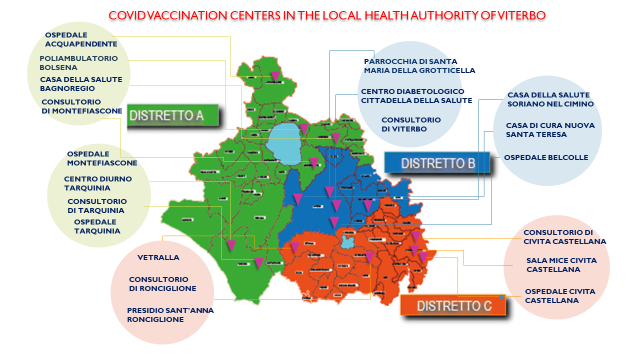
Chart 1: Covid vaccination centers in the local health authority of viterbro.
In the first instance, the so-called Hospital Vaccination Centers began their activities. These were located at the Hospital of Viterbo, which is the Hub Center where the centralized management of storage and delivery of vaccines takes place, and at the “satellite” hospitals of Civita Castellana, Tarquinia, Acquapendente, Ronciglione and Montefiascone. They were rapidly followed by the Territorial Vaccination Centers, consisting in the health centers of Soriano and Bagnoregio, in the polyclinics, in the clinics for the vaccination of adolescents, and in external structures, equipped with a wide space and obtained on loan for use in Viterbo, Civita Castellana and Tarquinia. A Private Vaccination Center was added to these at the accredited Nursing Home “Nuova S. Teresa” in Viterbo, which is always managed and supplied by the Hub of Viterbo. Overall, 20 Vaccination Centers were activated, each with a Medical Director and a Nurse Referent, and organized in compliance with the specifications of Regional Official Act no. G16441, with vaccination lines dedicated to a single type of vaccine [15, 16].
With regard to the implementation of the vaccination strategy and to the allocation of specific responsibilities, the Vaccination Plan of the Local Health Authority of Viterbo was drawn up through a special deliberation of the Director General. This was divided into several chapters and clearly identified two management figures, defined Hub Managers [17, 18]. One is the Corporate Pharmacy Department Director, who is responsible for the aspects concerning the procurement of vaccine doses, storage, distribution, delivery plans to spokes, accredited facilities, residential care homes, and nursing homes. The other is the Hygiene and Public Health Service Department Director, who is responsible for ensuring that all systems and processes, workforce (with clearly defined roles and responsibilities), training and all other relevant requirements are properly respected. The same figure must also ensure that all personnel involved in local vaccination services are aware of the processes defined at National and Regional level and of all detailed procedures to manage any adverse events or problems during the vaccination process [19, 20].
Objectives
The goal of the Vaccination Campaign is to achieve the highest possible percentage of vaccinated persons within the intervention targets of national and regional plans, where the priority action categories and proactive recruitment methods are identified [21, 22, 23, 24, 25].
Implementation Model
The structural characteristics of the vaccination centers must correspond to the requirements of the Regional Official Act and must be equipped with computer tools, furnishings, emergency drugs indicated. The setting provides for a waiting room for pre-vaccination, a room for administration with a pre-vaccination anamnesis area, a point of vaccine preparation and administration, and a room for post- vaccination. It is defined the minimum team, consisting of one doctor, one nurse, one social health worker, one administrative/data manager per vaccine line, while a doctor can supervise more vaccine lines. The operating hours are set for every day of the week from 9.00 to 18.00, estimating the provision of 6 vaccinations per hour. Mobile units, which represent a priority for intervention, are organized with services provided at home and in senior residences [26, 27, 28, 29, 30].
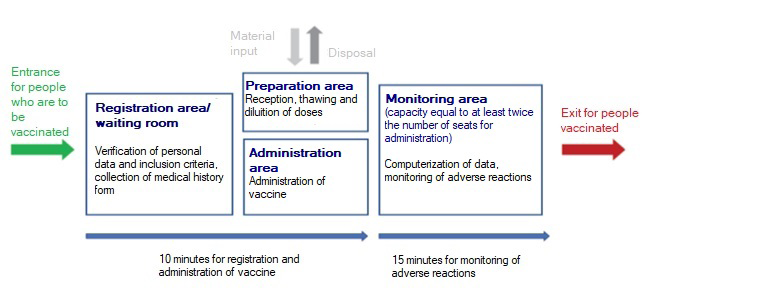
Chart 2: Basic outline of the organization of a COVID Vaccination Center, as required by Lazio Regional Plan.
The healthcare and administrative staff is recruited through different modalities: - Call for contract for freelance services - Operators provided by the Civil Protection and the Commissioners’ Structure - Staff already in service with “additional services” for exceeding hours
Vaccines
COVID vaccines are supplied in multi-dose packages and have specific storage and preparation methods, established by the Regulatory Authorities that have authorized them on the instructions of the manufacturers. It is necessary that all indicated steps of preparation are strictly followed. A camera system with on-call personnel is foreseen and installed in order to continually verify the context and maintenance of temperature in the storage and preservation points. The pharmacists working in the Hub of Viterbo are responsible for the management of vaccines.
After being authorized by EMA and AIFA (Italian Medicines Agency), the following vaccines are in use: Comirnaty, manufactured by Pfizer-BioNtech, mRNA vaccine with modified nucleosides, AIFA Determination of December 23, 2020. Two-doses vaccine with a minimum interval of 21
days Spikevax, manufactured by Moderna, mRNA vaccine with modified nucleosides, AIFA Determination of January 7, 2021. Two-doses vaccine with a minimum interval of 28 days Vaxzevria, manufactured by Astrazeneca, non-replicating viral vector vaccine, AIFA Determination of January 30, 2021. Two-doses vaccine with a minimum interval of 28 days Janssen, manufactured by Johnson&Johnson, non-replicating viral vector vaccine, AIFA Determination of March 12, 2021. Single-Dose Vaccine.
Staff Training
Prior to the start of activities, all recruited healthcare personnel must compulsorily undergo a specific training course, which is periodically updated and delivered in distance learning mode by the Italian National Institute of Health. Participation in the course must be verified. The corporate training started on December 24, 2020 and was conveyed through the accredited e-learning corporate platform FAD Med in order to certify its effective fruition.
The contents of this course provide the knowledge and skills on the following topics: 1) target population of vaccination and priority criteria of the offer; 2) efficacy and safety data of the vaccine; 3) vaccine schedule; 4) methods of procurement, transport and storage; 5) contraindications and precautions; 6) preparation (dilution, administration of the vaccine, types of syringes and needles); 7) collection of informed consent; 8) mode of administration; 9) registration of vaccinations; 10) post-vaccination surveillance; 11) monitoring and reporting of adverse events; 12) precautions for the control of infectious risk, waste disposal and waste
The Vaccination Booking Operational Center
vaccine.
In addition, acquisition of the Basic Life Support (BLS) course was verified for medical and nursing staff.
Monitoring of Vaccinations
The information system supporting vaccination bookings and registrations has been developed according to national and regional indications. This was intended to supplement the platforms dedicated to the active call/booking system, the registration and certification of vaccination, the recall system, the accurate daily calculation of doses administered and vaccination coverage, and the surveillance of adverse events. Particularly, the necessary elements to be correlated include how to manage the relationship with citizens from the active call/booking to the phase of administration and surveillance, supporting the supply chain from the distribution from the Hub to the points of administration, as well as real-time traceability and monitoring of vaccines during the single phases. Lazio Region uses the Regional Vaccine Registry platform, which has all the features required by national specifications. Reports of any adverse reactions must be made promptly (within 36 hours from the time when the doctor or health operator becomes aware of them) directly online at the VigiFarmaco site (https://www. vigifarmaco.it/), or by filling in the paper report form and sending it via e-mail to the Pharmacovigilance Manager of the facility to which the patient belongs. At the end of each session a compulsory report is compiled with the essential data useful for verification and monitoring activities.
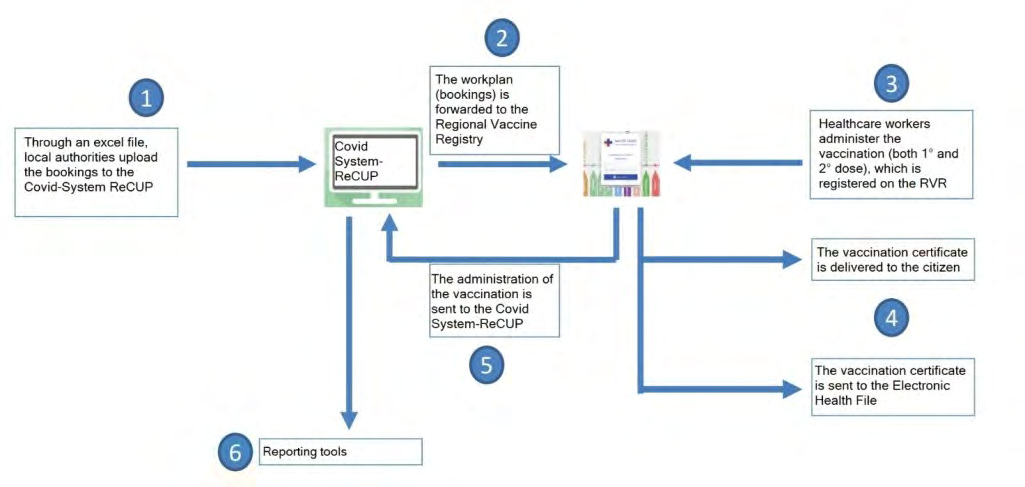
Chart 3: Operate centre.
Operating scheme of vaccination activities, from the booking to the administration and computer registration phases, as required by Lazio Regional Plan.
A centralized team of operators is established in order to deal with any critical matters in managing and to appropriately control the various phases of the vaccination activity. Their specific tasks include interfacing with computerized booking methods deriving from the website of Lazio Region through the Covid System-ReCUP and actively calling to vaccination citizens for whom a priority is identified. This operational center is the fulcrum of the vaccination organization since, according to the bookings, it communicates to the Corporate Pharmacy (Hub site) the amount of doses needed and their destination in the peripheral sites (Spokes) on a daily basis. It also sends computerized lists to each vaccination center, according to a format, which is registered on the Regional Vaccine Registry and will be completed with the administration of the vaccination and sent to the Electronic Health File. In the initial phase, this represents the official documentation of the vaccination. Subsequently, this document takes the name of Green Certificate (Green Pass), which is obtained through the same operational methods described and a further connection to the website of the Ministry of Health and the National Vaccine Registry. Bookings initially involve a functional stratification when identifying priorities, depending on the risk and severity of COVID infection and on the profession which one carries out. In compliance with national and regional indications, the vaccination campaign proceeds by age group, progressively opening up the possibility of booking according to the year of birth, depending on the numerical availability of vaccines. When the amount of vaccines enables it, free access through “Open-Day” without a real reservation is also organized and sometimes dedicated to specific categories (e.g. children who must take the maturity examination, or particular weekends).
Operating Instructions
In all its phases, the managing of the vaccination campaign has always taken place following the indications of the Commission Structure, the Ministry of Health and Lazio Region. The Commission Structure is responsible for the distribution of vaccines and the issuing of specific orders. On the other hand, the Ministry of Health issues the National Plan and the Ministerial Circulars, which contain the opinions of the Scientific Technical Committee and AIFA. The use of vaccines, the schedule of administration, the identification of age groups, conditions, risk categories and priority of vaccination has been over time quite burdensome and complex. Sometimes this urgently needed to be modified as a precautionary measure after the discovery of side effects, although of rare frequency. It was therefore necessary to establish technical methods of communication, so as to quickly and homogeneously reach the Contact Persons and Managers of the vaccination centers in order to ensure the delivery of compliant vaccines in accordance with the specific requirements of regulatory sources. These were always available for consultation in case of doubt and were adapted to the context of each vaccination center. Every time a new provision from the Health Authority was issued, an Operational Instruction was drawn up in order to implement it, then transmitted quickly via email to all vaccination centers. In more complex situations, the Operating Instructions were then followed by Video Calls on the subject in order to discuss, share and resolve the most critical aspects.
The operating instructions are intended to make an official and easily accessible document available to each operator of the Vaccination Centers. This enables to manage users on any innovative or particularly critical aspect of the application. They use a classic scheme which is easy to understand and includes the title of the topic, the reference legislation, the indications of who does what and when, with clear attribution of powers and responsibilities.
Computerization of Vaccination Data
One of the peculiar aspects of the campaign of national importance was the need for immediate reporting of daily vaccinations administered on a well-defined format. In Lazio and consequently in the Local Health Authority of Viterbo, the Regional Vaccine Registry has been used. This is a well-known platform in use since 2017, when vaccination was introduced as a requirement to access to childcare and school. The RVR data flows into the National Vaccine Registry, where a Vaccine Certificate on the Regional Health Record and the Green Certificate are issued, with all the specifications of use provided by the regulations issued. The availability of a computerized registry also consents a precise analysis and monitoring of the work, to calculate coverage rates on the entire population and by age groups, and to plan incisive interventions where low adhesions are evident. Computerization has then demonstrated its certification purposes, even if initially the release system was affected by different regional organizations, with difficulties in the mutual recognition of administrations. Further complications then arose for those who had received vaccinations in foreign countries, sometimes with different schedules and booster intervals, or with vaccines which were similar to those authorized in Europe and Italy, but with different trade names. Lazio computerized system has unfortunately suffered a hacker attack at the end of July 2021, as a result of which many users have made special requests to restore data. For this reason, a centralized support service for the various IT problems was set up, with a dedicated email, which in the months of August and September 2021 analyzed and resolved 2250 requests for intervention.
Results: January-September 2021
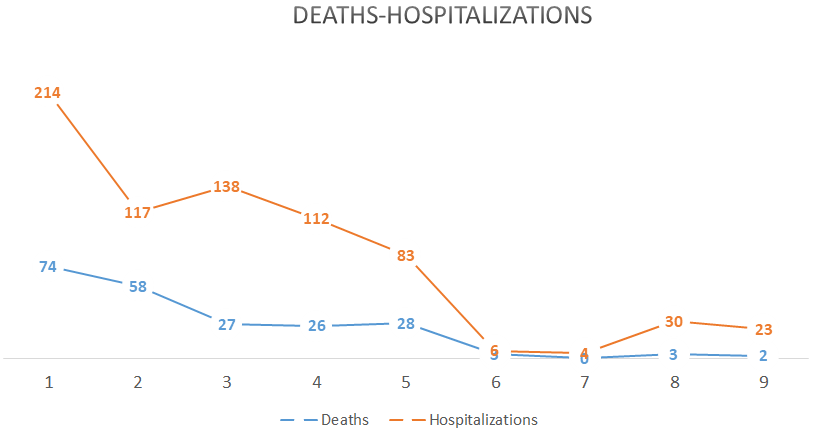
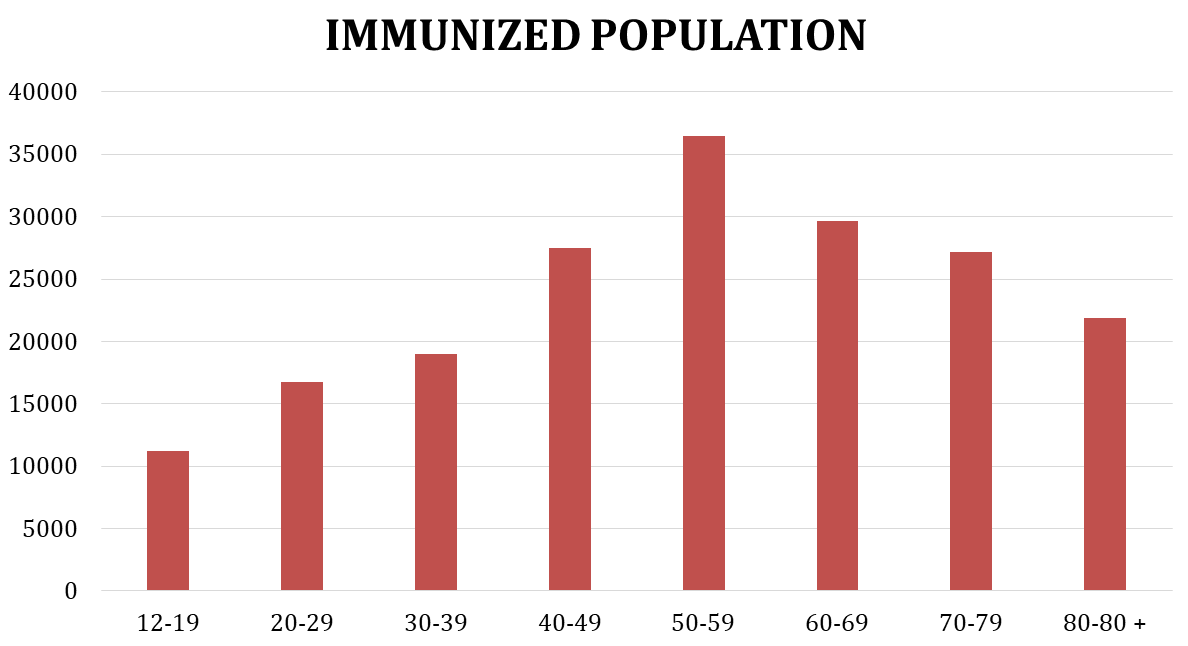
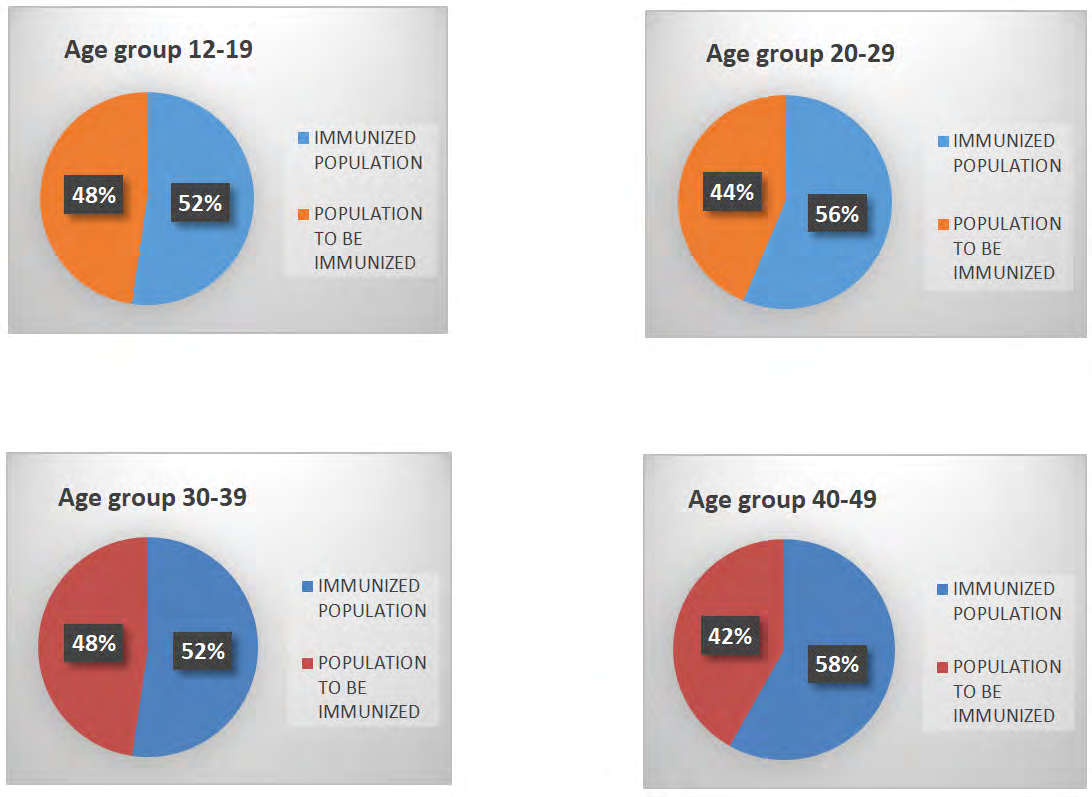
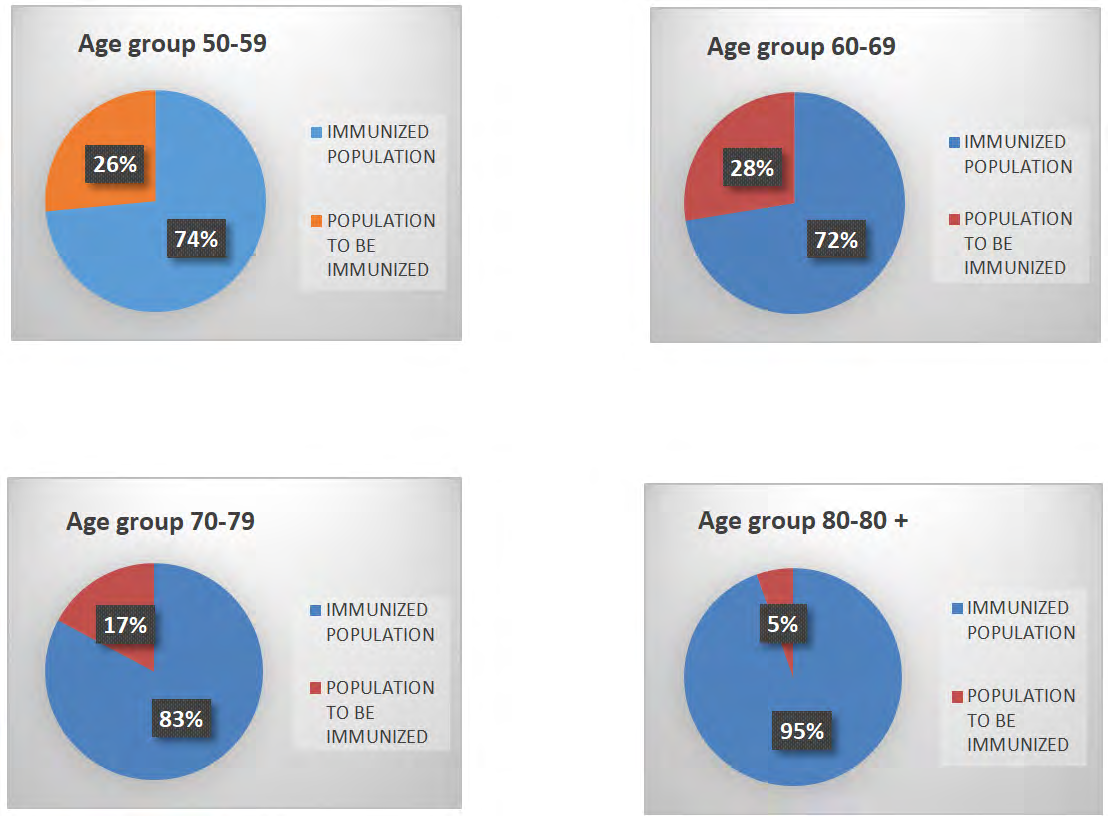
The extrapolation of data from the Regional Vaccine Registry made it possible to precisely monitor the vaccination activity and to produce descriptive indicators, which were useful to evaluate the results. Since we also have access to the Data Base of patients diagnosed with COVID, deaths and hospitalizations present in another platform of Lazio Region computerized system, it is very useful to estimate the trend of COVID cases over time by comparing them with the progressive increase in vaccine administrations, as represented graphically below (Figures 1-9).
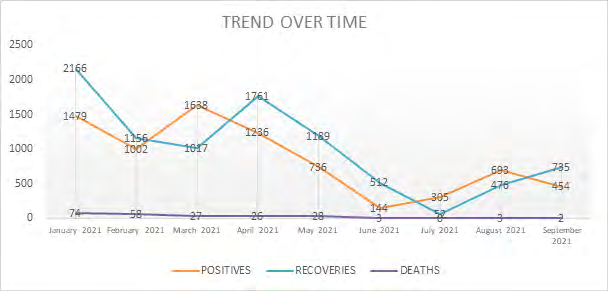
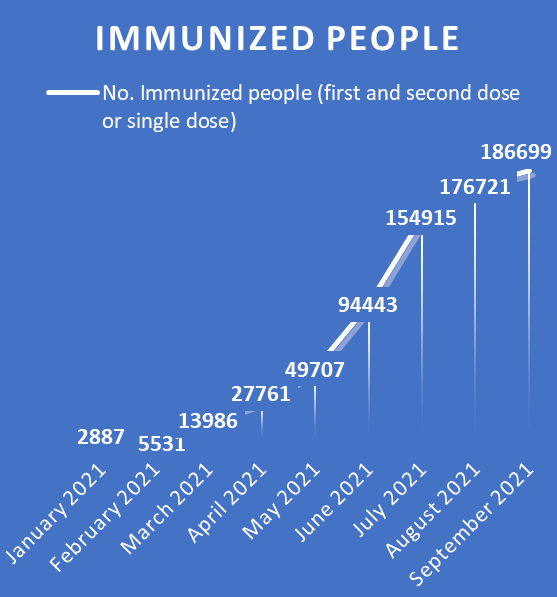
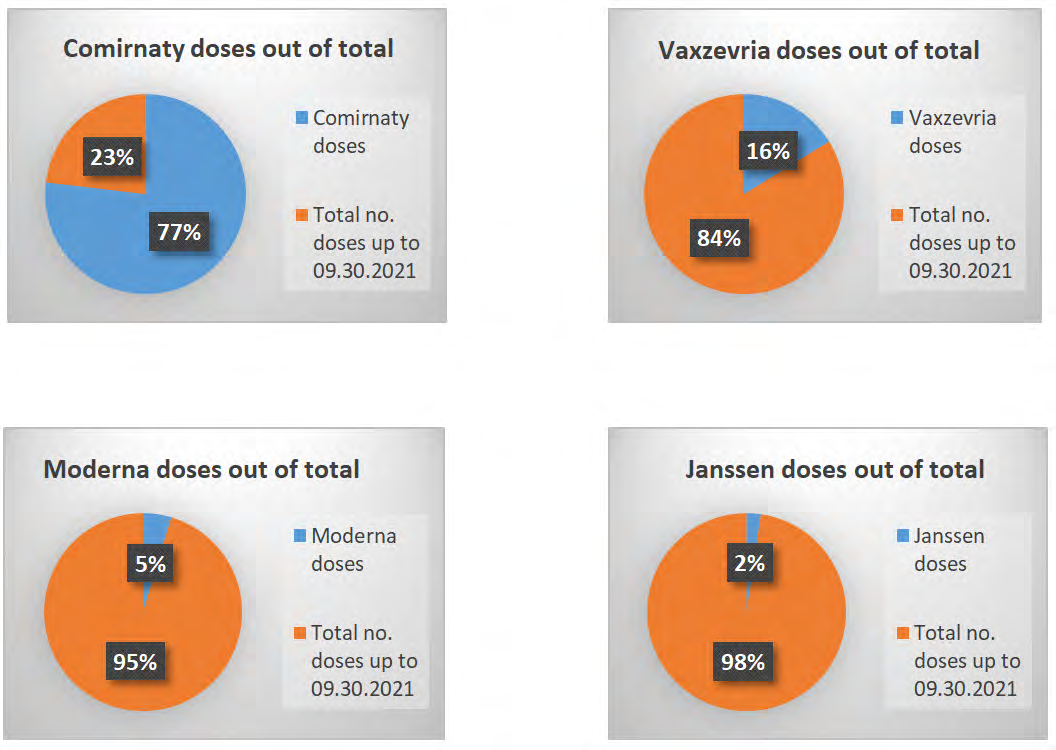
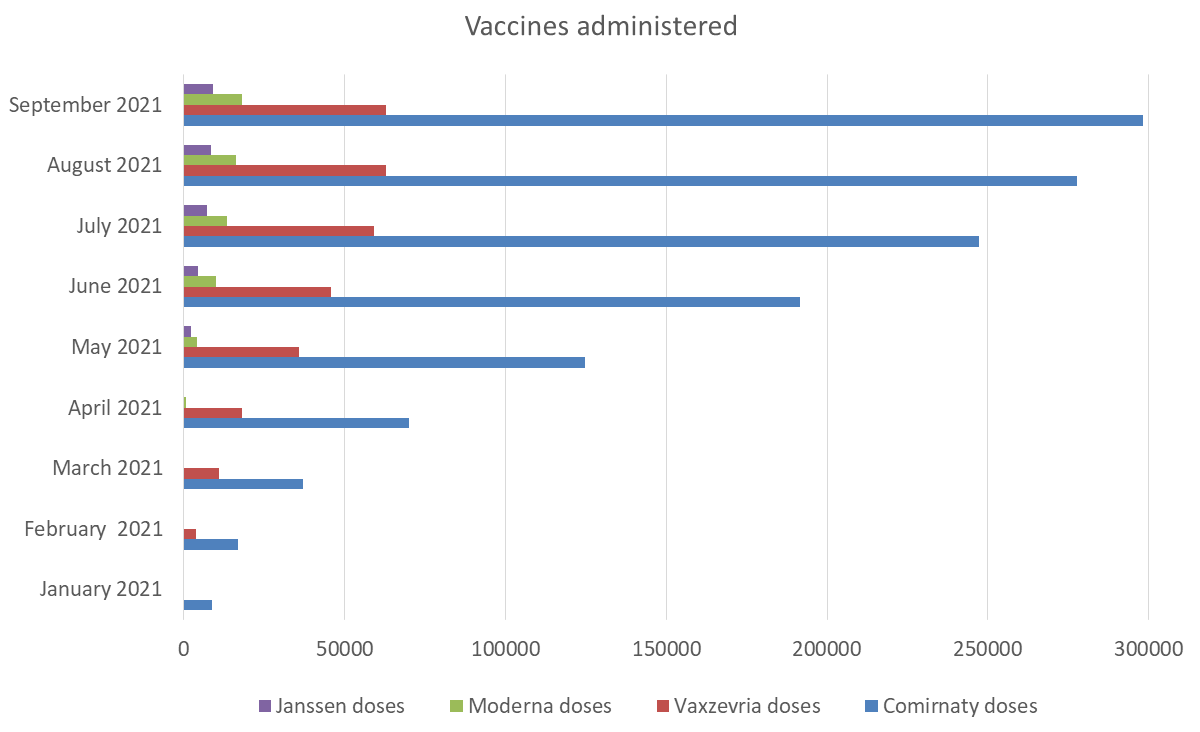
Comirnaty (Pfizer): 298,245 (77%) Vaxzevria (Astrazeneca): 62,762 (16%) Spikevax (Moderna): 17,938 (5%) Janssen (J&J): 8,987 (2%) Total: 387,932 It is also fundamental to highlight the significant increase in administrations over the months due to the progressive greater availability of doses.
Conclusions
The introduction of vaccination has certainly affected the epidemiology of COVID disease, particularly the reduction not only of cases but also of hospitalizations and deaths. In the first months of the year, the supply of vaccination was strongly influenced by the availability of doses, which were initially intended for the categories and age groups mostly at risk [31, 32].
Subsequently, the target of intervention has increasingly expanded to include the entire population of persons aged > 12 years.
In the period January-September 2021, 387,932 doses were administered in the Local Health Authority of Viterbo, and a full-cycle coverage of 67% of the general population was achieved. The age group with the highest coverage includes persons aged > 80 years, with a value of 95%; the lowest coverage refers to the age groups 12-19 and 30-39 with a value of 52%.
The extrapolation of data comes from the Regional Vaccine Registry system in use in Lazio, in which the administrations carried out by the centers and managed directly by the Local Health Authority, family doctors and pediatricians flow. The latter can vaccinate both in their offices and in the corporate vaccination centers. Since April 2021, also pharmacies have been authorized to provide vaccines. However, according to the procedures provided for Local Health Authority operators and for the purposes of processing coverage, it is not possible to access to the data of the vaccinations provided in pharmacies. Therefore, the values reported may be underestimated.
The coverage data and the monitoring of administrations are tools of fundamental importance to plan interventions following the achievement of high coverage. This enables to organize targeted interventions in contexts of low vaccine adhesions or in critical situations for the increase of COVID cases and outbreaks.
In accordance with Ministerial, Regional and Commissarial provisions, the administration of the third dose is currently underway, with the different definition of additional and booster dose. All actions aimed at encouraging the “hesitant” ones to start the vaccination cycle continue.
References
-
(2020) Piano Regionale vaccinazione anti SARS-CoV2: prima fase Determinazione. pp: G16441.
-
(2020) Raccomandazioni del Ministero della Salute per l’organizzazione della campagna vaccinale contro SARS- CoV-2/COVID-19.
-
(2020) Istruzione operativa per l’allestimento e somministrazione del vaccino COVID – 19 MRNA BNT16B2 “PROCEDURA SIFO-SIFAP.
-
(2020) RCP VACCINE REG174 information per UK heathcare professionals.
-
(2020) Determinazione Regione Lazio n. 21191 del 24/12/2020 approvazione Piano Regionale Vaccinazione anti SARS COV2 Prima Fase.
-
(2020) Nota AIFA STDG. Note di specifiche dell’uso di 6 dosi per fiala vaccino dosi per Pfizer Biontech.
-
(2021) CIRCOLARE del Ministero della Salute 19 marzo 2021 Trasmissione nota AIFA sul parere di sospensione e revoca del divieto d’uso del vaccino COVID-19 AstraZeneca.
-
(2021) ORDINANZA della Presidenza del consiglio dei ministri ufficio del commissario straordinario di governo per l’emergenza bse.
-
(2021) Disposizioni per ottimizzare l’impiego delle dosi di vaccino.
-
(2021) Avente per oggetto, Vaccinazione anti SARS- CoV2/COVID-19. Estensione dell’intervallo tra le due dosi dei vaccini a mRNA.
-
Circolare (2021) Trasmissione Indicazioni ad interim per la vaccinazione anti-SARS-CoV-2/COVID-19 nei luoghi di lavoro, pp: 1-13.
-
Circolare (2021) Aggiornamento vaccini disponibili contro SARS-CoV-2/COVID-19 e aggiornamento note informative del consenso.
-
Circolare (2021) Trasmissione parere del CTS in merito alla estensione dell’intervallo tra le due dosi dei vaccini a mRNA e alla seconda dose del vaccino Vaxzevria.
-
Nota Regione Lazio (2021) Recepimento indicazioni Ministero della Salute, circolari prot. Estensione intervallo tra le due dosi del vaccino PFIZER/BIONTECH.
-
Circolare (2021) Estensione di indicazione di utilizzo del vaccino Comirnaty (BioNTech/Pfizer) per la fascia di età tra i 12 e i 15 anni. Aggiornamento note informative.
-
Circolare (2021) Aggiornamento parere CTS vaccini.
-
Circolare Min (2021) Aggiornamento nota informativa vaccino Moderna.
-
Circolare Min (2021) Vaccinazione anti-SARS-CoV2/ COVID-19. Trasmissione determina e parere AIFA sull’uso dei vaccini a mRNA per schedula vaccinale mista.
-
Ministero della Salute (2021) Ordinanza 18 giugno 2021, Ulteriori misure urgenti in materia di contenimento e gestione dell’emergenza epidemiologica da COVID-19.
-
Circolare (2021) Completamento del ciclo vaccinale nei soggetti sotto i 60 anni che hanno ricevuto una prima dose di vaccino Vaxzevria e chiarimenti sulle modalità d’uso del vaccino Janssen. Aggiornamento note informative e specifico consenso informato.
-
Circolare Min (2021) Chiarimenti in materia di Certificazioni Verdi e loro uso in ambito transfrontaliero e in materia di Digital Passenger Locator Form.
-
Circolare (2021) Aggiornamento indicazioni sulla Vaccinazione dei soggetti che hanno avuto un’infezione da SARS-CoV-2.
-
LEGGE (2021) Conversione in legge, con modificazioni, del decreto-legge 25 maggio 2021, n. 73, recante misure urgenti connesse all’emergenza da COVID-19, per le imprese, il lavoro, i giovani, la salute e i servizi territoriali.
-
Ministero della Salute (2021) Ulteriori misure urgenti in materia di contenimento e gestione dell’emergenza epidemiologica da COVID-19.
-
Circolare (2021) Utilizzo del vaccino Spikevax (Moderna) in soggetti di età pari o superiore a 12 anni. Aggiornamento note informative.
-
Circolare (2021) Equipollenza certificazioni vaccinali e di guarigione rilasciate dagli Stati Terzi per gli usi previsti dall’ art. 3 del decreto-legge 23 luglio 2021.
-
Circolare (2021) Modalità per il rilascio EU Digital Covid Certificate (certificazione verde COVID-19) ai cittadini italiani vaccinati o guariti all’estero.
-
Circolare (2021) Certificazioni di esenzione alla vaccinazione anti-COVID-19.
-
(2021) D.L. 5 agosto 2021 (Green Pass).
-
Circolare (2021) Certificazione di esenzione temporanea alla vaccinazione anti-COVID-19 nei soggetti che hanno partecipato alla sperimentazione COVITAR.
-
Circolare (2021) Proroga validità delle certificazioni di esenzione alle vaccinazioni anti COVID 19.
-
Circolare (2021) Intervallo temporale tra la somministrazione dei vaccini anti SARS Cov-2/COVID 19 e altri vaccini.
- Capacity Constraints in Pediatric Inpatient Psychiatric Care: A Cross-Sectional Analysis of Bed Availability and Geographic Access in North Carolina
- Why Healthcare Analytics Still Optimizes the Wrong Things
- Coding, Coverage, and Care: The Infrastructure of Transgender Health Inequities
- The Effect of Classroom Attendance on Academic Achievement of Management and Leadership Discipline of Nursing Students at Instituto Superior Cristal and Universidade de Dili, Timor-Leste, 2024: A Case Study
- The Role of Social Bonds in Facilitating Shared Investments and Resource Allocation: Addressing the “Wrong Pocket Problem” in Public Health and Healthcare
- Social-Cultural Factors Contributing to Antimicrobial Resistance in Livestock Farmers and Community Households in Kayonza District, Rwanda