
GC-MS Analysis of Phytochemical Composition, Antibacterial and Antioxidant Properties of Ethanolic Extract of Detarium microcarpum (OFOR)
The increasing use of Detarium microcarpum as food and in treatment of different ailment and the understudy of its bioactive and chemical composition resulted to this work on GCMS studies of phytochemical composition, antibiotic and antioxidant properties of ethanolic extract of ofor (Detarium microcarpum). Ethanol extract of seed of Detarium microcarpum showed the presence of the various phytochemicals; saponin, flavonoids, steroid, proteins, anthraquinnones and alkaloids. The following phytochemicals were absence from the sample; tannins, terpenoids, cardiac glycoside, phulobactanins, phenolic compounds and reducing sugars. GCMS analysis showed the presence of 9, 12-Octadecadienoic acid (Z,Z)- as a main compound in the extraction. The aqueous extraction showed 28.59% and the least compound showed methyl tetradecanoate and the aqueous extraction is 1.13%. The activities of 10mg/2ml of the seed extract on selected bacterial organisms with Minimium Inhibition Concentration (MIC) of Eseterichia coli (10μl), Pseudomonas aeruginosa (100μl) Staphylococcus aureus (50μl) and Bacillus suptili (20μl) justified the use of the plant seeds for various treatments by local traditional practitioners. Antioxidant activities of Detarium microcarpum seed determined by the free radical scavenging activity (DPPH) assay method indicated a steady increase in the scavenging activity of free radicals in all extracts from 322 to 1011μg/mL. The usage of this ornamental plant should be promoted as an alternative for synthetic chemicals as it is easily available, grown and maintained, accessible and affordable. The high antioxidant potential, free radical scavenging activity and anti-oxidative enzymes of Detarium microcarpum should be utilized to develop new drug candidates for antioxidant therapy.
Introduction
Detarium microcarpum, commonly known as ofor in Igbo land or tallow tree, is an under-utilized tr+++ee legume that grows naturally in the drier regions of Central and West Africa [1]. Many different vernacular names exist for this species, including the English, sweet dattock or tallow tree, and the French, dankh or petit détar, as well as Abu-laili (in Sudan) or Tamba Dala (in Mali). D. microcarpum crop up naturally in the drier areas of Central and West Africa (Guinea, Guinea Bissau, Côte d’Ivoire, Mali, Niger, Nigeria, Senegal, Benin, Cameroon, Central African Republic, Chad, Gambia, Ghana, Sudan and Togo). Detarium microcarpum is a multiuse species, with an extensive range of uses because of its medicinal properties, edible fruit (eaten raw, cooked or made into flour with many uses of its own) and hardwood used as fuel-wood [2]. Contrasting to other species of its family, D. microcarpum breeds in dry savanna, while Detarium senegalense breeds in the dry forest, and Detarium macrocarpum breeds in humid forest [3]. Propagation of this species may be vegetative or from seed [4]. It is capable of vegetative propagation by coppice regeneration and suckering from stumps or roots, as well as propagation by rooted cuttings and grafting using scions from mature trees [5]. This classes is extremely valued by local peoples owed to its diversity of uses; it is said to be one of the most appreciated in the environments where it occurs naturally [6]. The fruit can be taken raw or cooked, but for the most part, its pulp is converted into flour. Medicinal properties are in the roots, stems, bark, leaves and fruits to treat ailments including tuberculosis, meningitis and diarrhea. The species showed strong inhibitory effects on HIV-1 or HIV-2 infection in methanol extracts. Leaves and roots are also used to treat farm animals.
D. microcarpum has numerous other uses for rural communities, leaves being used to thatch roofs, seeds dried and made into necklaces or are ground and used as a fragrance (considered to have an aphrodisiac effect) and mosquito repellent prepared from the roots. Leaves and roots are also used to treat farm animals [7]. It lights quickly making it high-quality fuel wood and charcoal. The fruit is rich in vitamin C (3.2 mg), with 4.8 g protein and 64.5g of sugar per 100g. It was found to have the highest total phenolic, flavonoid and antioxidant values among fourteen wild edible fruits from Burkina Faso [8]. The general aim of this research work is to determine the phytochemical properties of D. microcarpum (ofor) seed. The objectives include to determine the phytochemical properties of the D. microcarpum (ofor) seed which includes phenols, flavonoids, alkaloids, tannins, terpenoids, steroids, glycosides and saponins and to evaluate the antioxidant properties of D. microcarpum (ofor).
Materials and Methods
Materials and Reagents
Whatman filtter paper No. 41, Gas Chromatography-Mass Spectromotry (GC-MS), (Hewett Packard gas chromatograph, model 6980), spectrophotometer (Biobase BK-D560, China), 24-mesh sieve, rough mechanical weighing balance (Contech Instruments Limited, Mumbai), conical flask, beaker, test tubes, grinding machine (Jainnher grinding machine, China), magnetic stirrer, Graduated cylinder. Distilled water, Hydrochloric acid (HCl), Wagners reagent (Alpha Chemika, India), Fehling’s solution (Alpha Chemika, India), Chloroform, Acetic anhydride, Sulphuric acid, Ninhydrin solution (Santacruz Biotechnology, USA), ferric chloride, diethyl ether, ammonia, sodium hydoroxide.
Collection of Sample
Fresh Detarium microcarpum (ofor) seeds were bought from Ekeonuna market in Owerri, Imo State and were immediately transported to the biotechnology laboratory of the Imo State University for proper authentication and identification by the head of department Dr. Ezeibekwe in comparison with voucher specimen present in herbarium.
Preparation for Extract
A substantial quantity of fresh Detarium microcarpum seeds was collected and thoroughly washed with distilled water and oven dried until a constant weight was attained then were spread out on laboratory bench for inspection. They were then ground using electric blender to fine powder and passed through a 24 mesh sieve. 100g of the sample was weighed using a rough mechanical beam balance and allowed to air dry 24 hours at room temperature [9].
Extraction of Plant Material
The powdered sample (100g) of Detarium micocarpum was successfully extracted with 100 mL ethanol (75%), using soxhlet apparatus. Also, with 500ml of distilled water, using magnetic stirrer and stirred for 3 hours. Then it was filtered using Whatmann filter paper. Again, the residue was dissolved with 100ml of distilled water and stirred for 2 hours. The solvent enclosing the extract is dehydrated below reduced pressure. The supernatant was heated up to minimum volume. The extract obtained were kept in sterile sample tube and stored.
Methods of Phytochemical Screening
The freshly prepared crude extract was quantitatively tested for the presence of biochemical constituents. Screening for Alkaloids: 20ml of aqueous extract was added to 4ml of HCl. to this acidic medium, 2ml of Wagner’s reagent was added. A reddish brown precipitate showed the existence of alkaloids. Screening for Glycosides: To a small quantity of the extract, 2ml of Fehling’s solution was added and heated, orange precipitate showed the presence of glycoside. Screening for Flavonoids: To 2ml of the extracts, a few drops of sodium hydroxide solution were added. Disposition of deep yellow colour, which turn into colourless on addition of dilute hydrochloric acid, signifies the occurrence of flavonoids. Screening for Terpenoids (Lieberman-Burchad Test) Ref: To 2ml of the extracts was treated with chloroform, acetic anhydride and drops of sulphuric acid was supplemented, the formation of dark green colour specified the existence of terpenoids. Screening for Proteins (Ninihydrin Test) Ref: 2ml of the extract was treated with aqueous ninihydrin and perceived for the presence of blue colour, signal the presence of amino acid or purple colour indicating the incidence of protein. Screening for Antharquinone (Bornthrager’s Test) Ref: The powdered leaves (50mg) was heated with 10% ferric chloride solution and 1ml concentrated hydrochloric acid. The mixture was cooled sieved and the filtrate shaken with diethyl ether. The ether extract was further extracted with strong ammonia and perceived for the formation of pink or deep red colouration of the aqueous layer. Screening for Steroids: 2ml of the extract was diluted with chloroform, acetic anhydride and drops of sulphuric acid was added and dark pink colouration indicates the existence of steroids. Saponins: 2ml of the extract was diluted with 40ml of decontaminated water and it was agitated in a graduated cylinder for 20mins. The disposition of 1cm layer of foam showed the presence of saponins. Screening for Phenolic Compounds: 2ml of the extract was taken discretely in water and tested for the incidence of phenolic compound with dilute ferric chloride solution. Violet colour showed the presence of phenolic components. Screening for Reducing Sugar: To 2ml of the extract, 4ml of Fehling’s solution reagent and 6ml of water was added. Emergence of red orange showed the presence of reducing sugar. Screening for Tannins: 2ml of the extract was treated with acetic acid solution and it was discerned for the formation of red colour solution. Screening for Phyobatannins: 6ml of aqueous extract was added to 4ml of 1% HCl and the extract was boiled. Deposition of a red precipitate was seen as an indication for the presence of Phylobatannins.
Antibacterial Screening
The in vitro antibacterial activity of Detarium micocarpum seed was carried out on four selected bacteria for 24h culture. The bacteria organisms used were two Gramm negative (Escherichia-coli and Pseudomonas aeruginosa), two Gramm positive (Staphylococcus aureus and Basicilius suptilis). All the test organisms are clinical isolates of human pathogens obtained from the Federal Medical Centre (FMC) Owerri, Nigeria. Cultures were brought to laboratory conditions by resuscitating the organism in buffered peptone broth and thereafter agar medium and incubated at 37oC for 24h. The antibacterial activity was performed by disc diffusion technique. The medium (7g nutrient agar in 250ml distilled water, auto claved at 115oC for 15min) was cooled to 50oC. 20ml of the medium was poured into a sterile Petri dish and allowed to solidify. It was allowed to stay for 8 h and observed for contamination.
Antibacterial activity of the ethanolic extracts of Detarium micocarpum seed against the test microorganisms were determined by Agar well diffusion technique as described by. Sterile agar plates were inoculated with 0.1ml of an overnight culture of each bacteria strain (equivalent to 108 CFU/ml). The inoculated agar plates were allowed to dry and were appropriately labelled. A plastic cork-borer (6mm in diameter) was used to create wells on the inoculated nutrient agar. 10mg of the test sample was dissolved in 2ml dimethyl sulphoxide (DMSO) of different volumes (10, 50, 100, 200) μl were delivered into each well in triplicate. The plates were left on the bench for 30 minutes to allow the compound to diffuse into the agar. Thereafter, the plates were incubated at 370C for 24 hours. After incubation, the plates were observed for zones of inhibition around the wells and the diameters of the zones were measured with metre rule. The MIC (Minimium Inhibition Concentration) was calculated in micro litre of 10 mg/2 ml.
Identification of Components (GC-MS)
GC-MS analysis on the ethanolic extract of Detarium microcarpum was carried out using a Hewlett Packard gas chromatography (model 6890 series) equipped with a flame ionization detector and Hewlett Packard 7683 series injector, MS transfer line temperature of 2500C. The instrument was used employing the following conditions. column elite- fused silica capillary column (30nm x 0.25nm 1D x 1µm df, composed of 100% dimethyl polysiloxane operating in electron impact mode at 70ev; helium (99.999%) was used as a carrier gas at a persistent current of 1ml/minute and an injection volume of 0.5µ was engaged (split ratio of 10:1) injection temperature 2500C, ion-source temperature 2800C. the oven temperature was programmed from 1100C (isothermal for 2 minutes), was an increase of 100C / minutes, to 2000C, then 50C / min to 2800C, ending with a 9 minutes isothermal at 2800C. mass spectra were taken at 70ev; a scan interval 0.5 seconds and fragment from 45 to 450Da. total GC running time is 36mins. the plant extract was dissolved I distilled water and filtered with polymeric acid phase extraction (SPE) column and analyzed in GC-MS for different components [10].
Identification of Components
Interpretation of mass spectrum GC-MS was conducted using the NIST Database. The spectrums of the unknown components were compared with the spectrum of known component stored in the NIST library. The name, molecular weight and structure of the component of the test materials were ascertained.
Results and Discussion
Ethanolic extract of seed of Detarium microcarpum showed the presence of the various phytochemicals;
saponins, flavonoids, steroids, protiens, anthraquinnones and alkaloids. The following phytochemicals were absence from the sample: tannins, terpenoids, cardiac glycosides, phulobactanins, phenolic compounds and reducing sugars. Similarly, this result was in line with a research work done on the phytochemical screening of seeds of Detarium microcarpum, which revealed the presence of alkaloids, flavonoids, tannins, terpenoids and anthraquinones in the extract [11]. Presence of alkaloids and flavonoids are usually found more in seed oil and it is reported to be an effective antioxidant and radical scavenging activity. The presence of saponins, steroids, proteins and anthraquinnones were moderately present while flavonoids and alkaloids were heavily present. These bioactive components are naturally occurring in Detarium microcarpum and known to possess interesting biological activities. Several studies have shown that a diet rich in fruit and vegetables has an important role in reducing the incidence of diseases. Some of these preventive actions have been related to the presence of bioactive substances such as polyphenols. Flavonoids are characterized by a common benzopyrene ring structure. The biological functions of flavonoids, apart from its antioxidant properties include protection against allergies, inflammation, free radicals, platelet aggregation, microbes, ulcers, hepatoxins, viruses and tumors. Flavonoids reduce cancers by interfering with the enzymes that produce estrogen (Table 1 & Figure 1).
| S/N | Test | Ethanol |
|---|---|---|
| 1. | Tannins | - |
| 2. | Saponins | + |
| 3. | Flavonids | ++ |
| 4. | Steroids | + |
| 5. | Terpenoids | - |
| 6. | Cardiac Glycoside | - |
| 7. | Phylobactanins | - |
| 8. | Phenolic Compounds | - |
| 9. | Proteins | +++ |
| 10. | Reducing Sugars | - |
| 11. | Anthraquinnones | + |
| 12. | Alkaloids | ++ |
Table 1: ** Phytochemical analysis of various extracts.
Key: (+++) = maximum present, (++) = Present, (-) = Indicates Absence, (+) = moderately present Table 1: Phytochemical analysis of various extracts.
D. microcarpum seeds extracts were examined for antimicrobial activities against four pathogenic organisms comprising of two gram positive and two gram negative bacteria, namely, Escherichia coli, Pseudomonas aeruginosa, Staphylococcus aureus, and Basilius suptilis. A clear zone of inhibition was observed against the tested pathogenic organisms. The antimicrobial activities varied with the gram negative and gram positive bacterial species, these variations may be due to genetic differences between the microorganisms. The highest zone of inhibition was against Basilius suptilis at 150 and 200 mg/ml concentration. For the control antibiotics, the highest zone of inhibition was against Pseudomonas aeruginosa and the least against Eseterichia coli as shown in the table 2, this is also in line with results obtained by Ebi and Afieroho [12]. The activities of 10mg/2ml of the seed extract on selected bacterial organisms with Minimium Inhibition Concentration (MIC) of Eseterichia coli (10μl), Pseudomonas aeruginosa (100μl) Staphylococcus areus (50μl) and Basilius suptili (20μl) justified the use of the plant seeds for various treatments by local traditional practitioners. The observed antimicrobial activities were due to the presence of tannins, flavonoids, fatty acids, saponins, steroids and alkaloids in D. microcarpum seeds. In broad sense, incorporating D. microcarpum seeds into human diets could help prevent and fight diseases and infections and also this study also authenticates the use of the plant parts as a whole as antimicrobial agents.
| Zone of inhibition (mm) | |||||||
|---|---|---|---|---|---|---|---|
| Organisms | 10μl of 10mg/2ml | 20μl of 10mg/2ml | 50μl of 10mg/2ml | 100μl of 10mg/2ml | 150μl of 10mg/2ml | 200μl of 10mg/2ml | MIC μl |
| E. coli | 2.00±0. | 2.80±0.2 | 4.00± 0.10 | 10.00± 0.2 | 14.04±0.6 | 16.00±0.2 | <10 |
| P.aeruginosa | 0 | 0 | 0 | 6.08± 0.6 | 10.97± 0.4 | 12.03±0.2 | <100 |
| S. aureus | 0 | 0 | 8.00± 0.4 | 12.06± 1.0 | 13.13 ±0.1 | 20.10± 0.6 | <50 |
| B. suptilis | 0 | 2.60±0.6 | 10.06±0.0 | 14.20±0.0 | 28.00±0.8 | 24.10±0.1 | <20 |
| Cipro | 4.0±0.2 | 5.8±0.4 | 12±0.2 | 22±0.2 | 30±0.8 | >32 | <10 |
Table 2: Zone of inhibition and MIC 10 mg/2 ml of ethanolic fraction of Detarium microcarpum seed at different volumes.
E.Coli= Eseterichia coli., P. aeruginosa= Pseudomonas aeruginosa., S.Aureus= Staphylicoccus areus and B. Suptilis= Basilius suptilis., Cipro= Ciprofloxacine Table 2: Zone of inhibition and MIC 10 mg/2 ml of ethanolic fraction of Detarium microcarpum seed at different volumes.
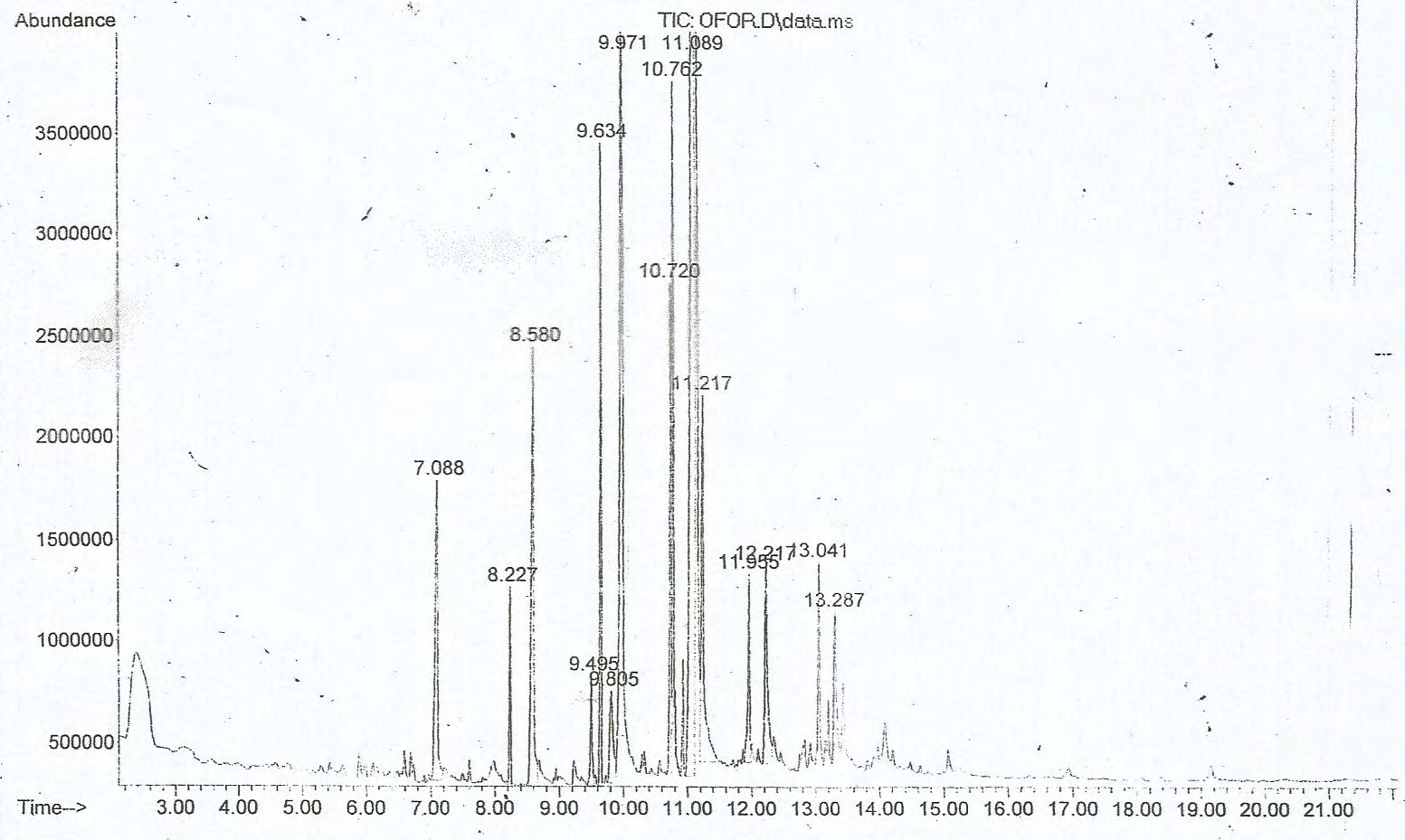
The following in the table 3, shows all the GCMS bioactive compounds, their molecular formula and their peak area. GC- MS analysis showed the presence of 9, 12-Octadecadienoic acid (Z,Z)- as a main compound 28.59% and methyl tetradecanoate as the least compound 1.13%. The presence of various bioactive compounds from plants seed justified the use of various treatments by local traditional practitioners. Dodecanoic acid (Lauric acid) is a saturated fatty acid alongside a 12 carbon atom chain, consequently falling into the intermediate chain fatty acids is a white chalky solid with a weak odor of baby oil or soap. It is an antibacterial agent, a substance that kills or slows the growth of bacteria [13]. Myristic acid (tetradecanoic acid) is a familiar saturated fatty acid. It plays an important role in cell regulation, signal transduction pathways, vascular trafficking and structural roles [14]. Methyl tetradecanoate or methyl myristate is a food additive permitted for direct addition to food for human consumption as synthetic flavouring substances. Hexadecanoic acid or palmitic acid is the most common fatty acid (Saturated) found in animals plants and microorganisms. It is used to produce soaps, cosmetics, and release agents. Methyl esters are commonly used as fragrance and found in essential oils and pheromones. N-hexadecanoic acid are used as adhesives and sealant chemicals, agricultural chemicals, (non-pesticidal), filters, finishing agents and lubricants [15].
| S/N | RT | Name of compound | Structure | Molecular formula | M/W | Peak Area % |
|---|---|---|---|---|---|---|
| 1 | 2.386 | 1,2-propanediol, 3-chloro | Cl OH HO | C H ClO 3 7 2 | 110 | 7.06 |
| 2 | 7.088 | Docecanoic acid | O HO CH 3 | C H O 12 24 2 | 200 | 3.69 |
| 3 | 8.227 | Methyl tetradecanoate | HC O 3 O HC 3 | C H O 15 30 2 | 242 | 1.13 |
| 4 | 8.58 | Tetradecanoic acid | OH HC 3 O | C H O 14 28 2 | 228 | 5.21 |
| 5 | 9.495 | Pentadecylamine | HC 3 NH 2 | C H N 15 33 | 227 | 0.9 |
| 6 | 9.634 | Hexadecanoic acid, methyl ester | O HC 3 CH 3 O | C H O 17 34 2 | 270 | 3.79 |
| 7 | 9.805 | Pentadecylamine | HC 3 NH 2 | C H N 15 33 | 227 | 1.54 |
| 8 | 9.971 | n-hexadecanoic acid | O HC OH 3 | C H O 16 32 2 | 256 | 11.79 |
| 9 | 10.72 | 9,12-Octadecadienoic acid, methyl ester | O H 3C CH 3 O | C H O 19 34 2 | 294 | 3.07 |
| 10 | 10.762 | 9-Octadececanoic acid(Z)- ,methyl ester | O H 3C CH 3 O | C H O 19 36 2 | 296 | 4.1 |
| 11 | 11.089 | 9,12-Octadecadienoic acid(Z,Z)- | HO CH 3 O | C H O 18 32 2 | 280 | 28.59 |
| 12 | 11.121 | Cis -11-Eicosenoic acid | H3C O OH | C H O 18 34 2 | 282 | 16.54 |
| 13 | 11.217 | Octadecanoic acid | O HO CH 3 | C H O 18 36 2 | 284 | 4.68 |
| 14 | 11.955 | Methyl 13-eicosenoate | H3C O O CH3 | C H O 21 40 2 | 324 | 1.57 |
| 15 | 12.217 | Cis-11-Eicosenoic acid | H3C O OH | C H O 20 38 2 | 310 | 2.68 |
| 16 | 13.041 | Methyl 11-decosenoate | O CH 3 HC O 3 | C H O 23 44 2 | 352 | 1.64 |
| 17 | 13.287 | Erucic acid | O HO CH3 H H | C H O 22 42 2 | 338 | 2.02 |
Table 3: GCMS data of importance bioactive compounds of ethanolic extract of Detarium microcarpum.
RT = Retaintion time, M/W = Molecular weight Table 3: GCMS data of importance bioactive compounds of ethanolic extract of Detarium microcarpum.
Erucic acid is a mono-unsaturated Omega 9 fatty acid. It can be used as precursor to biodiesel fuel. It is commonly used in cooking in Spain, North Africa, the Middle East and India. Erucic acids have the ability to reduce the risk of cardiovascular disease stroke attack and heart attacks. Cis- 11-Eicosenoic acid or Oleic acid (in triglyceride form) is mono-saturated Omega 9 fatty acid emollient. Small amounts of oleic acid are used as an exicipent in pharmaceuticals and also used as an emulsifying or solubilizing agent in aerosol products. It is also used to induce lungs damage in certain types of animals for the purpose of testing new drugs. Stearic acid (octadecanoic acid) is used in the manufacturing of soaps, detergents and cosmetics such as shaving cream and shampoos products. It is also used as lubricants, softening ad release agents and Niche uses. Stearic acid is several of the utmost regular saturated fatty acids discovered in Mother Nature. 9-Oct 9 dececanoic acid (z)-, methyl ester is used as agricultural crops, ink toner and dye products it is invariably used as grasses, lubricants and water lubricants products.
Cis-vaccenic acid is also an Omega 7 fatty acid also identified as octadec-11-enoic acid. It decreases LDL cholesterol and improves insulin sensitivity [16]. N-hexadecanoic acid inhibits phospholipase A (2) in a competitive manner hence act as anti-inflammatory agent. 1,2-propanediol, 3-chloro (3-MCPD) is an organic chemical compound which is carcinogenic and extremely supposed to be genotoxic in individuals, has male anti-fertility effects and is a chemical by product which may be found in foods. Pentadecylamine (triamylamine) is a saturated fatty amine that helps in removed of large molecules from fluid [17]. Sterculic acid (9, 12, octadececanoic acid, methyl ester) is an organic compound found in some tropical vegetable oils, it helps in the treatment of neuro generative diseases [18]. Malvalic acid [9,12-Octadecadienoic acid (z, z)] is a cyclopropenic fatty acid found in cotton seed oil, it is a potent antioxidant that plays a perfect role of prevention of prostate cancer disease, Alzheimer disease and cardiovascular diseases. Methyl Oleate [9- Octadececanoic acid (z), methyl ester] is an oily clear to amber; water-soluble liquid used chiefly an intermediate for detergents, wetting agents and emulsifiers. It is an antimicrobial agent.
The antioxidant activity of the extract was evaluated by DPPH radical scavenging which was originally described by Blois (1958) in this experiment, a well-known natural antioxidant was used as the positive control. Linear regression analysis was carried out for calculating the effective concentration of sample require scavenge DPPH by 50% (Table 4 & Figure 2).
| Sample | Absorbance | |||
|---|---|---|---|---|
| 5mg/l | 10mg/l | 15mg/l | control | |
| Aqueous extract of OFOR | 1.301 | 1.271 | 1.056 | 1.861 |
Table 4: Antioxidant activity assay of Detarium microcarpum.
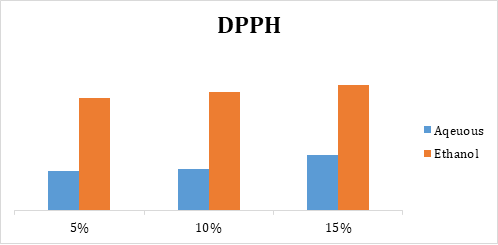
Antioxidant activities of Detarium microcarpum determined by the free radical scavenging activity (DPPH) assay method indicated a steady increase in the scavenging activity of free radicals in all extracts from 322 to 1011μg/ mL. It was observed that the ability of test materials to scavenge DPPH was assessed on the basis of their IC50 values, defined above as the concentration of test material to lessen the absorbance at 515 nm of DPPH solution to half of its original value. The occurrence of numerous bioactive compounds from the oil defensible the use of numerous cures by local traditional physicians. Tannins have remained conventionally used for defense of inflamed surfaces of the mouth and also treatment of catarrh, hemorrhoids and diarrhea. It served as natural antibiotics, which help the body to fight infections and microbial invasion.
Conclusion
The usage of this herbal plant should be promoted as an alternative medicine to synthetic chemicals as it is easily available, grown and maintained, accessible and affordable. Many evidences gathered in earlier studies which confirmed the identified phytochemicals to be bioactive. The high antioxidant potential and anti-oxidative enzymes of Detarium microcarpum should be utilized in developing new drug design treatment of free radical diseases. The seeds of the plant can be used to inhibit the growth of bacterial organisms that resistant to synthetic drugs. Due to its many uses, Detarium microcarpum should be planted as ornamental as well as domestic plants to increase its availability to be used as food and as herb. Research in the following areas could aid in furthering its benefits: genetic variation associated with drought tolerance; causes underlying variation in tree growth and fruit production; more information on its medicinal, nutritional and wood-energy properties; effective population sizes in semi-natural farmland populations and minimum viable populations for conservation and long- term sustainable use. Additionally, regulation is needed for exploitation of wood, controlling fires, reducing fuel-wood demand and encouraging re-forestation. Rural communities require aid to develop sustainable use and conservation practices for the species; this must be done using local knowledge. The qualitative phytochemical screening of the seed extracts of D.microcarpum indorsed that they are rich in medicinal agents which incude alkaloids, tannins, flavonoids, saponins, steroids and fatty acids. The extracts revealed antibacterial activities against the tested organisms and therefore suggests the use of D. microcarpum seeds in the treatment and prevention of infections initiated by these organisms as well as incorporating them into human diets. This study also authenticates the use of the plant parts as a whole as antimicrobial agents.
References
-
Tiwari B, Valdramidis VV, O’ Donnell CP, Muthukumarappan K, Bourke P, et al. (2009) Application of Natural Antimicrobials for Food Preservation. J Agri Food Chem 57(14): 5987-6000.
-
Vandana D, Shalini T (2014) Review Study on Potential Activity of Piper Betle. Journal of Phamacognosy and Phytochemistry 3(4): 93-98.
-
Farasat M, Khavari-Nejad RA, Nabavi SMB, Namjooyan F (2014) Antioxidant activity, total phenolics and flavonoid contents of some edible green seaweeds from northern coasts of the Persian Gulf, Iran. J Pharm Res 13(1): 163- 170.
-
Williams WB, Cuvelier ME, Berset C (2005) Use of a free radical method to evaluate antioxidant activity. Food Sci Tech 28(1): 25-30.
-
Periyanayagam K, Jagadeesan M, Kavimani S, Vetriselvan T (2012) Pharmacognostical and Phyto-physicochemical Profile of The Leaves of Piper Betle L. varPachaikodi (Piperaceae)-Valuable Assessment of Its Quality. Asian Pacific Journal of Tropical Biomedicine 2(2): 506-510.
-
Burkill HM (2005) The useful plants of West Tropical Africa. 2nd (Edn), Volume 3, Families J-L. Royal Botanic Gardens, Kew, Richmond, United Kingdom, pp: 857.
-
Cook NC, Samman S (1996) Flavonoids-chemistry, metabolism, cardioprotective effects, and dietary sources. Journal of Nutritional Biochemistry 7(2): 66-76.
-
Pin KY, Luqman Chuah A, Abdull Rashih A, Mazura MP, Fadzureena J, et al. (2010) Antioxidant and Anti- inflammatory Activities of Extracts of Betel Leaves (Piper betle) From Solvents with Different Polarities. Journal of Tropical Forest Science 22(4): 448-455.
-
Ihenetu SC, Enyoh CE, Inyamah PC, Enyoh EC (2019) Physicochemical properties, phytochemicals and fat soluble vitamins of seed oil extracts from Sesamum Indicum L. International Journal of Chemical and Biological Sciences Volume 1(2): 8-12.
-
Havsteen BH (2002) The biochemistry and medical significance of the flavonoids. Pharmacology and Therapeutics 96(2-3): 67-202.
-
Srivastava N, Shwarupa S, Bhagyawant SS (2011) Comparative study on the antitermite, antimicrobial and antioxidant activity of leaf and root extracts of pothos aurea (Epipremnum aureum L.). J Pharm Res Clin Prac 1(2): 1-11.
-
Ebi GC, Afieroho OE (2010) Phytochemical and antimicrobial studies on Detarium microcarpum Guill and Sperr (Caesalpinioceae) seeds coat. African Journal of Biotechnology 10(3): 457-462.
-
Vaya J, Belinky PA, Aviram M (2007) Antioxidant constituents from licorice roots: Isolation, structure elucidation and antioxidative capacity towards LDL Oxidation. Free Radical Biology Medicine 23(2): 302- 313.
-
Abreu PM, Rosa VS, Araujo EM, Canda AB, Kayser O, et al. (1998) Phytochemical analysis and antimicrobial evaluation of Detarium microcarpum bark extracts. Pharmaceutical and Pharmacological Letters 8(3): 107- 109.
-
Sanchez JC, Garcia RF, Cors MM (2010) 1,1 Diphenyl-2- picrylhydrazyl radical and superoxide anion scavenging activity of Rhizophora mangle (L.) bark. Pharmacog Res 2(5): 279-284.
-
Anhwange BA, Ajibola VO, Oniye S (2004) Chemical studies of the seeds of Moringa oleifera (Lam) and Detarium microcarpum (Guill and Sperr). Journal of Biological Science 4(6): 711-715.
-
Gulcin I, Huyut Z, Elmastas M, Aboul-Enein HY (2010) Radical scavenging and antioxidant activity of tannic acid. Arab J Chem 3(1): 43-53.
-
Roussel AM, Kerkeni A, Zouari N, Mahjoub S, Matheau JM, et al. (2003) Antioxidant effects of zinc supplementation in Tunisians with type 2 diabetes mellitus. Journal of American College of Nutrition. 22(4): 316-321.
- Spectrophotometric Determination of Lanthanum (III) and Some Rare Earths with Xylenol Orange
- Introduction and Sources of Molluscicides
- Trimetazidine: An Antianginal Drug and Not Only!
- Nature Inspired Discovery and Development of Antibacterials: An Update
- Fungal Biodegradation of Polycyclic Aromatic Hydrocarbons (PAHs)
- Recent Approaches of Impurity Profiling in Pharmaceutical Analysis: A Concise Review