
Research of Phytochemical Marker in Trunk Bark Extracts of Lannea microcarpa, a Traditional Herbal used to Treat High Blood Pressure
Introduction: Lannea microcarpa is a medicinal plant that is an alternative source of medical care for many people. It contains several compounds, some of which are present in very low concentrations. Objective: This study aims to search for a phytochemical tracer among the chemical groups in the plant for quality control. Methodology: The extracts were prepared by decoction from the trunk bark powder, freeze-dried and then fractionated successively with solvents to increase polarity. The antioxidant properties by DPPH method were studied and compared. A phytochemical screening was determined by TLC and evaluation of the contents of phytochemicals. LC-MS/MS fingerprinting of the ethyl acetate fraction was performed. Results/Discussion: The antioxidant activity of the freeze-dried aqueous extract was higher than that of the raw trunk bark powder. CCM screening indicated the presence of several compounds with three intense spots. The assays showed that phenolic compounds were in the majority. The evaluation of the fractions showed that the ethyl acetate fraction had the best content of total phenols and total flavonoids with the best antioxidant powers (IC50: 3.63 ± 0.16 μg /mL). The LC-MS/MS fingerprinting of the ethyl acetate extract revealed three major compounds detected that could serve as tracers. Conclusion: These compounds are related to the phenolic family concerning the standard myricetin, a flavonoid of the phenolic family
Introduction
The use of plant products as complementary and alternative therapies is growing around the world [1]. About 78% of the new chemical constituents, which are natural molecules or derived from natural products (from medicinal plants), are used as a promising alternative treatment for infectious and other diseases [2]. In modern pharmacopoeia, about 25% of drugs and many synthetic analogues prepared on prototype compounds derived from plants are included [3, 4]. It has been observed that its use has changed and improved because plants were first used as they are, whole or in parts, then with the progress of organic chemistry, they have become real raw materials from which many medicines have been made. It is possible to modify or isolate the active principles by chemical synthesis, thanks to the evolution of medicine by plants. In developing countries where the cost of research and development of synthetic drugs is prohibitive and where technological facilities and expertise are lacking, phytochemical research rarely isolates and characterizes all secondary metabolites as chemical markers present in plants. From harvest to manufacturing, chemical markers play a crucial role in assessing the quality of medicinal plants [5]. Plants contain several hundred constituents that can be made up of chemical markers or fingerprints, but some of them are often present in very low concentrations [6, 7]. In addition, the study of chemical markers applies to many areas of research, including quality control and standardization (authentication of authentic species, the search for new resources or substitutes for raw materials, optimization methods of extraction and purification, elucidation of structures and determination of purity). Systematic investigations using chemical markers can lead to the discovery and development of new drugs [5]. One or more marker/tracer substances must be chosen for analysis. However, in most cases, these markers have never been tested to see if they explain the therapeutic action reported for herbal remedies. Ideally, chemical makers should be single components that contribute to the therapeutic effects of herbal medicine. As only a small number of chemical compounds have been shown to have clear pharmacological actions, other chemical compounds are also used as markers. The amount of a chemical marker can indicate the quality of herbal medicine [5]. The source and quality of raw materials play a central role in ensuring the quality and stability of herbal preparations. Thus, proper standardization and quality control of raw materials should be carried out at all times.
Lannea microcarpa Engl. & K. Krause (Anacardiaceae) is one of the species of medicinal plants used in medicine and traditional pharmacopoeia to treat human pathologies in Africa. Experimental studies have shown that the plant is rich in secondary metabolisms and that it has anti-oxidant, anti- inflammatory, antihypertensive properties, etc [8]. In placing on the market, a form of stable use of products derived from the plant guaranteeing its quality and effectiveness, there is a need to look for a marker for quality control. Various selective and sensitive analytical techniques are used for the metabolic investigation of plant extracts. Among these techniques, chromatographic methods alone or coupled are the most used [9, 10]. The objective of this study is to search for a chemical tracer by HPLC - MS/MS methods from the freeze-dried aqueous extract of Lannea microcarpus barks intended for the formulation of a phytomedicine for the treatment of hypertension.
Material and Methods
Plant material
The plant material consisted of the bark of the trunk of Lannea microcarpa (Anacardiaceae) collected in the commune of Loumbila (Burkina Faso), a locality located 20 km from Ouagadougou. A sample of the plant was identified by a botanist from the Ecology Laboratory of the Training and Research Unit / Life and Earth Sciences of Joseph KI- ZERBO University and filed under reference N ° 1544.
Processing and preparation of extracts: The harvested bark was dried away from sunlight and dust, then dried and crushed using a Gladiator East type blade crusher. The extracts were prepared by an aqueous decoction of the bark of the trunk of Lannea microcarpa then by lyophilization in the galenic pharmacy laboratory of the IRSS. The extraction yield was obtained with 10 g of powder in 100 mL of distilled water decocted for 40 minutes and then lyophilized. The lyophilization time was 90 hours.
Comparative study of the activity of the crude powder and the lyophilized aqueous extract of Lannea microcarpa: The method for measuring anti-oxidant power by DPPH is based on the ability of a compound to reduce the DPPH ° radical. The scavenging of free radicals of the lyophilized aqueous extract and the powder of Lannea microcarpa was evaluated according to the method of Kim [11]. Twenty (20) µL of different concentrations of aqueous or reference extracts (Trolox) were mixed with 200 µL of a methanolic solution of DPPH (0.08 mg / mL) in the wells of a 96-well microplate. The absorbance was read at 490 nm with the BioRad Model 680 spectrophotometer (Japan) after 30 min incubation at room temperature. Each test was performed in triplicate, and the blank was the diluting solvent of the extract or standard. The curve of inhibition of absorbance versus concentration of extract or Trolox was established to determine the 50% inhibitory concentration (CI50).
Phytochemical Study of Lyophilized Aqueous Extract of Lannea microcarpa
At this stage, the significant interest groups were demonstrated in the drug (having the highest activity) by thin-layer chromatography (TLC), and the groups revealed were quantified by the various appropriate methods. The compounds having obtained the highest contents will be considered the probable tracers for the remainder of the study. Chemical screening by TLC: According to the methods described in the literature, the phytochemical screening was carried out on chromatoplates (60 F254, glass support 20 x 20 cm, Fluka –Silica gel) according to the methods described in the literature [12, 13]. This involved looking for major chemical groups using thin-layer chromatography (TLC) such as steroid compounds, terpene compounds, phenolic compounds and alkaloid compounds. The dry sample was solubilized in its extraction solvent at a concentration of 10 mg / mL (10 mg in 1 mL of solvent), and 5 µL was placed on the TLC plate to develop the chromatogram.
Phytoconstituent Content of the Most Effective Extract
Determination of Phenolic Compounds
Total phenolics: The amount of total phenolics in the drug retained from the plant was estimated by the Singleton method using the Folin-Ciocalteu reagent (FCR) [14]. FCR is a mixture of phosphotungstic acid and phosphomolybdic acid, which is reduced during the oxidation of phenols in an alkaline medium to a mix of blue oxides of tungsten and molybdenum. FCR has an absorption maximum at the wavelength of 760 nm and whose intensity is proportional to the amount of polyphenols present in the sample.
The reaction mixture consisted of 25 µL of the 0.1 mg/ mL sample, 105 µL of 0.2N FCR which was incubated for five minutes in the dark. This mixture was added 100 µL of sodium carbonate solution (75 g/L in distilled water). The mixture was then left to incubate for one (1) hour protected from light, and then the absorbance was measured at the wavelength of 760 nm with a spectrophotometer against a gallic acid standard curve.
The tests were carried out four times and the results were expressed in grams of gallic acid equivalent per 100 g of dry sample (mg EAT/100 g). The total phenolic content of the extract was obtained by the formula:
T = Content in mg Gallic Acid Equivalent in 100 g of extract C = concentration of the sample read (μg EAT / mL) on the standard curve D = Dilution factor of the sample subjected to the assay Ci = initial concentration of the sample solution to be determined Total flavonoids: The determination of flavonoids was carried out according to the method of Kumaran [15], adapted by Abdel-Hamed [16]. To 100 μL of sample concentration (1 mg / mL) was added 100 μL of aluminum trichloride (2% in methanol). The absorbance was read at 415 nm after 40 min of incubation against a blank (100 µL of methanol and 100 µL of extract).
Thus, the appearance of a stable yellow colour makes it possible to evaluate by UV spectrophotometry (biotek) the flavonoid content of the sample compared to a reference solution of quercetin (0-70 μg / mL). The tests were carried out in triplicate, and the results were expressed in grams of quercetin equivalent per g of dry extract (mg EQ / g). The flavonoid content of the extract was obtained by the formula:
$$ \mathrm {T} = \frac {c \mathrm {x} D}{C i} \mathrm {X} 1 0 0 $$
T = Content in mg Quercetin equivalent in 100 g of extract C = Concentration of the sample read (μg EQ / mL) on the standard curve D = Dilution factor of the sample subjected to the assay Ci = Initial concentration of the sample solution to be determined
Tannins
• Condensed tannins The dosage of the condensed tannins was carried out for the drug obtained according to the method of Swain [17] slightly modified. To 400 µL of suitably diluted 0.4 mL sample or standard, 3 mL of the vanillin solution [4% in methanol (w / v)] and 1.5 mL of concentrated HCl were added. After 20 minutes of incubation, the absorbance of the mixture was read at 500nm (red colour). The contents of condensed tannins are deduced from the (+) catechin as a reference.
• Hydrolyzable tannins The content of hydrolyzable tannins was determined by the method of Mole and Waterman [18]. In 1mL of the suitably diluted sample, 5ml of KIO3 (2.5%, w/v) was added and vortexed for 10 seconds. The resulting mixture was read at 550 nm against a blank. The different concentrations of the tannic acid solution (0.1 to 2 mg / mL) were used for the calibration curve.
Determination of Triterpenes and Sterols
The total content of triterpenes and sterols was determined by colourimetry using the procedure described by Chang [19] with slight modifications. Thirty (30) μL of vanillin - glacial acetic acid 5% solution was mixed with 20 μL of total genins (5 mg / mL) dissolved in methanol. One hundred (100) μL of perchloric acid was then added. The mixture was placed in a water bath at 60 ° C for 45 min, then cooled in an ice-water bath for a few minutes. After the addition of 450 µL of glacial acetic acid, the absorbance of each sample solution was measured using a spectrophotometer (BioTeck instruments, USA) on the one hand at 548 nm against a curve of ursolic acid for triterpenes and on the other hand at 640 nm against a cholesterol calibration curve for sterols. The analyses were carried out in triplicate. The results were evaluated respectively in mg Ursolic Acid equivalent per g of extract (mg WATER / g extract) and mg Cholesterol equivalent per g of extract (mg EC / g extract).
Search from the fractions from the extract
- Fractionation of the extract: A 2 g sample of the lyophilisate from the bark of the trunk of Lannea microcarpa was dispersed in 40 mL of distilled water and then sonicated. The extract solution was transferred to a 250 mL separator funnel. The extract solution was successively extracted with hexane (3 x 20 mL); DCM (3 x 20 mL); ethyl acetate (3 x 20 mL) and 1-butanol (3 x 20 mL). Each collected fraction was concentrated to dryness under reduced pressure using a rotary evaporator.
- Evaluation of the biological activities of the different fractions: The anti-oxidant activity of the different fractions was evaluated in accordance with the DPPH protocol detailed above, and the fraction with the highest activity will be used for the search for the tracer.
• LC-MS / MS fingerprint of the effective fraction
Preparations of Solutions
For the identification of the different constituents of Lannea microcarpa (potential tracers), interest was focused on the fraction that exhibited the best anti-free radical power during the evaluation of the anti-oxidant activity. Stock solutions of 100 μg / ml of each standard and of the fraction with the best activity were prepared. For the fraction retained, 10 μL were dissolved in HPLC grade methanol at a concentration of 100 μg / ml and injected in LC-MS. Standard solutions of 10 μg / mL were also prepared.
Mass Spectrometry
Liquid chromatography coupled with mass spectrometry was used for the analyzes [20, 21, 22, 23, 24, 25]. The chromatograph used is Waters Alliance brand 2695 coupled to the Q-TOF US mass spectrometer in negative ionization mode, using the Electrospray or Electrospray Ionization (ESI) ionization source. A volume of 10 μL of each sample is injected. The column used is an inverted phase of the Phenomenex Kinetex C18 type. The temperature of the HPLC oven was maintained at 40 ° C with a flow rate of 0.25 mL/min. The mobile phase consists of a mixture of acidified water (0.1% HCOOH) (eluent A) and acetonitrile (eluent B) which changes according to the conditions of the gradient. The majority peaks were determined first, then the fragment ions were obtained by LC-MS / MS.
Results and Discussion
Anti-oxidant activity by the DPPH method of powder and extract The anti-oxidant activity of crude trunk bark powder and lyophilized aqueous extract has been reported in Table 1.
| Parameters / Sample | Powder | Extract | Trolox |
|---|---|---|---|
| IC (µg/mL) 50 | 25.46 ± 0.53 | 7.41 ± 0.30 | 06.40 ± 0.6 |
| ARP (%) | 3.93 | 13.49 | 15.63 |
Table 1: Anti-oxidant activity of the powder and the extract. IC50: _50% inhibitory concentration_, ARP: _Antiradical power_ The
Table 1: Anti-oxidant activity of the powder and the extract. IC50: 50% inhibitory concentration, ARP: Antiradical power The evaluation of the anti-oxidant activity by the DPPH method in vitro gave a powder IC50 of 25.46 ± 0.53 μg / mL, and that of the extract of 7.41 ± 0.30 μg / mL. The extract has an anti-free radical power (13.49) greater than that of the powder (3.93) and close to that of the reference compound (Trolox) which is 15.3. Belemnaba [26], in their studies on trunk bark, also found anti-oxidant activity of lyophilized aqueous extracts of Lannea microcarpa comparable to Trolox. This high activity of the extract, comparable to the activity of Trolox, would guide the choice of the lyophilized aqueous extract for the phytochemical study in the search for a tracer potential. This strong activity could be linked to the presence of specific phytochemical groups having interesting biological properties in pathology management.
Chemical Screening of the Lyophilized Aqueous Extract
Phytochemical screening by thin-layer chromatography
(TLC) demonstrated chemical groups, namely, tannins, flavonoids, sterols and triterpenes. The results obtained are given in the following table (Table 2).
| Chemical groups | |||||
|---|---|---|---|---|---|
| Flavonoids | Tannins | Sterols | Triterpenes | Alkaloids | |
| Lannea microcarpa | + | + | + | + | - |
Table 2: Results of phytochemical screening by TLC.
* Legend: presence (+); not detected (-) Table 2: Results of phytochemical screening by TLC.
This screening of the aqueous extract revealed chemical groups of interest. These results are in agreement with those of Ouedraogo [27], who demonstrated the same compounds in the bark trunk of the same plant. An example of an illustrative TLC is shown in Figure 1.
Figure 1: TLC for the detection of phenolic compounds of Lannea microcarpa Solvent system: ethyl acetate / formic acid / water (8: 1: 1, v / v / v). Detection: Neu UV reagent at 366 nm After spraying with the NEU reagent, the blue fluorescence characterizes the presence of phenolic compounds in the extracts of Lannea microcarpa. These phytochemicals detection would allow speculation on the probable choice of a tracer while respecting the criteria of the EMA [28]. Among these criteria, the tracer should be in sufficient quantity and easily assayed in the active substance.
Determination of compounds of interest in the aqueous extract
The content of the different phytochemical groups was quantified using calibration curves, and the equations are given in Table 3.
| Standard curves | Standard | Equations | Correlation coefficients |
|---|---|---|---|
| TP | Gallic acid | y=10.459x+0.0335 | R²=0.9993 |
| TFC | Rutin | y=2.5608x+0.0034 | R²=0.9995 |
| CT | Catechin | y=2.9549x-0.0071 | R²=0.9990 |
| HT | Tannic acid | y=0.4158x+0.0235 | R²=0.9981 |
| TT | Ursolic acid | y=0.1259x+0.053 | R²=0.9966 |
| TS | Cholesterol | y=0.0744x+0.0056 | R²=0.9891 |
Table 3: Summary of the standard curves.
TP: total phenolics, TFC: total flavonoid content, CT: condensed tannins, HT; hydrolyzable tannins, TT: total triterpenes, TS: total sterols Table 3: Summary of the standard curves.
The results obtained from the determination of the secondary metabolites (total phenolics, total flavonoids, condensed tannins, hydrolyzable tannins, total triterpenes, total sterols) of the aqueous extract are given in the table below (Table 4).
| Lannea microcarpa | TP | TFC | CT | H T | TT | TS |
|---|---|---|---|---|---|---|
| Unity | (mg d’EAG/g ES) | (mg d’Eru/g ES) | (mg d’EC/g ES) | (mg d’EAT/g ES) | mg EAU/mg | mg EC/ g ES |
| Aqueous extract | 969.61 ± 0.18 | 313.98 ± 1.91 | 219.59 ± 1.11 | 289.82 ± 3.37 | 273.29 ± 14.24 | 153.05 ± 28.24 |
Table 4: Content of phytochemicals.
TP: total phenolics, TFC: total flavonoid content, CT: condensed tannins, HT; hydrolyzable tannins, TT: total triterpenes, TS: total sterols Table 4: Content of phytochemicals.
Of these results, total phenolics had the highest levels (969.61 ± 0.18 mg EAG / g ES), followed by those of triterpenes (273.29 ± 14.24 mg WATER/mg) and finally those of sterols (153.05 ± 28.24 mg EC / g ES). Given the results obtained during the various dosages, it appears that the lyophilized extract of Lannea microcarpa is richer in phenolic compounds, compounds with high therapeutic potential in cardiovascular disease and arterial hypertension [29]. Indeed, several subgroups of phenolic compounds play an essential role in managing these pathologies, and this hypothesis is strongly supported by experimental data in animals affecting endothelial function and, consequently, blood pressure [30].
To do this, these various constituents of the phenolic compounds were also assayed, namely the flavonoids and the tannins (condensed and hydrolyzable). The results show that the total phenolic content of the lyophilized aqueous extract was 969.61 ± 0.18 mg EAG / g ES and that of total flavonoids 313.98 ± 1.91 mg Eru / g ES. As for the tannins, a content of 219.59 ± 1.11 mg of EC / g ES is obtained for the condensed tannins and 289.82 ± 3.37 mg of EAT / g ES for the hydrolyzable tannins. Also, epidemiological, clinical and animal studies confirm the role of polyphenols in the prevention of various chronic diseases, including cardiovascular diseases, inflammatory and metabolic diseases, neurodegenerative diseases and certain cancers [8]. The anti-oxidant activity observed previously could be related to the phenolic compounds in the lyophilized aqueous extracts of Lannea microcarpa. These phenolic compounds could constitute a tracer. To confirm this hypothesis, the fractionation of the lyophilized aqueous extract was carried out to concentrate the different chemical groups in their extraction solvent to evaluate the anti-oxidant activity of the different fractions to facilitate the choice of the tracer.
Anti-oxidant activity of the fractions derived from the aqueous extract
The anti-oxidant activities by the DPPH method of the various fractions derived from the aqueous extract are mentioned in Table 5.
| Fractions/Parameters | IC µg/mL 50 | ARP |
|---|---|---|
| Hexane | ND | ND |
| Dichloromethane | ND | ND |
| Ethyl acetate | 3.63 ± 0.16 | 27.55 |
| Butanol | 3.78 ± 0.41 | 26.45 |
| Residues | 13.49 ± 1.68 | 7.41 |
| Trolox | 6.40 ± 0.05 | 15.63 |
Table 5: Antioxidant activity of the fractions.
IC50: 50% inhibitory concentration, ARP: Antiradical power, ND: Non determined Table 5: Antioxidant activity of the fractions.
From these results, the ethyl acetate fraction obtained by fractionation gave the best activity, followed by the butanol fraction. The hexane and dichloromethane fractions were in insufficient quantity to not have been determined. Mathieu, et al. had obtained a very high anti-oxidant activity in the ethyl acetate fraction of the trunk bark of the same plant [31]. Further screening of this ethyl acetate fraction could be used to demonstrate phytochemical tracers further.
Chemical screening of the ethyl acetate fraction by LC-MS / MS
Fingerprint of the ethyl acetate fraction by mass spectrometry This analysis made it possible to determine the molecular ions, the fragment ions and the retention times (Tr) of the major compounds of the ethyl acetate fraction. Indeed, the results of the LC-MS analysis of the ethyl acetate fraction revealed three compounds mainly represented by peaks, including three predominant, with retention times Tr = 7.65 min, Tr = 12, 24 min and Tr = 20, 25 min respectively with molecular ions m / z 435, m / z 597 and m / z 593 (Table 6).
| N° Pic | Tr (min) | MS (m / z) ; Ion + / - [M-H] - | LC-ESI-MS / MS |
|---|---|---|---|
| 1 | 7.65 | 435 | 313 ; 297 ; 289 ; 271 ; 245 ; 151 ; 137 ; 125 |
| 2 | 12.24 | 597 | 487 ; 451 ; 341 ; 323 ; 298 ; 287 ; 189 ; 177 ; 186 |
| 3 | 21.25 | 593 | 447 ; 429 ; 323 ; 295 ; 283 ; 151 ; 121 |
| Reference molecule | |||
| Myricetin 14.3 317 288 ; 271 ; 227 ; 171 ; 151 ; 137 ; 107 |
Table 6: Data on the compounds of the AcOEt fraction of Lannea microcarpa analyzed by the LC-ESI-MS / MS method in negative mode.
Table 6: Data on the compounds of the AcOEt fraction of Lannea microcarpa analyzed by the LC-ESI-MS / MS method in negative mode. Compound 1 - Tr = 7.65 min Compound 1 has a retention time of 7.65 min and a molecular ion of m / z 435 (Figure 2). The largest fragment ions are detected at m / z 313, m / z 297, m / z 289 and m / z 271, m / z 245; m / z 151; m / z 137; m / z 125.
![Figure 1: Figure 1: TLC for the detection of phenolic compounds of _Lannea microcarpa_ Solvent system: ethyl acetate / formic acid / water (8: 1: 1, v / v / v). Detection: Neu UV reagent at 366 nm After spraying with the NEU reagent, the blue fluorescence characterizes the presence of phenolic compounds in the extracts of Lannea microcarpa. These phytochemicals detection would allow speculation on the probable choice of a tracer while respecting the criteria of the EMA [28]. Among these criteria, the tracer should be in sufficient quantity and easily assayed in the active substance.](/fulltextimages/7762/fig_1.png)
Figure 2: MS / MS spectrum of compound 1 m / z 435. Compound 2 - Tr = 12, 24 min Compound 2 with a retention time of 12.24 min has a parent ion of m / z 597 in LC-MS in negative ionization mode (Figure 3). Fragmentation of the parent ion in LC-MS / MS yielded several fragment ions, the most important of which are m / z 487; m / z 451; m / z 341; m / z 323; m / z 298; m / z 287; m / z 189; m / z 177; m / z 186. The MS / MS spectrum of the compound is as follows:
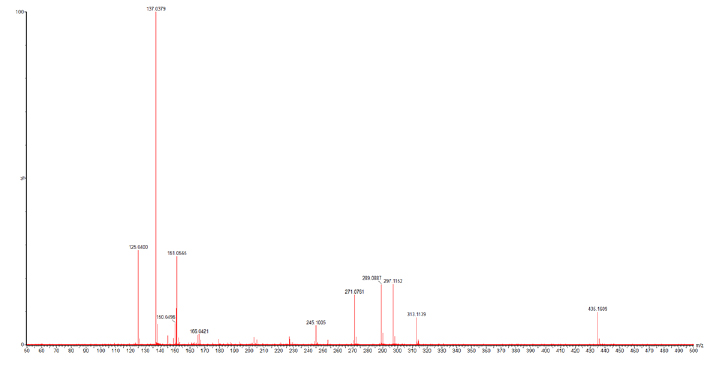
Figure 3: MS / MS spectrum of compound 2 m / z 597. Compound 3 - Tr = 21, 25 min Compound 3 has a retention time of 21.25 min. It presents in its mass spectrum (Figure 4), a molecular ion [M-H] - at m / z 593. In ESI-MS / MS, we observe majority fragment ions of respective m / z m / z 447; m / z 429; m / z 323; m / z 295; m / z 283; m / z 151; m / z 121.
![Figure 3: MS / MS spectrum of compound 2 m / z 597. Compound 3 - Tr = 21, 25 min Compound 3 has a retention time of 21.25 min. It presents in its mass spectrum (Figure 4), a molecular ion [M-H] - at m / z 593. In ESI-MS / MS, we observe majority fragment ions of respective m / z m / z 447; m / z 429; m / z 323; m / z 295; m / z 283; m / z 151; m / z 121.](/fulltextimages/7762/fig_3.png)
These three major compounds could be detected by mass spectrometry in the ethyl acetate fraction. TLC analysis after spraying with NEU reagent also revealed three strong spots. These three spots would correspond to the three compounds detected by mass spectrometry. These three compounds detected could be phenolic compounds. Myricetin was used as standard whereas the three compounds detected exhibited some characteristic fragments close to myricetin fragments, a flavonoid (phenolic compound). These characteristic fragments observed are m / z 289, m / z 271, m / z 151, m / z 137 for the three compounds. These compounds could therefore be derivatives of myricetin or another compound of the flavonoid family. The mass spectra obtained could constitute a characterization fingerprint during quality control, standardization and initially during formulation. Subsequently, with other standards of flavonoids and phenolic compounds, the chemical structures of the three compounds could be identified more precisely.
Conclusion
In this study, several analyzes were carried out to identify a chemical tracer or a group of compounds that can serve as a tracer for the quality control of the plant raw material and the finished product. The phytochemical screening carried out on the aqueous extract indicated several compounds of interest, particularly the phenolic compounds that have a potential antihypertensive effect. The evaluation of the anti-oxidant activity by the DPPH method of the different fractions obtained from the aqueous extract shows that the ethyl acetate fraction has the best anti-oxidant powers. This ethyl acetate extract was therefore chosen for the separation and isolation of chemical tracers. After spraying with NEU reagent, TLC revealed three intense spots and three major compounds could be detected by mass spectrometry. The fragments of these compounds are similar to the family of phenolic compounds concerning the fragments of the standard, which is myricetin which is a flavonoid of the family of phenolic compounds.
References
-
WHO (2003) Fifth-Six World Health Assembly report on traditional Medicine.
-
Lokhande P, Gawai K, Kodam K, Kuchekar B, Chabukswar A, et al. (2007) Antibacterial activity of isolated constituents and extract of roots of Inula racemosa. Research Journal of Medicinal Plant 1(1): 7-12.
-
Mahmood A, Rashid S, Malik RN (2013) Determination of toxic heavy metals in indigenous medicinal plants used in Rawalpindi and Islamabad cities, Pakistan. Journal Ethnopharmacology 148(1): 158-164.
-
Mustafa G, Arif R, Atta A, Sharif S, Jamil A (2017) Bioactive compounds from medicinal plants and their importance in drug discovery in Pakistan. Matrix Science Pharma 1(1): 17-26.
-
Li S, Han Q, Qiao C, Song J, Cheng CL, et al. (2008) Chemical markers for the quality control of herbal medicines: an overview. Chin Med 3(1): 1-16.
-
Farooqi AA, Sreeramu B (2004) Cultivation of medicinal and aromatic crops: Universities Press.
-
Nikam PH, Kareparamban J, Jadhav A, Kadam V (2012) Future trends in standardization of herbal drugs. Journal Applied Pharmaceutical Science 2(6): 38-44.
-
Ouédraogo S, Nitiéma M, Belemnaba L, Traoré TK, Sombié BC, et al. (2021) An Overview on Ethnopharmacologicals Studies Carried Out on Lannea Microcarpa Engl. & K. Krause (Anacardiaceae): A Medicinal Plant Used in Burkina Faso for the Treatment of Hypertension. International Journal of Research in Pharmaceutical Sciences 12(3): 2047-2061.
-
Bony NF (2013) Stratégie analytique des tradimédicaments: établissement de profils chromatographiques des métabolites phytochimiques apolaires: Université Paris Sud-Paris XI; Université de Cocody (Abidjan, Côte d’Ivoire).
-
Li Y, Wu T, Zhu J, Wan L, Yu Q, et al. (2010) Combinative method using HPLC fingerprint and quantitative analyses for quality consistency evaluation of an herbal medicinal preparation produced by different manufacturers. Journal of pharmaceutical and biomedical analysis 52(4): 597-602.
-
Kim KS, Lee S, Lee YS, Jung SH, Park Y, et al. (2003) Anti-oxidant activities of the extracts from the herbs of Artemisia apiacea. Journal Ethnopharmacology 85(1): 69-72.
-
Mamyrbékova-Békro JA, Konan KM, Békro YA, Gobin M, Bi D, et al. (2008) Phytocompounds of the extracts of four medicinal plants of Côte D’ivoire and assessment of their potential antioxidant by thin layer chromatography. Eur J Scient Res 24(2): 219-228.
-
Chaaib Kouri F (2004) Investigation phytochimique d’une brosse à dents africaine “Zanthoxylum zanthoxyloides” (Lam.) Zepernick et Timler (Syn. “Fagara zanthoxiloides” L.) (Rutaceae): Université de Lausanne;.
-
Singleton VL, Orthofer R, Lamuela Raventos RM (1999) Analysis of total phenols and other oxidation substrates and antioxidants by means of Folin-Ciocalteu reagent. Methods in enzymology 299: 152-178.
-
Kumaran A, Joel Karunakaran R (2007) In vitro antioxidant activities of methanol extracts of five Phyllanthus species from India. LWT - Food Science and Technology 40(2): 344-352.
-
Abdel Hameed ESS (2009) Total phenolic contents and free radical scavenging activity of certain Egyptian Ficus species leaf samples. Food Chemistry 114(4): 1271- 1277.
-
Swain T (1959) The phenolic constituents of Prunus domestica. I. The quantitative analysis of phenolic constituents. J Sci Food Agr 10(1): 63-68.
-
Mole S, Waterman PG (1987) A critical analysis of techniques for measuring tannins in ecological studies : II. Techniques for biochemically defining tannins. Oecologia 72(1): 148-156.
-
Chang CL, Lin CS, Lai GH (2012) Phytochemical characteristics, free radical scavenging activities, and neuroprotection of five medicinal plant extracts. Evid Based Complement Alternat Med 2012: 984295.
-
Loo JA (1997) Studying noncovalent protein complexes by electrospray ionization mass spectrometry. Mass spectrometry Reviews 16(1): 1-23.
-
Menet MC (2011) Principes de la spectrométrie de masse. Revue francophone des laboratoires. 2011(437): 41-53.
-
Prasain JK, Wang CC, Barnes S (2004) Mass spectrometric methods for the determination of flavonoids in biological samples. Free Radical Biology Medicine 37(9): 1324- 1350.
-
McLafferty FW (2008) Mass spectrometry across the sciences. Proceedings of the National Academy of Sciences of the United States of America 105(47): 18088-18089.
-
Liu H, Mou Y, Zhao J, Wang J, Zhou L, et al. (2010) Flavonoids from Halostachys caspica and their antimicrobial and antioxidant activities. Molecules (Basel, Switzerland) 15(11): 7933-7945.
-
Zeng F, Ge Z, Limwachiranon J, Li L, Feng S, et al. (2017) Antioxidant and tyrosinase inhibitory activity of Rosa roxburghii fruit and identification of main bioactive phytochemicals by UPLC-Triple-TOF/MS. International Journal of Food Science & Technology 52(4): 897-905.
-
Belemnaba L, Soubeiga M, Ouédraogo GG, Traoré TK, Nitiéma M, et al. (2019) Antioxidant properties and subchronic toxicity of the standardized extract of LAMIC, a phytomedicine prototype based on aqueous extracts from trunk bark of Lannea microcarpa Engl and K. Krause. Journal of Drug Delivery and Therapeutics 9(5): 1-8.
-
Ouédraogo S, Belemnaba L, Zague H, Traore A, Lompo M, et al. (2010) Endothelium-independent vasorelaxation by extract and fractions from Lannea microcarpa Engl. and K. Krause (Anacardiaceae): possible involvement of phosphodiesterase inhibition. International Journal of Pharmacology and Biological Sciences 4(2): 9-16.
-
EMA (2008) Reflection paper on markers used for quantitative and qualitative analysis of herbal medicinal products and traditional herbal medicinal products: pp: 1-6.
-
Jiménez R, López-Sepúlveda R, Kadmiri M, Romero M, Vera R, et al. (2007) Polyphenols restore endothelial function in DOCA-salt hypertension: Role of endothelin-1 and NADPH oxidase. Free Radical Biology and Medicine 43(3): 462-473.
-
Galleano M, Pechanova O, G Fraga C (2010) Hypertension, nitric oxide, oxidants, and dietary plant polyphenols. Current Pharmaceutical Biotechnology 11(8): 837-848.
-
Nitiéma M, Soleti R, Koffi C, Belemnaba L, Mallegol P, et al. (2019) Ethyl Acetate Fraction of Lannea microcarpa Engl. and K. Krause (Anacardiaceae) Trunk Barks Corrects Angiotensin II-Induced Hypertension and Endothelial Dysfunction in Mice. Oxidative medicine and cellular longevity 2019: 9464608.
- Spectrophotometric Determination of Lanthanum (III) and Some Rare Earths with Xylenol Orange
- Introduction and Sources of Molluscicides
- Trimetazidine: An Antianginal Drug and Not Only!
- Nature Inspired Discovery and Development of Antibacterials: An Update
- Fungal Biodegradation of Polycyclic Aromatic Hydrocarbons (PAHs)
- Recent Approaches of Impurity Profiling in Pharmaceutical Analysis: A Concise Review