
Green Synthesis of TiO2 Nanoparticles Using Root Extract of Asparagus racemosus (Shatavari) and Evaluation of its Antibacterial, Antioxidant and Antidiabetic activities
Since ancient times, Asparagus racemosus, a traditional herb with various health advantages, has been used to cure a wide range of illnesses. Researchers sparked a lot of interest in the biological methods for producing nanoparticles (NPs). This study’s objective was to synthesize titanium dioxide nanoparticles (TiO2 NPs) utilizing the top-down nanofabrication method. Asparagus racemosus root extract was used to produce titanium nanoparticles utilizing green chemistry. The nanoparticles were characterized using UV-Visible spectroscopy, SEM (Scanning Electron Microscope), and EDX. According to the SEM images the particles are spherical in shape with an average size of 89.59 nm. The antibacterial activity was done with 3 bacterial strains i.e., E. coli, Pseudomonas aeruginosa and Bacillus subtills. Antioxidant activity was evaluated by DPPH and phosphomolybdate assays, the calculated IC50 was 85.18±0.55 μg/ml and 66.4±1.3 μg/ml respectively. The calculated IC50 value for alpha amylase assay was 46.59±2.81 μg/ml. As per the outcomes it is concluded that the plant mediated titanium nanoparticle is very potent which can be used in pharmaceutical and biomedical areas.
Introduction
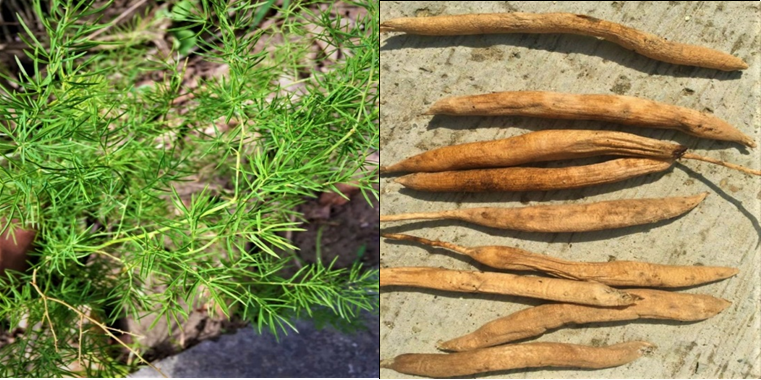
Asparagus racemosus (Shatavari), also known as shatamuli, shatawari, satavar, shatavari, satmool, etc., is a species of asparagus that is frequently found in various areas of India, the Himalayas, and the polar regions of Australia [1]. The demand for this plant has increased dramatically as a result of its extensive medical application. The plant’s roots can either be fibrous or tuberous. Sharp pine-like needles make up the stem of this plant [2]. The flowers of this plant often have a white color and a spike-like stem. It produces berry-like fruit that comes in a variety of colors, including purple, black, and others. The picture of the plant has been shown in Figure 1.
Uses of Asparagus racemosus
One of the most significant herbal medicines in the world is this one. Using various components of this plant, numerous varieties of extract are produced [3]. This plant’s root extract is used to treat a variety of female hormonal issues, including those related to reproduction. It has no negative side effects on nursing moms’ infants or their own. Patients with colds and other illnesses are administered boiling water made from the plant’s roots.
Minimize Menopause
This herb has been used for centuries to cure a variety of conditions, including the female reproductive system. According to study conducted by modern experts, the asparagus racemosus, when taken with other medications, can lessen the symptoms of menopause in women. 117 women participated in a test that was done in 2018. Following a 12-week continuous course of this herb and a few others, those women reported reduced night sweats and hot flashes [4].
Antianexietic
This herb and several of its supplements have both historically been used to treat sadness and anxiety. Even though there is no proof that these effects have been observed in humans, studies have suggested that they may exist because they were tested on mice, suggesting that they may also apply to humans. According to certain studies, Asparagus racemosus reduces mice’s anxieties through interacting with the serotonin hormone and certain acids, which together make up people’s and mice’s concerns. It has antidepressant properties [5].
Antioxidants
Many herbs and medications have this quality. This property shields the body against several toxins and dangers brought on by free radicals, which can seriously damage the body’s cells and tissues and even result in the growth of cancerous cells. Thus, this feature also works well against oxo-stress, which can lead to a number of other disorders. We definitely need additional research in this area because numerous studies and evaluations have indicated that Asparagus racemosus contains certain antioxidants. Further research revealed that this plant had an antioxidant impact on rats. Asparagamine and racemsol, two different forms of antioxidants, are present in Asparagus racemosus. This plant has more saponins than average, which are also known for antioxidant property [6].
Immunity
It is an ayurvedic herbal immune system booster. In 2004, a demonstration was carried out in which the animals were induced with the roots of Asparagus racemosus had acquired some antibodies to some strain of cough which is then distinguished with the un-induced animals. In contrast to the other animals, the ones who were stimulated recovered faster. The immunological response is thus demonstrated [7].
Chemical Constituents of Asparagus racemosus
Its root was used to create polycyclic alkaloids, asparagmines, steroidal saponin, and schidigersponin. Shatavaroside A, B, and several isoflavone varieties have also been discovered there.
OH
O
OH
H3CO
HO
O
GLYCITEIN O
HO
EQUOL
OH
OH
HO
O
OH
OH
HO
O
HO
OH O
NH2 ASPARAGINE
NH2
OH
STEROIDAL SAPONINS
O
O
O
H
O
OH
HO
OH
O
SAPONINS O HO
O
HO O
OH
OH OH
SCHIDIGERASAPONIN
Nanometers (1–100 nm) are the units used to measure the diameter of nanoparticles, which are very small particles [8]. Both naturally occurring events and human activity can produce nanoparticles [9]. Manufactured nanoparticles could be helpful in a number of fields, including as engineering, catalysis, medicine, and environmental remediation [10]. These nanoparticles display a wide range of physical and chemical properties because of their nanoscale size and vast surface area [11]. This is as a result of their particular material properties and submicroscopic size. The substance known as titanium dioxide is created when one titanium atom and two oxygen atoms come together. As photocatalysts, titanium dioxide nanoparticles may harness the energy of light to speed up chemical reactions with other molecules at low temperatures [12]. Although there are other photocatalytic substances, researchers have found that titanium dioxide works best in sunlight [13].
The purpose of this study is to synthesize TiO2 nanoparticles using Asparagus racemosus root extract and to assess the antibacterial and phytochemical properties of these nanoparticles in vitro. According to the literature, it has been discovered that the Kumaon region of Uttarakhand has not yet conducted any research on antibacterial, in-vitro phytochemical screening, evaluation of antioxidant and antidiabetic activity.
Materials and Methods
Materials
Plant Sample Collection: The fresh roots of Asparagus racemosus (shatavari) were collected from Dineshpur U.S.N, Uttarakhand in the month of July. The plant often reaches a height of 1 to 2.1 meters, and its roots are the most important part and is edible and it may be fibrous or tuberous. The roots are spindle-shaped, fascicled, fleshy, light ash-colored on the outside and white on the inside [14]. It was firstly described in the year 1799.
Chemicals: Ethanol, distilled water, Sodium phosphate dibasic (heptahydrate), Trichloro acetic acid (TCA), Ferric chloride, Sodium phosphate monobasic (monohydrate), Lead tetra acetic acid, Copper sulphate, Mayer’s reagent, glacial acetic acid, Potassium ferrocyanide, and Sodium bicarbonate was obtained from Hi Media Laboratories Pvt. Ltd. Sulphuric acid (H2SO4), Hydrochloric acid (HCl), Ascorbic acid, and Sodium hydroxide (NaOH) were procured from Sigma Aldrich, India. Ammonium molybdate (tetrahydrate), and 2, 2-diphenyl- 1-picrylhydrazyl (DPPH), were obtained from Central Drug House (P) Ltd. India. From Central Drug House (P) Ltd. in India, we obtained 2, 2-diphenyl-1-picrylhydrazyl (DPPH), ferric chloride, ammonium molybdate (Tetrahydrate), di- nitro salicylic acid, alpha amylase, acarbose, starch, agar nutrient, and sodium phosphate buffer.
Methods
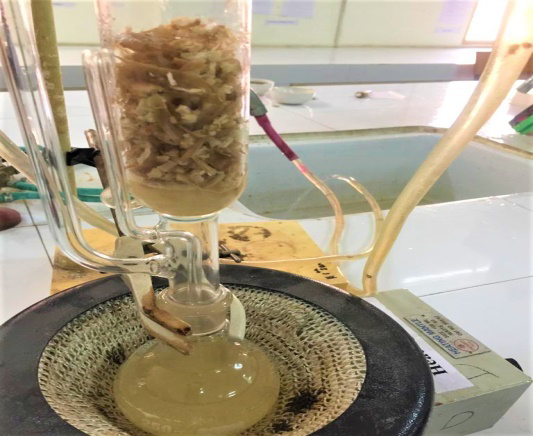
Preparation of root extract: Asparagus racemosus (Shatavari) fresh roots were procured in Dineshpur (U.S.N), Uttarakhand, India. The roots were then completely rinsed with water and subjected to a 15-minute sonication, then washed once more. The roots were sliced into smaller pieces after being air dried at room temperature. After cutting, it was ground to a coarse powder and then dried for another 22 hours in a dark place. In order to prepare the soxhlet assembly, 120 ml of ethanol were used as the solvent, and 15 gramms of AR roots were measured and added to the soxhlet apparatus. Then held at 70 degrees for three hours as shown in Figure 2 [15]. Lastly, it is distillated using a distiller, and surplus ethanol is expelled, creating extract.
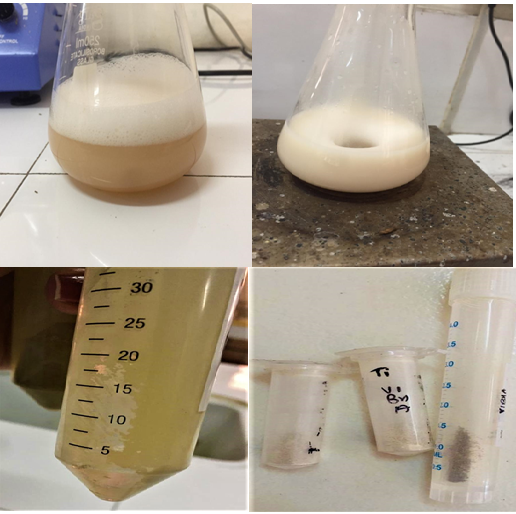
Green synthesis of TiO2 nanoparticles by using root extract of Asparagus racemosus: The newly obtained root extract was added to a 1.0M solution of titanium tetrachloride made in 80 ml of distilled water, which was then agitated for 3.5 hours at room temperature using a magnetic stirrer at 1700–1800 RPM. The hue had changed noticeably. It was pinkish white at first and then took on a curdy white color which is another sign of the reduction process. Now, the created nanoparticles were centrifuged at 8000 rpm for 30 minutes [16]. After being thoroughly rinsed three times with distilled water, the easily identifiable solid residue was finally dissolved in a small amount of ethanol and heated in an oven at 85o C before being collected in the vial as depicted in Figure 3.
Preliminary Phytochemical Screening Test: According to the procedure opted by Bachhar, et al. [17] and Jayashree, et al. [18], the extract was carried out for phytochemical screening assays for the detection of plant secondary metabolites, tannins, saponins, flavonoids, terpenoids, alkaloids, cardiac glycosides, and carbohydrates.
- Test for Saponins: By adding a tiny amount of 2N HCl, shaking the extract with a small amount of water, and then adding a few drops of Mayer’s reagent, the saponin content of root extract was ascertained. It is a sign that saponins are present if the foam formed [19, 20].
- Test for Alkaloids: Heat 2 ml of root extracts with 10% NaOH solution to perform an alkaloid test. The presence of the white precipitate was considered evidence of alkaloids [21].
- Test for Tannins: Heat 2-3 ml of root extract with concentrated HNO3 in presence of ammonia. The development of white ppt. is a sign of tannins [22].
- Test for Carbohydrate: Fehling’s A and B solution was heated and applied to the extract. The existence of carbohydrates is indicated by the orange-red color of the precipitate [23].
- Test for Flavonoids: The existence of flavonoids is shown by the appearance of green color after adding a few drops of a neutral ferric chloride solution to the alcoholic solution of the plant extract [24].
- Test for Amino acid: Add 3 drops of ninhydrin in 3 ml of plant extract and put it into a water bath for about 15 minutes, the formation of violet/purple color indicates the presence amino acids [25].
Characterizations of Nanoparticles
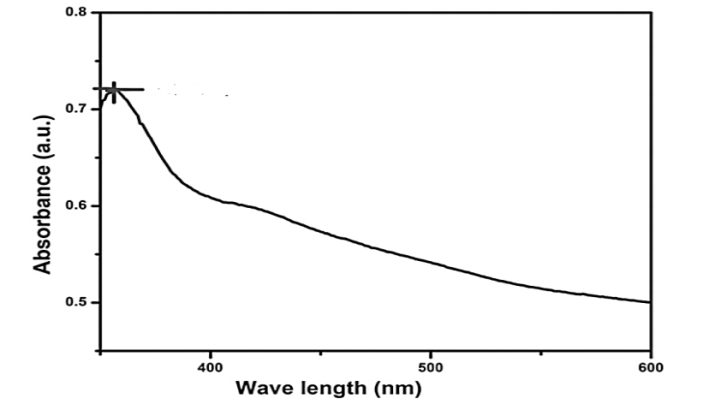
- UV Spectroscopy: The characterization of Asparagus racemosus NPs was carried out by using UV spectroscopy (Shimadzu UV—1900 spectrophotometer). The UV-visible spectrometer, which has a wavelength range of 200-800 nm, was used to examine the first characterization of the nanoparticles. The synthesis of Asparagus racemosus NPs has been validated by the SPR (Surface Plasmon Resonance) band at 352 nm.
- SEM-EDX: The elemental composition of all the synthesized Asparagus racemosus NPs in the study was carried out by Energy Dispersive X – Ray Analysis (EDAX). The microstructural study was carried out by Scanning Electron Microscopy (SEM) using Scanning Electron Microscope EVO 18 (CARL ZEISS) for identifying structure for identifying the material property.
Antibacterial Activity: The antibacterial activity of Asparagus racemosus TiO2 nanoparticles was assessed using the disc diffusion method. Bacterial growth inhibition was left in place for the entire night. The bacteria used in this experiment were Bacillus subtilis, Escherichia coli, and Pseudomonas aeruginosa. These bacteria were daubed into the Nutrient Agar using Whattman filter sheets and tiny, circular discs of paper that were cut to a diameter of 6 mm and coated with a nanoparticle of TiO2. The solutions were made by adding 5 ml of water to NP concentrations of 20%, 40%, and 60%, respectively. After the paper disc and plates had been autoclaved and sterilized, the bacteria culture was incubated in the incubator for roughly 24 hours at a temperature of 38°C.
Antioxidant Activity • DPPH Assay: According to the methodologies suggested by Santhoshkumar, et al. [26]. Sample stock solutions (1.0 mg/ml) were diluted to final concentrations of 20, 40, 60, 80, 100 µg/ml, in ethanol and sonicated for 20 minutes. To analyze solutions of various concentrations, 1 ml of a 0.3 mM DPPH ethanol solution was added, and the mixture was left to react at room temperature. The absorbance readings were determined at 517 nm after 40 minutes. Using the following formula, the % radical scavenging activity was determined:
() ( ) 0 1 A -A RSA % =100 A
0 Where A0 was the absorbance of the control reaction (Without AR NPs) and, A1 was the absorbance of the sample. DPPH solution with ethanol was used as a negative control. The positive controls were those using the standard solutions. The IC50 values were determined by linear regression of plots, where the ordinate indicated the average percent of antioxidant activity from three different experiments and the ordinate represented the concentration of the analyzed AR NPs.
• Phosphomolybdate Assay: Asparagus racemosus NPs was evaluated for antioxidant activity using phosphomolybdate assay according to the methodologies suggested by Sujatha, et al. [27]. Sample (20, 40, 60, 80, 100 μl) and 1 ml of reagent solution (0.6 M sulphuric acid, 28 mM sodium phosphate, and 4 mM ammonium molybdate) were taken in the test tubes. The test tubes were capped tightly with aluminum foil and kept in a water bath for 1.5 hour at 95 °C. The samples were then cooled to room temperature and the absorbance was measured. The following formula was used to evaluate the % antioxidant activity.
( ) 0 1 $$ \% \text {Inhibition} = 100 \frac {\left(\mathrm {A} _ {0} - \mathrm {A} _ {1}\right)}{\mathrm {A} _ {0}} $$
0 Where, A0 was the absorbance of the control reaction (Without Asparagus racemosus NPs) and, A1 was the absorbance of the sample.
Antidiabetic activity: The assay was carried out following the standard protocol with slight modifications. 600 ml of Asparagus racemosus NPs with concentrations of 10, 20, 40, 60, 80, and 100 g/ml was mixed with 1.2 ml of starch in phosphate solution (pH 6.9) and 6.7 mM sodium chloride. 600 µl amylase were added to start the reaction, which was then left at 37 °C. From the aforementioned mixture, 600 µl were taken, 300 µl of DNSA were added, and the mixture was then placed in a boiling water bath for 15 minutes (1 g of DNSA, 30 g of sodium potassium tartrate, and 20 mL of 2N sodium hydroxide were added). With 2.7 ml of water added to the reaction mixture, the absorbance was measured at 540 nm. In order to prepare blank, the enzyme solution was removed and replaced with 600 µl of distilled water. Similar steps were taken to make the control, which represented 100% enzyme activity and contained no Asparagus racemosus NPs. Three times the tests were conducted using the same procedure [28]. The IC50 values were calculated from the graph by plotting the percentage of alpha-amylase suppression against the Asparagus racemosus NPs content. The α-amylase inhibitory activity was calculated as follow:
Inhibition (%) = (1- As / Ac) × 100
where As and Ac are the absorbance of the sample and the control respectively.
Statistical Analysis: MS-Excel and origin 9 pro were used for the calculations and graphs. Every experiment was done in triplicate and the results are presented in mean ± standard deviation.
Result and Discussion
Phytochemical Analysis
It has been noted that ethanolic root extract includes a variety of bioactive components, including primary and secondary metabolites. A preliminary phytochemical screening revealed the presence of alkaloids, saponins, steroids, and tannins. The use of root extract in the treatment of illnesses with probable bacterial aetiologies is therefore suggested and supported by our research. The results are represented in Table 1.
| S. no | Phytochemical | Result |
|---|---|---|
| 1 | Saponin | + |
| 2 | Alkaloid | + |
| 3 | Tannins | + |
| 4 | Carbohydrates | + |
| 5 | Flavonoids | + |
| 6 | Amino acid | + |
| (+) = presence and (-) = absence |
Table 1: Results of Preliminary Phytochemical Analysis.
UV-Visible Spectroscopy of TiO2 NPs
Greenly produced TiO2 nanoparticles are analyzed using a UV-Visible spectrophotometer. The resulting graph shows the strong peak at 352 nm with an absorbance less than 1 very clearly. Significant peak at 352 nm in the wavelength range of 200 to 600 nm was discovered, providing evidence that TiO2 nanoparticle formation has occurred. The peaks in our results were comparatively extremely comparable to the peaks of conventional TiO2, and they were also matched with the literature and numerous online sources [29, 30]. The nanoparticle’s UV peak is depicted in Figure 4.
Scanning Electron Microscope (SEM) Analysis
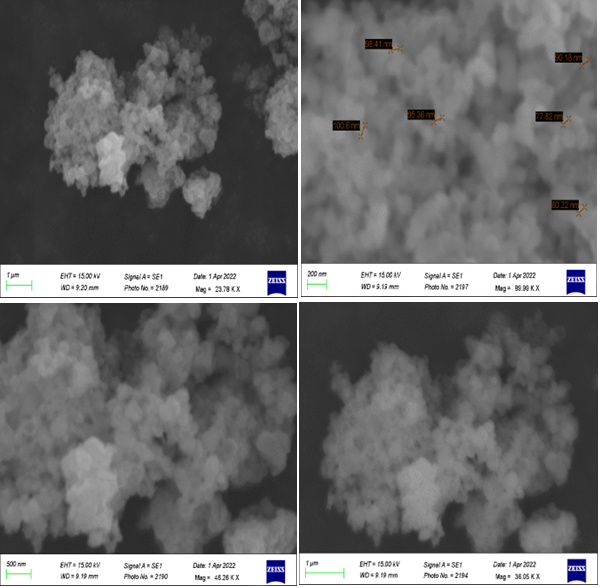
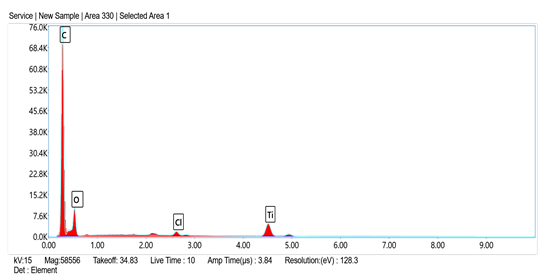
It was utilized to determine the shape of a nanoparticle that was synthesized in a more environmentally friendly manner. The shape and size of the nanoparticles were confirmed by SEM pictures as shown in Figure 5; in accordance with the visual results, the particles were spherical, and the size was determined using a particle size analyzer [31]. The tiny circular particles were clustered together and tightly packed. The sample underwent EDX analysis as shown in Figure 6, which confirms the presence of the component in the nanoparticles [32]. The most prevalent component in the sample was determined to be carbon, which was actually caused by the carbon tape used to hold the sample during examination. Titanium and oxygen were also identified in extremely substantial amounts, which suggests that TiO2 nanoparticles were present. The weight percentage of the constituents are given in Table 2.
- Element
- Weight %
- Atomic %
- Error %
- Net Int.
- C
- 68.3
- 80.6
- 8.8
- 45265.6
- O
- 16.6
- 14.7
- 11.6
- 5768.3
- Cl
- 1.7
- 0.7
- 4.1
- 1420.5
- Ti
- 13.5
- 4
- 2.7
- 5645.7
Table 2: Percentage of Nanoparticle constituents.
- Element
- Weight %
- Atomic %
- Error %
- Net Int.
- C
- 68.3
- 80.6
- 8.8
- 45265.6
- O
- 16.6
- 14.7
- 11.6
- 5768.3
- Cl
- 1.7
- 0.7
- 4.1
- 1420.5
- Ti
- 13.5
- 4
- 2.7
- 5645.7
Table 2: Percentage of Nanoparticle constituents.
Antibacterial Activity
The ethanolic root extract of Asparagus racemosus was tested for its antibacterial effects against a number of microorganisms, including Gram Positive Bacillus subtilis, Gram Negative Pseudomonas aeruginosa, and Escherichia coli. Asparagus racemosus root extract exhibits the highest level of effectiveness against all bacterial strains. By measuring the petri dish’s zone of inhibition (ZOI) with a ruler, Escherichia coli (16.5 mm), Pseudomonas aeruginosa
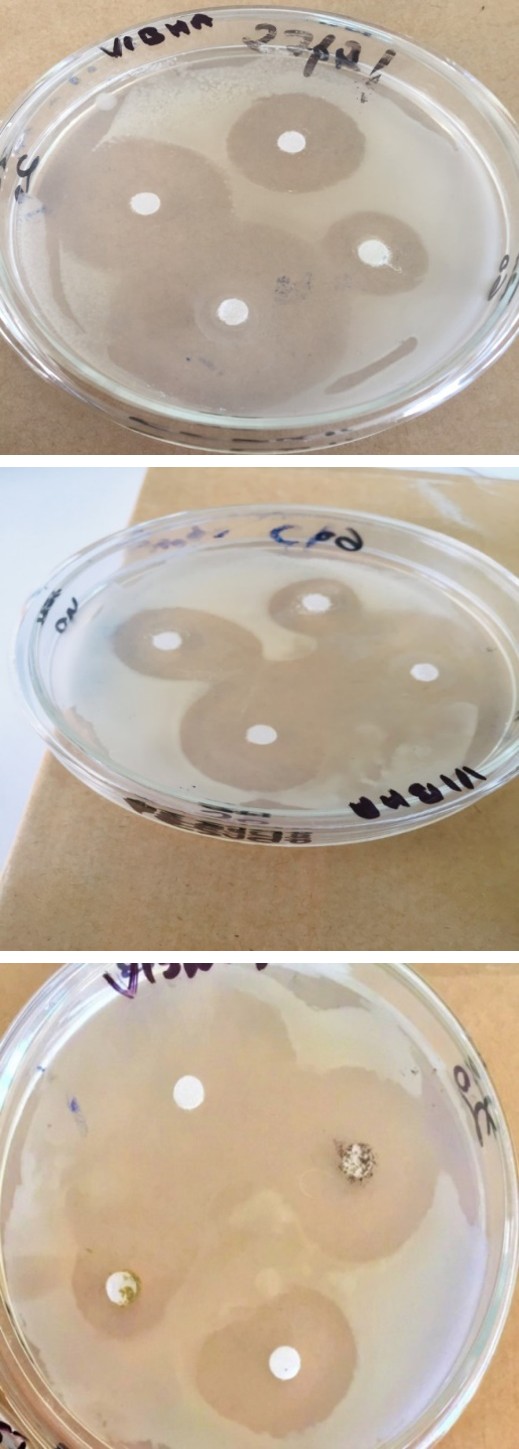
(14.75 mm), and Bacillus subtillis (16.5 mm) in 20% concentration produced the greatest amount of inhibition. Escherichia coli (19mm) in a 20% concentration produces the greatest amount of inhibition. The overall results were highly encouraging, as seen in Figure 7, below, where the antibacterial activity was practically comparable to that of the usual antibacterial medication. This finally shows that the plant’s root extract has good antibacterial properties.
| 1. Escherichia Coli | |||
|---|---|---|---|
| 20% | 40% | 60% | AB |
| 19mm | 12mm | 11mm | 22mm |
| 15mm | 14mm | 9mm | 22mm |
| 17mm | 14mm | 10mm | 21mm |
| 15mm | 12mm | 10mm | 20mm |
| 2. Pseudomonas Aeruginosa | |||
|---|---|---|---|
| 20% | 40% | 60% | AB |
| 15mm | 11mm | 10mm | 21mm |
| 13mm | 11mm | 9mm | 22mm |
| 16mm | 12mm | 9mm | 23mm |
| 15mm | 15mm | 10mm | 23mm |
| 3. Bacillus Subtilis | |||
|---|---|---|---|
| 20% | 40% | 60% | AB |
| 14mm | 14mm | 5mm | 23mm |
| 16mm | 19mm | 6mm | 24mm |
| 18mm | 12mm | 7mm | 23mm |
| 18mm | 12mm | 7mm | 23mm |
Antioxidant Activity
The antioxidant potential of the nanoparticles was evaluated using two methods i.e., DPPH and Phosphomolybdate assays. In this study, antioxidant activity of the synthesized TiO2 nanoparticles from root extract of Asparagus racemosus has been evaluated and were found to be effective antioxidants. A visible color shift is seen in the DPPH test as the concentration of the nanoparticle is increased from 20 to 100 µl. As a result of the color shift, which suggests the nanoparticles’ potential for reduction, the sample may be a powerful antioxidant. When the nanoparticle’s IC50 value was compared to that for standard ascorbic acid, it was found that the nanoparticles had a lower value of IC50, but the value was still very excellent, indicating that the nanoparticles have good antioxidant activity. The
calculated value of IC50 for nanoparticle is 85.18±0.55 µg/ml. And for standard ascorbic acid is 18.11±0.87 µg/ml. A lower value of absorbance indicates a good scavenging potential since the DPPH antioxidant assay is based on DPPH’s ability to decolorize in the presence of antioxidants. In the phosphomolybdate assay, a dose dependent relationship has been seen as a function of increasing concentration. The calculated IC50 value is 66.4±1.3 µg/ml. And for the standard ascorbic acid the IC50 value is 23.8±0.68 µg/ml the
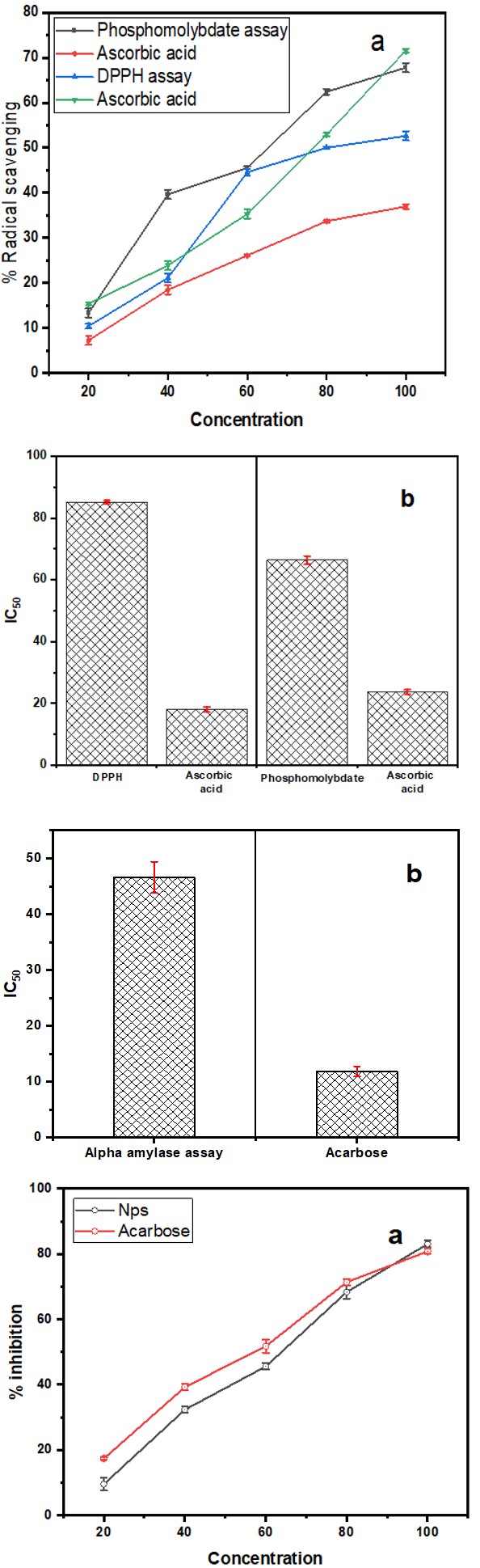
synthesized TiO2 nanoparticles shows a good antioxidant activity when compared to the standard ascorbic acid. Thus, these nanoparticles can be used for various applications in pharmacological and biomedical fields. Percentage radical scavenging activity as a function of concentration 20-100 µl is presented in Figure 8a & b shows the difference between IC50 of two methods of antioxidant activity and their comparison with standard drug.
Figure 8a: Represents the dose dependent curve showing % of radical scavenging, b: Shows IC50 comparison of DPPH and Phosphomolybdate Assay with ascorbic acid as standard.
Antidiabetic Activity
The antidiabetic activity was evaluated by using alpha amylase assay. The Asparagus racemosus NPs showed dose dependent α-amylase inhibition with IC50 value 46.59±2.81 µg/ml. The IC50 value of acarbose was found to be 11.84 ± 0.91 µg/ml. We have investigated that the Asparagus racemosus NPs can be used in the treatment of several diseases, and can be also serve as anti-diabetic potential. Previously, this
beneficial and priceless plant NPs was not been investigated for its in vitro anti-diabetic activity in the northern region of India. It has clearly recognized the potential of anti- diabetic activity and anti-oxidant activity. A dose response relationship of the concentration of the sample vs. percentage inhibition of the alpha amylase is given in the Figure 9a & b shows the comparison of IC50 of standard drug and Asparagus racemosus NPs.
Figure 9a: Represents the dose dependent curve of the antidiabetic assay showing % of inhibition, b: Shows IC50 value of Alpha Amylase Assay with standard drug acarbose.
Concluding the outcomes of the study, it is noted that the synthesized Asparagus racemosus NPs are very potent as it shows excellent biological activities. Various studies shows that the antioxidant activity of the extract of Asparagus
racemosus shows an IC50 value of ~ 78.15 µg/ml [33], 4158.8 µg/ml [34], 97.12 μg/ml [35], whereas the antidiabetic activity of the extract ~ 55.52 μg/ml [36], 0.9% inhibition [37], from these comparable outcomes of the various studies the synthesized nanoparticles in the present study is more potent as it possesses excellent outcomes than crude extract.
Conclusion
The root extract of Asparagus racemosus was effectively used to synthesize titanium dioxide nanoparticles. The green synthesis approach was used in this process. Using SEM- EDX and UV-Visible spectroscopy, the synthesis of titanium dioxide nanoparticles was confirmed; the absorption peak in UV Spectroscopy denotes the presence of TiO2 nanoparticles. Finely powdered particles were formed as a result. Antibacterial activity was investigated using the disc diffusion method, Asparagus racemosus NPs showed a good antibacterial property in 3 bacterial strains and it also shows that a large number of bacteria were significantly suppressed by the sample. It shows a good antioxidant behavior as the IC50 value for DPPH and phosphomolybdate assay were 85.18±0.55 µg/ml and 66.4±1.3 µg/ml respectively. Asparagus racemosus NPs also has excellent antidiabetic potential, a good IC50 value of 46.59±2.81 µg/ml have been shown in comparison with the standard drug acarbose (a widely used and marketed anti-diabetic drug). Concluding the outcomes of the study it may state that the nanoparticles are potent towards the activities performed and hence suitable for application in pharmacology and medicine.
References
-
Sachan AK, Shuaib M, Das DR, Dohare SL (2012) Asparagus racemosus (Shatavari): An Overview. IJPCS 1(3): 937-941.
-
Negi JS, Singh P, Joshi GP, Rawat MS, Bisht VK (2010) Chemical constituents of Asparagus. Pharmacogn Rev 4(8): 215-220
-
Alok S, Jain SK, Verma A, Kumar M, Mahor, et al. (2013) Plant profile, phytochemistry and pharmacology of Asparagus racemosus (Shatavari): A review. Asian Pac J Trop Dis 3(3): 242-251.
-
Pandey AK, Gupta A, Tiwari M, Prasad S, Pandey AN, et al. (2018) Impact of stress on female reproductive health disorders: Possible beneficial effects of shatavari (Asparagus racemosus). Biomedicine & Pharmacotherapy 103: 46-49.
-
Singh GK, Garabadu D, Muruganandam AV, Joshi VK, Krishnamurthy S (2009) Antidepressant activity of Asparagus racemosus in rodent models. Pharmacol Biochem Behav 91(3): 283-290.
-
Negi J, Singh P, Joshi GP, Rawat MS, Bisht VK (2010) Chemical constituents of Asparagus. Pharmacogn Rev 4(8): 215-220.
-
Gautam M, Saha S, Bani S, Kaul A, Mishra S, et al. (2009) Immunomodulatory activity of Asparagus racemosus on systemic Th1/Th2 immunity: Implications for immunoadjuvant potential. J Ethnopharmacol 121(2): 241-247.
-
Khan, Saeed K, Khan I (2019) Nanoparticles: Properties, applications and toxicities. Arabian Journal of Chemistry 12(7): 908-931.
-
Griffin S, Masood MI, Nasim MJ, Sarfraz M, Ebokaiwe AP, et al. (2018) Natural nanoparticles: A particular matter inspired by nature. Antioxidants 7(1).
-
Afolalu SA, Ikumapayi OM, Oloyede OR, Ogedengbe TS, Ogundipe AT (2023) Advances in Nanotechnology and Nanoparticles in the 21st Century – An Overview. IEOM Society International, pp: 1200-1211.
-
Siddiqi S, Rahman A, Tajuddin, Husen A (2018) Properties of Zinc Oxide Nanoparticles and Their Activity Against Microbes. Nanoscale Research 13.
-
Etacheri V, Di Valentin C, Schneider J, Bahnemann D, Pillai SC (2015) Visible-light activation of TiO2 photocatalysts: Advances in theory and experiments. Journal of Photochemistry and Photobiology C: Photochemistry Reviews 25: 1-29.
-
Anucha B, Altin I, Bacaksiz E, Stathopoulos VN (2022) Titanium dioxide (TiO₂)-based photocatalyst materials activity enhancement for contaminants of emerging concern (CECs) degradation: In the light of modification strategies. Chemical Engineering Journal Advances 10: 100262.
-
Mohanty B. Shukla NN, Das SK (2022) Pharmacological Profile Of Asparagus Racemosus Wild (Shatavari) with Evidence. International Ayurvedic Medical Journal, pp: 698-703.
-
Redfern J, Kinninmonth M, Burdass D, Verran J (2014) Using Soxhlet Ethanol Extraction to Produce and Test Plant Material (Essential Oils) for Their Antimicrobial Properties. J Microbiol Biol Educ 15(1): 45-46.
-
Selvakumar P, Sithara R, Viveka K, Sivashanmugam P (2018) Green synthesis of silver nanoparticles using leaf extract of Acalypha hispida and its application in blood compatibility. J Photochem Photobiol B 182: 52-61.
-
Bachhar V, Joshi V, Gangal A, Duseja M, Shukla RK (2023) Identification of Bioactive Phytoconstituents, Nutritional Composition and Antioxidant Activity of Calyptocarpus vialis. Appl Biochem Biotechnol.
-
Jayashree GV, Rachitha P, Krupashree K, Kandikattu HK, Khanum F (2013) Phytochemical analysis of methanolic extract of roots of Asparagus Racemosus (Shatavari). International Journal of Pharma and Bio Sciences 4(4): 250-254.
-
Gul R, Jan SU, Faridullah S, Sherani S, Jahan N (2017) Preliminary Phytochemical Screening, Quantitative Analysis of Alkaloids and Antioxidant Activity of Crude Plant Extracts from Ephedra intermedia Indigenous to Balochistan. Scientific World Journal.
-
Devmurari VP (2010) Phytochemical screening study and antibacterial evaluation of Symplocos racemosa Roxb. Archives of Applied Science Research 2(1): 354- 359.
-
Kancherla N, Dhakshinamoothi A, Chitra K, Komaram RB (2019) Preliminary Analysis of Phytoconstituents and Evaluation of Anthelminthic Property of _Cayratia_ _auriculata_ (In Vitro) Maedica (Bucur) 14(4): 350-356.
-
Morsy N (2014) Phytochemical analysis of biologically active constituents of medicinal plants. Main Group Chemistry 13(1): 7-21.
-
Zohra SF, Meriem B, Samira S, Muneer AM (2012) Phytochemical Screening and identification of some compounds from Mallow. J Nat Prod Plant Resour 2(4): 512-516.
-
Ruwali P, Gautam P, Thapliyal A (2015) Qualitative and quantitative phytochemical analysis of Artemisia indica Willd. J Chem Pharm Res 7(4): 942-949.
-
De Silva GO, Abeysundara AT, Aponso MMW (2017) Extraction methods, qualitative and quantitative techniques for screening of phytochemicals from plants. American Journal of Essential Oils and Natural Products 5(2): 29-32.
-
Santhoshkumar T, Rahuman AA, Jayaseelan C, Rajakumar G, Marimuthu S, et al. (2014) Green synthesis of titanium dioxide nanoparticles using Psidium guajava extract and its antibacterial and antioxidant properties. Asian Pac J Trop Med 7(12): 968-976.
-
Sujatha S, Sekar T (2019) Free-Radical Scavenging Activity Leaf Extract of _Litsea Laevigata_ Gamble. Int J Pharm & Pharm Sci 11(3): 96-103.
-
Paun G, Neagu E, Albu C, Savin S, Radu GL (2020) In Vitro Evaluation of Antidiabetic and Anti-Inflammatory Activities of Polyphenolic-Rich Extracts from _Anchusa_ _officinalis_ and Melilotus officinalis. ACS Omega 5(22): 13014-13022.
-
Khorasaninejad M, Chen WT, Zhu AY, Oh J, Devlin RC, et al. (2017) Visible Wavelength Planar Metalenses Based on Titanium Dioxide. IEEE Journal of Selected Topics in Quantum Electronics 23(3): 43-58.
-
Brindha D, Xavier T, Muthu S (2014) Fungal Generated Titanium Dioxide Nanopartilces for Uv Protective and Bacterial Resistant Fabrication. International Journal of Engineering Science and Technology 6(9): 621-625.
-
Khattak A, Ahmad B, Rauf A, Bawazeer S, Farooq U, et al. (2019) Green synthesis, characterization and biological evaluation of plant-based silver nanoparticles using Quercus semecarpifolia Smith aqueous leaf extract. IET Nanobiotechnol 13(1): 36-41.
-
Kumar PV, Ahamed AJ, Karthikeyan M (2019) Synthesis and characterization of NiO nanoparticles by chemical as well as green routes and their comparisons with respect to cytotoxic effect and toxicity studies in microbial and MCF-7 cancer cell models. SN Appl Sci 1(9): 1-15.
-
Hossain I, Sharmin FA, Akhter S, Bhuiyan MA, Shahriar M (2012) Investigation of cytotoxicity and in-vitro antioxidant activity of Asparagus racemosus root extract. International Current Pharmaceutical Journal 1(9): 250- 257.
-
Dohare S, Shuaib M, Naquvi KJ (2011) In-Vitro Antioxidant Activity Of Asparagus Racemosus Roots. International Journal of Biomedical Research 4(4): 228- 235
-
Selvaraj K, Sivakumar G, Pillai AA, Veeraraghavan VP, Bolla SR, et al. (2019) Phytochemical Screening, HPTLC Fingerprinting and Invitro Antioxidant Activity of Root Extract of Asparagus racemosus. Pharmacognosy Journal 11(4): 818-823.
-
Vadivelan R, Krishnan RG, Kannan R (2019) Antidiabetic potential of _Asparagus racemosus_ Willd leaf extracts through inhibition of α-amylase and α-glucosidase. J Tradit Complement Med 9(1): 1-4.
-
Sapkota BK, Khadayat K, Adhikari B, Poudel DK, Niraula P, et al. (2021) Phytochemical Analysis, Antidiabetic Potential and in-silico Evaluation of Some Medicinal Plants. Pharmacognosy Res 13(3): 140-148.
- Spectrophotometric Determination of Lanthanum (III) and Some Rare Earths with Xylenol Orange
- Introduction and Sources of Molluscicides
- Trimetazidine: An Antianginal Drug and Not Only!
- Nature Inspired Discovery and Development of Antibacterials: An Update
- Fungal Biodegradation of Polycyclic Aromatic Hydrocarbons (PAHs)
- Recent Approaches of Impurity Profiling in Pharmaceutical Analysis: A Concise Review