
A Descriptive Survey Regarding Impact of Lockdown on School Going Children
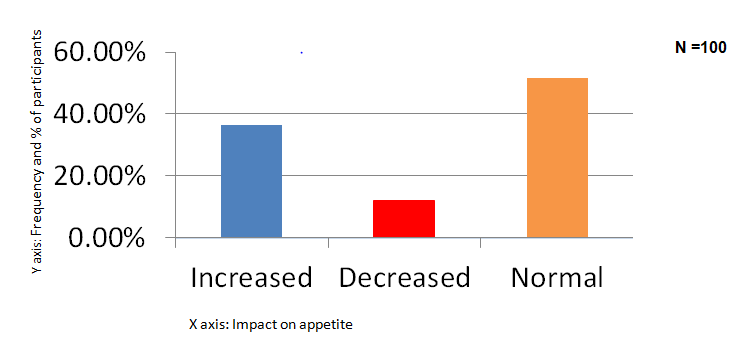
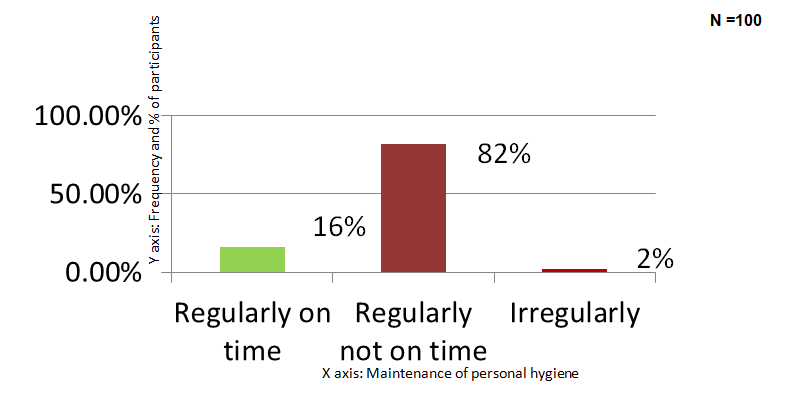
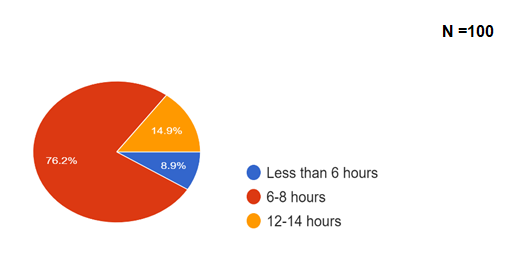
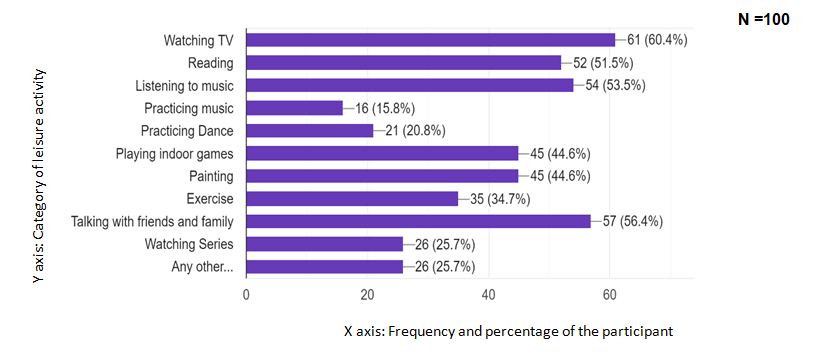
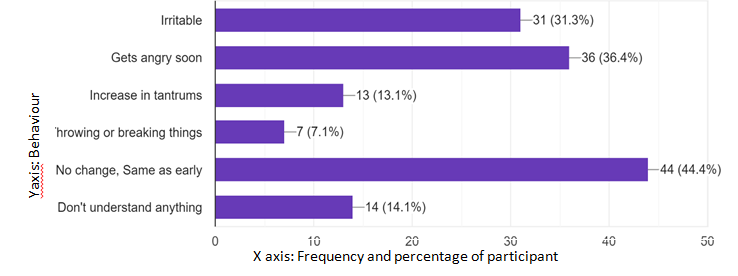
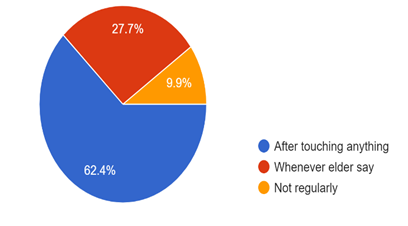
Introduction: In India, lockdown for COVID-19 prevention started from March 25th 2020, causing severe disruption to the normal life. All nations’ scientists are still trying to find a solution for it. Beating the virus completely seems to be difficult because of the nature of the virus. In West Bengal, India, schools reopened from February 12th 20218 for class IX-XII only. So school children up to class VIII are still confined at home. In this context, it is important to understand the effects of lockdown on children. Methods: Hundred school students were selected for online (Google form) survey during Oct-Nov 2020 through purposive sampling. After ethics committee approval school children between 6-18 years who were willing to participate were enrolled for the survey. Informed consent was taken from the parents and their children. Descriptive statistics were used for analysis of data. Results: 36% children had increased appetite whereas 12% reported a decrease in appetite during COVID-19 lockdown. Few (9%) students reported long sleeping hours (12-14 hours / day) and majority (61%) of the participants expressed spending their leisure time by watching TV. Most of them (89%) missed the school; 53% participants felt loneliness and 74% missed outdoor games. 60% children also reported the concepts to be unclear in online classes. 46% parents reported behavioral changes of their children like irritability (31%), getting angriness (36%) and temper tantrum (13%) during COVID-19 lockdown. Most (98%) of the school children are maintaining their personal hygiene but 82% children are not doing it in time. 99% had basic knowledge on COVID-19 and its preventive behaviors but 37% didn’t want to wear mask, 30% were not maintaining social (physical) distancing and 10% were not washing their hands regularly. Many participants expressed that their quality of life, quality of study, health and mental health condition deteriorated during the lockdown than the pre COVID situation. Conclusion: Parent’s counselling about the developmental needs of the children in various phase of childhood is required so that parent will put their maximum effort to make and follow a consistent routine for study, play, rest and physical activities of the children.
Introduction
The World Health Organization (WHO) declared the emergency situation caused by COVID-19 as a global pandemic on 11th March 2020 [1]. In India, lockdown was announced to prevent the spread of COVID-19 from March
24th to April 14 and then it extended beyond its expectations. We have seen four phases of lockdown where almost all kinds of workplaces were shut except essential services. According to Ministry of Home Affairs, the school and colleges are totally shut from March 2020 and online classes started [2]. School plays an important role in promoting importance of personal hygiene, physical activity, healthy food and body habits [3]. Even a short term shutdown of educational institutions for children is troublesome and anticipated to have detrimental effects on children’s physical and mental health [4, 5]. Additionally children had to cope up with the psychological distress caused by the threat of the pandemic, fear of contamination and fear of uncertainty concerning the ongoing pandemic. Children experienced an abrupt disruption to their normal life and prolonged isolation from their peers and loved ones which may lead to an increased behavioural problem. We know children are extra-sensitive to emotional stress. Childhood obesity and reduced cardio- respiratory fitness are anticipated to be the end result of this long term physical inactivity, irregular sleep patterns, unfavourable diet plans, sedentary lifestyle, longer smart- phone/television screen time which are being practiced during this lockdown [6]. This prolonged lockdown has made a massive impact on children’s lives [7].
Since June 2020 phase wise unlock period started in India and schools reopened for many states. In West Bengal, schools reopened from February 12th 2021 [8] for class IX- XII only. Population returned to new normal life but without school reopening. So, school children up to class VIII are still stuck at home and online classes are still going on. We know that effectiveness of online learning varies amongst age groups. Younger children usually require structured environment because, they are more distracted by the environment. There are some researches which show that, on average, student retains 25-60% more material when learning online compared to only 8-10% in a classroom [9]. It may be because student can learn at their own pace, re- reading, skipping etc. On the other hand Elkind D [10] and House R [11] have insisted that young children should not be expose to online learning because latter it will be very difficult to prepare young children socially and emotionally ready for school. Study by Zalaznick M [12] and Edwards S, et al. [13] explained that online learning brings some harm to children’s health and growth. So, effectiveness of online learning is still remaining under researched. In this context, it is important to understand the effects of lockdown on children. This study attempts to find out answer of the
Results
following few questions:
- What are the impact of COVID-19 lockdown on children’s sleep pattern, appetite & behavior?
- How the children are spending leisure time during lockdown?
- What about their study pattern & learning experience through online?
- How are they maintaining friendship?
- How much are they knowledgeable regarding COVID-19 and its preventive measures?
- What is the impact on quality of life (QOL), quality of relationship with family, peer and teachers, quality of health and mental health from pre COVID to post COVID-19 situation?
Methodology
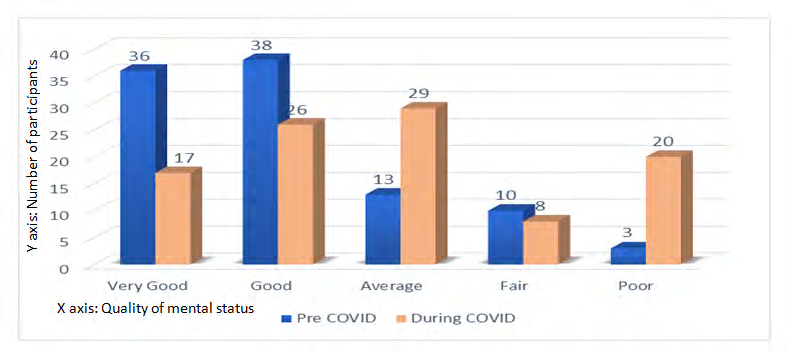
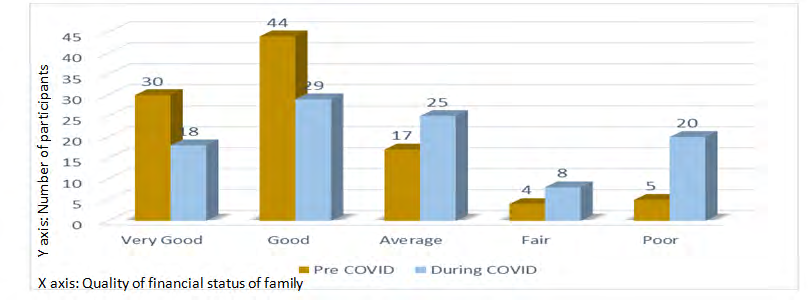
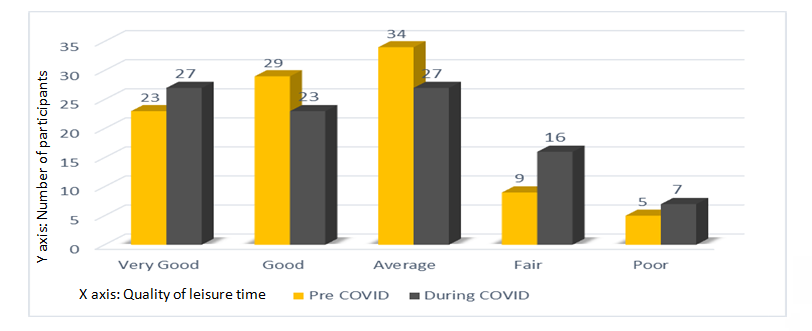
This study was based on non-experimental descriptive survey approach. Through purposive sampling technique 100 school students were recruited for online (Google form) survey during. School children between 6-18 years were enrolled for the survey after an ethics committee approval. Consent of parent was taken along with assent of children before participation in the Google form. Exclusion criteria were children/parents not willing for participation and any type of cognitive insufficiency that will affect participation in study. Study included participants from different districts of West Bengal, India. Tool to assess quality of life, quality of study, quality of relationship, quality of mental health status & quality of leisure time categorized from very good to poor through 5 point likert scale (Figures 10-19). Validity of the tool was established by 7 experts and the reliability of the tool was established by test re-test method and correlation co-efficient r = 0.9. So, the tool is found to be reliable. In the tool few questions were there for the parent only and parent were requested not to give answer and just help participant to read and understand the question if they are confused. Tool was converted into local language, i.e, Bengali and validated by linguistic expert and re-translated back into English. There is no significant difference found between the original tool and converted tool. Descriptive statistics was used for analysis of data.
| Characteristics | Frequency | Percentage |
|---|---|---|
| Age (years) | ||
| 6-10 (Primary age group) | 23 | 23 |
| 11-16 (Secondary age group) | 64 | 64 |
| 17-18 (Higher secondary group) | 13 | 13 |
| Gender | ||
| Male | 52 | 52 |
| Female | 48 | 48 |
| Medium/ Standard of education | ||
| English Medium | 59 | 59 |
| Bengali Medium | 41 | 41 |
| Family composition of the participants | ||
| Father | 91 | 91 |
| Mother | 79 | 79 |
| Grandparents | 37 | 37 |
| Sister | 27 | 27 |
| Brother | 25 | 25 |
| Working pattern of parents | ||
| Both are working and going office daily | 28 | 28 |
| Both are working and work from home | 2 | 2 |
| One parent only and going office daily | 19 | 19 |
| One parent only and work from home | 9 | 9 |
| One parent stays at home and one parent going to office. | 42 | 42 |
Table 1: Demographic Characteristics of the participants N =100.
| Category | Yes | No |
|---|---|---|
| Missing school | 89 | 11 |
| Studies in routine | 68 | 32 |
| Time table for daily routine | 40 | 60 |
| Studies at home is better than home | 22 | 78 |
| Concepts are getting clear in online studies | 40 | 60 |
| Online study is better than class room study | 6 | 94 |
| Missing extracurricular activities | 87 | 13 |
Table 2: School and studies of the participant in lockdown N =100.
| Category | Yes | No |
|---|---|---|
| Missing friends | 95 | 5 |
| Talking with friends regularly | 40 | 60 |
| Missing outdoor game | 74 | 26 |
| Feeling lonely | 47 | 53 |
Table 3: Friends and feelings of the participant in lockdown N =100.
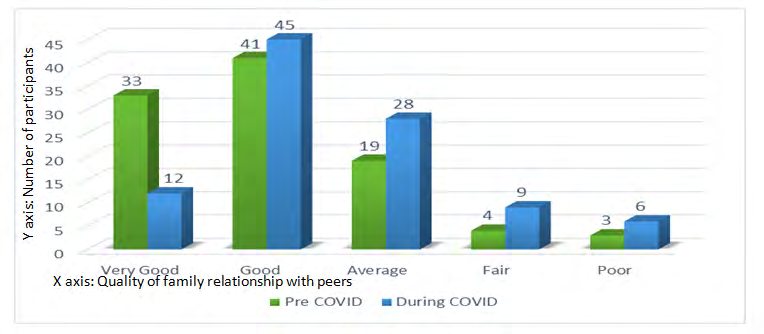
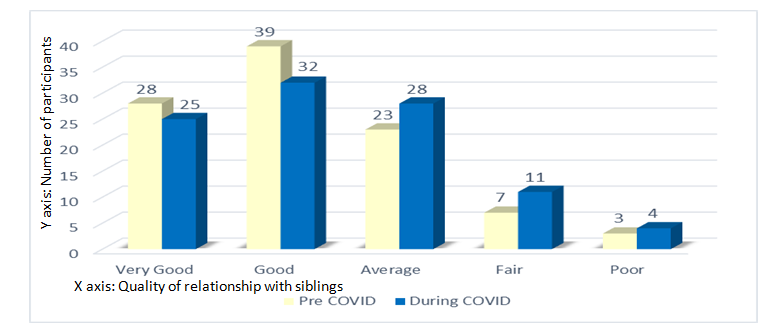
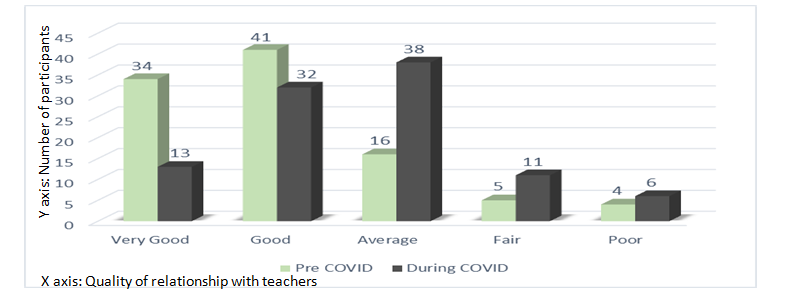
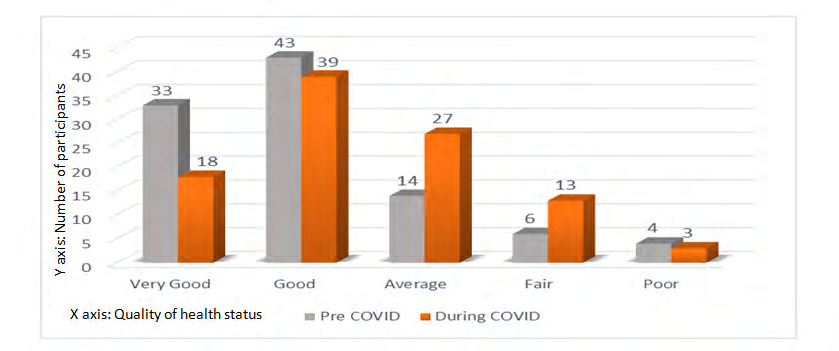
Discussion
COVID-19 has a great impact on children mainly in the physical, social and psychological health. The present study found that 36% children have increased appetite and 12% children have decreased appetite. An Australian study by Owen AJ, et al. [14] revealed that 53.6% adults reported poor appetite or overeating during COVID-19 lockdown. Possible explanation for this finding may be with difference in activity level, mental conditions of children and changes in eating habit during lockdown period.
During COVID-19 pandemic situation, maintenance of personal hygiene is very important and this study revealed that most (98%) of the school children are maintaining their personal hygiene but 82% children are not doing in time. This is the right time where parent should train children to follow good personal hygiene in time. During online class school teacher can encourage the students to maintain personal hygiene because they obey the teachers very much. According to our knowledge there is lack of published study which dealt such issue.
The present study found that 9% of the school children sleep for less than 6 hours and 15% sleep for more than 12- 14 hours. So total 24% school children have disrupted sleep pattern which is almost similar with Lourdes Ezpeleta, et al. [15] study where they found 17.3% of adolescents have sleep problem. On the other hand, Dutta K, et al. [16] study in India reported that 100% Indian children have disrupted sleep during COVID-19 lockdown though our study didn’t measure sleep duration according to age. It is very difficult to compare with studies from other countries because housing conditions and screen time differ from one student to others.
Children leisure activities were affected during COVID-19 lockdown. This study revealed that 61% student engaged in watching TV during their leisure which has negative impact on children. The reported active leisure activities include practicing dance (21%) and exercise (35%) only though these percentages are not mutually exclusive. Other passive leisure activities are reading (52%), listening to music (54%), practicing music (16%), playing indoor games (45%), painting (45%) and talking with friends and family (57%) respectively. Spanish study by Lourdes Ezpeleta, et al. [15] support our finding i.e. 59.3% adolescent only practice physical activity. We know active leisure activities improve children’s physical, mental and social wellbeing but passive leisure activities do not improve physical wellbeing and may lead to obesity. Possible explanation for this result is that some school children don’t have outdoor places such as garden or terraces and have a very limiting available space for outdoor activities so they are engaged in passive leisure activities. So parent should encourage their children to engage in physical activities during leisure time.
Our study result also reported that 68% students are studying routinely where as 32% are not studying routinely so they are lagging behind, hence it is mandatory that parent should insist them to follow daily routine for the study.
Many studies [15, 17, 18] reported that children had behavioural problem during COVID-19 lockdown. Our study results found that 31% of school going children became irritable, 36% are getting angry soon, 13% shows temper tantrum and 7% throwing or breaking things which are comparable with the study findings by Morgul E, et al. [19] where they found >40% of children are irritable and 1/3rd argues with the rest of the family more than before home confinement. Ezpeleta, et al. [15] study also showed that 35.8% adolescent were irritable during COVID-19 lockdown period. Recent study on adults from China [20] during the COVID-19 pandemic also showed that children argue more with the rest of the family during home confinement. So it is clear that COVID-19 lockdown has an adverse psychological effect on adults and children’s mental health causing tensions within the household people. Francisco R, et al. [20] study findings also showed that number of people living at home contributed significantly to children’s mood alterations and they explained that children have a very few opportunities for social interaction and have deprived from contact with peers. Francisco R, et al. [20] study also explained that interaction with siblings acquires greater importance in terms of psychological well-being.
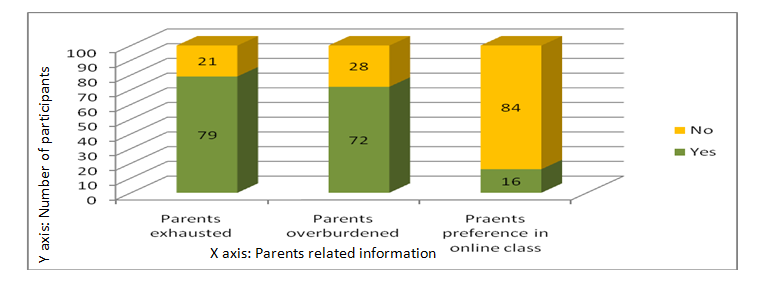
Our study reported 79% parental exhaustion which is much more than the Italian study by Daniela Marchetti, et al. [21] which reflects only 17% of parents experienced significant parenting-related exhaustion. Possible explanation for this might be associated with parental anxiety and distress due to expected danger of COVID-19.
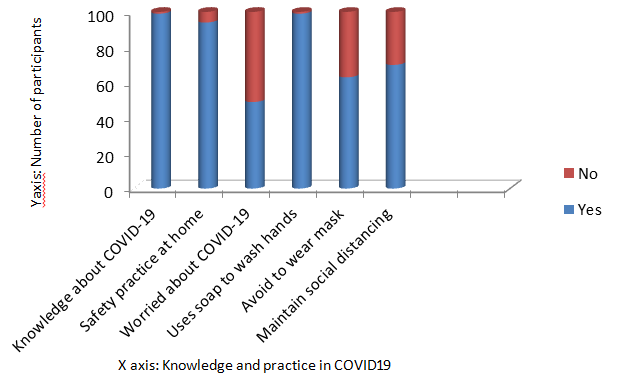
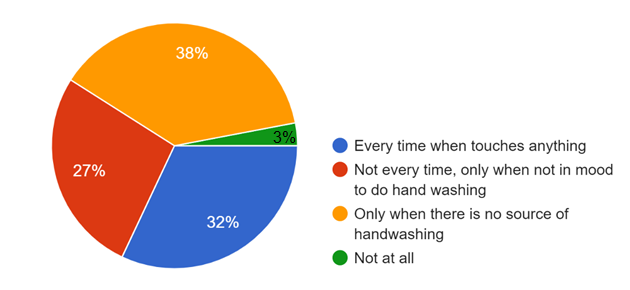
School going children’s knowledge and safety practice on COVID-19 is very good that is 99% but 37% didn’t want to wear mask, 30% were not maintaining social (physical) distancing and 10% were not washing their hands regularly. Whereas researcher from Indiana University Mueller AS, et al. [22] found that most (70%) high-school age youth are willing to wear masks to prevent the spread of the COVID-19 virus but 10 % wore no mask. They also shared that all school struggled with social distancing, except when students were seated in socially distanced chairs. So our study findings are comparable with study done by Mueller AS, et al. [17]. Regarding knowledge and safety practice our study is in accordance with the study by Atriy AS, et al. [23] study at Pune, India where they have shown that awareness, perception and safety practices about COVID-19 was more than 90%. We know, children learn from adults so it is crucial that parent, teachers and community adults should follow the guideline related to COVID-19 prevention.
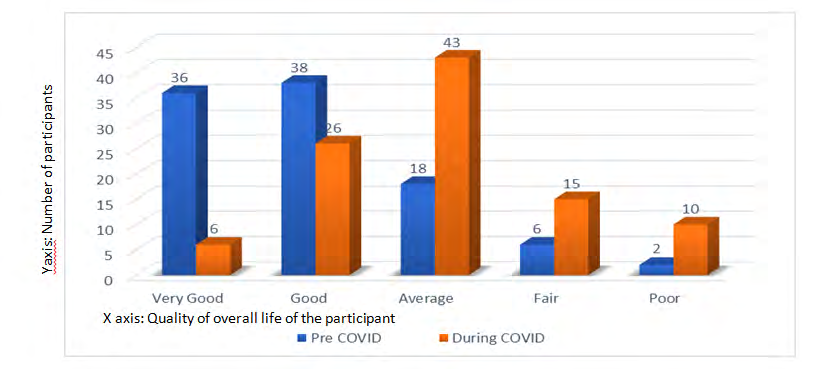
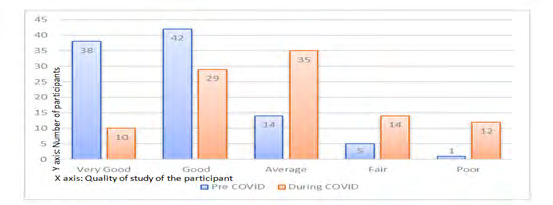
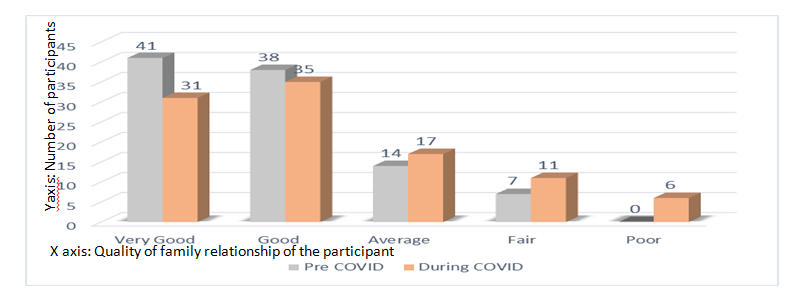
In the present study many participants expressed their quality of life, quality of study, quality of relationship with friends and siblings, health and mental health condition deteriorated during lockdown than the pre COVID situation. Ulrike RS, et al. [18] study also reported lower HRQoL during COVID-19 than pre-COVID-19 period and quality of mental health deteriorated during COVID-19 than before the pandemic (17.8% vs 9.9%), two-fifth of the children and adolescents stated that their relationships with their friends had been impaired. Ezpeleta, et al. [15] study reported that 15.5% adolescent’s family relationships worsen, 12.4% had worsen relationship with their parent and also reported peer problem during COVID-19 lockdown.
This study has limitation too. Firstly less number of children was involved in the online survey. Secondly, non- probability purposive sampling technique was used. Thirdly, cross-sectional nature of the study does not allow conclusions on cause-effects relationships.
The strength of our study is that it contributes an emergent body of literature regarding impact of COVID-19 lockdown on children which is remaining uncertain in a population and it is still under studies. So from the study findings we can make out the necessity of parent counselling about the developmental needs of the children in various phase of childhood. So the recommendation is to conduct a planned follow up study to evaluate the children reaction after parent counselling.
Conclusion
Parents and school teachers’ involvement with the school children mainly during this period of lockdown might be an effective strategy to improve children’s quality of mental health. Effort should be made by the parent for consistent routine which would be followed by the children with enough opportunity to play, rest and physical activities.
References
-
WHO (2020) Director-General’s opening remarks at the media briefing on COVID19.
-
The Economic times Industries (2020) HRD formulating safety guidelines for schools, colleges to ensure social distancing when they reopen. E -paper.
-
Sylva K (1994) School influences on children’s development. J Child Psychol Psychiat 35(1): 135-170.
-
Stewart H, Watson N, Campbell M (2018) The cost of school holidays for children from low income families. Childhood 25(4): 516-529.
-
Lee J (2020) Mental health effects of school closures during COVID-19. Lancet Child Adolesc Health 4(6): 421.
-
Rundle AG, Park Y, Herbstman JB, Kinsey EW, Wang YC (2020) COVID -19-Related School Closings and Risk of Weight Gain among Children. Obesity.
-
Press Information Bureau (2020) Extension of Lockdown for a further period of Two Weeks with effect from May 4, 2020.
-
(2021) West Bengal schools reopen after 11 months for classes 9-12 Karnataka Schools to reopen from January 1(ANI) West Bengal schools reopen after 11 months for classes 9-12. The Hindustan Times.
-
Students retain more information during online lesson (2021) Hindustan Times Chandigarh, E-paper.
-
Elkind D (2007) The power of play: How spontaneous, imaginative activities lead to happier, healthier children. Cambridge: Da Capo Press.
-
House R (2012) The inappropriateness of ICT in early childhood: Arguments from philosophy, pedagogy, and developmental research. In Suggate S, Reese E (Eds.), 1st (edn), Contemporary debates in childhood education and development. Routledge, New York, pp: 105-120.
-
Zalaznick M (2019) Online service intends to expand pre-K access (Equity) District Administration 55(8): 12.
-
Edwards S, Skouteris H, Rutherford L, Cutter MA (2013) ‘It’s all about Ben10™’: Children’s play, health and sustainability decisions in the early years. Early Child Development and Care 183(2): 280-293.
-
Owen AJ, Tran T, Hammarberg K, Kirkman M, Fisher JRW (2020) Poor appetite and overeating reported by adults in Australia during the coronavirus-19 disease pandemic: a population-based study. Public Health Nutr 24(2): 275-281.
-
Ezpeleta L, Jose BN, Núria de la O, Esther T, Eva P (2020) Life Conditions during COVID-19 Lockdown and Mental Health in Spanish Adolescents. Int J Environ Res Public Health 17(19): 7327.
-
Dutta K, Mukherjee R, Sen D, Sahu S (2020) Effect of COVID-19 lockdown on sleep behavior and screen exposure time: an observational study among Indian school children. Biological Rhythm Research.
-
Liu Q, Zhou Y, Xinyan X, Xue Q, Kaiheng Z, et al. (2021) The prevalence of behavioral problems among school- aged children in Home quarantine during the COVID-19 pandemic in china. J Affect Disord 279: 412-416.
-
Ulrike RS, Anne K, Michael E, Janine D, Robert S, et al. (2021) Impact of the COVID-19 pandemic on quality of life and mental health in children and adolescents in Germany. European Child & Adolescent Psychiatry.
-
Morgül E, Angeliki Kallitsoglou, Cecilia AE (2020) Psychological effects of the COVID-19 lockdown on children and families in the UK. Revista de Psicología Clínica con Niños y Adolescentes 7: 42-48.
-
Francisco R, Pedro M, Delvecchio E, Espada JP, Morales A, et al (2020) Psychological Symptoms and Behavioral Changes in Children and Adolescents During the Early Phase of COVID-19 Quarantine in Three European Countries. Front Psychiatry 11: 570164.
-
Daniela M, Lilybeth F, Cristina M, SerenaDG, Paolo R, et al. (2020) Parenting-Related Exhaustion During the Italian COVID-19 Lockdown. J Pediatric Psychology 45(10): 1114-1123.
-
Mueller AS, Waterman LD (2021) Youth mask wearing and social-distancing behavior at in-person high school graduations during the COVID-19 pandemic. J Adolesc Health 68(3): 464-471.
-
Atiya AS, Apoorva L (2020) Awareness, perception and safety practices about COVID-19 in school children of 6-16 years using COVID-19 quiz. International Journal of Health Sciences and Research 10(8): 42-48.
- Teaching Cognitive Behavioral Therapy to Graduate Psychiatric Mental Health Nurse Practitioner Students: Utilizing A Mixed Methods Course Evaluation
- The Role of Pharmacogenetic Testing in Clinical Practice: A Path toward more Effective, Personalized and Cost-effective Care
- Implementing Screening with the GAD-7 in an Outpatient Mental Health Setting: A Quality Improvement Project
- Social Media and Health Promotion
- Impact of Covid-19 Pandemic on the Academic Performance and Attitude of Nursing Students towards E-Learning
- A Study to Assess the Knowledge Regarding Ill Effects of Tobacco Consumption on Health among Adolescents in Selected Higher Secondary School in Nadiad City