
Knowledge and Obstacles Perceived by Critical Care Nurses in Endo-tracheal and Tracheostomy Suctioning
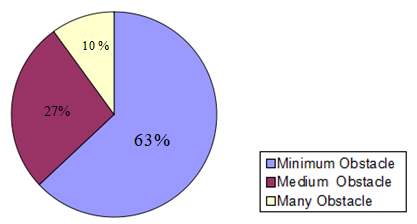
Tracheostomy and Endo-tracheal suctioning is one of the most common procedure performed in patients with artificial airways. It is a component of airway management and mechanical ventilation that involves the evacuation of the pulmonary secretions from the patient’s airway to prevent complications. Performance obstacle are those inhibiting factors perceived by critical care nurses in terms of knowledge and skill, tool and technology, and work setting which tend to affect their performance. Objectives: i) to assess the knowledge and performance obstacles perceived by critical care nurses while performing Endotracheal and Tracheostomy suctioning. ii) To find out the suggestions of critical care nurses on overcoming the performance obstacles identified in Endo-tracheal and Tracheostomy suctioning. Methodology: A cross sectional descriptive survey was designed among 80 and a questionnaire survey conducted among critical care nurses. Results: The performance obstacles during suction as perceived by nurses were 63% reported minimum obstacle, 27% reported medium obstacles, were as only 10% reported many obstacles while performing the suctioning. All of them suggested the need for training at the beginning of clinical posting in the unit, clear cut guidelines/protocol on ET suctioning and updating of guidelines/equipment. Conclusion: The performance obstacles were categorized into knowledge, skill, technology, tool and organization. The performance obstacles perceived by nurses were mostly related to the skill in doing the procedure. The major knowledge related performance obstacles perceived by nurses were inadequate training on ET suctioning in a real patient as s student (70%). Training on ET suctioning should be given during the induction program on the time of joining to the organization.
Introduction
Tracheostomy and Endo-tracheal suctioning (ETS) is one of the most common procedure performed in patients with artificial airways. It is a component of airway management and mechanical ventilation that involves the evacuation of the pulmonary secretions from the patient’s airway to prevent the complications. It is the aspiration of pulmonary secretions from the patient’s airway to prevent complications. Suctioning is a procedure which is most frequently done and may be associated with much risks and complications. There are some inhibiting factors which are perceived by the nurses that tend to influence their performance. It can be related to knowledge, skill, tool and technologies and work settings.
A study done by Nishamol YN to assess the knowledge & practice of endo-tracheal suctioning among 30 neuro nurses in Sree Chitra Tirunal Institute for Medical Sciences and Technology, Trivandrum. The data collected by convenient sampling technique. The results shows that the knowledge score of staff nurses with less ICU experience ranged from 10 to 14 with more ICU experience ranged from 11 to 14 with a mean of 12.08(1.19). There was no statistically significant difference in the mean knowledge score of both group [1].
With an increasing demand for intensive care beds more nurses in acute and high dependency wards will be expected to care competently for patients with Tracheostomy / mechanically ventilated patients. Respiratory hygiene is an essential aspect of effective airway management and the critical care nurses must be aware about the risks and they must be able to practice according to current recommendations by the concerned authorities.
This study was designed to identify the performance obstacles perceived by critical care nurses while performing Endo-tracheal and Tracheostomy suctioning and to find out the opinion of critical care nurses on overcoming the performance obstacles identified in Endo-tracheal and Tracheostomy suctioning.
Objectives
- To assess the level of knowledge among critical care nurses in Endo-tracheal and Tracheostomy suctioning
- To assess the performance obstacles perceived by critical care nurses while performing Endo-tracheal and Tracheostomy suctioning.
• To find out the suggestions of critical care nurses on overcoming the performance obstacles identified in Endo-tracheal and Tracheostomy suctioning.
Methods
This study used a cross sectional descriptive survey design with a sample size of 80. This study was conducted in critical care nurses through convenient sampling method. The data collection was conducted from December 2019 to March 2020. Data collection instrument consist of demographic proforma and structured questionnaire on knowledge and performance obstacles perceived by nurses during suctioning. The researcher developed questionnaire was distributed to the study participants under direct supervision of the investigators.
Ethical Considerations
This study received approval from the Institutional Research Committee. The investigator explained the study objectives and process to all of the participants. The respondents were given a choice to express their willingness to participate in the survey by adding a specific question in this regard. Participants were free to terminate the participation at any point during the study with no repercussions. To protect the confidentiality, all of the data were anonymized using serial numbers. All personal information was secured and kept safe. (Ref. No 06/18/JMCONRC)
Results
Major Findings of The Study
Section I: Characteristics of the Samples The data presented in table 1 regarding the sample characteristics (n=80) show that 53.8 % of the subjects were diploma holders and 46.3% were graduates. 35 % of nurses had one to three years of experience in the critical care unit and only 16.3% had less than one year of experience in the critical care unit. Training programme on suctioning was received by 73.8 % of the subjects (Table 1).
| Demographic variables | f | % | |
|---|---|---|---|
| 1 | Level of education | ||
| 1 | GNM | 43 | 53.8 |
| 1 | B Sc nursing, | 37 | 46.3 |
| 2 | Total experience as a nurse | ||
| 2 | 6months -1 year, | 3 | 3.8 |
| 2 | 1-3yr, | 12 | 15 |
| 2 | 3-5 yr, | 26 | 32.5 |
| 2 | More-than 5 yr | 39 | 48.8 |
| 3 | Total experience in the current hospital | ||
| 3 | 6months -1 year, | 6 | 7.5 |
| 3 | 1-3yr, | 30 | 37.5 |
| 3 | 3-5 yr, | 22 | 27.5 |
| 3 | More-than 5 yr | 22 | 27.5 |
| 4 | Total experience in the critical care unit | ||
| 4 | 6months -1 year, | 13 | 16.3 |
| 4 | 1-3yr, | 28 | 35 |
| 4 | 3-5 yr, | 20 | 25 |
| 4 | More-than 5 yr | 19 | 23.8 |
| 5 | Attended training programme on ET suctioning | ||
| 5 | Yes | 59 | 73.8 |
| 5 | No | 21 | 26.3 |
Table 1: Description of Sample Characteristics.
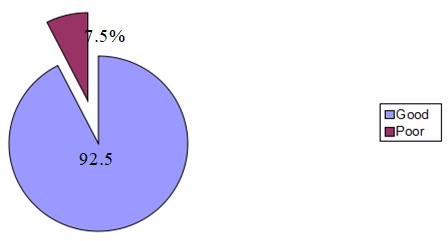
Section II: Knowledge Level of Critical Care Nurses in Suctioning Majority of the subjects’ i.e, 92.5% had good knowledge, and 7.5 % had poor knowledge about suction (Figure 1).
Section III: Level of Performance Obstacles Perceived by Nurses during ET Suctioning It is evident that majority of the subjects perceived to have performance obstacles related to ET/Tracheostomy suctioning. 90% perceived minimum to medium obstacles during ET suctioning, whereas only 10% perceived many performance obstacles during the procedure (Figure 2).
Section IV: Performance Obstacles Perceived by Critical Care Nurses While Performing Endo-Tracheal and Tracheostomy Suctioning The performance obstacles perceived by nurses were mostly related to skill in ET suctioning which include; difficulty to do suctioning without assistance (76.3%), restless in patient during the procedure makes the procedure difficult (83.8%) and experiencing distractions while performing ET/Tracheostomy suctioning (72.5%). The nurses have not identified any knowledge related performance obstacles. The nurses also identified two major performance obstacles related to organization which include; not receiving training before starting experience in their unit(45%) and research finding related to ET / Tracheostomy suctioning and its complications was not being revealed to them(58.8)% (Table 2).
| Item | f | % | |
|---|---|---|---|
| I | |||
| 1. | I have adequate knowledge regarding suctioning procedure | 74 | 92.5 |
| 2. | I have received adequate hands on training on suctioning in a real patient when I was a student | 56 | 70 |
| 3. | I received adequate hands on training on suctioning as a staff nurse | 42 | 52.5 |
| 4. | I have adequate knowledge in assessment of patient to identify the need for suctioning | 73 | 91.3 |
| 5. | I know the changes to be monitored in a patient while suctioning | 75 | 93.8 |
| 6. | I know that ventilator can be used hyper oxygenation before and after suctioning | 75 | 93.8 |
| II | |||
| 1. | I am confident in suctioning | 69 | 86.3 |
| 2. | I lack technical skill in handling equipment related to suctioning | 29 | 36.3 |
| 3. | I don’t get time to do patient assessment | 25 | 31.3 |
| 4. | I complete the suctioning procedure in a hurry due to lack of time | 33 | 41.3 |
| 5. | It is difficult to do suctioning without assistance | 61 | 76.3 |
| 6. | The irritation caused by the procedure creates restlessness in patient which makes the procedure more difficult | 67 | 83.8 |
| 7. | I have experienced distractions while performing suctioning | 58 | 72.5 |
| 8. | Additional responsibility assigned to me other than nursing care affects my work | 60 | 75 |
| III | |||
| 1. | Hand washing facility and articles are not available within easy reach | 24 | 30 |
| 2. | Equipment for suctioning are in poor condition/not available | 12 | 15 |
| 3. | There are conflicts in the usage of technology related to suctioning in the unit | 22 | 27.5 |
| IV | |||
| 1. | A mechanism to ensure the performance of suctioning in a sterile manner is not available | 15 | 18.8 |
| 2. | I was not given training on suctioning before starting my experience in the unit. | 36 | 45 |
| 3. | Research findings on suctioning and its complications on patients was not revealed to us | 47 | 58.8 |
Table 2: Performance obstacles perceived by critical care nurses in suctioning.
Section IV: Suggestions of Critical Care Nurses on Overcoming the Performance Obstacles Identified In Endo-Tracheal and Tracheostomy Suctioning (Table 3) The present study reveals that majority of the study participants agreed to the suggestions provided to overcome the performance obstacles related to Endo-tracheal and Tracheostomy suctioning. All the participants agreed to the following suggestions, i) training on Endo-tracheal and Tracheostomy suctioning should be given during the induction program, ii) there must be a clear cut guideline/ protocol on Endo-tracheal and Tracheostomy suctioning, and iii) timely validation and updating of the guideline/ equipment on Endo-tracheal and Tracheostomy suctioning should be made.
| Item | f | % | |
|---|---|---|---|
| I. | Suggestions for overcoming performance obstacles related to knowledge | ||
| 1 | Training on suctioning should be given at the beginning of clinical posting in critical care unit | 78 | 97.5 |
| 2 | Time to time updating of suctioning should be made in the guideline/equipment’s and must be taught to critical care nurses | 70 | 87.5 |
| 3 | Participation in continuing nursing education / research activities related to suctioning creates open mindedness among nurses to accept changes in guidelines/protocol | 77 | 96.3 |
| II. | Suggestions for overcoming performance obstacles related to skill in suctioning | ||
| 1 | Adequate time for suctioning should be ensured | 76 | 95 |
| 2 | Identifying the nursing and non-nursing activities | 73 | 91.3 |
| 3 | Bringing a system to meet the needs of bystanders | 71 | 88.8 |
| 4 | Have a system for other health professionals/workers | 66 | 82.5 |
| III. | Suggestions for overcoming performance obstacles related to technology and tool | ||
| 1 | Adequate hand washing facility and articles are required | 68 | 85 |
| 2 | Suctioning equipments should be in good condition | 72 | 90 |
| 3 | Strict adherence to guidelines/protocol minimizes conflicts related to usage of technology in suctioning | 73 | 91.3 |
| IV. | Suggestions for overcoming performance obstacles related to organization | ||
| 1 | The critical care unit must develop a guideline/protocol on suctioning | 77 | 96.3 |
| 2 | charge nurses should make sure that staff nurses have access to the guidelines/protocol | 73 | 91.3 |
| 3 | Time to time peer review evaluation/audit of the procedure in the critical care unit can help in improvement | 72 | 90 |
Table 3: Suggestions of Critical Care Nurses for Overcoming the Performance Obstacles in Suctioning.
Discussion
Present study findings reveals that 53.8 % of the subjects were diploma holders and 46.3% were graduates. 35 % of nurses had one to three years of experience in the critical care unit and only 16.3% had less than one year of experience in the critical care unit. Training programme on suctioning was received by 73.8 % of the subjects. In a study conducted by Sharma S, Sarin J, Bala GK (2014) on effectiveness of endo-tracheal suctioning protocol in terms of knowledge and practices of nursing personal (N=30) in Mullana, it was found that, 100% of sample had professional qualification of GNM and 100% had within five years of experience in ICU [2].
In the present study 73.8% of the subjects attended training programme on ET / Tracheostomy suctioning. Previously a study by Sharma S, Sarin J, Bala GK (2014) 56.67% had attended the in-service education related to ET suctioning [2]. Comparing to the above study findings shows that the present study findings can be more generalised to graduate nurses with less than one to three years of experience in ICU. In the present study majority of the subjects 90% perceived minimum to medium obstacles during ET/ Tracheostomy suctioning, whereas only 10% perceived many performance obstacles during the procedure. The results of this study indicate that critical care nurses experience a wide variety of performance obstacles during ET suctioning.
The performance obstacles perceived by nurses’ were mostly related to skill in ET suctioning which include; difficulty to do ET suctioning without assistance (76.3%), restlessness in patient during the procedure makes the procedure difficult (83.8%) and assignment of additional responsibility other than nursing care (75.%).
This result was entirely different from the study by Keshk LI, Qalawa SA, Aly AA (2012) on performance obstacles experienced among 60 critical care nurses in damanhur teaching hospital which reflect that, only 48.3% of them had only one assistant nurse to help them in nursing care and 65% of them reported inadequate help from nursing assistants. The performance obstacles related to environment in work system highlighted distractions experienced by nurses which included; insufficient work place for completing paper work (40%), patients’ room full with visitors (36.7%), receiving many phone calls from patients (33.4%), distractions from family members (31.7%) receiving many phones calls from family members (25%) [3].
A multisite, cross-sectional study was conducted by Gurses AP, Carayon P reported that most frequently experienced performance obstacles included noisy work environment (46%), distractions from families (42%), hectic (40%) and crowded work environments (37%), delay in getting medications from pharmacy (36%), spending considerable amount of time teaching families (34%), insufficient workspace for completing paperwork (26%), seeking for supplies (24%) or patients’ charts (23%), receiving many phone calls from families (23%), delay in seeing new medical orders (21%) [4], from the studies discussed above it are clear that performance obstacles related to nursing assistance is a major issue.
In the present study nurses reported minimal performance obstacle related to technology and tool which included; conflict in the usage of technology and tool related to ET suctioning in the unit (27.5%), hand washing facility and articles are not available within easy reach (30.%) and poor condition of ET suctioning equipment (15%).
The study by Keshk LI, Qalawa SA, et al. also reported minimal performance obstacles related to Technology or Tools in work system which included; having to use equipment that was in poor condition (21.7%) [3]. The study by Gurses AP also reported less performance obstacles on Technology or Tools in work system which included; equipment not being available-someone else using it (32%), patient rooms not well-stocked (32%) and misplaced equipment (20%) [4].
In the present study the major knowledge related performance obstacles perceived by nurses’ was regarding inadequate training on ET suctioning in a real patient as a student (78%). The nurses also identified two major performance obstacles related to organization which include; not receiving training before starting experience in their unit (62%) and research finding related to ET suctioning and its complications not being revealed to the nurses (76%). The result of the present study reveals that the critical care nurses experiences a number of performance obstacles while performing endo-tracheal or Tracheostomy suctioning.
Majority were in agreement with all the ten suggestions provided to overcome the performance obstacles related to ET suctioning. All of them (100%) agreed on three statements which were; training on ET suctioning should be given in the beginning of clinical posting in critical care unit, the critical care unit must have a clear cut guideline/protocol on ET suctioning and time to time updating of ET suctioning procedure should be made in the guideline/equipment’s.
Limitations and Recommendations
This study has limitations of a cross-sectional design and small sample size. This makes it difficult to generalize the findings. Therefore, future studies should include larger samples and qualitative studies such as focused group discussions for an in-depth understanding of the issues.
Conclusion and Implications for Practice
The nurse’s perception on performance obstacles reported was that, most of them had only minimum to medium obstacles. However majority of the subjects suggested the need for ET / Tracheostomy suctioning during the induction program. The need for skill training program specific to practice areas of nursing before independent practice has become evident through this study [5].
In the present study, majority of the participants (73.8 %) were undergone a training programme on suctioning, but still there are some obstacles which causes hindrance to the performance of the procedure. It is recommended to conduct qualitative studies to explore the factors which hinders the overall performance in doing the Endo-tracheal and Tracheostomy suctioning
References
-
Nishamol YN (2011) A study to assess the knowledge and practice of endotracheal suctioning among neuronurses SCTIMST. Trivandrum: Sree Chitra Tirunal Institute for Medical Sciences And Technology, pp: 1-43.
-
Sharma, S, Sarin J, Bala G (2014) Effectiveness Of Endotracheal Suctioning Protocol’’ In Terms Of Knowledge And Practices Of Nursing Personnel. Nursing and Midwifery Research Journal 10(2): 47-60.
-
Keshk LI, Qalawa SA, Aly AA (2012) Performance obstacles experiences among critical care nurses in damanhur teaching hospital. Life Science Journal 9(2): 1044-1054.
-
Gurses A, Carayon P (2007) Performance Obstacles of Intensive Care Nurses. Nursing Research 56(3): 185- 194.
-
Zeb A, Haq S, Ali F, Hussain N, Ali SH, et al. (2017) Knowledge and Practice of ICU Nurses Regarding Endotracheal Suctioning in Tertiary Care Hospitals, Peshawar. JOJ Nursing & Health Care 2(4): 001-004.
- Teaching Cognitive Behavioral Therapy to Graduate Psychiatric Mental Health Nurse Practitioner Students: Utilizing A Mixed Methods Course Evaluation
- The Role of Pharmacogenetic Testing in Clinical Practice: A Path toward more Effective, Personalized and Cost-effective Care
- Implementing Screening with the GAD-7 in an Outpatient Mental Health Setting: A Quality Improvement Project
- Social Media and Health Promotion
- Impact of Covid-19 Pandemic on the Academic Performance and Attitude of Nursing Students towards E-Learning
- A Study to Assess the Knowledge Regarding Ill Effects of Tobacco Consumption on Health among Adolescents in Selected Higher Secondary School in Nadiad City