
Save Human Life through Basic Life Support Training
Heart attacks can occur without a predictable time or place of occurrence. Delays in administering first aid risk threatening the safety and even disability and claiming lives. Practicing the provision of basic life support for ordinary people is suspected to prevent the worsening of the condition of heart attack sufferers. This study aims to determine the effect of basic life support training on the motivation, knowledge, and skills of trainees in providing first aid when cases of cardiac arrest occur in the community. The design of the pre-experimental pretest-posttest one group is used to compare the motivation, knowledge, and skills of the people in Lahat City, South Sumatera Province, Indonesia before and after training. The participants numbered 86 people, determined by the purposive sampling technique. Questionnaire data collection instruments and observation sheets, motivational questionnaires were adopted from MQ John Smith 2017, while knowledge and skills questionnaires were compiled concerning Basic Life Support (BLS) literature. Basic life support training intervention is carried out as many as four sessions within a period of 3 months. Based on the analysis of the results obtained from abnormal data, the test conducted by the Wilcoxon Test is known to have a significant increase in the variables of knowledge, skills, and skills. Respondents’ motivation after training, is directed with sequential p-values namely BLS to motivation (p = 0.033), skills (p = 0.001), and knowledge (p=0.000). Conclusion: Basic life support training effectively improves community readiness to provide first aid to heart attack victims. This program must be disseminated until a basic life support community is formed on standby in the community.
Detiana, Wiyanti S, Kusumawaty I* and Yunike
Nursing Department, Politeknik Kesehatan Kemenkes Palembang, Indonesia *Corresponding author: Ira Kusumawaty, Poltekkes Kemenkes Palembang, Merdeka Street, Palembang, Sumatera Selatan, Indonesia, Tel: +6281324841551; Email: irakusumawaty@ poltekkespalembang.ac.id
Introduction
Sudden cardiac arrest is the leading cause of death globally. Out of 17 million deaths worldwide due to disease and blood vessels [1]. The incidence of heart and blood vessel disease increases yearly in Indonesia, 15 out of 1000 people, or about 2,784,064 individuals suffering from heart disease [2]. Basic health research (Riskesdas) of South Sumatera Report 2018 obtained data on 1,732 people with heart disease in the city of Lahat; this is also because the coffee consumption habits of Lahat city is a coffee plantation area. This is stated heart attack in the hospital or In Hospital Cardiac Arrest (IHCA) still has a better prognosis, with 22.3% to 25.5% of adults who are still able to survive [4, 5, 6].
Cardiac disease outside the hospital is a significant public health problem affecting more than 356,500 people each year in the United States [6] research shows as many as 70% of out-of-hospital cardiac arrests (OHCAs) occur at home, and even about 50% occur without eyewitnesses. OHCA was demonstrated that only 10.8% of adult victims with nontraumatic heart attacks had received resuscitation efforts from emergency medical service (EMS) or had received emergency medical services and were able to survive to hospital.
Basic life support (BLS) can maintain survival, especially ethical k given immediately when experienced [6], [7, 8]. The assistance was carried out to save the life of someone who was hit by an attack while waiting for medics to arrive. Essential Life Support is provided to open the airway, perform chest compressions and mouth-to-mouth ventilation, and apply the defibrillation process by using [7, 8, 9]. BLS knowledge is considered the basis of skills for nurses [10], so in general, BLS actions are performed by paramedics. But in developed countries such as America, Canada, and the United Kingdom can be done by ordinary people or the general public who have received training before [11]
The success of the rescue, determined by the speed at which BLS delivers initial action, makes experts think of ways to perform an effective BLS action and train as much as possible. May the general public function properly and correctly regardless of educational and occupational background [8, 12, 13]. BLS skills become essential because they teach how the basic techniques of saving victims from various accidents or daily disasters are commonly encountered [14]
The incidence of a heart attack cannot be estimated at the time and place of occurrence, so a layperson who finds a first-time heart attack victim will be the key to helping the victim and contacting the emergency medical system [3, 15]. The first aid given quickly and appropriately will improve the patient’s heart condition after receiving treatment in the hospital [5].
Providing BLS training to lay people correctly will increase the success of heart function recovery after a heart attack occurs [16, 17] Nevertheless, it turns out that the activity and ability of the community to provide essential life support becomes one of the determinants of the success of BLS. Facts show, less than 1% of ordinary people can give BLS adequately, and only a few are motivated to do so [16].
The study demonstrates the effect of BLS theory training on high school student’s knowledge of pulmonary heart resuscitation. BLS training in the community can improve community knowledge and skills [13].
To know the success of the implementation of training, it becomes urgent to evaluate activities [18] presented four levels of training evaluation, including level 1, reaction, and measuring the trainees’ responses to the training. Replies need to be estimated to be an upcoming reference so that the training program becomes as effective as possible and constantly evolving while detecting the completeness of the material that has been delivered. At level 2, learning, measurement of the components of the learning process of participants was conducted. An important question asked is the learning activity that has been implemented or capturing new knowledge and insights. Before starting a training session, the best thing to do is to prepare a list of learning goals, which will be the starting point of analysis. Level 3, behavior, evaluate the attitudes and behaviors of the participants after receiving the training. In the last stage, namely level 4, results in the final results of the training session are and measured.
BLS training for lay people has never been done in Lahat Regency, even though the training is essential to be implemented and socialized. Knowledge and skills of BLS actions must be known to the general public to provide immediate assistance if there is a heart attack [19, 20].
Based on background, action is needed to tackle emergency conditions at the community level by providing BLS training for the lay community, so that first aid can be given before the patient is taken to the hospital for further assistance.
Methods
This research is a pre-experimental research design with one group pretest-posttest design. The population of this study is the people of the Lahat Regency. The sampling technique in this study is purposive sampling with community inclusion criteria that have never received BLS training and are aged 18-45 years. The number of respondents involved in this study was 86 people who took the pre-test at the beginning and followed up to the post-test at the end of the session. The study was conducted in September-November 2020. All respondents received intervention in BLS training conducted for three months and carried out in 4 sessions. The measurement of the success of the training was carried out after the respondents attended four training sessions.
Result
Characteristics of Respondents
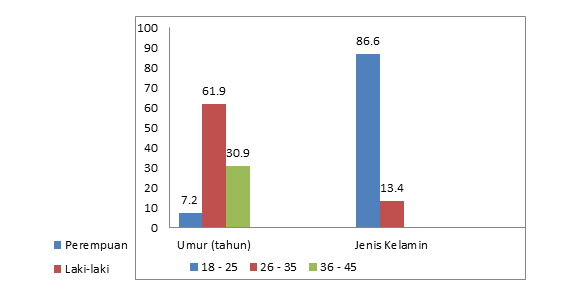
Data collection was carried out in four stages, using questionnaires to respondents’ as many as 86 respondents (Figure 1). Based on research data from instrument research that has been collected, data on the demographics of study respondents consisted of gender and age. The following Tables 1 & 2 shows the results of the study.
| Variable | Before BLS Training | After BLS Training | |||
|---|---|---|---|---|---|
| Category | Frequency | Percentage | Frequency | Percentage | |
| Knowledge of BLS | Good | 13 | 15.1 | 49 | 50.5 |
| Enough | 27 | 31.4 | 28 | 28.9 | |
| Less | 46 | 53.5 | 9 | 9.3 | |
| BLS skills | Skilled | 11 | 11.3 | 16 | 16.5 |
| Enough | 48 | 49.5 | 48 | 49.5 | |
| Less | 27 | 27.8 | 22 | 22.7 | |
| Motivation | Good | 15 | 15.5 | 15 | 15.5 |
| Enough | 44 | 45.4 | 47 | 48.5 | |
| Less | 27 | 27.8 | 24 | 24.7 |
Table 1: Frequency Distribution of Respondent Characteristics.
| n | Mean | Std. Deviation | Min | Max | ||
|---|---|---|---|---|---|---|
| Knowledge | ||||||
| Pre Test | 97 | 5.31 | 2.113 | 1 | 10 | |
| Post Test | 86 | 74.82 | 20.698 | 2 | 100 | |
| Skills | ||||||
| Pre Test | 97 | 65.42 | 19.029 | 27 | 98 | |
| Post Test | 86 | 71.23 | 17.867 | 27 | 100 | |
| Motivation | ||||||
| Pre Test | 97 | 67.06 | 19.831 | 27 | 98 | |
| Post Test | 86 | 68.79 | 19.658 | 27 | 98 | |
| Kolmogorov-Smirnova | Shapiro-Wilk | |||||
| Statistics | Df | Sig. | Statistics | Df | Sig. | |
| Knowledge | ||||||
| Pre Test | 0.109 | 86 | 0.013 | 0.971 | 86 | 0.051 |
| Post Test | 0.171 | 86 | 0 | 0.853 | 86 | 0 |
| Skills | ||||||
| Pre Test | 0.136 | 86 | 0 | 0.95 | 86 | 0.002 |
| Post Test | 0.107 | 86 | 0.017 | 0.962 | 86 | 0.013 |
| Motivation | ||||||
| Pre Test | 0.185 | 86 | 0 | 0.902 | 86 | 0 |
| Post Test | 0.166 | 86 | 0 | 0.913 | 86 | 0 |
Table 2: Summary of Results.
| Knowledge | Skill | Motivation | |
|---|---|---|---|
| Pretest-posttest | |||
| Z | -5.559 | -3.547 | -2.201 |
| Asymp. Sig. (2-tailed) | 0 | 0 | 0.028 |
Table 3: Wilcoxon Signed Test Results Variable. Based on the Table 4, there is an average difference between the results of learn
Discussion
Based on the above analysis tests, it can be concluded that both partially and simultaneously BLS Training affects the knowledge, skills, and motivation of the Lahat City Community. The results of this study support other studies such as those conducted [21, 22] because BLS theory training affects the knowledge of cardiac resuscitation of lung students State High School 1 Tool. Likewise, the study results [23] have a relationship of knowledge with attitude, ability, and perspective with skills.
The success of the implementation of the training can be known after evaluating the activities using the evaluation method, according to the age factor of respondents also influenced the seriousness of participating in training and the ability to adapt the knowledge and skills taught during training. Age can affect the ability to analyze and process new information; there can be a decline and difficulty in adopting new skills [24].
Terms of motivation can also affect the success of the implementation of training. Low motivation results in a reluctance to participate in training activities and to learn the material delivered. As well as training his skills during the training program [2]. This stage is critical because it is the initial stage of interaction in the training program. The lack of optimal training preparation can trigger a lack of preservation of the material to be delivered. As research [24, 26] the initial leaks of trainees can predict the success of the training. The lack of attention given by trainees indicates that the research carried out becomes less acceptable to participants. After entering the first stage, the following evaluation is the second stage, namely learning or learning. The success of the learning stage depends mainly on the interest in the training topic, which is the initial stage of training evaluation [26] suppose in the early stages it turns out that it does not cause the interest of participants. In that case, it is possible that participants will not be enthusiastic about learning the material or repeating the exercises that are provided during the training program. The emergence of attachment or feeling the training program depends on the respondent’s motivation, primarily if the respondent has ever found a heart attack case in general. Direct experience finding topics can be a consideration factor for following a training program.
Entering level 3 in the evaluation, researchers analyzed the behavior or attitudes shown by respondents after participating in a radiant training program, namely four times in 3 months. There was a significant increase in the mood and behavior of respondents after engaging as much as four times. Compared to when it has not reached session 4, the behavior and attitude of respondents after the fourth time seems more swift and well organized in providing attack assistance. The more repeated the implementation of training, the more positive impact on changes in attitudes and behavior of respondents in assisting heart attack victims. The success of the third stage also depends on the success of the first and second stages that the helper does if given by the same trainer. Skip and behavior will change in line with changes in environmental conditions.
Training will have an impact on changing attitudes and behavior of individuals to become more caring and responsive and provide first aid if someone is in need. It is very likely that the changes are not visible if, for example, the previous two levels were not applied and measured correctly. The implementation of the training is assumed to fail if it gives the opposite result. However, the absence of change does not necessarily mean the participants learn nothing; superiors or environments may hinder applying the things learned, or there is no intention to use it [16, 18]. Record-keeping and evaluation of participants’ expected behavior changes before and after essential training are carried out at this stage.
In stage 4 as the evaluation of the result, researchers measured and analyse conducted session four training. These measurements are taken to identify the outcome of providing first aid to heart attack sufferers. However, the success of this stage correlates with the success of the previous step. However, it could be that this stage’s success depends on other aspects that are unconsciously affected. This measurement is done by analyzing the data that may be found to evaluate all matters related to the results of the training obtained and correct limitations during the training process [27, 28]. Environmental conditions and individual characteristics can be related to the success of the fourth stage of training. Overall, the success of BLS training implementation depends on the internal and external factors of the respondent and the performance of the training.
Conclusion
Overall, the success of BLS training implementation depends on the internal and external factors of the respondent and the performance of the training program. The process of continuous evaluation and monitoring is needed to control the initial community’s ability to provide first aid in heart attack conditions. It is recommended that local governments in the case of the implementation of basic life assistance as a result of training required legalization by policy makers who are authorized to empower the community lay people in providing first aid in the case of a heart attack.
Acknowledgments
The author is grateful for the guidance, direction, and support from the Director of Poltekkes Palembang Indonesia, who is willing to guide and facilitate this research process
References
-
Mpotos N, Iserbyt P (2017) Children saving lives: Training towards CPR excellence levels in chest compression based on age and physical characteristics. Resuscitation 121: 135-140.
-
Kemenkes RI (2018) Hasil Riset Kesehatan Dasar Tahun 2018. Kementrian Kesehat, pp: 1-501.
-
Julianti M (2020) Hubungan Antara Kebiasaan Minum Kopi dengan Kejadian Hipertensi pada Pra Lansia di Desa Aromantai Wilayah Kerja Puskesmas Jarai Kabupaten Lahat, Universitas Sriwijaya, pp: 1-29.
-
Hasselager AA, Bohnstedt C, Sønderskov C, Bihrmann K, Martin G (2019) Improving the cost-effectiveness of laypersons’ paediatric basic life support skills training: A randomised non-inferiority study. Resuscitation138: 28-35.
-
Jensen TW, Lockey A, Perkins GD, Granholm A, Eberhard KE, et al. (2020) The Copenhagen Tool a research tool for evaluation of basic life support educational interventions. Resuscitation 156: 125-136.
-
Greif R, Lockey A, Breckwoldt J, Carmona F, Conaghan P, et al. (2021) European Resuscitation Council Guidelines 2021 : Education for resuscitation. Resuscitation 161: 388-407.
-
Bylow H, Karlsson T, Claesson A, Lepp M, Lindqvist J, et al. (2019) Supplementary dataset to self-learning training compared with instructor-led training in basic life support. Data Br 25: 104064.
-
Olasveengen TM, Mancini ME, Perkins GD, Avis S, Brooks S, et al. (2020) Adult Basic Life Support: International Consensus on Cardiopulmonary Resuscitation and Emergency Cardiovascular Care Science With Treatment Recommendations. Resuscitation 156: A35-A79.
-
Pehli̇van M, Mercan NC, Çi̇nar İ, Elmali F, Soyöz M (2019) The evaluation of laypersons awareness of basic life support at the university in Izmir. Turkish J Emerg Med 19(1): 26-29.
-
Kose S, Akin S, Mendi O, Goktas S (2020) The effectiveness of basic life support training on nursing students’ knowledge and basic life support practices: A non-randomized quasi-experimental design. Afr. Health Sci 20(2): 966-976.
-
Bonizzio CR, Nagao CK, Polho GB, Paes VR (2019) Basic life support: An accessible tool in layperson training. Rev Assoc Med Bras 65(10): 1300-1307.
-
Greif R (2020) Resuscitation and Emergency Cardiovascular Care 6.
-
Ahmad A, Akhter N, Mandal RK, Areeshi MY, Lohani M, et al. (2018) Knowledge of basic life support among the students of Jazan University, Saudi Arabia: Is it adequate to save a life? Alexandria J Med 54(4): 555-559.
-
Ojifinni K, Motara F, Laher AE (2019) Knowledge, Attitudes and Perceptions Regarding Basic Life Support Among Teachers in Training. Cureus 11(12).
-
AHA (2016) Basic life support: Provider Manual, Found. Ski. Caring, American Heart Association, pp: 99.
-
Pranata R, Wiharja W, Fatah A, Yamin M, Lukito AA (2020) General population’s eagerness and knowledge regarding basic life support: A community based study in Jakarta, Indonesia. Clin Epidemiol. Glob Heal 8(2): 567-569.
-
AHA (2015) Fokus Utama : Pembaharuan Pedoman American Heart Association 2015 untuk CPR dan ECC, pp: 1-33.
-
Kirkpatrick DL (2007) The Kirkpatrick Model.
-
Kusumawaty I, Surahmat R, Martini S, Muliyadi (2021) Family Support For Members in Taking Care of Mental Disordered Patients. Proc First Int Conf Heal Soc Sci Technol (ICoHSST 2020), pp: 115-120.
-
Crane P, O’Regan M (2010) Using Participatory Action Research to Improve Early Intervention.
-
Alfakey M, Alkarani A (2021) Students’ knowledge and attitudes toward basic life support. Int J Eval Res duc 10(3): 871-877.
-
Lontoh C, Kiling M, Wongkar D (2013) Pengaruh Pelatihan Teori Bantuan Hidup Dasar Terhadap Pengetahuan Resusitasi Jantung Paru Siswa-Siswi Sma Negeri 1 Toili. J Keperawatan UNSRAT 1(1), pp: 1-5.
-
Wijaya WA (2017) Pengaruh Pelatihan Basic Life Support Awam Terhadap Di Pondok Pesantren Gontor Kediri.
-
Uliyah M, Aisyah S, Rahmina Y (2009) Hubungan Usia Dengan Penurunan Daya Ingat (Demensia) Pada Lansia Di Panti Sosial Tresna Werdha Budi Sejahtera Landasan Ulin Kota Banjarbaru Kalimantan Selatan, pp: 1-5.
-
Zherebovich I, Goldberg A, Ben Tov A, Schwartz D (2021) Resuscitation in Community Healthcare Facilities in Israel. Int J Environ Res Public Health 18(12): 6612.
-
Hayati N, Yulianto E (2021) Efektivitas Pelatihan Dalam Meningkatkan Kompetensi Sumber Daya Manusia. Jurnqal Inst Pendidik.
-
Riva G, Jonsson M, Ringh M, Claesson A, Therese Djärv, et al. (2020) Survival after dispatcher-assisted cardiopulmonary resuscitation in out-of-hospital cardiac arrest resuscitation in out-of-hospital cardiac arrest 157: 195-201.
-
Nurhayati Y, Muda WA (2018) penerapan model Kirkpatrick untuk evaluasi program diklat teknis subtantif materi perencanaan pembelajaran di wilayah kerja Provinsi Kepulauan Riau. Andragogi J Diklat Tek VI(2).
- Teaching Cognitive Behavioral Therapy to Graduate Psychiatric Mental Health Nurse Practitioner Students: Utilizing A Mixed Methods Course Evaluation
- The Role of Pharmacogenetic Testing in Clinical Practice: A Path toward more Effective, Personalized and Cost-effective Care
- Implementing Screening with the GAD-7 in an Outpatient Mental Health Setting: A Quality Improvement Project
- Social Media and Health Promotion
- Impact of Covid-19 Pandemic on the Academic Performance and Attitude of Nursing Students towards E-Learning
- A Study to Assess the Knowledge Regarding Ill Effects of Tobacco Consumption on Health among Adolescents in Selected Higher Secondary School in Nadiad City