
Evaluation of Nurses Clinical Knowledge and Attitude Regarding Management of Critically Ill Patient in the Emergency Department
Background: management of critically ill patient in emergency is a critical health status which requires standardized care policies, as well as it needs qualified and skilled health providers to obtain good outcome of management. Objectives: To evaluate nurses’ cognitive skill regarding management of critically ill patient in the emergency department. Methods: This was a descriptive cross sectional hospital-based study conducted at emergency department in Omdurman military hospital during the period between February 11 to March 4. 2022. Sixty nurses were participated in the study taken as total coverage. Results: Sixty five percent of participants were females and most of them had 1-5 years’ experience. Their average age was 32 years old. Ninety two percent of them holding bachelor degree. The overall participant’s knowledge for all the variables analyzed was 18 participants (30%) had poor knowledge, (18.3%) scored for Fair knowledge and 28 Nurses (46.6%) scored for good knowledge. Only 14 nurses (23.3%) attain very good results for the overall aspects of the knowledge variable. Also the participants were assessed for their attitude regarding management of critically ill patient in emergency department. Total mean of the attitude showed strongly disagree by (14.4), disagree (8.0), Neutral Agree (5.8), agree (16) and strongly agree (13.8). There was a significant correlation between participants’ level of knowledge and educational level, and between the knowledge and the training courses (P. value ≤ 0.01) respectively. Conclusion: According to the findings of the current study It was concluded that the study participants showed approximately forty six percent of them attained good knowledge, 23% attained very good knowledge and thirty percent of them gained poor Knowledge. The low attitude in the care areas needs qualified and full trained nurse. Low results of training courses provided to participant had its effect in the quality of care delivered to the patients.
Introduction
Emergency and critical care Patients with critical illness require care and require it quickly [1]. This is “emergency and critical care”, the identification and continued observation, assessment, and treatment required to manage critical illness. Emergency and critical care focuses on resuscitating unstable patients and allowing time for recovery or the effect of specific therapies to improve outcomes and prevent death [2]. Emergency and critical care is therefore for those who are critically ill at arrival, or who were stable and subsequently deteriorated, and can be provided anywhere in the hospital, in the emergency department, the intensive care unit ICU), general wards, post-operative recovery units, and high- dependency units [2, 3].
Nurses are key members of healthcare system, and their clinical knowledge is crucially important, particularly in the emergency department. There is a close relationship between nurses’ clinical knowledge and quality of care [4, 5]. However, there is a lack of high quality studies on nurses’ clinical knowledge criteria in the emergency departments. In the context of continual changes in the medical technology and nurses’ roles and responsibilities, it is important not only for nurses to maintain and develop their clinical knowledge, but also for nurse managers to assess such knowledge to ensure the quality and safety of care [6, 7]. Giving the extent of nurses’ roles in different clinical areas, special instruments need to be developed for assessing nurses’ competencies [8]. Then, these competences can be used as clinical guidelines either in the evaluation or teaching and preparing specialized nurses in clinical settings such as emergency departments [9].
Several factors are involved in the lack of using nursing knowledge and skills in practice it compass the barriers that prevent nurses to implement knowledge and their expertise in the area of acute care and emergency nursing. This include lack of recognizing emergency nursing as a specialized care, lack of standards of clinical competency, and lack of specific instruments and indicators for assessing nurses’ competency in emergency departments [10]. Thus, it is necessary to develop not only standards of nursing competence in special areas, such as emergency nursing, but also appropriate instruments to assess these competencies [11]. Moreover, it is recommended that stakeholders (staff nurses and nurse managers) are involved in the process of developing such instruments in each specific area [11]. If the standards of clinical knowledge are not clear, assessment of clinical competency will be deficit [5, 10] care.
This study aimed to determine clinical competences indicators to develop an instrument for assessing nurses’ professional knowledge in the emergency care. Such an instrument could be used as an evaluation tool and guideline by nurses for development of attributes and skills required for making clinical decisions. It could also be used as a step toward professional development and further specialization in emergency nursing [11].
Materials and Methods
This was a descriptive cross sectional hospital based study conducted in Omdurman Military Hospital at Khartoum State in Sudan. Aiming to evaluate the nurses’ clinical knowledge regarding management of critically ill patient in the emergency department. Sixty nurses working in the emergency department were taken as total coverage. The researcher explained the objectives of the study to the participants. After their agreement to participate in the study a written consent was obtained from each participant. Tool for the data collection was a structured self-administrative questionnaire constructed by the researcher based on literature review was used to assess the nurses’ clinical knowledge in management of critically ill patient. The questionnaire was exposed to five expert doctors from the field of medical surgical specialty to evaluate and validate the contents. The questionnaire consists of three sections. Section A includes the demographic variables. Section B includes a structured self-administrative questionnaire to assess nurses’ knowledge. Section C is a five point pivotal Likert scale (agree, strongly agree, neutral, disagree and strongly disagree) to assess the participants attitude during reception and management of critically ill patients in the emergency department. Variable of the study for the questionnaire were nursing demographic characteristics, Knowledge regarding triage system, airway management, pulmonary embolism, pleural effusion, shock, neurological status, circulatory management and questions related to nurses attitude when receiving critically ill patients. For the Data collection, and gave them one hour to fill the questionnaire at their convenient time. A pilot test was done for 10 nurses (excluded from the study) before the data collection to test the reliability of the questionnaire. Pearson coefficient correlation result was (r= 81). Time of the data collection took three weeks. The interval scale for the knowledge and practical skills measurement was used as follows: 0- 49 denote to poor, 50-59=fair, 60-69= good, 70-79= very good, 80-100= excellent. Score used for the questionnaire was 1 = correct and 0 = incorrect. After the data collection it was recorded, coded and processed using the Statistical Package of Social Sciences (SPSS) software program (version 22).
For the statistical method a descriptive analysis was selected using frequency mean and percent. Five points pivotal Likert scale (agree, strongly agree, neutral, disagree and strongly disagree) was used to assess the attitude of participants during their receipt of ill patients. Pearson Correlation test was used to measure relationship between demographic variables and the nurses’ knowledge. P value < 0.05 was considered significant.
Ethical Consideration
Permission was taken from the “Research Committee on
Results
Gender
Human Subjects” in the AlMughtaribeen University and from the manager and director of the emergency department in Omdurman Military Hospital. All participants in the study were informed about the objectives of the study and they signed a written consent. Participants had free choice to continue or to withdraw from the study any time they wished.
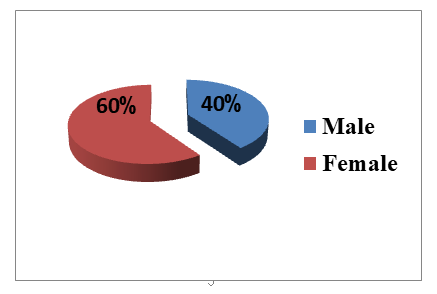
In this figure it is clear that the female were predominant which is usually appear in every research census in Sudan.
Age group
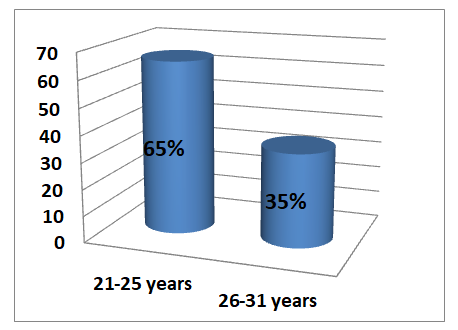
This figure shows the majority of nurses were younger than 25 years of age which is clear that their experience was less than five years.
| Bachelor Degree | Master Degree | PhD Degree | |
|---|---|---|---|
| Higher Education | 92% | 7% | 1% |
Table 1: Level of education of participants in the study (n=60).
Table 1 showed that majority of the participants holding bachelor degree And only 7% of them holding master degree.
| Emergency Department (n=60) | ||
|---|---|---|
| Courses | Frequency | Percent |
| Basic Cardiac Life | 25 | 41.7 |
| Support (BCLS) | ||
| Advanced Cardiac Life | 8 | 13.3 |
| Support (ACLS) | ||
| Trauma Nursing Core Course | 6 | 10 |
| (TNCC) | ||
| Triage and Acuity Scale (CTAS) | 9 | 15 |
| I did not do Training courses | 12 | 20 |
| Total | 60 | 100 |
Table 2: Distribution of study sample’ training courses in Emergency Department (n=60).
In Table 2 it is noticed that only 25 participants tested basic life support course and the rest contributed in different courses by low rate which is not satisfactory.
| Variable | Total | % | No | % | Yes | Grade |
|---|---|---|---|---|---|---|
| Ensured quality of care Delivered | 100 | 38.33 | 23 | 61.6 | 37 | Good knowledge |
| Optimize safety and the Efficiency | 100 | 26.33 | 16 | 73.3 | 44 | V. good knowledge |
| Ensure equity to health Services | 100 | 43.33 | 26 | 16.6 | 34 | poor knowledge |
| Facilitates improvement in Emergency | 100 | 13.33 | 32 | 46.6 | 28 | poor knowledge |
Table 3: Study sample Knowledge regarding Purpose of a triage system (n=60).
Table 3 participants’ acceptable knowledge in all variables analyzed regarding triage purpose.
| Variables | Yes | % | No | % | Total | Grade |
|---|---|---|---|---|---|---|
| Monitor cardiovascular status | 36 | 60 | 24 | 40 | 100 | Good knowledge |
| Monitor arterial blood gases | 39 | 65 | 21 | 35 | 100 | Good knowledge |
| Establish intravenous line | 15 | 25 | 45 | 75 | 100 | Poor knowledge |
| Place patient in high Fowler’s position. | 36 | 60 | 24 | 40 | 100 | Good knowledge |
| Put patient in shock position | 47 | 78% | 12 | 22% | 100 | Very good Knowledge |
| primary *ABCD assessment | 46 | 76.66 | 14 | 23.3 | 100 | Very good knowledge |
| A “head to toe approach | 28 | 46.66 | 32 | 53.3 | 100 | Poor knowledge |
| Intravenous cannula insertion | 38 | 63.33 | 22 | 36.7 | 100 | Good knowledge |
| Preparation for blood transfusion | 23 | 38.33 | 37 | 61.7 | 100 | Poor knowledge |
| *ABCD = Airway, Breathing, Circulation and Disability |
Table 4: Initial management of patient with Pulmonary Embolism (n=60).
Table 4 the participants manage to gain good knowledge regarding monitoring of cardiac monitor and the arterial blood gasses but failed in establishing the IV line, this might be due to their urgency or fear.
Table 5 showed variations for the analyzed variable which needs attention for upgrading the participants’ knowledge especially for preparation of blood transfusion and the head to toe approach.
| Variables | Yes | % | No | % | Total | Grade |
|---|---|---|---|---|---|---|
| Administer supplemental oxygen | 46 | 76.66 | 14 | 23.3 | 100 | Very good |
| Monitor for changes in vital signs. | 43 | 71.66 | 17 | 28.3 | 100 | Very good |
| Perform turning, coughing, deep-breathing exercises to enhance lung expansion. | 29 | 48.33 | 31 | 51.7 | 100 | Poor knowledge |
| Monitor chest tube drainage if any. | 26 | 43.33 | 34 | 56.7 | 100 | Poor knowledge |
Table 5: Knowledge regarding intervention and monitoring of Patient with pleural effusion (n=60).
| Variables | Yes | % | No | % | Total | Grade |
|---|---|---|---|---|---|---|
| Put patient in cardiac Bed | 36 | 60 | 24 | 40 | 100 | Good knowledge |
| Insert IV lines | 36 | 73.3 | 16 | 26.6 | 100 | Very good knowledge |
| Administer oxygen | 33 | 55 | 27 | 45 | 100 | Fair knowledge |
| Connect monitors an ECG | 42 | 70 | 18 | 30 | 100 | Very good knowledge |
Table 6: Initial management of patient with acute coronary syndrome (n=60).
For the management of the patient with acute coronary syndrome in Table 7 the participants gained good knowledge, 27 of them get fair knowledge in oxygen administration.
| Variables | Yes | % | No | % | Total | Grade |
|---|---|---|---|---|---|---|
| Glasgow coma scale | 25 | 41.6 | 35 | 58.4 | 100 | Poor knowledge |
| diminished level of consciousness | 41 | 68.3 | 19 | 31.6 | 100 | Good knowledge |
| headaches, restlessness | 38 | 63.3 | 22 | 36.6 | 100 | Good knowledge |
| nausea and vomiting | 43 | 71.6 | 17 | 28.3 | 100 | V. good knowledge |
| Speech changes or seizures | 36 | 60 | 24 | 40 | 100 | Good knowledge |
Table 7: Study sample knowledge while monitoring signs of increased intracranial pressure (n=60).
Table 8 present very good performances of the participants in all the variables except they shed deficit in assessing the patient for Glasgow coma scale in which they need more training.
| Variables | Yes | % | No | % | Total | Grade |
|---|---|---|---|---|---|---|
| rapid assessment using ABCD* | 44 | 73.33 | 16 | 26.7 | 100 | V good knowledge |
| Expose the patient and maintain thermal control | 29 | 48.33 | 31 | 51.7 | 100 | poor knowledge |
| Full set of vital signs equipment | 39 | 65 | 21 | 35 | 100 | Good knowledge |
| Measuring and applying of c-spine collar`- spine immobilization | 40 | 66.66 | 20 | 33 | 100 | Good knowledge |
| *ABCD= Airway, Breathing, Circulation and disability |
Table 8: Study sample Knowledge in management of Trauma care (n=60).
Table 9 showed majorities of participants manage to intervene for trauma care except their failure in controlling thermal condition for the patient.
| Variable | Strongly disagree | Disagree | Neutral | Agree | Strongly agree | Total |
|---|---|---|---|---|---|---|
| Errors are a sign of lack of knowledge | 21 | 12 | 7 | 11 | 9 | 60 |
| (35%) | (20%) | (11.7%) | (18.3%) | k15%) | (100%) | |
| personal problem can affect my performance work values | 14 | 6 | 4 | 8 | 27 | 60 |
| (25%) | (10%) | (6.7%) | (13.3%) | (45%) | (100%) | |
| make independent decisions in the absence of a doctor | 9 | 9 | 7 | 22 | 10 | 60 |
| (20%) | (15%) | (11.7%) | (36.7%) | (16.7%) | (100%) | |
| when confronted with a difficult situation I first discuss it with another nurse before consulting a doctor | 19 | 6 | 7 | 22 | 6 | 60 |
| -31.70% | -10% | -11.70% | -36.70% | -10% | -100% | |
| To be patient with difficult patients means caring | 9 (0.15) | 7 (11.7%) | 4 (0.383) | 17 (0.283) | 17 (0.283) | 60 (-1) |
Table 9: Participants attitude regarding management of Emergency and critically ill patient in emergency department (n=60).
Table10 explore participants who strongly disagree that errors are sign of lack of knowledge which scored for 35% of the total sample. Also they disagree to discuss difficult situation with their colleagues and 19 of them scored for
31.7%. As well 25% of them disagree that personal problems will have an effect on their attitude. For acceptable attitude, care areas need qualified and full trained nurses which was lacking in this study.
| Variables | Frequency | Percent | |
|---|---|---|---|
| Poor knowledge | 18 | 30% | |
| Fair knowledge | 11 | 18.30% | |
| Good knowledge | 28 | 46.60% | |
| Very good know | 14 | 23.30% | |
| Excellent knowledge | 3 | 5% | |
| Knowledge total scores | Level of qualification | ||
| Knowledge total scores | Pearson Correlation | 1 | 0.416 |
| Sig. (2-tailed) | 0.001 | ||
| N | 60 | 60 | |
| Level of qualification | Pearson Correlation | 0.416 | 1 |
| Sig. (2-tailed) | 0.001 | ||
| N | 60 | 60 |
Table 10: Participants total knowledge grades (n= 60).
Table 11 showed 30% of the participants had poor knowledge which is not acceptable for management of patients in a critical area, those obtained good knowledge are less than 50%.
Table 12 reflects a positive relationship between the participants’ knowledge and the level of their qualifications with a P value 0.001.
| Total Knowledge | Training courses | ||
|---|---|---|---|
| Total Knowledge | Pearson Correlation | 1 | .525** |
| Sig. (2-tailed) | 0 | ||
| N | 60 | 60 | |
| Training courses | Pearson Correlation | .525** | 1 |
| Sig. (2-tailed) | 0 | ||
| N | 60 | 60 | |
| **Correlation is significant at the 0.01 level (2-tailed). |
Table 11: Correlation between study sample knowledge and the training courses (n=60).
Table 13 showed positive correlation between the participants’ training courses and the knowledge which support that training courses in implementing care for the critically ill patient.
Discussion
Nursing care is crucial in management of critically ill patient in emergency departments and the competence of the nurse is very important in such patient care. The current study is an attempt to assess the knowledge, practice and attitude of 60 staff nurses regarding management of critically ill patient in Omdurman Military Hospital.
The female nurses reflect (60%) of the participants who contribute in the study as shown in Figure
- This reflects the general nursing situation in Sudan, where most of the nursing care is carried out by females [12]. The mean age of the study sample was 25.3 years, and majority of participants were younger than 25 years of age Figure
- According to the years of experience this point attains more than 76% where the participants experience was less than five years. This little experience usually affects the accurate intervention of critically ill patients Figure
- A similar findings were reported by the study in Iraq [13] which showed that, the majority of nurses (36.8%) were between the ages (22-
Female Professional qualification of Bachelor degree dominating in this study by 92%. This findings was compatible with findings reported by Elbashir H and colleagues in Sudan, who found that, females represented (84%) [14].
Regarding the training courses attended by the participants for the emergency courses, 25% of them fulfill this part in the cardiac life support course. Although this is very important for the critically ill patient care, but participants were expected to gain better performance in this issue (Table 2).
Knowledge regarding purpose of triage system is imminently lifesaving. This study revealed that greater than fifty percent of the participant had a good level of knowledge of purpose of triage. In this regard our study result is better compared to a study conducted in Indonesia [15] stated that the respondents had no knowledge on waiting time limits for the triaged categories.
Regarding knowledge triage of major trauma management also this result was good compared to a study conducted in Gana [16] which stated that nurses are deficient in identifying ABCS triage patients for trauma care. Regarding Purpose of a triage system represented in (Table 3) also, emergency departments’ managers need to acquire accurate information to improve the quality of triage and reduce errors to ensure correct implementation of triage and identify nurses’ needs and gaps in training [16]. In the study of Goransson and von Rosen [17], only 58% of nurses’ application of triage system was acceptable. Abbasi, et al. [18] also determined that the accuracy of nurses’ triage was low. On the contrary, Worster, et al. [19] found a high accuracy for nurses’ triage. Quick and accurate triage of patients in the ED is the key to successful performance and in the case of selecting improper level of triage based on misreading or ignoring patients’ variables and triage criteria, will lead to face triage errors. Under triage and over triage are critical errors by nurses [19].
For the Initial management of patient with Pulmonary Embolism the participant generally attained good knowledge for all the variables analyzed, although a nurse will be confused and panicked in this situation but in this study the participants did good job (Table 4). This was contradicted with a study done in Bagdad (20) stating that , nurses had low level in nurses knowledge concerning signs and symptoms of pulmonary embolism in most of the items analyzed [20]. Knowledge regarding intervention and monitoring of patient with pleural effusion nurses did very well when dealing with oxygenation and monitoring patient vital signs. But when it comes to perform the breathing exercise and observing the chest drainage their level of knowledge dropped to low score (48.3%, 43.3%) respectively (Table 4). Hypovolemic shock is the common type of shock which results from the loss of circulating blood which may result in depletion of body fluid [21].
For initial management of patient with this shock in (Table 5), the participants gained very good results, which was reflected in the primary survey of the ABCD, position of the patient and assessment gained a score of (76.6%, 78%) respectively. But the participants failed to fulfill the head to toe approach. While in other study findings [21] mentioned critically ill patients should be initially assessed according to Airway, breathing, circulation, disability, and exposure (ABCDE) approach. Deviation from the approach might lead to increased morbidity and mortality. Out of 100 patients around 52% were assessed using ABCDE approach for life saving [22].
Table 6 encompasses Knowledge variables regarding intervention and monitoring of patient with pleural effusion. The results revealed equal variation of a score of 50% between poor and very good regarding Administer supplemental oxygen and monitor for changes in vital signs. Breathing exercise and monitoring of the chest drain needs more effort from the nurse [23]. Knowledge regarding early symptoms of ACS enabling and early diagnosis early management will prevents complications and save patients’ life. This result of (Table 7) disagreed with findings reported by researchers in a study [24], done earlier who stated that, the percentage of nurses who correctly estimated the incidence of symptoms was low by (25%) of nurses who did not make any correct estimates, and the mean number of correct estimates was not associated with nurses’ experience or qualifications [24]. Table 7 also showed that nurses did good effort in performing the initial requirement for patient in order to manage the situation. Increased intracranial pressure (ICP) is a complex condition that could pose challenges to the novice practitioners [25]. In this regard nurses in the current study reflect good knowledge for the initial assessment of ICP. For the special signs and symptoms in diminished level of consciousness the result attained for the variables analyzed, the participants knowledge was good. And they score for very good knowledge, about occurrence of nausea (71.6%) in (Table 8). Trauma is a major cause of mortality and morbidity in emergency aspects. Nurses should have good knowledge regarding intervention of traumatized patient. A study done about trauma assessment [26] stated that established a clear airway (chin lift or jaw thrust) but protect the cervical spine at all times. If the patient can talk, the airway is likely to be safe; however, remain vigilant and recheck. The result in (Table 9) agreed with the study done about trauma assessment [26]. It showed the participants had very good knowledge regarding, rapid assessment using ABCD (73.3%) and good knowledge regarding full set of vital signs (65%), Measuring and applying of c-spine collar`-spine immobilization, but had poor knowledge regarding Exposure to patient. For maintaining thermal control the result was (48.3%) (Table 9).
The assessment of the participants for their attitude regarding management of critical ill patient in emergency department (Table 10) showed errors which are a sign of lack of knowledge: Strongly disagree scored for (35%), disagree scored for (20%), neutrally agree (11.7%), agree (18.3%), and strongly agree (15.5%).
For the variable personal problem can affect my performance work value participant attained results for strongly agree got (25%), disagree (10%), neutrally agree (6.7%), agree (13.3%) and finally strongly agree was (25%). Make independent decisions in the absence of a doctor: Strongly disagree (20%), disagree (15%), neutral agree (11.7%), agree (36.7%), which is higher among the other variables strongly agree (16.7%).
When the participant confronted with a difficult situation she first discuss it with another nurse before consulting a doctor, the result was attained as Strongly disagree (31%)
which is against patient right, disagree scored for (10%), neutral agree (11.7%), agree (36.7%), strongly agree (10%).
Being patient with difficult patients mean caring scored for strongly disagree (15%), disagree (11.7%), neutral agree (38.3%), agree (28.3%), strongly agree (28.3%). attitude identified by the participants may be partly responsible for these lower scores, there may be other contributing factors, such as burnout. Notably, Barbara [27] quantitatively explored the prevalence of job-related burnout in mental health professionals at the same psychiatric hospital and reported that burnout for MHNs is more a feature of low personal accomplishment than it is for other professionals.
Table 11 reflected the overall participants’ knowledge for all the variables analyzed. This study revealed that 18 participants (30%) had poor knowledge in the emergency department which was considered alarming for caring for critically ill patients. Twenty eight participants scored below 50% which considered deficient for applying critically ill patient care (Table 11).
Nurses’ knowledge in the current study (Table 11) was low; it was compatible when compared to the percentage of knowledge with the previous studies done by Austin Previously [26]. The results of correlation between the level of knowledge and the qualification of the participants, showed significant (P value = > 0.01). Also there was highly significant correlation between levels of knowledge and Training courses (P value = > 0.01).
It was known that training courses will upgrade the nurses’ performance that allows them to deliver high quality of patient care.
Conclusion
According to the findings of the current study it was concluded that the study sample showed approximately forty six percent of the participant’s attained good knowledge, 23% of them attained very good knowledge followed by 30% of them with poor Knowledge. For acceptable attitude, care areas need qualified and full trained nurses which was lacking in this study. Low results of training courses participant had, had its effect in poor quality care given to critically ill patients.
References
-
Baker T (2015) Critical care in low resource settings. Stockholm: Karolinska Institutet, pp: 1-68.
-
Adhikari NK, Fowler RA, Bhagwanjee S, Rubenfeld GD (2010) Critical care and the global burden of critical illness in adults. Lancet 376(9749): 1339-1346.
-
Vincent JL (2013) Critical care—where have we been and where are we going? Critical care 17(Suppl 1): S2.
-
Mahmoudi H, Ebadi A, Salimi SH, Najafi Mehri S, Mokhtari Noori J, et al. (2010) Effect of nurse communication with patients on anxiety, depression and stress level of emergency ward patients. Iranian J Crit Care Nurs 3(1): 7-12.
-
Nesami M, Rafiee F, Parvizi S, Esmaeili R (2008) Concept analysis of competency in nursing: Qualitative research. J Mazandaran Univ Med Sci 18(67): 35-42.
-
Bahreini M, Moattari M, Kaveh MH, Ahmadi F (2010) A comparison of nurses’ clinical competences in two hospitals affiliated to Shiraz and Boushehr Universities of Medical Sciences: A self-assessment. Iran J Med Educ 10(2): 101-110.
-
Lenburg CB, Klein C, Abdur-Rahman V, Spencer T, Boyer S (2009) The COPA model: A comprehensive framework designed to promote quality care and competence for patient safety. Nurs Educ Perspect 30(5): 312-317.
-
Ghalje. M, Ghaljae F, Mazlum A (2008) Association between clinical competency and patient’s satisfaction from nursing care. J Nurs Midwifery 18(63): 12-19.
-
ENA NP Validation Work Team, Hoyt KS, Coyne EA, Ramirez EG, Peard AS, et al. (2010) Nurse Practitioner Delphi Study: Competencies for practice in emergency care. J Emerg Nurs 36(5): 439-449.
-
Scott Tilley DD (2008) Competency in nursing: A concept analysis. J Contin Educ Nurs 39(2): 58-64.
-
Witt RR, de Almeida MC (2008) Identification of nurses’ competencies in primary health care through a Delphi studies in southern Brazil. Public Health Nurse 25(4): 336-343.
-
Abdelsatir S (2013) Evaluation of nurses awareness and practice of Hemodialysis Care in Khartoum State, Sudan Arab Journal of Nephrology and Transplantation 6(2): 119-121.
-
Al-Ftlawy DMH (2012) Determination of Nurses’ knowledge Toward Care Provided to Patients with Acute Myocardial Infarction in Al-Najaf City. Kufa Journal for Nursing Sciences 2(2): 27-41.
-
Elbashir H, Khalil SE (2013) Assessment of Nurses Competency during emergency Management of Patients with Acute Myocardial Infarction. NMJ November 3(12): 1858.
-
Fathoni M, Hathairat S, Sangchan P (2013) Relationships between Triage Knowledge, Training, Working Experiences and Triage Skills among Emergency Nurses in East Java Indonesia. Nurses Media Journal of Nursing 13(4): 153.
-
Afaya A, Azongo TB, Yakong VN (2017) Perceptions and Knowledge on Triage of Nurses working in Emergency departments of Hospitals in the Tamale Metropolis, Ghana. IOSR Journal of Nursing and Health Science 6(3): 59-65.
-
Goransson KE, von Rosen A (2011) Interrater agreement: a comparison between two emergency department triage scales. Eur J Emerg Med 18(2): 68-72.
-
Abbasi E, Nosrati A, Nabipour I, Emami SR (2005) Assessment of the level of knowledge of physicians in Bushehr province about preparedness and response for nuclear emergency. Iranian Sought Medical Journal 7(2): 183-189.
-
Worster A, Sardo A, Eva K, Fernandes CM, Upadhye S (2007) Triage tool inter-rater reliability: a comparison of live versus paper case scenarios. J Emerg Nurs 33(4): 12-16.
-
Najm MA, Jassim AH, Mohammed TR (2020) Critical Care Nurses’ Knowledge about Pulmonary embolism in Respiratory Care Unit in Baghdad Teaching Hospitals. Indian Journal of Forensic Medicine and Toxicology 14(3): 1-7.
-
Siddal E, Khatri M, Radhakrishnan I (2017) Capillary leak syndrome etiologies, pathophysiology, and management. Kidney international journal 92(1): 37-46.
-
SIGN (2008) Management of acute upper and lower gastrointestinal bleeding. A national clinical guideline. Scottish Intercollegiate Guidelines Network Guideline, pp: 1-64.
-
Brunner & Suddarth’s textbook of medical-surgical nursing. Gas Exchange and Respiratory Function, 12th(Edn), Unit 5, pp: 586.
-
Newens AJ, McColl E, Bond S, Priest JF (1996) Patients’ and nurses’ knowledge of cardiac-related symptoms and cardiac misconceptions. Heart Lung 25(3): 190-199.
-
Mohamed Toufic EL Hussein, Stephanie Zettel, Ashley M (2017) Suykens Inte The ABCs of managing increased intracranial pressure. Journal of Nursing Education and Practice 7(4): 1-13.
-
Austin N, Krishnamoorthy V, Dagal A (2014) Airway management in cervical spine injury. Int J Crit Illn Inj Sci 4(1): 50-56.
-
Palfrey N, Reay RE, Aplin V, Cubis JC, McAndrew V, et al. (2019) Achieving service change through the implementation of a trauma-informed care training program within a mental health service. Community Mental Health Journal 55(3): 467-475.
- Teaching Cognitive Behavioral Therapy to Graduate Psychiatric Mental Health Nurse Practitioner Students: Utilizing A Mixed Methods Course Evaluation
- The Role of Pharmacogenetic Testing in Clinical Practice: A Path toward more Effective, Personalized and Cost-effective Care
- Implementing Screening with the GAD-7 in an Outpatient Mental Health Setting: A Quality Improvement Project
- Social Media and Health Promotion
- Impact of Covid-19 Pandemic on the Academic Performance and Attitude of Nursing Students towards E-Learning
- A Study to Assess the Knowledge Regarding Ill Effects of Tobacco Consumption on Health among Adolescents in Selected Higher Secondary School in Nadiad City