
An Analysis of Theory Practice Gap in Nursing
Nursing is a scientific profession, based on theory and art of care. Learning in clinical field is essential aspect of the nursing course. Exposure to the clinical setting helps the nursing students to gain competency in order to provide safe and effective care. Theory practice gap arises when theory is not translated into action. Transition from student to registered nurse has been described as the most stressful period due to the gap between theory taught in the classroom and clinical practice. Theory- practice gap impacts the professional image of nurses that affects their self-esteem, interrupting their personal development and professional growth. Factors associated with the gaps are related to training, teaching faculty and clinical learning environment. Professional skill, communication competency of the instructors and nurses are the influential human resources. Donabedian model may be considered to identify the gap. Simulation used for lab teaching translates theoretical learning into practice. Models of Collaboration will strengthen the bridge between hospital and teaching institutes.
Introduction
Nursing education encompasses preparation of nurses to meet diverse needs of the patient. Training of nursing students focuses equally on developing cognitive and psychomotor domain of the students as they have to gain theoretical knowledge and obtain practical experience. Nursing is a scientific profession, based on theory and art of care. The purpose of nursing training is to produce competent nurses. The training also encourages the nurse to remain inquisitive for continuous up gradation and help them to incorporate knowledge into practice so that they are able to deliver safe and quality care to the individual in need.
Certain Explicit Characteristics of Nursing Training
The student nurse is expected to involve in direct care of the patient that has a definite impact on the patient recovery.
Perspective
The nursing students are also prepared to be responsible for their care related actions and trained to function as leader. Apart from learning the skills, students are able to experience the real world of nursing and develop interpersonal relationship with others in clinical environment [1]. Exposure of student to clinical practice sensitizes them to adapt to the norms and culture of the nursing profession [2]. Learning in clinical field is essential aspect of the nursing course. Exposure to the clinical setting helps the nursing students to gain competency in order to provide safe and effective care. To be trained as a professional nurse is an uphill task. The doctors, clinical nurses and teachers collectively contribute towards developing clinical skill of the students.
Clarifications
It is imperative to reflect on the terms theory, practice, and the gap between these two terms. Theory is the subject matter of nursing taught in the classroom which prepares student nurse to practice in the clinical area. Theories explain a group of facts or phenomenon. Practice is the physical application of theoretical knowledge gained in the classroom and using it in the patient care situation while working in the clinical field [1]. Gap is the difference between what is desired, idealised i.e. taught in the class and what is encouraged by the clinical nurse as good practice habit at the bedside.
There are multiple interpretations of theory practice gap. Some experts may interpret the gap as breach between idealised practice and common practice; whereas others might assume it as difference between nursing principles taught in the classroom and difficulty in interpreting them in the field for application to a specific situation and some authorities may conclude it as Gap between individual mental representations of nursing and published theories of nursing.
However, the guiding practice with theoretical knowledge to reduce the theory-practice gap has become the biggest challenge of nursing today. Transition from student to registered nurse has been described as the most stressful period Some of them even experience transition shock and this is especially due to the gap between theory taught and clinical practice [3, 4] which makes them conclude that their education was useless and following the traditional routine is a better choice. It further affects the performances of the professionals and reduces the quality of care [5]. Thus, it seems necessary to search for the reasons in light of the learner and the learning environment. Researcher found that there is role conflict between instructors, nurses and students. Instructors are more attracted towards research, nurses towards documentation and students toward completing assignment than learning. Review of literature revealed that, nurses often do not follow their academic training in practice [6, 7] and they can neither use their qualification nor their scientific knowledge in health system [8].
The theory practice gap has been widely addressed in the literature. An issue regarding the gap has been discussed in literature with both positive and negative connotations [5]. Theory practice gap impacts the professional image of nurses that affects their self-esteem, interrupting their personal development and professional growth [9].
Identification of Theory Practice Gap
In a natural standard the reality is observed on the basis of the context and authenticities. Therefore an interaction at various levels (i.e. individual, group and organisational level) confirms the existence of gap. Fundamentals to identify the theory practice gap are: I. Areas to identify theory practice gap: meaning the zones in which the gap exists and the extent of the gap. II. Purposes to identify the gap: This is to recognise the determinants for the gap. III. Measures to identify theory practice gap: the procedures to detect the gap.
Why and where the gap is: Practice at the clinical setting is key to nursing training. Key factors of theory practice gaps are related to training, teaching faculty and Clinical learning environment. To understand why does the gap exist we must acknowledge the following facts:
• Training related factors - Students study nursing without enough information about it. They lack knowledge and do not have clear job prospects. This results in false illusion about the profession. Some of them lack interest in the profession and they have even thought about different job in the future [10]. - Clinical instructor posted in the clinical area concentrates more on the completion of the clinical assignments of the students and the student works at the bedside along with a staff nurse who is more concerned in completion of her routine work. Most of the time student follow substandard care provided by the inexperienced staff [10]. - In-spite of the fact that nursing is a practice discipline, curriculum of the undergraduate programme emphasis more on theory than practical. Students are finally evaluated on the basis of their performance in theory examination (knowledge based evaluation) and with little weight age on practical. - The existence of the gap might also be the result of lack of coordination between hospital administration and school of nursing administration in the conception of curriculum [3]. - With increasing number of students joining nursing, learners do not get opportunity to practice the procedures related to patient care. They lack competency in tasks essential to nursing before completing the training. - The selected field for Clinical experience does not provide sufficient exposure to those conditions which the students had learnt theoretically. They are deprived of the opportunity to practice the procedure scientifically; as a result student nurses may have sufficient theoretical knowledge but lacks skill in performing procedures. - Clinical Evaluation provided to the student is very superficial, as most of the students get average score because they are not observed objectively. - Practical examinations are conducted in the settings where students are not allowed to perform procedures. In some hospital if they are permitted to perform some patient care activities the equipment available are not sufficient to demonstrate the procedure scientifically.
- All the above mentioned conditions do not equip the undergraduate students with the desired skill which eventually leads to problems in transition of a student to a professional nurse.
• Instructor related factors - Professional competence of the instructors and nurses are the influential human resources. Lack of supervision may lead nursing students learning incorrect procedures as they lack guidance, they become incompetent and lose interest in nursing profession as they feel frustrated in their work due to incompetence [2]. - Le Helloco (2011) stated that the faculty of nursing generally recruit professionals with high level degree but they generally lack experience and competence in practical demonstration [3]. So they focus more in theory part even in practical setting [7]. Consequently these supervisor lack confidence, competence and hesitate to demonstrate the procedures in the clinical area. - Instructor’s inexperience and lack of competence to handle the equipment was identified as limitation by the students [10]. Inappropriate clinical knowledge of instructor has been identified as important area by many researchers [5]. - They also fail to observe the competency gained by the student. Some instructors concentrate on marks rather than the students understanding of information [7]. - Some clinical instructors have poor communication skill which creates a weak bond between the teacher and the student [7]. Poor communication between teacher and student further increase the gap [6]. Thus the students miss support from their clinical instructors while performing complex nursing procedures. Subsequently the desired trust between the student and teachers is not developed. - Few clinical tutors are enthusiastic and want the students to learn the procedure scientifically but they are discouraged by the clinical nurses as they are perceived as outsiders by the hospitals. Some give the reason that the students take too much time in completing the ward routine and performing the procedure scientifically is not possible in day to day practice.
• Factors related to Clinical Learning Environment - Clinical learning environment (CLE) is considered as a valuable component of nursing program that provides students with unique learning opportunities in which classroom theory and skills are put to the test in real life situation however the CLE is unpredictable and relatively out of nursing instructor’s control [11]. It has often been observed that - Poor nurse patient ratio is one of the biggest drawback in most of the hospitals. It increases the workload of nurses and they do not get enough time or energy to read [12].
- The nursing staffs concentrates on management activities like procurement of drugs and supplies, taking the instructions from the doctors, maintenance of documents, looking into the inquiries of the visitors. After accomplishment of all these tasks, the remaining time is used for completing the routine which often includes vital parameter recording and administration of medication without much adhering to scientific principles. The student mostly works as an assistant to the staff nurse or remain in the clinical area as an observer. - Sufficient supplies and equipment are not available for the patient care. Lack of sterile supplies [3], difficulty in using special equipment. Shortage of equipment for performing standard procedures is factors limiting the nursing personnel to adhere to scientific principles learnt in the classroom. - If the nurses are not well equipped theoretically the image of nurse being doctor’s handmaiden is promoted, on the other hand if they do not exhibit proficient hands on skills their credibility is questioned leading to frustration and demotivation [5]. Mere obedience towards doctors and little use of judgement discourages the nursing students to use their educational capabilities in clinical area. - Students or nurses do not prefer to perform basic procedure like bed making, meeting needs related to personal hygiene, feeding and elimination as these activities are perceived to spoil nurse’s image in the society. - Poor communication, unsupportive behaviour of staff towards instructors, lack of mutual respect and poor team work between the nurses and mistreatment of student by the supervisor lead the students to not use their educational capabilities [10]. - Thus, students show no interest in clinical learning when they identify the fact that, their clinical teachers as well as staff nurses working in the ward fails to justify use of any procedure or an equipment and practically have no role in clinical decision making even in case of an emergency. Rather they simply follow doctor’s orders. Thus students also get dissolved into the system that is comfortable for both.
• Methods Suggested Identifying the Gap The concept of theory practice gap is multidimensional and involves a complex phenomenon. This has always been a challenge to the experts in nursing field and it is a consistent problem experienced by almost all categories of nursing fraternity: those include experienced nurses, newly qualified nurses and nursing students. When clinical nursing practice does not use the best evidence, the result may be non-standard care of client. Researches have shown that, theory- practice gap hinders acceptance of evidence in clinical practice (Upton, 1999). Since no specific measures have been highlighted in literature, a few are proposed to assess the theory practice gap:
Quality indicators are measures that are used as a guide to monitor, assess, and improve the quality of care. Quality indicator to assess the basis for gap may be implemented and Donabedian model may be considered to identify the gap (Figure 1) that separates quality into structure (learning environment: classroom, arts lab, clinical setting, peers, faculty), process( teaching learning activity both in the classroom and in the clinical area) and outcome (Status after intervention). Prioritization of the identified gap may be done based on the findings. Need assessment may be carried out strategically. Strategies for need assessment are based on:
- Felt need: What the nursing tutors, nursing students, clinical nursing staff and patient’s feel and what they need
- Expressed needs: what people do
- Normative needs : what experts say
- Comparative needs : group’s comparison
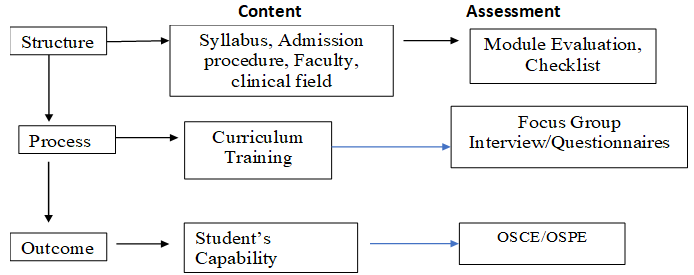
Figure1: Donabedian model for Assessment of Theory Practice Gap.
Generating Evidence Through Research
The gap between theory and practice exists that can be felt or experienced but cannot easily be measured. Theory practice gap is a multi-dimensional phenomenon. This phenomenon of theory practice gap is too complex to identify through quantitative research. This requires description and exploration of gap at different settings. There are multiple realities and structures related to this phenomenon which is not always observable. Therefore in depth extensive interview need to be used for identifying gap through research [13] that would assist in the professional development of nursing.
Competencies Deemed Essential To Safe and Effective Nursing Practice
Nursing is considered as caring for a person and community in a variety of health related situations. Apart from the physical care, nursing incorporates supportive and educative care that includes education regarding health promotional behaviour and rehabilitation.
To maintain a proper balance between theory and practice, a nurse, has to be updated with current knowledge and recent practice in the clinical field. Therefore, to assess the gap, one needs to develop an understanding of the recent professional advances, identify reasons and areas of theory practice gap and also to explore the fact through in-depth analysis of the phenomenon which indeed is very essential.
Reflections from Clinical Practice
In self-reflection the student critically analyse the problem and identify challenges related to expected events. This enables the nursing students to express their feelings while identifying problems. It provides a room to relieve stress. Self-reflections assist in self-directed learning, enhances critical thinking and supports the student to boost self-esteem and gain confidence [2, 4, 14, 15].
Academic Audit
Clinical environment is a complicated setting and changes are incessant. Theory is concentrated on what is ideal for patient care whereas clinical education is focussed on reality in patient care. Nursing teachers are not involved directly in patient care. Therefore a very effective theoretical input in the classroom would not provide clear understanding on the complexities of clinical situation. Academic audit would help to identify the obstacles and look for supports wherever possible to solve problems. Also it would assist in identifying the strength and weaknesses. Result of such assessment uphold positive aspects and brings out effective solutions those can be implemented in case of potential problems.
Suggestions/Recommendations to Reduce the Gap
Though the theory practice gap is a long standing controversy in nursing there is no direct solution to it.
Propositions for the Instructors
- Students in the clinical area need support of clinical instructors. Instructors with experience of working in tertiary level hospital for minimum three years will have significant contribution in the clinical learning of the student. Their proficiency in managing a clinical situation and maturity in handling the teenage students would reduce the theory practice gap. Researchers have suggested that clinical instructors need to increase their communication competency by undergoing a course on communication skill [5, 7].
- Nurse educator need to spend time in clinical practice, updating their clinical skills and re-experiencing the realities of practice [5].
- Post-graduate programme which prepares clinical nurses to work in teaching institutions must provide clinical experience to the students in the super-speciality hospitals of their concerned specialization so that they develop knowledge and competencies in their field of specialization.
- Reflective practices and Problem based learning (PBL): reflective practice is an intellectual process to gain new understandings in learning.
Guided reflection and Problem Based Learning can close the gap PBL and Reflective process which focuses on both cognitive and affective aspects allow students to learn from their practice experience through discussions and meetings with other students under the guidance of the preceptor. Students become independent self-learners thereby developing the critical thinking and problem solving skills [1, 2]. Westin, et al. states that PBL approach help the student to cope with continuous change in nursing education that has shifted from doing to understanding [3].
Suggestions for Modifications in Clinical Environment
Frankel (2009) states that the clinical learning environment can influence nursing students learning positively or negatively. A conducive clinical learning environment is one that is supportive with good ward atmosphere and good relationships and is perceived to produce positive learning outcomes [2].
- Student feels motivated and confident in a Clinical learning Environment where students are recognised, supported and respected as part of the health care team. Peer support and social support of significant others in the clinical area also facilitate learning. Faculty of nursing institution must take interest in making the student professionally socialize and caring which would reflect better nursing practice [2, 8, 9].
- Revision of curriculum by the nursing educationists is necessary. The principles laid in curriculum are not always in line with the practices in clinical area due to its dynamic nature. Therefore considering a context based curriculum coordinated with the clinical experts in nursing that would support clinical learning can help to reduce the gap [5, 7, 14, 15].
- Models of Collaboration between the education and service can be followed where dual responsibility can be taken by the staffs. This would strengthen the bridge through communication and coordination [7, 9] between nurse educators in the nursing institutions and clinical instructors in the clinical settings. Collaboration will result in the ability to build practice upon theoretical knowledge in addition to providing better understanding of the theoretical underpinning of educational knowledge [3].
- In order to maintain a rhythmic relationship between theory materials and practical training [7], the clinical teaching model of Dedicated Education Unit (
Conclusion
Nursing is a practice discipline where theory and practice cannot be separated as both are very critical to the profession. Nurses are expected to provide equitable, effective, affordable and high quality health care services.
There are many similarities between the experience of writers and research findings. Some of the gaps are universal in Global nursing education. A well-motivated student with positive attitude and nurtured under the wings of confident and knowledgeable instructor along with enthusiastic and passionate clinical nurse will automatically bridge the gap between education and practice. Therefore, learning in the clinical practice should be effectively facilitated in order to prepare the nursing students for the work they are qualifying.
Author Contribution
Author 1: conception and writing draft preparation, review and editing the manuscript. Author 2: manuscript, Review and editing. Conflict of interest: The authors declare no conflict of interest.
Funding Statement
No grant from any funding agencies in the public, commercial or not-for-profit sectors have been received.
References
-
Bouchlaghem MA, Mansouri H (2018) Exploration of Gap between theory and practice in Tunisia Nurse Education System: A cross sectional descriptive study with a focus on hand hygiene. International journal of nursing 5(1): 10-24.
-
Shahzadi C, Kousar R, Hussain M, Waqas A, Gilani SA, et al. (2017) The assessment of Gap between Theory and training classes in nursing Education system: A case of University of Lahore Pakistan. Saudi J Med Pharm Sci 3(8): 896-906.
-
Greenway K (2018) What is theory practice gap? An exploration of the concept. Nurse education in practice 34: 1-6.
-
Salah AA, Aljerjaway M, Salama A (2018) Gap between theory and practice in the nursing education. The Role of clinical setting. JOJ Nursing and Health care 7(2): 555707.
-
Saifan A, AbuRuz ME, Masa’deh (2015) Theory Practice gap in Nursing Education: A qualitative Perspective. Journal of social science 11(1): 20-29.
-
Budden L (1994) Nursing Faculty Practice: benefits vs costs. Journal of advanced Nursing 9: 1241-1246.
-
Rolfe G (1998) Theory Practice gap in Nursing: from research based practice to practice practitioner based research. Journal of Advanced Nursing 28(3): 672-679.
-
Safazadeh S, Irazpour A, Haghani F (2018) Exploring the reason for theory- practice gap in emergency nursing education: A qualitative research. J Educ Health Promot 7: 132.
-
Ajani K, Moez S (2011) Gap between Knowledge and practice in Nursing, Procedia Social and behavioural sciences 15 (2011): 3927-3931.
-
Shoghi M, Sajadi M, Oskui F, Dehnad A, Borimnejad L (2019) Strategies for bridging the gap from the perspective of nursing experts, Heliyon 5(9).
-
Kaphagawani NC, Useh U (2013) Analysis of Nursing student’s learning experience in clinical practice: literature review. Ethno Med 7(3): 181-185.
-
Hatlevik IKR (2012) The Theory Practice relationship: Reflective skills and theoretical knowledge as key factors in bridging gap between the theory and practice in initial nursing education. J Adv Nsg 68(4): 868-877.
-
Sharif F, Masoumi S (2005) A qualitative study of nursing students’ experiences of clinical practice. BMC Nursing 4(6): 4-6.
-
Risjord M (2011) Nursing Knowledge: Science, Practice, and Philosophy. United Kingdom: John Wiley & Sons, pp: 1-266.
-
Tiwaken SU, Caranto LC, David JJ (2015) The real World: Lived experiences of student nurses during clinical practice. Int J Nurs Sci 5(2): 66-75.
- Teaching Cognitive Behavioral Therapy to Graduate Psychiatric Mental Health Nurse Practitioner Students: Utilizing A Mixed Methods Course Evaluation
- The Role of Pharmacogenetic Testing in Clinical Practice: A Path toward more Effective, Personalized and Cost-effective Care
- Implementing Screening with the GAD-7 in an Outpatient Mental Health Setting: A Quality Improvement Project
- Social Media and Health Promotion
- Impact of Covid-19 Pandemic on the Academic Performance and Attitude of Nursing Students towards E-Learning
- A Study to Assess the Knowledge Regarding Ill Effects of Tobacco Consumption on Health among Adolescents in Selected Higher Secondary School in Nadiad City