
Assessing the Effectiveness of Lateral and Semi Fowler’s Position on Selected Patients Admitted with Respiratory Problems in Different Hospitals
Introduction: Respiratory disease is a medical term that encompasses pathological conditions affecting the organs and tissues that make gas exchange possible in higher organisms and includes conditions of the upper respiratory tract, trachea, bronchi, bronchioles, alveoli, pleura, pleural cavity, the nerves and muscles of breathing. Positioning is one of the most frequently performed nursing activity in the critical care, often providing a central pivotal focus for planning other nursing activity. Lateral position involves the patient lying on either patient’s right or left side. Semi Fowler’s Position is a position in which a patient is positioned on their back with the head and trunk raise to 30 degrees. So, the main objective of this study was to compare and evaluate the effectiveness after giving Lateral position in group 1 & Semi Fowler’s position in group 2 among patients admitted with Respiratory problems. Method: A comparative study was conducted to assess the effectiveness of Lateral position v/s Semi Fowler’s position on selected Respiratory Parameters among the patients admitted with Respiratory problems for which 40 samples were selected by non-random purposive sampling and the data was collected by assessing the selected respiratory parameters (blood pressure, oxygen saturation, breath holding time, respiration rate & heart rate) using instruments. Quantitative Research Approach was used in this study and research design was Quasi Experimental Research Design. The collected data was analyzed by Descriptive and Inferential Statistics. Result: Majority of the patients are male as compared to female and above 51 years of age. On the basis of comparing the posttest mean values of both the group, the posttest mean value (417.05) of group 2 (Semi Fowler’s position) is much higher than the posttest mean value (403.1) of group 1 (Lateral position). The result revealed that both the positions are effective to improve the respiratory parameters but on the basis of mean post test score the semi fowler’s position is more effective when compared to lateral position on respiratory parameters. The t value is found to be 3.022 with the significance level of p<0007. Therefore, Hypothesis H3 is accepted. Conclusion: From the finding of the study, the respiratory parameters were improved in semi fowler’s position as compared to lateral position. Paired ‘t’ value was significantly higher where p value is <0.05. Thus, it is concluded that the Semi Fowler’s position is highly effective to improve the selected Respiratory Parameters on the patients admitted with Respiratory Problems.
Introduction
Respiratory disease is a therapeutic term that wraps pathological conditions affecting the organs and tissues that make gas exchange possible in higher organisms and includes conditions of the upper respiratory tract, trachea, bronchi, bronchioles, alveoli, pleura, pleural hole, the nerves and muscles of breathing. Respiratory disease is a common and significant cause of illness and death around the world. In the US, approximately 1 billion “common colds” occur each year. A study found that in 2022, there were approximately 6.8 million emergency department visits for respiratory disorders in the U.S. for patients under the age of 18 [1].
In the UK, approximately 1 in 7 individuals are affected by some form of chronic lung disease, most commonly chronic obstructive pulmonary disease, which includes Asthma, Chronic Bronchitis. Respiratory diseases (including lung cancer) are responsible for over 10% of hospitalizations and over 16% of deaths in Canada. In 2011, a respiratory disease with ventilator support accounted for 93.3% of ICU utilization in the United States [2]. According to the American Lung Association, almost 4, 00,000 people die from lung disease each year. Lung disease is the third leading cause of death in the US. Lung disease and other breathing problems are the leading causes of death in infants. Today, more than 35 million Americans are living with chronic lung disease. Lung disease can affect people of all ages, both genders, all incomes, but affects a disproportionate share of adolescence populations [3].
According to the WHO Global Status Report 2018, smoking is estimated to cause about 71% of all lung cancer deaths and 42% of chronic respiratory disease worldwide. Of the six WHO regions, the highest overall prevalence for smoking in 2018 was estimated to be in the European Region, at nearly 29% [4]. In developed countries, the frequency of (life threatening) acute respiratory infections has dropped over the last 50 years. This is probably due to improved living conditions and health care. Within Europe, there tends to be more asthma and allergy in the West and more infectious disease in the East [5].
Respiratory diseases are often diagnosed at an advanced stage but hopefully, thanks to progress in investigational technologies (such as imaging and biomarkers), more patients will benefit from diagnosis and management earlier in the course of their disease [6]. Approximately 14.8 million adults have been diagnosed with COPD, and approximately 12 million people have not yet been diagnosed. Respiratory diseases influence individuals and their families, schools, workplaces, neighborhoods, cities, and states. Because of the cost to the health care system, the burden of respiratory diseases also falls on society; it is paid for with tax dollars, higher health insurance rates, and lost productivity. Annual health care expenditures for asthma alone are estimated at $20.7 billion [7].
Positioning is one of the most frequently performed nursing activity in the critical care, often providing a central pivotal focus for planning other nursing activity. Currently, the concept of therapeutic positioning is emerging in trauma and critical care with the adaptation of research-based positioning strategies designed to enhance or promote physiologic stability and tolerance of nursing and medical treatments [8]. Body positioning refers to optimize O2 transport, primarily by manipulating the effect of gravity, on cardiopulmonary and cardiovascular function. Changing a patient’s posture may not perceive a dramatic technique, but this simple action often prevents recourse to more time consuming or tiring techniques. Positioning should be an integral part of all respiratory care, especially when prophylaxis is the aim [9].
The hospitalized patients often assume recumbent body positions, such as supine and side lying (right lateral and left lateral). The physiotherapists also recommend body positioning to increase oxygen transport and oxygenation to minimize the risk of aspiration and to drain pulmonary secretions. The recumbent body positions have well documented deleterious effects on lung function, such as reduced lung volumes and capacities, increased closing volume of dependent airways, reduced flow rate and reduced arterial saturation [10]. Based on physiological studies, one can postulate that the oxygenation improvement is mainly due to a lung volume redistribution induced by reduced ventral CW (continuous wave) compliance during prone positioning, while an increase of the lung volume appears more significant during upright positioning. Because of their harmonious mechanisms of action, combining prone and upright positioning can make sense in ARDS (acute respiratory distress syndrome) patients. Likewise, it has already been shown that the combination of prone positioning with a coordinative technique to increase lung volume, the recruitment exercise, has additive positive effects on oxygenation [11].
Hypothesis
- H1- There is significant difference between pre-test & post test score on selected Respiratory Parameters in group 1.
- H2- There is significant difference between pre-test & post test score on selected Respiratory Parameters in group 2.
- H3- There is significant difference between post test score on selected Respiratory Parameters in group 1 & group 2.
Review of Literature
A hospital based cross sectional study was carried out among 200 cases of COPD. Their detailed history, thorough clinical examination and parameters like hemoglobin level, serum creatinine level, protein level etc. were investigated. The presence of co-morbidities was noted. Results: As the age increased the prevalence of the COPD (Chronic Obstructive Pulmonary Disease) increased and highest was found out to be in the age group of above 60 years of age. Males were more affected with COPD as compared with females. The male to female ratio was found out to be 2.4:1. The smokers were more compared to the non-smokers. The prevalence of smoking among COPD was noted to be 66% compared to 34% as non-smokers. The study concluded that breathlessness was the most common symptom at presentation and diabetes and hypertension were the most common co-morbidities found Arathy S, et al. [12].
A randomized and quasi‐randomized trial was conducted to examine the effects of lateral positioning in critically ill adults in which the lateral position was compared with other body positions on patient outcomes (mortality, morbidity and clinical adverse events) in critically ill adult patients. (Clinical adverse events include hypoxemia, hypotension, low oxygen delivery and global indicators of impaired tissue oxygenation). The study compared two studies of critically ill adults with unilateral lung disease (one ‘bad lung’ and one ‘good lung’). Oxygen levels within the blood were lower for ‘bad lung down’ (side lying with the ‘bad lung’ lowermost). The study found no clear evidence on the effectiveness of routine lateral repositioning or the effects of a single turn for critically ill patients. Good quality studies are needed to find out whether routine lateral repositioning is still recommended for most critically ill patients, and whether one body position is best avoided for some Tracey Bucknall, et al. [13].
Anchala AM [14] the study was aimed to determine the effect of therapeutic positions on respiratory parameters among critically ill patients. Experimental pre-test and post- test design was used. Samples were critically ill patients who got admitted in the C4 multi-disciplinary intensive care unit of Sri Rama Chandra Medical Centre. Simple random sampling was used to select 40 samples. Respiratory parameters such as heart rate, respiratory rate, systolic blood pressure, diastolic blood pressure, oxygen saturation, mean arterial pressure and the demographic variables of critically ill patients were studied together. This study has attempted to identify the changes in respiratory parameters among critically ill patients while following turning schedule. The study shows that there was a significant difference in systolic blood pressure in left lateral position and oxygen saturation in semi fowler’s position. Therapeutic positions based on turning schedule have a significant role in maintaining the respiratory parameters and preventing complications [14]. Harika Rama, et al. [15] a comparative study was conducted to evaluate the effectiveness of lateral position versus supine position on respiratory parameters among infants with respiratory problems in selected hospital, Nellore District. 60 Infants with respiratory problems were selected by simple random technique. A true experimental pre-test post-test design was adopted for the study. The study reveals that in supine position among 30 infants in pre- test, 17 children had mild, 5 had moderate and 1 had severe respiratory difficulty whereas in post-test 24 had mild, 5 had moderate and 1 had severe respiratory failure. In lateral position group among 30 samples in pre-test, 23 infants had mild, 7 had moderate respiratory difficulty whereas in post test, 20 infants had mild, 8 had moderate and 2 had severe respiratory difficulty. The study revealed that there is no significant difference with supine or lateral position on respiratory parameters in both group 1 & group 2 among infants with respiratory problems [15].
Prajakta S, et al. [11] a study conducted on 33 subjects aged between 15-73 years, 21 male and 12 female patients suffering with respiratory failure due to different respiratory conditions like ARDS, pneumonia, tuberculosis, collection of fluid in pleural cavity with underlying lung collapse were selected from ICU, Neurological trauma unit, Pune. The patients were kept in supine position, lateral and prone and respiratory parameters like blood pressure, heart rate, respiration rate and oxygen saturation with the help of pulse oxymeter noted just before giving position. Paired t- test was used, the findings revealed that p values for prone and bilateral side lying positions was < 0.05 showing its significance for above mentioned 3-positions. P value for supine was not < 0.05 showing its non-significance. The study concluded that oxygen saturation improves in prone lying and side lying position as compared to supine lying [11].
The review of literature suggested that the positioning is one of the most frequently performed nursing activity in the critical care, often providing a central pivotal focus for planning other nursing activity. Currently, the concept of therapeutic positioning is emerging in trauma and critical care with the adaptation of research-based positioning strategies designed to enhance or promote physiologic stability and tolerance of nursing and medical treatments. Therapeutic positions based on turning schedule have a significant role in maintaining the respiratory parameters and preventing complications.
Research Design
A research design is the arrangement of condition for collection and analysis of data in a manner that aims to combine relevance purpose with economy in procedures. Quasi Experimental research design attempts to determine causal relationship by applying a treatment or condition to one group and comparing the outcome with a control group [16]. The research design used in this study is Quasi Experimental Research design which is represented in below Table 1 & Figure 1.
| Pre-Test | X | Post-Test | |
|---|---|---|---|
| Group 1 | P1 | X1 | P2 |
| Group 2 | P1 | X2 | P2 |
Table 1: Quasi experimental research design.
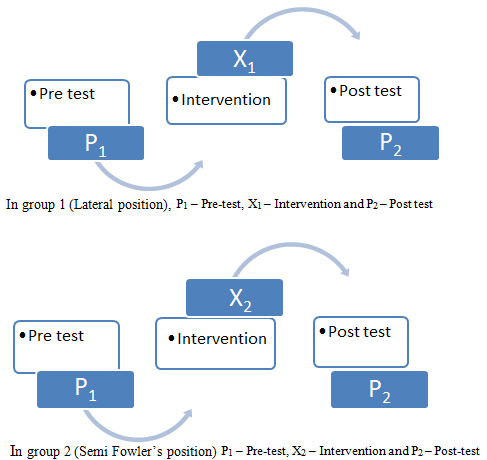
Group 1 (Lateral Position)
- Pre-Test: To measure blood pressure, oxygen saturation, breathe holding time, respiration rate and heart rate before giving lateral position to the patient.
- Intervention: Positioned the patient with Lateral position for 1 hour.
- Post-Test: To measure blood pressure, oxygen saturation, breathe holding time, respiration rate and heart rate after giving lateral position to the patient.
Group 2 (Semi Fowler’s Position)
- Pre-Test: To measure blood pressure, oxygen saturation, breathe holding time, respiration rate and heart rate before giving semi fowler’s position to the patient.
- Intervention: Positioned the patient with Semi Fowlers position for 1 hour.
- Post-Test: To measure blood pressure, oxygen saturation, breathe holding time, respiration rate and heart rate after giving semi fowler’s position to the patient.
In the present study, independent variables are Lateral Position & Semi Fowler’s Position. Dependent variables are selected Respiratory Parameters i.e., Blood pressure, Oxygen saturation, Breath Holding Time, Respiration rate and Heart rate. In this study, the setting is at selected private hospitals (Peoples Hospital & Chirayu Hospital, Bhopal). The accessible population selected is the patients admitted in selected private hospitals of Bhopal and the target population comprised of patients admitted with Respiratory Problems in selected Private Hospitals of Bhopal.
Description of the Tool: The tool of the study has two parts:
- Part I: Socio Demographic Variables
- Part II: Selected Respiratory Parameters
Socio Demographic Variables
Socio demographic variables which consist of 10 items for obtaining information about selected factors such as Age, Gender, Religion, Marital status, Educational Qualification, Occupation, Family Monthly Income, Food Preference, Habit of Smoking and Numbers of Cigarettes used per day.
Selected Respiratory Parameters
This part of the tool consists of 5 Respiratory Parameters such as Blood Pressure, Oxygen saturation, Breathe Holding Time, Respiration rate and Heart rate.
Pilot Study
Pilot study is a small-scale version or trial run for the main study. The purpose of the pilot study is to find out the feasibility of the study, clarity of the language in tool and finalize the plan for analysis [17]. The pilot study was conducted with 6 patients admitted with Respiratory problems in selected private of hospitals of Bhopal (People’s Hospital, Bhopal & Chirayu Hospital). The analysis of pilot study revealed the objectives of the study could be fulfilled based on this information and the investigator can further proceed with actual data collection for the main study.
Data Analysis and Interpretation
Distribution of Socio Demographic Variable of the Patients Admitted with Respiratory Problems. This section deals with the data pertaining to sample characteristics of the subjects. It is presented and analyzed in terms of frequency and percentage distribution (Table 2 & Figure 2).
| Age (in years) | Group 1 | Group 2 | ||
|---|---|---|---|---|
| Frequency | Percent | Frequency | Percent | |
| 21-30 | 5 | 25 | 3 | 15 |
| 31-40 | 5 | 25 | 1 | 5 |
| 41-50 | 5 | 25 | 7 | 35 |
| >51 | 5 | 25 | 9 | 45 |
| Total | 20 | 100 | 20 | 100 |
Table 2: Distribution of age according to frequency and percentage.
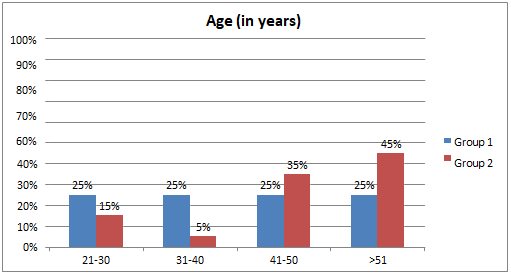
Data presented in Table 2 show the frequency distribution of patients according to age group in group 1 and group 2 respectively.
Group 1: All of the patients were 5(25%) of age group 21-30,
5(25%) of age group 31-40, 5(25%) of age group 41-50 and 5(25%) of age group >51. Group 2: Majority of the patients were 9(45%) of age group >51, 7(35%) of age group 41-50, 3(15%) of age group 21-30 and only 1(15%) of age group 31-40 (Table 3 & Figure 3).
| Gender | Group 1 | Group 2 | ||
|---|---|---|---|---|
| Frequency | Percent | Frequency | Percent | |
| Male | 11 | 55 | 12 | 60 |
| Female | 9 | 45 | 8 | 40 |
| Transgender | 0 | 0 | 0 | 0 |
| Total | 20 | 100 | 20 | 100 |
Table 3: Distribution of gender according to frequency and percentage.
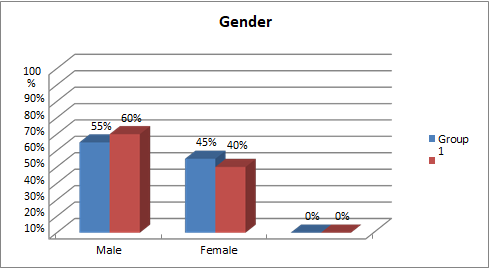
Data presented in Table 3 show the frequency distribution of patients according to gender. GROUP 1 – Majority of patients were male 11(55%), 9 female (45%) and no transgender (0%) GROUP 2 – Majority of patients were male 12(60%), 8 female (40%) and no transgender (0%) (Table 4 & Figure 4.
| Religion | Group 1 | Group 2 | ||
|---|---|---|---|---|
| Frequency | Percent | Frequency | Percent | |
| Hindu | 13 | 65 | 10 | 50 |
| Muslim | 6 | 30 | 8 | 40 |
| Christian | 1 | 5 | 2 | 10 |
| If any other, specify | 0 | 0 | 0 | 0 |
| Total | 20 | 100 | 20 | 100 |
Table 4: Distribution of religion according to frequency and percentage.
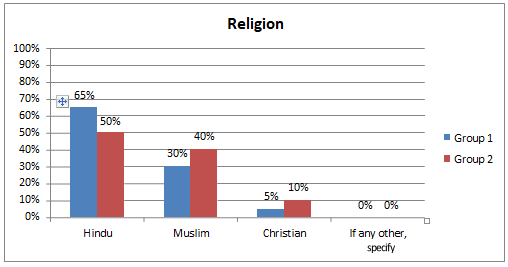
Data presented in Table 4 show the frequency distribution of patients according to religion. Group 1: Majority of patients were Hindu 13(65%), Muslims 6(30%), Christians 1(5%) and no other religion (0%).
Group 2: Majority of patients were Hindu 10(50%), Muslims 8(40%), Christians 2(10%) and no other religion (0%) (Table 5 & Figure 5).
| Marital Status | Group 1 | Group 2 | ||
|---|---|---|---|---|
| Frequency | Percent | Frequency | Percent | |
| Married | 14 | 70 | 9 | 45 |
| Unmarried | 3 | 15 | 2 | 10 |
| Widow/Widower | 2 | 10 | 7 | 35 |
| Divorce | 1 | 5 | 2 | 10 |
| Total | 20 | 100 | 20 | 100 |
Table 5: Distribution of marital status according to frequency and percentage.
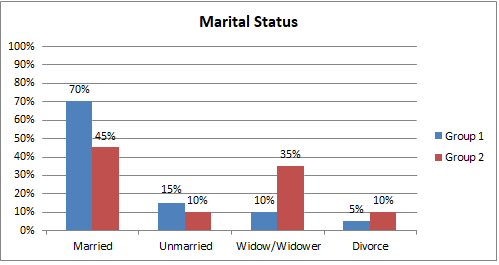
Data presented in Table 5 shows the frequency distribution of patients according to marital status. Group 1– Majority of patients were married 14(70%), unmarried 3(15%), widow/widower 2(10%) and divorcee only 1(10%). Group 2– Majority of patients were married (45%), widow/ widower 3(35%), unmarried 2(10%) and divorcee only 1(10%) (Table 6 & Figure 6).
| Educational Qualification | Group 1 | Group 2 | ||
|---|---|---|---|---|
| Frequency | Percent | Frequency | Percent | |
| Illiterate | 6 | 30 | 6 | 30 |
| Secondary/Higher Secondary education | 8 | 40 | 5 | 25 |
| Graduate | 5 | 25 | 8 | 40 |
| Postgraduate and above | 1 | 5 | 1 | 5 |
| Total | 20 | 100 | 20 | 100 |
Table 6: Distribution of educational qualification according to frequency and percentage.
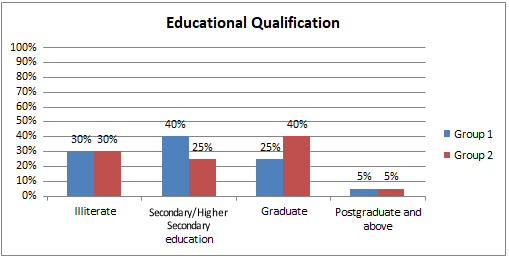
Data presented in Table 6 shows the frequency distribution of patients according to educational qualification. Group 1 – Majority of patients were secondary/ higher secondary educated 8 (40%), illiterate 6 (30%), graduate 5 (25%) and post graduate or above only 1(5%).
Group 2 – Majority of patients were graduate 8 (40%), illiterate 6 (30%), secondary/ higher secondary educated 5 (25%) and post graduate or above only 1(5%) (Table 7 & Figure 7).
| Occupation | Group 1 | Group 2 | ||
|---|---|---|---|---|
| Frequency | Percent | Frequency | Percent | |
| Private job | 9 | 45 | 6 | 30 |
| Government job | 2 | 10 | 2 | 10 |
| Business man | 1 | 5 | 4 | 20 |
| Housewife | 8 | 40 | 8 | 40 |
| Total | 20 | 100 | 20 | 100 |
Table 7: Distribution of occupation according to frequency and percentage.
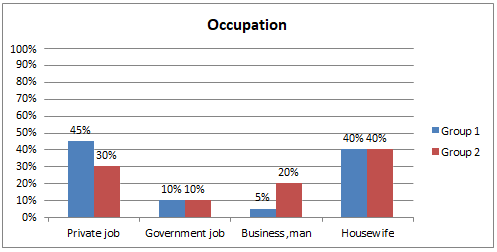
Data presented in Table 7 shows the frequency distribution of patients according to occupation. GROUP 1 – Majority of patients were 9 (45%) in private job, 8 (40%) as house wife, 2 (10%) in government job and only
1 (5%) as business man. GROUP 2 – Majority of patients were 8 (40%) as house wife, 6 (30%) in private job, 4 (20%) as business man and only 2 (10%) in government job (Table 8 & Figure 8).
| Family Monthly Income | Group 1 | Group 2 | ||
|---|---|---|---|---|
| Frequency | Percent | Frequency | Percent | |
| Less than 10,000/- | 8 | 40 | 8 | 40 |
| 11,000 - 15,000/- | 9 | 45 | 4 | 20 |
| 16,000 - 20,000/- | 3 | 15 | 7 | 35 |
| More than 21,000/- | 0 | 0 | 1 | 5 |
| Total | 20 | 100 | 20 | 100 |
Table 8: Distribution of Family monthly income according to frequency and percentage.
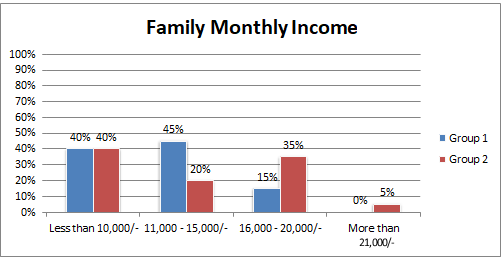
Data presented in Table 8 shows the frequency distribution of patients according to family monthly income. Group 1 – Majority of patients with the monthly income 11,000-15,000 were 9(45%), less than 10,000 were 8 (40%), 16,000-20,000 were 3(15%) and 0 in more than 21,000.
Group 2 – Majority of patients with the monthly income is less than 10,000 were 9(45%), 16,000-20,000 were 7(35%), 11,000-15,000 were 4(20%) and only 1(5%) in more than 21,000 (Table 9) & (Figure 9).
| Food Preference | Group 1 | Group 2 | ||
|---|---|---|---|---|
| Frequency | Percent | Frequency | Percent | |
| Non - Vegetarian | 16 | 80 | 15 | 75 |
| Vegetarian | 4 | 20 | 4 | 20 |
| Mixed | 0 | 0 | 1 | 5 |
| Total | 20 | 100 | 20 | 100 |
Table 9: Distribution of Food preference according to frequency and percentage.
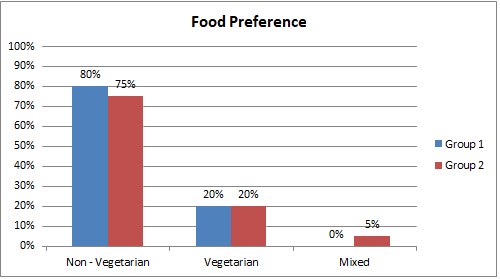
Data presented in Table 9 shows the frequency distribution of patients according to food preference. Group 1: In majority of patients 16(80%) were non- vegetarian, 4(20%) were vegetarian and 0(0%) in mixed type. Group 2: In majority of patients 15(75%) were non- vegetarian, 4(20%) was vegetarian and only 1(1%) in mixed type.
Comparison of Lateral Position V/S Semi Fowler’s Position on Selected Respiratory Parameters among the Patients Admitted with Respiratory Problems (Table 10 & Table 11).
| Lateral Position | Pre test | Post test | t value | P value | ||
|---|---|---|---|---|---|---|
| Mean | SD | Mean | SD | |||
| Blood Pressure Systolic | 122 | 25.87419 | 122.5 | 6.38666 | 0.083 | 0.935 |
| Blood Pressure Diastolic | 85.5 | 9.44513 | 81 | 5.52506 | 2.131 | .046* |
| Oxygen saturation(SpO2) | 87.85 | 3.06551 | 89.65 | 3.70313 | 3.269 | .004* |
| Breath Holding time | 16.6 | 2.81724 | 16.6 | 3.13553 | 0 | 1 |
| Respiration rate | 17.55 | 1.82021 | 18.55 | 1.60509 | 2.078 | 0.052 |
| Heart rate | 73.45 | 3.70597 | 74.8 | 5.24756 | 1.937 | 0.068 |
Table 10: Comparison of selected respiratory parameters within group 1 (Lateral position).
| Lateral Position | Semi Fowler’s Position | t value | P value | |||
|---|---|---|---|---|---|---|
| Post Test | Post Test | |||||
| Mean | SD | Mean | SD | |||
| Blood Pressure Systolic | 122.5 | 6.38666 | 125.5 | 8.87041 | 1.101 | 0.285 |
| Blood Pressure Diastolic | 81 | 5.52506 | 85 | 7.60886 | 2.179 | .042* |
| Oxygen saturation(SpO2) | 89.65 | 3.70313 | 95.25 | 2.35919 | 7.064 | .000* |
| Breath Holding time | 16.6 | 3.13553 | 13 | 2.59554 | 4.218 | .000* |
| Respiration rate | 18.55 | 1.60509 | 17.25 | 1.71295 | 2.4766 | .018* |
| Heart rate | 74.8 | 5.24756 | 79.2 | 5.22746 | 2.6566 | .011* |
Table 11: Comparison of selected respiratory parameters in post-test between group 1 and group 2.
*significant at P<0.05 Table 11: Comparison of selected respiratory parameters in post-test between group 1 and group 2.
The statistical data shows that the post test mean value (125.5) of systolic blood pressure in semi fowler’s position (Group 2) is higher than the post test mean value (122.5) of systolic blood pressure in lateral position (Group 1). The statistical data shows that the post test mean value (85.0) of diastolic blood pressure in semi fowler’s position (Group 2) is higher than the post test mean value (81.0) of diastolic blood pressure in lateral position (Group 1). The statistical data shows that the post test mean value (95.25) of oxygen saturation (SpO2) in semi fowler’s position (Group 2) is higher than the post test mean value (89.65) of oxygen saturation (SpO2) in lateral position (Group 1). The statistical data shows that the post test mean value (16.6) of breath holding time in lateral position (Group 1) is higher than the post test mean value (13.0) of breath holding time in semi fowler’s position (Group 2). The statistical data shows that the post test mean value (18.55) of respiration rate in lateral position (Group 1) is higher than the post test mean value (17.25) of respiration rate in semi fowler’s position (Group 2). The statistical data shows that the post test mean value (79.2) of heart rate in semi fowler’s position (Group 2) is higher than the post test mean value (74.8) of heart rate in lateral position (Group 1) (Table 12).
| Post test | Post test | t value | P value | ||
|---|---|---|---|---|---|
| Mean | SD | Mean | SD | ||
| 403.1 | 12.13043 | 417.05 | 15.01745 | 3.022 | .007* |
Table 12: Comparison of the total post-test mean value of group 1 with the total post-test mean value of group 2.
*significant at P<0.05 Table 12: Comparison of the total post-test mean value of group 1 with the total post-test mean value of group 2.
The statistical data shows that on comparing the post test mean values of both the group, the post test mean value (417.05) of group 2 (Semi Fowler’s position) is much higher than the post test mean value (403.1) of group 1 ( Lateral position).
Results
The present study represents the major findings based on the interpretation from statistical analysis. This study intends to assess the effectiveness of lateral position v/s semi fowler’s position on selected respiratory parameters among the patients admitted with respiratory problems in selected private hospitals of Bhopal. In order to achieve the objective of the study, experimental factorial research design was adapted.
The present study deals with the discussion of the result of the data analysis based on the objective of the study, review of literature and the hypothesis in relation to similar studies conducted by other researchers and conceptual framework. The study intended to assess the effectiveness of lateral position v/s semi fowler’s position on selected respiratory parameters among the patients admitted with respiratory problems. The findings of the present study have discussed with the specific objectives, hypothesis, review of literature and conceptual framework.
The demographic variables have been presented in the terms of frequency and distribution. The finding of the study revealed that:-
- In Lateral position(Group 1), all of the patients were 5(25%) of age group 21- 30, 5(25%) of age group 31- 40, 5(25%) of age group 41-50 and 5(25%) of age group >51 and in Semi Fowler’s position(Group 2) the majority of the patients were 9(45%) of age group >51, 7(35%) of age group 41-50, 3(15%) of age group 21-30 and only 1(15%) of age group 31-40.
- In Lateral position(Group 1), majority of the patients were male 11(55%), 9 female (45%) and no transgender (0%) and in Semi Fowler’s position(Group 2) the majority of patients were male 12(60%), 8 female (40%) and no transgender (0%) .
- In Lateral position (Group 1), majority of the patients were Hindu 13(65%), Muslims 6(30%), Christians 1(5%) and no other religion (0%) and in Semi Fowler’s position (Group 2) the majority of patients were Hindu 10(50%), Muslims 8(40%), Christians 2(10%) and no other religion (0%).
- In Lateral position (Group 1), majority of the patients were married 14(70%), unmarried 3(15%), widow/ widower 2(10%) and divorcee only 1(10%) and in Semi Fowler’s position (Group 2) the majority of patients were married (45%), widow/widower 3(35%), unmarried 2(10%) and divorcee only 1(10%).
- In Lateral position(Group 1), majority of the patients were secondary / higher secondary educated 8 (40%), illiterate 6 (30%), graduate 5 (25%) and post graduate or above only 1(5%) and in Semi Fowler’s position(Group 2) the majority of patients were graduate 8 (40%), illiterate 6 (30%), secondary/ higher secondary educated 5 (25%) and post graduate or above only 1(5%).
- In Lateral position (Group 1), majority of the patients were 9 (45%) in private job, 8 (40%) as house wife, 2 (10%) in government job and only 1 (5%) as business man and in Semi Fowler’s position(Group 2) the majority of patients were 8 (40%) as house wife, 6 (30%) in private job, 4 (20%) as business man and only 2 (10%) in government job.
- In Lateral position (Group 1), majority of the patients with the monthly income 11,000-15,000 were 9(45%), less than 10,000 were 8 (40%),16,000-20,000 were 3( 15%) and 0 in more than 21,000 and in Semi Fowler’s position(Group 2) the majority of patients with the monthly income is less than 10,000 were 9(45%) , 16,000-20,000 were 7(35%) , 11,000-15,000 were 4(20%) and only 1(5%) in more than 21,000.
- In Lateral position (Group 1), majority of the patients 16(80%) were non-vegetarian, 4(20%) were vegetarian, 0(0%) in mixed type and in Semi Fowler’s position (Group 2) the majority of patients 15(75%) were non- vegetarian, 4(20%) was vegetarian and only 1(1%) in mixed type.
Analysis of effectiveness of lateral position score before and after the assessment of selected respiratory parameters
- The finding revealed that according to the mean in lateral position (Group 1) the post test mean value (122.5) of systolic blood pressure is higher than pre-test mean value (122.0) of systolic blood pressure and the pre-test mean value (85.5) of diastolic blood pressure is higher than the post test mean value (81.0) of diastolic blood pressure.
- The finding revealed that according to the mean in lateral position (Group 1) the post test mean (89.65) of oxygen saturation (SpO2) is higher than the pre-test mean (87.85) of oxygen saturation (SpO2).
- The finding revealed that according to the mean in lateral position (Group 1) the pre-test mean value (16.6) of breath holding time is equal to the post test mean value (16.6) of breath holding time.
- The finding revealed that according to the mean in lateral position (Group 1) the post test mean value (18.55) of respiration rate is higher than the pre-test mean value (17.55) of respiration rate.
- The finding revealed that according to the mean in lateral position (Group 1) the post test mean value (74.8) of heart rate is higher than the pre-test mean value (73.45) of heart rate.
Analysis of effectiveness of semi fowler’s position score before and after the assessment of selected respiratory parameters
- The statistical analysis shows that according to the mean in semi fowler’s position (Group 2) the post test mean value (125.5) of systolic blood pressure is higher than the pre-test mean value (120.0) of systolic blood pressure and the post test mean value (85.0) of diastolic blood pressure is higher than the pre-test mean value (80.5) of diastolic blood pressure.
- The statistical analysis shows that according to the mean in semi fowler’s position (Group 2) the post test mean value (95.25) of oxygen saturation is higher than the pre-test mean value (89.15) of oxygen saturation.
- The statistical analysis shows that according to the mean in semi fowler’s position (Group 2) the post test mean value (13.0) of breath holding time is higher than the pre-test mean value (12.5) of breath holding time.
- The statistical analysis shows that according to the mean in semi fowler’s position (Group 2) the pre-test mean value (17.6) of respiration rate is higher than the post test mean value (17.25) of respiration rate.
- The statistical analysis shows that according to the mean in semi fowler’s position (Group 2) the pre-test mean value (80.7) of heart rate is higher than the post test mean value (79.2) of heart rate.
Discussion
On comparison of post test scores of lateral position and semi flowers position we found that On the basis of mean, the post test mean value (125.5) of systolic blood pressure in semi fowler’s position (Group 2) is higher than the post test mean value (122.5) of systolic blood pressure in lateral position (Group 1) and the post test mean value 85.0) of diastolic blood pressure in semi fowler’s position (Group 2) is higher than the post test mean value (81.0) of diastolic blood pressure in lateral position (Group 1). The statistical data shows that the post test mean value (95.25) of oxygen saturation (SpO2) in semi fowler’s position (Group 2) is higher than the post test mean value (89.65) of oxygen saturation (SpO2) in lateral position (Group 1).
The statistical data shows that the post test mean value (16.6) of breath holding time in lateral position (Group 1) is higher than the post test mean value (13.0) of breath holding time in semi fowler’s position (Group 2). The statistical data shows that the post test mean value (18.55) of respiration rate in lateral position (Group 1) is higher than the post test mean value (17.25) of respiration rate in semi fowler’s position (Group 2). The statistical data shows that the post test mean value (79.2) of heart rate in semi fowler’s position (Group 2) is higher than the post test mean value (74.8) of heart rate in lateral position (Group 1).
On comparing the post test mean value of Lateral position and Semi Fowler’s position, the post test mean value (417.05) of the total selected respiratory parameters in Semi Fowler’s position is higher than the post test mean value (403.1) of the total selected respiratory parameters in Lateral position. The effectiveness was found out through paired (t) test (3.002) and p<0.05 this shows that there was effectiveness found in semi fowler’s position as compared to lateral position. Hence the research hypothesis H3 is accepted.
Conclusion
On the basis of finding of the study, we concluded that the mean post test score (417.05) of semi fowler’s position is apparently higher than the mean post test score (403.1) of lateral position. The result revealed that both the positions are effective to improve the respiratory parameters but on the basis of mean post test score the semi fowler’s position is more effective when compared to lateral position on respiratory parameters. Paired ‘t’ value was significantly higher where p value is <0.05. Thus, it is concluded that the Semi Fowler’s position is highly effective to improve the selected Respiratory Parameters on the patients admitted with Respiratory Problems.
Recommendations
On the basis of findings of the study, the following recommendations are being made:
- A similar study can be carried out on a large sample size for better generalization of findings.
- An experimental study can be undertaken with control group for comparison.
References
-
Sharma V, Gupta RK, Jamwal DS, Raina SK, Langer B, et al. (2016) Prevalence of chronic respiratory disorders in a rural area of North West India: A population-based study. J Family Med Prim Care 5(2): 416-419.
-
Blackwell DL, Lucas JW, Clarke TC (2014) Summary health statistics for U.S. adults: National Health Interview Survey, 2012. Vital Health Stat 10(260): 1-161.
-
Jindal SK, Aggarwal AN, Gupta D, Agarwal R, Kumar R, et al. (2016) Indian study on epidemiology of asthma, respiratory symptoms and chronic bronchitis in adults. Int J Tuberc Lung Dis 16(9): 1270-1277.
-
Decramer M, Sibille Y, Bush A, Rabe KF, Clancy L, et al. (2011) The European Union Conference on chronic respiratory disease: purpose and conclusion. Eur Respir J 37(4): 738-742.
-
Ceylan B, Khorshid L, Gunes UY, Zaybak A (2016) Evaluation of oxygen saturation values in different body positions in healthy individuals. J Clin Nurs 25(7-8): 1095-1100.
-
Chhabra P, Sharma G, Kannan AT (2008) Prevalence of respiratory disease and associated factors in an urban area of Delhi. Indian J Community Med 33(4): 229-232.
-
Aggarwal AN, Chaudhry K, Chhabra SK, Gupta D, Kumar R, et al. (2006) Prevalence and risk factors for bronchial asthma in Indian adults: a multicentric study. Indian I Chest Allied Sci 48(1): 13-22.
-
Fontaine DK, McQuillain K (1989) Positioning as a nurse therapy in trauma care. 1st (Edn.), Crit Care Nurs Clin North Am 1(1): 105-111.
-
Walz M, Muhr G (1992) Continuously alternating prone and supine positioning in acute lung failure. Chirurg 63(11): 931-937.
-
Rival G, Patry C, Floret N, Navellou JC, Belle E, et al. (2011) Prone position and recruitment manoeuvre: the combined effect improves oxygenation. Crit Care 15(3): 125.
-
Patil PS, Nagarwala R (2015) A comparative study of supine lying, side lying and prone positioning on oxygen saturation, in mechanically ventilated patients, in acute respiratory failure. Int J Res Med Sci 3(7): 1627-1631.
-
Gudagunti AK, Hasahi I, Arathy S (2019) A study of clinical profile of patients with chronic pulmonary obstructive disease at a tertiary care centre in North Karnataka, India. Int Journal of Advances in Medicine 6(2): 430-433.
-
Hewitt N, Bucknall T, Faraone NM (2016) Lateral positioning for critically ill adult patients. Cochrane Database Syst Rev 16(5): CD007205.
-
Anchala AM (2016) A Study to Assess the Effect of Therapeutic Positions on Hemodynamic Parameters among Critically Ill Patients in the Intensive Care Unit at Sri Ramachandra Medical Centre. J Nurs Care 5(3): 348.
-
Harika R, Radhika M, Indira S (2015) A comparative study to evaluate the effectiveness of lateral position versus supine position on respiratory parameters among infants with respiratory problems. International Journal of Applied Research 1(12): 935-940.
-
Ganapathi LV, Vinod S (2015) The estimation of pulmonary functions in various body postures in normal subjects. Int J Adv Med 2(3): 250-254.
-
Das H, Shaikh S, Kella N Effect of prone position on oxygen saturation in patients with respiratory disease in neonates. 5th (Edn.), 1098-1101.
- Teaching Cognitive Behavioral Therapy to Graduate Psychiatric Mental Health Nurse Practitioner Students: Utilizing A Mixed Methods Course Evaluation
- The Role of Pharmacogenetic Testing in Clinical Practice: A Path toward more Effective, Personalized and Cost-effective Care
- Implementing Screening with the GAD-7 in an Outpatient Mental Health Setting: A Quality Improvement Project
- Social Media and Health Promotion
- Impact of Covid-19 Pandemic on the Academic Performance and Attitude of Nursing Students towards E-Learning
- A Study to Assess the Knowledge Regarding Ill Effects of Tobacco Consumption on Health among Adolescents in Selected Higher Secondary School in Nadiad City