
Analysis of Nursing Professionals Criteria Regarding the Application of Ostomy Devices at Each Stage of the Care Process
Objective: To analyze the opinions and criteria of nursing professionals regarding the use of ostomy devices at each stage of the care process, considering both the characteristics of the ostomy and the patient. Method: A multicentered, cross-sectional descriptive study based on a national survey conducted among nursing professionals involved in the care of ostomy patients. Results: Despite the availability of various ostomy devices in most centers, patients are typically instructed in the use of twopiece devices upon hospitalization, which potentially explains their higher frequency of use. Discussion and Conclusion: Case presentations or industry-sponsored research have been identified where the use of specific devices is not justified, but rather their characteristics. Conducting a nationwide survey provides a comprehensive understanding of the criteria followed by nursing professionals in the care and management of ostomy patients, as well as in the selection and/or change of ostomy devices.
Introduction
Adapting to life after undergoing an ostomy can become a challenge, especially when it comes to digestive elimination ostomies. Therefore, choosing the right device that anatomically adapts, prevents fecal content leaks, and aligns with the ostomy person’s lifestyle, is a key aspect. Addressing this soon in the care of these patients is crucial to promote their recovery and early return to daily life [1].
There are a wide variety of devices or systems for ostomy care, which can be classified according to different criteria. Based on the number of pieces composing the device, they are classified as one or two pieces [2]. Both have distinguishing features that can provide significant benefits to ostomy carriers, providing the possibility of alternating their use according to daily life requirements and situations. Ostomy devices should offer security, protection, comfort, and discretion to avoid disrupting the carrier’s lifestyle [3, 4].
Health education is crucial, and the role of the nurse or stomatherapist facilitates patient training in the care of his or her stoma throughout the entire care process. All biopsychosocial aspects that are altered or at risk of alteration should be comprehensively addressed [5, 6, 7, 8, 9].
There are studies [10, 11] addressing ostomy patient care, quality of life, complications associated with the stoma and skin, economic costs [12, 13, 14], and even considerations regarding the use of the device based on its convexity [15, 16, 17]. However, after conducting a literature review, no research providing evidence regarding the application of one or two-piece devices in ostomy patients and their optimal use was found.
Therefore, the objectives of this study are to analyze the opinions of nursing professionals on the application of ostomy devices at each stage of the care process for ostomy patients, evaluate professional opinions on the use of one- piece devices considering ostomy and patient characteristics, and identify criteria for recommending different types of devices.
Methods and Materials
Design
Descriptive, multicentered, cross-sectional study.
Target Population
Nursing professionals who participated in different educational webinars, organized by Conva Tec SL, on contents related to the care of ostomy persons, and who provided their personal data authorizing its use for research and educational purposes.
Inclusion Criteria
Nurses in the field of ostomy patient care.
Exclusion Criteria
Nursing professionals who did not voluntarily consent to participate in the study.
Sample
A convenience sample was conducted, including in the analysis all of the questionaries that were filled correctly.
Procedure
Initially, an expert group was formed by applying the competency criteria method for the selection of its members, related to the topic. The group consisted of six nurses with extensive experience in providing direct care to ostomy individuals and with academic master’s degree training related to the topic. In the context of virtual meetings held between November and December 2020, they developed a unitransversal ad hoc questionnaire to gather the opinion of nursing professionals on the use of ostomy devices. For drafting the items, they consulted literature related to the topic and, during successive meetings, reformulated statements and improved the questionnaire until constructing the final version. This version, comprising 27 items with single or multiple-choice options, allowed the collection of sociodemographic, occupational, and opinion/evaluation variables. It was not considered necessary to evaluate the theoretical construct and content due to the highly specific nature of the topic, and since the research’s primary goal was fundamentally descriptive. The questionnaire access link was spread nationally and sent via email or WhatsApp. The response collection period was from March to June 2021.
Data Analysis
Descriptive analysis of variables. Quantitative variables were described using their measures of central tendency and dispersion, while qualitative variables were described using frequency and percentage. Data were collected on the Microsoft Forms platform and analyzed using Excel version 22.
Ethical Considerations
Addressed by providing information about the questionnaire’s objective, seeking participants’ consent before completion, and informing them that the data would only be used for educational and research purposes, respecting the provisions of Organic Law 3/2018 on Personal Data Protection and guarantee of digital rights. The fundamental principles of the current Declaration of Helsinki were taken into account, and all responses were treated anonymously.
Results
A total of 233 surveys that met the inclusion criteria were obtained. Regarding sociodemographic data, the average age of survey participants was 47 years (SD: 9.6). Most respondents were female, accounting for 91.4% (n=213). Concerning their occupational roles, 45.3% (n=106) worked in hospitalization units, and 51.7% (N=121) had less than ten years of professional experience. Only 9.9% (n=23) acknowledged having no specific training in ostomies.
In terms of knowledge about the use of one-piece and two-piece devices, 78.5% (n=183) of respondents in healthcare centers had access to all ostomy devices (open and closed one-piece, open and closed two-piece). When not all device systems were available, 4.3% (n=10) stated that the most common options were two-piece devices with both open and closed bags and an open one-piece.
Following the creation of the stoma, the choice of ostomy devices varied depending on the service area: one- piece devices were most used in the operating room, while in hospitalization and upon patient discharge, two-piece devices were preferred (Graph 1).
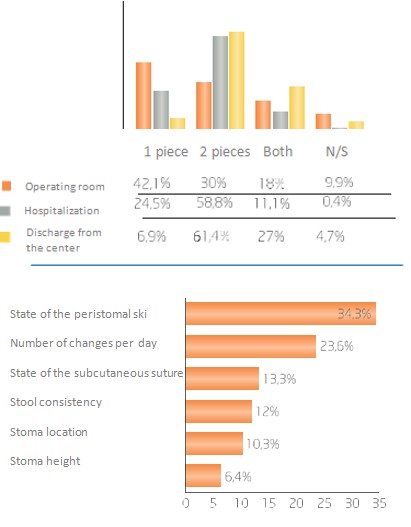
Graph 1: Devices used according to the surgical stage.
When evaluating patients’ predisposition to changing from a two-piece system to a one-piece system, 44.4% (n=104) respond “yes, reluctantly.” 43.3% (n=101) of the participants occasionally recommend the one-piece device, and the same percentage recommends it frequently.
Out of the total sample, 86.3% (n=201) considers it essential to include different types of ostomy devices in electronic prescriptions based on patient needs, compared to 13.7% (n=32) who doubt their benefits.
Regarding beliefs about ostomy device usage, as shown in Graph 2, when analyzing aspects related to ostomy that should be considered when recommending one-piece devices, it is noteworthy that the majority values the peristomal skin condition, followed by the number of changes per day, and to a lesser extent, the height of the stoma.
Graph 2: Considerations for the use of a one-piece device in relation to Ostomy.
Most professionals believe that when indicating a one- piece device, the patient’s manual and/or visual dexterity and their degree of dependence should be taken into account (Graph 3). When asked about the most appropriate device option for immediate postoperative use, 62.2% (n=145) consider it should be a two-piece, and 37.8% (n=88) prefer a one-piece.
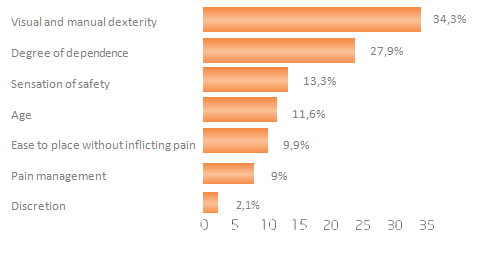
Graph 3: Aspects to consider for the use of a one-piece device in relation to the patient.
Only 85 professionals justify their response:
- 76.5% (n= 65) base their choice of a two-piece device on benefits for both the stoma and the professional. 35.4% (n= 23) consider that, in an immature stoma, the use of two-piece devices minimizes the risk of infection, avoids peristomal complications, and reduces pain during device removal. Regarding benefits for the professional, 17% (n= 11) believe that using two- piece devices reduces workload, 18.6% (n= 12) increases safety in handling effluent by facilitating stoma visibility without removing the entire device, and finally, 29.4% (n= 19) find it more comfortable due to the irregularity of effluent consistency during the first days.
- 23.5% (n= 20) justify the use of a one-piece device; 25% (n= 5) of the cases for its ease in emptying effluent, and 75% (n= 15) for the simplicity of the device.
Regarding the professional’s knowledge about the use of one-piece devices, 94% (n= 219) recommend the use of one- piece devices, while 6% (n= 14) claim to have never done so.
Regarding the appropriate care moment for the placement of a one-piece device, 25.3% (n= 59) believe it should be after stoma creation in the operating room, 24% (n= 56) during outpatient follow-up when intestinal transit is regularized, and the skin is intact, and 6.4% (n= 15) when the suture is removed (Table 1).
| Answers | N= 233 | % |
|---|---|---|
| According to the patient’s activities and lifestyle | 71 | 30.60% |
| Based on the patient’s comfort with the device | 57 | 24.50% |
| By demand of the patient and/or caretaker | 48 | 20.60% |
| To avoid generating pain when installing the device | 29 | 12.50% |
| Little manual dexterity | 26 | 11% |
| Never recommends it | 2 | 0.80% |
Table 1: In which cases does the professional recommend one-piece devices?
| Advantages | N= 233 | % |
|---|---|---|
| Flexibility | 146 | 62% |
| Ease of placement | 27 | 11.30% |
| Bag discretion | 25 | 10.8% |
| Reasonable price | 10 | 4.30% |
| Does not know | 9 | 3.90% |
| Hygienic | 5 | 2.10% |
| Adhesiveness to the skin | 3 | 1.80% |
| Safe | 4 | 1.70% |
| Skin protection | 2 | 0.90% |
| Adaptation to the skin | 2 | 0.90% |
| Disadvantages | N= 233 | % |
| Difficulty with placement if the bag is opaque | 61 | 25.90% |
| Does not protect peristomal skin | 58 | 24.90% |
| No disadvantages | 57 | 24.50% |
| Does not know | 19 | 8.10% |
| Difficult to take out | 7 | 3% |
| Antihygienic | 6 | 2.70% |
| Not very flexible | 6 | 2.70% |
| General placement difficulty | 5 | 2.20% |
| Difficult adaptation | 5 | 2.20% |
| Expensive | 4 | 1.80% |
| Unsafe | 3 | 1.30% |
| Not very discreet | 2 | 0.80% |
| Contraindications | N= 233 | % |
| Sunk/invaginated stoma | 80 | 34.40% |
| Peristomal lesions | 49 | 20.80% |
| Mucosal necrosis | 37 | 16% |
| Dehiscence | 28 | 12.10% |
| No inconveniences | 26 | 11.20% |
| Stoma in abdominal fold | 6 | 2.60% |
| Prolapse | 5 | 2.10% |
| Protruded | 2 | 0.80% |
Table 2: Advantages, Disadvantages and Contraindications in the use of a one-piece device.
In Table 2, responses are listed based on the advantages, disadvantages, and contraindications that professionals have considered for the use of one-piece devices, highlighting flexibility as an advantage, which provides greater freedom of movement. Regarding disadvantages, the majority emphasize the difficulty of placement when the bag is opaque and the belief that it offers less protection to peristomal skin. They believe that the use of this device is contraindicated in cases of sunk/invaginated stomas, peristomal injuries, mucosal necrosis, and/or dehiscence.
Regarding the appropriateness of using a one-piece device while peristomal sutures are in place, 42.9% (n= 100) believe there is no contraindication. 43.5% (n= 44) state that they do not use one-piece devices with peristomal sutures due to the risk of dehiscence.
The frequency of changing one-piece devices is, for 32.7% (n= 76) of respondents, one bag per day; for 23.6% (n= 55), two changes per day; and for 6.4% (n=15), a maximum of three changes per day. In contrast, 31.3% (n= 73) of professionals consider the use of a one-piece device independent of the number of changes per day if the skin is intact.
Discussion and Conclusion
In the absence of evidence on the topic of “the use of one or two-piece devices in ostomy patients,” this study aimed to review the types of devices most commonly used in clinical practice for the daily care of ostomy patients. Exposures of clinical cases or industry-sponsored research were found where the use of the devices employed was not justified, but rather the characteristics of the devices were emphasized [17, 18, 19]. Among them, Welser, et al. [20] compared two-piece devices, and Voergaard, et al. [21] conducted a comparative study of a single piece closed bag compared to the old reference for this bag. In both cases, devices of the same brand were compared without analyzing the better use between one or two pieces.
On the other hand, Salvadalena, et al. [22] refer to the treatment and recommendations applied to peristomal complications, indicating the use of flat to convex plates or the frequency of device changes without specifying the use of one or two-piece devices.
This study raises the question of what aspects should be prioritized for the use of one device or another, highlighting skin peristomal condition as the top consideration at 34.3%, and secondly, at 23.6%, the frequency of device changes. These data align with the annotations in clinical guidelines for ostomy patients [23, 24], recommending device use based on the number of bag changes, peristomal skin condition, and stoma characteristics, without specific details.
Ratliff [25] describes that patients who use two-piece systems had a 78% lower chance of experiencing leaks. This study agrees in that only a minority states that the one-piece device offers security (1.7%) or skin protection (0.9%); the majority define the advantage as being more flexible, easy to place, and discreet.
The use of devices varies by country. In the United Kingdom, one-piece devices are commonly used [26], while in the rest of Europe and the United States, two-piece devices are more commonly used as they are considered more cost- effective, with longer device usage time (in the United States, a minimum of three days is recommended) [27].
The indication or use of ostomy devices may be related to their funding or not, depending on the country, different types of distributors, nursing prescription or not, and the economic cost for the patient. Some countries, such as Belgium [28], analyzed deficiencies in the regulatory framework that set prices, reimbursement, distribution, and prescription of ostomy devices, recommending an evaluation of the role of nurses in ostomy care, introducing a competitive bidding process, and providing a fixed grant to patients for device purchase. This regulation would contribute to promoting competition among manufacturers and reducing device costs.
Regarding the manufacturing costs of ostomy devices, no studies providing updated evidence were found; however, the articles already found reflected the price difference between the two devices, with the one-piece device being of lower economic cost.
In Spain, ostomy devices are funded by Social Security (National Health System), resulting in minimal costs for patients. This fact may have influenced the results presented in this article, being a non- relevant factor in the decision of using one or two-piece devices.
Conducting a nationwide survey provides a comprehensive view of the criteria followed by nursing professionals in the care and management of ostomy patients and in the selection and/or change of ostomy devices.
The results confirm that, despite the availability of all types of devices in most centers, patients are typically instructed in the use of two-piece devices upon admission to the hospital, which would explain their higher frequency of use. There is doubt about whether patients are given the option to try different available devices, and although actual data on the percentage of their usage in Spain (at each health care level) is not available, the study results confirm the inclination of nursing professionals towards the use of two-piece devices compared to one-piece devices, regardless of considering the peristomal skin condition and even the patient’s stoma management.
With all the analyzed data, there are discrepancies among respondents in certain aspects such as professional criteria, evaluation of peristomal skin and injury risk, presence of sutures, frequency of device changes, and lack of knowledge about the use of one-piece devices.
Considering all the points mentioned above, and while recommendations regarding the use of ostomy accessories are useful, it would be crucial to conduct scientific studies and establish consensus related to the use of one or two- piece ostomy devices based on stoma characteristics, patient preferences, and not solely on professional preferences.
References
-
Fernandez-Diaz D, Castillo-Carrasco VI, Lezcano-Barbero F, Benito-Carrion P, Verdes- Montenegro JC (2019) What is the Experience of Living with an Ostomy like? A Phenomenological Approach. Enfermeria Comunitaria 15.
-
Ibanez Blazquez E (2020) Health Education Program Aimed at Ostomy Patients and Families “Know Your Stoma”. Universidad Zaragoza.
-
Burch J (2011) One-piece and Two-piece Pouches: What’s the Difference?. Br J Nurs 20(14): 858-860.
-
Mora Rivas C (2012) Assessment of One and Two Piece Ostomy Devices: Moderma Flex and Conform 2 of Hollister. Metas enferm 15(4): 22-26.
-
Nieves CBL, Diaz CC, Celdran-Manas M, Morales-Asencio JM, Hernandez-Zambrano SM, et al. (2017) Ostomy Patients Perception of the Health Care Received. Rev Lat Am Enfermagem 25: e2961.
-
Colwell JC, Mc Nichol L, Boarini J (2017) North America Wound, Ostomy, and Continence and Enterostomal Therapy Nurses Current Ostomy Care Practice Related to Peristomal Skin Issues. J Wound Ostomy Continence Nurs 44(3): 257-261.
-
Williams J (2012) Stoma Care: Intimacy and Body Image Issues. Pract Nurs 23(2): 91-93.
-
Silva NM, Santos MAD, Rosado SR, Galvao CM, Sonobe HM (2017) Psychological Aspects of Patients with Intestinal Stoma: Integrative Review. Rev Lat Am Enfermagem 25: e2950.
-
Maestra LP, Soriano TA, Fernandez CM (2019) Tools to Guarantee Quality of Life for an Ostomy Patient. Paraninfo Digital 13(29): 1.
-
Kalashnikova I, Achkasov S, Fadeeva S, Vorobiev G (2011) The Development and Use of Algorithms for Diagnosing and Choosing Treatment of Ostomy Complications: Results of a Prospective Evaluation. Ostomy Wound Manage 57(1): 20-27.
-
Pittman J (2011) Characteristics of the Patient with an Ostomy. J Wound Ostomy Continence Nurs 38(3): 271- 279.
-
Meisner S, Lehur PA, Moran B, Martins L, Jemec GB (2012) Peristomal Skin Complications are Common, Expensive, and Difficult to Manage: A Population Based Cost Modeling Study. PLoS One. 7(5): e37813.
-
Taneja C, Netsch D, Rolstad BS, Inglese G, Lamerato L, et al. (2017) Clinical and Economic Burden of Peristomal Skin Complications in Patients with Recent Ostomies. J Wound Ostomy Continence Nurs 44(4): 350-357.
-
Taneja C, Netsch D, Rolstad BS, Inglese G, Eaves D, et al. (2019) Risk and Economic Burden of Peristomal Skin Complications Following Ostomy Surgery. J Wound Ostomy Continence Nurs 46(2): 143-149.
-
Walker H, Hopkins G, Waller M, Storling ZM (2016) Raising the Bar: New Flexible Convex Ostomy Appliance - A Randomised Controlled Trial. World Council of Enterostomal Therapists Journal.
-
Burch J (2019) Using Convex Stoma Appliances. Gastrointest Nurs 17(7): 20-22.
-
Bueno Cruz B (2016) Clinical Evaluation of the New Three-Piece Alterna® Confort Ostomy Devices. Metas Enferm 19(4): 49-53.
-
Sanz Ros MT, Jimenez Funcia A, Martinez Ortuno FJ, Medina Munoz M, Sanz Caparros R, et al. (2016) Evaluation of Improvements in Adhesively Attached Two-Piece Ostomy Devices. Metas Enferm 19(5): 27-31.
-
Gomez Perez A, Panadero Morales R, Garcia Torres F, Solera Navarro MJ, Peris Serra JL, et al. (2020) Evolucion Comparativa Mediante Ensayos Biomecanicos De Anillos Moldeables De Ostomia. Metas Enferm 23(10): 17-20.
-
Welser M, Riedlinger I, Prause U (2009) A Comparative Study of Two-Piece Ostomy Appliances. Br J Nurs 18(9): 530-534.
-
Voergaard LL, Vendelbo G, Carlsen B, Jacobsen L, Nissen B, et al. (2007) Ostomy Bag Management: Comparative Study of a New One-Piece Closed Bag. Br J Nurs 16(2): 95-101.
-
Salvadalena G, Colwell JC, Skountrianos G, Pittman J (2020) Lessons Learned About Peristomal Skin Complications: Secondary Analysis of the ADVOCATE trial. J Wound Ostomy Continence Nurs 47(4): 357-363.
-
(2022) Recommendations for People with an Ostomy. Portal de Salud de la Junta de Castilla y Leon.
-
(2022) Guia de recomendaciones al paciente Ostomias [Internet] Madrid: Ciudad publicada: Direccion General de Calidad, Acreditacion, Evaluacion e Inspeccion de la Comunidad de Madrid; Disponible.
-
Ratliff CR (2014) Factors Related to Ostomy Leakage in the Community Setting. J Wound Ostomy Continence Nurs 41(3): 249-253.
-
Burch J (2008) Stoma Care. John Wiley & Sons.
-
Ostomy Guidelines TF, Goldberg M, Aukett LK, Carmel J, Fellows J, et al. (2010) Management of the patient with a fecal ostomy: best practice guideline for clinicians. J Wound Ostomy Continence Nurs 37(6): 596-598.
-
Simoens S, Vanleene V, De Mare L, Moldenaers I, Debruyne H, et al. Ostomy Appliance Prices in Europe. J Med Econ 12(1): 17-24.
- Teaching Cognitive Behavioral Therapy to Graduate Psychiatric Mental Health Nurse Practitioner Students: Utilizing A Mixed Methods Course Evaluation
- The Role of Pharmacogenetic Testing in Clinical Practice: A Path toward more Effective, Personalized and Cost-effective Care
- Implementing Screening with the GAD-7 in an Outpatient Mental Health Setting: A Quality Improvement Project
- Social Media and Health Promotion
- Impact of Covid-19 Pandemic on the Academic Performance and Attitude of Nursing Students towards E-Learning
- A Study to Assess the Knowledge Regarding Ill Effects of Tobacco Consumption on Health among Adolescents in Selected Higher Secondary School in Nadiad City