
In Vitro Anti-Cancer, Anti Metabolic and Anti Proliferative Activity of Phytolacca decandra 6CH and 200CH in Breast Cancer Cell Lines
Phytolacca decandra is specific medicine used for treatment of breast cancer although many literatures available regarding its utility. Evidence based action is needed for its action on breast cancer therefore we aimed to assess In vitro cytotoxicity effects of Phytolacca decandra 6CH, 200CH in Breast cancer cell lines. cytotoxicity and antiproliferative effects in breast cancer lines exposed to Phytolacca decandra 6CH, 200CH as revealed by MTT assay, metabolic activity was tested using SRB assay. Ability to inhibit growth of cancer cells was evaluated by colony forming assay. Phytolacca decandra 6CH and 200CH has exhibited antiproliferative effect and significant cytotoxicity as revealed by MTT assay. Initially dose was optimized for each sample and once the IC50 value was determined we checked its cytotoxicity using MTT assay. The metabolic activity of the Phytolacca decandra 6CH and 200CH was tested using SRB assay. This too revealed that the Phytolacca decandra 6CH and 200CH were able to reduce the metabolic activity of then cancer cells. Colony forming assay was done to check the ability of the Phytolacca decandra 6CH and 200CH to inhibit the growth of cancer cells. The results revealed that the Phytolacca decandra 6CH and 200CH drastically decreased the multiplication of the MCF 7 cancer cells and thus proving its anticancer activity. This result shows evidence-based Homoeopathy medicine Phytolacca decandra 6CH and 200CH has anticancer activity.
Introduction
Cancer is among the top causes of mortality. In 2020, there was around 2.26 million new cases and 6, 85,000 deaths. By 2030, cancer-related deaths will rise by 4 million people, with emerging countries suffering more than developed countries. Cancer accounts for about 5% of the global illness burden. Breast, colon, and prostate cancers are becoming more common as a result of changes in western lifestyle. Cancer is caused by somatic DNA changes that result in uncontrolled cellular proliferation. The majorities of cancers develop in families and are caused by a germ line mutation in the cancer gene [1]. On the factors including the type of tissue in which the cancer begins (histological) and the place in the body where it grows, cancers are classed in two ways. For 35 years, In Order to ensure the quality of Oncology Diseases (ICD-0-3) is being used to code neoplasm or cancer registries, and even the site and histology. Breast carcinoma is coded as ICD-10 [2].
Cancer starts when cells that are influenced by hormones. Exogenous hormones have a key role in the development of breast cancer. Hormone therapy and radiation exposure are both high-risk factors for breast cancer. Breast cancer cases are diagnosed by obtaining a biopsy of a nodule found on a mammogram or palpation. In the case of breast cancer patients, staging is crucial. It can be used to determine a disease’s prognosis as well as therapy options. Primary tumor, regional nodal, and spread are all abbreviated as TNM [3].
Obesity, lack of physical activity, drinking, hormone replacement therapy following menopause, and ionizing radiation are all risk factors for breast cancer. Science and technology have advanced greatly in radiology and diagnostic techniques, making diagnosis easier and allowing us to diagnose cases early. We can prevent disease by understanding the predisposing factors. Dr. JH Clarke, Dr. Cooper, Dr. JC Burnett, and Dr. AH Grimmer, Dr. KN Kasad, and Dr. RP Patel have all made significant contributions to the Homoeopathic treatment of cancer. In treating cancer patients, three techniques should be used: prevention, cure, and palliative care. Nano biotechnology has a stronger impact on cancer treatment, particularly in priority drug delivery and cancer cell line investigations in vitro. Various variables, such as uncontrolled cell growth and unregulated apoptosis, are involved in the cell cycle of tumor cells. Other miasms develop in the body as acquired or genetic traits [4]. “My observation has been that there is not a case of cancer without a tubercular foundation,” says Dr. AH Grimmer. It flourishes in tuberculous soil. It’s a miasm that comes from the mixing of all previous miasms [5].
Phytolacca decandra is a specialized medicine for breast cancer, according to Materia Medica literature. The cytotoxicity of cancer cell lines is used to determine the efficacy of therapy. The current work is an experimental study on the anti-cancer action of ultra-diluted homoeopathic medicine Phytolacca decandra 6CH, 200CH in breast cancer cell lines MCF -7. In the MTT experiment, Phytolacca decandra had an anti-proliferative impact and demonstrated considerable cytotoxicity. Phytolacca decandra 6CH and 200CH doses were optimized. MTT assay was used to determine the IC50 value. The SRB assay was used to assess the metabolic activity of Phytolacca decandra 6CH and 200CH.
The traditional homeopathic medicines show some identified nanoparticles which adds more colour to the therapeutic area with immense potential activity between contemporary nanomedicine and another interventional approaches. Antiproliferative and pro-apoptotic effects can be a positive sign for the homoeopathic drugs to prove its anti-placebo nature and it could also initiate anticancer effects in cell-to-cell signalling actions of both exogenous and endogenous nanoparticles [6]. The nano-encapsulation of Phytolacca decandra increases drug bioavailability and thereby has a better chemo-preventive action against lung cancer in vivo and on A549 cells in vitro than that of Phytolacca decandra [7].
Materials and Methods
Homeopathic Remedies
The two potencies of Phytolacca decandra 6CH and 200CH were procured from Dr. Wilmar Schwabe India Pvt. Ltd.
Cell Culture
MCF-7, a breast cancer cell line, was obtained from the National Centre for Cell Science (NCCS) in Pune, India. The cells were cultured in a CO2 incubator with 5% CO2 and 95% humidity, supplemented with DMEM, 10% FBS, non-essential amino acids, and 1X final concentrations of penicillin and streptomycin from a 100X stock. When the cells had reached confluent growth, they were trypsinized utilizing Trypsin- EDTA and seeded onto sterile 6-well and 96-well plates to perform various tests. The cytotoxicity assays and staining were done in 96-well plates and 6-well plates, respectively. Before the cells were seeded, a clean, dry, sterile cover slip was placed in each well of the 6- well plates, followed by incubation in a CO2 incubator (Innova CO-170, United States) with 5% CO2 and 95% humidity. The two treatment groups are MCF-7 +Phytolacca decandra 6CH and MCF-7 +Phytolacca decandra 200CH.
MTT Dye Reduction Assay
MTT assay was used to optimize the dose at first (Igarashi and Miyazawa, 2001). Hundred micro liters (100μl) of cells were planted at a density of 1106 cells/ml in 96 well plates, and they were treated to different treatment groups for 24 hours at different doses. The cells were treated with 50μl of MTT (Sigma, USA) after 24 hours of treatment and left undisturbed for 3 hours at 37°C. Following the incubation period, 200μl of PBS was added to each sample, and the extra MTT was aspirated away. To it, 200μl of isopropanol was added, and it was left in the dark overnight for solubilization before the absorbance was measured. The % viability of the treatment groups was calculated using a microtitre plate at 560nm (Bio-Rad, iMark Micro plate Reader). The 50 percent growth inhibition concentration (IC50) was estimated from a displayed dose-response curve. This carried out in triplicate with cell viability. MTT assay was repeated after fixing the dose with the IC50 value [8].
Cytotoxic Assay- SRB
The 350μl of ice cold 40% TCA was placed on top of the treated cells and incubated for one hour at 40C. After that, the cells were washed five times in 200μl of cold PBS. After removing the buffer, 350μl of SRB stain was applied to each well and allowed to sit for 30 minutes at room temperature in contact with the cells. Washing four times with 350μl parts of 1 percent acetic acid removed the unbound dye. Then, to fix the protein-bound dye, 10mM Tris (350μl) was added to each tube, and the plate was gently shaken for 20 minutes. The Tris layer in each tube was transferred to a 96- well plate and the absorbance was read in a microtitre plate reader ((Bio-Rad, iMark Micro plate Reader) 492nm. The cell survival on MCF-7 was recorded and the percentage viability was calculated [7].
Colony Forming Assay
A 6-well plate was used for the colony formation assay. MCF-7 cells (1 x 10³ cells) were sown onto 6-well sterile plates. The cells were given treatment groups the next day. After cell adhesion, the media was aspirated and new media was added, and the cells were cultured for 7 days at 37°C in a 5 percent CO2 incubator. Glutaraldehyde was used to fix the colonies, and crystal violet was used to dye them [9].
Results
MTT Assay - Cytotoxicity
When metabolic events lead to apoptosis or necrosis, the MTT cell proliferation assay evaluates the rate of cell proliferation and, conversely, the reduction in cell viability. Depending on the vitality of the cells, mitochondrial dehydrogenase reduces the yellow chemical MTT to the water-insoluble blue formazan molecule. MCF-7 cells were treated to different doses of Phytolacca decandra (6CH and 200CH) ranging from 10μl, 25μl, 50μl, and 100μl for 24 hours in order to optimize the dose and duration of plant extracts in breast cancer cell line. Cell viability was measured using MTT assay.
The IC50 values for the Phytolacca decandra (6CH and 200CH) treated groups were 50μl and 100μl, respectively, with ideal exposure duration of 24 hours. The IC50 value was found to be 50µl and 100µl for Phytolacca decandra (6CH and 200CH) treated group with an optimal exposure period of 24 hours (Figure 1). The MTT assay showed that plant extracts treatment significantly inhibited the viability of MCF-7 cells in a dose dependent manner (Table 1).
| S. No | Volume of sample | 6CH | 200CH | ||
|---|---|---|---|---|---|
| OD | % of inhibition | OD | % of inhibition | ||
| 1 | 10 µl | 0.357 | 35.08±0.18 | 0.413 | 24.36±0.62 |
| 2 | 25µl | 0.275 | 49.93±0.19 | 0.372 | 32.24±0.20 |
| 3 | 50µl | 0.258 | 53.02±0.10 | 0.354 | 35.63±0.62 |
| 4 | 100µl | 0.142 | 73.84±0.91 | 0.273 | 50.36±0.18 |
Table 1: Cytotoxicity effect of MCF-7 cells treated with Phytolacca decandra 6CH and 200CH.
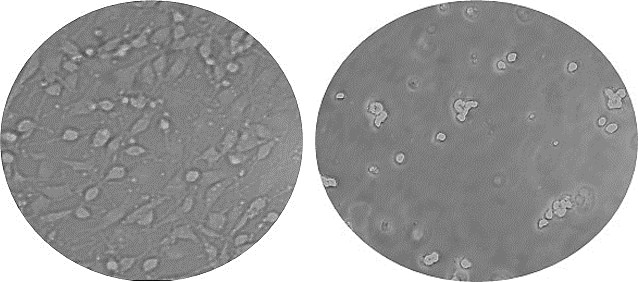
Control Phytolacca decandra Figure 1: Cytotoxicity effect of MCF-7 cells treated with Phytolacca decandra.
Sulforhodamine B (SRB) Assay – Metabolic Activity
SRB assay is indicative of the metabolic capacity of the cells. Percent inhibition of metabolic activity was measured. The control values were fixed to be 100 %; other groups were calculated relative to that. Anticancer efficacy of Phytolacca decandra 6CH and 200CH was screened using MCF-7, breast cancer cell line at 6CH and 200CH concentrations (Table 2). Extract inhibited the growth of the cells in dose dependent manner. The effect was found to be at Phytolacca decandra (6CH and 200CH) treated group with an optimal exposure period of 24 hours.
| S. No | Volume of sample | % Inhibition | |
|---|---|---|---|
| 6C | 200C | ||
| 1 | 10 µl | 36.17±0.25 | 23.39±0.63 |
| 2 | 25µl | 48.83±0.21 | 31.55±0.23 |
| 3 | 50µl | 54.32±0.33 | 36.60±0.59 |
| 4 | 100µl | 74.45±0.95 | 52.32±0.21 |
Table 2: Metabolic capacity of MCF-7 cells treated with Phytolacca decandra 6CH and 200CH.
Colony Forming Assay
Colony formation, also known as clonogenic assay, is an in vitro quantitative approach for determining a single cell’s potential to clonally expand into a large colony. Clonogenic assay or colony formation assay is an in vitro cell survival assay based on the ability of a single cell to grow into a colony. The colony is defined to consist of at least 50 cells. The assay essentially tests every cell in the population for its
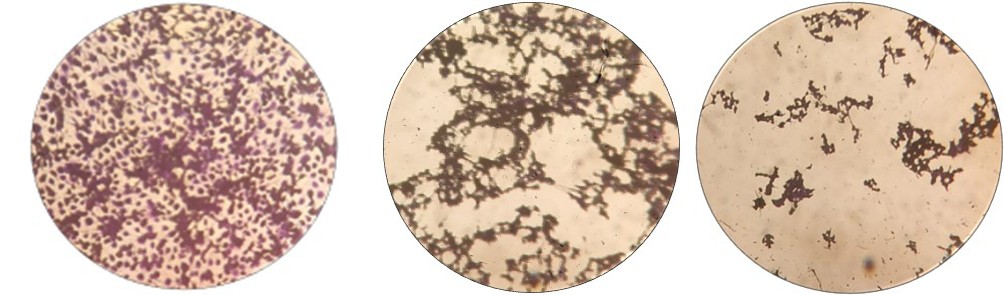
ability to undergo “unlimited” division. Clonogenic activity is a sensitive indicator of undifferentiated cancer cells. This method demonstrates that cancer cells can survive and produce colonies in an anchorage-free culture medium. We analyzed if the Phytolacca decandra 6CH and 200 CH could impair colony formation. The results showed that on exposure to the Phytolacca decandra 6CH and 200CH there was a decrease in the cell population and this indicates treatment group has an anti-proliferative effect (Figure 2).
Discussion
Breast cancer is the most frequent invasive malignancy in women worldwide. Breast cancer, along with lung cancer, is the most often diagnosed malignancy, with 2.09 million cases recorded in 2018. One in every seven women in the globe is diagnosed with breast cancer. Thieme Publishers released a study with peer-reviewed publications. Shagun arora Jaypee institute of technology’s faculty journal, Homeopathy, volume 102 issues 4 October 2013. Sarsaparilla (Sars) on ACHN cells (human renal adenocarcinoma), Ruta graveolens (Ruta) on COLO-205 (human colorectal carcinoma), and Phytolacca decandra (Phyto) on MCF-7 (human breast carcinoma) were tested in mother tincture (MT) and ultra-molecular dilution (30C, 200C, 1M, and 10M) [10, 11]. The preliminary in vitro evidence indicating the potential of homeopathic medicines in the treatment of cancer. Further research should be conducted. Understanding the mechanism of action of ultramolecular dilutions presents a major challenge [6].
According to the findings of this study, Phytolacca decandra has substantial cytotoxic and anti-proliferative effects in breast cancer cell lines. Ultra- diluted treatments have a cytotoxic effect on breast cancer cells. In conclusion, the study shows that the ultra-diluted natural product therapies suggested in the ‘Banerjee Protocol’ cause cell cycle delay/arrest in breast cancer cells, followed by apoptosis. Though the existence of the wild-type p53 gene seemed to correspond with the anti-survival impact, overall susceptibility to the inhibitory effects of the remedies appeared to be independent of the functional p53 and estrogen-receptor status of the breast cancer cells.
Homoeopathic medicines are made by a series of dilutions. Drugs’ material quantity exceeds Avogadro’s number after a series of dilutions, implying non molecular action of remedies with unique healing qualities. Scientific evidence is required for homoeopathic medicines. In Allopathic, Carcinoma of breast in its treatment includes Surgery, Chemotherapy, Radiotherapy based on TNM Staging. Lots of side effects are there while during treatment of carcinoma of Breast. Many studies have been conducted in recent years to see if there is a way to shield healthy tissue from the harmful effects of radiation and anti-cancer medications. The Phytolacca decandra 6CH, 200CH shows cytotoxicity effects and reduced cell proliferation in Breast cancer cell lines MCF-7 by MTT Assay, Reduced Metabolic activity by SRB assay and reduction in colony forming by colony forming assay. Analyzing the effects of Phytolacca decandra 6CH and 200CH in breast cancer cell lines MCF -7. Phytolacca decandra 6CH and 200CH has been shown to significantly decrease the viability of breast cancer cell lines. The 50μl and 100μl for Phytolacca decandra 6CH treated group with optimal exposure period of 24 hours. The MTT assay showed that Phytolacca decandra 6CH and 200CH treatment significantly inhibited the viability of MCF -7 cells in dose dependent manner. SRB assay shows 50μl and 100μl for Phytolacca decandra 6CH and 200CH treated group with an optimal exposure period 24hours.Colony forming assay demonstrates that cancer cells can survive and produce colonies in an anchorage-free culture medium. Phytolacca decandra had beneficial biological action, opening up a possibility of having therapeutic values in the management of diseases including cancer [9]. We analyzed if a Phytolacca decandra 6CH and 200CH could impair colony formation. The results showed that on exposure to the samples there by decrease in the cell population and this indicates Phytolacca decandra 6CHand 200CH Group has good anti-proliferative effect. The study revealed that Phytolacca decandra 6CH and 200CH has better anti- cancer activity in Breast cancer cell lines MCF-7. Statistical techniques and data analysis were performed. The statistical results reveal that p value<0.01 so these results are statistically significant (ANOVA).
Conclusion
The study implies that Phytolacca decandra 6CH and 200CH shows significantly decrease the viability of Breast cancer cell lines. The results indicate the potential anticancer activity of Phytolacca decandra 6CH and 200CH, which helps in part to its inhibition of proliferation. The homoeopathic medicines tested in study Phytolacca decandra 6CH and 200CH demonstrated both Cytotoxicity and Anti- Proliferative activity the cytotoxicity was attenuation when breast cancer cell lines were treated with Phytolacca decandra 6CH and 200CH In MTT assay. Percent of inhibition of metabolic activity were measured using SRB assay. Anti- cancer efficacy of Phytolacca decandra 6CHand 200CH was screened using Breast cancer cell lines at 6CH and 200CH. Phytolacca decandra 6CH and 200CH inhibited the growth of cells in dose dependent manner. Colony forming Assay was performed. Phytolacca decandra 6CH and 200 CH could impair the colony formation. The study revealed that exposure to Phytolacca decandra 6CH and 200 CH decrease in cell population and indicates anti-proliferative effect. The Phytolacca decandra have another therapeutic effect towards chronic rheumatism, regular conjunctivitis, psoriasis, and in some skin diseases [12]. In general, medicinal plants provide raw material for all of indigenous systems of medicine namely Ayurveda, Siddha, Unani and Homeopathy. In homoeopathy various medicinal plants viz., Phytolacca decandra, Hydrastis canadensis and so on [13]. Early diagnosis of cancer would decrease morbidity and mortality among females worldwide [14].
Acknowledgement
I heartfully thank the management of Sarada Krishna Homoeopathic Medical College, Kulasekharam for their valuable guidance, constant encouragement and providing basic facilities throughout the study. I am gratified to our colleges who furnished expertise that greatly aid the research, although they may not assent with all of the interpretations provided in this paper. I am heartfully thank Dr. Anitha Subash, Professor and Head, Department of Biochemistry, Biotechnology and Bioinformatics, School of Biosciences and Dr. S. Sumathi, Associate Professor, Department of Biochemistry, Biotechnology and Bioinformatics, School of Biosciences and PhD Scholars of the department, Avinashlingam University, Coimbatore for proving laboratory facilities and kind support. I thank my parents, relatives and friend for their constant encouragement.
References
-
WHO (2022) Breast Cancer.
-
WHO (2022) International Classification of Diseases for Oncology.
-
National Cancer Institute (2022) Risk Factors.
-
Patel RP (1974) My Experiments with 50 Millesimal Scale Potencies. 6th (Edn.), Hahnemann House, Gujarat: India, pp: 361.
-
Tiwary H (2018) Homeopathic therapeutics of cancer from the masters of homeopathy. 1st (Edn.), B Jain Publications: New Delhi, India, pp: 132,160,172.
-
Das J, Das S, Samadder A, Bhadra K, Bukhsh ARK (2012) Poly (lactide-co-glycolide) encapsulated extract of _Phytolacca decandra_ demonstrates better intervention against induced lung adenocarcinoma in mice and on A549 cells. European Journal of Pharmaceutical Sciences 47(2): 313-324.
-
Bell IR, Sarter B, Koithan M, Banerji P, Banerji P, et al. (2014) Integrative nanomedicine: treating cancer with nanoscale natural products. Global advances in health and medicine 3(1): 36-53.
-
Igarashi M, Miyazawa T (2001) The growth inhibitory effect of conjugated linoleic acid on a human hepatoma cell line, HepG2, is induced by a change in fatty acid metabolism, but not the facilitation of lipid peroxidation in the cells. Biochimica et Biophysica Acta (BBA)- Molecular and Cell Biology of Lipids 1530(2-3): 162-171.
-
Skehan P, Storeng R, Scudiero D, Monks A, McMahon J, et al. (1990) New colorimetric cytotoxicity assay for anticancer-drug screening. J Natl Cancer Inst 82(13): 1107-1112.
-
Arora S, Aggarwal A, Singla P, Jyoti S, Tandon S (2013) Anti-proliferative effects of homeopathic medicines on human kidney, colon and breast cancer cells. Homeopathy 102(04): 274-282.
-
Das S, Das J, Samadder A, Bhattacharyya SS, Das D, et al. (2013) Biosynthesized silver nanoparticles by ethanolic extracts of _Phytolacca decandra_, _Gelsemium sempervirens,_ _Hydrastis canadensis_ and _Thuja occidentalis_ induce differential cytotoxicity through G2/M arrest in A375 cells. Colloids and Surfaces B: Biointerfaces 101(1): 325- 336.
-
Ghosh S, Bishayee K, Paul A, Mukherjee A, Sikdar S, et al. (2013) Homeopathic mother tincture of _Phytolacca_ _decandra_ induces apoptosis in skin melanoma cells by activating caspase–mediated signalling via reactive oxygen species elevation. Journal of Integrative Medicine 11(2): 116-124.
-
Ruskin RS, Kumari VP, Gopukumar ST, Praseetha PK (2014) Evaluation of phytochemical, antibacterial and anti-cancerous activity of _Cissus quadrangularis_ from South Western Ghats regions of India. Int J Pharm Sci Rev Res 28(1): 12-15.
-
Sudha B, Poornima A, Suganya K, Swathi K, Kumar NS, et al. (2022) Identification of hub genes and role of CDKN2A as a biomarker in cervical cancer: An in-silico approach. Human Gene 33(1): 201048.
- Solution-Processed Chiral Perovskites for Biomedical Applications
- Nanotechnology in Health Chemistry and Medicine: Current Challenges and Future Directions
- Human Exposure to Micro- and Nanoplastics: Pathways, Toxicity, and Intervention Strategies
- Exosome Nanomedicine for Cancer Therapy
- Micro and Nanoplastics–Plastisphere, Biotoxicity, Impact on Human Health, and Mitigation Strategies
- Process Validation of Cefixime Powder for Suspension Dosage Form, 50 mL