
Green Synthesis of Nano-Semiconductor Photocatalysts and their Effectivity for Photo-Oxidation of Organic Pollutants in Wastewater: A Review Study
In recent years, green synthesis of nanoparticles (NPs) has been regarded as preferable and acceptable than chemical approaches, particularly when it applies to pollution control and wastewater treatment. The green synthesis approaches were effectively employed to prepare a huge number of semiconductors photocatalysts, such as TiO2, WO3, SnO2, CeO2, ZnO, Bi2O3, Ag, Na2SeO3, ZnCr2O4, Nb2O5, and so on. Photocatalytic degradation is an advanced water treatment technology that has great potential for the photo-oxidation of various organic pollutants and various types of nano-semiconductors photocatalysts. Plant waste has the potential to be more useful in the green synthesis of metal nanoparticles (NPs) due to their availability, high biodiversity, eco-friendliness, and low cost. This review focuses on the employing of plant extracts in the synthesis of nano-photocatalysts as a cost-effective approach. Our study involves reviewing a huge number of impactful studies that deal with the photooxidation of organic pollutants under light radiation. It was concluded that the utilization of waste plants in the green synthesis of nano-photocatalysts is a low-cost technology, environmentally friendly, and can produce nanoparticles with outstanding efficiency for water pollution remediation. This study encourages the development of new technologies based on reusing plant waste in the synthesis of economic photocatalysts for environmental applications.
Ayah A Okab1#, Zaid H Jabbar2*, Bassim H Graimed3 and Abeer I Alwared3
#These authors have contributed equally to this work and share the first authorship.
Introduction
A few days ago, organic pollutants revealed a greater threat to human health and the environment due to the potential contamination of marine life and ecosystems via phenols, antibiotics, pesticides, and dyes [1, 2]. These pollutants exhibit a strong toxic effect and are difficult to decompose in nature [3, 4, 5]. Thus, it is crucial to develop robust technology to effectively eradicate organic contaminants. As a prominent solution, advanced oxidation processes (AOPs) are a set of efficient chemical treatment techniques that can completely oxidize recalcitrant organic materials in wastewater into simple products [6]. AOPs (see Fig. 1) involve the production of powerful and non-selective radical species that can break down refractory organic pollutants in efficient degradation pathways [7, 8, 9, 10].
Nowadays, a huge number of hazardous organic pollutants (HOPs), like organic dyes [11, 12], pesticides [13], phenols [14], antibiotics [14, 15, 16], detergents [17], drugs [18], biphenyls [19], plasticizers [20], and others, are discharged into water and treated by efficient treatment technologies. Among them, heterogeneous photocatalytic degradation technology is an advanced oxidation process (AOPs), which has received more attention due to its advantages, such as low energy consumption, mild reaction conditions, and a broad range of applications [21, 22]. Under light illumination, it has been shown to be more efficient in degrading HOPs into low-toxic and biodegradable products, which can then be completely mineralized into CO2 and H2O [23, 24] (Figure 1).
![Figure 1: Classification of AOPs that can be employed for oxidation of different organic pollutants [25].](/fulltextimages/11320/fig_1.png)
A huge number of metal oxides, such as TiO2, WO3, SnO2, CeO2, ZnO, Bi2O3, Ag-based photocatalysts, Nb2O5, and so on, were employed as semiconductor photocatalysts for the degradation of organic pollutants under UV and visible light sources [26, 27, 28]. Several techniques and approaches have been implemented to synthesize the metal oxides, including sol gel [29], liquid phase [30], chemical vapor deposition [31], colloidal [32, 33], electrodeposition [34], hydrothermal method, co-precipitation, solvothermal, self- assembly, and so on [35]. The green synthesis technologies based on bio-resources have been proven to be more effective, environmentally friendly, and less dangerous than other methods [36, 37, 38, 39]. These methods were developed to produce a variety of metal oxide nanoparticles derived from biocompatible materials such as microorganisms (bacteria, algae, and fungi) and plant extracts (steam, seed, leaf, fruit, and flower) [40, 41].
Recently, the synthesis of nanoparticles from plant extracts has received increased attention due to their activity and economics. Hence, many plant species were investigated for the preparation of nanoparticles in various shapes and sizes. The researchers gave priority to fabricating plant- mediated NPs because dealing with plant parts is easier and more practical than dealing with microorganisms (bacteria, algae, and fungi). Moreover, the utilized microorganisms require a significant amount of time to cultivate fungus or bacterial cultures to be ready for practical use. On the other hand, plant-mediated NPs exhibited many other advantages, like their availability, high biodiversity, eco-friendliness, and low cost [42]. This review highlights the recent technologies employed to fabricate metal-oxide nanoparticles using different plant parts. Moreover, this study concentrates on the application of green synthesized NPs in the photocatalytic oxidation of organic pollutants in wastewater. This study encourages the development of new technologies based on reusing plant waste in the synthesis of economic photocatalysts for environmental applications.
Fundamentals of Photocatalytic Reactions
The photocatalysis process “has been proven to be promising and sustainable for addressing the problems related to environmental pollution and the energy crisis by harvesting clean or renewable solar energy [43]. The photocatalysis process was commonly implemented to degrade the organic pollutants under visible-light illumination and ambient conditions to obtain a desirable mineralization process [44]. In the photocatalysis process, the reaction rate can be accelerated by using semiconductor photocatalysts to absorb light of the appropriate frequency [45]. Based on the phases of catalysts and reactants, the photocatalysis reaction may be heterogeneous or homogenous. It is identified as a homogeneous system if the catalyst and the reactant are in the same phase, while it is identified as a heterogeneous reaction if the catalyst and the reactant are in a different phase [46].
The photodegradation mechanism involves four main steps, including the absorption of light energy, excitation of electrons, separation of photo-carriers, and photocatalytic reaction [47, 48, 49]. By irradiating the photoreactor system with a light source (Eq. 2.1), the photocatalyst absorbs the photon energy equivalent to the frequency of its band gap energy (Eg), exciting the electrons (e−) from the valence band (VB) to the conduction band (CB), producing pairs of electrons and holes in the CB and VB, respectively [50, 51]. The excited photo-carriers participate in a series of redox reactions to create a sufficient number of active radials.
Specifically, water molecules and/or hydroxyl ions can be reacted with splitter holes in the VB to generate hydroxyl radicals (•OH), as depicted in Eqs. 2.2 and 2.3. In addition, the superoxide radicals (•O2−) and hydrogen peroxide (H2O2) can be obtained via a series of oxidation reactions between the photoexcited electrons of CB and dissolved oxygen (Eqs. 2.4 and 2.5), which convert to •OH radicals as illustrated in Eqs. 2.6 and 2.7 [52, 53]. Subsequently (Eq. 2.8), the organic pollutants like dyes and antibiotics will be broken down by these ROS, converting them into simple and less harmful intermediates [54, 55]. Unfortunately, the photoreaction can be hampered by reintegrating between the electrons and holes (Eq. 2.9), resulting in an undesirable treatment process [56, 57]. Thus, it is important to overcome this deactivation action by using efficient modification technologies that will be clarified in the next sections” [58, 59, 60] (Figure 2).
( ) Photocatalyst Light Energy e h hν − + + → + (1)
$$ \mathrm {h} ^ {+} (\mathrm {V B}) + \mathrm {H} _ {2} \mathrm {O} \rightarrow \dot {\mathrm {O}} \mathrm {H} + \mathrm {H} ^ {+} (2) $$ $$ \mathrm {h} ^ {+} (\mathrm {V B}) + \mathrm {O H} \rightarrow \dot {\mathrm {O H}} \tag {3} $$ ( ) 2 2 e CBof PC O O − − + → (4) $$ \mathrm {O} _ {2} + 2 \mathrm {H} ^ {+} + 2 \mathrm {e} ^ {-} (C B) \rightarrow \mathrm {H} _ {2} \mathrm {O} _ {2} (5) $$ $$ \dot {\mathrm {O}} _ {2} ^ {-} + 2 \mathrm {H} _ {2} \mathrm {O} _ {2} \mathrm {H} \dot {\mathrm {O}} + 2 \mathrm {H} \dot {\mathrm {O}} + \mathrm {O} _ {2} + \mathrm {H} _ {2} \mathrm {O} _ {2} + \dot {\mathrm {O}} _ {2} ^ {-} \rightarrow \dot {\mathrm {O}} \mathrm {H} \tag {6} $$ $$ \mathrm {H} _ {2} \mathrm {O} _ {2} \mathrm {o r} \dot {\mathrm {O}} _ {2} ^ {-} + \mathrm {e} ^ {-} \rightarrow \dot {\mathrm {O}} \mathrm {H} \tag {7} $$ ( ) 2 2 2 2 ROS OH,h ,H O organic CO H O+intermediates + + → + (8) e h deactivated reaction hν − + + → + (9)
![Figure 2: Schematic illustration depicting the photocatalytic mechanism under simulated sunlight irradiation [61].](/fulltextimages/11320/fig_2.png)
Green Synthesis of Single Nano-Semi conductors
The green pathway refers to these methods that are employed to fabricate NP, which is characterized by being risk-free, less hazardous, environmentally friendly, and mostly employing renewable energy sources. In these technologies, plants and microorganisms are utilized as active bio-components in green synthesis, resulting in low energy consumption and environmentally friendly solvents, with water serving as the primary solvent. Besides, the NPs could be created by utilizing bioactive substances that serve as reducing and capping agents. The bioactive components are primarily sourced from various plant parts, including leaves, flowers, seeds, roots, and vegetable waste. Accordingly, bioactive phytochemicals are essential for the reduction of metal ions in the green synthesis of NPs. Generally, a simple method is employed for the manufacture of different kinds of metal nanoparticles mediated by plant extracts [62, 63].
In the green synthesis approach, a known quantity of plant parts was washed three or four times with tap water and air-dried at room temperature. Then, the cleaned plant parts are cut into pieces (manually or with an electric grinder) and weighed before being added to 100 mL of distilled water at a high temperature for 20 min. After that, the extract is allowed to cool down to room temperature. To obtain a clear solution, the extract was filtered by Whatman filter paper No. 1 and stored at 0 to 4 °C. The filtrated extract was used as a reducing agent during the nanoparticle synthesis process [64]. The deionized water is used to create an aqueous solution of metal precursors in varied concentrations. After that, the produced aqueous plant extract mixes in a different ratio with the obtained solution. The mixture was then stirred and heated to 80 °C. Bio-reduction can be detected by changing the solution color to dark brown. The produced nanoparticles can be centrifuged before being cleaned with deionized water and dried at room temperature. The final precipitate was annealed at high temperatures in a hot air oven for several hours before being cooled and collected for the next characterization step [64, 65, 66]. Sometimes, NaOH solution may be added to the mixture (metal precursors and plant extract) as an accelerator to increase the reducing potential and the rate of the reaction [67].
For instance [68], jujube fruit extract was used to prepare high-quality zinc oxide nanoparticles (NPs) using a green method. Moreover, ZnO NPs were fabricated using zinc nitride (Zn(NO3)2.6H2O) as a zinc precursor, and the jujube fruit aqueous extract was employed as an effective reducing agent and stabilizer. The ZnO NPs were applied for the degradation of two organic dyes (methylene blue (MB) and eriochrome black-T (ECBT)). The ZnO photocatalyst showed high photocatalytic activity, which was about 92% and 86% after 5 h of light radiation for MB and ECBT dyes, respectively. Moreover, the NPs demonstrated stable photocatalytic activity after sequential degradation experiments.
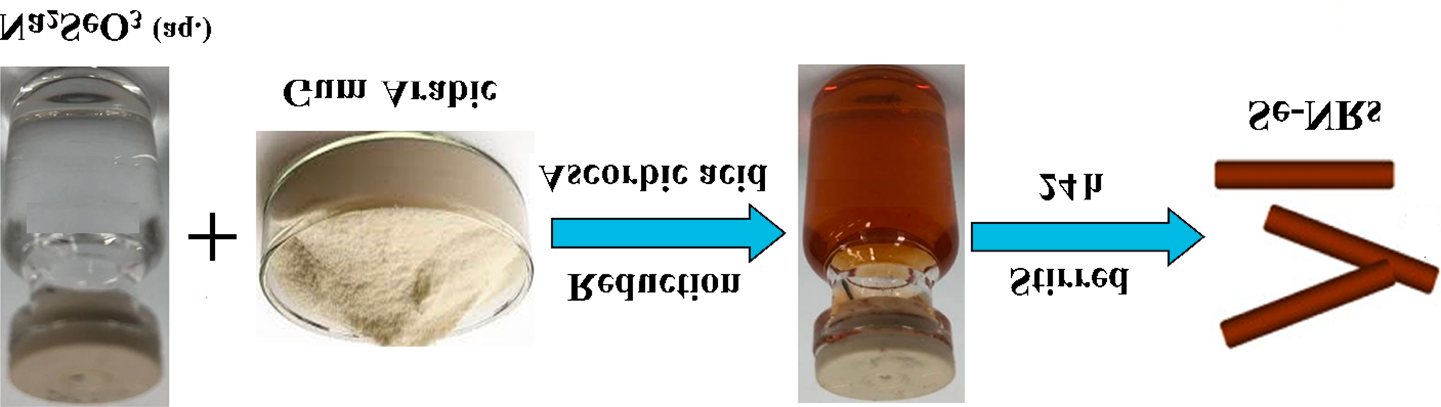
In another work [71], green, facial, environmentally friendly, and simple biological procedure was used for the fabrication of selenium nanorods (Se-NRs) by adding ascorbic acid and gum Arabic (GA) to the aqueous solution of selenium precursor sodium selenite salt (Na2SeO3) (see Fig. 3). Briefly, ascorbic acid was used to reduce Na2SeO3 and synthesize Se nanorods, while gum Arabic was added as a stabilizing agent to prevent the undesired growth of Se-NRs and stimulate the force driver to control the particle size and improve the stability within the solution. The obtained Se-NRs displayed high stability and negative charge, as well as the shape of nanorods and a crystalline nature with an average size of about 24 nm. The photocatalytic performance of the obtained Se-NRs was evaluated in the elimination of RhB dye under UV light, which exhibited a degradation efficiency of about 85% within 120 min.
In another work, SnO2 nanoparticles (NPs) were prepared by using Camellia sinensis leaf extract as a green method. In the synthesis procedure, three different extract concentrations (1, 2, and 4%) were utilized. The characterization technologies revealed that 4% SnO2 NPs were different in average sizes and band gaps compared with the bulk sample. This result is attributed to the action of extracting molecules as a stabilizing agent. Moreover, the 4%SnO2 NPs achieved a high degradation efficiency of MO (81%), and a total degradation of 100% of organic dyes, such as MB and Rd-B, after 180 min of UV-light radiation [69].
Moreover [70], silver nanoparticles (Ag NPs) were prepared using jujube core extract as a green, eco- friendly, facile, cost-effective, and rapid method. The photodegradation ability of Ag NPs was examined against cationic rhodamine B (RhB) and anionic eriochrome black T (EBT) pollutants under UV and visible light irradiations. The structural characterization of jujube core extract concluded that the biological activity of the extract can be attributed to its content of phenolic acids. The phenolic acids can stabilize and reduce the silver ions to silver nanoparticles. The photocatalytic experiments manifested that the degradation efficiencies were about 90.9% for RhB and 84.7% for EBT under UV irradiation and 74.7% for RhB and 68.2% for EBT under visible light irradiation within 80 min. The high degradation activity of Ag NPs against cationic dye compared with anionic dye could be attributed to the positive charge and oxygen group in the molecular structure of RhB.
In an interesting study [72], Cu-doped ZnO NPs were synthesized via bioreductant, eco-friendly, and Synedrium grantiid leaf extracts. Various concentrations of Cu were doped on ZnO NPs (1 to 9 wt%). The photocatalytic activity of the fabricated nanomaterial was studied against some organic pollutants like MB, Indigo Carmine (IC), and RhB under UV light. The X-ray photoelectron spectroscopy (XPS) analysis confirmed the existence of binding energies between the host material and dopant ions. Moreover, when doping content increases, the band gap values also increase, negatively affecting the photocatalytic activity. Moreover, 3% and 5% Cu-doped samples exhibited enhanced degradation efficiency against the organic dyes. More impactful studies can be summarized in Table 1 (Figure 3).
| No. | plant Name | Part of plant | NPs type | NPs Morphology | NPs Size (nm) | Organic pollutants | References |
|---|---|---|---|---|---|---|---|
| 1 | fenugreek (Trigonella foenum-graecum) | aqueous extract | Au NPs | spherical | 20 | 4-nitrophenol | [73] |
| 2 | Terminalia chebula (T. chebula) | fruit | Ag NPs | face centered cubic geometry oriented in (1 1 1) plane | Diameter 25 | methylene blue | [74] |
| 3 | Plectranthus amboinicus | leaf | ZnO NPs | Rod shape | 88 | methyl red (MR) | [75] |
| 4 | Punica granatum | fruit juice | gold and silver NPs | spherical | GNPs is 18 SNPs is 36 | Methylene Blue (MB), Methyl Orange (MO) and Eosin Y (EY) | [76] |
| 5 | Sterculia acuminate (S. acuminata) | fruit | AuNPs | spherical | 9.37 to 38.12 | 4-nitrophenol (4-NP), methylene blue (MB), methyl orange (MO) and direct blue 24 (DB24) | [77] |
| 6 | Moringa oleifera | flower | PdNPs | ---- | 100 | P-nitrophenol (PNP) and methylene blue dye. | [78] |
| 7 | Carissa edulis (C. edulis) | ZnO NPs | flower shaped | 50–55 | Congo red | [79] | |
| 8 | Zanthoxylum armatum | leaves | Ag NPs | crystalline | range from 15 to 50 | Safranine O, Methyl red, Methyl orange and Methylene blue | [80] |
| 9 | Cicer arietinum | leaves | Ag NPs | spherical | 88.8 | Congo red, 4-nitrophenol, and methylene blue. | [66] |
| 10 | Hyphaene thebaica | fruit | Ag NPs | spherical | 20 | 4-nitrophenol (4-NP) and Congo red dyes (CR), | [81] |
| 11 | Guiera senegalensis | leaves | Ag NPs | spherical | 50 | Congo red dye (CR) and 4-nitrophenol (4-NP). | [82] |
| 12 | Catunaregum spinosa (C. spinosa) | root bark | Ag NPs | spherically | 33±2 | Amaranth dye | [83] |
| 13 | Anacardium occidentale | leaf | α-Fe O 2 3 | nanocrystals | Less than 50 | methyl red and eosin yellowish | [84] |
| 14 | Camellia japonica | leaf | Ag-NPs | spherical | around 12 to 25 | nitrobenzene and EY dye | [85] |
| 15 | Lagerstroemia speciosa | leaf | Au NPs | spherical | 41–91 | methylene blue, methyl orange, bromophenol blue, bromocresol green, and 4-nitrophenol | [86] |
16 Cuminum cyminum seeds Ag NPs spherical 16 ± 2
17 Tamarindus indica leaves TiO2 spherical 20-40 Titan yellow dye [88]
18 Trigonella foenumgraecum seed Fe NPs --- 11 methyl orange dye degradation [89]
19 Mangifera indica flower Ag NPs Less than 51 4-nitrophenol and azo bond in dye molecules [90]
quasi-spherical, spherical, ellipsoidal, hexagonal and irregular
20 Allium ampeloprasum leaf Ag NPs
triangular, pentagonal, hexagonal and spherical
21 Alcea rosea leaf Au NPs
Sal deoiled seed cake (DOC), a plant-based waste as reducing capping agent
22 Seed Ag NPs polygonal 30–150
23 Hibiscus Rosa sinensis leaf ZnCr2O4/ZnCrO4 crystalline 70-14 [94]
24 corn-cob waste CC-Ag NPs CC- AuNPs Spherical multiple shapes 2 to 28 5 to 50 o-, m-, p-nitrophenols, , Rhodamine 6G, and Eosin Y. [95]
25 Terminalia bellerica kernel Ag NPs ---- Less than 48
26 Clitoria ternatea flower SnO2 spherical 7 Rhodamine B (RhB) [96]
27 Ceratonia siliqua ---- Fe3O4-cellulose- copper nanocomposite spherical 25
the epicarp (cover) and endocarp (seeds)
28 jumbo Muscadine (Vitis rotundifolia)
29 Cydonia oblonga NiO-NPs cubic shape dimension (74.5 nm) Rhodamine B (RB) dye [29]
30 Camellia sinensis SnO2 quasi-spherical 6.91, 5.2, and 4.7
31 Citrus reticulata blanco peel Ag NPs spherical Less than 27 malachite green dye [65]
32 Melia azedarach Leaf Cu-ZnO irregularly shaped particles chlorpyriphos pesticide [99]
Methylene blue (MB), methyl red (MR), rhodamine-B (Rh-B) and 4enitrophenol (4eNP).
[87]
4-nitrophenol to 4 aminophenol, DPPH
- (2,2- diphenyl-1-picrylhydrzyl) and ABTS+
- (2,2’-azino-bis (3-ethylbenzothiazoline-6- sulphonic acid)) radicals.
between 2 and 43 [91]
Apr-95 4-nitrophenol pollutant [92]
namely Methyl orange, Congo red, Methylene blue, Eriochrome black T, and Evans blue.
[93]
4-nitrophenol, methylene blue, eosin yellow and methyl orange.
[67]
4- nitrophenol, 2,4-dinitrophenylhydrazine, methyl orange and potassium ferricyanide.
[97]
GCoO-NPs ------- -------- AB-74 dye [98]
dyes Methylene Blue (MB), Methyl Orange (MO), and Rhodamine B (Rd-B)
[69]
- 33
- Canna indica L.
- Flowers
- ZnO crystallite
- 27.82 methylene blue
- [100]
- 34
- Solanum torvum (Turkey Berry)
- Fruit
- Au NPs spherical
- 9–14
- Methylene Blue dye
- [101]
- 35
- Vernonia amygdalina
- Leaf α-Fe2O3 resemble ginger
- ---methyl orange (MO) and methylene blue (MB) dyes
- [102]
- 4-nitrophenol (4-NP),
- 2-nitrophenol (2-NP), and azo dyes included
- Rhodamine B (RB), Congo red (CR), and Methyl orange
- (MO).
- 36
- Dodonaea viscosa plant species
- Ag NPs
- ---
- 60
- 37
- Eucalyptus globulus outer fruit shell
- Ag NP
- ----
- -----
- Methyl orange, methyl red and congo red
- [104]
Table 2: Examples of NP synthesis with plant assisted and their performance in photocatalytic degradation of organic pollutants.
Green Synthesis Heterojunction Photo catalyst
Photocatalytic processes by nanomaterials can be considered one of the most creative techniques because of their ability and flexibility for manipulation to enhance their activity. Coupling two nano-semiconductors in one system has been demonstrated to be one of the most efficient ways to boost the photocatalytic capacity [105]. The enhancement by heterojunction construction is coming by overcoming the drawbacks of single photocatalysts like fast recombination of photo‐generated electron‐hole pairs, limited electron mobility, restricted optical absorption, or insufficient active sites [106]. According to the electron transfer pathway between the contributed nanomaterials in one heterojunction, the green synthesis heterojunction has many types, like nanoparticle/semiconductor heterostructure, plasmonic heterojunction, etc.
For example, a ternary Ag/RGO/Fe3O4 heterogenous catalyst was biosynthesized using Lotus garcinii leaf extract. The plant extract was used as an agent for the reduction and stabilization of silver ions from the precursor’s solution (AgNO3) to silver NPs on the RGO/Fe3O4 nanocomposite. The photocatalytic performance of the prepared nanocomposite was assessed using many organic pollutants, including 4-nitrophenol (4-NP), CR, and RhB. The green synthesis of NPs can greatly reduce their adverse environmental effects. Moreover, RGO acted as a matrix in the heterojunction, preventing the accumulation of NPs, and was magnetized to facilitate the separation of nanocomposite from the reaction solution. The Ag/RGO/Fe3O4 heterojunction present excellent photocatalytic efficiency in 180 min [107].
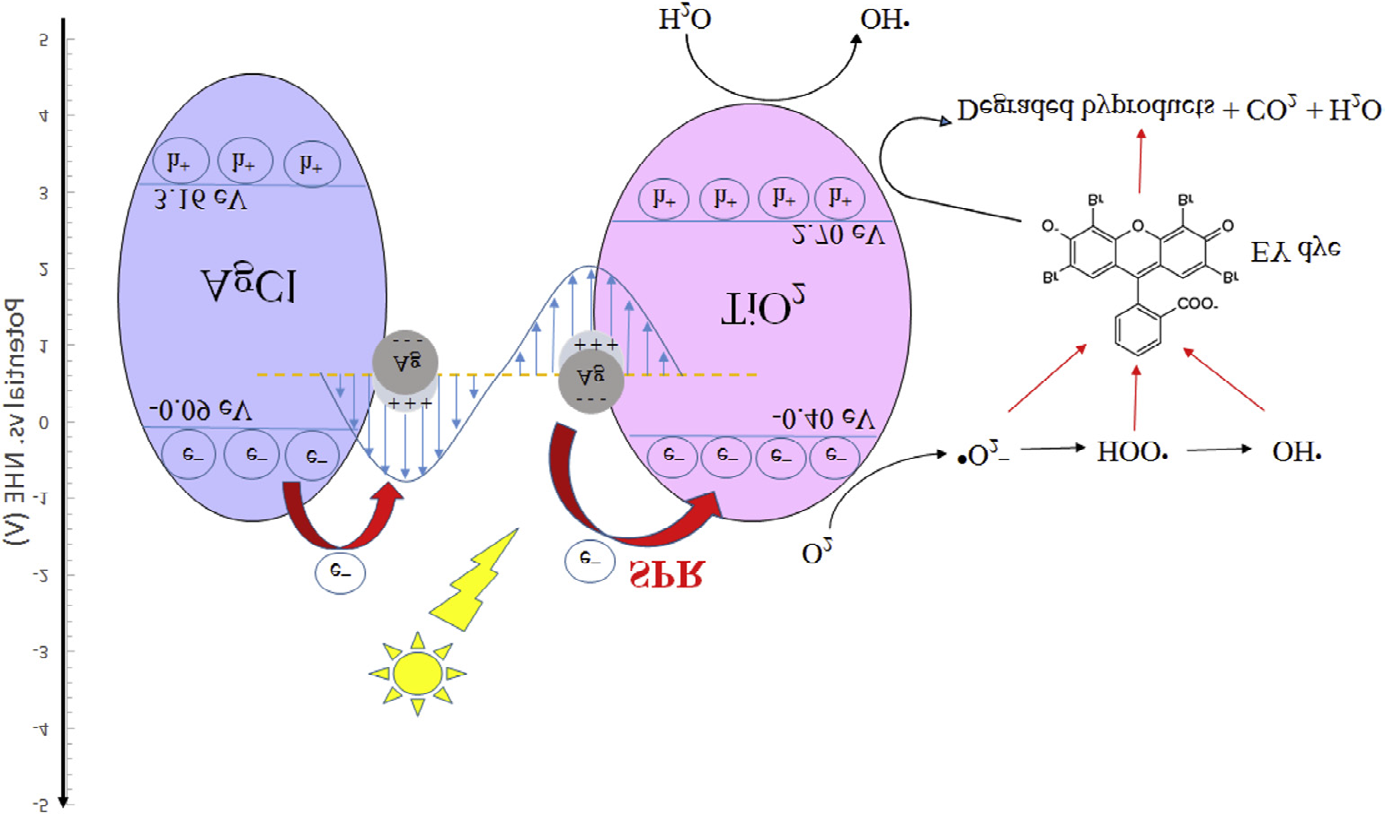
In another study [108], mangrove plant Avicennia marina aqueous leaf extract was used in the facile biosynthesis of Ag/AgCl@TiO2 plasmonic heterojunction. The extract was applied as a reducing and stabilizing agent as well as a chlorine source to synthesize Ag/AgCl from AgNO3 precursors. The characterization results revealed successfully synthesized Ag/AgCl@TiO2 nanocomposite with nanosized particles (~35 nm), high specific surface area (31.94 m2/g), and improved bandgap energy (1.73 eV). The photocatalytic activity of the prepared Ag/AgCl@TiO2 was examined against the degradation of eosin Y dye under sunlight radiation. The photocatalytic activity indicated high removal efficiency (99.74% for 50 ppm dye concentration, 50 mg/100 mL catalyst dose, and 4 pH at 35°C) after one hour of sunlight radiation. This high performance was attributed to the surface plasmon resonance and the effective charge separation due to the heterostructure developed among Ag, AgCl, and TiO2, as shown in Figure 4.
Conclusion
A few days ago, organic pollutants revealed a greater threat to human health and the environment due to the potential contamination of marine life and ecosystems. A huge number of metal oxides, such as TiO2, WO3, SnO2, CeO2, ZnO, Bi2O3, Ag-based photocatalysts, Nb2O5, and so on, were employed as semiconductor photocatalysts for the degradation of organic pollutants under UV and visible light sources. This review introduced valuable information about the fabrication of nanoparticles via green synthesis approaches. These methods demonstrated promise as technologies due to being risk-free, less hazardous, environmentally friendly, and mostly employing renewable energy sources. The synthesized nanoparticles revealed robust photocatalytic activity for the degradation of different organic pollutants under UV and visible light sources. This study discussed recent advances and the sustainable fabrication approach to developing stable nanoparticles. Moreover, the preparation of green heterojunctions and their application in wastewater treatment were also highlighted.
References
-
Al-Baidhani JH, Khadafy ZH (2016) Treatment of water and wastewater by using roughing filter technology of local materials. Int J Curr Eng Technol 6(6): 2192-2198.
-
Al-Baidhani JH, Khafajy ZHA (2017) Pre-treatment of water by using broken marble and ceramic wastes as up-flow roughing filter media. Int J Curr Eng Technol 7: 74-81.
-
Chengli Z, Ronghua M, Qi W, Mingrui Y, Rui C, et al. (2021) Photocatalytic degradation of organic pollutants in wastewater by heteropolyacids: a review. J Coord Chem 74(11): 1751-1764.
-
Fauzi AA, Jalil AA, Hassan NS, Aziz FFA, Azami MS, et al. (2022) A critical review on relationship of CeO2-based photocatalyst towards mechanistic degradation of organic pollutant. Chemosphere 286(1): 131651.
-
Ebrahim M, Mustafa YA, Alwared AI (2013) Removal of oil wastewater by advanced oxidation process/ homogenous process. J Eng 19(6).
-
Okab ZH, Jabbar BH, Graimed AI, Alwared SH, Ammar MA (2023) A comprehensive review highlights the photocatalytic heterojunctions and their superiority in the photo-destruction of organic pollutants in industrial wastewater, Inorg Chem Commun 158(1): 111503.
-
Sennaoui S, Alahiane F, Sakr A, Assabbane EHA, Hamdani AM (2018) Advanced oxidation of reactive yellow 17 dye: A comparison between fenton, photo-fenton, electro-fenton, anodic oxidation and heterogeneous photocatalysis processes. Port Electrochim Acta 36(3): 163-178.
-
Rekhate V, Srivastava JK (2020) Recent advances in ozone-based advanced oxidation processes for treatment of wastewater- A review. Chem Eng J Adv 3: 100031.
-
Valdez HCA, Jiménez GG, Granados GS, de León CP (2012) Degradation of paracetamol by advance oxidation processes using modified reticulated vitreous carbon electrodes with TiO2 and CuO/TiO2/Al2O3. Chemosphere 89(10): 1195-1201.
-
Sajjad TA, Al Zobai KMM (2020) Investigation the effect of intensity and direction of light on the removal of reactive blue dye from simulated wastewater using photo-Fenton oxidation under UV irradiation: Batch and continuous methods. IOP Conf Ser Mater Sci Eng 928.
-
Nazri MKHM, Sapawe N (2020) A short review on photocatalytic toward dye degradation. Mater Today Proc 31(1): 42-47.
-
Ammar SH, Khadim HJ, Mohamed AI, Jabbar ZH (2024) Synthesis of heterostructure composite (g-C3N4/ phosphomolybdic acid) for synergistic piezo/photo- catalytic degradation of CR dye and S. aureus bacteria. J Photochem Photobiol A Chem 447: 115243.
-
Miguel N, Ormad MP, Mosteo R, Ovelleiro JL (2012) Photocatalytic degradation of pesticides in natural water: Effect of hydrogen peroxide. Int J Photoenergy pp: 11.
-
Wang YJ, Zhang JY, Hou SS, Wu JX, Wang C, et al. (2022) Novel CoAl-LDH Nanosheets/BiPO4 nanorods composites for boosting photocatalytic degradation of phenol. Pet Sci 19(6): 3080-3087.
-
Graimed BH, Jabbar ZH, Alsunbuli MM, Ammar SH, Hamood SA, et al. (2023) Rational design of 1D TaON nano-fibrous network decorated 2D BiOBr nanosheets for sustainable photocatalytic detoxification of antibiotics in wastewater via S-scheme heterostructure system. J Water Process Eng 54: 104059.
-
Sabit DA, Ebrahim SE, Jabbar ZH (2023) Immobilization of 0D CuO/ZnFe2O4 nanoparticles onto 2D BiOBr nanoplates as dual S-scheme heterostructure for boosting photocatalytic oxidation of levofloxacin in wastewater: Magnetic reusability and mechanism insights. J Photochem Photobiol A Chem 443: 114849.
-
Nageswara Rao N, Dube S (1996) Photocatalytic degradation of mixed surfactants and some commercial soap/detergent products using suspended TiO2 catalysts. J Mol Catal A Chem 104(3): 197-199.
-
Chatzitakis A, Berberidou C, Paspaltsis I, Kyriakou G, Poulios I, et al. (2008) Photocatalytic degradation and drug activity reduction of Chloramphenicol. Water Res 42(2): 386-394.
-
Wang R, Tang T, Lu T, Huang K, Feng S, et al. (2019) Photocatalytic degradation of polybrominated biphenyls (PBBs) on metal doped TiO2 nanocomposites in aqueous environments: Mechanisms and solution effects. Environ Sci Nano 6(4): 1111-1120.
-
Cao Q, Che R (2014) Tailoring Au-Ag-S composite microstructures in one-pot for both SERS detection and photocatalytic degradation of plasticizers DEHA and DEHP. ACS Appl Mater Interfaces 6: 7020-7027.
-
Jabbar ZH, Ebrahim SE (2021) Synthesis, characterization, and photocatalytic degradation activity of core/shell magnetic nanocomposites (Fe3O4@SiO2@Ag2WO4@ Ag2S) under visible light irradiation. Opt Mater (Amst) pp: 111818.
-
Li S, Shan S, Chen S, Li H, Li Z, et al. (2021) Photocatalytic degradation of hazardous organic pollutants in water by Fe-MOFs and their composites: A review. J Environ Chem Eng 9(5): 105967.
-
Li J, Ren J, Hao Y, Zhou E, Wang Y, et al. (2021) Construction of β-Bi2O3/Bi2O2CO3 heterojunction photocatalyst for deep understanding the importance of separation efficiency and valence band position. J Hazard Mater 401: 123262.
-
Abdul-wahid IK, Ammar SH, Ibrahim A, Jabbar ZH (2023) Enhanced synergistic photocatalytic degradation of oxytetracycline antibiotic using novel Ag2 MoO4 / Co- zeolitic imidazolate framework. Inorg Chem Commun 156: 111277.
-
Miklos DB, Remy C, Jekel M, Linden KG, Drewes JE, et al. (2018) Evaluation of advanced oxidation processes for water and wastewater treatment–A critical review. Water Res 139: 118-131.
-
Jabbar ZH, Okab AA, Graimed BH, Issa MA, Ammar SH (2023) Fabrication of g-C3N4 nanosheets immobilized Bi2S3/Ag2WO4 nanorods for photocatalytic disinfection of Staphylococcus aureus cells in wastewater: Dual S-scheme charge separation pathway. J Photochem Photobiol A Chem 438: 114556.
-
Jabbar ZH, Graimed BH (2022) Recent developments in industrial organic degradation via semiconductor heterojunctions and the parameters affecting the photocatalytic process: A review study. J Water Process Eng 47: 102671.
-
Amiri F, Dehghani M, Amiri Z, Yousefinejad S, Azhdarpoor A (2021) Photocatalytic degradation of 2,4-dichlorophenoxyacetic acid from aqueous solutions by Ag3PO4/TiO2 nanoparticles under visible light: Kinetic and thermodynamic studies. Water Sci Technol 83(12): 3110-3122.
-
Ghazal S, Akbari A, Hosseini HA, Sabouri Z, Forouzanfar F, et al. (2020) Sol-gel biosynthesis of nickel oxide nanoparticles using Cydonia oblonga extract and evaluation of their cytotoxicity and photocatalytic activities. J Mol Struct 1217: 128378.
-
Rodríguez, Valenzuela MA, Tiznado H, Poznyak T, Flores E (2014) Synthesis of nickel oxide nanoparticles supported on SiO2 by sensitized liquid phase photodeposition for applications in catalytic ozonation. J Mol Cata A Chem 392: 39-49.
-
Schüler, Betzenbichler F, Drescher C, Hinrichsen O (2018) Optimization of the synthesis of Ni catalysts via chemical vapor deposition by response surface methodology. Chem Eng Res Des 132: 303-312.
-
Hidayat MI, Adlim M, Maulana I, Suhartono S, Hayati Z, et al. (2022) Green synthesis of chitosan-stabilized silver- colloidal nanoparticles immobilized on white-silica-gel beads and the antibacterial activities in a simulated-air- filter. Arab J Chem 15(2): 103596.
-
Zayadi RA, Bakar FA, Ahmad MK (2019) Elucidation of synergistic effect of eucalyptus globulus honey and Zingiber officinale in the synthesis of colloidal biogenic gold nanoparticles with antioxidant and catalytic properties. Sustain Chem Pharm 13: 100156.
-
Xiao L, Yao P, Xue T, Li F (2021) One-step electrodeposition synthesis of Ni/NiSx@NF catalyst on nickel foam (NF) for hydrogen evolution reaction. Mol Catal 511: 111694.
-
Elaibi AI, Ammar SH, Mohammed IS, Jabbar ZH (2023) Construction of heteropolyacid-anchored magnetic g-C3N4/Fe3O4@ polyindole hybrids for efficient photocatalytic destruction of methyl orange and bacteria. J Photochem Photobiol A Chem 444: 114923.
-
Sone BT, Makamu E, Mohamed HEA, Oputu O, Fester V (2021) Green-synthesized ZnO via Hyphaene thebaica fruit extracts: Structure & catalytic effect on the ozonation of Coralene Rubine-S2G azo disperse dye. Environ Nanotechnology Monit Manag 16: 100515.
-
Princy KF, Gopinath A (2021) Green synthesis of silver nanoparticles using polar seaweed Fucus gardeneri and its catalytic efficacy in the reduction of nitrophenol. Polar Sci 30: 100692.
-
Eltaweil AS, Fawzy M, Hosny M, El-Monaem EMA, Tamer TM, et al. (2022) Green synthesis of platinum nanoparticles using Atriplex halimus leaves for potential antimicrobial, antioxidant, and catalytic applications. Arab J Chem 15(1): 103517.
-
Rakhshan N, Mansournia M, Jookar Kashi F (2022) Plant extract-strategy using Teucrium Polium stems to green synthesize Ag/AgCl bionanocomposite imprinted on Fe3O4/kaolinite and potentials in catalytic and chemosensor applications. Arab J Chem 15: 103719.
-
SP Patil, RY Chaudhari, Nemade MS (2022) Azadirachta indica leaves mediated green synthesis of metal oxide nanoparticles: A review. Talanta Open 5: 100083.
-
Zikalala N, Matshetshe K, Parani S, Oluwafemi OS (2018) Biosynthesis protocols for colloidal metal oxide nanoparticles. Nano-Structures and Nano-Objects 16: 288-299.
-
Jan H, Gul R, Andleeb A, Ullah S, Shah M, et al. (2021) A detailed review on biosynthesis of platinum nanoparticles (PtNPs), their potential antimicrobial and biomedical applications. J Saudi Chem Soc 25(8): 101297.
-
Solis-Casados DA, Escobar-Alarcón L, Natividad R, Romero R (2019) Advanced Oxidation Processes II: Removal of Pharmaceuticals by Photocatalysis. Handb Environ Chem 66: 143-155.
-
Lakshmi K, Varadharajan V, Kadirvelu KG (2020) Photocatalytic Decontamination of Organic Pollutants Using Advanced Materials. Mod Age Waste Water Probl pp: 195-212.
-
Hernández-Ramírez A, Medina-Ramírez I (2015) Photocatalytic semiconductors: Synthesis, characterization, and environmental applications.
-
Rakkesh RA, Durgalakshmi D, Balakumar S (2017) Mixed Metal Oxides Nanocomposites for Visible Light Induced Photocatalysis. pp: 107-127.
-
Liu H, Wang C, Wang G (2020) Photocatalytic Advanced Oxidation Processes for Water Treatment: Recent Advances and Perspective. Chem An Asian J 15(20): 3239-3253.
-
Graimed BH, Okab AA, Jabbar ZH, Issa MA, Ammar SH (2023) Highly stable β-Bi2O3/Ag decorated nanosilica as an efficient Schottky heterojunction for ciprofloxacin photodegradation in wastewater under LED illumination. Mater Sci Semicond Process 156: 107303.
-
Ammar SH, Hadi HJ, Abdul-wahid IK, Jabbar ZH (2023) Visible-light boosted photocatalytic performance of sulfonated polypyrrole-coated ZIF-8 hybrids for pollutants degradation. J Mol Struct 1288: 135752.
-
Du S, Lian J, Zhang F (2021) Visible light- responsive N-doped TiO2 photocatalysis: Synthesis, characterizations, and applications. Trans Tianjin Univ 28: 33-52.
-
Lafta MA, Ammar SH, Khadim HJ, Jabbar ZH (2023) Improved photocatalytic degradation of methyl violet dye and pathogenic bacteria using g-C3N4 supported phosphotungstic acid heterojunction. J Photochem Photobiol A Chem 437: 114506.
-
Jabbar ZH, Graimed BH, Issa MA, Khadim HJ, Ammar SH, et al. (2022) A review study summarizes the main characterization techniques of nano- composite photocatalysts and their applications in photodegradation of organic pollutants. Environ Nanotechnology Monit Manag 18: 100765.
-
Jabbar ZH, Graimed BH, Ammar SH, Alsunbuli MM, Hamood SA, et al. (2023) Design and construction of a robust ternary Bi5O7I/Cd0.5Zn0.5S/CuO photocatalytic system for boosted photodegradation of antibiotics via dual-S-scheme mechanisms: Environmental factors and degradation intermediates. Environ Res 234: 116554.
-
Bera S, Ghosh S, Basu RN (2018) Fabrication of Bi2S3/ ZnO heterostructures: An excellent photocatalyst for visible-light-driven hydrogen generation and photoelectrochemical properties. New J Chem 42(1): 541-554.
-
Ammar SH, Hadi HJ, Khudhair EM, Khadim HJ, Abdulmajeed YR, et al. (2023) Facile assembly of CoS/ Ag2MoO4 nanohybrids for visible light-promoted Z-type-induced synergistically improved photocatalytic degradation of antibiotics. J Photochem Photobiol A Chem 444: 115000.
-
Musial J, Mlynarczyk DT, Stanisz BJ (2023) Photocatalytic degradation of sulfamethoxazole using TiO2-based materials–Perspectives for the development of a sustainable water treatment technology. Sci Total Environ 856(2): 159122.
-
Khudhair EM, Ammar SH, Al Najjar SZ, Al Jubouri SM, Mahdi AS, et al. (2023) Facile construction of g-C3N4/ MnWO4/NiS heterostructures for photocatalytic degradation of organic contaminates under visible light irradiation. Mater Lett 347: 134599.
-
Muñoz Batista MJ, Ballari MM, Kubacka A, Alfano OM, Fernández García (2019) M Braiding kinetics and spectroscopy in photo-catalysis: the spectro-kinetic approach. Chem Soc Rev 48(2): 637-682.
-
Jabbar ZH, Esmail Ebrahim S (2021) Highly efficient visible-light-driven photocatalytic degradation of organic pollutants by using magnetically separable supported heterogeneous nanocomposites (SiO2/Fe3O4/ Ag2WO4). Environ Nanotechnology Monit Manag 16: 100554.
-
Jabbar ZH, Ebrahim SE (2021) Synthesis, characterization, and photocatalytic degradation activity of core/shell magnetic nanocomposites (Fe3O4@SiO2@Ag2WO4@ Ag2S) under visible light irradiation. Opt Mater (Amst) 122: 111818.
-
Zare EN, Iftekhar S, Park Y, Joseph J, Srivastava V, et al. (2021) An overview on non-spherical semiconductors for heterogeneous photocatalytic degradation of organic water contaminants. Chemosphere 280: 130907.
-
Aswathi VP, Meera S, Maria CGA, Nidhin M (2023) Green synthesis of nanoparticles from biodegradable waste extracts and their applications: a critical review. Nanotechnol Environ Eng 8: 377-397.
-
Bordiwala RV (2023) Green Synthesis and Applications of Metal Nanoparticles.-A Review article. Results Chem 5: 100832.
-
Alobaidi TB, Alwared AI (2022) Biosynthetic of Titanium Dioxide Nanoparticles Using Zizyphus Spina-Christi Leaves Extract: Properties. J Ecol Eng 23(1): 315-324.
-
Jaast S, Grewal A (2021) Green synthesis of silver nanoparticles, characterization and evaluation of their photocatalytic dye degradation activity. Curr Res Green Sustain Chem 4: 100195.
-
Arya G, Sharma N, Ahmed J, Gupta N, Kumar A, et al. (2017) Degradation of anthropogenic pollutant and organic dyes by biosynthesized silver nano-catalyst from Cicer arietinum leaves. J Photochem Photobiol B Biol 174: 90-96.
-
Sherin L, Sohail A, Amjad U, Mustafa M, Jabeen R, et al. (2020) Facile green synthesis of silver nanoparticles using Terminalia bellerica kernel extract for catalytic reduction of anthropogenic water pollutants. Colloids Interface Sci Commun 37: 100276.
-
Golmohammadi M, Honarmand M, Ghanbari S (2020) A green approach to synthesis of ZnO nanoparticles using jujube fruit extract and their application in photocatalytic degradation of organic dyes. Spectrochim. Acta - Part A Mol Biomol Spectrosc 229: 117961.
-
Luque PA, Chinchillas Chinchillas MJ, Nava O, Lugo Medina E, Martínez Rosas ME, et al. (2021) Green synthesis of tin dioxide nanoparticles using Camellia sinensis and its application in photocatalytic degradation of textile dyes. Optik (Stuttg) 229: 166259.
-
Naghizadeh, Mizwari ZM, Ghoreishi SM, Lashgari S, Mortazavi Derazkola S, et al. (2021) Biogenic and eco- benign synthesis of silver nanoparticles using jujube core extract and its performance in catalytic and pharmaceutical applications: Removal of industrial contaminants and in-vitro antibacterial and anticancer activities. Environ Technol Innov 23: 101560.
-
Velayati M, Hassani H, Sabouri Z, Mostafapour A, Darroudi M (2021) Biosynthesis of Se-Nanorods using Gum Arabic (GA) and investigation of their photocatalytic and cytotoxicity effects. Inorg Chem Commun 128: 108589.
-
Karthik KV, Raghu AV, Reddy KR, Ravishankar R, Sangeeta M, et al. (2022) Green synthesis of Cu- doped ZnO nanoparticles and its application for the photocatalytic degradation of hazardous organic pollutants. Chemosphere 287(2): 132081
-
Aswathy Aromal S, Philip D (2012) Green synthesis of gold nanoparticles using Trigonella foenum-graecum and its size-dependent catalytic activity. Spectrochim Acta - Part A Mol Biomol Spectrosc 97: 1-5.
-
Edison TJI, Sethuraman MG (2012) Instant green synthesis of silver nanoparticles using Terminalia chebula fruit extract and evaluation of their catalytic activity on reduction of methylene blue. Process Biochem 47: 1351-1357.
-
Fu L, Fu Z (2015) Plectranthus amboinicus leaf extract- assisted biosynthesis of ZnO nanoparticles and their photocatalytic activity. Ceram Int 41(2): 2492-2496.
-
Meenakumari M, Philip D (2015) Degradation of environment pollutant dyes using phytosynthesized metal nanocatalysts. Spectrochim Acta - Part A Mol Biomol Spectrosc 135: 632-638.
-
Bogireddy NKR, Anand KKH, Mandal BK (2015) Gold nanoparticles - Synthesis by Sterculia acuminata extract and its catalytic efficiency in alleviating different organic dyes. J Mol Liq 211: 868-875.
-
Anand K, Tiloke C, Phulukdaree A, Ranjan B, Chuturgoon A, et al. (2016) Biosynthesis of palladium nanoparticles by using _Moringa oleifera_ flower extract and their catalytic and biological properties. J Photochem Photobiol B Biol 165: 87-95.
-
Fowsiya J, Madhumitha G, Al Dhabi NA, Arasu MV (2016) Photocatalytic degradation of Congo red using Carissa edulis extract capped zinc oxide nanoparticles. J Photochem Photobiol B Biol 162: 395-401.
-
Jyoti K, Singh A (2016) Green synthesis of nanostructured silver particles and their catalytic application in dye degradation. J Genet Eng Biotechnol 14(2): 311-317.
-
Bello BA, Khan SA, Khan JA, Syed FQ, Mirza MB, et al. (2017) Anticancer, antibacterial and pollutant degradation potential of silver nanoparticles from Hyphaene thebaica. Biochem Biophys Res Commun 490(3): 889-894.
-
Bello BA, Khan SA, Khan JA, Syed FQ, Anwar Y, et al. (2017) Antiproliferation and antibacterial effect of biosynthesized AgNps from leaves extract of Guiera senegalensis and its catalytic reduction on some persistent organic pollutants. J Photochem Photobiol B Biol 175: 99-108.
-
Haritha E, Roopan SM, Madhavi G, Elango G, Arunachalam P (2017) Catunaregum spinosa capped Ag NPs and its photocatalytic application against amaranth toxic azo dye. J Mol Liq 225: 531-535.
-
Rufus A, Sreeju N, Vilas V, Philip D (2017) Biosynthesis of hematite (α-Fe2O3) nanostructures: Size effects on applications in thermal conductivity, catalysis, and antibacterial activity. J Mol Liq 242: 537-549.
-
Karthik R, Govindasamy M, Chen SM, Cheng YH, Muthukrishnan P, Set al. (2017) Biosynthesis of silver nanoparticles by using _Camellia japonica_ leaf extract for the electrocatalytic reduction of nitrobenzene and photocatalytic degradation of Eosin-Y. J Photochem Photobiol B Biol 170: 164-172.
-
Choudhary BC, Paul D, Gupta T, Tetgure SR, Garole VJ, et al. (2017) Photocatalytic reduction of organic pollutant under visible light by green route synthesized gold nanoparticles. J Environ Sci 55: 236-246.
-
Choudhary MK, Kataria J, Sharma S (2018) Evaluation of the kinetic and catalytic properties of biogenically synthesized silver nanoparticles. J Clean Prod 198: 882- 890.
-
Hiremath S, Antony Raj MAL, Chandra Prabha MN, Vidya C (2018) _Tamarindus indica_ mediated biosynthesis of nano TiO2 and its application in photocatalytic degradation of Titan yellow,. J Environ Chem Eng 6 (6): 7338-7346.
-
Radini IA, Hasan N, Malik MA, Khan Z (2018) Biosynthesis of iron nanoparticles using Trigonella foenum-graecum seed extract for photocatalytic methyl orange dye degradation and antibacterial applications. J Photochem Photobiol B Biol 183: 154-163.
-
Kolya H, Kuila T, Kim NH, Lee JH (2019) Bioinspired silver nanoparticles/reduced graphene oxide nanocomposites for catalytic reduction of 4-nitrophenol, organic dyes and act as energy storage electrode material. Compos Part B Eng 173: 106924.
-
Khoshnamvand M, Huo C, Liu J (2019) Silver nanoparticles synthesized using Allium ampeloprasum L. leaf extract: Characterization and performance in catalytic reduction of 4-nitrophenol and antioxidant activity. J Mol Struct 1175: 90-96.
-
Khoshnamvand M, Ashtiani S, Huo C, Saeb SP, Liu J (2019) Use of _Alcea rosea_ leaf extract for biomimetic synthesis of gold nanoparticles with innate free radical scavenging and catalytic activities. J Mol Struct 1179: 749-755.
-
Singhal A, Gupta A (2019) Sustainable synthesis of silver nanoparticles using exposed X-ray sheets and forest-industrial waste biomass: Assessment of kinetic and catalytic properties for degradation of toxic dyes mixture. J Environ Manage 247: 698-711.
-
Mayedwa N, Mulaudzi Masuku T, Matinise N, Nkosi M (2019) Biosynthesis and characterization of multifunctional mixed oxides of ZnCr2O4/ ZnCrO4nanoparticulate from natural leaf extracts of Hibiscus Rosa Sinensis. Mater Today Proc 36: 309-312.
-
Doan VD, Luc VS, Nguyen TLH, Nguyen TD, Nguyen TD (2020) Utilizing waste corn-cob in biosynthesis of noble metallic nanoparticles for antibacterial effect and catalytic degradation of contaminants. Environ Sci Pollut Res 27: 6148-6162.
-
Fatimah I, Sahroni I, Muraza O, Doong RA (2020) One-pot biosynthesis of SnO2 quantum dots mediated by Clitoria ternatea flower extract for photocatalytic degradation of rhodamine B. J Environ Chem Eng 8(4): 103879.
-
Kalantari E, Khalilzadeh MA, Zareyee D, Shokouhimehr M (2020) Catalytic degradation of organic dyes using green synthesized Fe3O4-cellulose-copper nanocomposites. J Mol Struct 1218: 128488.
-
Samuel MS, Selvarajan E, Mathimani T, Santhanam N, Phuong TN, et al. (2020) Green synthesis of cobalt-oxide nanoparticle using jumbo Muscadine (Vitis rotundifolia): Characterization and photo-catalytic activity of acid Blue-74. J Photochem Photobiol B Biol 211: 112011.
-
Pathania D, Sharma A, Kumar S, Srivastava SK, Kumar A, et al. (2021) Bio-synthesized Cu–ZnO hetro-nanostructure for catalytic degradation of organophosphate chlorpyrifos under solar illumination. Chemosphere 277: 130315.
-
Nguyen DTC, Le HTN, Nguyen TT, Nguyen TTT, Bach LG, et al. (2021) Multifunctional ZnO nanoparticles bio-fabricated from Canna indica L. flowers for seed germination, adsorption, and photocatalytic degradation of organic dyes. J Hazard Mater 420: 126586.
-
Shah AA, Jayalakshmi D, Xavier B (2021) Characterization of gold nanoparticles synthesized from Solanum torvum (Turkey Berry) fruit extract and its application in catalytic degradation of methylene blue and antibacterial properties. Mater Today Proc 47(4): 927-932.
-
Weldegebrieal GK, Sibhatu AK (2021) Photocatalytic activity of biosynthesized α-Fe2O3 nanoparticles for the degradation of methylene blue and methyl orange dyes. Optik 241: 1-15.
-
Shah Z, Gul T, Ali Khan S, Shaheen K, Anwar Y, et al. (2021) Synthesis of high surface area AgNPs from Dodonaea viscosa plant for the removal of pathogenic microbes and persistent organic pollutants. Mater Sci Eng B 263: 114770.
-
Sarkar M, Denrah S, Das M, Das M (2021) Statistical optimization of bio-mediated silver nanoparticles synthesis for use in catalytic degradation of some azo dyes. Chem Phys Impact 3: 100053.
-
Yang H (2021) A short review on heterojunction photocatalysts: Carrier transfer behavior and photocatalytic mechanisms. Mater Res Bull 14: 111406.
-
Wang Z, Lin Z, Shen S, Zhong W, Cao S (2021) Advances in designing heterojunction photocatalytic materials, Chinese J. Catal. 42(5): 710-730.
-
Maham M, Nasrollahzadeh M, Sajadi SM, Nekoei M (2017) Biosynthesis of Ag/reduced graphene oxide/Fe3O4 using Lotus garcinii leaf extract and its application as a recyclable nanocatalyst for the reduction of 4-nitrophenol and organic dyes. J Colloid Interface Sci 497: 33-42.
-
Ghasemi Z, Abdi V, Sourinejad I (2020) Green fabrication of Ag/AgCl@TiO2 superior plasmonic nanocomposite: Biosynthesis, characterization and photocatalytic activity under sunlight. J Alloys Compd 841: 155593.
- Solution-Processed Chiral Perovskites for Biomedical Applications
- Nanotechnology in Health Chemistry and Medicine: Current Challenges and Future Directions
- Human Exposure to Micro- and Nanoplastics: Pathways, Toxicity, and Intervention Strategies
- Exosome Nanomedicine for Cancer Therapy
- Micro and Nanoplastics–Plastisphere, Biotoxicity, Impact on Human Health, and Mitigation Strategies
- Process Validation of Cefixime Powder for Suspension Dosage Form, 50 mL