
A Review of Experimental and Comparative Study of Cork-Based Nanocomposite Dampers with Normal Dampers in the Field of Construction
Cork products have an increasing demand for vibration damping systems due to their good vibration isolation behavior as well as their eco-friendly and sustainable properties. Cork is a lightweight, natural material made from the bark of the Quercus Suber L. tree, which can be found in Portugal's forests. The principal application is wine stoppers, but due to its unique thermal and vibration insulation and acoustic characteristics, it is now commonly found in construction and aeronautic applications. Nowadays, the urge to have lightweight and environmentally friendly materials with improved mechanical properties is increasing. As technology and ideas emerge, composite materials evolve with different elements to test different approaches. This paper reviews the possibility of using granulated cork and other nanomaterials as reinforcement and the various preliminary tests that are performed to characterize the dynamic properties of the composite with a view to assessing its ability to attenuate vibration in the concrete material. The same experimental results were compared with the normal dampers without cork and nanomaterials.
Introduction
The cellular structure of cork is made up by the regular hexagonal or pentagonal shaped cells (Figure 1). The three main parts of the cellular wall include a thick secondary wall composed of alternating suberin and wax lamella, a thin tertiary wall composed of polysaccharides, and a thin, lignin- rich intermediate lamella (internal main wall). According to some research, the secondary wall may not be made entirely of suberin and waxes since it is lignified [1]. Because the cork cells are filled with a gas combination that is similar to air, they act like real ‘pads’, which helps cork rebound from compression (Cortica). Many of the characteristics of cork, like its great elasticity and poor permeability, are caused by the high concentration of suberin present in the material. In addition to the referred properties, cork is further characterized by low density, good resistance to fatigue, low thermal conductivity (it is an excellent thermal insulator), low speed of sound propagation, and low acoustic impedance (it is an excellent sound insulator), high resistant to combustion (serves as the progression of fire retardant), good wear resistance, and hypo-allergenicity (since not absorb dust, not cause allergies) (Ortica). A number of authors have studied the characteristics of cork composites in recent years. According to Fernandes TF, et al. [2] and Correlo VM, et al. [3] agglomerated cork composites have lower Young’s modulus values at small strains and plateau stress, and they have higher densities than other cellular-like materials like expanded polystyrene (EPS) and expanded polypropylene (EPP).
More recovery capacity and less persistent deformation have been seen in agglomerated cork following many loading cycles [4]. Agglomerated cork also performed better than EPS and EPP in numerous loading and impact tests [4, 5]. It has also been investigated to include agglomerated cork into sandwich constructions, particularly for applications involving vibration damping [6, 7]. Research has also been done on the effects of adding cork to CPC with thermoplastic matrixes such polyethylene (PE) Brites F, et al. [8], polyurethane (TPU) Gama N, et al. [9], and polylactic acid (PLA) Daver F, et al. [10], Da Silva SM, et al. [11] on the thermal, mechanical, and viscoelastic properties of the material.
This research seeks to determine how adding cork affects the mechanical and physical characteristics of concrete, as well as the impact of two criteria pertaining to the cork granules used in the formulation: granulometry and amount. The cork rubber composites under study can be used as bearing pads in systems that isolate vibrations. Our goal is to present a comparative analysis between the conventional dampers and the Cork-based nanomaterial dampers.
Classification Based on the Type of Materials
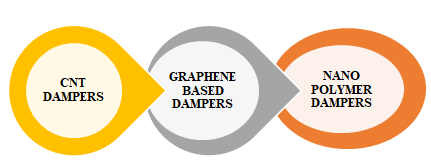
![Figure 2: a. Carbon Nanotube (CNT) Dampers: These dampers incorporate carbon nanotubes, which provide exceptional mechanical properties and are known for their ability to enhance material strength [12]. b. Graphene-Based Dampers: Graphene is another nanomaterial with outstanding mechanical and electrical properties, making it suitable for vibration control applications [13]. c. Nano-Polymer Dampers: These dampers incorporate polymer nanocomposites, which combine polymers with nanoscale fillers like nanoparticles, nanoclays, or nanofibers [14].](/fulltextimages/11450/fig_2.png)
Figure 2: a. Carbon Nanotube (CNT) Dampers: These dampers incorporate carbon nanotubes, which provide exceptional mechanical properties and are known for their ability to enhance material strength [12]. b. Graphene-Based Dampers: Graphene is another nanomaterial with outstanding mechanical and electrical properties, making it suitable for vibration control applications [13]. c. Nano-Polymer Dampers: These dampers incorporate polymer nanocomposites, which combine polymers with nanoscale fillers like nanoparticles, nanoclays, or nanofibers [14].
Based on Application:
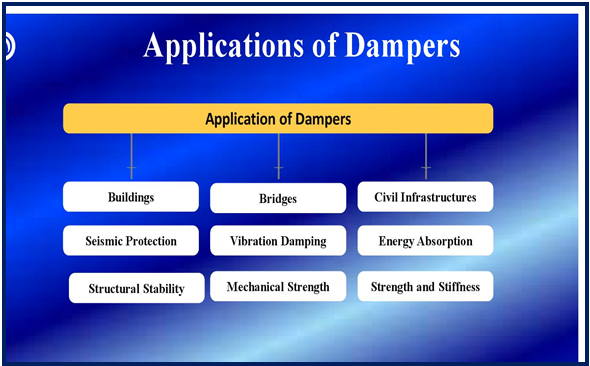
- Civil Engineering Dampers: Dampers designed for use in the construction of buildings, bridges, and other civil infrastructure to reduce vibrations and enhance structural stability [15].
- Aerospace Dampers: Dampers utilized in the aerospace industry to minimize vibrations in aircraft and spacecraft components [16].
Based on Damping Mechanism
- Viscoelastic Nanocomposite Dampers: Dampers that rely on the viscoelastic properties of nanomaterials to dissipate energy and reduce vibrations [17].
- Piezoelectric Nanocomposite Dampers: Dampers incorporating piezoelectric materials at the nanoscale to convert mechanical energy into electrical energy for damping [17].
Key Properties and Advantages of Nanocomposite Dampers
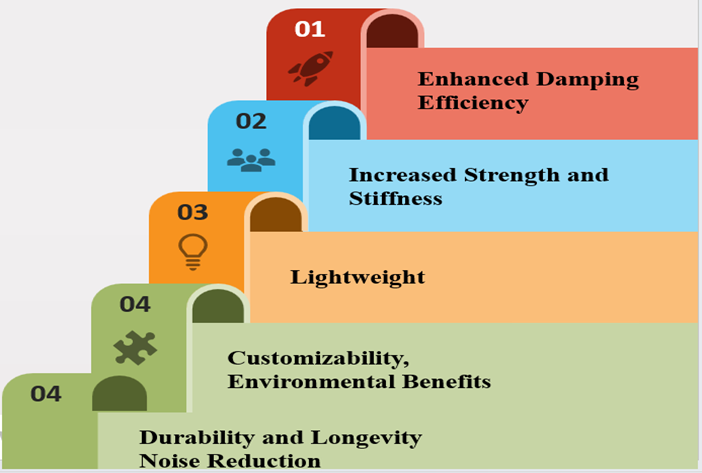
- Enhanced Mechanical Properties: Improved Strength and Stiffness: Nanomaterials such as carbon nanotubes (CNTs) and graphene can significantly enhance the mechanical properties of composites increasing their strength and stiffness.
- Vibration Damping Properties: High Damping Capacity: Nanocomposite dampers exhibit excellent vibration damping characteristics, reducing the amplitude and frequency of vibrations [18].
- Durability and Longevity: Enhanced Durability: The use of nanomaterials can improve the durability of composite materials in harsh environments and under dynamic loads [19].
- Lightweight and Weight Efficiency: Reduced Weight: Nanocomposite dampers can be lightweight, making them ideal for aerospace and automotive applications where weight efficiency is crucial [20].
- Customizability: Tailored Properties: The composition of nanocomposite dampers can be customized to meet specific engineering and structural requirements [21].
- Thermal and Electrical Conductivity: Thermal and Electrical Conductivity: Depending on the nanomaterials used, nanocomposite dampers can exhibit improved thermal and electrical conductivity [22].
- Environmental Benefits: Sustainability: Some nanomaterials are sourced sustainably, and their use in dampers can align with environmentally friendly practices [23].
- Reduction in Noise Transmission: Noise Reduction: Nanocomposite dampers can attenuate noise transmission in addition to reducing vibrations, making them suitable for noise-sensitive applications [24] (Tables 1-4) (Figures 2-5).
| Type of Damper | Description | Reference |
|---|---|---|
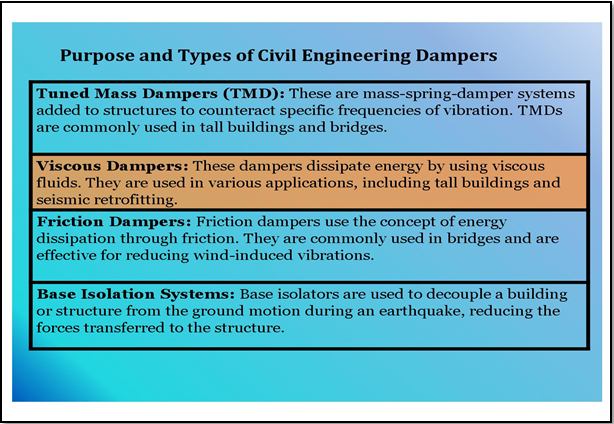
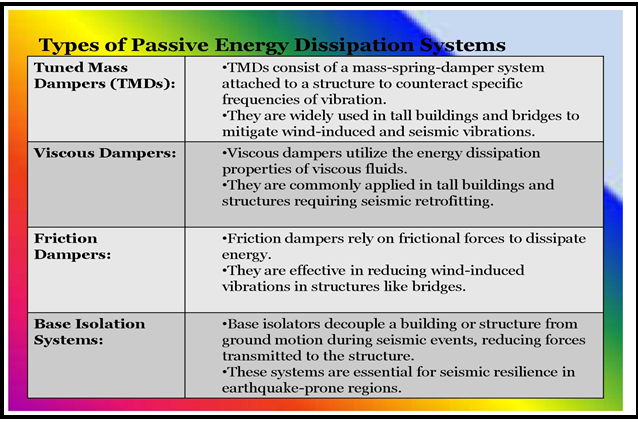
| Tuned Mass Dampers (TMD) | Mass-spring-damper systems are added to structures to counteract specific frequencies of vibration. | [25] |
| Viscous Dampers | Dampers that dissipate energy using viscous fluids are commonly used in tall buildings and for seismic retrofitting. | [26] |
| Friction Dampers | Dampers utilize friction to dissipate energy, effective in reducing wind-induced vibrations in structures. | |
| Base Isolation Systems | Systems designed to decouple a building or structure from ground motion during earthquakes, reducing forces transferred to the structure. | [27] |
Table 1: Purpose and Types of Civil Engineering Dampers.
Literature Review
| Paper Title and Author | Methodology involved | Inferences |
|---|---|---|
| Antonio J, et al. [28] | • The study investigates the possibility of using rice husk and granulated cork as a composite material. • Composite boards were manufactured and preliminary tests were performed to characterize the composite’s dynamic properties to assess its ability to attenuate vibration. • The dynamic properties can be determined from parameters such as dynamic stiffness, vibration transmissibility, and loss factor. • The experimental procedures described in this work follow the methodology presented in ISO 10846- 3:2002 which sets out a method for determining the dynamic transfer stiffness of resilient supports, under specified preload. The method concerns the measurement of transmissibility. | • The highest values of vibration isolation are achieved for the specimens with the highest thicknesses and smallest size. • For a given size of a specimen, it appears that the vibration isolation can be improved by increasing the thickness of the specimen. • The dynamic stiffness results agree with the transmissibility results, since low dynamic stiffness values are found for smaller Specimensand higher thickness. • This material can be used to support equipment inbuildings to reduce vibration, for insertion in lightweight wall cavities to reduce sound transmission and vibration, and as a resilient layer in floating floors to reduce the impact of sound transmission. |
Table 2: Purpose and Types of Civil Engineering Dampers.
- The cyclical behavior of a novel composite material consisting of granulated cork added to a conventional mortar is examined experimentally. CorBe thus designates this substance. Tests were conducted on specimens that had cork added at volumes of 0%, 15%, and 30%.
- Cyclic uniaxial and diagonal compression experiments were performed in order to describe the cyclical behavior of this composite material. It was also investigated how much energy these mortars might dissipate.
- Additionally examined and discussed were the rupture mechanisms of this composite material under cyclical loadings.
de-Carvalho R, et al. [29].
- Shear thickening fluid (STF) and shear stiffening polymer (SSP) are two smart materials that have been suggested as improving the vibration attenuation behavior of multi-layer cork systems.
- The structural constants of natural frequency and damping ratio were discovered via modal studies, which involved testing the composites using hammer-based vibration tests.
- The hammer impulse method was employed in the vibration experiments to examine the cork composites’ modal properties.This method, which is frequently employed to ascertain the dynamic characteristics of complicated structures, incorporates modal analysis [30].
Gurgen S, et al. [30]
- The asymmetrical device of the transient Hot Plate method was primarily used to conduct an experimental evaluation of its thermal properties.
- To support the idea that this composite material will be utilized as a wall insulator, an experimental investigation of this sustainable material intends to characterize its thermal properties and then compare them with those of white cement without cork.An intriguing energy gain can be inferred from a comparison of the energy performances of white cement and the composite material.
Bakr A, et al.
[31]
- The potential use of cork powder in place of fines in self-compacting concrete mixing mixes is the subject of this study.
- An experimental programme was conducted to evaluate the behavior of this material in the combination and to specify the strength and durability characteristics of the cork powder- containing self-compacting concrete.
Matos AM, et al. [32]
- A clear tendency for an improvement in performance, for the tested deformation levels, for mortars with the incorporation of cork granules, when loaded cyclically either in uniaxial or diagonal compression was observed.
- It was possible to determine and quantify the improvement behavior in terms of energy dissipation capacity, leading to the conclusion that the inclusion of cork granules in controlled volume fractions in construction mortars is most certainly beneficial for the seismic protection of buildings
- Based on the findings, the STF has a viscosity profile that increases under loading, whereas the elastic characteristics of the SSP dominate its viscous behavior when the material is stimulated.
- STF and SSP help to dampen the vibrations acting on the cork structures through the impact of these rheological alterations.
- This work suggests that smart materials can be integrated into cork constructions to improve the adaptive qualities of passive control systems in vibration-damping applications and create sustainable and environmentally friendly goods.
• Based on the analysis and comparisons, it can be concluded that the novel composite material has three times the insulating properties of white cement without cork and is two times lighter than white cement.
- This study shown that it is feasible to use a plentiful byproduct of the cork industry, cork powder, into the fine material of self-compacting concrete to achieve a good strength level and appropriate durability for typical applications.
- Considering that cork powder can be utilized in SCC, further research and development are needed to replace fine material in lightweight self-compacting concrete with this waste product.
- An experimental study of the dynamic crushing behaviour of agglomerated cork looked at the effects of specimen thickness on energy absorption capacity, contact force, displacement, and strain.
- In a drop-weight tower, dynamic crushing experiments were performed on four specimens of different thicknesses. It was discovered that as the maximum contact force, displacement, and strain increased, so did the impact-energy/thickness ratio.
- Sanchez-
- Saeza S, et al. [33]
Table 3: Dampers Based on Cork and Nanomaterials.
- The maximum contact force, maximum displacement, and maximum strain exhibit a notable dispersion due to the natural origin of agglomerated cork and the variation in characteristics amongst each specimen. These factors, notwithstanding this dispersion, increased as the impact-energy/thickness ratio increased.
- When the thickness of the specimen rose, the contact force dropped for the same impact energy.
- It was impossible to identify comparable behaviour for the displacement and the strain due to the results’ dispersion.
- There is a linear relationship between the absorbed energy and the impact energy/ thickness ratio for any specimen thickness that is being studied.
- The thickness of the specimen had no effect on the agglomerated cork’s absorption capacity within the range of energies examined.
| Paper Title and Author | Methodology involved | Inferences |
|---|---|---|
| Khan SU, et al. [34] | • Vibration-dampingcharacteristics of nanocomposites and carbon fiber-reinforced polymercomposites (CFRPs) containing multiwall carbon nanotubes (CNTs) have been studied using free and forced vibration tests. • The damping ratio of the hybrid composites is enhanced with the addition of CNTs, which is attributed to sliding at the CNT–matrix interfaces. | • The damping ratio of the CFRP-CNT hybrid composites increased as the amount of CNT in them increased, per the free vibration test results. This result is consistent with the previously proposed idea that CNTs slide across matrix interfaces. • Although the CFRP composites had an intrinsically lower damping ratio than the clean epoxy, they showed a faster rate of increase in damping ratio than the epoxy nanocomposites. • The forced vibration test confirmed that CNTs positively impacted CFRP composites and nanocomposites’ damping ratios in both the first and second vibration modes. • The DMA results demonstrated that CNTs moderated the damping properties of the composites. The loss modulus and tan delta of CFRP composites and nanocomposites both consistently increased with CNT presence, however the rise was more pronounced in the nanocomposites than in the CFRP hybrid composites, likely because to the differing degrees to which CNTs influence the stiffness of the materials. |
Table 4: Comprehensive comparison of Dampers with Cork/Nanomaterials and Dampers only with nanomaterials.
| Khalili SMR, et al. [35] | • By utilising multi-scale material modelling to analyse the primary design parameters of the reinforcing agents, the impact loads on single-walled carbon nanotube (SWCNT) reinforced nanocomposites are investigated. • It is investigated how the diameter, chirality, and volume fraction (VF) of SWCNTs relate to different representative volume elements (RVEs) of nanocomposites and their impact behavior. · Using beam elements in space frame structures, SWCNTs are simulated in finite element modelling (FEM) software in accordance with their atomic structures as determined by molecular mechanics. | • Axial strain diagrams and strain energy density diagrams generated from the investigation of RVEs’ reaction to impact loads indicate that the introduction of even a small number of CNTs in RVE can produce an adequate impact strength. • The impact behavior of nanocomposites is not primarily determined by the sort and chirality of CNTs. This effect is more pronounced in the simulated RVEs with higher CNT VFs. • More comprehensive research shows that the impact damage to nanocomposite structures can be minimized by CNT VF, especially in Armchair CNTs, more effectively than by the diameter of the CNTs implanted in the material. |
|---|---|---|
| Li WW, et al. [36] | • The study examined cement composites with varying percentages of carbon nanotubes (CNTs): 0.033, 0.1, 0.066, and 0.0 percent. • To investigate the damping characteristics of the CNT/ cement composite, the Dynamic Mechanical Analysis (DMA) method and the Logarithmic Decrement method were applied. • Using Mercury Intrusion Porosimeter (MIP) and Scanning Electron Microscopy (SEM), respectively, the effects of CNT on the composite’s microstructure and pore size distribution were examined. | • The outcomes of the experiment demonstrated that the CNT/cement composite outperformed pure cement paste in terms of flexural strength index. • CNT has the potential to enhance cement paste’s ability to reduce vibration. Moreover, the tests demonstrated that CNT could facilitate load transfer inside the cement matrix and span adjacent hydration products, which helped with energy dissipation during the loading process. |
| Kana ZP, et al.[37] | • A novel concept to design cement matrix composites that exhibit high damping capacity as well as good mechanical performance around room temperature was suggested. • The hard Li5La3Ta2O12 ceramic particulates with high damping capacity at room temperature were embedded as additives into cement matrix to form the composite materials. • The damping capacity (internal friction) and compressive strength of the Li5La3Ta2O12/cement composites increase with increasing Li5La3Ta2O12 concentration in the 0–25 wt% range. | • The maximum damping capacity of the 25 wt%Li5La3Ta2O12/cement composites is as high as 0.016 at 66 ◦C and 4 Hz, corresponding to a vibration energy dissipation of about 10% in each vibration cycle. • The compressive strength and flexural strength of the 10wt%Li5La3Ta2O12/ cement composites is about 40% and 5% higher than those of the pure cement. • This kind of composite material with high damping capacity around or above room temperature and enhanced mechanical properties will find wide applications in the fields where both high damping capacity and good mechanical properties are required. |
Table 5: Comprehensive comparison of Dampers with Cork/Nanomaterials and Dampers only with nanomaterials.
| Liew KM, et al. [38] | • CNT-reinforced cementitious composite structures’ mechanical and damping qualities were investigated experimentally. • The studies employed polyvinylpyrrolidone (PVP) and TNWDIS, an aromatic modified polyethylene glycol ether that was highly efficient and compatible with cement hydrates, to disperse CNTs. • Energy Dispersive Spectrometry (EDS) and Scanning Electron Microscopy (SEM) were used to identify and monitor the formation of cement hydrates on the CNT surface. • The combination of the CNTs and cement hydrates was proposed to have occurred by a physical process, according to X-Ray Powder Diffraction (XRD) research. | • Adding 0.1 weight percent of CNTs dispersed by PVP increased the compressive and flexural strengths of CNT/cement composites by 17.3 and 16.3%, respectively, but adding CNTs dispersed by TNWDIS just slightly increased strength. • Furthermore, TNWDIS-dispersed 0.1 weight percent CNTs enhanced the loss factor of the CNT/cement matrix by 25.9%, which is almost twice as much as that of PVP- dispersed 0.1 weight percent CNTs. |
|---|
Table 6: Comprehensive comparison of Dampers with Cork/Nanomaterials and Dampers only with nanomaterials.
- Dampers with Cork and nanomaterials
- Dampers with only nanomaterials
- To enhance the adaptive qualities of passive control systems in vibration-damping applications and to create sustainable and environmentally friendly goods.
- Compressive and flexural strengths both significantly rise.
- Based on the analysis and comparisons, it can be concluded that the novel composite material has two times the weight of white cement and three times the insulating properties of white cement without cork.
- In many fields where both high damping capacity and good mechanical qualities are necessary, composite materials with high damping capacities at or above room temperature and improved mechanical properties will find extensive use.
- Self-compacted concrete can be made with that cork powder. Future research must also be done to replace the fine material in lightweight self-compacting concrete with this waste material.
- Damping ratio increases more quickly than with epoxy nanocomposites.
Table 7: Comprehensive comparison of Dampers with Cork/Nanomaterials and Dampers only with nanomaterials.
Conclusion
The following general conclusions may be drawn concerning the properties of cork-modified and nanomaterial- based concrete formulations and concrete modified by only nanomaterials.
- The insertion of any degree of cork examined in this paper had a negative impact on strength and elasticity modulus in both compression and flexion.
- The cork modifies the mechanical behavior. The material exhibits less brittle failure and becomes more ductile, especially in compression, as the cork content increases throughout the course of each test series.
- The elasticity modulus of cork-modified polymer mortars is rather low when compared to traditional cement materials, but the flexural/compressive strength ratio is noticeably higher.
- In an effort to find a class of extremely lightweight formulations, or with densities less than unity, the results call for further research with a higher cork content.
- More research is anticipated to maximize the resin content and take use of other benefits brought about by the addition of cork, including enhanced thermal and acoustic qualities and a higher energy absorption capacity.
References
-
Filomena Bento M, Aurea Cunha M, Moutinho AMC, Pereira H, Fortes MA (1992) A mass spectrometry study of thermal dissociation of cork. International Journal of Mass Spectrometry and Ion Process 112(2): 191-204.
-
Stephen J, Klaine Pedro JJ, Alvarez Graeme E, Batley Teresa F, Fernandes Richard D, et al. (2023) Nanomaterials in the environment. Environmental Toxicology and Chemistry 42(11): 1-220.
-
Correlo VM, Mano JF, Reis RL (2015) Cork-polymer bio composites: mechanical, structural and thermal properties. Mater Des 82: 282-289.
-
Buil RM, Angulo DR, Ivens J (2021) Analysis of the capability of cork and cork agglomerates to absorb multiple compressive quasi-static loading cycles. Holz Als Roh- Und Werkst 79: 1195-1208.
-
Fernandes F, Jardin R, Pereira A, de Sousa RA (2015) Comparing the mechanical performance of synthetic and natural cellular materials. Mater Des 82: 335-341.
-
Kumar SS, Milwich M, Deopura B, Plank H (2011) Finite element analysis of Carbon composite sandwich material with agglomerated Cork core. Procedia Eng 10: 478-448.
-
Gurgen S, Fernandes FAO, de Sousa RJA, Kushan MC (2021) Development of Eco-friendly Shock-absorbing Cork Composites Enhanced by a Non-Newtonian Fluid. Appl Compos Mater 28: 165-179.
-
Brites F, Malça C, Gaspar F, Horta J, Franco M, et al. (2017) Cork Plastic Composite Optimization for 3D Printing Applications. Procedia Manuf 12: 156-165.
-
Gama N, Ferreira A, Timmons AB (2019) 3D printed cork/polyurethane composite foams. Mater Des 179: 107905.
-
Daver F, Lee KPM, Brandt M, Shanks R (2018) Cork–PLA composite filaments for fused deposition modeling. Compos Sci Technol 168: 230-237.
-
Da Silva SM, Antunes T, Costa ME, Oliveira JM (2020) Cork-like filaments for Additive Manufacturing. Addit Manuf 34: 101229.
-
Mir A, Pellegrino S (2007) Carbon Nanotube Dampers for Vibration Control of Space Structures. Journal of Vibration and Acoustics.
-
Rafiee R, Rafiee J, Wang Z, Song H, Yu Z, et al. (2010) Enhanced Mechanical Properties of Nanocomposites at Low Graphene Content. ACS Nano 3(12): 3884-3890.
-
Boccaccini AR, Moniruzzaman M (2005) Polymer Nanocomposites Containing Carbon Nanotubes. Macromolecules 39(16): 5194-5205.
-
Alipour A, Sharbatdar MK (2019) A Review of Damping Systems in Civil Engineering. Structures.
-
Nitzsche F, Bryant MD (2007) Passive Tuned Mass Dampers in Aerospace Engineering. Aerospace Science and Technology.
-
Dai L, Ma J (2003) Mechanical and Thermal Properties of Carbon Nanotubes. Polymer International 33(7): 925- 930.
-
Jiang C (2007) Enhanced Damping Performance of Multi- Walled Carbon Nanotube/Polystyrene Composites. Composites Science and Technology.
-
Sapuan SM (2014) Durability and Impact Strength of Oil Palm Fibre-Reinforced Epoxy Composites. Materials & Design,
-
Allen MG (1998) Structural Damping of Advanced Composite Materials and Engineering Applications. Journal of Composites Technology & Research.
-
Mohd Rosli MAU, Sapuan M (2013) Nano clay Reinforced Polymer Composites: Characterization and Optimization of Mechanical Properties Materials & Design.
-
Rafiee R, Rafiee J, Wang Z, Song H, Yu ZZ, et al. (2010) Enhanced Mechanical Properties of Nanocomposites at Low Graphene Content. ACS Nano 3(12): 3884-3890.
-
Marson R, Maiti S, Uddin MA, Afroj S (2018) Sustainable Multi-Scale Composites Reinforced by Ramie Fibers: A Review. Composites Part B: Engineering 6(11): 2200258.
-
Chong JC (2013) Investigation on Vibration and Noise Reduction in Automotive Engineering. Procedia Engineering.
-
Soong TT, Dargush GF (1997) Passive Energy Dissipation Systems in Structural Engineering. Wiley, pp: 368.
-
Constantinou MC, Tsopelas P (2004) Seismic Protection of Structures with Supplemental Energy Dissipation Devices. Engineering Structures.
-
Kelly JM, Whittaker AS, Fenves GL (2006) Dynamic Analysis and Design of Base-Isolated Buildings. Earthquake Spectra.
-
Antonio J, Tadeu A, Nascimento J, Pedro F, Martins A (2014) Dynamic properties of a composite made of granulated cork and rice husk. 40th IAHS World Congress on Housing, Sustainable Housing Construction.
-
De-Carvalho AR, Teixeira-Dias AF, Varum Bh (2013) Cyclic behavior of a lightweight mortar with cork granulate composite. Composite Structures 95: 748-755.
-
Gurgen S, Sofuoglu MA (2020) Smart polymer integrated cork composites for enhanced vibration-damping properties. Composite Structures 258: 113200.
-
Cherki AB, Khabbazi A, Mounir S, Maaloufa Y (2014) Thermal properties of a new ecological building material/Granular cork embedded in white cement. MATEC Web of Conferences 11: 10101.
-
Matos AM, Nunes S, Sousa-Coutinho J (2015) Cork waste in cement-based materials. Materials and Design 85: 230-239.
-
Sanchez-Saez A, García-Castillo SK, Barbero E, Cirne J (2015) Dynamic crushing behavior of agglomerated cork. Materials and Design 65: 743-774.
-
Khan SU, Li CY, Siddiqui NA, Jang-Kyo K (2011) Vibration damping characteristics of carbon fiber-reinforced composites containing multi-walled carbon nanotubes. Composites Science and Technology 71(12): 1486-1494.
-
Khalili SMR, Haghbin A (2013) Investigation on design parameters of single-walled carbon nanotube reinforced nanocomposites under impact loads. Composite Structures 98: 253-260.
-
Wei-Wen L, Wei-Ming J, Yi L, Xing F, Yu-Kai L (2015) Damping Property of a Cement-Based Material Containing Carbon Nanotube. Journal of Nanomaterials.
-
Kana ZP, Li C, Wanga XP, Lu H, Fanga QF (2010) Damping properties of Li5La3Ta2O12 ceramic particulates reinforced cement composites. Materials Science and Engineering: A 528(2): 780-783.
-
Liew KM, Kai MF, Zhang LW (2017) Mechanical and damping properties of CNT-reinforced cementitious composite. composite structures 160: 81-88.
- Solution-Processed Chiral Perovskites for Biomedical Applications
- Nanotechnology in Health Chemistry and Medicine: Current Challenges and Future Directions
- Human Exposure to Micro- and Nanoplastics: Pathways, Toxicity, and Intervention Strategies
- Exosome Nanomedicine for Cancer Therapy
- Micro and Nanoplastics–Plastisphere, Biotoxicity, Impact on Human Health, and Mitigation Strategies
- Process Validation of Cefixime Powder for Suspension Dosage Form, 50 mL