
Comparison between Different Nanomaterials Used in Waste Treatment
India has rapidly urbanized during the past 30 years, adding 260 million people between 1990 and 2021. World population expansion increases energy and material use, causing environmental damage. This article uses literature and experiments to examine India's waste material potential for sustainable energy production. Scientific treatment of Indian MSW is part of the Ministry of Urban Development's several schemes such as Swachh Bharat Mission. Most successful waste-to-energy technologies, such as gasification, pyrolysis, anaerobic digestion, and land-gas recovery, were developed in developed countries to handle segregated waste, including biodegradable and hazardous options. Urban local bodies (ULBs) in India face significant challenges in managing solid waste (SWM), particularly in high-population metro cities. Nanotechnology is a versatile, profitable, and eco-friendly option for generating energy from trash. Nanotechnology can improve the environment by directly detecting, preventing, and removing pollutants and indirectly by improving industrial design and producing environmentally friendly products. Nanoparticles' small size and high surface increase reactivity. While this trait has many benefits and applications, it may pose concerns to personnel and the environment, such as long-term suspension in the air, environmental accumulation, easy absorption, and organ damage. This review examined nanotechnology's use in waste management, air pollution control, water treatment, and nanomaterial safety..
Introduction
Solid waste management is a pressing global challenge, with increasing waste generation posing significant environmental, economic, and social issues.
Traditional methods of waste disposal, such as landfilling and incineration, are becoming less viable due to space constraints, environmental regulations, and the need for more sustainable practices. As the world seeks innovative solutions to manage and mitigate the impact of solid waste, nanotechnology has emerged as a promising field with the potential to revolutionize waste management processes.
Nanotechnology involves the manipulation and application of materials at the nanoscale (1-100 nanometres), where unique physicochemical properties enable novel functionalities. These properties, such as high surface area, reactivity, and tunable characteristics, make nanomaterials highly effective in various environmental applications, including solid waste management. The integration of nanotechnology into waste management practices offers numerous advantages, including enhanced efficiency in waste detection, degradation, and recycling. The diverse applications of nanotechnology in solid waste management, focus on how nanomaterials can improve the efficiency and sustainability of waste treatment processes. We examine the use of nanomaterials in adsorption, catalysis, and sensing to enhance waste segregation, pollutant removal, and resource recovery. By presenting specific case studies, we illustrate the practical benefits and challenges associated with implementing nanotechnology in municipal, industrial, and hazardous waste management. The environmental impact and safety considerations of using nanomaterials in waste management are critically assessed to ensure responsible and sustainable practices. As we navigate the potential of nanotechnology to transform solid waste management, it is crucial to balance technological advancements with environmental and public health concerns. One of the areas where nanotechnology can be used is the environment. The best strategies for the health of the environment like human health involve three forms of prevention, care, and treatment so that before a big risk we should take care of the environment carefully and take deliberate measures to deal with it. Nanosensors will allow us to detect and follow the effects of human activities on the environment accurately and quickly. Finally, when a risk occurs more than its usual level, nanotechnology solutions can be used to reduce environmental damage. Nanotechnology helps us refine existing pollution and proper use of our available resources.
India’s Waste Generation
Figure 1 shows relevant changes in India concerning waste generation, population growth etc. The figure illustrates three key metrics of population growth over the years 1911 to 2011. These metrics are plotted against the corresponding years. Population (Blue Line) shows the total population in millions for each decade from 1911 to 2011. Starting at 252 million in 1911, the population remained relatively stable until 1921 (251.3 million), then began to rise more significantly from 1931 onwards. A steady and accelerating increase is observed, reaching 1210.2 million by 2011. The population roughly quadrupled over the last 100 years. Decadal Growth (Orange Line) indicates the increase in population every decade, in millions.
There was a slight decrease of 0.8 million between 1911 and 1921. From 1931 onwards, there was consistent positive decadal growth, peaking around 2001 with 182.3 million, then slightly decreasing to 181.4 million by 2011. Significant jumps are noted particularly post-1951, highlighting rapid population increases in later decades. Progressive Growth Rate (Green Line) line represents the cumulative growth rate compared to the base year of 1911. Starting at zero in 1911, this metric steadily increases, reflecting the cumulative effect of population growth over each decade. The progressive growth rate continues to climb, reaching 407.64 by 2011, indicating over a 400% increase relative to the 1911 population. The figure provides a comprehensive overview of population dynamics over a century, in population growth, a consistent upward trend in total population, showing significant increases, particularly from the mid-20th century onwards. In decadal growth Initially fluctuates, with a slight decline in the early decades, followed by consistent and significant increases in the latter half of the century. In progressive growth rate the steady increase, demonstrating a compounding effect of population growth over the 100 years, highlighting substantial cumulative growth relative to the starting point in 1911. The overall trend indicates rapid population expansion, especially in the latter half of the 20th century, showcasing the demographic changes and growth patterns over a century [1].
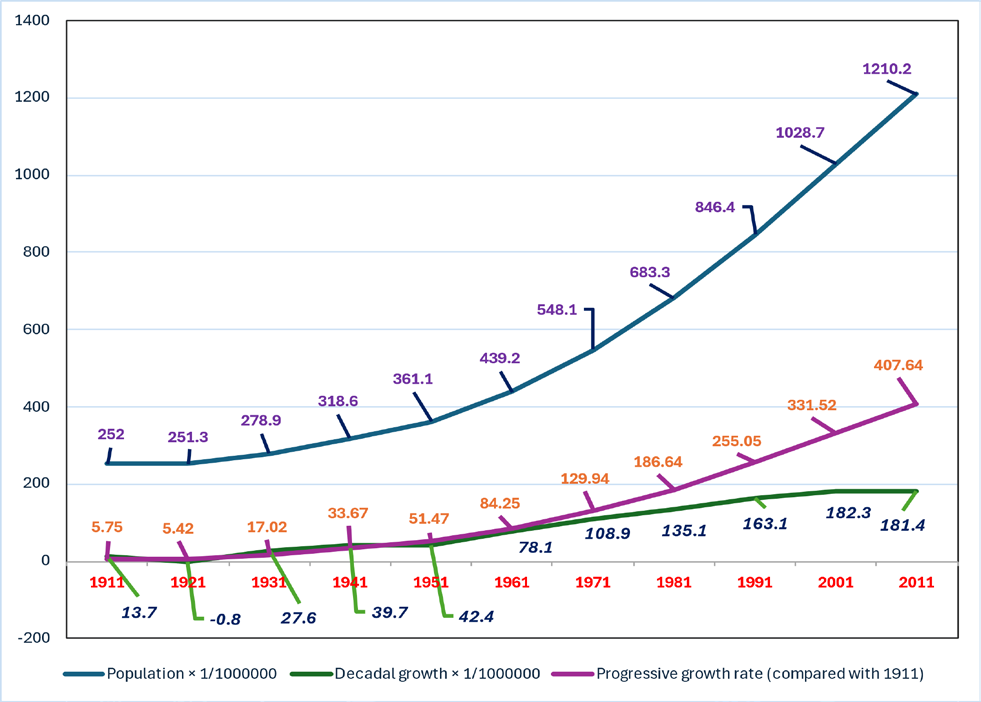
Figure 2 shows the bar chart displays the population of major Indian cities in 2011, with Mumbai having the highest population at approximately 18.5 million, followed by Delhi with 16.8 million, and Kolkata with 14.1 million. Chennai, Bangalore, and Hyderabad have populations of approximately 10.9 million, 8.4 million, and 7.7 million, respectively, while Ahmedabad has the smallest population among these cities at around 6.3 million Sharma GK, et al. [2]. This data highlights significant demographic concentration in Mumbai, Delhi, and Kolkata, which have the largest populations, indicating a need for focused urban planning and resource allocation in these densely populated areas [3].
![Figure 2: Population among Metro Cities [1].](/fulltextimages/13161/fig_2.png)
Figure 3 The chart illustrates waste management metrics for several Indian cities, showing Mumbai generating the highest total waste at around 6,500 tonnes/day, followed by Delhi with 5,000 tonnes/day, and Hyderabad with 4,200 tonnes/day, while Chennai and Ahmedabad generate the least. In terms of per capita waste, Hyderabad and Kolkata lead with approximately 0.5 g/capita/day, whereas Chennai has the lowest at around 0.3 g/capita/day. This data reveals significant variations in waste generation both in total and per capita terms, highlighting the need for tailored waste management strategies in each city [4].
![Figure 3: Waste Generation among Major Cities [5].](/fulltextimages/13161/fig_3.png)
Literature Review
Nanotechnology has been extensively researched and applied across various fields, including medicine, electronics, and environmental science. Its application in solid waste management, though relatively nascent, is rapidly gaining attention due to the unique advantages it offers. This literature review delves into the current state of research on the use of nanotechnology in solid waste management, examining key studies, methodologies, and findings across different aspects of waste treatment and management.
Nanomaterials for Waste Detection and Segregation
Efficient waste management relies heavily on the identification and separation of garbage. Nanomaterial- based advanced sensing technologies have demonstrated the potential to enhance these processes. Nanosensors possess exceptional sensitivity and specificity, enabling them to detect various forms of waste at the molecular level. In their study, Li et al showcased the application of gold nanoparticles in identifying heavy metals present in industrial waste Li LC, et al. [6]. The study demonstrated that gold nanoparticles, modified with certain ligands, can accurately detect minute quantities of heavy metals. This capability enables prompt intervention and treatment. Jiang and Sun created a nanosensor array utilizing carbon nanotubes to identify organic contaminants in municipal solid waste. This method facilitated the immediate monitoring and separation of trash into categories of biodegradable and non-biodegradable [7].
Nano Catalysts for Waste Degradation
Nanocatalysts have undergone thorough examination due to their capacity to expedite chemical reactions, rendering them well-suited for the decomposition of intricate waste substances. These catalysts can decompose organic contaminants into less toxic chemicals, hence improving the effectiveness of waste treatment procedures. Chen et al. investigated the application of titanium dioxide (TiO2) nanoparticles as photocatalysts to break down organic waste in landfill leachate. The study revealed that the presence of TiO2 nanoparticles had a substantial impact on diminishing the concentration of organic pollutants when exposed to UV radiation Chen DMC, et al. [8]. This resulted in an enhancement of the quality of leachate and a reduction in its negative effects on the environment. Zhang et al. examined the utilization of iron oxide nanoparticles for the process of catalytic decomposition of plastic waste. The study demonstrated that these nanoparticles can efficiently degrade polyethene and polypropylene into smaller, reusable monomers, presenting a promising resolution to the issue of plastic pollution [9].
Nanomaterials for Adsorption of Contaminants
Nanomaterials’ ability to adsorb substances is a highly intriguing field of study. Nanomaterials possess a large surface area and surfaces that may be modified, enabling them to capture a diverse array of pollutants from waste streams. Luo et al. investigated the application of graphene oxide in the process of adsorbing heavy metals from electronic trash Liu L, et al. [10]. The study showcased the capacity of graphene oxide to effectively absorb significant quantities of lead, cadmium, and mercury. This characteristic renders it a feasible choice for addressing the issue of electronic waste leachates. In their study, Peng et al examined the process of adsorption of colours from effluents in the textile sector utilizing magnetic nanoparticles Peng Z, et al. [11]. The study demonstrated the effective utilization of magnetic nanoparticles for the removal of dye molecules from wastewater. The magnetic features of these nanoparticles facilitated convenient separation and retrieval [6].
Environmental Impact and Safety of Nanomaterials
Although nanoparticles provide significant advantages, it is crucial to carefully evaluate their environmental consequences and ensure their safety. If nanoparticles are not adequately managed, their small size and high reactivity can provide potential hazards to human health and the environment. Oberdörster et al. performed an extensive examination of the toxicological impacts of nanomaterials on both aquatic and terrestrial ecosystems Oberdorster G, et al. [12]. The evaluation emphasized the necessity of conducting comprehensive risk assessments due to the potential for bioaccumulation and toxicity across different species. Kumar et al. conducted a study on the lifespan analysis of nanomaterials utilized in waste management Kumar M, et al. [13]. The study evaluated the environmental consequences throughout the entire lifecycle, from manufacturing to disposal, pinpointing critical areas that require enhancements in safety and sustainability measures. Multiple studies have showcased the pragmatic implementation of nanotechnology in actual waste management situations, highlighting both the potential advantages and the associated difficulties. Singh et al. documented the utilization of nanotechnology in the management of solid waste in Delhi, India. The research recorded the application of nanocatalysts in composting procedures, leading to accelerated decomposition rates and improved compost quality Singh S, et al. [14]. Ramirez et al. provided a comprehensive account of a pilot initiative conducted in Brazil, which involved the utilization of nanosensors in waste segregation facilities. The research enhanced the precision of trash categorization, resulting in increased rates of recycling and less pressure on landfills [15].
Comparison of Different Nanotechnologies for Solid Waste Treatment
The application of nanotechnology in solid waste treatment encompasses various nanomaterials and methods, each with distinct mechanisms, benefits, and challenges. Here, we compare key nanotechnologies used for waste detection, degradation, and adsorption as shown in Table 1.
| S. No | Nano Material | Features | Reference |
|---|---|---|---|
| 1 | Gold Nanoparticles (AuNPs) | Mechanism: Utilize plasmon resonance and ligand binding for detecting specific heavy metals. Applications: Primarily in the detection of trace heavy metals in industrial waste. Advantages: Extremely high sensitivity and specificity due to tenable surface properties. Challenges: High production costs and potential environmental toxicity due to persistence and bioaccumulation. | [16,17] |
| 2 | Carbon Nanotubes (CNTs) | Mechanism: Use electrochemical sensing and high surface area for adsorption. Applications: Effective in detecting and adsorbing organic pollutants in municipal waste. Advantages: Exceptional electrical properties and large surface area allow for precise detection. Challenges: Difficulty in dispersion and concerns regarding inhalation and long-term health effects. | [18,19] |
| 3 | Titanium Dioxide (TiO ) 2 | Mechanism: Acts as a photocatalyst under UV light to degrade organic pollutants. Applications: Commonly used in treating landfill leachate and wastewater. Advantages: Abundant, non-toxic, and highly effective under UV light. Challenges: Limited efficiency under visible light and dependency on UV light sources. | [20,21] |
| 4 | Iron Oxide Nanoparticles | Mechanism: Facilitate catalytic degradation through redox reactions. Applications: Degradation of plastic waste and organic contaminants. Advantages: Magnetic properties enable easy recovery and reuse. Challenges: Potential for environmental impact due to iron leaching and the need for stable formulations. | [22,23] |
| 5 | Graphene Oxide (GO) | Mechanism: Adsorbs contaminants through functionalized surface groups. Applications: Effective in heavy metal removal from electronic waste leachates. Advantages: High adsorption capacity and potential for large-scale production. Challenges: Stability issues and potential environmental and health risks due to toxicity. | [24-27] |
| 6 | Magnetic Nanoparticles | Mechanism: Adsorb contaminants and allow for magnetic separation. Applications: Removal of dyes and heavy metals from industrial wastewater. Advantages: Reusable and easily separable through magnetic fields. Challenges: Potential leaching of magnetic materials and handling issues. | [28-30] |
| 7 | Silver Nanoparticles (AgNPs) | Mechanism: Utilize antibacterial and catalytic properties for waste treatment. Applications: Removal of pathogens in organic waste treatment and water purification. Advantages: Broad-spectrum antimicrobial activity and catalytic efficiency. Challenges: Environmental and health concerns due to nanoparticle release and toxicity. | [31-33] |
| 8 | Zinc Oxide (ZnO) Nanoparticles | Mechanism: Photocatalytic degradation under UV and visible light. Applications: Degradation of dyes and organic pollutants in wastewater. Advantages: Effective under visible light, cost-effective, and widely available. Challenges: Photocatalytic efficiency can vary depending on particle size and surface modifications. | [34-36] |
Table 1: Comparison of Some Nanomaterial and Their Features.
Titanium Dioxide (TiO2) nanoparticles are a popular choice for degrading a variety of organic contaminants because of their demonstrated efficacy, non-toxicity, and economical nature. However, each nanotechnology has its unique benefits. Because of their catalytic and magnetic qualities, iron oxide nanoparticles are also quite useful, particularly in applications involving plastic waste. Because graphene oxide is particularly good at adsorbing heavy metals, it can be used to remediate electronic waste.
Because they are simple to collect and repurpose, magnetic nanoparticles provide useful benefits in the treatment of industrial wastewater. Titanium Dioxide (TiO2) nanoparticles are frequently regarded as the best option overall for a variety of applications with an emphasis on cost, efficacy, and safety. The choice of the most suitable nanotechnology should, in the end, be determined by the waste type and treatment objectives.
Discussion
The physical, chemical, and biological features of nanomaterials have greatly improved waste treatment systems, it explores the characteristics and relative efficacy of different nanomaterials via mechanisms, benefits, and constraints in waste treatment applications. Nanomaterials provide notable including elevated surface area and reactivity. Metal oxide nanoparticles, such as TiO₂ and Fe₂O₃, have efficacy in photocatalysis and adsorption. However, these encounter obstacles associated with toxicity and retrieval. Carbon-based nanomaterials, such as carbon nanotubes (CNTs) and graphene, demonstrate exceptional abilities in adsorption and mechanical strength. However, these are expensive and have the potential to harm the environment. Zero-valent iron nanoparticles (nZVI) exhibit excellent reactivity and cost-effectiveness in reducing pollutants. However, these tend to agglomerate, leading to the potential for secondary contamination. Quantum dots have adjustable characteristics and serve as efficient photocatalysts and potential hazards due to their toxicity. To obtain effective, safe, and economically feasible waste treatment solutions, it is necessary to carefully consider and balance these variables while selecting the suitable nanomaterial.
Conclusion
The use of nanotechnology in solid waste management offers a viable avenue to tackle the escalating environmental, financial, and societal issues related to waste management. The various ways that nanoparticles can enhance the identification, deterioration, and adsorption of contaminants have been discussed in this article, demonstrating how they have the potential to completely transform current waste management techniques. Enhanced Detection and Segregation: With their great sensitivity and specificity, nanosensors—like those based on carbon nanotubes and gold nanoparticles—allow for the accurate detection and separation of various waste kinds. This feature lowers contamination and improves recycling operations. Efficient Degradation: The breakdown of organic contaminants and plastics can be accelerated by using nanocatalysts such as titanium dioxide (TiO2) and iron oxide nanoparticles. These substances enable faster and more thorough degradation processes, which lessen their negative effects on the environment and increase the effectiveness of waste treatment.
Superior Adsorption: Materials with strong adsorption capabilities for heavy metals, dyes, and other pollutants include magnetic nanoparticles and graphene oxide. They are efficient in cleaning waste streams and recovering precious resources due to their high surface area and functionalizable surfaces. Environmental and Safety Considerations: Notwithstanding their benefits, using nanomaterials needs to be carefully controlled to reduce any hazards to human health and the environment. To guarantee responsible and sustainable application, thorough risk evaluations and the creation of safe production, use, and disposal procedures are crucial.
Comparative Analysis
Titanium dioxide (TiO2) nanoparticles are unique among the evaluated nanotechnologies due to their demonstrated efficacy, non-toxicity, and economical nature in the degradation of a broad spectrum of organic contaminants. Because of their magnetic characteristics, iron oxide nanoparticles have special benefits for the decomposition of plastic waste and ease of recovery. For the treatment of electronic waste, graphene oxide is a highly effective heavy metal adsorbent, whereas magnetic nanoparticles offer useful advantages in the treatment of industrial wastewater due to their facile separation and reuse.
Future Directions
Research and innovation in nanotechnology will be key to its future in solid waste management. Waste treatment methods can be further advanced by improving the stability and safety profiles of graphene oxide, creating more effective, visible light-responsive TiO2, and making optimal use of magnetic nanoparticles. Ensuring the safety of the environment and public health while fully utilizing nanotechnology will require interdisciplinary cooperation and strong regulatory frameworks Kumar S, et al. [37, 38]. In summary, nanotechnology has the potential to revolutionize solid waste management by delivering creative solutions that raise affordability, sustainability, and efficiency. Utilizing the special qualities of nanomaterials, we may solve important waste management issues and advance the development of a more sustainable and circular economy. To fully realize this promise, though, technological improvements must be balanced with a close eye on the effects they will have on the environment and public safety. Nanotechnology can be a key component of sustainable solid waste management with continued research, interdisciplinary collaboration, and responsible practices.
Acknowledgement
My proud privilege and appreciation for providing laboratory and internet facilities to the Department of Automation, Banasthali Vidyapith, Rajasthan and DESM, NIE, NCERT, New Delhi.
Statements and Declarations
Ethical Approval Not applicable.
Competing Interest
The present study has no technical or financial conflict of interest.
Author Contributions
Rajesh Singh Gurjar performed the literature search and data analysis. Dr. Sudesh Kumar read the manuscript. All authors read and approved the final version.
Funding
No funding is available.
Availability of data and material
The manuscript includes all data produced or examined throughout this study.
References
-
Government of India (2014) Census.
-
Sharma GK, Ghuge VV (2023) Assessment of urban growth dynamics in eight Indian metropolitan cities using spatial metrics. Journal of Spatial Science pp: 1-40.
-
Kumar R, Joseph AE (2006) Air pollution concentrations of PM 2.5, PM 10 and NO 2 at ambient and kerbsite and their correlation in Metro City–Mumbai. Environmental Monitoring and Assessment 119: 191-199.
-
Kumar S, Bhattacharyya J, Vaidya A, Chakrabarti T, Devotta S, et al. (2009) Assessment of the status of municipal solid waste management in metro cities, state capitals, class I cities, and class II towns in India: An insight. Waste management 29(2): 883-895.
-
Government of India(CPCB) (2024) Waste in India.
-
Li LC, Zou DS, Xiao ZH, Zeng XY, Zhang LQ, et al. (2019) Biochar as a sorbent for emerging contaminants enables improvements in waste management and sustainable resource use. Journal of Cleaner Production 210: 1324- 1342.
-
Liu J, Jiang J, Meng Y, Aihemaiti A, Xu Y, et al. (2020) Preparation, environmental application and prospect of biochar-supported metal nanoparticles: A review. Journal of hazardous materials 388: 122026.
-
Chen DMC, Bodirsky BL, Krueger T, Mishra A, Popp A, et al. (2020) The world’s growing municipal solid waste: trends and impacts. Environmental Research Letters 15(7): 074021.
-
Zhang C, Hu M, Di Maio F, Sprecher B, Yang X, et al. (2022) An overview of the waste hierarchy framework for analyzing the circularity in construction and demolition waste management in Europe Science of the Total Environment 803: 149892.
-
Liu L, Luo XB, Ding L, Luo SL (2019) Application of nanotechnology in the removal of heavy metal from water. Nanomaterials for the removal of pollutants and resource reutilization: Elsevier pp: 83-147.
-
Peng Z, Liu X, Zhang W, Zeng Z, Liu Z_,_ et al. (2020) Advances in the application, toxicity and degradation of carbon nanomaterials in environment: A review. Environment international 134: 105298.
-
Oberdorster G, Castranova V, Asgharian B, Sayre P (2015) Inhalation exposure to carbon nanotubes (CNT) and carbon nanofibers (CNF): Methodology and dosimetry. Journal of Toxicology and Environmental Health Part B 18(3-4): 121-212.
-
Kumar M, Dosanjh HS, Singh J, Monir K, Singh H, et al. (2020) Review on magnetic nanoferrites and their composites as alternatives in waste water treatment: synthesis modifications and applications. Environmental Science: Water Research & Technology 6(3): 491-514.
-
Singh S, Batra R (2018) Nanotechnology in wastewater treatment: A review Novel applications in polymers and waste management pp: 173-182.
-
Ramirez IEM, Cardenas MAA, Olmos AM, Lopez MAR (2019) Synthesis characterization toxicological and antibacterial activity evaluation of Cu@ZnO nanocomposites. Ceramics International 45(14): 17476- 17488.
-
Patil T, Gambhir R, Vibhute A, Tiwari AP (2023) Gold nanoparticles: synthesis methods functionalization and biological applications. Journal of Cluster Science 34(2): 705-725.
-
Xu F, Li Y, Zhao X, Liu G, Pang B, et al. (2023) Diversity of fungus-mediated synthesis of gold nanoparticles: properties mechanisms challenges and solving methods. Critical Reviews in Biotechnology 44(5): 924-940.
-
Mishra S, Sundaram B (2023) Efficacy and challenges of carbon nanotube in wastewater and water treatment. Environmental Nanotechnology Monitoring & Management 19: 100764.
-
Rimamnya ND, Samson AO, Bunmi DC, Abass GF, Olaniyan AJ, et al. (2023) Evolution of Carbon Nanotubes Their Methods And Application as Reinforcements in Polymer Nanocomposites: A Review. Journal of Advanced Mechanical Engineering Applications 4(1): 49-63.
-
Akinnawo S (2019) Synthesis modification applications and challenges of titanium dioxide nanoparticles. Research Journal of Nanoscience and Engineering 3(4): 10-22.
-
Dharma HNC, Jaafar J, Widiastuti N, Matsuyama H, Rajabsadeh S, et al. (2022) A review of titanium dioxide (TiO2)-based photocatalyst for oilfield-produced water treatment. Membranes 12(3): 345.
-
Jjagwe J, Olupot PW, Carrara S (2023) Iron oxide nanoparticles/nanocomposites derived from steel and iron wastes for water treatment: a review. Journal of Environmental Management 343: 118236.
-
Chaudhary S, Jain VP, Sharma D, Jaiswar G (2023) Implementation of agriculture waste for the synthesis of metal oxide nanoparticles: its management, future opportunities and challenges. Journal of Material Cycles and Waste Management 25(6): 3144-3160.
-
Priyadharshini SD, Manikandan S, Kiruthiga R, Rednam U, Babu PS, et al_._ (2022) Graphene oxide-based nanomaterials for the treatment of pollutants in the aquatic environment: Recent trends and perspectives–A review. Environmental Pollution 306: 119377.
-
Zeng H, Qu S, Tian Y, Hu Y, Li Y, et al. (2023) Recent progress on graphene oxide for next-generation concrete: Characterizations, applications and challenges. Journal of Building Engineering 69: 106192.
-
Deshwal N, Singh MB, Bahadur I, Kaushik N, Kaushik NK, et al. (2023) A review on recent advancements on removal of harmful metal/metal ions using graphene oxide: Experimental and theoretical approaches. Science of the Total Environment 858(1): 159672.
-
Rasuli H, Rasuli R (2023) Nanoparticle-decorated graphene/graphene oxide: synthesis properties and applications. Journal of Materials Science 58(7): 2971- 2992.
-
Piotrowska GB, Golimowski J, Urban PL (2009) Nanoparticles: their potential toxicity waste and environmental management. Waste management 29(9): 2587-2595.
-
Vallinayagam S, Rajendran K, Lakkaboyana SK, Soontarapa K, Remya RR, et al. (2021) Recent developments in magnetic nanoparticles and nano- composites for wastewater treatment. Journal of Environmental Chemical Engineering 9(6): 106553.
-
Mondal P, Nandan A, Ajithkumar S, Siddiqui NA, Raja S, et al. (2023) Sustainable application of nanoparticles in wastewater treatment: Fate current trend & paradigm shift. Environmental Research 232: 116071.
-
Palani G, Trilaksana H, Sujatha RM, Kannan K, Rajendran S, et al. (2023) Silver nanoparticles for waste water management. Molecules 28(8): 3520.
-
Syafiuddin A, Salmiati, Salim MR, Kueh ABH, Hadibarata T, et al. (2017) A review of silver nanoparticles: research trends, global consumption, synthesis, properties, and future challenges. Journal of the Chinese Chemical Society 64(7): 732-756.
-
Santos CAD, Seckler MM, Ingle AP, Gupta I, Galdiero S, et al. (2014) Silver nanoparticles: therapeutical uses toxicity and safety issues. Journal of pharmaceutical sciences 103(7): 1931-1944.
-
Shaba EY, Jacob JO, Tijani JO, Suleiman MAT (2021) A critical review of synthesis parameters affecting the properties of zinc oxide nanoparticle and its application in wastewater treatment. Applied Water Science 11(2): 48.
-
Bhattacharjee N, Som I, Saha R, Mondal S (2024) A critical review on novel eco-friendly green approach to synthesize zinc oxide nanoparticles for photocatalytic degradation of water pollutants. International Journal of Environmental Analytical Chemistry 104(3): 489-516.
-
Maria VPKD, Paiva FFGD, Tamashiro JR, Silva LHP, Pinho GDS, et al. (2024) Advances in ZnO nanoparticles in building material: Antimicrobial and photocatalytic applications–Systematic literature review. Construction and Building Materials 417: 135337.
-
Kumar S, Dhanda N (2023) Innovative Nanotechnology Applications for Water Purification: Mini Review. J Nanomedicine Biotherapeutic Discov 13(6): 222.
-
N Dhanda, Kumar S (2024) Nanomedicine and Nanorobot: Mini Review. Nanomed Nanotechnol 9(1): 000295.
- Solution-Processed Chiral Perovskites for Biomedical Applications
- Nanotechnology in Health Chemistry and Medicine: Current Challenges and Future Directions
- Human Exposure to Micro- and Nanoplastics: Pathways, Toxicity, and Intervention Strategies
- Exosome Nanomedicine for Cancer Therapy
- Micro and Nanoplastics–Plastisphere, Biotoxicity, Impact on Human Health, and Mitigation Strategies
- Process Validation of Cefixime Powder for Suspension Dosage Form, 50 mL