
Nanotechnology and Its Implications for Controlling Air Pollution: A Mini Review
Air pollution is a pressing global challenge that severely impacts human health and the environment. Traditional approaches to mitigate air pollution have limitations in terms of efficiency and scalability. Nanotechnology, with its unique properties at the nanoscale, offers innovative solutions to combat air pollution by enhancing pollutant detection, improving filtration systems, and enabling catalytic processes to degrade harmful pollutants. This mini-review explores the key advancements in nanotechnology-based applications for air pollution control, focusing on detection, filtration, and catalytic conversion methods. It also discusses the challenges and future prospects of integrating nanotechnology into environmental management.
Abbreviations
VOC: Volatile Organic Compounds; WHO: World Health Organization.
Graphical Abstract
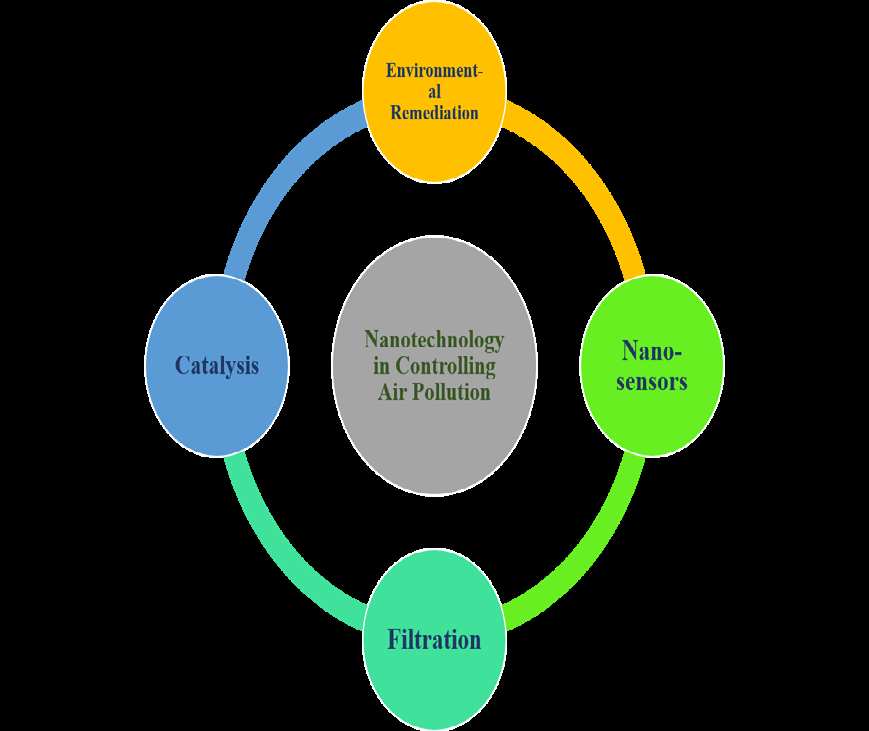
Introduction
Air pollution remains one of the most pressing environmental challenges of the modern era, profoundly impacting public health and ecosystems worldwide [1, 2]. Rapid industrialization, urban expansion, and escalating energy demands have led to an alarming increase in airborne pollutants, including particulate matter (PM), nitrogen oxides (NOx), sulphur oxides (SOx), volatile organic compounds (VOCs), and greenhouse gases [3]. These pollutants degrade air quality and contribute to global phenomena such as climate change and acid rain [3]. The severity of this issue is underscored by the World Health Organization’s (WHO) data, which reveals that air pollution is responsible for millions of premature deaths globally, making it a leading risk factor for respiratory and cardiovascular diseases, cancer, and other chronic illnesses [2, 4].
Despite advancements in traditional air pollution control measures like filtration systems, catalytic converters, and electrostatic precipitators, these technologies often face significant constraints [2]. High operational costs, energy requirements, and limited efficacy in addressing ultrafine and nanoscale pollutants pose critical challenges [5]. In light of these limitations, the integration of nanotechnology into air pollution control systems offers a promising avenue [4]. Nanotechnology leverages the exceptional properties of nanomaterials, such as enhanced reactivity, high adsorption capacity, and tunable physicochemical attributes, enabling novel approaches for detecting, capturing, and neutralizing diverse pollutants [6]. This review delves into the transformative role of nanotechnology in mitigating air pollution, emphasizing its potential to overcome the limitations of conventional methods and contribute to a sustainable future.
Nanotechnology in Pollutant Detection
Effective air pollution management begins with accurate and reliable detection of pollutants, which provides critical data for designing control strategies and ensuring environmental compliance [5]. Traditional detection methods, while effective for specific pollutants, often suffer from limitations like bulkiness, high operational costs, and insufficient sensitivity to trace-level contaminants [7]. Nanotechnology has revolutionized pollutant detection by introducing advanced materials and techniques that exhibit superior sensitivity, selectivity, and miniaturization potential [6].
Nano-Sensors for Gas Detection
Metal oxide nanoparticles, such as zinc oxide (ZnO) and titanium dioxide (TiO₂), have become pivotal in gas- sensing technologies [7]. These nanoparticles exhibit a high surface area-to-volume ratio, which enhances their interaction with target gases like carbon monoxide (CO), nitrogen dioxide (NO₂), and sulfur dioxide (SO₂) [8]. Their electrical resistance changes significantly upon exposure to specific gases, enabling real-time and precise monitoring [9]. The incorporation of dopants and surface functionalization further improves their selectivity and response time, making them suitable for urban and industrial applications [8].
Carbon-Based Sensors
Graphene and carbon nanotubes (CNTs), with their extraordinary electrical conductivity, high aspect ratio, and chemical stability, have emerged as leading materials for detecting volatile organic compounds (VOCs) such as benzene, toluene, and formaldehyde [7]. These sensors rely on charge transfer mechanisms that occur when VOC molecules interact with the sensor’s surface [9]. Additionally, their ability to operate at room temperature and their compatibility with flexible and wearable devices offer considerable advantages for developing next-generation air quality monitoring systems [10].
Quantum Dot-Based Detection
Quantum dots, semiconductor nanocrystals renowned for their tunable fluorescence properties, are being utilized in high-precision pollutant detection [11, 12, 13]. By tailoring their size and surface chemistry, quantum dots can be engineered to exhibit selective optical responses to specific pollutants, such as ammonia (NH₃) or formaldehyde [11]. This unique feature allows their integration into portable and miniaturized air quality monitoring devices. Moreover, their strong photostability and rapid response times make them highly advantageous for continuous and field-based monitoring, particularly in environments with fluctuating pollution levels [14].
Filtration and Adsorption Using Nanomaterials
Nanotechnology has profoundly influenced the development of advanced filtration and adsorption systems, offering a significant leap in air pollution control [13]. These systems leverage the unique properties of nanomaterials, such as high surface area, tailored pore sizes, and enhanced reactivity, to efficiently remove particulate and gaseous pollutants [12]. Compared to conventional methods, nanomaterial-based filtration and adsorption systems exhibit superior efficiency, durability, and the ability to target a wide range of pollutants, including ultrafine particles and hazardous gases [15].
Nanofiber Filters
Electrospun nanofiber membranes have emerged as a breakthrough in particulate matter (PM) filtration technology [15]. These membranes, composed of polymers like polyvinylidene fluoride (PVDF) or polyacrylonitrile (PAN), possess high porosity, interconnected structures, and large surface areas, making them highly effective at trapping fine particles such as PM2.5 and PM10 [12]. Furthermore, their low-pressure drop and lightweight properties make them ideal for integration into portable air purifiers and industrial-scale filtration systems [11]. Recent advancements include functionalizing nanofibers with antimicrobial agents or photocatalytic nanoparticles, such as titanium dioxide (TiO₂), to enhance their pollutant removal capabilities and inhibit microbial growth [16].
Adsorption using Nanoporous Materials
Nanoporous materials, such as zeolites and metal- organic frameworks (MOFs), have gained attention for their exceptional adsorption capacities [17]. Zeolites, with their crystalline aluminosilicate structures, are particularly effective at trapping polar molecules like ammonia (NH₃)
and sulfur dioxide (SO₂) [18]. Conversely, MOFs offer unparalleled versatility due to their tunable pore sizes and surface chemistry, enabling them to selectively adsorb gases like carbon dioxide (CO₂) and methane (CH₄) [17]. These materials are being incorporated into gas capture devices and air filtration systems for applications ranging from industrial emissions control to indoor air purification [19]. Additionally, regenerable adsorbents based on MOFs are being developed, allowing for repeated pollutant capture and material reuse, thus enhancing sustainability [18].
Active Carbon Nanotubes (CNTs)
Carbon nanotubes (CNTs), especially those chemically or physically modified, have proven to be highly effective in adsorbing a variety of pollutants, including heavy metals, VOCs, and other organic contaminants [8]. Their exceptional adsorption performance stems from their large specific surface area, high aspect ratio, and the ability to functionalize their surfaces to enhance interaction with specific pollutants [19]. CNTs are increasingly integrated into hybrid filtration systems, where they work in conjunction with other nanomaterials to improve overall pollutant removal efficiency [20]. For instance, CNTs impregnated with metal nanoparticles are being explored for catalytic degradation of VOCs, adding an active purification dimension to passive adsorption [19, 20].
Catalytic Applications in Air Pollution Control
Catalysis is a cornerstone in air pollution mitigation, providing transformative pathways to convert hazardous pollutants into less harmful or inert substances [18]. The advent of nanotechnology has significantly advanced catalytic applications by enabling the development of nano- catalysts with enhanced surface area, superior reactivity, and improved efficiency [20]. These nano-catalysts are critical in degrading gaseous pollutants and reducing emissions, offering a sustainable approach to air pollution control [20].
Photocatalytic Degradation of Pollutants
Titanium dioxide (TiO₂) nanoparticles are among the most extensively researched photocatalysts for air pollution control [21]. Under ultraviolet (UV) light, TiO₂ generates reactive oxygen species (ROS) that oxidize volatile organic compounds (VOCs), nitrogen oxides (NOx), and other harmful pollutants, converting them into benign products such as carbon dioxide (CO₂) and water (H₂O) [22]. Incorporating TiO₂ into building materials, such as paints and tiles, has led to self-cleaning surfaces that actively degrade airborne pollutants. Recent advancements include doping TiO₂ with metals like silver or non-metals like nitrogen to extend its catalytic activity into the visible light spectrum, enhancing its practicality for real-world applications [23].
Plasmonic Nanoparticles
Plasmonic nanoparticles, such as silver (Ag) and gold (Au), exhibit unique surface plasmon resonance properties that allow them to harness visible light for catalytic processes [20]. These nanoparticles enhance the efficiency of photocatalytic reactions by concentrating electromagnetic energy and generating hot electrons that drive pollutant degradation [23]. For example, plasmonic catalysts have been shown to effectively decompose VOCs and other organic pollutants under sunlight, offering energy-efficient solutions for outdoor air purification [24]. Furthermore, combining plasmonic nanoparticles with semiconductor catalysts like TiO₂ creates synergistic systems that improve overall catalytic performance [25].
Catalytic Converters
In the automotive sector, catalytic converters rely on platinum (Pt), palladium (Pd), and rhodium (Rh) nanoparticles to reduce harmful emissions [21]. These nano- catalysts facilitate critical reactions, such as the oxidation of carbon monoxide (CO) into CO₂ and the reduction of nitrogen oxides (NOx) into nitrogen (N₂) [23]. Nanoparticles significantly enhance the surface area and catalytic activity, allowing for more efficient pollutant conversion even at lower temperatures [26]. Innovations in catalytic converter technology include the development of bimetallic and alloyed nanoparticles to improve durability, reduce material costs, and increase resistance to poisoning by sulphur and other contaminants [26].
Emerging Catalytic Technologies
In addition to traditional applications, emerging nano- catalysts are being explored for advanced air pollution control strategies [27]. For instance, single-atom catalysts (SACs), where individual metal atoms are dispersed on a support material, offer maximum atom efficiency and unparalleled catalytic performance for pollutant degradation [28]. Similarly, hybrid catalysts combining photocatalytic and thermo-catalytic functionalities are under investigation for addressing complex pollutant mixtures [29].
Challenges and Environmental Concerns
While nanotechnology offers transformative solutions for air pollution control, its implementation is not without significant challenges and environmental concerns [18]. These issues must be addressed to ensure nanotechnology’s safe, sustainable, and ethical deployment in environmental applications [16]. The toxicity of certain nanomaterials, such as silver nanoparticles, zinc oxide nanoparticles, and carbon nanotubes, raises concerns for both human health and the environment [5, 15, 19]. When inhaled or ingested, these materials can generate reactive oxygen species (ROS) and other byproducts that may lead to oxidative stress, inflammation, and cellular damage [21]. Furthermore, their persistence in natural ecosystems can disrupt microbial communities, bioaccumulate in food chains, and affect aquatic and terrestrial organisms [25]. Addressing these concerns requires extensive research into the toxicological profiles of nanomaterials and the development of safer-by- design alternatives that minimize environmental and health risks [21]. The high cost of synthesizing nanomaterials, especially those involving rare or precious metals like platinum or palladium, poses a significant barrier to large- scale implementation [29]. Complex production techniques, such as chemical vapour or atomic layer deposition, add to the expense [12]. Maintaining consistent quality and performance at an industrial scale remains a technical challenge [14]. To overcome these issues, researchers are exploring cost-effective synthesis methods, nanomaterials recycling strategies, and abundant, low-cost materials like bio-derived nanoparticles or transition metal oxides [19]. If not properly managed, nanomaterials can persist in the environment, leading to unintended consequences such as soil and water contamination [25]. The challenge lies in developing efficient recycling and degradation techniques to minimize waste and prevent environmental accumulation [30]. For instance, strategies like photocatalytic degradation or magnetic recovery of nanomaterials are being explored to enable reuse and reduce ecological footprints [27].
Future Prospects and Innovations
The continuous evolution of nanotechnology offers immense opportunities for addressing air pollution more sustainably and effectively [25]. Future research should prioritize innovations that enhance nanotechnology-based solutions’ environmental compatibility, affordability, and adaptability, ensuring their widespread adoption and long- term impact [28]. Future research should significantly focus on designing biodegradable and eco-friendly nanomaterials to mitigate environmental risks associated with their use and disposal [26]. These materials could be derived from renewable sources, such as plant-based polymers or bio-minerals, and engineered to degrade into harmless byproducts after their functional life [29]. The high cost of nanomaterial production and application remains a critical barrier to large-scale deployment [22]. Future efforts should focus on developing scalable and energy-efficient synthesis techniques, such as microwave-assisted synthesis or sol- gel methods, to reduce manufacturing costs [18, 19]. The integration of artificial intelligence (AI) and machine learning (ML) can revolutionize the application of nanotechnology in air quality management [23]. AI-driven algorithms can optimize the design and functionality of nanomaterials by predicting their performance, stability, and environmental impact based on computational models [27]. Real-time data analysis enabled by ML can enhance the efficiency of air pollution monitoring systems, allowing dynamic adjustments in pollutant capture or degradation processes [25]. To accelerate progress, interdisciplinary collaboration among material scientists, environmental engineers, data scientists, and policymakers is essential [30].
Conclusion
Nanotechnology has emerged as a groundbreaking tool in the fight against air pollution, offering innovative approaches for detecting, filtration, and catalytic degradation of harmful pollutants. Its ability to provide high sensitivity in monitoring, enhanced efficiency in removing nano-sized particulates, and the capability to convert toxic emissions into benign byproducts marks a significant advancement over traditional methods. These contributions make nanotechnology an indispensable asset in addressing one of the most pressing environmental challenges of the modern era. By fostering innovations prioritising environmental safety and economic feasibility, nanotechnology can seamlessly be incorporated into global efforts to combat air pollution. This integration promises to mitigate the adverse effects of air pollution and contributes to broader goals of sustainable development and public health enhancement.
References
-
Saleem H, Zaidi SJ, Ismail AF, Goh PS (2022) Advances of nanomaterials for air pollution remediation and their impacts on the environment. Chemosphere 287: 132083.
-
WHO (2021) Air Pollution and Health.
-
Yunus IS, Harwin Kurniawan A, Adityawarman D, Indarto A (2012) Nanotechnologies in water and air pollution treatment. Environmental Technology Reviews 1(1): 136-148.
-
Taran M, Safaei M, Karimi N, Almasi A (2021) Benefits and application of nanotechnology in environmental science: an overview. Biointerface Research in Applied Chemistry 11(1): 7860-7870.
-
Tsekhmistrenko OS, Bityutskyy VS, Tsekhmistrenko SI, Kharchishin VM, Melnichenko OM, et al. (2020) Nanotechnologies and environment: A review of pros and cons. Ukrainian journal of ecology 10(3): 162-172.
-
Salem SS (2023) A mini review on green nanotechnology and its development in biological effects. Archives of Microbiology 205(4): 128.
-
Saritha GNG, Anju T, Kumar A (2022) Nanotechnology- Big impact: How nanotechnology is changing the future of agriculture?. Journal of Agriculture and Food Research 10: 100457.
-
Malik S, Muhammad K, Waheed Y (2023) Nanotechnology: A revolution in modern industry. Molecules 28(2): 661.
-
Intisar A, Ramzan A, Sawaira T, Kareem AT, Hussain N, et al. (2022) Occurrence, toxic effects, and mitigation of pesticides as emerging environmental pollutants using robust nanomaterials–A review. Chemosphere 293: 133538.
-
Rafeeq H, Hussain A, Ambreen A, Waqas M, Bilal M, et al. (2022) Functionalized nanoparticles and their environmental remediation potential: a review. Journal of Nanostructure in Chemistry 12(6): 1007-1031.
-
Ali MU, Lin S, Yousaf B, Abbas Q, Munir MAM, et al. (2022) Pollution characteristics, mechanism of toxicity and health effects of the ultrafine particles in the indoor environment: Current status and future perspectives. Critical Reviews in Environmental Science and Technology 52(3): 436-473.
-
Zhou Y, Ashokkumar V, Amobonye A, Bhattacharjee G, Sirohi R, et al. (2023) Current research trends on cosmetic microplastic pollution and its impacts on the ecosystem: A review. Environmental Pollution 320: 121106.
-
Yadav N, Garg VK, Chhillar AK, Rana JS (2021) Detection and remediation of pollutants to maintain ecosustainability employing nanotechnology: A review. Chemosphere 280: 130792.
-
Huang X, Auffan M, Eckelman MJ, Elimelech M, Kim JH, et al. (2024) Trends, risks and opportunities in environmental nanotechnology. Nature Reviews Earth & Environment 5(8): 572-587.
-
Okeke ES, Ezeorba TPC, Mao G, Chen Y, Feng W, et al. (2022) Nano-enabled agrochemicals/materials: Potential human health impact, risk assessment, management strategies and future prospects. Environmental Pollution 295: 118722.
-
Du Y, Yu DG, Yi T (2023) Electrospun nanofibers as chemosensors for detecting environmental pollutants: A review. Chemosensors 11(4): 208.
-
Adeel M, Shakoor N, Shafiq M, Pavlicek A, Part F, et al. (2021) A critical review of the environmental impacts of manufactured nano-objects on earthworm species. Environmental pollution 290: 118041.
-
Zein El-Din AM, Youssef Taha RM, Abdel Hamied RG (2021) Nanotechnology sector applications in power and farm machinery: a review. Journal of the Advances in Agricultural Researches 26(2): 38-47.
-
Kumar L, Ragunathan V, Chugh M, Bharadvaja N (2021) Nanomaterials for remediation of contaminants: a review. Environmental Chemistry Letters 19(4): 3139- 3163.
-
Ningthoujam R, Singh YD, Babu PJ, Tirkey A, Pradhan S, et al. (2022) Nanocatalyst in remediating environmental pollutants. Chemical Physics Impact 4: 100064.
-
Nair AN, Anand P, George A, Mondal N (2022) A review of strategies and their effectiveness in reducing indoor airborne transmission and improving indoor air quality. Environmental Research 213: 113579.
-
Bui VKH, Nguyen TN, Van Tran V, Hur J, Kim IT, et al. (2021) Photocatalytic materials for indoor air purification systems: An updated mini-review. Environmental Technology & Innovation 22: 101471.
-
Thakur A, Kumar A (2022) Recent advances on rapid detection and remediation of environmental pollutants utilizing nanomaterials-based (bio) sensors. Science of The Total Environment 834: 155219.
-
Bhavya G, Belorkar SA, Mythili R, Geetha N, Shetty HS, et al. (2021) Remediation of emerging environmental pollutants: a review based on advances in the uses of eco-friendly biofabricated nanomaterials. Chemosphere 275: 129975.
-
Li W, Qamar SA, Qamar M, Basharat A, Bilal M, et al. (2021) Carrageenan-based nano-hybrid materials for the mitigation of hazardous environmental pollutants. International Journal of Biological Macromolecules 190: 700-712.
-
Essa WK, Yasin SA, Saeed IA, Ali GA (2021) Nanofiber- based face masks and respirators as COVID-19 protection: A review. Membranes 11(4): 250.
-
Hamad HT, Al-Sharify ZT, Al-Najjar SZ, Gadooa ZA (2020) A review on nanotechnology and its applications on fluid flow in agriculture and water recourses. In IOP conference series: materials science and engineering 870(1): 012038.
-
Haleem A, Javaid M, Singh RP, Rab S, Suman R (2023) Applications of nanotechnology in medical field: a brief review. Global Health Journal 7(2): 70-77.
-
Dey T (2023) Microplastic pollutant detection by Surface Enhanced Raman Spectroscopy (SERS): a mini- review. Nanotechnology for Environmental Engineering 8(1): 41-48.
-
Malakar A, Kanel SR, Ray C, Snow DD, Nadagouda MN (2021) Nanomaterials in the environment, human exposure pathway, and health effects: A review. Science of the Total Environment 759: 143470.
- Solution-Processed Chiral Perovskites for Biomedical Applications
- Nanotechnology in Health Chemistry and Medicine: Current Challenges and Future Directions
- Human Exposure to Micro- and Nanoplastics: Pathways, Toxicity, and Intervention Strategies
- Exosome Nanomedicine for Cancer Therapy
- Micro and Nanoplastics–Plastisphere, Biotoxicity, Impact on Human Health, and Mitigation Strategies
- Process Validation of Cefixime Powder for Suspension Dosage Form, 50 mL