
The Challenges of Dental Care during the Hemodialysis: Case Report
Chronic renal deficiency (CRD) can leading to progressive loss of kidney function. Its causes include hypertension and diabetes mellitus. The lack of oral assistance could increase the presence of oral foci of infection, which alarms the nephrologists and worsens the metabolic equilibrium, especially those undergoing hemodialysis (HD). The dental care is always a big challenge due the risks of infection and bleeding, pharmacologic limitation, effects on social economic patterns, and psychological damages. This study aims to report a case of integral oral assistance in a patient undergoing HD. Upon oral examination it were observed dental caries, periodontal disease, periapical lesion, and several loss of teeth. Therefore, it was need promotion of oral health, control of gingivitis and periodontitis, dental extractions, teeth restoration, and dental prosthesis. For oral treatment, the dental team used a mobile dental equipment and worked together with the physiotherapy and nursing team and in accordance with nephrologist schedule of treatment. The patient was able to achieve a satisfactory level of oral health after one year of oral assistance. The authors conclude that a multidisciplinary approach is effective in giving better oral assistance to patients undergoing hemodialysis.
Summary
Keywords: Renal insufficiency; Bleeding risk; Oral health
Introduction
Patients with chronic renal deficiency (CRD) present with high levels of oral and systemic health alterations that substantially affect the prognosis in dentistry, as patients with CRD can be classified as persons with disability. In spite of these challenges, effective metabolic control and elimination of oral infection to prepare him for kidney transplantation would be necessary [1].
CRD can be seen since childhood, but it becomes more frequent with the aging, as older persons are more susceptible to pathologies such as diabetes or hypertension, which are strongly related to a progressive restriction on kidney function [2, 3]. Moreover, the main cause of CRD are pyelonephritis, glomerulonephritis, renal polycystic disease, interstitial nephritis, autoimmune disease, and intoxication by medicine abuse. In addition, CRD also negatively affects the quality of life of patient, with increasing morbidity and mortality indices [4, 5]. CRD can be initially controlled through restriction of proteins, potassium, and liquids in diet, with the aim to reduce uremia and to aid the lowering capacity of kidney to excrete wastes. As the disease progresses, dialysis or even renal transplantation would be necessary [2, 3, 6].
Dialysis artificially removes or filters excess metabolites from blood, and it can be done through peritoneal dialysis or hemodialysis (HD). For HD, the patient is normally connected to the HD device for an average of 4h, three times a week. It can be done for a lifetime, but it is not considered the definitive cure for the patient. On the other hand, kidney transplantation is considered as the ultimate solution, but the risk of organ rejection must always be considered [3, 4, 5].
Increased concentrations of creatinine, urea, sodium, potassium, chloride, and alpha amylase can be expected in the saliva of a CRD patient; the reduction in salivary flow modifies oral homeostasis [7]. Aside from the changes in oral environmental, poor oral hygiene can mainly result in dental caries and periodontal disease [1, 8, 9]. When dental treatment is in progress, the use of drugs, risk of bleeding, and infections mandates CRD patients to become significant dentistry patients [1, 3, 4, 10]. Therefore, the help of nephrologist, blood complete examination, and monitoring of blood pressure are vital for the patient. Furthermore, the well-being of patients undergoing HD could be facilitated by physiotherapists by aiding patients to improving their respiration capacity, quality of life, and muscles responses, which can benefit the dental treatment in several aspects [1, 5].
Considering the background presented, this study aims to report a case of integral dental treatment that emphasizes dental care adapted to special conditions and multidisciplinary work.
Case Presentation
The present case here reported is part of a study about oral health and DRC approved by Ethical Committee of Lutheran University of Brazil (N. 2008-141H). The patient, who is a 55-year-old Caucasian male, gave his informed consent. The etiology of his CRD was amyloidosis. He underwent HD in a HD Center (HDC) partnered with University for ten years. Few weeks prior to HD his right leg was amputated due a thrombosis of the tibial arteries. The HD was conducted thrice weekly for four hours each day in the last three years. In the first bloody dental procedure, the protocol of hematologic monthly analysis showed the following results: Ca xP 37.37;Ca 10.1mg/dL;P 3.7 mg/dL; RBC 2.8 million cells/mcL; hematocrit 28.5%, Hb= 8.7 g/dL; leucocytes 13,090 cells/mm3; segmented neutrophils 63%; platelet 359, 000 cells/mcL; kt/V 1.16;PCRn SP 0.58; PNA 0.55 g/kg/day; albumin 3.0 g/dL; globulin= 3.4g/dL; rel A/G= 0.88; TAC Urea 19.86 mM; TGP 248.0; urea post 23mM; urea pre 62 mM; URR 0.63.
He takes warfarin 20 mg/day, enalapril 5 mg/day, atenolol 25 mg/day, folic acid 5 mg/day , ferrous sulfate 100 mg/day, vitamin B complex one tablet/day, calcium carbonate 500 mg/twice daily. Moreover, his blood pressure was measured 130/80 mmHg.
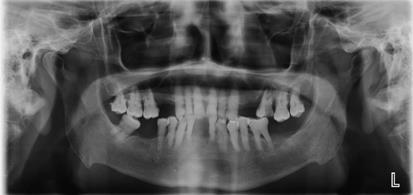
The intraoral examination showed tongue varicosities; absence of teeth 14, 15, 46, 41 24 e 25 31, 37 and 48; dental caries in teeth 13, 18, 26, 44, 26, 35, 36, 44, 45 and 18; periapical chronic abscess and vestibular furcation grade 2 in 26 and grade 3 in tooth 36; dental necrosis in teeth 16, 18, 26, 28 and 36; gingivitis in all present teeth; and periodontitis in all teeth except 33 and 34. This general aspect could be observed in panoramic x ray shown in Figure 1. No extra oral abnormalities were recorded.
The treatment plan were as follows: promotion of oral health, including control of retained biofilm factors and supra gingival scaling to remove calculus in maxilla; control of gingival inflammation; extraction of teeth 16, 18, 26, and 28; subgingival curettage and root planning of all present teeth, except extracted teeth and 33 and 34; and light-cured composite restoration of teeth 13, 18, 44, 35, 44, and 45.The abovementioned procedures were conducted in the HD Center for free, as it is a University Extension. For the whole year, 15 appointments of dental treatment were set. Subsequently, the patient was referred to the Prosthesis Department, where he will receive removable partial prosthesis in both arcs.
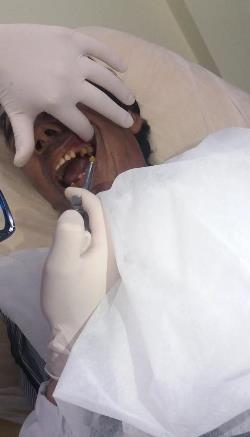
For antibiotic prophylaxis, the patient was given amoxicillin 500 mg 12h/12h for seven days, starting two days before the surgical appointment. Furthermore, 500- mg paracetamol was prescribed every 6h for two days or whenever that patient experiences post-operation pain. A maximum of three cartridges of 3% Mepivacaine was administered [11]. No intercurrences nor post-operatory complications were reported. Figure 2.
Discussion
Considering the complexity of oral and general health the CRD can be classified with disability [1, 8]. In this context, the dental team, together with the nephrologist, specialized nursing service, the physiotherapy and the nutritionist, allowed the oral treatment to be as safe as possible. The exercise program [5] resulted in improvement of respiratory capacity, better control of blood pressure, and reduced muscles cramps. All these factors benefited and improved the patient’s quality of live. In addition the diet orientation became easier a better metabolic control for the patient additionally to the HD treatment where, for example, the liquid and alcohol intake, the protein ingestion and carbohydrate ingestion are strictly controlled by the HD service in a daily schedule.
The second step was the promotion of oral health, following the diagnosis process. Avoidance of poor oral hygiene is fundamental to not worsen and reduce risks of compromising HD and the possible future kidney transplantation by avoiding the presence of uncontrolled sepsis source [8, 11]. This kind of oral find if not properly treated can becoming a big challenge in an eventual kidney transplantation process. It is important remember that drugs to control the organ rejection have the effect of reducing the immunity of body, in that moment if those oral infections sources are present they can promoting disability to the patients in so high level that could be necessary interruption of the treatment increasing the rejection risk. Therefore, in the present approach, such strategy was used for the patient to gain confidence and to explain to him the damages in his oral health and how CRD is responsible for making oral pathologies more aggressive. Fortunately, he understood that he must keep the oral hygiene process as proposed. It was the initial and decisive gain in the adopted approaching.
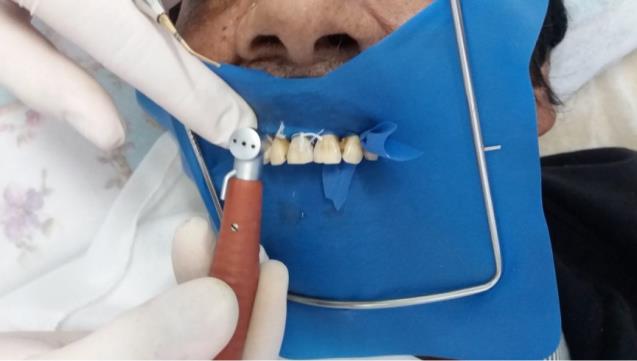
The control of gingivitis and the restorative procedures were made by adopting principles of action and education of dental student in home care by organizing teams and using of mobile dental equipment, in which the high and low speed hand pieces and suction unit functions through electricity10. The dental chair was adapted from that used in HD becoming the method with more practicality and cheaper, as the University Extension Program and the associated HDC assist patients of Public Health [12] system for free Figure 3.
In treating periodontitis, which can increase the mortality index for the patient [13], and the performance of dental extractions, control of blood pressure and risk of infection, and management of different prescribed medicines are challenges for the dental team. Hematologic tests were not in ideal conditions [9]. But, the operatory procedures were carried out with support from medical and nursing staff, so that they can respond promptly if some emergency were to occur. This work condition brought the opportunity of treating more difficult clinic cases, easiest helping persons in improving their process of HD and better preparing them to receive kidney transplantation.
The antimicrobial prophylaxis, local anesthesia, and analgesia indicated with the proper posology for DRC helped the patient to be free of post-operatory pain and infection, even with some immunity deficiency [1, 8, 11]. The prescription of medicines was made adopting a twice time of normal interval for this patient to avoid intoxication because for this patient due the lack of kidney function the drugs half life is increased.
Future studies must evaluate the impact of multidisciplinary assistance and the use of strategy adopted of home care principles on the patient’s quality of life and resolution of ondontological injuries and focus of infection in CRD patients. Beyond this topics the effect of the better access to dental treatment for this kind of patient how was demonstrated here must be evaluated and if this strategy could really reducing custs and contribute to keeping the patient as healthy as possible.
Conclusion
Finally, we conclude that the providing oral assistance for patients with CRD undergoing HD require knowledge about the pharmacology, hemostasis, control of infections, and security of patient and his quality of life. This challenge can be overcome easily by adopting a multidisciplinary approach.
Acknowledgments
The authors would like to thanks the Direction of Community Relations of the Lutheran University of Brazil to support this study.
References
-
Proctor R, Kumar N, Stein A, Moles D, Porter S (2005) Oral and dental aspects of chronic renal failure. J Dent Res 84(3): 199-208.
-
Staples A, Wong C (2010) Risk factors for progression of chronic kidney disease. Curr Opin Pediatr 22(2): 161-169.
-
El Hafeez SA, Bolignano D, D'Arrigo G, Dounousi E, Tripepi G, et al. (2018) Prevalence and burden of chronic kidney disease among the general population and high-risk groups in Africa: a systematic review. BMJ Open 8(1): e015069.
-
Gupta M, Gupta M, Abhishek (2015) Oral conditions in renal disorders and treatment considerations-A review for pediatric dentist. Saudi Dent J 27(3): 113- 119.
-
Afsar B, Siriopol D, Aslan G, Eren OC, Dagel T, et al. (2018) The impact of exercise on physical function, cardiovascular outcomes and quality of life in chronic kidney disease patients: a systematic review. Int Urol Nephrol 50(5): 885-904.
-
Bellizzi V, Cupisti A, Locatelli F, Bolasco P, Brunori G, et al. (2016) Low-protein diets for chronic kidney disease patients: the Italian experience. BMC Nephrol 17(1): 77.
-
Tomás I, Marinho JS, Limeres J, Santos MJ, Araújo CL, et al. (2008) Changes in salivary composition in patients with renal failure. Arch Oral Biol 53(6): 528- 532.
-
Cerveró AJ, Bagán JV, Soriano YJ, Roda RP (2008) Dental management in renal failure: Patients on dialysis. Med Oral Patol Oral Cir Bucal 13(7): 419- 426.
-
Huang MJ, Wei RB, Wang Y, Su TY, Di P, et al. (2017) Blood coagulation system in patients with chronic kidney disease: a prospective observational study. BMJ Open 7(5): e014294.
-
Patel R, Robertson C, Gallagher JE (2017) Collaborating for oral health in support of vulnerable older people: co-production of oral health training in care homes. J Public Health 23: 1-6.
-
Georgakopoulou EA, Achtari MD, Afentoulide N (2011) Dental management of patients before and after renal transplantation. Stomatologija 13(4): 107- 112.
-
Silva AT, Soares LB, Magajewski FR (2016) Epidemiologic and Economic Aspects Related to Hemodialysis and Kidney Transplantation in Santa Catarina in the Period of 2012-2013. Transplant Proc 48(7): 2284-2288.
-
Ricardo AC, Athavale A, Chen J, Hampole H, Garside D, et al. (2015) Periodontal disease, chronic kidney disease and mortality: results from the third national health and nutrition examination survey. BMC Nephrol 16: 97.
- Diagnosis and Management of Mental Nerve Paresthesia Secondary to Apical Periodontitis of Mandibular Second Premolar: A CBCT Based Case Report
- A Randomized, Double Blinded Clinical Trial to Compare the Effect of Oral Premedication (Diclofenac Potassium or Dexamethasone) on Post-Operative Pain Following Pulpectomy
- Modified Lip Repositioning Technique for the Management of Excessive Gingival Display
- Integral Role of Non-Dental Providers and Fluoride Dissemination
- Root Canal Treatment Rate in Deciduous Teeth Among 6-Year- Olds in the Era of Discontinuing Water Fluoridation - Historical Cohort Study
- The Impact of the Notch1 on the Migratory Capacity and the Expression of E-Cadherin and CyclinD1 in Ameloblastoma Cells