
Perception of Changing Roll among Orthodontists, Dentists and Laypersons in Central Indian Population- A Pilot Study
Introduction: Esthetics is the main factor in choosing orthodontic treatment. It can be difficult to identify an esthetic issue because no two people think alike. When the line of dentition is rotated around a horizontal axis left-right, it is termed as roll. We are therefore attempting to evaluate the lack of clarity in perception among different groups. Aim: To assess and compare the perception of changing roll among orthodontists, dentists & laypersons. Materials and Methods: Two standard extra-oral photographs of a subject, were digitally manipulated in terms of roll. A sample of 120 evaluators [40 orthodontists, 40 dentists and 40 laypersons] judged both the images (original and altered) on a visual analogue scale ranging from 1 (the least attractive) to 10 (the most attractive). The responses were then analyzed by Statistical Package for Social Sciences 20.0 version. Inclusion criteria: Participants from Central India residing for more than 2 years. Results: The comparison of the VAS score assigned to images by orthodontists, lay persons and dentists (except orthodontists) was done using Friedman test, followed by post hoc analysis. The comparison of the VAS score assigned to different images by participants of any group was done using Kruskal-Wallis test. This was followed by post hoc analysis. A p value <0.5 was considered statistically significant. Confidence interval was set at 95.0%. This revealed that dentists were able to identify roll of 3 mm or more with significant difference. Orthodontists could identify roll at 1 mm itself, while laypersons found the image with roll of 0 mm and 4 mm attractive. Conclusion: The most attractive image in the opinion of the orthodontists were with 0 mm of roll, 0 mm and 4 mm of roll for laypersons and 2 mm of roll for dentists.
Introduction
Esthetics is the main factor in choosing orthodontic treatment. One of the distinctive qualities of humans is their ability to smile, which is significant when assessing facial beauty. According to Langlois, a higher quality of life and interpersonal success are strongly connected with having a beautiful face [1]. It can be difficult to identify an esthetic issue because no two people think alike.
Any asymmetry on the face is noticeable when smiling, which might lessen facial attractiveness. The person could become self-conscious as a result. Such asymmetries are visible along many spatial planes. Only a few of them are roll, yaw and pitch. In addition to terminology like vertical, anteroposterior and transverse, three aeronautical rotational terminologies—pitch, yaw and roll—are applied to describe orientation of the line of occlusion and the esthetic line of the dentition (Figure 1A). We have chosen the concept of changing roll in our study.
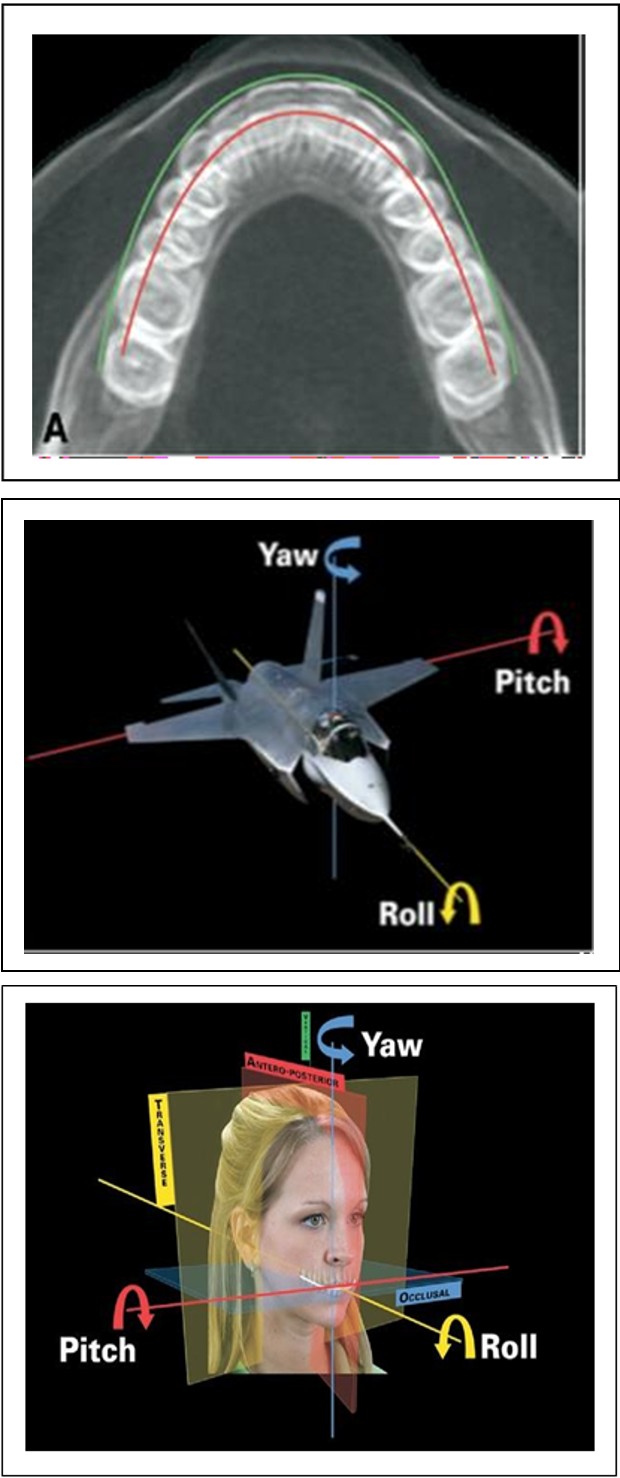
Figure 1A: Pitch, Yaw and Roll [4].
Line of occlusion can be described as the curve passing through the central fossa of each molar and across the cingulum of the canine and incisors of the maxillary and mandibular teeth [2]. In clinical analysis of modern times, another curved line to distinguish the esthetic aspect of the dentition is essential in evaluating anterior tooth display called as the ‘esthetic line of dentition’. This line follows the facial surfaces of the maxillary anterior and posterior teeth [3]. Line of occlusion (red) runs along buccal cusps and incisal edges of mandibular teeth, and along central fossae and cingulae of maxillary teeth as given by Angle. Second line (green), which follows facial surface of maxillary teeth and is highly visible, is aesthetic line of dentition’ [3] (Figure 1B).
Figure 1B: Line of occlusion and Esthetic Line of Dentition [4].
When the esthetic line of dentition is rotated around a horizontal axis left- right, it is termed as Roll. Roll addresses the teeth’s vertical position when there is a difference between the left and right sides. A transverse cant of the occlusal plane is usually seen in connection to a skeletal relationship, such as the interocular line, which makes it easier for humans to perceive [4] (Figure 1C).
Figure 1C: Pitch, Yaw and Roll [4].
According to research, orthodontists are less tolerant than laypeople when evaluating certain dentofacial traits. Additionally, research has revealed that the general public is less aware of the aforementioned traits than dentists. There are, however, few studies that compare how orthodontists, dentists, and laypersons perceive facial attractiveness, and none that include the Central Indian population. Therefore, we are attempting to evaluate any difference of opinion in perception across various groups, if they exist.
Aim and Objectives
To assess and compare the perception of changing roll among a) Orthodontists b) Dentists c) Laypersons
Materials and Methods
After ethical clearance for our study was taken from the Ethical Committee of our college, consent was obtained and a frontal view photograph of the chosen subject (one female), with a posed smile and the surrounding gingival tissues, lips and adjoining area was the first image taken in the Departmental photographic setup.
In order to reduce any bias in the perception of the smile, the second image was a cropped extra-oral frontal view photograph produced with the aid of a cheek retractor, without the confounding elements such as chin, nose and cheeks. The chosen frontal smile was modified using Adobe Photoshop 7 software for the purpose of the study.
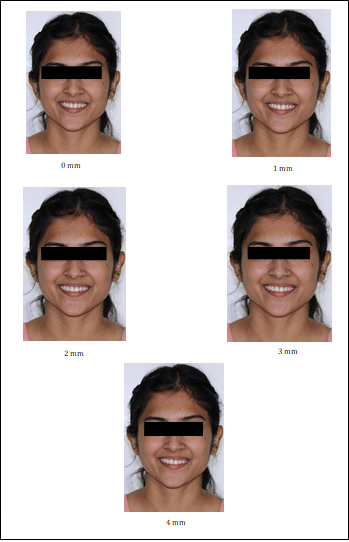
Four gradual alterations were produced in the range of 1-4 mm from the original photograph in terms of changing roll (Figure 2). These photographs were presented through Google forms online. The link of the Google forms was circulated through social media platforms such as WhatsApp and Facebook groups among the population. The link of the forms was opened from 01 Dec 2021 and closed on 10 Dec 2021. These photographs were presented to the evaluators for the perception of facial attractiveness.
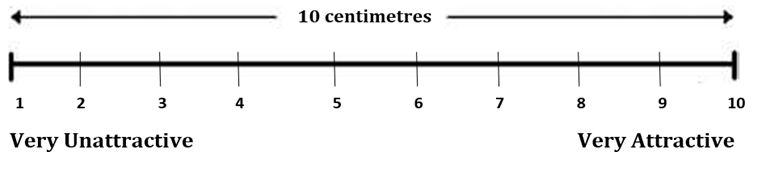
Visual analog scale (VAS) with 1-10 markings was used for the assessment of facial attractiveness and the evaluators were asked to score on digital VAS score sheet. Attractiveness in our study meant an ideal smile and unattractiveness meant any deviation from the ideal. On visual analog scale, leftmost position indicated (0)’very unattractive’ and the rightmost position indicated (10) ‘very attractive’ smile (Figure 3).
Evaluation of images were performed by 3 groups
- A – Orthodontists
- B – Laypersons
- C – Dentists
- Inclusion Criteria: Participants from central India residing for more than 2 years.
- Exclusion Criteria: Impaired vision; Colourblindness; Evaluator’s age above 60 years
Data and Statistical Analysis
The data was added to the excel document. A sample of 120 evaluators [40 orthodontists, 40 dentists and 40 laypersons] assessed the standard and the altered images on a visual analogue scale ranging from 1 (the least attractive image) to 10 (the most attractive image). The statistical package for social sciences (SPSS) 20.0 version was used to analyze data and descriptive statistics was performed. The comparison of the VAS score assigned to images by orthodontists, dentists (except orthodontists) and laypersons was done using Friedman test, followed by post hoc analysis. The comparison of the VAS score assigned to different images by participants of any group was done using Kruskal-Wallis test, followed by post hoc analysis. p value <0.05 was considered statistically significant. Confidence interval was set at 95.0%.
Results
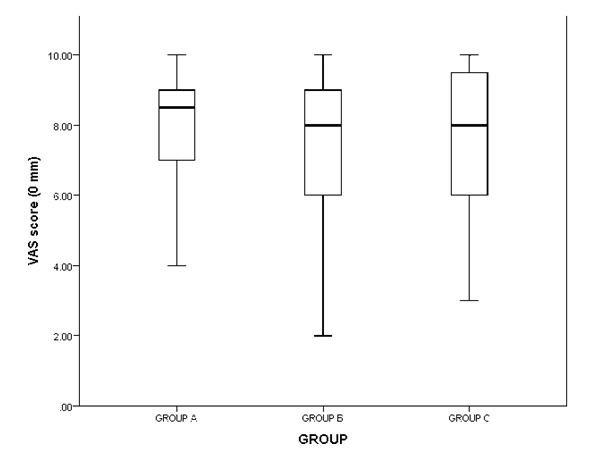
The findings revealed that dentists and laypersons scored similarly for images with a 4 mm roll. Orthodontists scored roll of 4 mm lower than dentists and laypersons, with the difference statistically significant. For orthodontists, the VAS score assigned to images with different mm of roll was significantly different (p value<.05). Furthermore, for dentists and lay persons, the VAS score assigned to images with different mm of roll was non-significantly different (p value>.05) (Table 1).
| VAS score | ||||||||
|---|---|---|---|---|---|---|---|---|
| Group A (n=40) | Group B (n=40) | Group C (n=40) | Chi- square value | P valueΩ | ||||
| Median | Inter-quartile range | Median | Inter-quartile range | Median | Inter-quartile range | |||
| 0 mm | 8.5 | 7.0-9.0 | 8 | 6.0-9.0 | 8 | 6.0-9.75 | 1.787 | >.05 (NS) |
| 1 mm | 8 | 5.5-8.0 | 7 | 6.0-8.5 | 8 | 6.0-9.0 | 0.521 | >.05 (NS) |
| 2 mm | 7 | 5.25-8.0 | 7 | 6.0-8.5 | 8 | 6.25-9.75 | 2.528 | >.05 (NS) |
| 3 mm | 6 | 4.25-7.0 | 7 | 6.0-8.5 | 8 | 6.0-9.75 | 5.781 | >.05 (NS) |
| 4 mm | 4.5 | 4.0-5.75 | 8 | 5.5-8.5 | 8 | 6.0-9.75 | 9.688 | <.05 (S) |
Table 1: Comparison of perception of orthodontists, laypersons and dentists towards the images with different mm of roll.
Dentists and laypeople did not significantly differ in the VAS score they assigned to the image with 4 mm of roll (p value >.05), but orthodontists did. According to post hoc analysis, the VAS score assigned to the images with 0 mm and 1 mm of roll was almost similar (non-significantly different) however the score assigned to images with 2 mm, 3 mm and 4 mm of roll was significantly greater (Table 2). The orthodontists perceived the image with 0 mm of roll as most attractive. For laypersons, 0 mm and 4 mm of roll were the most attractive images but for dentists, the most attractive image was with 2 mm of roll.
| Groups | P value |
|---|---|
| Group A vs Group B | <.05 (Significant) |
| Group A vs Group C | <.05 (Significant) |
| Group B vs Group C | >.05 (Non-Significant) |
Table 2: Post hoc analysis.
Despite this, the median VAS score assigned to images with different mm of roll was almost same (8.0) for laypersons. In addition to this, dentists were able to identify roll of 3 mm or more with significant difference. Orthodontists could identify roll at 1 mm itself, while laypersons found the image with roll of 0 mm and 4 mm attractive.
Discussion
In the field of Orthodontics, Edward. H. Angle gave the classification of malocclusion and it was performed in the sagittal plane which was the main drawback [5]. To overcome this, Ackermann and Profitt in 1969, proposed that Angle’s classification could be systematically strengthened by evaluating the dental and skeletal relationships in all three planes of space, not just in the sagittal dimension. In 2007, the classification was further enhanced by including three aeronautical rotational descriptors (i.e. pitch, roll and yaw) which supplemented the planar terms (i.e. anteroposterior, transverse and vertical) in describing the orientation of jaw rotation with the esthetic line of dentition. When the esthetic line of dentition is rotated around a horizontal axis left- right, it is termed as Roll [4] Figures 4-8.
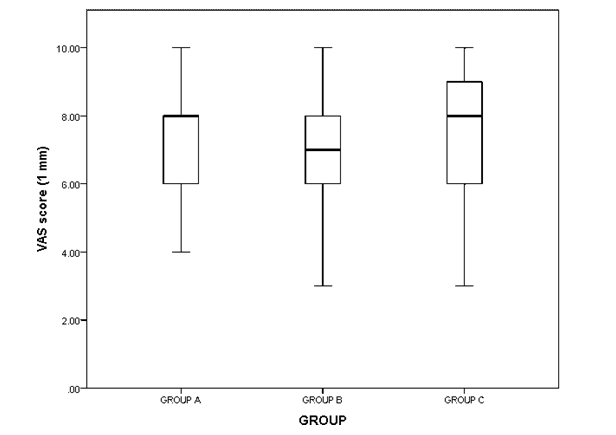
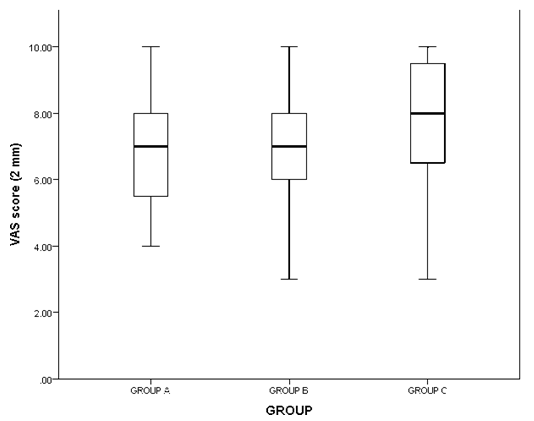
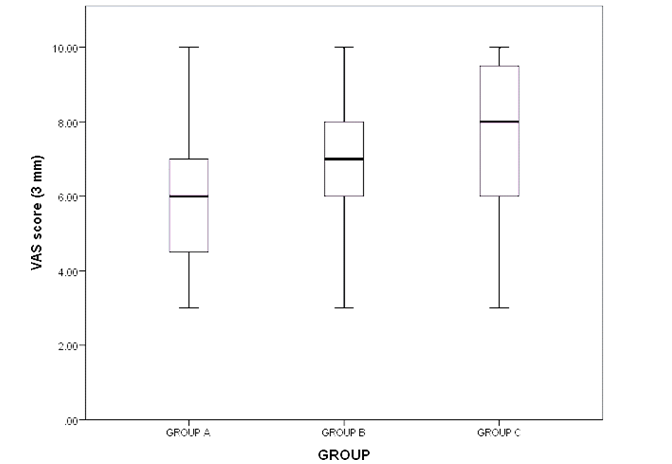
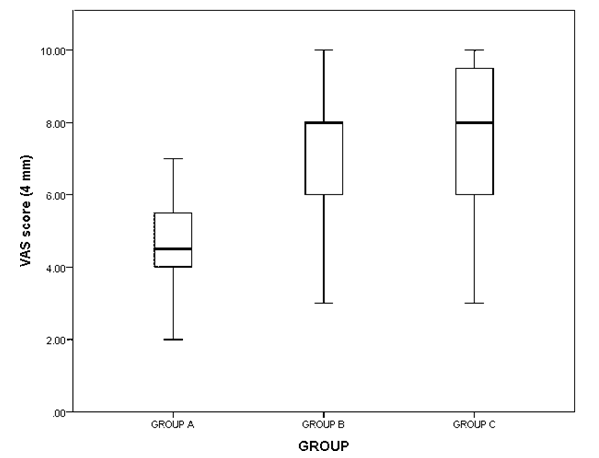
Smile is the defining factor for facial beauty in comparison to soft tissue relationships at rest. Because of this, it’s crucial to consider the features of smile and the interaction of the dentition with the soft tissues of the face, both dynamically and statically [6]. Various social groups have different perspectives about smiling. The phrase “Beauty lies in the eye of the beholder” has a literal meaning: that the perception of beauty is subjective. In contrast to the lenient view of society towards changing roll, an orthodontist and dentist have a lower threshold for it.
Studies have been done to evaluate perception of laypeople and orthodontist to mini- esthetics (tooth –lip relationship, amount of tooth and gingival display, buccal corridor and smile arc) and micro-esthetics (golden proportion, height-width relationship, gingival heights, shape and contour black triangles) and facial profile. The results revealed that orthodontists had a lower threshold when compared to laypersons [6, 7, 8, 9, 10, 11, 12, 13]. In this study, the parameter of occlusal cant (roll) is considered. Pitch, yaw and roll are different from the above-mentioned parameters but are just as important in evaluating the attractiveness of a smile. The relationship between the alignment of the dentition with the occlusal plane and the corresponding jaw bases affects the treatment planning in orthodontics. Clinically, our research showed that an orthodontist, as opposed to a dentist and layperson, has a keen eye for recognizing and correcting smile irregularities. The lack of research on the perception of changing roll led to the necessity for this study.
Randhawa GK, et al. [14] conducted a study that compared the perception of dentists and orthodontists to altered dental esthetics which included pitch, yaw and roll. Data collected from a sample size of 80 was analyzed using unpaired t-test. Their study results showed that an orthodontist could identify roll of 1 mm while dentists could identify roll of 3 mm or more. For 3 mm and 4 mm of roll, there was significant difference in orthodontist (p=0.00277) and dentist (p=0.0029) scores. Their study was done only on the smile and mouth region which included parameters like pitch, yaw and roll showed that orthodontists were more perceptive to changes in occlusal cant (roll) and midline shift (yaw). Studies like these enlighten us how different professionals view smile as per their knowledge and insight [14]. The result of the present study is consistent with the results of Randhawa GK, et al. [14]. An additional group of laypersons was added to the evaluators in present study. All evaluators gave higher scores to images displaying 0 mm of roll, showing that it is more esthetic and pleasing.
The median VAS score of dentists was 8.0 for 0-4 mm of roll. Orthodontists had a median VAS score of 8.5 for 0 mm of roll, 8.0 for 1 mm of roll, 7.0 for 2 mm of roll, 6.0 for 3
mm of roll and 4.5 for 4 mm of roll. The median VAS score of laypersons was similar to dentists in terms of 0 mm and 4 mm of roll. Roll was not as easily recognizable in the study. Thus, the study found that orthodontists and dentists had different perceptions of the aforementioned differences in roll, with orthodontists being more sensitive to images with changed roll. Post hoc analysis revealed p = <.05 to be significant for orthodontists with dentists and laypersons while it was non- significant between laypersons and dentists.
Subsequently, research on the qualitative assessment of changing roll is subjective and varies between individuals. There is little research done on perception of changing roll but we could not find any quantitative assessment for the precise measurement of roll in English literature. Ravi J, et al. [15] invented a simple chairside device called as the ‘Cant-o- meter’ which includes a bite plane that is compatible with the patient’s arch form. This bite fork is affixed to a gyroscopic sensor which displays the value of roll and pitch once the patient bites on the bite plane. This developed device could sequentially measure the correction of roll by orthodontic treatment and orthognathic surgeries.
The present study focused on the smile and facial region. When we see a person’s whole face with smile rather than just smile and mouth region, the results may change. Until now, we have been viewing only cropped smile which may interfere with a layperson’s perspective. Furthermore, there is scope for research on perception related anomalies among various groups of individuals which would be enlightening. Additional investigation with a larger sample size including diverse population, would be beneficial for the interplay of various malocclusions, in all three planes of space, on roll, and vice versa.
Conclusion
Our study’s findings from the Central Indian population demonstrate that -
- Orthodontists, dentists & laypersons have different perceptions of changing roll.
- Orthodontists were significantly more perceptive to the changes in the occlusal plane than dentists.
- The threshold for roll is 1mm for orthodontists and 3 mm for dentists.
- Laypersons were significantly less perceptive to the changing roll than orthodontists and dentists.
References
-
Langlois JH, Kalakanis L, Rubenstein AJ, Larson A, Hallam M, et al. (2000) Maxims or myths of beauty? A meta- analytic and theoretical review. Psychol Bull 126(3): 390-423.
-
Ricketts RM (1978) A detailed consideration of the line of occlusion. Angle Orthod 48(4): 274-282.
-
Proffit WR (2019) Contemporary Orthodontics. 6th (Edn.), Elsevier, Philadelphia, pp: 193-205.
-
Ackerman JL, Proffit WR, Sarver DM, Ackerman MB, Kean MR (2007) Pitch, roll, and yaw: describing the spatial orientation of dentofacial traits. Am J Orthod Dentofacial Orthop 131(3): 305-310.
-
Angle EH (1899) Classification of malocclusion. Dent Cosmos 41(3): 248-264.
-
Proffit WR, Fields HW, Sarver DM (2007) Contemporary Orthodontics. 4th (Edn.), Elsevier, Philadelphia, USA, pp: 150-219.
-
Johnston DR, Gallerano R, English J (2005) The effects of buccal corridor spaces and arch form on smile esthetics. Am J Orthod Dentofacial Orthop 127(3): 343-350.
-
Loi H, Nakata S, Counts AL (2009) Effects of buccal corridors on smile esthetics in Japanese. Angle Orthod 79(4): 628-633.
-
Parekh SM, Fields HW, Beck M, Rosenstiel S (2006) Attractiveness of variations in the smile arc and buccal corridor space as judged by orthodontists and laymen. Angle Orthod 76(4): 557-563.
-
Zange SE, Ramos AL, Cuoghi OA, Mendonça MR, Suguino R, et al. (2011) Perceptions of laypersons and orthodontists regarding the buccal corridor in long- and short-face individuals. Angle Orthod 81(1): 86-90.
-
Sarver DM (2004) Principles of cosmetic dentistry in orthodontics: part 1-shape and proportionality of anterior teeth. Am J Orthod Dentofacial Orthop 126(6): 749-753.
-
Pinho S, Ciriaco C, Faber J, Lenza MA (2007) Impact of dental asymmetries on the perception of smile esthetics. Am J Orthod Dentofacial Orthop 132(6): 748-753.
-
Scott CR, Goonewardene MS, Murray K (2006) Influence of lips on the perception of malocclusion. Am J Orthod Dentofacial Orthop 130(2): 152-162.
-
Randhawa GK, Kale P, Tripathi NR, Gore KA (2015) Perception of Dentists and Orthodontists to Altered Dental Esthetics. IJMHS 1(2): 1-10.
-
Ravi J, Jnaneshwar P, Krishnaraj R, Ravi K (2021) Comparison of Roll and Pitch among patients with vertical and horizontal skeletal patterns using Cant-O- Meter: a new gyroscopic device for measuring occlusal cant. J Indian Orthod Soc 56(2): 189-192.
- Diagnosis and Management of Mental Nerve Paresthesia Secondary to Apical Periodontitis of Mandibular Second Premolar: A CBCT Based Case Report
- A Randomized, Double Blinded Clinical Trial to Compare the Effect of Oral Premedication (Diclofenac Potassium or Dexamethasone) on Post-Operative Pain Following Pulpectomy
- Modified Lip Repositioning Technique for the Management of Excessive Gingival Display
- Integral Role of Non-Dental Providers and Fluoride Dissemination
- Root Canal Treatment Rate in Deciduous Teeth Among 6-Year- Olds in the Era of Discontinuing Water Fluoridation - Historical Cohort Study
- The Impact of the Notch1 on the Migratory Capacity and the Expression of E-Cadherin and CyclinD1 in Ameloblastoma Cells