
75th IOL Anniversary Experience: A Journey from Visionary Beginnings to a Bright Future
The year 2024 marks a significant milestone in the history of ophthalmology—the 75th anniversary of the intraocular lens (IOL), a groundbreaking innovation that has restored sight to millions of people worldwide. Since its invention in 1949 by Sir Harold Ridley [1] the development of IOLs has undergone tremendous transformation, continuously shaped by technological advances and the tireless efforts of researchers, medical professionals, and industry partners [1-10].
Abbreviations
IOL: Intraocular Lens; EDOF: Extended Depth of Focus; LAL: Light-Adjustable Lenses.
Editorial
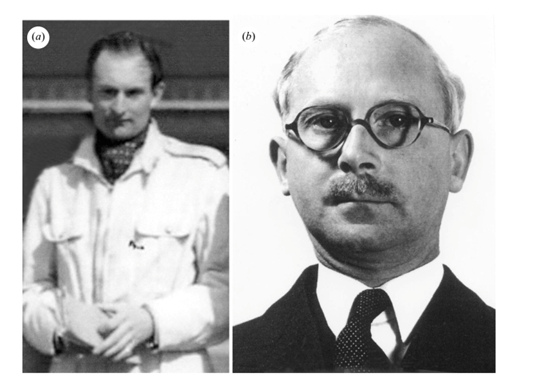
The year 2024 marks a significant milestone in the history of ophthalmology—the 75th anniversary of the intraocular lens (IOL), a groundbreaking innovation that has restored sight to millions of people worldwide. Since its invention in 1949 by Sir Harold Ridley [1] the development of IOLs has undergone tremendous transformation, continuously shaped by technological advances and the tireless efforts of researchers, medical professionals, and industry partners [1, 2, 3, 4, 5, 6, 7, 8, 9, 10]. This editorial delves into the fascinating story behind Ridley’s first IOL, the pivotal role played by industry collaborators, and a glimpse into the future of IOL technologies (Figures 1-5).



The Birth of the IOL: From a Spitfire Pilot to Surgical Revolution
The journey of the IOL began with a remarkable and unexpected discovery during World War II. Sir Harold Ridley, an ophthalmologist at St Thomas’s Eye Hospital in London, was treating Royal Air Force pilot Gordon “Mouse” Cleaver, who had been injured while flying Hawker Hurricane fighter plane. Cleaver’s plane was hit, and fragments of the acrylic canopy entered his eye. Upon examining Cleaver, Dr. Ridley noticed something unusual-while most foreign objects inside the eye cause severe inflammation and damage, the acrylic fragments seemed inert and non-reactive [2].
This observation ignited Dr. Ridley’s revolutionary idea: If acrylic material could remain in the eye without causing harm, it could potentially be used as an artificial lens to restore vision to cataract patients, whose natural lenses had become clouded. At the time, cataract surgery involved the removal of the natural lens, leaving patients dependent on thick, cumbersome aphakic eyeglasses to achieve functional vision. Dr. Ridley realized that an acrylic lens implant could be the key to eliminating this need, offering patients a new level of visual clarity.
The Historic First Implant
On November 29, 1949, at St. Thomas’ Hospital in London, Ridley implanted the first intraocular lens into a 45 year old patient. The idea of an artificial IOL was planted in Dr. Ridley’s mind by a curious young medical student named Stephen Perry who observed the cataract procedure performed by Sir Harold Ridley several years back. The operation, though successful in its execution, was not without controversy. Many of Dr. Ridley’s peers were skeptical, and the medical community was slow to embrace the idea of implanting foreign materials into the eye. However, Dr. Ridley’s determination never wavered.
Over the next decade, Dr. Ridley continued to refine his technique and design, despite facing significant resistance from the medical establishment. By the early 1960s, advancements in lens design, materials, and surgical techniques began to win over skeptics, and the use of IOLs started to gain wider acceptance. Dr. Ridley’s pioneering work laid the foundation for modern cataract surgery and opened the door to a world of possibilities in vision restoration.
The Role of Industry Partners in Shaping the Future of IOLs
The story of IOLs is not just one of clinical innovation but also of industry collaboration. The development and evolution of IOLs would not have been possible without the support of industry partners who brought Dr. Ridley’s vision to life. Companies like Rayner Intraocular Lenses [2], the manufacturer of Dr. Ridley’s first IOL, played a crucial role in transforming the invention from a concept into a commercially viable medical device.
As technology advanced, so did the materials and designs of IOLs. Early lenses were made of rigid polymethyl methacrylate (PMMA), but today’s IOLs are crafted from flexible materials like silicone and hydrophobic acrylics, allowing for smaller incisions and quicker recovery times.
Industry leaders such as Alcon Laboratories [4], Johnson & Johnson Vision [5], Bausch & Lomb [6] Carl Zeiss Meditec [7] have been at the forefront of these innovations, continuously pushing the boundaries of what IOLs can achieve.
The introduction of multifocal and toric IOLs represented another leap forward, offering patients the ability to see clearly at multiple distances and correcting astigmatism. In recent years, extended depth of focus (EDOF) lenses and light-adjustable lenses (LALs) have further expanded the possibilities for post-cataract vision, allowing for personalized refractive outcomes and reducing the need for additional corrective eyewear [8].
The Evolution of IOLs: Key Milestones
Since Ridley’s first implant, the field of IOL technology has witnessed a series of remarkable milestones:
- 1967: Introduction of the first foldable IOL, which allowed for smaller surgical incisions and faster recovery.
- 1978: The development of the first posterior chamber foldable IOL, designed to be placed behind the iris, closer to the natural position of the original lens.
- 1990s: The advent of multifocal and accommodating IOLs, enabling patients to see at both near and far distances, reducing dependence on reading glasses.
- 2000s: The rise of aspheric IOLs, which improved visual quality by reducing spherical aberrations and enhancing contrast sensitivity.
- 2010s: Introduction of toric IOLs to correct astigmatism, and the emergence of trifocal IOLs offering improved vision across a wider range of distances.
- 2020s: Ongoing research into light-adjustable lenses, which allow for post-surgical adjustments to fine-tune vision.
Looking Ahead: The Future of IOL Technologies
As we celebrate 75 years of IOL innovation, it is essential to look to the future and consider the advancements that will shape the next era of cataract surgery. One of the most promising areas of development is smart IOLs— lenses equipped with sensors or electronics that can monitor intraocular pressure, adjust focus, or even deliver medications directly to the eye. These lenses have the potential to revolutionize not only vision restoration but also eye care management for conditions like glaucoma and macular degeneration [9].
Additionally, advances in biocompatible materials and gene therapy may enable the development of regenerative IOLs that integrate with the eye’s natural tissues, potentially eliminating the need for artificial lenses altogether. Artificial intelligence (AI) and machine learning are also poised to play a significant role in improving surgical outcomes, from pre- operative planning to post-operative monitoring.
Honoring the Legacy of Sir Harold Ridley
As we reflect on 75 years of IOL innovation, it is impossible to overstate the impact of Sir Harold Ridley’s pioneering work. His discovery, inspired by the resilient acrylic fragments in Gordon Cleaver’s eye, set in motion a series of innovations that have transformed millions of lives around the world. The modern cataract procedure, now one of the most commonly performed surgeries globally, owes its success to Ridley’s original vision of restoring sight through an implanted lens.
Dr. Ridley’s contribution to medicine was formally recognized when he was knighted in 2000, but his legacy lives on in every cataract surgery performed today. As we celebrate this milestone, we also honor the many surgeons, researchers, and industry innovators who have carried forward Ridley’s work, continually pushing the boundaries of what is possible in vision restoration [10].
Conclusion: A Visionary Future for IOLs
The 75th anniversary of the IOL is a celebration not only of the past but also of the exciting future ahead. With ongoing technological advancements and a commitment to improving patient outcomes, the field of IOL development is poised to enter a new era of innovation. As smart lenses, AI-driven surgeries, and regenerative technologies become a reality, the next 75 years of IOL innovation promise to be as groundbreaking as the first.
From Sir Harold Ridley’s initial insight in 1949 to the cutting-edge IOLs of today, the story of intraocular lenses is a testament to the power of human ingenuity and the relentless pursuit of better vision for all. As we look forward, the future of IOLs is bright—clearer, sharper, and more personalized than ever before.
References
-
Ridley H (1952) Intra-ocular acrylic lenses: A recent development in the surgery of cataract. British Journal of Ophthalmology 36(2): 113-122.
-
Apple DJ, Sims J (1996) Harold Ridley and the invention of the intraocular lens. Survey of Ophthalmology 40(4): 279-292.
-
Alcon Laboratories. (2020) History of the AcrySof® IOL: Evolution in vision care, USA.
-
Johnson & Johnson Vision (2022) TECNIS® Multifocal IOL: Advanced optical technology for enhanced vision , USA.
-
Carl Zeiss Meditec. (2021) ZEISS IOL portfolio: Innovations in intraocular lenses, USA.
-
Bausch + Lomb. (2020) enVista® IOL: Reducing visual disturbances post-cataract surgery, USA.
-
Rayner Intraocular Lenses Ltd. (2023) The RayOne® preloaded IOL system: Innovation in cataract surgery, USA.
-
Fred Hollows Foundation. (2023) Restoring sight through cataract surgery: Global initiatives, USA.
-
Orbis International. (2022) Fighting blindness with cataract surgeries in developing countries, USA.
-
Chang DF, Lee V (2019) Advances in intraocular lens technology. Ophthalmology Clinics of North America 16(3): 367-379.
- Screening of Hospital Staff During World Glaucoma Week in a Tertiary Eye Care Centre
- Angioid Streaks with Macular Neovascularization: Clinical Insights from Two Cases
- Giant Kissing Naevus: An Oculoplastic Challenge
- Why Freedom of Vision Should Not Cost the Freedom of Feeling - LASIK in the Climate of Change
- Asymmetric Optic Nerve with Small Disc and Large Cup: A Rare and Challenging Case of Unilateral Optic Nerve Hypoplasia
- Large Angle Exotropia in a Child: A Case Report