
Are Freshwater Sources in India Safe for Wildlife with Regard to Trematodiases?
Freshwater is necessary not only for drinking for humans and animals but also for agricultural and industrial purposes. If diverse snails (gastropods) and crabs or crayfish (crustaceans) are found in both these water bodies, various dangerous trematodiases caused by infection with trematode parasites may also be possible in humans and animals. In fact, these invertebrate species act as carriers or vectors of these parasitic diseases. In wild ruminants like antelopes and deer, the most common trematodiases are fascioliasis, amphistomiasis, paramphistomiasis, and schistosomiasis while in wild carnivores like lions and tigers, the most common trematodisis are paragonimiasis. These diseases are caused by infection with trematode (fluke) parasites Fasciola spp., Amphistomum spp., Paramphistomum spp., Schistosome spp., and Paragonimus westermani. These parasitic diseases are more dangerous and fatal to wildlife. The incidence of these parasitic diseases varies greatly from region to region and according to the animal species. However, these diseases are more prevalent in wild herbivores than carnivores and the peak infection of trematode parasites generally occurs after the monsoon and before winter. Though infection with these parasites may occur throughout the year. Trematodiasis not only causes ill health in wild animals but also reduces their population. Many times, outbreaks of these diseases also result in death of many wild animals. In fact, freshwater sources that contain various species of snails and crabs infected with trematode larvae are not at all safe for wildlife in terms of trematodiasis. Therefore, more research survey studies are needed from time to time on different species of wildlife living in different ecosystems of the country to find out the current status of these diseases. The results of these studies are useful not only in health policy making but also in the prevention and control of these diseases in wildlife in India. Although these diseases are treatable and effective drugs are also available for them, yet, awareness, vigilance, and regular monitoring are necessary.
Introduction
It is well known that various freshwater sources whether lotic (springs, rivers, streams, etc.) or lentic (ponds, lakes, dams, etc.) are not only essential for drinking water in human beings and animals but are also useful and important in agricultural and industrial sectors. If the water from these sources is contaminated with toxicants and pathogens, it may not be safe for the health of humans and animals. In India, most of the groundwater is naturally contaminated with fluoride toxicant [1, 2, 3]. Many freshwater sources have also been found to be naturally and anthropogenically contaminated with this toxic chemical [4, 5]. Drinking of such fluoridated water for a long time is not safe for health and causes a serious disease called fluorosis in humans [6, 7, 8, 9, 10, 11, 12, 13] and domestic animals [14, 15, 16, 17, 18, 19, 20, 21]. If such water is consumed by wild animals, they also develop this disease [22, 23].
Dracunculiasis, a parasitic disease caused by infection with the female nematode worm Dracunculus (Dracunculus Medinensis), was also endemic in India, especially in rural areas [24, 25, 26], although it has now been eradicated. In fact, the disease was also transmitted by drinking freshwater contaminated with Cyclops infected with the larvae of this parasite. Not only in India but also in other countries, freshwater sources populated by snail and crab species infected with trematode larvae are capable of causing a variety of trematodiases not only in humans [27] and domestic animals [28, 29, 30, 31, 32, 33, 34, 35] but also in various species of wildlife [36, 37, 38, 39, 40, 41, 42, 43, 44] (Figure 1).
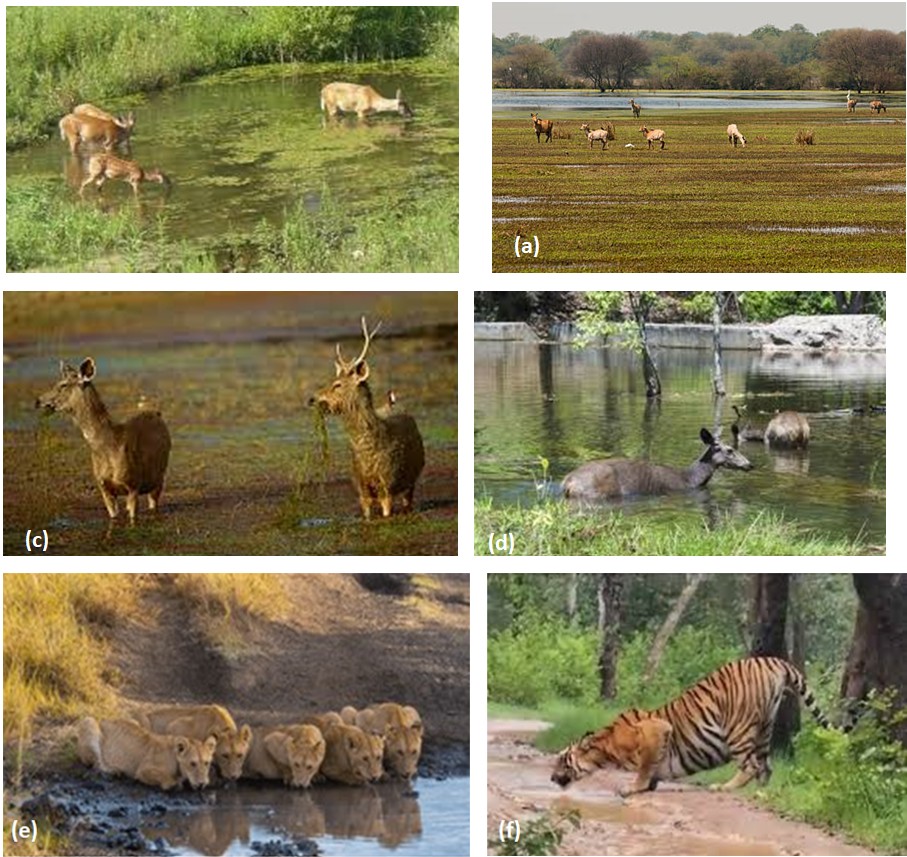
Trematodiases such as fascioliasis, amphistomiasis, paramphistomiasis, and schistosomiasis are more prevalent in wild herbivorous animals such as antelope and deer (Figure 1), while paragonimiasis is more common in wild carnivorous animals such as lion and tiger (Figure 1). In fact, these diseases are caused by infection with digenetic trematode parasites (flukes) Fasciola spp. (liver fluke), Amphistomum spp. (rumen fluke), Paramphistomum spp. (intestinal fluke), Schistosome spp. (blood fluke), and _Paragonimus westerman_ni (lung fluke), respectively. Apart from these most common diseases, other types of trematodiases are also found in wildlife. These diseases not only cause morbidity and mortality in wild animals, but also affect their growth, reduced production yield and quality, loss of body weight, poor reproductive performance, digestive disturbances, long-term emaciation, and increased susceptibility to other infections [45]. Indeed, these parasitic diseases are transmitted to wildlife by their specific vector species such as snails (gastropods) and crabs or crayfish (crustaceans) that are present in almost every freshwater body. But this is possible only when these vector species are infected with the larvae of trematode parasites. Therefore, the aquatic habitats in which these vector species are found are not safe for wildlife in terms of trematodiasis, which is the main focus of the present review.
Are Freshwater Sources Safe for Wildlife in Terms of Trematodiases?
In India, wherever wildlife is found, many bodies of seasonal and perennial freshwater are also present. These water bodies have their own ecosystems with a wide variety of species of snails and crabs or crayfish. Importantly, most snail species are habitat and trematodiasis specific [46, 47, 48]. However, many of them are widely distributed in different geographical areas and belong to the families Lymnaeidae, Planorbidae, Thiaridae (Melanidae), and Viviparidae of the class Gastropoda of the Phylum Mollusca. The most common snail species found in various freshwater bodies in the country where wildlife is present are Lymnaea acuminate f. patula, L. acuminate f. chlamys, L. acuminate f. typica, L. acuminate f. rufescens, L. luteola f. australis, L. luteola f. typica, L. luteola f. impura, Gyraulus convexiusculus, Planorbis (Indoplanorbis) exustus, Faunus ater, Melania (Plotia) scabra, Thiara (Tarebia) lineata, Melanoide striatella tuberculata, Vivipara bengalensis race gigantica, V. bengalensis race mandiensis, etc [49, 50].
In fact, these molluscan gastropods are intermediate or secondary hosts of digenetic trematode parasites of wild animals and complete the life cycle of these parasites in them. In these hosts, different larval stages of these parasites such as sporocysts, rediae, and cercariae develop by asexual reproduction. Interestingly, each trematode species has its own characteristic type of cercarial larvae which differ in size, shape, specific morphological features, etc [51, 52, 53, 54, 55, 56, 57, 58, 59, 60, 61, 62, 63]. Most of these free floating cercariae are phototrophic and emerge from the snails in the mornings [64]. The most favourable or ideal time for most snail species to get infected with miracidium larvae of digenetic trematodes is the rainy season. In fact, faecal matter contaminated with trematode eggs is carried by rainwater to available freshwater sources where these eggs hatch into miracidia larvae which swim in water in search of a snail host. Eventually these larvae enter the body of the snails where these larvae multiply and develop into various forms of trematode larvae. Most snails release cercariae larvae in the post monsoon and pre- winter seasons [65, 66, 67, 68, 69]. The cercariae are free-living stages and float in water until they attach to a substrate such as leaves of aquatic plants or vegetation where they develop into cysts called metacercariae. These larvae are highly infective. These larvae enter the body of wild ruminants whenever they eat this contaminated aquatic vegetation. Eventually, these larvae reach their target organs where they grow and damage their tissues and ultimately cause trematodiasis in wild ruminants. There is no metacercarial stage development in schistosomiasis, the cercarial larvae penetrate the skin and enter the body while the cercarial larvae of P. westermannii directly invade tertiary crustacean hosts such as crabs or crayfish where these larvae develop into infective metacercariae [70]. When wild predators such as lions (Panthera leo) and tigers (P. Tigris) eat meat of prey contaminated with these metacercarial larvae, these larvae eventually reach the lungs of these animals and slowly grow into adults. The disease caused by them is called paragonimiasis. In general, herbivorous animals are relatively more susceptible to various trematodiases than carnivorous animals.
Interestingly, not only the adult trematode parasites cause various pathogenesis in their vertebrate hosts including humans, but their larvae are also highly pathogenic to their intermediate hosts and particularly they damage their hepatopancreas and gonads [71, 72, 73, 74, 75, 76, 77]. It is clearly evident that the freshwater sources in which snails and various species of crabs or crayfish infected with trematode larvae are found are not safe for the wildlife in the country in terms of various dangerous trematodiases. Even in humans and domestic animals such freshwater sources are not safe with respect to these diseases [78].
Can Trematodiases in Wildlife be Prevented and Controlled?
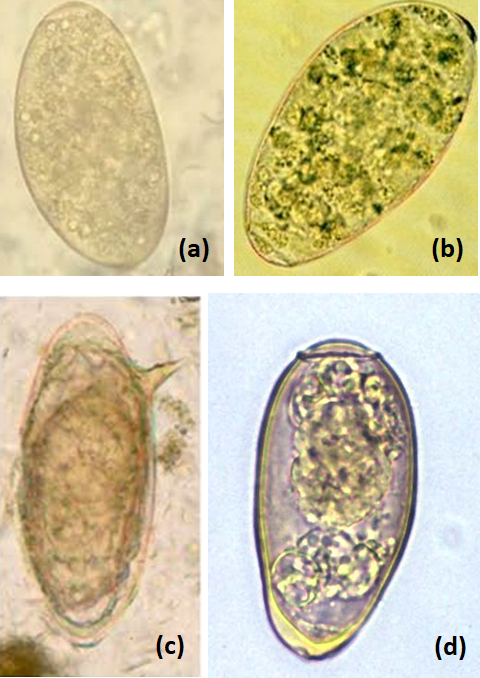
Yes, it is possible and with a little effort, awareness, vigilance, and regular monitoring, these parasitic diseases can be prevented and controlled from occurring in wildlife. However, these trematodiases have been considered as neglected diseases. Whether these diseases are endemic in wildlife areas or not can only be confirmed by coprological analysis or faecal examination of wild animals. This is the easiest, most practical, and cost-effective method. It does not require any special resources and can be trained or taught even to a less educated person. In this method, faeces of wild animals are randomly collected from different areas and then examined under simple microscope for the presence of eggs or ova of trematode parasites (Figure 2). Effective treatment of these parasitic diseases is available. Anthelmintic drugs can be used under the guidance of a veterinarian for the treatment of these diseases. Providing free drinking water to the intermediate host snails and limiting their population is also the ideal option for the prevention and control of trematodiases in wildlife. In future, vaccination is also the best option [79, 80].
Conclusion
India has many wildlife sanctuaries, reserves, national parks and forest areas that are home to diverse species of wild animals and also have various sources of freshwater. Most of these are home to species of snails and crabs or crayfish that are carriers of trematodiasis. In fact, these diseases develop due to infection with digenetic trematode parasites. Several studies show that thousands of wild animals in the country are suffering from these parasitic diseases that cause morbidity and mortality in them. This means that water bodies that have snails and crab species infected with trematode larvae are not at all safe for wildlife in terms of trematodiasis. However, these diseases can be easily prevented and controlled in wildlife as these diseases can be easily identified and effective treatments are available for them. Also, it is important that the health of these wild animals is checked from time to time. Along with this, awareness, vigilance, and regular monitoring are also necessary.
References
-
Choubisa SL (2018) A brief and critical review on hydrofluorosis in diverse species of domestic animals in India. Environ Geochem Health 40(1): 99-114.
-
Choubisa SL (2018) Fluoride distribution in drinking groundwater in Rajasthan, India. Curr Sci 114(9): 1851- 1857.
-
Choubisa SL (2023) is drinking groundwater in India safe for domestic animals with respect to fluoride? Arch Animal Husb & Dairy Sci 2(4): 1-7.
-
Choubisa SL (2023) is it safe for domesticated animals to drink fresh water in the context of fluoride poisoning? Clin Res Anim Sci 3(2): 1-5.
-
Choubisa SL, Choubisa D, Choubisa A (2023) Can people get fluorosis from drinking water from surface water sources? Fluoride test of water mandatory before its supply. SciBase Epidemiol Public Health 1(2): 1006.
-
Adler P, Armstrong WD, Bell ME, Bhussry BR, Buttner W, et al. (1970) Fluorides and human health. World Health Organization.
-
Choubisa SL, Sompura K, Bhatt SK, Choubisa DK, Pandya H, et al. (1996) Prevalence of fluorosis in some villages of Dungarpur district of Rajasthan. Indian J Environ Health 38(2): 119-126.
-
Choubisa SL, Choubisa DK, Joshi SC, Choubisa L (1997) Fluorosis in some tribal villages of Dungarpur district of Rajasthan, India. Fluoride 30(4): 223-228.
-
Choubisa SL (1998) Fluorosis in some tribal villages of Udaipur district (Rajasthan). J Environ Biol 19(4): 341- 352.
-
Choubisa SL (1999) chronic fluoride intoxication (fluorosis) in tribes and their domestic animals. Intl J Environ Stud 56(5): 703-716.
-
Choubisa SL (2001) Endemic fluorosis in southern Rajasthan (India). Fluoride 34(1): 61-70.
-
Choubisa SL, Choubisa L, Choubisa DK (2001) Endemic fluorosis in Rajasthan. Indian J Environ Health 43(4): 177-189.
-
Choubisa SL (2018) A brief and critical review of endemic hydrofluorosis in Rajasthan, India. Fluoride 51(1): 13-33.
-
Choubisa SL (1999) some observations on endemic fluorosis in domestic animals of southern Rajasthan (India). Vet Res Commun 23(7): 457-465.
-
Choubisa SL (2007) Fluoridated ground water and its toxic effects on domesticated animals residing in rural tribal areas of Rajasthan (India). Intl J Environ Stud 64(2): 151-159.
-
Choubisa SL (2010) Osteo-dental fluorosis in horses and donkeys of Rajasthan, India. Fluoride 43(1): 5-10.
-
Choubisa SL (2010) Fluorosis in dromedary camels of Rajasthan, India. Fluoride 43(3): 194-199.
-
Choubisa SL (2013) Fluorotoxicosis in diverse species of domestic animals inhabiting areas with high fluoride in drinking waters of Rajasthan, India. Proc Natl Acad Sci, India Sect B: Biol Sci 83(3): 317-321.
-
Choubisa SL (2013) Fluoride toxicosis in immature herbivorous domestic animals living in low fluoride water endemic areas of Rajasthan, India: an observational survey. Fluoride 46(1): 19-24.
-
Choubisa SL (2022) A brief and critical review of chronic fluoride poisoning (fluorosis) in domesticated water buffaloes (_Bubalus bubalis_) in India: focus on its impact on rural economy. J Biomed Res Environ Sci 3(1): 96-104.
-
Choubisa SL (2023) Endemic hydrofluorosis in cattle (_Bos Taurus_) in India: an epitomised review. Int J Vet Sci Technol 8(1): 001-007.
-
Choubisa SL (2024) Can fluoride exposure be dangerous to the health of wildlife? If so, how can they be protected from it? J Vet Med Animal Sci 7(1): 1144.
-
Choubisa SL (2024) is wildlife safe from chronic fluoride poisoning in India? Comprehensive survey needed. J Vet Res Clinic Care.
-
Choubisa SL (2002) Guinea worm (_Dracunculus_ _medinensis_) in Rajasthan, India: A case report. J Parasit Dis 26(2): 105-106.
-
Choubisa SL, Verma R, Choubisa L (2010) Dracunculiasis in tribal region of Rajasthan (India): A case report. J Parasit Dis 34(2): 94-96.
-
Choubisa SL (2022) a historical dreaded human nematode parasite, Dracunculus worm (_Dracunculus_ _medinensis_) whose awe is still alive in elderly of India! Can’t it reappear in India (editorial)? Austin Pub Health 6(1): 1-4.
-
Arora DR, Arora BB (2010) Medical Parasitology. 3rd (Edn.), CBS Publishers and Distributors Private LTD, pp: 233-245.
-
Choubisa SL, Agrawal MP, Sharma PN (1982) Histochemical distribution and functional significance of acetyl and butyryl cholinesterase in the amphistome _Gastrothylax cruminifer_. Proc Indian Acad Parasit 3(1): 69-75.
-
Phiri A, Phiri I, Monrad J (2006) Prevalence of amphistomiasis and its association with _Fasciola_ _gigantica_ infections in Zambian cattle from communal grazing areas. J Helminthol 80(1): 65-68.
-
Choubisa SL, Jaroli VJ (2013) gastrointestinal parasitic infections in diverse species of domestic ruminants inhabiting tribal rural areas of southern Rajasthan, India. J Parasit Dis 37(2): 271-275.
-
Domke AVM, Chartier C, Gjerde B, Leine N, Vatn S, et al. (2013) Prevalence of gastrointestinal helminths, lungworms and liver fluke in sheep and goats in Norway. Vet Parasitol 194(1): 40-48.
-
Nzalawahe J, Kassuku AA, Stothard JR, Coles GC, Eisler MC (2014) Trematode infections in cattle in Arumeru District, Tanzania is associated with irrigation. Parasit Vect 7(1): 107.
-
Tramboo SR, Shahardar RA, Allaie IM, Wani ZA, Bushra MS (2015) Prevalence of gastrointestinal helminth infections in ovine population of Kashmir Valley. Vet World 8(10): 1199-1204.
-
Dey AR, Begum N, Anisuzzaman I, Md T, Alam MZ (2022) A large-scale epidemiological investigation on trematode infections in small ruminants in Bangladesh. Vet Med Sci 8(3): 1219-1228.
-
Sujatha T, Mondal S, De AK, Perumal P, Sawhney S, et al. (2023) First recorded outbreak of _Paramphistomum_ _cervi_ in Andaman local goats (_Capra aegagrus_ hircus) from Bay Island of India: A brief communication. Indian J Anim Sci 93(1): 29-32.
-
Rao AT, Acharjyo LN (1972) further observations on fasciolosis among wild ungulates at Nandan Kanan Zoo. Indian Vet J 49: 133-135.
-
Hiregoudar LS (1975) Spirometra and _Schistosome_ infection among lions of Gir forest in India. Curr Res 4: 134-135.
-
Ravindran R, Lakshamana B, Anoop S, Rajeev TS, Dinesh CN (2006) Parasitic infection in captive lions (_Panthera_ _leo_) at Wayanad. Zoos 21(4): 2230.
-
Gupta A, Dixit AK, Dixit P, Mahajan C, Shrivastava AB (2011) Incidence of gastro-intestinal parasites in wild ruminants around Jabalpur, India. J Threaten Taxa 3(11): 2226-2228.
-
Chhabra MB, Pathak KML (2013) an overview of parasites of Wildlife in India. I. Herbivores, primates and reptiles. Indian J Anim Sci 83(5): 463-473.
-
Chhabra MB, Pathak KML (2013) Parasites and parasitic diseases of wildlife in India. 2. Carnivores and birds. Indian J Anim Sci 83(6): 567-578.
-
Moolamkudy SA, Ravindran R, Zachariah A, Mohanarangan A, Varghese A, et al. (2017) Gastrointestinal parasites of tigers (Panthera tigris tigris) in Wayanad Wildlife Sanctuary, Kerala. Int J Curr Microbiol App Sci 6(8): 2502-2509.
-
Pfukenyi DM, Mukaratirwa S (2018) Amphistome infections in domestic and wild ruminants in East and Southern Africa: A review. Onderstepoort J Vet Res 85(1): a1584.
-
Madeline SS, Ignore N, Mokgadi PM, Samson M (2024) Prevalence and geographical distribution of amphistomes of African wild ruminants: A scoping review. Int Parasitol Parasites Wildl 23: 100906.
-
Radostits OM, Gay CC, Blood DC, Hinchkliff KW (2000) Veterinary Medicine. 9th (Edn.), ELBS, Bailliere Tindall, pp: 1541-1564.
-
Choubisa SL (1992) Mollusc as bio-indicators for the trophic stages of lakes and lotic environments. Bulle Pure Appl Sci 11A (1): 35-40.
-
Choubisa SL, Sheikh Z (2013) Freshwater snails (Mollusca: Gastropoda) as bio-indicators for diverse ecological aquatic habitats. Cibtech J Zool 2(3): 22-26.
-
Choubisa SL (2010) Snails as bio-indicators for dreaded trematodiasis diseases. J Commun Dis 42(3): 223-226.
-
Choubisa SL (1991) Snail hosts of larval trematodes in Southern Rajasthan. Indian J Parasit 15(1): 49-51.
-
Choubisa SL, Sheikh Z (2013) A new variety of freshwater snail, _Thiara scabra var. choubisai_ from Rajasthan, India. Cibtech J Zool 3(3): 44-46.
-
Sharma PN, Choubisa SL (1983) Cercaria udaipuriensis n. sp. from fresh water snails, _Vivipara bengalensis_ from Fateh Sagar Lake. Indian J Parasit 7(2): 209-212.
-
Choubisa SL, Sharma PN (1983) histochemical demonstration of cholinesterase in the nervous system of stregeoid metacercaria, _Tetracotyle lymnaei_. Indian J Parasit 7(2): 217-219.
-
Sharma PN, Choubisa SL (1985) histochemical demonstration of hydrolytic enzymes in two species of cercariae and in radia. Indian J Parasit 9(2): 153-154.
-
Choubisa SL (1985) A gymnocephalous cercaria, _Cercaria Johrii_ n. sp. from fresh water snail, _Melanoides_ _tuberculatus_ (Muller) of Fateh Sagar Lake, Udaipur (Rajasthan). Indian J Parasit 9(2): 245-247.
-
Choubisa SL, Sharma SL (1985) Cercaria tewarii n. sp. (_Echinostomatid cercaria_) from fresh water snail, _Indoplanorbis exustus_ (Deshayes). Bio Sci Research Bulletin 1(1): 50-53.
-
Choubisa SL (1986) histochemical demonstration of esterase in the certain fresh water larval trematodes with a note on neuroanatomical. Proc Indian Acad Sci (Anim Sci) 95(5): 623-628.
-
Choubisa SL (1988) Neuroanatomy of furcocercous, _Cercaria milleri_. Curr Sci 57(7): 402-404.
-
Choubisa SL (1988) In-vitro culture of echinostome cercaria _Cercaria tewarii_ (Choubisa and Sharma 1985) from the metacercaria to vitellogenous stage. Indian J Parasit 12(1): 123-128.
-
Choubisa SL (1989) Distribution of non-specific esterase in certain larval digeneans with a note on morphology of nervous system. Indian J Experim Biol 27(1): 32-57.
-
Choubisa SL (1990) _Cercaria_ _gurayai_, n. sp. (furcocercaria) from the fresh water snail Faunus ater (Linnaeus). Records Zool Surv India 87(4): 267-271.
-
Choubisa SL (1992) on a rare cercaria, _Cercaria_ _udaipuriensis_ II n. sp. From the fresh water snail, _Melanoides tuberculatus_ (Muller). Bio Sci Res Bull 8(1): 13-16.
-
Choubisa SL, Sheikh Z (2013) A rare trematode sporocyst from freshwater snail, _Malanoides tuberculatus_ (Miller 1722). Cibtech J Zool 2(3): 6-9.
-
Choubisa SL, Jaroli VJ, Sheikh Z (2016) First record of a rare transversotrematid cercarial larva (Trematoda: Digenea) from Rajasthan, India: focus on seasonal occurrence and host-specificity of diverse cercariae. J Parasit Dis 41(2): 496-502.
-
Choubisa SL (1991) Comparative study on cercarial behaviours and their host specificity. Indian J Parasit 15(2): 125-128.
-
Choubisa SL, Sharma PN (1983) Seasonal variations of cercarial infection in snails of Fateh Sagar Lake of Udaipur. Indian J Parasit 7(1): 111-113.
-
Choubisa SL, Sharma PN (1986) Incidence of larval trematodes infection and their seasonal variation in the fresh water molluscs of southern Rajasthan. Records Zool Surv India 83(2): 69-80.
-
Choubisa SL (1997) Seasonal variation of amphistome cercarial infection in snails of Dungarpur district (Rajasthan). J Parasit Dis 21(2): 197-198.
-
Choubisa SL (2002) Focus on seasonal occurrence of larval trematode (cercarial) parasites and their host specificity. J Parasit Dis 26(2): 72-74.
-
Choubisa SL (2008) Focus on pathogenic trematode cercariae infecting fresh water snails (Mollusca: Gastropoda) of tribal region of southern Rajasthan (India). J Parasit Dis 32(1): 47-55.
-
Bhatia BB, Pathak KML, Juyal PD (2022) Textbook of Veterinary Parasitology. 5th Ed, Kalyani Publishers, New Delhi, India.
-
Choubisa SL (1988) Histological and histochemical observations on the digestive gland of _Melanoides_ _tuberculatus_ (Gastropoda) infected with certain larval trematodes and focus on their mode of nutrition. Proc Indian Acad Sci (Anim Sci) 97(3): 251-262.
-
Choubisa SL (1990) Histopathological observations on the digestive gland of _Lymnaea auricularia_ infected with the larval trematodes. Proc Indian Acad Sci (Anim Sci) 99(5): 363-368.
-
Choubisa SL (1998) Focus on histopathogenesis of trematode larvae. J Parasit Dis 22(1): 57-59.
-
Choubisa SL (2008) Mode of nutrition in pathogenic trematode larvae (redia and cercaria) which infect hepatopancreas of fresh water snails (Mollusca: Gastropoda). J Parasit Dis 32(1): 68-73.
-
Choubisa SL, Sheikh Z, Jaroli VJ (2012) Histopathological effects of larval trematodes on the digestive gland of freshwater snail species, _Vivipara bengalensis_ and _Lymnaea acuminate_. J Parasit Dis 36(2): 283-286.
-
Choubisa SL, Sheikh Z (2013) parasitic castration in freshwater snail _Melanoides tuberculatus_ (Mollusca: Gastropoda). Proc Natl Acad Sci India Section B: Biol Sci 83(2): 193-177.
-
Choubisa SL (2022) a brief review of parasitic castration in aquatic snails and its contribution in control of diverse vector snail populations and trematodiases in man and animals. Austin J Infect Dis 9(1): 1-6.
-
Choubisa SL, Choubisa P (2024) Are freshwater sources safe for the health of humans and domestic animals in terms of deadly trematodiases? Med Disc 3(1): 1-7.
-
Zerna G, Spithill TW, Beddoe T (2021) Current status for controlling the overlooked caprine fasciolosis. Animals 11(6): 1819.
-
Choubisa SL (2024) Can gastrointestinal parasitic infections are eliminated among tribal people in India? Yes, this can happen with sustained effective efforts. Clinic Laborat Res 2(2): 1-7.
- The Digital Stethoscope: Harnessing AI in Veterinary Medicine Without Losing Our Healing Touch
- Meningoencephalomyelitis of Unknown Etiology: Short-Term Effect of Two Treatment Protocols on Cerebrospinal Fluid
- Safety and Efficacy of the HomeoPet Cough in Domestic Pets –A Clinical and Correction Analysis Based Upon User Response Survey
- Non Human Animals Responses to Social Loss
- Owner Reported Clinical Outcomes of a Homeopathic Proprietary Preparation for the Treatment of Upper Respiratory and Nasal Disorders in Companion Animals
- Effects and Diagnostic Approach of Ultrasound in Veterinary Practice: A Systematic Review