
Evaluating Continuous Cytarabine Infusion Via Omnipod® System, the Feasibility of at-Home Treatment in Dogs with Meningoencephalomyelitis of Unknown Etiology, a Pilot Study
The goal of this study was to evaluate the feasibility of at-home cytarabine (CA) delivery via a novel delivery system (Omnipod®) to dogs with meningoencephalomyelitis of unknown etiology (MUE). Nine dogs with clinical MUE received CA through a 24-hour continuous subcutaneous infusion (CSCI) using the Omnipod® system, with cytarabine administered at 12.5 mg/m²/hour, totaling 300 mg/m² over 24 hours. A single plasma sample was obtained between 20 and 22 hours after initiation of CSCI, and plasma CA concentrations were measured by high-pressure liquid chromatography. Ten plasma CA samples were analyzed, showing concentrations ranging from 533 ng/mL to 2958 ng/mL, similar to levels previously reported with continuous intravenous infusion. All owners responded positively to the Omnipod® at-home therapy, with no issues reported regarding its use or removal; seven out of nine preferred the at-home Omnipod® therapy over traditional inhospital treatment. These findings suggest that the Omnipod® system is a viable alternative for at-home CA administration in dogs with MUE.
Fonseca SL¹, Early PJ¹*, Olby NJ¹, Mariani CL¹, Munana KR¹, Fefer G¹, Mancini SL², Slater BM³, and Zhong Li⁴
Abbreviations
CA: Cytarabine; MUE: Meningoencephalomyelitis of Unknown Etiology; CRI: Continuous Rate Infusion; SC: Subcutaneous; IV: Intravenous; CSTD: Closed System Transfer Devices; USP: US Pharmacopeia.
Introduction
Meningoencephalomyelitis of unknown etiology (MUE) is a clinical diagnosis for immune-mediated inflammatory central nervous system diseases [1]. The basis of treatment for these patients is immunosuppression, which often includes corticosteroids and a secondary immunosuppressant [1]. Cytarabine (CA) is a pyrimidine analog frequently used to treat dogs with MUE. Clinicians typically treat using CA via either intravenous (IV) continuous rate infusion (CRI) or subcutaneous (SC) injections. Different studies have assessed the pharmacokinetics of various IV and SC treatment protocols [2, 3, 4, 5, 6, 7]. Lowrie, et al. showed a higher proportion of 3-month survival rates in MUE patients treated with CA via IV CRI (100 mg/m2 over 24 h) compared to dogs receiving SC administration (50 mg/m2 SC q 12 for 2 doses) as their initial CA treatment [4].
Although IV CRI administration has been considered the clinically favorable option, its disadvantages can make it less favorable among owners. It requires extended hospitalization, longer to perform, and repeated IV catheterization. In a previous pharmacokinetic study, the Omnipod® system was shown as a viable alternative for CA delivery in canine patients [5]. This study aimed to evaluate the feasibility of at- home CSCI of CA for the treatment of MUE via the Omnipod® system.
Materials and Methods
Animals
Nine client-owned dogs diagnosed with MUE were enrolled through NC State University Veterinary Hospital (NCSU). The NCSU-CVM Institutional Care and the Use Committee approved this study (Amended Protocol 20-140). A diagnosis of MUE was based on clinical signs, MRI, and CSF analysis results. Enrollment in this study was completed at the patients’ routinely scheduled CA administrations to treat MUE. Dogs weighing more than 16 kg were excluded due to the pump’s volume capacity of 2.00 ml.
Drug Preparation and Administration
The CA dose was prepared in a clean, negative-pressure room with a containment hood and complied with the US Pharmacopeia (USP) guidelines. The CA was drawn up by a pharmacist wearing chemotherapy-rated personal protective equipment and using closed system transfer devices (CSTD) from Equi-Shield®. The evening before each patient’s scheduled trial, the required dose was drawn up in a 3.00 mL syringe and dispensed to the investigator, along with an adapter that allowed attachment to a standard luer-lock needle. The investigator loaded the CA into each Omnipod® while wearing nitrile gloves and a face shield. Each patient’s hair was clipped in a 7 x 10 cm area along the dorsum between the shoulder blades. The skin was wiped with isopropyl alcohol and allowed to dry before Omnipod® placement. The Omnipod® was applied directly to the patient’s skin. An additional adhesive (PodPal®) was placed over and around each system. A holter monitoring vest was then placed on each patient. One patient, dog 5, was initially allowed to wear a t-shirt instead of a holter monitoring vest; this patient returned for a second enrollment and wore a holter monitoring vest the second time. The Omnipod® was programmed to deliver the CA at 12.5 mg/m2/hour as a CSCI over 24 hours (300 mg/m2 total). Each patient was sent home with the Omnipod® in place and was instructed to return the following morning before the completion of the 24-hour infusion.
Sample Collection
A single blood sample was obtained to evaluate the CA plasma concentration from each dog between 20-22 hours into the CSCI treatment before removing the Omnipod®. Plasma CA concentrations were measured by high- pressure liquid chromatography. A total of 10 plasma CA concentrations were obtained. A total of two separate plasma samples were collected on two separate treatment periods for one dog to evaluate if a potential premature detachment of the Omnipod® affected the delivery. Further explanation regarding this individual circumstance is summarized in the results section below.
Omnipod Removal
Upon the dog’s return to the NCSU the following morning, the Omnipod® was removed by each owner using Medi- Sol®, a spray adhesive remover. This was done under the supervision and guidance of the investigator. The Omnipod® was then disposed of in the chemotherapy biohazard waste container.
Upon removal of the pod, each dog owner was asked four questions to assess how the Omnipod® integrated into an at-home treatment. The questions were as follows: 1) How did it go? 2) Did you encounter any problems? 3) Was the pod easy to remove? 4) Would you prefer at-home therapy (Omnipod®) or traditional inpatient (hospital) therapy in the future? The primary owner was asked to answer the questions directly if a dog had multiple owners.
Results
Nine client-owned dogs were enrolled in the study. The median age was 3.5 years (range 1.2 - 6.6 years), and the median body weight was 8.1 kg (range 2.8- 12.3 kg). There were 2 castrated males and 7 spayed females included in the study. The following breeds were represented: French bulldog (2), Shih Tzu (2), Pomeranian (1), Terrier (1), Miniature Dachshund (1), Chihuahua (1), Havanese (1). All dogs were administered prednisone concurrently at a dose range of 0.19 - 1.75 mg/kg/day (median 0.88 mg/kg/day).
In addition, one dog received leflunomide at 2 mg/kg/day. Cytarabine was delivered at 300 mg/m2 over 24 hours. At the initial visit for the pod placement, the duration of admittance to the time of discharge ranged from 21 to 38 minutes (median 26.7 minutes).
Ten plasma samples from the 9 dogs were used for pharmacokinetic (PK) analysis. Each sample was obtained between 20 and 22 hours after CA CSCI Table 1 treatment started. The mean plasma drug concentration was 1452.1 ng/mL (range 533 - 2958 ng/mL). An individual summary of the results can be found in Tables 2 & 3.
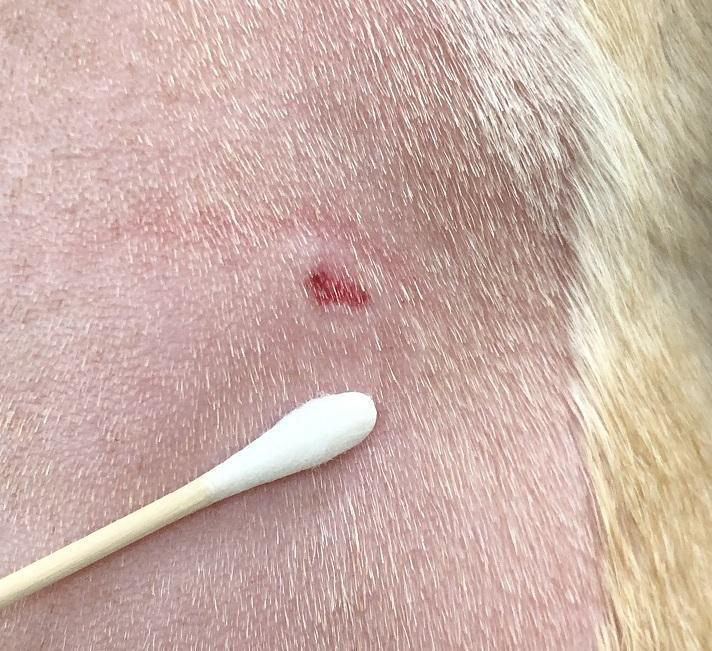
Cytarabine administration and Omnipod® placement appeared well tolerated by the dogs. No severe adverse skin reactions were noted in this study. Two dogs had a mild superficial 1 x 2 mm erythematous lesion Figure 1 upon removal of the system. Per the owner’s communication, these lesions resolved within 24 hours.
| Mean (n=10) | Stdev | |
|---|---|---|
| Cytarabine CSCI concentration (ng/ml) | 1452.1 | 641.1 |
| Plasma collection time during CSCI (hours) | 20.65 | 0.35 |
| Admittance to discharge on the day of pod placement (minutes) | 26.7 | 6.6 |
Table 3: Summary of results for cytarabine concentration, collection times, and total time in hospital prior to discharge after p
Table 2 summarizes the owner’s responses to the questions after removing the pod. All owners responded favorably to using the Omnipod® regarding questions one through three. Seven out of nine owners preferred at-home Omnipod® therapy over traditional therapy. Two out of nine owners preferred traditional treatment. However, a secondary owner was also in the exam room at discharge for one of those dogs and expressed a preference for at-home Omnipod® therapy.
| Questions at the time of discharge | Responses |
|---|---|
| How did it go? | Positive (9/9) |
| Did you encounter any problems or concerns? | No (9/9) |
| Was the pod easy to remove? | Yes (9/9) |
| Would you prefer at-home therapy (Omnipod®) or traditional inpatient (hospital) therapy? | Omnipod (7/9) |
Table 1: Summary of owner responses.
| Dog (number) | Cytarabine Concentration (ng/ml) |
|---|---|
| 1 | 1364 |
| 2 | 1217 |
| 3 | 1665 |
| 4 | 826 |
| 5* | 533 |
| 6 | 2958 |
| 5* | 1382 |
| 7 | 1686 |
| 8 | 1560 |
| 19 | 1330 |
Table 2: Dogs and corresponding cytarabine concentration. *For patient 5, the study was repeated later due to the Omnipod® potent
Discussion
The objective of this study was to evaluate the feasibility and efficacy of at-home cytarabine administration in dogs receiving CA at 12.5 mg/m2/hour using the Omnipod® system. The Omnipod® system proved well adapted for CA at-home treatment in dogs with MUE, an effective alternative for in-hospital treatment with CA. The Omnipod® was easy to place and remove. No severe adverse reactions were noted upon placement and removal of the Omnipod® system. All dogs tolerated pod placement. Owners could safely and efficiently remove the Omnipod® with appropriate instructions. All nine owners responded positively to the ease of removal of the system.
The plasma drug concentrations between hours 20- 22 ranged from 533 ng/mL to 2958 ng/mL (mean 1452.1 ng/mL). These values were similar to previously reported concentrations in dogs receiving a CSCI of CA via the Omnipod® system [8]. Previous PK studies have reported a minimum target concentration of 1000 ng/mL of CA [2, 5, 9, 10]. The results of this study showed that this delivery system meets the minimum target concentration and is comparable to other delivery routes, such as IV CRI and SC protocols [2, 3, 7]. Although it has not been established whether CA diffusion into the CNS is dose- or time-dependent, this treatment protocol ensures that a minimum target concentration is delivered. This study only evaluated a single time point. Still, a previous study by Mancini SL, et al. [8] evaluated different time points during CSCI of CA via the Omnipod® system [8]. It showed it reached the target concentration at 4 hours throughout CSCI delivery and up to 2 hours after treatment. Considering this, this delivery method with the Omnipod® system allows CA to be delivered above the target minimum concentration for more extended periods when compared to other outpatient treatment protocols [3, 7].
Upon removal of the Omnipod®, most pet owners stated that the removal was simple and easy. No issues with the Omnipod® were noted at home. All dogs tolerated the holter vest well. When asked if they would prefer at-home treatment versus in-hospital treatment, only two out of nine owners said they would prefer in-hospital therapy. For one of the dogs whose owner preferred in-hospital treatment, their partner (and secondary owner) preferred at-home treatment. The owners preferred in-hospital therapy to increase the time spent in face-to-face communication with the doctor. The other owner said they preferred traditional in-hospital therapy to ensure their dog receives high-quality care during treatment.
None of the Omnipod® systems were visibly dislodged before removal at NCSU on the second visit. In one of the dogs, the proximal portion, ~ 1 x 3 cm, of the adhesive backing was unattached before removal, although the cannula was still in place. In this dog, the investigator had approved the placement of a t-shirt instead of the standard holter monitoring vest provided to each patient. After this was noted, all patients were required to wear the holter monitoring vest at home, and this dog was repeated in the study to compare the plasma concentrations in separate instances see Table 3. When comparing the cytarabine concentration for this dog (dog 5) during the first visit to the second visit, there was a significant difference in the concentrations, which were 533 and 1382 ng/ml, respectively. This discrepancy between the values strongly suggests that using a t-shirt and adhesive lifting could have affected the Omnipod® ability to deliver cytarabine in this dog.
Upon reflection, the authors noted that specific measures should be in place to reduce the risk of accidental detachment of the Omnipod®. All hair should be shaved with a 1 cm distance margin to ensure the PodPal® can adhere properly. The area must be completely dry before placement. The holter vest should be snug to prevent tugging of the Omnipod® with movement. The optimal direction for Omnipod® placement would be with the insertion point in the caudal area of adherence if the pod was placed in the dorsal scapular region. This would make one more confident that the needle was still in place under the skin even if the more proximal portion of the adhesive lifted slightly. Other previously reported side effects of CA, such as gastrointestinal signs (diarrhea, vomiting) or bone marrow suppression, were not noted in these patients receiving CA via the Omnipod® [11].
Although cytarabine is one of the most reported add-on immunosuppressant medications for the treatment of MUE, this medication is often only recommended for owners who can easily transport their animals to the hospital, and it can be a commitment not everyone can manage. Beasley and Shores (2023) report one of the main determinant factors between the choice of cytarabine versus cyclosporine for treatment of patients with MUE is the owner’s ability to be able to bring them to the clinic for treatment routinely [12]. An advantage of this delivery system is that it reduces each patient’s time in the hospital. The total time to discharge for initial Omnipod® placement was under 38 minutes for each patient. This is substantially shorter than previously proposed IV CRI and SC injection treatment protocols [3, 4]. Although owners were instructed to return the following day for instruction on removing the Omnipod®, the goal for the future is to have the owners remove the system at home, which would further reduce their trips to and time in the hospital. The goal would be for owners to return the provided Bluetooth device and vest to the hospital with a prepaid shipping box and label. The owners would be instructed on how to remove the Omnipod® and place it in a sealed plastic bag away from animals and children. They would then bring this to their dogs’ next appointment for appropriate hazardous waste disposal by the hospital.
The Omnipod and cytarabine delivery appeared to be well tolerated in this study population, with previously reported adverse effects such as gastrointestinal signs, lethargy, and skin infection not reported in the study dogs after receiving their treatment [13]. For the two dogs with a mild skin reaction, these lesions were reported to resolve within 24 hours with no intervention at home per the owners.
One limitation of this study is the small sample size. This is partly due to the exclusion criteria, as patients over 16 kg were excluded. This exclusion was due to the specifics of the Omnipod® itself. The Omnipod® has a maximum capacity of 2.0 mL, which limited patients to 16 kg when the dose administered was 300 mg/m2. At a lower dose (i.e., 200 mg/ m2), the system could be used on a dog weighing up to 30 kg.
Another limitation of this delivery system would be potential hazardous drug exposure to both the owners and dogs. This risk was minimized by placing an additional adhesive layer (PodPal®) and a holter vest over the pod to ensure the dogs could not interfere with the pod when unsupervised at home. The owners were instructed to prohibit other pets or children from unsupervised access to the patients to avoid possible removal by the other members of the household. The owners removed the Omnipod® system under the supervision and guidance of the investigators, and the pod was disposed of in the appropriate chemotherapy hazardous waste container. The risk of exposure during this step might be higher if removal was unsupervised at home. This risk could be minimized with initial in-person instruction, supervised demonstration, and written instructions provided to owners.
Conclusion
This study highlights the feasibility and effectiveness of using the Omnipod® system for at-home cytarabine (CA) administration in dogs with meningoencephalomyelitis of unknown etiology (MUE). This delivery system consistently achieved therapeutic plasma drug concentrations comparable to traditional intravenous infusion protocols while significantly reducing hospitalization time, the number of injections required, and the stress associated with in- hospital treatment. Most owners found the system easy to use and appreciated its convenience, although a small subset preferred in-hospital therapy for closer communication with the clinical team. These findings suggest that the Omnipod® system is a practical and well-adapted alternative to in- hospital treatment, offering benefits for dogs and their owners.
Recommendations
Future research should compare the effectiveness of at-home treatment using the Omnipod® with traditional inpatient therapy and evaluate how at-home treatment with Omnipod® influences outcomes in patients with MUE.
Acknowledgments
The authors thank Insulet Corporation, Acton, Massachusetts, for supporting this study and all the Neurology and Clinical Studies Core veterinary technicians for collecting samples.
Funding and conflict of interest statement
The NC State University CREATE Fund, the Department of Clinical Sciences, and the NC State University Neurology Department provided funding. The authors would like to thank Insulet Corporation, Acton, Massachusetts, for providing the pods and PDM to conduct the study at no cost. The authors had no apparent conflict of interest related to this study.
Authors’ contribution
PJE and SLM designed the research, formulated the plans, and supervised the experiment. PJE, SLF, NJO, CLM, and KRM assisted in data collection. PJE, SLM, SLF, NJO, CLM, KRM, GF, XL, and BMS reviewed and edited the manuscript.
References
-
Cornelis L, Ham LV, Gielen I, Decker SD, Bhatti SFM (2019) Clinical presentation, diagnostic findings, prognostic factors, treatment and outcome in dogs with meningoencephalomyelitis of unknown origin: A review. Vet J 244: 37-44.
-
Early PJ, Crook, KL, Williams LM, Davis EG, Munana KR, et al. (2016) Plasma and Serum Concentration of Cytarabine Administered via Continuous Intravenous Infusion to Dogs with Meningoencephalomyelitis of unknown etiology. J Vet Pharmacol Ther 40(4): 411-414.
-
Levitin HA, Foss KD, Li Z, Reinhart JM, Hague DW (2021) Pharmacokinetics of a cytosine arabinoside subcutaneous protocol in dogs with meningoencephalomyelitis of unknown etiology. J Vet Pharmacol Ther 44(5): 696-704.
-
Lowrie M, Thomson S, Smith P, Garosi L (2016) Effect of a constant rate infusion of cytosine arabinoside on mortality in dogs with meningoencephalitis of unknown origin. Vet J 213: 1-5.
-
Pastina B, Early PJ, Bergman RL, Nettifee J, Maller A, et al. (2018) The pharmacokinetics of cytarabine administered subcutaneously, combined with prednisone, in dogs with meningoencephalomyelitis of unknown etiology. J Vet Pharmacol Ther 41(5): 638-643.
-
Stee K, Broeckx BJG, Targett M, Gomes SA, Lowrie M (2020) Cytosine arabinoside constant rate infusion without subsequent subcutaneous injections for the treatment of dogs with meningoencephalomyelitis of unknown origin. Vet Rec 187(11): e98.
-
Jones A, McGrath S, Gustafson DL (2019) The pharmacokinetics of cytarabine administered at three distinct subcutaneous dosing protocols in dogs with meningoencephalomyelitis of unknown origin. J Vet Pharmacol Ther 42(6): 588-592.
-
Mancini SL, Early PJ, Slater BM, Olby NJ, Mariani CL, et al. (2022) Novel subcutaneous cytarabine infusion with the Omnipod system in dogs with meningoencephalomyelitis of unknown etiology. Am J Vet Res 83(9): ajvr.22.03.0046.
-
Crook KL, Early PJ, Messenger KM, Muñana KR, Gallagher R, et al. (2013) The pharmacokinetics of cytarabine in dogs when administered via subcutaneous and continuous intravenous infusion routes. J Vet Pharmacol Ther 36(4): 408-411.
-
Pawlack A, Obminska-Mrukowicz B, Zbyryt I, Rapak A (2016) In vitro drug sensitivity in canine lymphoma. Journal of Veterinary Research 60(1): 55-61.
-
Guillen A, Finotello R, Wynne P, Harper A, Killick D, et al. (2020) Toxicity of cytarabine constant rate infusion in dogs with high-grade non-Hodgkin lymphoma with bone marrow or central nervous system involvement. Aust Vet J 98(3): 69-78.
-
Beasley MJ, Shores A (2023) Perspectives on pharmacological strategies in the management of meningoencephalomyelitis of unknown origin in dogs. Front Vet Sci 10: 1167002.
-
Kim SH, Oh YI, Park SM, An JH, Kim TH, et al. (2023) Retrospective evaluation of prognosis and survival with various immunosuppressants in 82 dogs diagnosed with meningoencephalitis of unknown etiology (2010–2021). BMC Vet Res 19(1): 269.
- The Digital Stethoscope: Harnessing AI in Veterinary Medicine Without Losing Our Healing Touch
- Meningoencephalomyelitis of Unknown Etiology: Short-Term Effect of Two Treatment Protocols on Cerebrospinal Fluid
- Safety and Efficacy of the HomeoPet Cough in Domestic Pets –A Clinical and Correction Analysis Based Upon User Response Survey
- Non Human Animals Responses to Social Loss
- Owner Reported Clinical Outcomes of a Homeopathic Proprietary Preparation for the Treatment of Upper Respiratory and Nasal Disorders in Companion Animals
- Effects and Diagnostic Approach of Ultrasound in Veterinary Practice: A Systematic Review