
Fair Strategies to Tackle Unfair Risks? Bacteriological Assessment of Food and Water Prepared in Standard Hotels in Abuja Metropolis, Fct, Niger
In Nigeria, with a populace of more than 170 million individuals it was accounted for that just 90,000 cases of food borne ailments happen every year. There was also a report of 60 cases and 3 deaths due to food borne disease with symptomatic gastro intestinal disorders among people who ate in a funeral service. In Nigeria, food safety is not given high preference. Since the hospitality industries manages giving food, drink or convenience to individuals who are away from home, food contamination may emerge at whatever point there is unhygienic food preparation. The study seeks to assess the bacteriological assessment of food and water prepared in standard hotels in Abuja. The study made use of a descriptive cross-sectional study with stratified purposive sampling technique, hotels with 3, 4 and 5 star ratings in Abuja were selected for this study, 45 foods and water samples were aseptically collected for this study. The instrument for data collection was sterile container for sample collection. Data were analysed using, SPSS version 23.0 to present inferential statistics (ANOVA) and descriptive statistics (charts and tables). Staphylococcus aureus (69.75%), Pseudomonas aeruginosa (20%), E. coli (33.75%) and Bacillus spp (18.2%) were isolated in the food samples while E. coli (48%), S. aureus (77.5%), P. aeroginosa (27%), P. vulgaris (12%) Shigella dysentriae (6%) were isolated in water samples. The percentage occurrence of bacteria isolated in the samples were in compliance with the WHO limit for microorganisms in food and water (105) cfu/m. This could be as a result of the poor food handling practices carried out in the hotels. However, According to WHO, there should be zero tolerance of E. coli and Samonella typhii, in food and water because at low levels they can still pose risk to health. The results from this study will enable health inspectors and food handlers in hotels to implement stringent food safety methods like HACCP in hotels of their standard to bring about satisfaction and safety of food in their hotels.
Introduction
In Africa, more than 91 million individuals were influenced and that food borne illness are caused by 31 hazards overall as indicated by a report by the World Health Organization [1]. In developing nations, most foodborne infection outbreaks are underreported or thought little of particularly in Nigeria where data are not really accessible in view of insufficient survey systems. As numerous researchers have reported on adverse effects on human health due to exposure to some of these waterborne and foodborne infection outbreaks [2, 3, 4, 5, 6, 7, 8, 9, 10, 11, 12, 13, 14, 15, 16, 17, 18, 19, 20, 21]. Considering the Nigeria populace of more than 170 million individuals it was accounted for those just 90,000 cases of food borne ailments happen every year [4, 9, 21]. There was also a report of 60 cases and 3 deaths due to food borne disease with symptomatic gastro intestinal disorders among people who ate in a funeral service [4, 22]. The deaths were linked to food contamination during processing, preservation and service [9, 22]. The improper use of agro chemicals and pesticides to control pests on agricultural products and grains were said to be responsible for the rising cases of food poisoning in Nigeria [23, 24, 25, 26, 27, 28, 29, 30, 31]. While hotels have become a fragment of the hospitality industry which structure some part of a bigger establishment regarded to as the travel and the tourism industry [32, 33, 34]. Hotels are imperative to the public; this is on the grounds that they make accommodation available for business people and travellers [32, 33, 34, 35, 36]. In Nigeria, as in other nations being developed, Food safety is not given high preference. Since the hospitality industries manages giving food, drink or convenience to individuals who are away from home, food contamination may emerge at whatever point there is unhygienic food preparation [9, 37]. Thus, there is a need to determine the bacteria level food and water samples prepared in the hotels, to assess the bacteriological quality of cooked food and water samples collected from selected standard hotels in FCT, Abuja and to compare them with the World Health Organization, (WHO) guidelines so as to assess potential health hazard.
Research Hypothesis
- Null hypothesis: The total concentration of bacteria in the samples remains the same across the samples.
- Alternative hypothesis: The total concentration of bacteria in the food and water samples is not the same across the samples.
Methodology
Study Design
The study adopted a cross-sectional survey research design and was conducted in FCT, Abuja. All the hotels classified by the Nigeria Tourism Development Corporation [38] as three, four or five star-rated were targeted. A purposive and stratified sampling technique was used to select the study units who constituted the respondents for the study. The design allows the use of both descriptive and inferential statistics, permits many aspects of a problem to be addressed, capture the population characteristics and test hypotheses as well as control manipulation of the variables are made possible.
Study Area
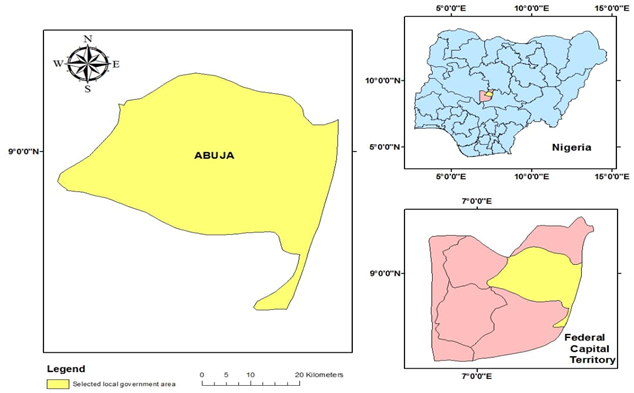
Nigeria’s Federal Capital Territory is Abuja. The city is located in the country’s center. Abuja is a well-organized and planned city that was mostly created in the 1980s. Aso Rock, a 400-metre (1,300-foot) boulder left by water erosion, defines Abuja geography. The Presidential Complex, National Assembly, Supreme Court, and majority of the city are located to the south of Zuma Rock, a 792-metre (2,598- foot) monolith located immediately north of the city on the Kaduna Expressway. Abuja has a total landmass of roughly 7,315 km2 and is located between latitude 90 4” north of the equator and longitude 70 29” east of the Greenwich Meridian (see Figure 1 below). It is located in a savannah zone with mild weather conditions. Municipality of Abuja council covers 1,769km2 (683 sq mi) Area, of which 1,728km2 (667 sq mi) is land and 41km2 (16 sq mi) is water [3, 15].
Sampling Technique
A purposive and stratified sampling technique was used to select the study units who constituted the respondents for the study. In the stratified random sampling, hotels were divided into strata; the hotels are then selected by applying random selection technique.
Inclusion Criteria
Food and water samples in the hotel’s establishments were included in the study. This survey zeroed in on 3 stars to 5 star hotels, that is, hotels with at least 30 rooms, private or public. This classification represents over 70% of the complete hotel stock as per Standard for National Classification and Grading of Hotels and other Serviced Accommodation in Nigeria, created by Nigerian Tourism Development Corporation (NTDC) [38] as a team with Standard Organization of Nigeria (SON). The explanation had been that these classifications of hotels cut across all hotels’ inns however reject other overhauled facilities which are ordered with 1 Star inns or lower classification of hotels.
Exclusion Criteria
Food and water samples in other food establishment such as restaurants and street food vendors were excluded from this study.
Method of Data Collection
A total of 45 food and water samples totaling 90 samples were collected aseptically in a sterile container and transported to the laboratory for bacteriological analysis using a cooling pack.
Isolation and Enumeration of Microorganisms from Food Samples
Nutrient Agar (NA), MacConkey Agar (MA), Salmonella- Shigella Agar (SSA) were used for isolation and were each prepared according to the manufacturer’s instruction MacConkey agar was used for coliform enumeration while Salmonella-Shigella agar was used for the isolation of Salmonella and Shigella. Total viable bacteria count was performed on Nutrient Agar.
Isolation and Enumeration of Microorganism from Water Samples
Two techniques (plate count and MPN) were used simultaneously to estimate the coliform load in each food and/ or water sample. Discrete colonies were randomly selected from each plate (from both temperatures of incubation) and were characterized using standard bacteriological techniques to ascertain that they were coliforms and confirm the specific identity of the isolates. Characterization of isolate was carried pout using gram staining, Triple sugar iron agar, Motility Indole Lysine (MIL), Catalase test, oxidase test, Nitrate reduction, urease activity and gelatin hydrolysis.
Statistical Analysis
In this study, quantitative data collection was used followed by qualitative data collection, analysis of findings and following interpretation of the results. The required data were collected, analyzed and the results appropriately interpreted. The data was cross checked before entry into a computer package called Statistical Package for the Social Sciences (SPSS) version 23. The data was analyzed using techniques such as percentages, figures, tables,] as tools of descriptive data analysis which determines the group characteristics with analysis of variance (ANOVA).
Results (Figures 2-7 & Tables 2)
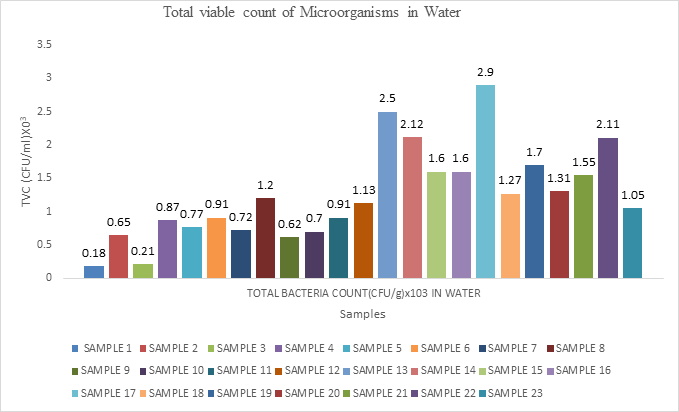
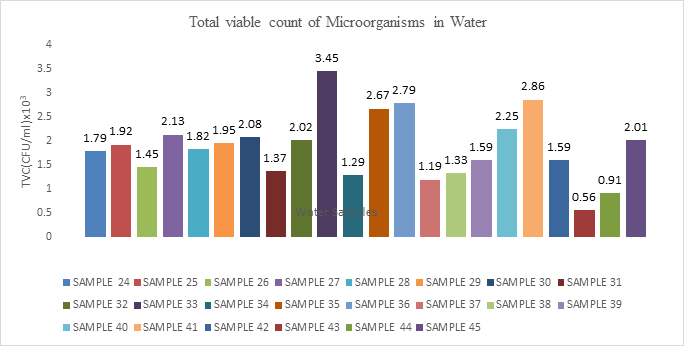
TVC in Abuja ranges from 0.18-3.45 CFU/ML in samples. Samples 13, 17, 33, 35,36 and 41 with TVC 2.5x103,2.9x103, 3.45x10³, 2.67x103,2.72x103, 2.83x10³ CFU/ml are highest respectively.
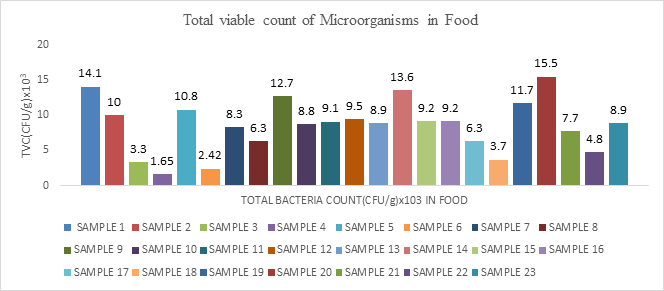
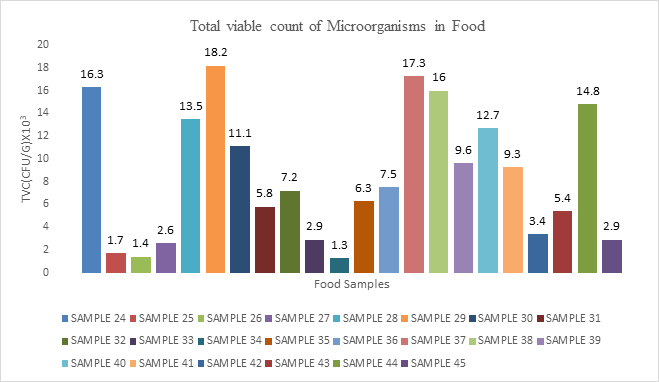
TVC for food in Abuja ranges from 1.30- 18.2x10³, CFU from samples 1-45. With the highest TVC (18.2x10³, 17.3x10³, 16.3x10³, 16.0x10³, 15.5x10³, 14.8x10³,
14.1x10³, 13.6x10³, 13.5x10³, 12.7x10³, 11.7x10³ CFU/g)
respectively.
| Tests of Between-Subjects Effects | |||
|---|---|---|---|
| Dependent Variable: TVC | |||
| Source | Type III Sum of Squares | Df | Sig. |
| Corrected Model | 52.125a | 2 | 0.022 |
| Intercept | 196.349 | 1 | 0 |
| Sample | 51.568 | 1 | 0.728 |
| MGS | 0.557 | 1 | 0.006 |
| Error | 262.322 | 42 | |
| Total | 1232.188 | 45 | |
| Corrected Total | 314.447 | 44 | |
| a. R Squared = .166 (Adjusted R Squared = .126) |
Table 1: ANOVA table with concentration of Bacteria in the food samples in the hotels.
| Dependent Variable: TVC | ||||
|---|---|---|---|---|
| Source | Type III Sum of Squares | Df | Mean Square | Sig. |
| Corrected Model | 151.887a | 2 | 75.944 | 0.06 |
| Intercept | 79.485 | 1 | 79.485 | 0.083 |
| Sample | 71.326 | 1 | 71.326 | 0.1 |
| MGS | 80.561 | 1 | 80.561 | 0.081 |
| Error | 1062.003 | 42 | 25.286 | |
| Total | 5121.393 | 45 | ||
| Corrected Total | 1213.89 | 44 | ||
| a. R Squared = .125 (Adjusted R Squared = .083) | ||||
| b. Computed using alpha = .05 |
Table 2: ANOVA table with Concentration of Bacteria in the cooked Food Samples in the Hotels.
Discussion
Food Analysis
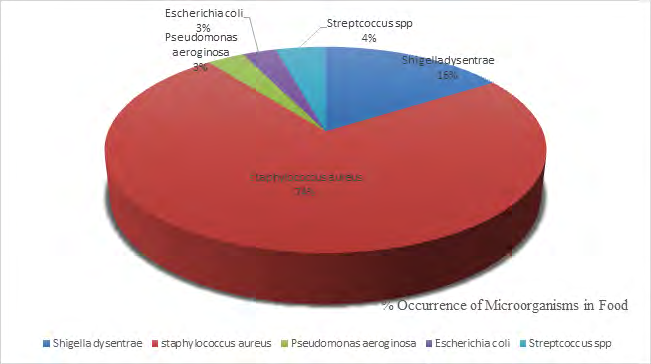
Figure 2 above, shows the occurrence of bacteria in the food prepared in the sampled hotels in Abuja. In this study, Pseudomonas aeroginosa was detected with (3%), occurrence. In this study the presence Pseudomonas aeruginosa were relatively low which agrees with the work of Donkor, [39] where the presence of Pseudomonas aeruginosa which shows 18.2% from Jollof rice from one of the food assessed in the hotels. Pseudomonas can be found almost everywhere; in soil, water, plants and animals and it is the most famous opportunistic human pathogen most commonly affecting immunocompromised patients [40]. Most members are psychrotrophic, can be fluorescent or non- fluorescent, and have long been known to be responsible for chilled food spoilage. Psychrotrophic Pseudomonas species, pose significant food spoilage problems in refrigerated meat, fish, shell fish and dairy products. Probably, the food sample collected in this study was refrigerated and reheated inadequately hence the contamination. Pseudomonas as well can lead to problems in water systems and this could also be the source of the contamination in the food industry. The percentage of E. coli in the samples was also found to be (3%) which is comparable with the work of Donkor, [39] with a lower percentage of 5.9 % which was present in jollof rice in one of the hotel assessed. Also, it is in accordance with a study done by Wogu et al., [41] who discovered the presence of E. coli in ready-to-eat jollof rice from high class restaurants. E. coli lives in the intestines of humans and animals and most types are harmless but some types can cause sickness, for example, E. coli 0157: H7 which causes bloody diarrhoea and can sometimes cause kidney failure and even death [4, 15]. According to WHO, there should zero tolerance for Detection of E. coli in food samples because in little amount it can still cause deleterious effects to human life. Results from this study could be as a result of improper handling during preparation and poor hand washing by the food preparers and some bad habits by food handlers. An infected worker could also be a potential source of contamination. The presence of S. aureus in the food samples was high (74%), which is comparable to a study carried out by Gosh, et al. [42] in India who observed a high prevalence (60%) in coriander sauce and ready-to-eat salads (86%) but in contrast with the work done by Nyenje, et al. [43] were he discovered a prevalence of 3.2% S. aureus from rice and chicken stew samples in roadside cafeterias in South Africa. S. aureus is found on the skin and in the nose and throat of most healthy people. Indeed, small cuts or burns on the hands in food preparation settings can become infected and contain millions of S aureus cells which can cause heavy contamination of foods handled by the cooks. It is also possible that injuries and/or infections on the hands of cooks could reduce the inclination of workers to wash and dry their hands properly and frequently and may hence contaminate foods they are in touch with. When S. aureus is allowed to grow in foods, it can produce toxins that cause illnesses. Similarly, Shigella dysentriae was found in the food samples at (16%) occurrence. This study disagrees with the study conducted in India by Joy, et al. [44], 66.6% of the ready-to-eat salads were contaminated with Shigella species, which is higher than the current study The occurrence of Strep. spp in the samples was (4.4%). This study TVC has shown acceptable microbiological quality. Results from the Analysis of Variance, in this study (0.728) shows that the null hypothesis was accepted and the alternative hypothesis was rejected. The results interprets that the total viable count of the microorganisms in the samples are the same across the samples with p-vale (0.05), thus the microorganisms where within the acceptable limit. This does not ascertain that the food is safe as accumulation of these microorganisms in the body could lead to harmful health.
Water Analysis
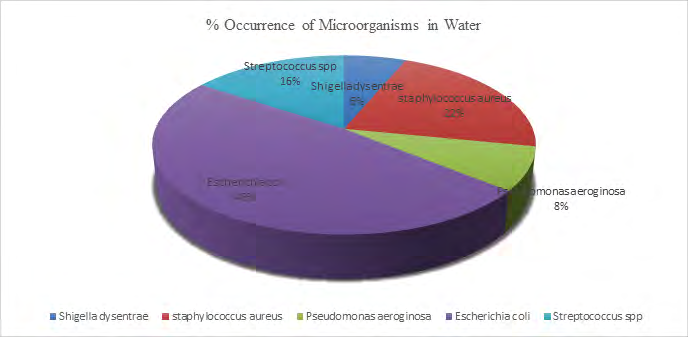
From Figure 3 above, the percentage occurrence of E. coli in water samples in the hotels was 24%. The detection of E. coli was high, this study which is in agreement with the study carried out by Nwandkor, et al. [45] on bacteriological assessment of different borehole drinking water sources in Umuahia metropolis with Most of the borehole (BH) water assessed a high rate of pollution by giving up to 29 (58%) typical or faecal coliform (E.coli). In this study, it was discovered that the samples does not conform to the international standard for safety and potability. It is virtually impossible to obtain drinking water of 100% purity in any naturally occurring sources of water, according to Chave, [46], but a private water supply harboring 34% E.coli in the borehole water is an indication of poor hygiene and sanitation, and a general collapse in the provision of safe drinking water. The E.coli may not actually constitute a public health hazard in a population of healthy individuals, but their presence is a pointer to the presence of or an indication that pathogenic bacteria, viruses, parasites, protozoa, including other aquatic micro lives that may cause diarrhea. According to WHO, there should be zero tolerance of E. coli in water samples as the little amount in water can be deleterious to health. S. aureus was present in the samples at (22%). The occurrence of Staphylococcus aureus in this study is was low in the water samples which is consistent with the work carried out by Aina, et al. [47] with low occurrence of 5.56% of S. aureus (5.56%) in bacteriological analysis of borehole water from different towns in Ogun State, Nigeria. The prevalence of Staphylococcus aureus in this study could be as a result of Staphylococcus aureus contaminating the well or borehole or has colonised the storage tank or pipe lines, the faucet screen surfaces could have provided nutritional conditions to enhance regrowth for staphylococci deposition as contaminated water flowed through the pipes. S. dysentriae was found in the samples at (6%), Strep. spp was detected in the samples at (16%). In Figures 6 & 7 above, the TVC were within the WHO permissible limit of bacteria in food of 105 which is in accordance with the work done by Okareh and Erhahon [48] in Ikpoba-Oha LGA, 5.48 x 10⁴ was found to be the highest while Egor LGA was the lowest, 1.19 x 10⁴ in microbiological assessment of food and hand-swabs samples of school food vendors in Benin city, Nigeria. This study is in contrast with a study carried out by Oranusi, et al. [49] with a high bacterial population in some RTE foods including fried and jollof rice, coleslaw and moimoi which were in the range of 2.0 x 10⁴ to 1.2 x 10⁶ cfu/g for bacteria. Olaoye and Onilude [50] stated that relatively high temperature in tropical countries like Nigeria promotes rapid growth of pathogenic bacteria. Results from Figures 4 & 5 above in this study is in contrast to the study by Tadesse, et al. [51] with mean coliform counts (1.9X10⁷ cfu/ml) of water, this study were also lower than the reports of Arthur and Danso [52] from Ghana (1.26x10⁶ cfu/ml.) and Lues and Tonder [53] from Ethiopia (3x10⁵ cfu/ml). this result is also lower to a study in Ghana, the overall mean total aerobic plate counts (6.3x1 CFU/ml) of water obtained in this study was relatively lower than that of (1.04×10⁸cfu/ml) [52]. In the present study, the bacteria counts of samples exceeded the WHO recommended drinking water quality. The presence of E coli. Which is a coliform shows there is a recent faecal contamination. This is not within the acceptable limit as WHO [54] recommends zero presence of E. coli in water. Which is in contrast with the study by Imran, et al. [55] with a higher TVC, Bacterial counts in Dogon dawa had 26.20 X 10²cfu/100ml. This study TVC of bacteria in water has shown acceptable microbiological quality. Results from the Analysis of Variance, in this study (0.100) shows that the null hypothesis was accepted and the alternative hypothesis was rejected. The results interprets that the total viable count of the microorganisms in the samples are the same across the samples with p-vale (0.05), thus the microorganisms where within the acceptable limit. This does not ascertain that the food is safe as the presence of E. coli in water has rendered the water polluted. According to WHO [54], there should be zero tolerance of E.coli in drinking water as it signifies recent faecal pollution.
Conclusion
Microbial growth such as; Staphylococcus aureus (77.5%), Proteus vulgaris (16%), E. coli (48%), Streptococcus spp (14.4%) were isolated in food and water samples from the hotels and this in compliance with the WHO limit for Microorganisms in food and water (105). This could be as a result of the poor food handling practices carried out in the hotels; the presence of E. coli in water samples depicts faecal contamination which could be deleterious to the health of the consumers. The results from this study will enable health inspectors and food handlers to implement stringent food safety methods like Hazard Analysis Critical Control Point (HACCP) in hotels of their standard to bring about satisfaction and safety of food in their hotels. Thus, regular training programmes should be organized for handlers by their establishment and the Environmental Health Officers to acquire new knowledge on food safety. Furthermore, to avert food contamination incidence and foods intoxication, there is need to educate as well as advocate for the importance of environmental sanitation and good food handling practices particularly proper hand-washing practices amongst food vendors.
Recommendations
- Food handlers in hotels should be trained regularly on food safety practices
- Hazard Analysis Critical Control Point (HACCP) system should be employed in hotels to avoid detection of biological (bacteria) food contamination in the end product testing.
- Environmental health officers should adopt the collection of food and water samples for analysis to ascertain the level of their food safety practices.
- Sanctions should be made on hotels whose food and water detected microorganisms above WHO standard.
References
-
WHO (2014) Foodborne diseases.
-
Raimi MO, Sabinus CE (2017) Influence of Organic Amendment on Microbial Activities and Growth of Pepper Cultured on Crude Oil Contaminated Niger Delta Soil. International Journal of Economy, Energy and Environment 2(4): 56-76.
-
Raimi MO, Ochayi EO (2017) Assessment of the Rate of Sexually Transmitted Diseases in Kubwa F.C.T. Abuja, Nigeria. Science Journal of Public Health 5(5): 365-376.
-
Raimi MO, Pigha TK, Ochayi EO (2017) Water-Related Problems and Health Conditions in the Oil Producing Communities in Central Senatorial District of Bayelsa State. Imperial Journal of Interdisciplinary Research 3(6): 30.
-
Olalekan RM, Vivien OT, Adedoyin OO, Ekoja OO (2018) The sources of water supply, sanitation facilities and hygiene practices in oil producing communities in central senatorial district of Bayelsa state, Nigeria. MOJ Public Health 7(6): 337-345.
-
Olaoye OA, Onilude AA (2010) Investigation on the potential application of biological agents in the extension of shelf life of fresh beef in Nigeria. World Journal of Microbiology and Biotechnol 26(8): 1445-1454.
-
Olalekan RM, Adedoyin OO, Ayibatonbira A, Babatunde A, Emmanuel OO, et al (2019) “Digging deeper” evidence on water crisis and its solution in Nigeria for Bayelsa state: a study of current scenario. International Journal of Hydrology 3(4): 244-257.
-
Henry OS, Odipe EO, Olawale SA, Raimi MO (2019) Bacteriological Assessment of Selected Hand Dug Wells in Students’ Residential Area: A Case Study of Osun State College of Health Technology, Ilesa, Nigeria. Global Scientific Journal 7(1): 1025-1030.
-
Raimi MO, Omidiji AO, Adeolu TA, Odipe OE, Babatunde A (2019) An Analysis of Bayelsa State Water Challenges on the Rise and Its Possible Solutions. Acta Scientific Agriculture 3(8): 110-125.
-
Oluwaseun EO, Raimi MO, Nimisingha DS, Abdulraheem AF, Okolosi-Patainnocent E, et al. (2019) Assessment of Environmental Sanitation, Food Safety Knowledge, Handling Practice among Food Handlers of Bukateria Complexes in Iju Town, Akure North of Ondo-State, Nigeria. Acta Scientific Nutritional Health 3(6): 186-200.
-
Raimi MO, Abdulraheem AF, Major I, Odipe OE, Isa HM, et al. (2019) The Sources of Water Supply, Sanitation Facilities and Hygiene Practices in an Island Community: Amassoma, Bayelsa State, Nigeria. Public Health Open Access 3(1): 1-13.
-
Suleiman RM, Raimi MO, Sawyerr HO (2019) A Deep Dive into the Review of National Environmental Standards and Regulations Enforcement Agency (NESREA) Act. International Research Journal of Applied Sciences 1(4): 108-125.
-
Gift RA, Olalekan RM (2020) Access to electricity and water in Nigeria: a panacea to slow the spread of Covid-19. Open Access J Sci 4(2): 34.
-
Olalekan RM, Dodeye EO, Efegbere HA, Odipe OE, Deinkuro NS, et al. (2020) Leaving No One Behind? Drinking-Water Challenge on the Rise in Niger Delta Region of Nigeria: A Review. Merit Research Journal of Environmental Science and Toxicology 6(1): 031-049.
-
Gift RA, Olalekan RM, Owobi OE, Oluwakemi RM, Anu B, et al. (2020) Nigerians crying for availability of electricity and water: a key driver to life coping measures for deepening stay at home inclusion to slow covid-19 spread. Open Access Journal of Science 4(3): 69-80.
-
Afolabi AS, Raimi MO (2021) When Water Turns Deadly: Investigating Source Identification and Quality of Drinking Water in Piwoyi Community of Federal Capital Territory, Abuja Nigeria. Online Journal of Chemistry, pp: 38-58.
-
Morufu OR, Aziba-anyam GR, Teddy CA (2021) ‘Silent Pandemic’: Evidence-Based Environmental and Public Health Practices to respond to the Covid-19 Crisis. IntechOpen.
-
Raimi MO, Mcfubara KG, Abisoye OS, Ifeanyichukwu EC, Henry SO, et al. (2021) Responding to the call through Translating Science into Impact: Building an Evidence- Based Approaches to Effectively Curb Public Health Emergencies [COVID-19 Crisis]. Global Journal of Epidemiology and Infectious Disease 1(1): 1-34.
-
Lateefat MH, Opasola AO, Misbahu G, Morufu OR (2022) A Wake-Up Call: Determination of Antibiotics Residue Level in Raw Meat in Abattoir and Selected Slaughterhouses in Five Local Government in Kano State, Nigeria. BioRxiv.
-
Lateefat MH, Opasola AO, Adiama BY, Ibrahim A, Morufu OR (2022) Elixirs of Life, threats to Human and Environmental Well-being: Assessment of Antibiotic Residues in Raw Meat Sold Within Central Market Kaduna Metropolis, Kaduna State, Nigeria. BioRxiv.
-
Lateefat HM, Faith A, Yusuf AB, Raimi OM (2022) Food for the Stomach Nourishing our Future: Assessment of Potassium Bromate in Local and Packaged Bread Sold in Ilorin Metropolis. Public H Open Acc 6(1): 1-7.
-
WHO (2000) Foodborne disease: A focus for health education. World Health Organization.
-
Raimi MO, Sawyerr HO, Isah HM (2020) Health risk exposure to cypermethrin: A case study of kano state, Nigeria. Journal of Agriculture. 7th International Conference on Public Healthcare and Epidemiology 1(1): 14-15.
-
Isah HM, Sawyerr HO, Raimi MO, Bashir BG, Haladu S, et al. (2020) Assessment of Commonly Used Pesticides and Frequency of Self-Reported Symptoms on Farmers Health in Kura, Kano State, Nigeria. Journal of Education and Learning Management 1(1): 31-54.
-
Olalekan RM, Muhammad IH, Okoronkwo UL, Akopjubaro EH (2020) Assessment of safety practices and farmer’s behaviors adopted when handling pesticides in rural Kano state, Nigeria. Arts & Humanities Open Access Journal 4(5): 191-201.
-
Isah HM, Raimi MO, Sawyerr HO, Odipe OE, Bashir BG, et al. (2020) Qualitative Adverse Health Experience Associated with Pesticides Usage among Farmers from Kura, Kano State, Nigeria. Merit Research Journal of Medicine and Medical Sciences 8(8): 432-447.
-
Morufu OR (2021) Self-reported Symptoms on Farmers Health and Commonly Used Pesticides Related to Exposure in Kura, Kano State, Nigeria. Annals of Community Medicine & Public Health 1(1): 1002.
-
Morufu OR, Tonye VO, Ogah A, Henry AE, Abinotami WE (2021) Articulating the effect of Pesticides Use and Sustainable Development Goals (SDGs): The Science of Improving Lives through Decision Impacts. Research on World Agricultural Economy 2(1): 1-8.
-
Hussain MI, Morufu OR, Henry OS (2021) Probabilistic Assessment of Self-Reported Symptoms on Farmers Health: A Case Study in Kano State for Kura Local Government Area of Nigeria. Environmental Analysis & Ecology Studies 9(1): 975- 985.
-
Olalekan MR, Abiola I, Ogah A, Dodeye EO (2021) Exploring How Human Activities Disturb the Balance of Biogeochemical Cycles: Evidence from the Carbon, Nitrogen and Hydrologic Cycles. Research on World Agricultural Economy 2(3).
-
Hussain MI, Morufu OR, Henry OS (2021) Patterns of Chemical Pesticide Use and Determinants of Self- Reported Symptoms on Farmers Health: A Case Study in Kano State for Kura Local Government Area of Nigeria. Research on World Agricultural Economy 2(1): 37-48.
-
Adindu IB, Raimi MO (2018) Obong Victor Attah International Airport and Its Contributions to the Income of the Host Communities in Akwa Ibom State, Nigeria. International Journal of Earth Science and Geology 1(1): 46-50.
-
Ihuoma BA, Raimi MO (2019) Obong Victor Attah International Airport Contributions to Tourism: A Case Study of Three (3) Communities in Uyo Local Government of Akwa Ibom State, Nigeria. Journal Ecology & Natural Resources 3(1): 1-10.
-
Adindu IB, Udoh JC, Olalekan RM (2019) Determinants of obong victor attah international airport, Akwa Ibom state on the employment status of the host communities. Arts and Humanities Open Access Journal 3(4): 175-188.
-
Mensah P, Yeboah-Manu D, Owusu-Darko K, Ablordey A (2002) Street foods in Accra, Ghana: how safe are they? Bull World Health Organ 80(7): 546-554.
-
Odonkor ST (2012) Food safety risks associated with tertiary students in self- catering hostels in Accra, Ghana. Pharmacy and Allied Sciences 1(4): 537-550.
-
Habeeb ML, Henry OS, Alabede M (2018) Hazard Analysis Critical Control Point (HACCP) Assessment of Regulated Premises: An Assessment of Standard Hotels in Ilorin Metropolis. Journal of Health and Environmental Research 4(2): 56-68.
-
NTDC (2001) Standard for National Classification and Grading of Hotels and Other Serviced Accommodations in Nigeria. Abuja: Nigerian Tourism Development Corporation.
-
Donkor SE, Kayang BB, Quay J, Akyeh ML (2009) Application of the WHO keys of safer food to improve food handling practices of food vendors in poor resource community in Ghana. Int J Environ Res Public Health 6(11): 2833-2842.
-
Franzetti L, Scarpellini M (2007) Characterisation of Pseudomonas spp. Isolated from foods. Annals of Microbiology 57(1): 39-47.
-
Wogu MD, Omoruyi MI, Odeh HO, Guobadia JN (2011) Microbial load in ready-to-eat rice sold in Benin City. Journal of Microbiology and Antimicrobials 3(2): 29-33.
-
Ghosh M, Wahi S, Kumar M, Ganguli A (2007) Prevalence of enterotoxigenic Staphylococcus aureus and Shigella spp. in some raw street vended Indian foods. Int J Environ Health Res 17(2): 151-156.
-
Nyenje ME, Odjadjare NF, Tanih EG, Ndip NR, Roland NN (2012) Foodborne pathogens recovered from ready-to- eat foods from roadside cafeterias and retail outlets in Alice, Eastern Cape Province, South Africa: Public Health Implications. Int J Environ Res Public Health 9(8): 2608- 2619.
-
Joy MT, DePeters EJ, Fadel JG, Zinn RA (2004) Effects of corn processing on the site and extent of digestion in lactating cows. J Dairy Sci 80(9): 2087-2097.
-
Nwandkor, Uzoije U, Obeagu EI (2015) Bacteriological Assessment of Different Borehole Drinking Water Sources in Umuahia Metropolis. International Journal of Current Microbiology and Applied Sciences 4(5): 1139- 1150.
-
Chave J (1999) Bacteriological Analysis of water. riological analysis.
-
Aina VO, Mustapha MB, Mamman OA, Amina Z, Hauwa H, et al. (2012) Extraction and Characterization of Pectin from Peels of Lemon (Citrus limon), Grape Fruit (Citrus paradis) and Sweet Orange (Citrus sinensis). British Journal of Pharmacology and Toxicology 3(6): 259-262.
-
Okareh OT, Erhahon O (2015) Microbiological Assessment of Food and Hand-Swabs Samples of School Food Vendors in Benin City, Nigeria. Food and Public Health 5(1): 23-28.
-
Oranusi S, Dahunsi SO, Owoso OO, Olatile T (2013) Microbial profiles of Hands, Foods, Easy contact surfaces and Food contact surfaces: A case study of a University Campus. Novus International Journal of Biotechnology and Bioscience 2(1): 30-38.
-
Olaoye OA, Dodd CER (2010) Evaluation of bacteriocinogenic Pediococcus acidilactici as protective culture in the preservation of tsire, a traditional Nigerian stick meat. Journal of Food Safety 30(4): 867-888.
-
Tadesse T, Tesfalem A, Tekalign K (2017) Bacteriological Quality of Hand Washing Water in Hotels and Restaurants of Ilu Aba Bora Zone, Oromia Region, Southwestern Ethiopia. Research Journal of life Sciences, Bioinformatics, Pharmaceutical and Chemical Sciences, pp: 256.
-
Arthur EW, Danso KO (2014) Microbiological Quality of Water in Hand-washing Bowls in Basic Schools in the Ablekuma South Sub-Metropolis of Accra, GHANA. MSc Thesis. Kwame Nkrumah University of Science and Technology, Kumasi, Ghana.
-
Lues JFR, Tonder IV (2007) The occurrence of indicator bacteria on hands and aprons of food handlers in the delicatessen sections of a retail group. Food Control 18(4): 326-332.
-
WHO (2010) Food safety. World Health Organization.
-
Rajput IR, Khaskheli M, Kaleri HA, Fazlani SA, Devi K, et al. (2009) Determination of Total, Viable Cells and Enterobacteraceae in Categorized Milk Powder. Pakistan Journal of Nutrition 8(9): 1493-1496.
- Intersecting Epidemics and Climate Vulnerabilities in Conflict- Driven Displacement: Epidemiology, Systemic Challenges, and One Health Gaps in South Sudan
- Advancing Domestic Health Financing for Community Health System Sustainability in South Sudan: The Boma Health Initiative Model (2025–2035)
- Prevalence and Correlates of Post-Exposure Prophylaxis Uptake among Men Who Have Sex with Men in Kisumu County, Kenya
- Medical, Ethical, and Legal Conflicts Surrounding Euthanasia in Argentina. Its Global Implications
- Knowledge and Attitude on Menstrual Hygiene among Adolescent Girls Studying in Secondary Level in Public Schools of Chitwan District, Nepal
- Biological Efficacy of an Adulticide Mixture (clothianidin + deltamethrin) as an Indoor Residual Spray against Adult Anopheles flavirostris in Palawan, the Philippines