
Rheological and Microstructural Properties of Thermal and Mechanically Treated Shea Butter
Shea butter, like other polymorphic fats are susceptible to morphological changes due to post harvest practices to produce either smooth and consistent fat containing predominantly β’-crystals or coarse and grainy fat containing predominantly β-crystals. The aim of this study was to determine the effect of temperature control (tempering) and agitation on the rheological and microstructural properties of Shea butter. Shea butter was heated at 80°C for 30 minutes and then fast cooled to room temperature. Tempered Shea butter was kept constant at tempering temperature with continuous agitation for 6 hours. Slip melting point and viscosity of tempered Shea butter was significantly reduced. The hardness index (mm) showed twice reduction compared to control. Rheological properties of tempered butter in comparison with control were in agreement with differential scanning calorimetry, X-ray diffraction results and micrographs.
Introduction
Shea butter is an African butter produced from the kernel of Shea tree (Vitellaria paradoxa). Unrefined Shea butter is ivory to yellow in colour with a slightly nutty aroma. It predominantly comprises of approximately 40- 45% of stearic acid and oleic acid in almost equal proportion depending on geographical distribution [1]. Shea butter also contains relatively high amounts of unsaponifiable matter ranging from 4 to 16% as compared to other fats such as Cocoa butter with unsaponifiable content <2% [2]. Shea butter unsaponifiables mostly comprises of polycyclic triterpene.
According to Di Vincenzo, et al. [3] polycyclic triterpene are highest in Nigeria Shea butter and lowest in Uganda Shea oil. The major triterpenes in Shea butter are: α- amyrin, β-amyrin, lupeol and butyrospermol. They are responsible for the therapeutic effect of Shea butter.
Shea butter is well known as a natural vitamin A cream used for a wide range of skin solutions including; moisturizing, anti-aging, rejuvenating, sunscreen, anti- inflammatory among others [1]. West Africa Shea butter is solid to semi solid at room temperature. It has a melting point of 28 - 35°C. The hardness of Shea butter is directly related to the regional area of Shea tree cultivation. It is of common knowledge that Eastern Africa Shea butter such as Uganda Shea butter is liquid at room temperature hence, it is commonly called Shea oil [4, 5]. Uganda Shea butter is favoured over the hard West Africa Shea butter in the cosmetics industry due to less complexity in cosmetics formulations [6, 7]. Even though research indicates that Uganda Shea oil may contain less unsaponifiables [3].
West African Shea butter such as Ghana and Nigeria Shea butter is mostly used in the confectionary industries as Cocoa butter substitute (CBS) due to similarity in hardness and Fatty acids profile [1]. Shea butter used as CBS is always refined. Refining strips it of its unique healing properties. In order to reposition West Africa Shea in the cosmetics industry, technologies to lower its hardness and subsequently its melting point, without altering its unsaponifiable fraction is required.
Tempering is a physical method used to alter the hardness of solid materials such as metals and vegetable fat especially cocoa butter. Tempering is a controlled temperature cooling that give a fine creamy consistent to Cocoa butter and other CBEs i.e. Shea butter via modification of fat crystals from β to β1 [7]. Tempering is usually combined with churning to produces a softer butter with similar chemical characteristics as starting material [8]. This conversion results to a sharp melting profile attributed to chocolate. This project compares the rheological, thermal and microstructutal characterisation of unrefined Shea butter modified by tempering and agitation to control (un tempered).
Materials and Methods
Shea butter used for the study was purchased from local market in Edo State, Nigeria. All chemical used were analytical grade.
Modification of Shea butter
Shea butter was heated at 80°C for 30 minutes to erase crystal memory. Melted Shea butter was then fast cooled (5°C/s) to tempering temperature (25°C). Shea butter was kept constant at tempering temperature with continuous agitation for 6 hours, using Kenwood mixer at speed 2/3. Tempered butter was left to set at room temperature for one week. Stabilized Shea butter was slightly agitated for few minutes to remove any trapped air bubbles.
Rheological Properties of Modified Shea butter
Slip melting point, hardness index (consistency) and viscosity were determined according to AOCS standard procedures AOCS Cc 1-25 and AOCS Cc 16-60 [9].
Viscosity measurement was determined using a Brookfield digital Viscometer Model DV-I+ (MA, USA) at 40°C. Thermal properties and microstructural properties of modified Shea butter was analyzed according to Fauzi SHM, Rashid NA, Omar Z [10]. The polymorphic form of fat crystals in Shea butter samples was carried out using the method employed by Zhang X, et al. [11].
Results and Discussion
Rheological Properties
Tempering is a physical process that has been used to alter the physical characteristics of polymorphic compounds such as milk fat, paraffin and cocoa butter [12, 13, 14]. Rønholt, et al. [15] reported the use of thermal treatment (tempering) to influence the number and sizes of fat crystals. Butter hardness is one of the most important aspects of texture and also the most measured. Hardness index have been highly correlated to sensory perception [14]. It is used to determines the texture and spread ability of polymorphic fats. One of the most common evaluations of butter hardness is cone penetrometry [14]. It is a simple, economical method that provides empirical data on consistency, softness and spreadabiity of polymorphic fats.
Tempering of Shea butter led to more than three times reduction of hardness and consequently spreadability. Earlier studies have establish the direct correlation of consistency (hardness index) with continuous shear viscosity and slip melting point of pseudo plastic materials structurally broken down by work softening procedures (tempering and/or stirring) [11, 12]. These studies are in agreement with our study as Tempered Shea butter (Temp B) had significantly lower slip melting point and viscosity compared to control (Temp A). This result is in agreement with Ab Latip R, et al. [16]. In their study, large increase in SMP was observed when cooling rate increased from 1.50 to 2.00°C/min. According to Ronholt S, Mortensen K, Knudsen JC [15], tempered butter tend to recover to a certain extent its initial physical state but will most likely not attain its full properties because some bonds such as the crystal-crystal cohesive bonds may have been irreversibly broken down. There is need to study the effect of time on tempered butter to ensure relative softness is maintained during storage. However, tempered butter mixed at room temperature solubilizes fat triglycerides, preventing full re-crystallization [17].
Fatty Acid Profile of Shea butter
Oleic acid and stearic acid were the major fatty acids in Shea butter samples. Previous research has established these fatty acids to be predominant in Shea butter with slight variations influenced by geographical distribution and postharvest practices [3, 18, 19]. Stearic acids compositions of Shea butter were relatively similar for tempered and non-tempered butter. However, oleic acid showed variation with tempered Shea butter (Temp B) had relative higher amount of oleic acid (51.47%) compared to Temp A (40.48%) (Table 1). Latip [16] reported the effect of crystallization temperature on the oleic acid fraction of milk fats. A similar study conducted by Vanhoutte B, Dewettinck K, Vanlerberghe B, Huyghebaert A [20] on milk fat also revealed that stirring of milk fat results in production of softer butter.
| Slip melting point (oC) | Viscosity (cP) | Hardness Index (mm) | |||||||
|---|---|---|---|---|---|---|---|---|---|
| Temp A | 37.0±1.0b | 11.0±0.05b | 6.21±0a | ||||||
| Temp B | 31.0±1.5a | 9.0±0a | 19.28±0b |
Table 1: Rheological Properties of Modified Shea butter in comparison with control.
| Palmitic | Stearic | Oleic | Linoleic | Linolenic | Arachidic | |||||||||||||||
|---|---|---|---|---|---|---|---|---|---|---|---|---|---|---|---|---|---|---|---|---|
| Temp A Temp B | 5.18a 5.47a | 36.64a 37.02a | 40.84a 51.47b | 6.31a 2.53b | 9.54a 3.01b | 1.49a 0.50b |
Table 2: Fatty acid composition of Modified Shea butter in comparison with control.
Crystal Polymorphism
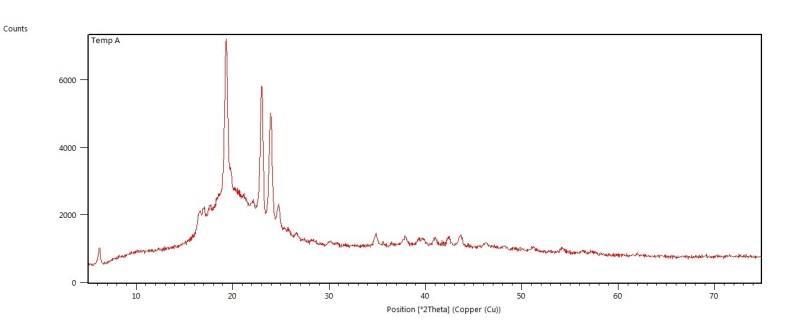
Temp A and Temp B had three major crystal polymorphs (α, β’, and β) as seen in Figure 1. However, the percentage presentation of these polymorphs differed. Although the chemical compositions (fatty acids) are relatively similar (Table 2), the different crystal structure (polymorphism) present can be attributed to difference in thermal and mechanical treatment undergone by Temp B. Rønholt and others [15, 21] explained that polymorphism was influenced by factors such as cooling rate, mechanical treatment and agitation temperature. Temp B had a lower
![Figure 1: However, the percentage presentation of these polymorphs differed. Although the chemical compositions (fatty acids) are relatively similar (Table 2), the different crystal structure (polymorphism) present can be attributed to difference in thermal and mechanical treatment undergone by Temp B. Rønholt and others [15,21] explained that polymorphism was influenced by factors such as cooling rate, mechanical treatment and agitation temperature. Temp B had a lower](/fulltextimages/3441/fig_1.jpeg)
Temp A
250µm
Temp B
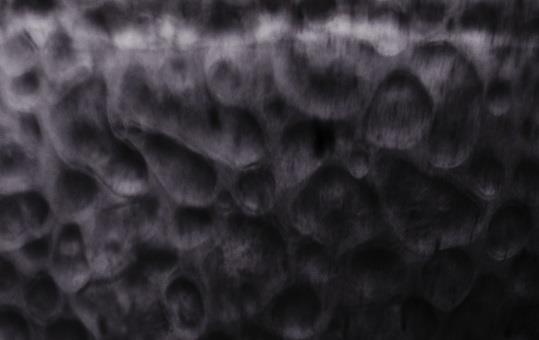
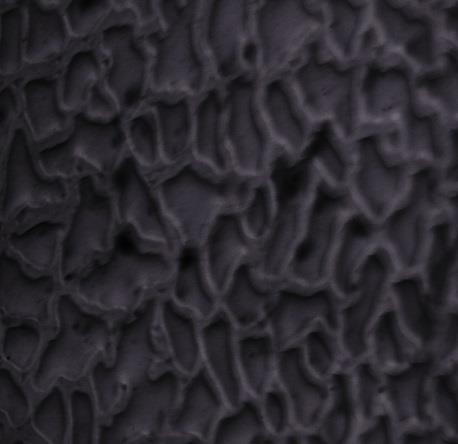
250µm Figure 2: Microstructure of Shea butter (magnification 45) of non-temp (Temp A) and tempered (Temp B).
Microscopy Analysis
Figure 2 shows the crystal morphology of un- tempered (Temp A) and tempered (Temp B) Shea butter. Tempering led to an observed alteration in the microstructure. The presence of large clustered crystal
Differential Scanning Analysis
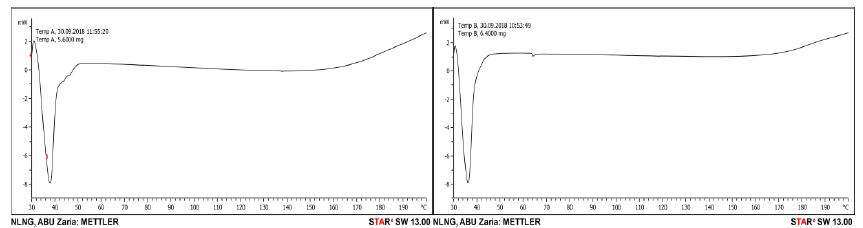
Thermal properties of Shea butter were examined by extrapolation of melting profile. Figure 3 shows two distinct melting curves (Temp A and Temp B). Temp A gave a broad graph with the initiation of melting starting at 32°C, while melting point occurred at 39°C. Within the temperature of 40°C and 50°C, other high melting triglycerides continued to melt before equilibrium was attained. This phenomenon was not present in tempered butter. Temp B gave a steep graph with melting initiated at 31°C. Melting point was established at 37°C and at 42°C equilibrium was attained.
Conclusion
It can be concluded that thermal treatment (tempering) significantly influenced rheology, thermal properties and crystal polymorphism of West Africa Shea butter.
References
-
Nahm HS (2011) Quality characteristics of West African shea butter (Vitellaria paradoxa) and approaches to extend shelf-life. Doctoral dissertation, Graduate School, New Brunswick, Rutgers University, New Jersey.
-
Alander J (2004) Shea butter-a multifunctional ingredient for food and cosmetics. Lipid Technology 16(9): 202-205.
-
Di Vincenzo D, Maranz S, Serraiocco A, Vito R, Wiesman Z, et al. (2005) Regional variation in shea butter lipid and triterpene composition in four African countries. J Agric Food Chem 53(19): 7473- 7479.
-
Hall J, Aebischer D, Tomlinson H, Osei-Amaning E, Hindle J (1996) Vitellaria paradoxa: a monograph. School of Agricultural and Forest Sciences, University of Wales, Bangor, UK.
-
Okullo J, Omujal F, Agea JG, Vuzi PC, Namutebi A, et al. (2010) Physico-chemical characteristics of Shea butter (Vitellaria paradoxa C.F. Gaertn.) oil from the Shea districts of Uganda. African Journal of Food, Agriculture, Nutrition and Development 10(1): 2070- 2084.
-
Andersson A, Alander J (2015) Shea butter extract for bioactive skin care. AAK, Sweden, pp: 1-8.
-
Lipp M, Anklam E (1998) Review of Cocoa Butter and Alternative Fats for Use in Chocolate- Part A. Compositional data. Food Chem 62(1): 73-97.
-
Gnanasambandam R, Bedi A (2014) U.S. Patent No. 8,790,733. Washington, DC: U.S. Patent and Trademark Office.
-
AOCS (1997) Official methods and recommended practices of the AOCS. 6th(Edn.), AOCS Press, USA.
-
Fauzi SHM, Rashid NA, Omar Z (2013) Effects of chemical interesterification on the physicochemical, microstructural and thermal properties of palm stearin, palm kernel oil and soybean oil blends. Food chemistry 137(1-4): 8-17.
-
Zhang X, Li L, Xie H, Liang Z, Su J, et al. (2014) Effect of temperature on the crystalline form and fat crystal network of two model palm oil-based shortenings during storage. Food and bioprocess technology 7(3): 887-900.
-
Barry BW, Grace AJ (1971) Structural, rheological and textural properties of soft paraffins. Journal of texture studies 2(3): 259-279.
-
Lechter A (2012) Effect of Minor Components on Cocoa Butter Polymorphism and Kinetics of Crystallization. Cocoa Butter and Related Compounds, pp: 213-232.
-
Wright AJ, Scanlon MG, Hartel RW, Marangoni AG (2001) Rheological properties of milkfat and butter. Journal of Food Science 66(8): 1056-1071.
-
Ronholt S, Mortensen K, Knudsen JC (2013) The effective factors on the structure of butter and other milk fat‐based products. Comprehensive Reviews in Food Science and Food Safety 12(5): 468-482.
-
Ab Latip R, Lee YY, Tang TK, Phuah ET, Lee CM, Tan CP, et al. (2013) Palm-based diacylglycerol fat dry fractionation: effect of crystallisation temperature, cooling rate and agitation speed on physical and chemical properties of fractions. PeerJ 1: e72.
-
Buldo P, Wiking L (2012) The role of mixing temperature on microstructure and rheological properties of butter blends. Journal of the American Oil Chemists' Society 89(5): 787-795.
-
Aculey PC, Lowor ST, Kumi WO, Assuah MK (2012) The effect of traditional primary processing of the shea fruit on the kernel butter yield and quality. Am J Food Technol 7: 73-81.
-
Obibuzor JU, Abigor RD, Omamor I, Omoriyekemwen V, Okogbenin EA, et al. (2014) A two year seasonal survey of the quality of shea butter produced in Niger state of Nigeria. African Journal of Food Science 8(2): 64-74.
-
Vanhoutte B, Dewettinck K, Vanlerberghe B, Huyghebaert A (2003) Monitoring milk fat fractionation: filtration properties and crystallization kinetics. Journal of the American Oil Chemists' Society 80(3): 213-218.
-
Marangoni AG, Ollivon M (2007) Fractal character of triglyceride spherulites is a consequence of nucleation kinetics. Chem Phys Let 442(4-6): 360- 364.
-
Saadi S, Ariffin AA, Ghazali HM, Abdulkarim MS, Boo HC, et al. (2012) Crystallisation regime of w/o emulsion [e.g. multipurpose margarine] models during storage. Food Chem 133(4): 1485-1493.
-
Fauzi SHM, Rashid NA, Omar Z (2016) Physicochemical and Microstructural Properties of Refined Palm Oil-Palm Kernel Oil Blends Following Chemical Interesterification. International Journal of Chemical Engineering and Applications 7(2): 81-84.
- Sense, Gravity, Parity & Chirality in Mathematical Physics
- Quantum Lattice Simulations PHYSICS: Microcircuit Particle Formation and Observable Macroscopic Irreversible Time - A Discrete Lagrangian with Cellular Automata Framework
- Quantum Biology from Biomacromolecule to Cell, and Central Dogma Described by Quantum Theory
- Focus, Agility, Speed and Technology (FAST) for Sustainability and Growth
- Square Root Metric Geometry and Pati-Salam Model in Curved Space-Time
- A Simple System Demonstrating the Mpemba Effect in Classical Mechanics