
Vertical Hot Melt Extrusion: A Cutting Edge Technology for Personalized and Sustainable Food Systems
New trends in the food industry are radically transforming how we produce, process, and consume food, creating new pathways for personalization, sustainability, and operational efficiency. Vertical Hot Melt Extrusion (HME) is a major innovation that offers unprecedented opportunities to create highly personalized food products tailored to specific dietary needs or remote locations, including nutrient-dense options designed for individual health requirements. All of this thanks to precise control over food texture, structure, and nutrient release while improving the solubility and stability of bioactive compounds and enhancing the bioavailability of nutrients, which results in higher absorption rates of essential vitamins, minerals, and functional ingredients. Vertical extrusion enables the development of innovative functional foods, gluten-free alternatives, and plant-based meat analogues that closely mimic the texture and taste of real meat as well as many other new food applications by providing improved precision, scalability, and efficiency, making it a versatile technology for creating consistent, high-quality products across multiple food categories. Additionally, vertical extrusion is revolutionizing the production of bioactive films, a cutting-edge advancement in active packaging technology. These films interact with food, offering real-time antimicrobial and antioxidant properties that extend product freshness and shelf life. The ability to incorporate bioactive compounds within packaging also helps to reduce spoilage and waste (not only food waste but also packaging waste) and improve the overall environmental footprint of food processing. This chapter delves into the wide-ranging applications of Vertical Extrusion as a cutting-edge technology and explores its potential to shape the future of personalized and sustainable food systems on a global scale.
Abbreviations
AI: Artificial Intelligence; FDA: Food and Drug Administration; HACCP: Hazard Analysis and Critical Control Points; HME: Hot Melt Extrusion; PAT: Process Analytical Technology; QbD: Quality by Design; R&D: Research and Development.
Introduction
Hot Melt Extrusion (HME) is very well known by the food industry for its achieved consistency and efficiency in shaping and producing foods like pasta or chocolate, while ensuring texture uniformity and controlled moisture levels as well as enabling the blending and cooking of ingredients under controlled heat and pressure [1, 2, 3]. HME has recently found expanded use in new food categories such as plant- based meat alternatives and high-protein snacks as it allows manufacturers to replicate the fibrous texture of animal meat by structuring plant proteins under high pressure and heat, creating products that closely resemble meat in taste, texture, and appearance. This innovation aligns with the growing environmental shift towards plant-based diets, pushing extrusion technology into new heights of relevance and innovation [2, 4].
A major breakthrough in extrusion technology is the recent development of the vertical twin-screw extruders that offer enhanced mixing capability, precise temperature control, and more efficient cooling, all while reducing contamination risks. With a significantly smaller footprint than horizontal extruders, vertical extrusion is also transforming food production by allowing for continuous and space-efficient manufacturing of products like thin films for bioactive packaging [5, 6, 7], (Figure 1). When combined with innovations such as thin films or 3D printing, vertical extrusion heralds a new era of customization, sustainability, and efficiency in food processing, enabling the production of personalized, nutrient-rich foods while optimizing production processes for greater environmental and economic efficiency [8, 9, 10].
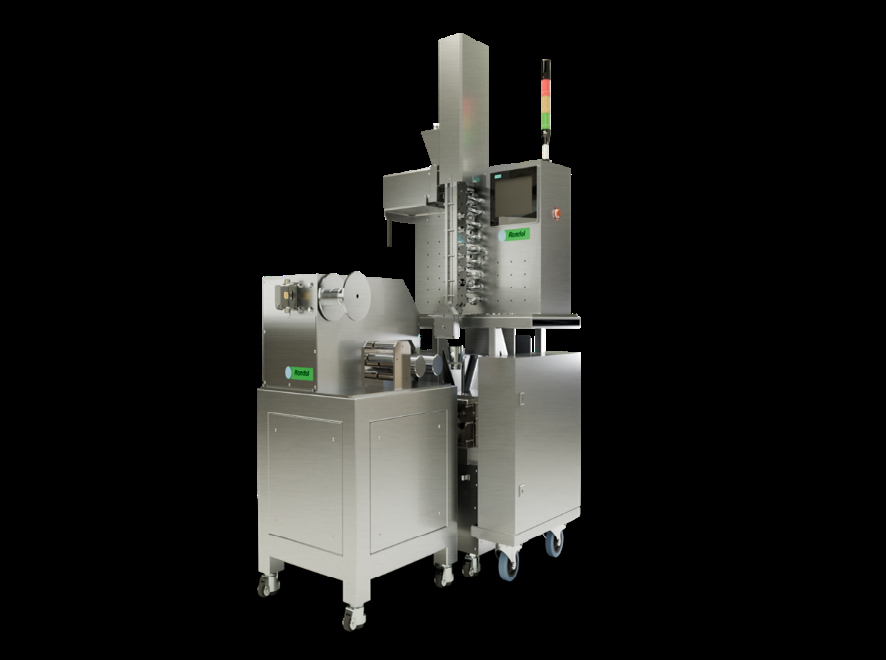
Pharma-Adapted Vertical Extrusion as a New Technology for Food Products with Proven Positive Impact
HME Provides Solutions for the Following Issues in Food Processing
HME has been tested/used in various shapes such as pellets, pastes, and for various purposes, e.g., masking the bitter taste, shaping, additives, etc. Additionally, HME significantly improves texture and organoleptic properties in food products, offering solutions that meet consumer expectations for both taste and texture, while also improving functionality through encapsulation of active ingredients, such as nutrients and flavors.
However, many food ingredients remain difficult to process, sometimes sticky, temperature-sensitive, and shear- sensitive materials. This requires working on all process parameters (screw configuration, screw speed, melt pressure, etc.) or ingredients in order to reduce the shear forces needed or lower the temperatures required to properly mix the final product, while avoiding thermal degradation:
On top of lowering those process parameters, controlling them with the smallest possible deviation is crucial to optimize the interference of some components with the functionality of other components in the recipe. Therefore, it requires precise dosing of all product ingredients and metering of all process parameters.
Food processing extruders must be compliant with the regulatory guidelines ─ the metallurgy of the contact parts must not be reactive, additive or absorptive with the product and the equipment must be configured for the cleaning and validation requirements associated with a food environment – see HACCP International Certification of Food Safe Equipment, Materials and Services [11]. This requires among other things that parts be made in special stainless steel alloys and be processed in order to reach specific surface finish in order to avoid contamination.
Vertical Extrusion as a New Technology with Positive Impact
Back in 2012, we estimated that the horizontal format was a bottleneck to various improvements:
- Contamination issues: The equipment footprint of horizontal extrusion machines is quite large for industrial scale production, and it is subjected to high risks of contaminations from the work environment to the production, and vice versa.
- Cleaning issues: A horizontal extruder is quite big, especially with a 40:1 or more Length to Diameter barrel, which makes the cleaning both long and fastidious. Cleaning is a central item in the food processes as both the equipment and the manufacturing room must be fully cleaned after every production run, therefore has a huge impact on efficiency and cost basis.
- Operator interface: Big footprint also means more complex operator interface due to numerous moves along the extrusion line, e.g., along the in-feed of the filler via the control panel to the die and the downstreams.
Based on a market analysis and a vision for the future of HME, we concluded that the preferred process flow direction needed to be changed from the horizontal position to top- down in the vertical axis.
All Technical Issues were Addressed One After the Other:
- The necessity to design a generic extruder capable of integrating by easy ‘plug in’ mechanism all types of top and side feeders for the pellets, powders and further solids, liquids and gases.
- The work on all screw elements design and configuration is essential to ensure smooth additive transportation through the secondary feeders, which are now horizontal. The versatility of changing screw elements allows for mixing at different intensities, conveying, chaotic mixing, and the use of various screw pitches, homogenization elements, and discharges. All these components are fully interchangeable along a single shaft, enabling precise control and customization of the extrusion process to meet specific product requirements.
- The simplification of the extruder ‘easy clean’ system
- The integration of a high-performance cooling systems for strand cooling.
- The integration of downstream equipment with versatile technical constraints (temperature control for the calendar, cutting precision for the pelletizer, tensile force, and size control for the haul-off winders).
- The coordination of all process parameters thanks to an integrated, user friendly and reliable automation system.
In more details, the following steps were achieved in order to develop the 10.5 mm 40:1 Length to Diameter twin screw vertical extruder starting from a ‘classical’ horizontal 10.5 mm 20:1 Length to Diameter extruder [5]:
- Lengthened the barrel in order to smoothen the mixing process for ingredients that are fragile.
- Positioned eight heating/cooling zones all along the barrel in order to better monitor the processing temperature of ingredients that have a narrow range between melting and degradation.
- Changed metals used to manufacture parts (high-grade stainless-steel precision engineered).
- Redesigned many external parts (for easier feed or to avoid contamination between lots due to powder that would remain stuck in notches) and many internal parts (to make ‘change over’ easy in between lots).
- Made the extruder vertical to further reduce the contamination risk (thanks to gravitation) and to further decrease footprint of the process.
- Optimized the settings between screw configuration and speed, motor power and torque in order to start the mixing quicker/smoother and extract the filament with strong/stable pressure for easier downstream steps.
The vertical twin-screw extruder has already been installed for various applications – aeronautics and pharma – both in France, UK and the USA – see presentation of the vertical extrusion line to Seqens Scientific Committee in Boston in June 2023 [12]:
Comparative Advantages of Vertical Twin-Screw Extrusion in Food Processing
The vertical twin-screw extrusion system represents a significant technological leap over traditional horizontal extrusion methods. The vertical configuration introduces several enhanced features that are critically important in food manufacturing, where efficiency, precision, and space optimization are essential. This comparative analysis highlights the key advantages of vertical extrusion, focusing on process control, mixing efficiency, and temperature regulation.
One of the most evident advantages of vertical twin- screw extrusion is its enhanced process control. Vertical systems benefit from gravity-assisted material flow, which significantly reduces the risk of feed blockages that can occur in horizontal systems. By utilizing gravity to move materials through each stage of the extrusion process, vertical systems allow for more consistent and predictable processing. This results in smoother operations, particularly when dealing with bulk materials or recipes requiring precise control over ingredient flow. The minimized risk of feed interruptions not only improves overall efficiency but also enhances the consistency of the final product, an essential factor in industries where product uniformity is critical, such as in the production of functional foods, gluten-free products, and meat analogues.
The mixing efficiency of vertical twin-screw extruders also surpasses that of their horizontal counterparts. The vertical orientation allows for better integration of ingredients during processing, as the materials are continuously mixed and transported downward through the screws. This configuration ensures that ingredients are more evenly distributed throughout the extrusion process, which is particularly beneficial when working with complex formulations or sensitive bioactive compounds. In addition, the vertical layout supports the integration of advanced mixing techniques that can handle a wider range of ingredient viscosities, from pastes to powders. This is particularly important in the development of products such as high-protein snacks or plant-based meats, where texture and ingredient incorporation are crucial to the final product’s quality.
Another key advantage of vertical twin-screw extrusion is its temperature regulation. The design of vertical systems allows for more precise control over temperature gradients throughout the extrusion process. Vertical systems are often equipped with multiple heating and cooling zones that can be independently controlled, ensuring that each stage of the process is maintained at the optimal temperature for ingredient processing. This is especially important for temperature-sensitive materials, such as certain proteins, bioactive compounds, or nutraceuticals, which can degrade or lose their functional properties if exposed to excessive heat. In comparison, horizontal extruders may face challenges in maintaining consistent temperatures, leading to potential variations in product quality and increased waste. The ability to finely tune the temperature at each stage of the extrusion process in vertical systems ensures better retention of nutritional and sensory qualities, which is essential for the development of premium functional foods.
In addition to these technical advantages, the space- saving design of vertical twin-screw extruders offers a practical benefit in industrial settings where floor space is at a premium. Vertical systems are typically more compact than horizontal extruders, as they stack components vertically rather than spreading them across a wide footprint. This makes vertical extrusion particularly well-suited for facilities looking to maximize production capacity without the need for extensive floor space. The reduced footprint also simplifies the integration of ancillary equipment, such as pelletizers, cooling units, or packaging systems, which can be positioned directly below the extruder. This not only improves the overall efficiency of the production line but also reduces the risk of contamination by limiting the number of open conveyors or transfer points between processing stages.
Energy efficiency is another critical factor where vertical twin-screw extrusion has an edge over traditional horizontal methods. The gravity-assisted material flow inherent in vertical systems reduces the mechanical effort required to move materials through the extruder, thereby lowering energy consumption. In a horizontal system, more energy is required to convey materials horizontally, especially when dealing with dense or viscous formulations. The verticality thus provides a more sustainable option, as it reduces both energy costs and the environmental impact of the production process.
Maintenance and cleaning procedures are also simplified in vertical twin-screw extruders. The vertical design minimizes the number of horizontal surfaces where materials can accumulate, reducing the risk of cross- contamination between production batches. Moreover, vertical systems often incorporate ‘easy-clean’ features, such as removable screws and quick-access panels, which make it easier to thoroughly clean the extruder between runs. This is especially important in food processing environments where hygiene standards are stringent, and any residue from previous batches could lead to contamination or quality control issues. Horizontal extruders can be more challenging to clean thoroughly, especially when handling sticky or hard- to-remove materials.
Finally, vertical twin-screw extrusion plays a crucial role in the development of novel food products that cater to emerging consumer demands for health, sustainability, and personalization. As consumers increasingly seek out products that align with specific dietary preferences or health goals, such as plant-based meat alternatives, gluten- free snacks, or fortified functional foods, vertical extrusion offers the flexibility needed to meet these demands wherever needed.
From Micro Scale to Industrial Scale
From the start of our “Vertical project” we have integrated all characteristics that we considered essential to successful scale-up for industrialization purposes and our Patent covers extruders up to 42 mm twin screw extruders [5]. Designed for pharmaceutical applications, the vertical extruder considers the well-known technical and economical constraints linked to pharmaceutical applications that are also very applicable to food applications (capability to produce small lots and necessary ‘soft’ extrusion process).
The design of the vertical extrusion system also allows modular integration of all ancillary equipment necessary for final product processing and shaping (pelletizers, calendars, millers and so on) below the extruder. In the traditional horizontal extrusion technology, an array of ancillary equipment is used for further downstream processing, comprising a conveyor belt combined plus a pelletizer. This typically results in a long process chain.
Operator working conditions are also improved as there will be no need to move around the equipment to control process performance – and the small footprint makes the extruder easy to cover and seal to protect operators and the working environment from any hazardous vapors/dusts.
Last but not least, the operational system of the vertical extruder is based on the same design geometry as its horizontal homologues so that the positive conveying mechanism of the fully intermeshing co-rotating twin- screws provides predictable scale-up from vertical small- scale machines to horizontal large-scale extruders, as long as both machines are of the same geometry, e.g., co-rotating and fully intermeshing.
This design allows for a seamless transition from R&D or small-scale individualized production to large-scale industrial production (Figure 1, Table 1) [13, 14]. However, each extrusion process scale up has its own specificities and special care will need to be given to allow for enough time for trials and training in doing so [15, 16].
| Horizontal Processing | Vertical Processing | |
|---|---|---|
| Definition | Processing occurs at the same level (horizontal layout). | Processing occurs in stacked levels or layers (vertical layout). |
| Space Utilization | Requires more floor space for machines and equipment. | Optimizes space by using vertical stacking, reducing floor space usage. |
| Maintenance | Similar maintenance challenges across both systems. | Similar maintenance challenges across both systems. |
| Process Flow | Easier to monitor, especially in small setups. | Improved material flow due to gravity, reducing transportation time and energy between stages. |
| Flexibility | Highly versatile system that allows modular and adaptable configurations in different setups. | Highly versatile system that allows modular and adaptable configurations in different setups. |
| Energy Efficiency | May require more energy for transferring products horizontally. | Energy-efficient as gravity can assist product flow and the extrusion process, reducing mechanical effort and energy consumption. |
| Cost | Generally more affordable to set up and maintain. | Can be more expensive due to complexity and space-saving designs. |
| Safety | Similar safety risks for both configurations. | Similar safety risks for both configurations. |
| Scalability | Easier to scale horizontally but requires more space. | Easier to scale vertically in environments with limited horizontal space. |
| Material Flow | Potential blockages during feeding due to filling issues in the hopper, causing interruptions in material flow. | Better material flow, especially for bulk materials, due to the use of gravity between stages, minimizing feed blockages. |
| Gravity Utilization | Not applicable. | Gravity helps move materials through stages and supports the extrusion process, reducing energy needs for both transfer and material processing. |
| Applications | Suitable for a wide range of industries, including food, pharmaceuticals, and manufacturing. | Suitable for a wide range of industries, including food, pharmaceuticals, and manufacturing. |
| QbD (Quality by Design) | QbD principles can be easily applied, but more control may be needed for consistent material flow. | QbD principles are supported by better material flow and the use of gravity, leading to more consistent results. |
| PAT (Process Analytical Technology) | Easier to implement PAT tools due to the accessible layout, allowing for real-time monitoring. | PAT implementation can be advantageous, as vertical designs often provide better control points for in-line monitoring and process optimization. |
Table 1: Comparative Analysis of Horizontal vs. Vertical Processing.
Sustainability and Future Trends in Personalized and Extruded Food Products
The future of food production is being shaped by the growing demand for personalized nutrition, sustainability, and efficiency. Vertical Hot Melt Extrusion (HME) can play a pivotal role in addressing these demands while becoming not only energy-efficient but also capable of supporting waste reduction and personalized food products [2, 3, 8, 10], nutrient preservation, and advanced bioactive packaging solutions [9, 16, 17]. In particular, the ability of HME to encapsulate bioactive ingredients ensures that nutrients are preserved during processing and released efficiently during consumption, enhancing the nutritional value of food [2, 9]. See Table 2.
| Key Benefits | Description |
|---|---|
| Improved Texture and Stability | HME improves the textural properties of food, such as crispiness, chewiness, and mouthfeel, by controlling the physical structure during processing. [2] |
| Enhanced Nutrient Bioavailability | HME enhances the bioavailability of nutrients like vitamins, minerals, and bioactive compounds by reducing particle size and improving solubility. [3] |
| Sustained Release of Nutrients and Additives | HME allows controlled release of nutrients, flavors, and additives in food products, improving the stability and release kinetics of sensitive ingredients. [9] |
| Reduction in Fat and Sugar Content | HME enables the reduction of fat and sugar content in products like chocolate and snacks without compromising texture and taste through matrix design. [8] |
| Gluten-Free and Plant-Based Food Development | HME is used to create gluten-free and plant-based alternatives by optimizing protein and fiber blends, providing better texture and taste. [4] |
| Reduction in Additive Usage | HME reduces the need for chemical additives, such as emulsifiers and stabilizers, by enabling physical modifications of food structures. [18] |
| Enhanced Food Shelf-Life | The extrusion process can protect food products from moisture and oxygen, significantly increasing their shelf life. [19] |
| Development of Novel Food Textures | HME allows the creation of new food textures, such as those found in meat analogs, snacks, and confectioneries, through innovative process control. [20] |
| Environmental Sustainability | HME offers energy-efficient processing with reduced waste, helping to create more sustainable food products. [21] |
| Enhanced Protein Structure for Meat Analogues | HME is particularly valuable in structuring plant-based proteins for meat analogues, closely mimicking meat-like texture and structure. [22] |
| Reduction of Processing Time and Costs | By combining multiple steps (mixing, kneading, cooking, shaping) in a single process, HME significantly reduces both processing time and production costs. [23] |
| Use of Functional Ingredients | HME facilitates the incorporation of functional ingredients such as prebiotics, probiotics, and antioxidants into foods without degrading their activity. [24] |
| Tailored Rheological Properties | The process enables customization of flow properties and viscosity, which is critical for the final product’s sensory characteristics. [15] |
| Preparation for 3D Food Printing | HME enables the preparation of complex and customized food structures that are optimized for 3D printing, creating unique textures and shapes. [10] |
| Biobased and Edible Films | HME is used to create biobased and edible films with elongation properties, extending the shelf-life of food products with less toxicities. [25] |
| Production of Bioactive Films for Food Protection | Bioactive films incorporating components such as living microorganisms, synthetic additives, hemisynthetic compounds, essential oils, and natural extracts provide antimicrobial and antioxidant properties. [26] |
Table 2: Key Benefits of Hot Melt Extrusion (HME) in Food Product Development and Manufacturing.
Energy Efficiency of Vertical HME: Energy efficiency is particularly important in the context of global food production, where manufacturers are under increasing pressure to reduce their environmental impact. HME’s capacity to streamline production while maintaining high- quality output positions it as a critical technology for the future of sustainable food systems. As mentioned before, the gravity-assisted material flow inherent in vertical systems reduces the mechanical effort required to move materials through the extruder, thereby lowering energy consumption.
In a horizontal system, more energy is required to convey materials horizontally, especially when dealing with dense or viscous formulations. The vertical configuration thus provides a more sustainable option, as it reduces both energy costs and the environmental impact of the production process.
By optimizing the use of energy, Vertical HME can therefore help companies meet sustainability goals and regulatory requirements related to energy consumption and greenhouse gas emissions [2, 9].
Vertical Extrusion with Plug in Downstream for BioActive Films and Packaging that can Reduce Food and Packaging Waste
As the global population continues to grow, the reduction of food waste will become increasingly important for maintaining food security and reducing the environmental impact of food production. By extending shelf life and minimizing waste, Vertical HME can help mitigate these challenges, making it a vital tool for the future of food sustainability [9, 16].
Through the encapsulation of bioactive ingredients, HME protects sensitive nutrients from oxidation and degradation during storage. This encapsulation technology allows nutrients such as vitamins, minerals, and probiotics to remain stable over extended periods, ensuring that food products retain their nutritional value until they are consumed.
Vertical HME together with Plug in Downstream Equipment will also make it easier to develop bioactive films and bioactive packaging materials that further extend shelf life. These films can be infused with antimicrobial agents or antioxidants, which actively interact with the food product to inhibit microbial growth and prevent spoilage. By slowing down the natural processes that lead to food degradation, bioactive packaging reduces the need for artificial preservatives while simultaneously decreasing food waste. One of the major advantages of bioactive packaging is its ability to maintain food freshness without relying on synthetic preservatives, which aligns with consumer preferences for natural, clean-label products. Moreover, by preserving nutrients and preventing degradation, bioactive packaging supports the overall health and well-being of consumers, ensuring that they receive the full nutritional benefits of the food they purchase. This combination of extended shelf life and enhanced nutrient preservation makes bioactive packaging an essential component of the future food system. Beyond its immediate benefits for food preservation, bioactive packaging also plays a critical role in reducing packaging waste as many bioactive films are designed to be biodegradable or recyclable. As the food industry continues to prioritize sustainability, the integration of bioactive packaging will likely become more widespread, helping to reduce food and packaging waste simultaneously [9, 16].
AI and Digitalization in Food Extrusion Technologies
Looking to the future, AI and digitalization also offer new opportunities for precision, customization, and efficiency, allowing manufacturers to produce highly personalized food products at scale while also maintaining sustainability and efficiency [18, 20, 27, 28].
Artificial Intelligence (AI): AI is playing an increasingly important role in the food industry by enabling predictive analytics, process optimization, and quality control. In the context of extrusion, AI can be used to analyze data from the production process and make real-time adjustments to optimize performance. For example, AI algorithms can predict how different ingredient combinations will behave during extrusion, allowing manufacturers to fine-tune recipes for personalized food products. AI can also be used to predict maintenance needs, reducing downtime and improving overall equipment efficiency.
Digitalization: Digitalization is transforming the way food manufacturers manage and track production processes. Through the use of sensors and connected devices, digital platforms can provide real-time insights into the extrusion process, from ingredient input to final product output. This level of transparency allows manufacturers to monitor quality, track production efficiency, and ensure that personalized nutrition goals are met. Digitalization also supports traceability, enabling manufacturers to track each batch of food from production to consumption, ensuring food safety and quality at every step.
Conclusion
Already in horizontal format, HME has strongly contributed to the development of higher quality and lower cost food processing. Vertical parallel twin screw extrusion now offers further cost reduction (thanks to space saving and better process control), lower environmental foot print (thanks to better energy efficiency and reduced waste) and better agility/flexibility to incorporate a variety of innovations in food applications such as plant-based meat alternatives, personalized nutrient-dense foods, and bioactive films for advanced packaging solutions.
These advancements enable the development of customized food products that not only address individual dietary needs but also enhance the bioavailability of essential nutrients and extend the shelf life of products making them available to populations in remote areas. It therefore offers a huge opportunity to the food industry that will be able to adapt smoothly both new customers and more sustainable systems while developing multiple added value in terms of capital intensity and operational efficiency.
Conflict of Interest Statement
The authors declare no conflict of interest.
Acknowledgement
The authors would like to thank the teams at Rondol Industrie and the Institut Jean Lamour for their contributions and support in this research.
Author’s Contribution
Victoire de Margerie: Writing – review & editing, Writing – original draft, Supervision, Conceptualization. Maël Gallas: Writing – review & editing, Writing – original draft, Supervision, Conceptualization.
References
-
Maskan M, Altan A (2012) Advances in Food Extrusion Technology. 1st(Edn.), CRC Press, Boca Raton, USA, pp: 412.
-
Prabha K, Ghosh P, Abdullah S, Joseph R, Krishnan R, et al. (2021) Recent Development, Challenges, and Prospects of Extrusion Technology. Future Foods 3: 100019.
-
Zhang Z, Feng Y, Wang H, He H (2024) Synergistic modification of hot-melt extrusion and nobiletin on the multi-scale structures, interactions, thermal properties, and in vitro digestibility of rice starch. Front Nutr 11: 1398380.
-
Langyan S, Yadava P, Khan FN, Dar ZA, Singh R, et al. (2022) Sustaining Protein Nutrition Through Plant- Based Foods. Front Nutr 8: 772573.
-
De Margerie V, Bruggeman D, Mayer H (2021) Hot Melt Extrusion for Drug Delivery. US Patent 10: 945.
-
Gallas M, Boulet P, de Margerie V (2023) Extrusion for Pharma Applications: an Update. SPE Polymers 4(1) : 16-23.
-
de Margerie V, Maier H (2015) From Pharma Adapted Extrusion to Brand New Pharma Fitted Extrusion Design in Practical Guide to Hot Melt Extrusion.
-
Teng X, Li C, Mujumdar AS, Zhang M (2022) Progress in Extrusion-Based Food Printing Technology for Enhanced Printability and Printing Efficiency of Typical Personalized Foods: A Review. Foods 11(24): 4111.
-
Zabot GL, Rodrigues FS, Ody LP, Tres MV, Herrera E, et al. (2022) Encapsulation of Bioactive Compounds for Food and Agricultural Applications. Polymers (Basel) 14(19): 4194.
-
Outrequin TCR, Gamonpilas C, Siriwatwechakul W, Sreearunothai P (2023) Extrusion-based 3D printing of food biopolymers: A highlight on the important rheological parameters to reach printability. J Food Eng 342: 111371.
-
(2024) HACCP International Certification of Food Safe Equipment, Materials and Services.
-
(2023) Presentation of Rondol Vertical Extrusion Line to Seqens Scientific Committee in Boston.
-
de Margerie V, McConville C, Dadou SM, Li S, Boulet P, et al. (2021) Continuous manufacture of hydroxychloroquine sulfate drug products via hot melt extrusion technology to meet increased demand during a global pandemic: from bench to pilot scale. Int J Pharm 605: 120818.
-
Li S, Zhang Z, Gu W, Gallas M, Jones D, et al. (2024) Hot melt extruded high-dose amorphous solid dispersions containing Lumefantrine and Soluplus. Int J Pharm 665: 124676.
-
Fadiji T, Rashvand M, Daramola MO, Iwarere SA (2023) A Review on Antimicrobial Packaging for Extending the Shelf Life of Food. Processes 11(2): 590.
-
Ananthanarayan L, Gat Y, Panghal A, Chhikara N, Sharma P, et al. (2018) Effect of extrusion on thermal, textural and rheological properties of legume based snack. J Food Sci Technol 55(9): 3749-3756.
-
Kakani V, Nguyen VH, Kumar BP, Kim H, Pasupuleti VR (2020) A critical review on computer vision and artificial intelligence in the food industry. J Agric Food Res 2: 100033.
-
Nastaj A, Wilczynski K (2021) Optimization and Scale Up for Polymer Extrusion. Polymers (Basel) 13(10): 1547.
-
Misra NN, Dixit Y, Al-Mallahi A, Bhullar MS, Upadhyay R, et al. (2022) IoT, big data and artificial intelligence in agriculture and food industry. IEEE Internet Things J 9(9): 6305-6324.
-
Arora B, Yoon A, Sriram M, Singha P, Rizvi SSH (2020) Reactive extrusion: A review of the physicochemical changes in food systems. Innov Food Sci Emerg Technol 64: 102429.
-
Lazou AE (2024) Food extrusion: An advanced process for innovation and novel product development. Crit Rev Food Sci Nutr 64(14): 4532-4560.
-
Pennells J, Bless I, Juliano P, Ying D (2023) Extrusion Processing of Biomass By-Products for Sustainable Food Production. In: Jacob-Lopes, et al. From Biomass to Biobased Products. IntechOpen.
-
Gao Y, Sun Y, Zhang Y, Sun Y, Jin T (2022) Extrusion Modification: Effect of Extrusion on the Functional Properties and Structure of Rice Protein. Processes 10(9): 1871.
-
Abilmazhinov Y, Bekeshova G, Nesterenko A, Dibrova Z, Ermolaev V, et al. (2023) A Review on The Improvement of Extruded Food Processing Equipment: Extrusion Cooking in Food Processing. Food Sci Technol 43.
-
Alam Md, Aslam R (2020) Extrusion for the Production of Functional Foods and Ingredients.
-
Kumar I, Rawat J, Mohd N, Husain S (2021) Opportunities of artificial intelligence and machine learning in the food industry. J Food Qual 2021: 4535567.
-
Andreuccetti C, Carvalho R, Galicia-García T, Martinez- Bustos F, González-Núñez R, et al. (2012) Functional properties of gelatin-based films containing Yucca schidigera extract produced via casting, extrusion and blown extrusion processes: A preliminary study. J Food Eng 113(1): 33-40.
-
Aragón-Gutiérrez A, Heras-Mozos R, Gallur M, López D, Gavara R, et al. (2021) Hot-Melt-Extruded Active Films Prepared from EVOH/Trans-Cinnamaldehyde Blends Intended for Food Packaging Applications. Foods 10(7): 1591.
- Sense, Gravity, Parity & Chirality in Mathematical Physics
- Quantum Lattice Simulations PHYSICS: Microcircuit Particle Formation and Observable Macroscopic Irreversible Time - A Discrete Lagrangian with Cellular Automata Framework
- Quantum Biology from Biomacromolecule to Cell, and Central Dogma Described by Quantum Theory
- Focus, Agility, Speed and Technology (FAST) for Sustainability and Growth
- Square Root Metric Geometry and Pati-Salam Model in Curved Space-Time
- A Simple System Demonstrating the Mpemba Effect in Classical Mechanics