
Medicinal Plants as Aphrodisiac Agents: A Current Status
Modern life vogue and bound environmental exposures have resulted in male infertility. The activating factors turn out differing types of derangements that directly or indirectly cause sexual dysfunctions. Male impotence conjointly known as erectile dysfunction (ED) may be a common medical condition that affects the sexual lifetime of ample men worldwide. ED is outlined because the inability of a person to realize and maintain an erection adequate for naturally satisfactory intercourse. This literary criticism discusses regarding aphrodisiac potential of plants, its biological science name, Common name, family, parts used and chemical constituents, that are useful for investigator to development new aphrodisiac formulations. Hence, patients are seeking complementary and practice of medicine to treat sexual dysfunction. Ayurveda and different Indian literature mention the utilization of plants in numerous human ailments. India has regarding over 45000 plant species and among them many thousand are claimed to possess medicative properties.
Introduction
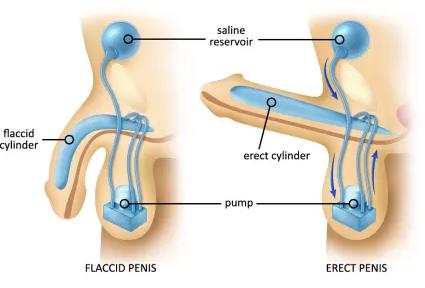
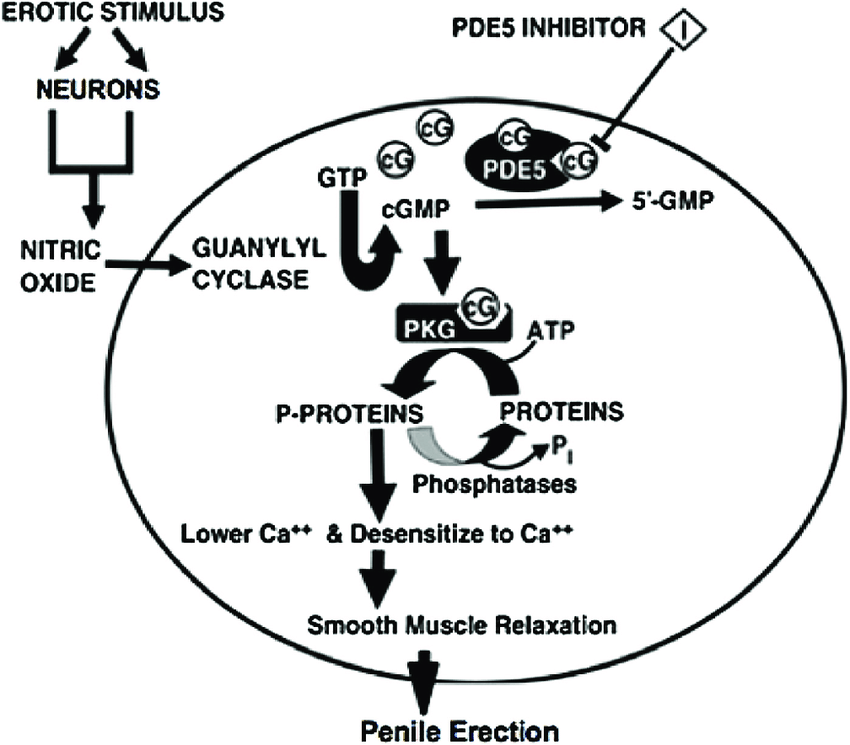
occidentale, Anacyclus pyrethrum, Butea frondosa, Caesalpinia benthamiana, Cannabis sativa, Chlorophylum borivilianum, Citrullus lanatus, Eurycoma longifolia, Ginkgo biloba, Hibiscus sabdariffa, etc. Sexual relationships are some of the foremost necessary social and biological relationship in human life. According to World Health Organization (WHO) Sexual health is prime to the physical or emotional health and wellbeing of people, couples and families and to the social or economic development of communities and countries [7, 8]. The National Institutes of Health Consensus Development Conference on Impotence (7 December 1992) has outlined, Male impotence conjointly known as ED may be a common medical condition that affects the sexual life of millions of men worldwide. Impotency or ED as the ‘inability to realize and maintain a penial erection adequate for satisfactory sexual relationship’ (Figure 1) [9]. ED is outlined because the persistent inability to get associated maintains an erection comfortable for naturally satisfactory intercourse. Male reproductive capability was found to be deficient in nearly 50% of infertile couples in step with a study carried by the WHO. Sexual disfunction may be a serious medical and social symptom that happens in 10-52% of men and 25-63% of women [10, 11, 12]. Sexual desire is controlled and regulated by the central central nervous system that integrates tactile, olfactive and mental stimuli (Figure 2) [13].
Aphrodisiac is that the word derived from Aphrodite, the Greek god of sexual, love and sweetness. Associate aphrodisiac is outlined as an agent (food or drug) that arouses physical attraction or sexual desire [1]. The chance of bioactive aphrodisiacs which can be derived from plants, animals or minerals, has been engaging throughout recorded history [2]. Aphrodisiac are mentioned there as Vajikaranas, the word vaji that means horse and karanta meaning creating i.e. Live to excite lust by charms etc. Natural products are on the market in texts of Ayurveda for their spermatogenic and virility potential activities. Ayurvedic aphrodisiac medical specialty is classified into vajikarana (pharmacological) and rasayana (non-pharmacological products) [3]. The plant-based, ancient or traditional medicine systems still play an important role in health care, with regarding 80% of the world’s inhabitants relying in the main on ancient medicines for his or her primary health care. Modern pharmacopoeia still contains a minimum of 25% drugs derived from plants and plenty of others that are artificial or synthetic analogues, designed on model compounds isolated from plants. Medicinal herbal plants produce bioactive compounds used in the main for medicinal functions [4, 5, 6]. Some well-known herbal aphrodisiacs are genus Allium sativum, Alpinia galangal, Anacardium
| S. No. | Stages | Explanation | ||||||
|---|---|---|---|---|---|---|---|---|
| 1 | First | Some aphrodisiac merely provides a burst of nutritionary worth rising the immediate health or well-being of the patron and consequently improving sexual performance and concupiscence (libido). | ||||||
| 2 | Second | This cluster includes the supposed aphrodisiac have a lot of specific physiological affects however don't seem to be psychologically active. They will have an effect on blood flow; increase duration of sexual intercourse by desensitizing the sex organ space [14,15]. | ||||||
| 3 | Third | The third cluster of aphrodisiac is created up compounds that are psychopharmacological, i.e. they really cross the blood brain barriers and stimulates some space of arousal [16]. This class includes a wide range of neurotransmitters, hormones, pheromones and drugs that interfere with the traditional perform of those molecules [17]. This class is most tough to check as a result of information of each arousal and therefore the mechanisms of the psychoactive properties of drugs are restricted. Solely the foremost general data regarding arousal and therefore the brain is known [18]. |
Table 1: Mechanism involved in aphrodisiac potentials.
Side Effects of Allopathic Treatments Used in Sexual Dysfunction
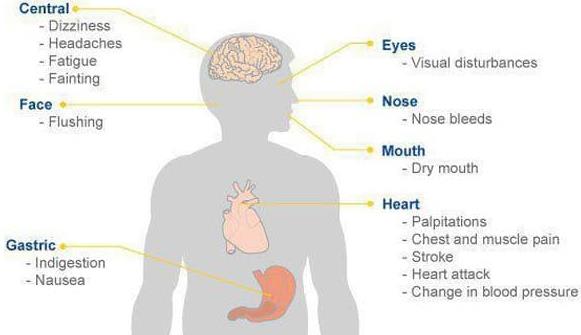
Side effects include drowsiness, insomnia, nasal congestion, headaches, dizziness, tachycardia, weight loss, etc. (Figure 3) [19].
Some Medicinal Plants with Aphrodisiac Potential
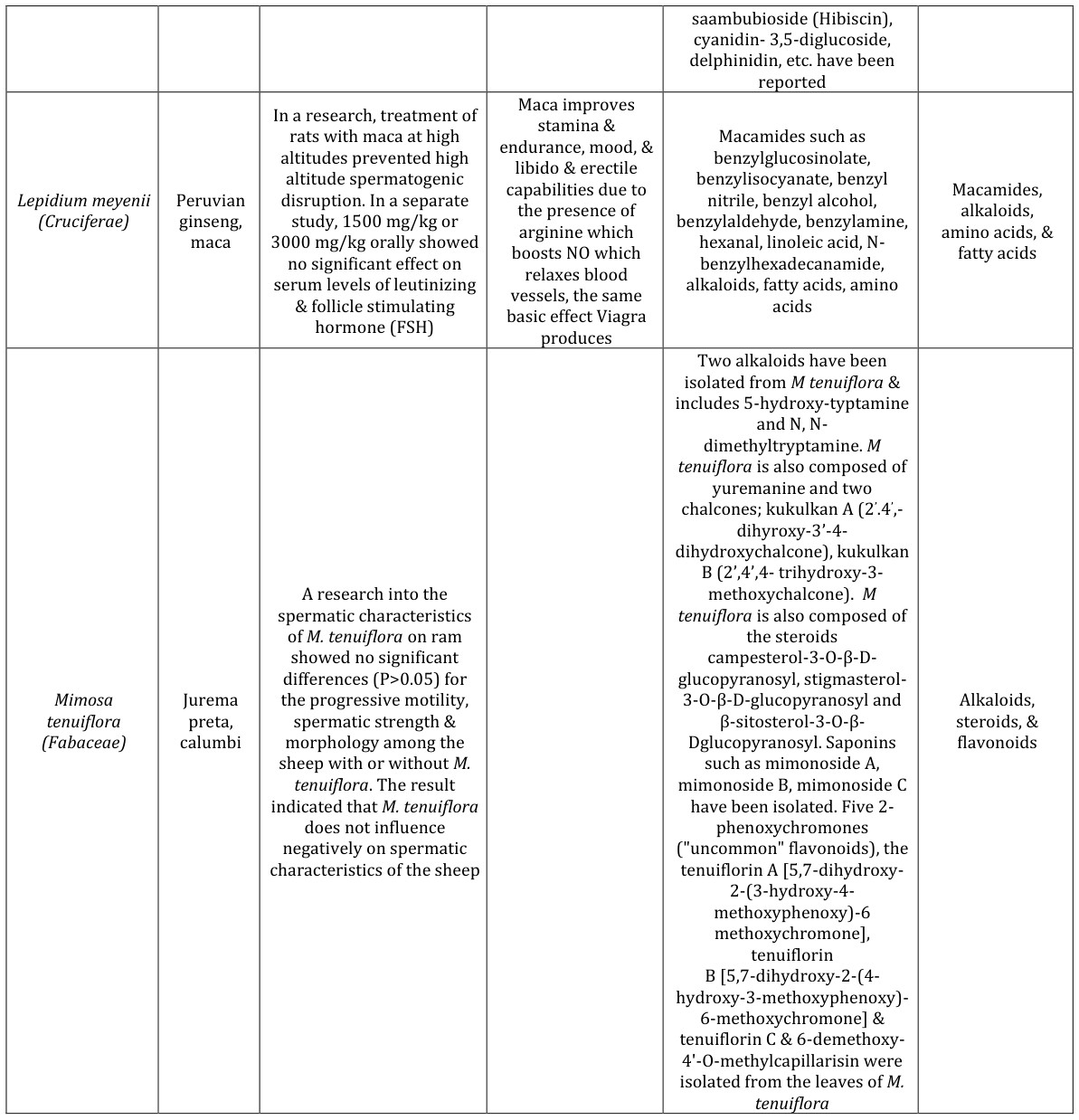
Some of the traditional plants have tested to possess a conventional similarly as scientifically proven aphrodisiac Scientific name Common name Pharmacology Mechanism of (Family) The alcoholic extract of A. Allicin increases blood flow to sexual satium increased sexual Allium sativum (Amaryllidaceae) Garlic behaviour through the organs through nitric oxide (NO) activities of sulphated compounds, peptides, flavonoids & phenolics synthase Methanolic extract of A. galangal showed increase Greater galangal, Alpinia galanga (Zingiberaceae) in serum testosterone blue ginger levels at 300 mg/kg/day Anacardium occidentale (Anacardiaceae) In a study to determine the aphrodisiac activity of the oils from A. occidentale seeds & shell, the result Cashew showed significant increase in sexual parameters Administration of 50 mg/kg & 100 mg/kg of aqueous extract in albino This could be partly explained by its vasorelaxant properties which may be caused by an increase in NO Anacyclus pyrethrum (Asteraceae) rats showed significant anabolic & spermatogenic effects. In a separate study, Arkakara petroleum ether extract had marked influence on body weight & accessory production in vascular bed & a decrease in its which will enhance passion, increase physical attraction, enhance sexual performance and facilitate to extend the intensity of sexual love [20]. A short report of aphrodisiac plants in (Table 2) [21, 22, 23, 24, 25, 26].
action Chemistry Class of isolates
Peptides,
Peptides, sulphated compounds, steroids, flavonoids, volatile oils with steroids, terpenes, flavonoids, volatile oils & sulphated compounds like alliin, enzymes, minerals & vitamins vitamins Spectroscopic analysis of sample has revealed the presence of 1’S’-1’- acetoxychavicol acetate, 1’S’- 1’acetoxyeugenol acetate, 1’S’- Coumarin, terpenoids, flavonoids, volatile oils, &
1’ hydroxychavicol acetate, trans-p- hydroxycinnam- aldehyde, trans-p-coumaryl phenols alcohol, trans-p hydroxycinnamyl acetate, β- bisaboline & β-selinene
2-hydroxy-6- pentadecylbenzoic acid, the ethanolic extract of the nuts of A. occidentale contains phytochemicals such as phenols, carbohydrates, proteins & Carbohydrates, xanthoproteins as well as phenols, flavonoids, steroids, & volatile oils, 2,6- dihydroxybenzoic acid from cashew apple, myristicin, proteins kaempferol, rhamnetin, cyanidin, peonidin, delphinidin which are flavonoid compounds. Other isolated compounds are 2- hydroxy-6-pentadecylbenzoic acid, cardinal & salicyclic acid Alkyl amides, pyrethrins, inulin, sesamine, hydrocaroline, pellitorine, volatile oils such as it is also Amides, & Volatile oils composed of 2-phenyl ethylamine, anacylin, β-biotol, salvia-4 (14)-en-1-one. Eudesma-4(15),7- diene-1-ol and β-himachalol; the sexual organs weight as compared with arachis oil The extract (400 mg/kg body wt./day) was administered orally by gavage for 28 days. Mount latency (ML), intromission latency (IL), ejaculation latency (EL), mounting frequency (MF), intromission frequency (IF), ejaculation frequency Flame of (EF) & post-ejaculatory interval (PEI) were the parameters the forest, bastard Butea frondosa (Papillionaceae) observed before and teak during the sexual behaviour study at day 0,
7, 10, 14, 21, & 28. The
extract reduced significantly ML, IL, EL and PEI (p < 0.05). The extract also increased significantly MF, IF and EF (p < 0.05).
These effects were observed in sexually active and inactive male rats The methanolic extract exhibited an accelerator effect by decreasing the latent time. The oral administration of aqueous Caesalpinia benthamiana (Caesalpiniaceae) Bail extract of C. benthamiana showed significant increase in mounting frequency & intromission frequency the dosage of 50 mg/kg Cannabis sativa (Cannabinaceae) In India’s Ayurveda & Chinese, Unani medicine, cannabis used to overcome Marijuana, bhaang impotence & raise libido & destruction essential oil also contains germacreme D, germacreme-
4(15),5,10(14) trien-1-a-ol, caryophyllene oxide, cedryl acetate, eudesma-4(15),7- diene-1-β-ol & spathuleno Fixed oil 18%, Water soluble albuminoid substances 19% and glucose 6%. Fatty acids isolated from this oil are orleic linoleic, lenorlenic, palmitic, stearic, arachidic, behenic and lingo cleric acid. Q-hydroxy-1- methyo allophonic acid, 15- hydroxy pentasonic acid and 1carboxy methoxy-2-carboxy hydrazine have been isolated Amino acids, alkaloids, & fixed from the seed coat. Seed has oils shown the presence of alkaloid monspermine from the alcoholic extract of the seeds are identified palasonin & palasonin-N-Phenyl imidine.
Aqueous methanolic extract contains a triazine compound,
4-arbomethoxy-3-dioxo- hydro-1,2,4-triazine 4.Carboxymethoxy 3.6 dioxo- hydro 1, 2, 4, triazine The petroleum ether extract of the bark has yielded cassane diterpenes with antibacterial activity such as deoxycaesaldekarine C, benthaminine I & benthaminine 2, the aqueous extract Terpenes, benthamine, fatty contains flavoinoids, phenols, anthraquinones such as gallic acids, flavonoids, & alkaloids acid, esveratrol; the chloroform & n-butanol extract contains methyl gallate, shikimic acid-3-O- gallate, 1-O-methyl-D- chiroinositol, (-)-epicatechin Narcortic resin, cannabidiol, Cannabinoids, Phenol, alkaloid, cannabidiol-carboxylic acid, cannabigerol & cannabichromene, flavonoid, & volatile as a general cure for the disease In a study of the aqueous The chemical extract of dried roots of structure of stigmasterol is related to that of C. borivilianum in rats, there was increase in libido, sexual vigour & Chlorophylum Safed Musli testosterone & mainly contributes borivilianum (Asparagaceae) sexual arousal at 250 mg/kg. The study supported treatment of premature ejaculation & to its aphrodisiac potentials; hecogenin produces oligospermia anabolic hormone The effect of red watermelon flesh extract on male sexual behaviour has been determined. In the research, the suspension of the flesh extract was administered on doses 100, 500, & 1000 Citrulline improves mg/kg to different groups of male rats (n=5) daily for 22 days. The result showed blood drive to the genital regions & plays a significant Citrullus lanatus Watermel- (Cucurbitaceae) that oral administration of role in the relaxation of blood, a major tool in high sexual performance on water melon flesh extract caused significant increase in mounting frequency, intromission frequency & ejaculatory latency. Watermelon flesh extract did not produce undesirable side effects on the male rats & thus its short-term use is apparently safe Standardized extract F2 at 25 mg/kg & its quassinoids Improves spermatogenesis by improved rat spermatogenesis, improved testosterone affecting the hypothalamic- pituitary-gonadal steroidgenesis. standardised water extract axis. Improves testosterone by inhibiting aromatic Eurycoma Tongkat ali, pasak longifolia (Simaroubaceae) at 400 mg/day for six weeks on testosterone, bumi conversion of testosterone to estrogen & may also epitestosterone ratio showed significant difference between supplementation & placebo. Treatment with E. longifolia extract at 400 involve phosphodiesterase (PGs) inhibition.
The extracts
cannabipinol & cannabidivarin, phloroglucinol oils β-D-glucoside, tetrahyrocannabinol, Isolated compounds include stigmasterol & hecogenin which are responsible for its antioxidant power, anticancer glycosides, saponins, fatty & aphrodisiac activities. Chlorophytoside-1, fatty acids, & hydrocarbons acids, eicosadienoic Watermelon contains bioactive agents such as citrulline, β-carotene & lycopene which have been used in the management of Carotenoids prostate cancer Quassinoids such as eurycomanone, eurycomnol, pasakbumin-B, hydroxylklaineanones, β- Phenols, quassinoids, alkaloids, volatile carboline alkaloids, canthin-6-one alkaloids, eurycomalactone, oils, & hydrocarbons laurycolactone, biphenyl neolignan and steroids, alkaloids such as 5,9- dimethoxycycanthin-6-one,
9,10-dimethoxy-3- methylcanthin5,6-dione have been reported
mg/day for 5 weeks resulted to increase in free of E. longifolia affects male infertility by suppressing α-2HS & total testosterone concentration & muscular force in men & women glycoprotein expression which thereby increases testosterone level and insulin sensitivity Improved blood circulation results to According to some researches, extracts of G. biloba may also help in an increase in the amount of oxygen in psychological conditions the blood & to all major organs of the by easing stress, mild depression & anxiety- body including the major causes of poor heart & brain thereby resulting to an increased arterial sexual performance thereby improving the mood for sexual pleasure. G. biloba extract have been used in traditional Chinese medicine to improve blood Ginkgo biloba (Ginkgoaceae) Gingko inflow to arterial tissues through arteries & veins without obstructing circulation. G. biloba systemic blood constituents have a thinning effect on the blood besides helping to improve the muscle tone in pressure. This enhanced supply of blood to sex organs is crucial in maintaining strong the walls of the blood vessels erection Pharmacology of the testicular effects of sub chronic administration of H. sabdariffa calyx aqueous extract in rats has been determined. Doses of 1.15, It decreases the Hibiscus sabdariffa (Malvaceae) Roselle
2.30, & 4.60g/kg for 12 viscosity of the blood & stimulates internal peristalsis weeks showed in significant change in the absolute & relative testicular weights; significant decrease in the epididymal sperm count & induced testicular toxicity GC-MS, HPLC-MS, HPLC-RI analysis of samples have led to the characterization of ginkgolides A, B, C, J, M with cage structures involving a tertiary butyl group & six membered rings including a spirononane system, a tetrahydrofuran and Steroids, flavonoid, & ginkgosides three lactones groups. 33 flavonoids have been isolated from the leaves including amento flavone, quercetin, myricetin, sesquojaflavone, Ginkgetin, Isorhamnetin, etc. Ginkgolic acids have also been isolated; the albumen of the seed also contains neurotoxic
4’-Omethylpyridoxine (ginkgotoxin), etc Several compounds have been isolated from different parts of H. sabdariffa including β- carotene, vitamin C, riboflavin, thiamine, and nutrients such as protein, carbohydrates & minerals like calcium and iron.
Carotenoids,
H. sabdariffa is composed vitamins, flavonoids, minerals, & amino acids chiefly of organic acids, anthocyanins, polysaccharides & flavonoids. Spectroscopic analysis off the aqueous extract of H. sabdariffa have yielded citric acids, hydroxycitric acid, hibiscus acid, malic acid & tartaric acids; oxalic acid as minor compounds. Delphinidin & cyanidin based anthocyanins including delphinidin-3-
| Mucuna pruriens (Fabaceae) | Velvet beans, lyon bean | In different texts of Ayurveda, M. pruriens is most commonly used in aphrodisiac formulations. At 70 mg/kg, treatments significantly improved testosterone quality, ameliorated Psychological stress & improved sperm count | Producing a dose dependent increase in FSH & leutenizing hormone which increases the number of eggs released at ovulation by the action of L-DOPA & dopamine | L-DOPA, serotonin, mucunain, arachidic acid, behenic acid, genistein, glutamic acids, betacarboline, β-sitosterol, cysteine, dopamine, lysine, tryptamine, riboflavin | Alkaloids, amino acids, saponins, & vitamins |
|---|---|---|---|---|---|
| Musa (Musa paradisiacal/ sapientum) (Musaceae) | Banana, plantain | Aqueous extract of M. paradisiaca root on testicular function parameters on male rats at 25, 50 and 100 mg/kg enhanced the testosterone dependent normal functioning of the testes. M. sapientum contain bromine, norepinephrine, dopamine & serotonin in the peel & pulp. Norepinephrine & dopamine elevate blood pressure while serotonin stimulates the blood vessels of the intestine | Increase in blood Circulation | Bromine, rubidium, strontium, saponins, norepinephrine, dopamine, serotonin, vitamin B , 6 vitamin a, c and D and natural glucose, fructose. Several compounds such as acyl steryl glycoside such a sitoindoside-I, sitoindoside-II, sitoindoside- III, sitoindoside-IV and steryl glycosides such as sitosterol, myo-inosityl-ß-D-glucoside have been isolated from fruits of M. paradisiaca, A bicyclic diarylheptanoid, rel-(3S, 4aR,10bR)-8-hydroxy-3-(4- hydroxyphenyl)-9-methoxy- 4a,5,6,10b-tetrahydro- 3H-naphthol[2,1-b] pyran, and 1,2-dihydro-1,2,3trihydroxy-9- (4-hydroxyphenyl) naphthalic anhydride, 1,7-bis(4- hydroxyphenyl) hepta-4(E), 6(E)-dien-3-one have also been isolated, cyclomusalenol, cyclomusalenone | Saponins, alkaloids, vitamins, glycosides, triterpenes, & sterols |
| Myristica fragrans (Myristiaceae) | Nutmeg, mace | 50% ethanolic extract showed significant increase in aphrodisiac properties in mice such as increase in mating frequency, libido & potency. It has also been used in Unani medicine for the treatment of sexual disorders | Stimulation of the nervous system by myristicin | Α-pinene, camphene, ρ- cymene, sabinene, βphillandiene, γ-terpinene, limonene, myrcene, linalool, 3- methyl-4-decan-1-ol, fixed oils like mysristic, stearic, palmitic, oleic and olenolic acids, Licarin B & malabaricone C | Essential oils, fixed oils, & unsaturated aliphatic hydrocarbon |
| Ocimum gratissimum (Lamiaceae) | Ocimum, wild basil | Oral administration of extracts of O. gratissimum at 100, 250 & 500 mg/kg to 6 groups of male rats once a day for seven days showed significant | O. gratissimum consist of several essential oils such as thymol, eugenol, methyl charvical, gratissimol, pentoses, hexoses, uronic acid, alkaloids, tannins, | Volatile oils, alkaloids, & tannins |
Table 2: Medicinal Plants used for the improvement of sexual performance and virility.
increase in mounting frequency, intromission frequency, erection & aggregate penile reflexes Ginsenosides Panax extract standardized enhances acetylcholine- with gensenoside Rg3 significantly produced induced & transmural nerve significant & sustains increase in sexual activity Panax ginseng Ginseng stimulation- activated relaxation (Araliaceae) berry of normal male rats. Improvement in all forms associated with increasing of sexual dysfunction including erectile dysfunction & premature tissue cGMP mediated by the ejaculation release of NO The aphrodisiac effect of the methanolic extract of P. flavonoids, methyl eugenol, cis-ocimene, trans-ocimene, pinene, camphor, germacrene- D, transcarypophyllene, farnesene, l-bisaboline, p- cymene, γ-terpene, α-trans sabiene hydrate, 1,8- cineole, linalool, β-salinene, & geraniol Triterpene glycosides called ginsenosides. Alkanes, alkenes, Saponins, hydrocarbons, sterols, fatty acids, carbohydrates, flavonoids, flavonoids & organic acids & vitamin vitamin Several compounds such as flavonoids and other phenolics have been isolated from P. incarnate such as apigenin and Phenolics, alkaloids, & luteolin, isovitexin, vitexin, isoorientin, orientin & saponarin. Also isolated from sugars P. incarnate includes schaftoside, isoschaftoside, isovitexin-2’-O- β-glucoside & isoorientin-2-O- β-glucoside Table 2: Medicinal Plants used for the improvement of sexual performance and virility.
Conclusion
Herbals medicinal plants have a possible to treat the assorted varieties of body ailments. The demand of herbal medicine is increasing day by day in developed yet as developing countries as a result of they are safer and well tolerated as compared to those of allopathic drugs. These plants must be subjected to animal and human studies to figure out their effectiveness in whole organism systems. Many plants have tried helpful within the management of sexual disorders throughout history, even herbs and spices are accustomed increased sexual activities in varied components of the world. There's great would like for substances that are accustomed treat sexual dysfunction in humans. The utilization of aphrodisiacs is outstanding in several countries of the world as well as Asian country like India, China, Sri Lanka, and Pakistan.
Acknowledgement
The authors are thankful to the Mr. Jivan Kumar; Production officer of Kusum Healthcare Pvt. Ltd. Chopanki, Bhiwadi (Rajasthan) India, for her support and helpful in cooperation in the review and data collection process.
Conflict of Interest
The authors declare that there is no conflict of interest regarding the publication of this paper
References
-
Jo JK, Jeong SJ, Oh JJ, Lee SW, Lee S, et al. (2018) Effect of starting penile rehabilitation with sildenafil [INLINE_TABLE:9:0] immediately after robot-assisted laparoscopic radical prostatectomy on erectile function recovery: A prospective randomized trial. J Urol 199(6): 1600- 1606.
-
Goethe VE, Angerer H, Dinkel A. Arsov C, Hadaschik B, et al. (2018) Concordance and discordance of sexual identity, sexual experience and current sexual behavior in 45-year old men: Results from the German Male Sex-Study. Sex Med 6(4): 282-290.
-
Lane-Cordova AD, Kershaw K, Liu K, Liu K, Herrington D, Lloyd-Jones DM, et al. (2017) Association between cardiovascular health and endothelial function with future erectile dysfunction: The Multi-Ethnic Study of Atherosclerosis. Am J Hypertens 30(8): 815-821.
-
Jisheng W, Hengheng D, Bin W (2017) Comparison of TCM and western medicine diagnosis and treatment strategies for erectile dysfunction. Chinese J Hum Sex 26: 23-26.
-
Rongmin J, Yu Q, Tao W (2018) Meta-analysis of clinical effectiveness of the acupuncture treatment for erectile dysfunction. Chinese J Hum Sex 27:82-85.
-
Kaminetsky JC, Stecher V, Tseng LJ (2017) Quality of erections by age group in men with erectile dysfunction. Int J Clin Pract 71(10):12976.
-
Wang X, Wang MLI (2017) Discussing on the action mechanism of two-way adjustment of acupuncture. J Sichuan Tradit Chinese Med 35: 40-42.
-
Onyeji IC, Sui W, Pagano MJ, Weinberg AC, James MB, et al. (2017) Impact of surgeon case volume on reoperation rates after inflatable penile prosthesis surgery. J Urol 197(12): 223-229.
-
Cocci A, Russo GI, Salonia A, Cito G, Regis F, Polloni G (2018) Predictive Factors of Patients' and Their Partners' Sexual Function Improvement After Collagenase Clostridium Histolyticum Injection for Peyronie's Disease: Results From a Multi-Center Single-Arm Study.. J Sex Med 15(5):716-721.
-
Ren H, Zhang Q, Wang J, Pan R (2018) Comparative effects of umbilical cord- and menstrual blood- derived MSCs in repairing acute lung injury. Stem Cells Int 2018: 9.
-
Wang J, Zhou Y, Dai H, Binghao Bao, Jin Dang (2019) (The safety and efficacy of acupuncture for erectile dysfunction: A Network meta-analysis. Medicine 98(2): 1-4.
-
Burnett AL, Nehra A, Breau RH. Erectile dysfunction: AUA guideline. J Urol 200(3): 633-641.
-
Pozzi E, Capogrosso P, Chierigo F (2018) Clinical profile of young patients with erectile dysfunction: Preliminary findings of a real-life cross-sectional study. Eur Urol Focus.
-
Kalka D, Womperski M, Gebala J, Smolinski R, Depko A (2018) 564 Do socioeconomic factors influence the pathogenesis of erectile dysfunction through modifiable risk factors? J Sex Med. 5(7): 335.
-
Deng C, Wang L, Feng J, Lu F (2018) Treatment of human chronic wounds with autologous extracellular matrix/stromal vascular fraction gel: A STROBE compliant study. Medicine (Baltimore) 97(32): e11667.
-
Sarwer DB, Wadden TA, Spitzer JC (2018) 4-Year changes in sex hormones, sexual functioning and psychosocial status in women who underwent bariatric surgery. Obes Surg 28(4): 892-899.
-
Aversa A, Fittipaldi S, Francomano D, Bimonte VM, Greco EA (2017) Tadalafil improves lean mass and endothelial function in nonobese men with mild ED/LUTS: in vivo and in vitro characterization. Endocrine 56(3): 639-648.
-
Amano T, Earle C, Imao T, Matsumoto Y, Kishikage T (2018) Administration of daily 5 mg tadalafil improves endothelial function in patients with benign prostatic hyperplasia. Aging Male. 21(1): 77-82.
-
Mulhall JP, Carlsson M, Stecher V, Tseng LJ (2018) Predictors of erectile function normalization in men with erectile dysfunction treated with placebo. J Sex Med 15(6): 866-872.
-
Lunsen RHW, Zimmerman Y, Coelingh BHJT, Termeer HMM3, Appels N, et al. (2018) Maintaining physiological testosterone levels by adding dehydroepiandrosterone to combined oral contraceptives: II. Effects on sexual function. A phase II randomized, double-blind, placebo-controlled study. Contraception 98: 56-62.
-
Ahlers CJ, Schaefer GA, Mundt IA, Roll S, Englert H, et al. (2011) How unusual are the contents of paraphilias? Paraphilia-associated sexual arousal patterns in a community-based sample of men. J Sex Med 8(5): 1362-1370.
-
McPhail IV (2018) Age of onset in pedohebephilic interests. Arch Sex Behav 47(5):1313-1317.
-
Tozdan S, Kalt A, Keller LB (2018) Keep faith in yourself! -A pilot study on the relevance of specific self-efficacy for modifying sexual interest in children among men with a risk to sexually abuse children. J Sex Marital Ther 6: 1-14.
-
Corona G, Maggi M, Jannini EA (2018) EDEUS, a real- life study on the users of phosphodiesterase type 5 inhibitors: Prevalence, perceptions and health careseeking behavior among European men with a focus on 2nd-generation avanafil. Sex Med 6(1):15- 23.
-
Hutchings DC, Anderson SG, Caldwell JL, Trafford AW (2018) Phosphodiesterase-5 inhibitors and the heart: Compound cardioprotection?. Heart 104(15): 1244- 1250.
-
Osondu CU, Vo B, Oni ET, Blaha MJ, Veledar E, et al. (2018) The relationship of erectile dysfunction and subclinical cardiovascular disease: A systematic review and meta-analysis. Vasc Med 23(1): 9-20.
- Gallic and Citric Acid Present in the Peels of Tropical Fruits as an Alternative in the Fight against Cancer
- Treating the Forehead Lines with Combination of Forehead and Glabellar Botulinum Toxin Among Japanese Patients
- Clinical Evaluation of Patients Suffering from Breast Cancer & Determination of Treatment Therapies and Better Strategies Related to Breast Cancer
- Medieval Recipes by Al-Zahrāwī for Heart Palpitations Treatment
- Etiology and Prescription Errors of Myocardial Infarction in Different Health Care Systems of Azad Kashmir
- Early Diagnosis and Multidisciplinary Management of Turner Syndrome: A Paediatric Case Study